The ancients used to say, “In January, you see the weather for the whole year” (em Janeiro vês o tempo do ano inteiro). The first 12 days of January, called “arremedas,” were considered a burn-in period not useful for predicting the weather. Instead, the days from January 13 to 24 were thought to represent the weather for each of the 12 months ahead. For example, a rainy January 13 signals a wet January, while a sunny January 14 points to a bright February, and so forth.
As January unfolds, we’ll closely examine its clues about the weather in 2025. Regardless of the predictions, we look forward to returning to this beautiful corner of the world—and we hope you’ll join us. Happy New Year!
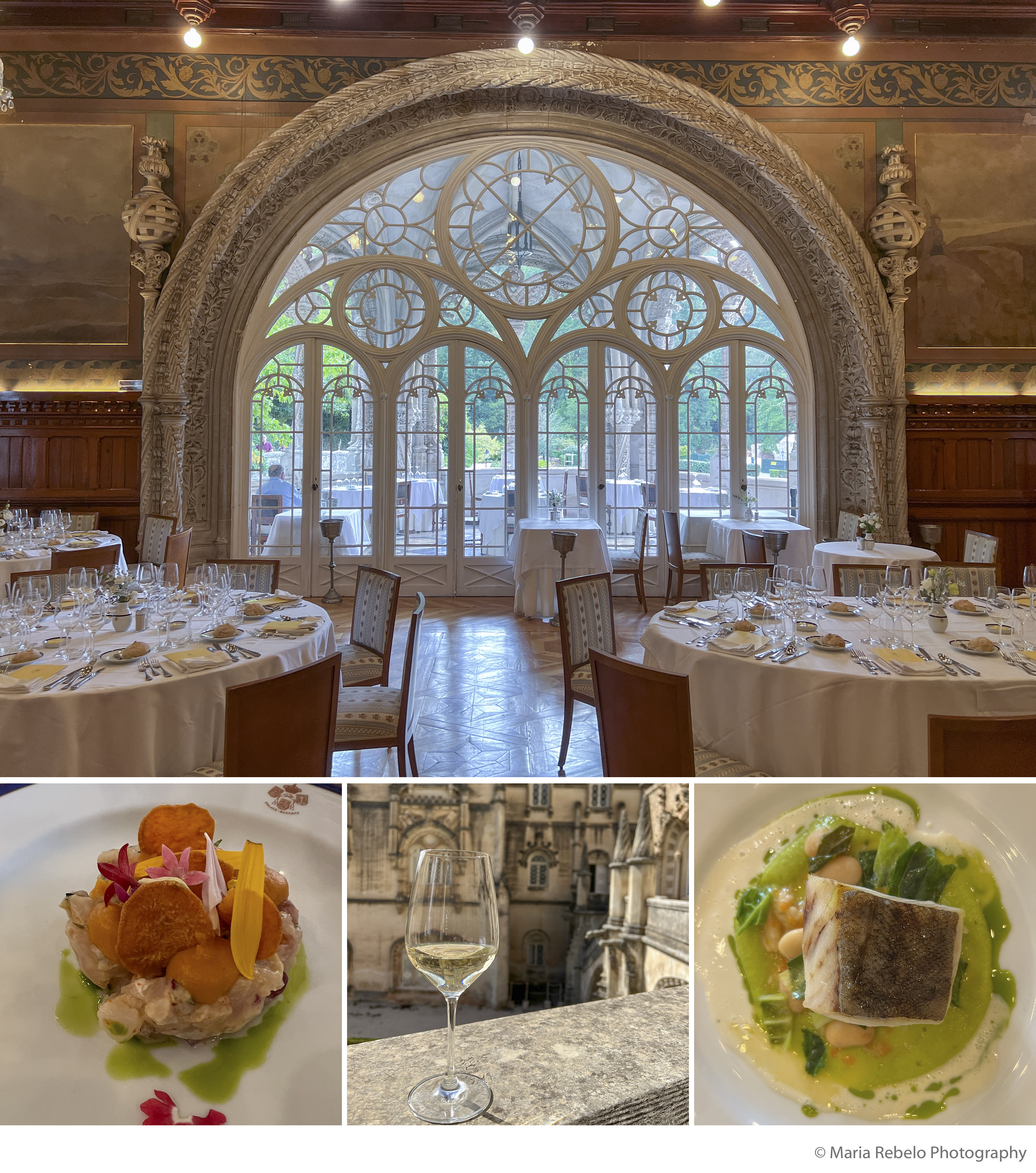
We drove through Bairrada without a GPS device, navigating the narrow, winding road by following signs pointing to Bussaco. Eventually, we arrived at a time-worn toll booth where we willingly paid a modest fee to enter the enchanted Mata do Bussaco. It is a verdant forest with ancient trees that sheltered us from the feisty midday sun. After a short drive, we glimpsed an edifice seemingly made of sand. As we drew closer, we saw a palace constructed from limestone intricately carved by artisans whose names time forgot. One of the last Portuguese kings converted an old Carmelite monastery into a place where his family could stay while he hunted in the forest. The grandfather of Alexandre de Almeida, the CEO of the group that manages the Bussaco Palace Hotel, converted the building into a luxury hotel at the beginning of the 20th century.
The palace hallway is decorated with exuberant tiles depicting scenes from the 1810 clashes between Napoleon’s troops and the Portuguese army. The dining room is magnificent, its walls painted with literary motifs and its furnishings crafted from rare, precious woods.
Alexandre de Almeida introduced us to his gifted chef, Nelson Marques, whose youth is artfully concealed by a well-groomed beard. We settled into the dining room, and soon, a delicate seabass freshly caught at Figueira da Foz arrived. It was marinated with citrus, adorned with crisp slices of sweet potatoes, and accented with purple onion pickles. Shortly after, the servers brought us a briny soup made from Peniche crabs, clams, mussels, and algae harvested from the Aveiro Ria.
António Rocha, responsible for the palace’s iconic wines, paired these offerings with the 2021 Bussaco Rosado, a refreshing rosé with pleasing acidity and beguiling color.
The first entrée was a delightful codfish confit with savory white beans paired with the elegant 2019 white Bussaco Reservado.
The second entrée was a game pie served with chutney from Baga, Bairrada’s iconic grape varietal. The servers generously poured glasses of the 2016 red Bussaco Reservado, a wine with grace and intensity that harmonized seamlessly with the pie.
The same wine was a superb companion for a quartet of Portuguese cheeses–Rabaçal, Serra da Estrela, Nisa, and São Jorge–served with freshly harvested grapes.
Our exquisite meal ended with a Morgado, the palace’s signature dessert, and a 10-year-old tawny produced by the renowned Dirk Niepoort, a good friend of António Rocha.
It’s worthwhile traveling to Bussaco just to enjoy delicious food prepared in an old palace by a young chef to pair perfectly with timeless wines.
On the last day of the year, there were fireworks on the beach. People enjoyed the impressive pyrotechnics. But the ocean did not stand still to stare at the sky; its waves kept rolling on the sand.
On the first day of the new year, there was copious rain. The ocean, created by millions of years of precipitaton, rejoiced like a child who sees her mother after a long absence. The waves danced, and we watched in awe how a coastline known for its sunny days could be so beautiful in the rain.
We wish you a joyous New Year and hope you come to see the beauty of the Portuguese coastline, rain or shine.
The farmers market was bustling. The baker ran out of cornbread; the vegetable stalls were out of Christmas cabbages. At home, thick slices of salt codfish were soaked to be cooked and doused with fragrant olive oil. In a country with so many splendid wines, it’s hard to elect one to grace the table. But the choice was made. Pumpkin fritters and other delights are ready to be served. And most of all, there are friends and family coming to enjoy each others’ company in this beautiful corner of the world called Portugal.
“Sea, half of my soul is made from sea breeze,” says Sophia de Mello Breyner Andresen in her poem Atlantic. In The Beginning of a Prayer, Filipa Leal writes, “Lord, fill my room with the high seas.” These poets express with eloquence what all Portuguese feel–that the sea is vital to our life.
We hope that the New Year is healthy and bright and that you can travel with ease to come experience the poetic radiance of the Portuguese sea.
Time flies by when we’re having fun. It’s hard to believe that we started Salt of Portugal one decade ago!
It’s been a pleasure to travel from north to south in search of all that is glorious about Portugal. Thank you dear readers for sharing this journey with us. We hope your travels will bring you soon to this corner of the world. A place of castles and palaces, of mountains and valleys, of sand and sea. All bathed in warm light, all cooled by the breeze that carries the ocean’s salt, the salt of Portugal.
Oh, how wonderful it is to spend a lazy Saturday in Lisbon! We started late, when the sun was already shinning with conviction, and drove to Vicentinas, an old tea shop in Rua de São Bento. A gentle push on the rickety door and we were greeted by a sweet aroma that invited us to enter.
We sat at a table, enjoying a cup of strong Earl Grey tea, while waiting with undisguised impatience for our scones to arrive. The minutes passed by slowly, but the wait was well worth it. The freshly baked scones were perfect; crispy on the outside and buttery inside.
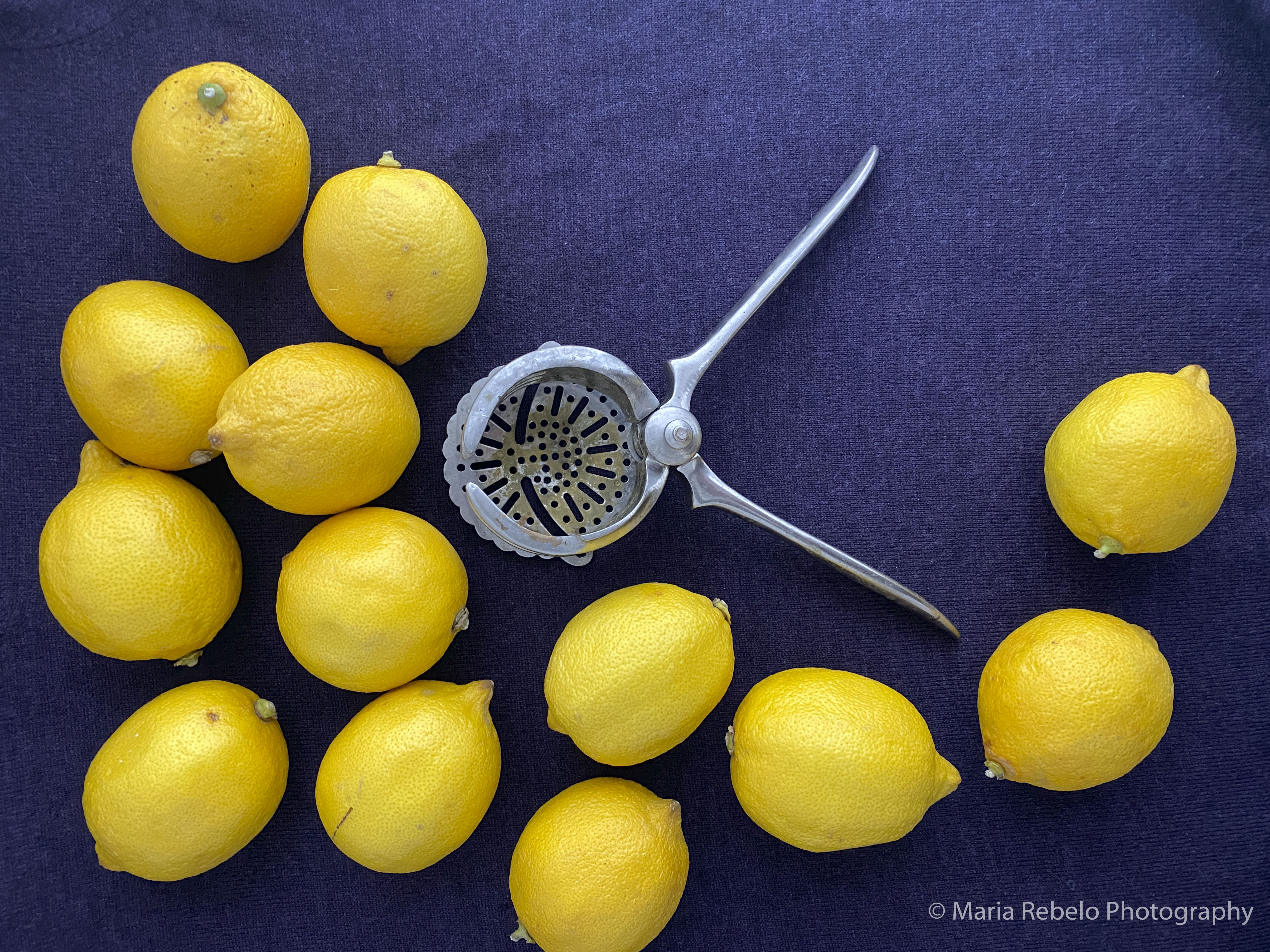
It took all our willpower to resist ordering more scones. Feeling virtuous, we walked down Rua de São Bento to visit the numerous antique stores located in this neighborhood. The store owners are always there, eager to show their collections of objects from times gone by. There is always something interesting. And occasionally there is something exquisite, like a pair of elegant lemon squeezers.
In the old days, luxury restaurants in Lisbon, like Tavares and Aviz, had a small tray of lemon squeezers prepared with fresh lemon halves wrapped in cheese cloth tied with a yellow bow. The waiters used them to season dishes by table side, turning the simple act of squeezing a lemon into a magical moment.
We walked home with this precious gift from the past, content with another lazy Saturday spent in Lisbon.
In the early 16th century, Lisbon was one of the world’s richest cities. A constant stream of caravels departed to far-away destinations like India and Brazil. Some of these ships perished tragically on the high seas. The ones that returned brought their hulls crammed with gold, silver, and spices.
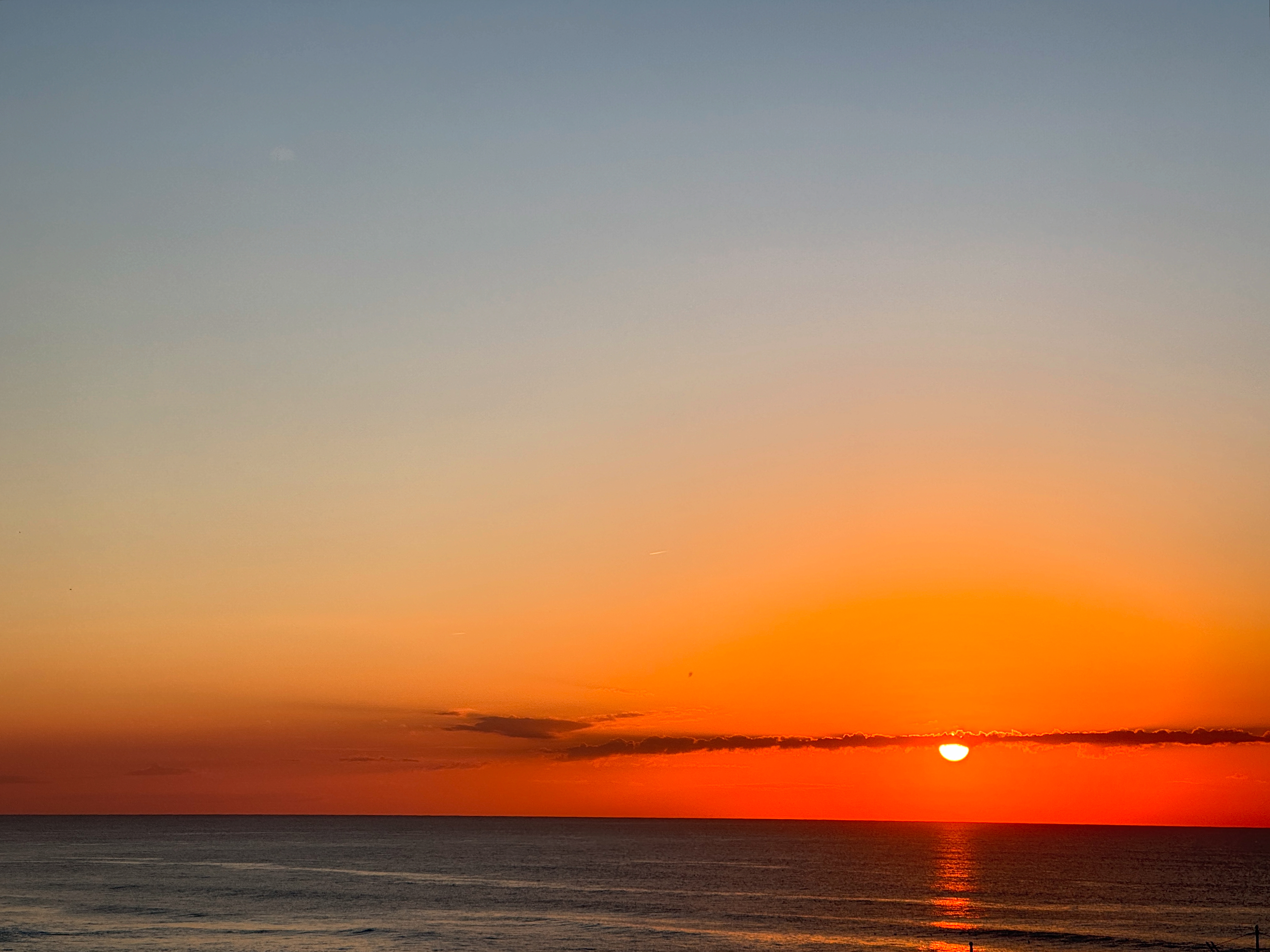
During the day, sailors relied on the sun to measure their latitude. At night, they were guided by the stars. Skilled pilots pointed sextants at the sky to estimate the ship’s position and evaluate its course. On the last night of the year, we too look at the stars for guidance on where we are and what lies ahead. We hope they can point us all to a blissful, healthy New Year that brings us back to Portugal.
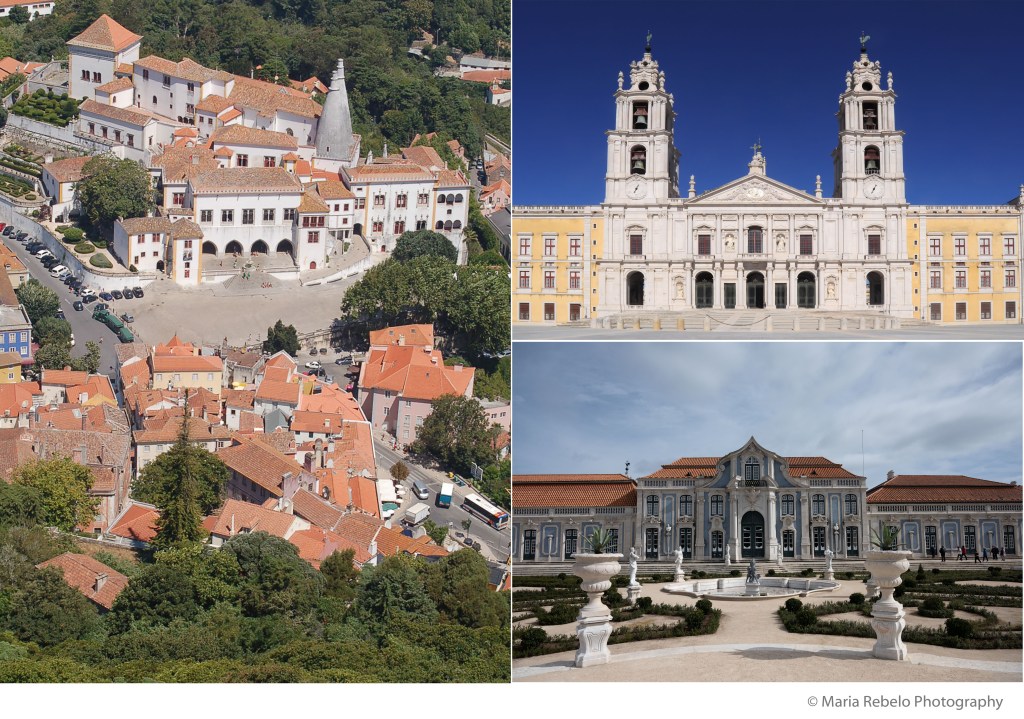
One curious fact about Lisbon is that there are few palaces in the center and many in the outskirts of the city. Before 1755, Lisbon was an overcrowded place where pestilence could quickly spread. So, the royal family and the aristocrats liked to build palaces away from the crowds, in places where the air was pure.
King John I built the Sintra town palace in 1415, which became a perennial favorite of the royal family. King John V used the riches from Brazil to finance the construction of an imposing palace in Mafra in 1717. Dom Pedro de Bragança, a prince who married his niece, Queen Dona Maria I, erected an exquisite palace in Queluz in 1747.
We are lucky that all these palaces were built away from the capital. In November 1, 1755 a massive earthquake destroyed much of Lisbon, including the royal palace at Terreiro do Paco and many other architectural jewels. From the rubles of the earthquake, the Marquis of Pombal, King Dom José’s powerful prime minister, created a new city where large avenues replaced the meandering medieval streets. The old ornate palaces gave way to the simpler but sturdier buildings that we still see in the downtown district.
If you visit Lisbon, make some time to travel to its surroundings to experience the palatial riches of a time gone by.
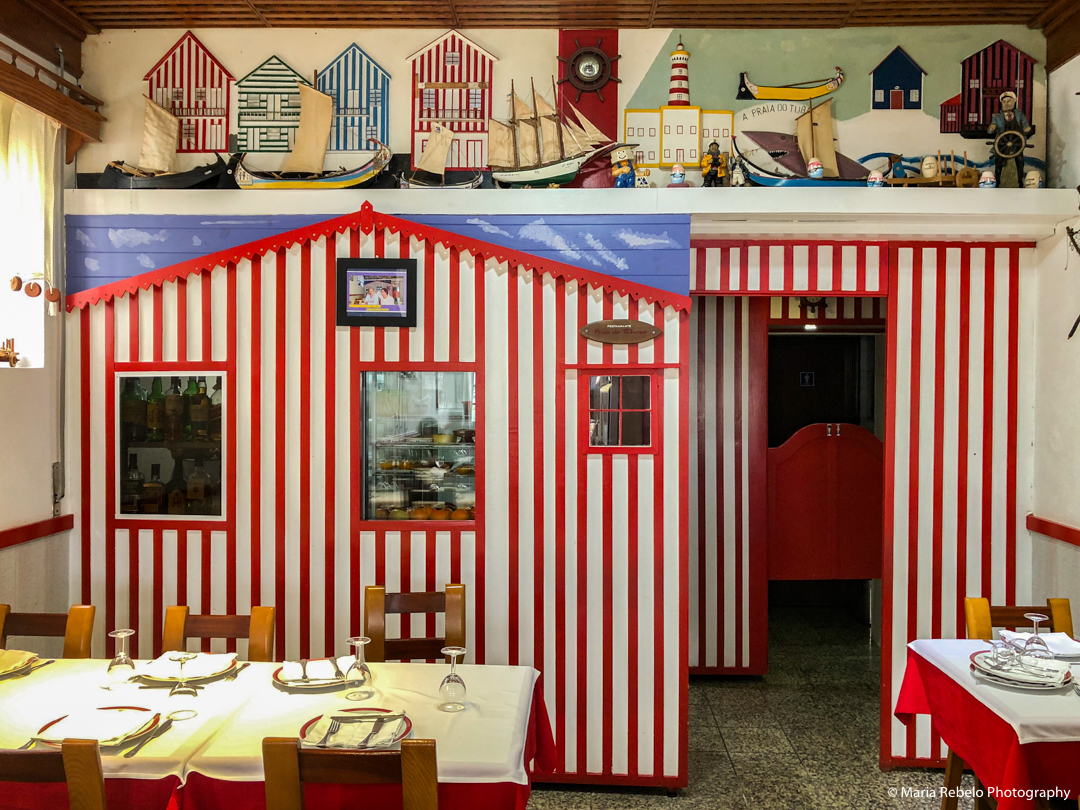
Roger Sobreiro, an American wine merchant of Portuguese descent, recommended a small restaurant called A Praia do Tubarão (the shark’s beach) that is his safe harbor when he visits Portugal. We drove to the picturesque town of Costa Nova to try it out.
The restaurant’s facade is painted with the traditional red and white stripes used to decorate fishermen houses. The same red and white palette dominates the cosy interior where Adriano Ferreira, the owner, was waiting for us. He has worked in Costa Nova for 50 years, first as a waiter and then, in the last three decades, together with his wife at A Praia do Tubarão.
“I hunt and fish and all hunters and fishermen are liars,” he said as a way of introduction. Despite this forewarning, we asked Adriano to choose our lunch menu. “Most of our food is served in the pots where it is cooked: caldeiradas (boulliabaisses) , “ensopados,” and seafood rices. We follow two simple rules: everything is fresh and everything is cooked to order,” he explained.
Adriano went into the kitchen and returned with a plate of petinga (small sardines) and tiny fried balls of berbigão rice. Then, he poured two generous glasses of the wonderful Duas Quintas white from Ramos Pinto. The petinga was crisp, hot, luxuriously fresh and perfectly fried. The rice balls were flavorful and deeply satisfying.
We ate an “ensopado,” a plate made with fish, potatoes, onions, garlic, and olive oil. It is seasoned with “sal d’unto,” a salt and lard combination. It comes with a sauce called “alhada,” made from garlic, lemon and piri piri. The flavors blend to create a unique taste and aroma. The quality of the ingredients and the cooking is superb.
Dessert was a small bowl of the traditional “ovos moles,” a convent sweet made with egg yolks and sugar. The meal ended with a vibrant espresso made with Delta’s famous diamond blend.
We said goodbye to Adriano and promised to be back soon to this welcoming place that serves delicious traditional food.
A Praia do Tubarão is located at Rua José Estevão, 136, Costa Nova Prado, Ilhavo, tel. 234 369 602.





 Salt of Portugal