Legendary moments at Quinta da Boavista

Quinta da Boa Vista Composit

Some quintas in the Douro valley experienced one legendary moment. But Quinta da Boavista experienced two. The first came in May 1809 when Joseph James Forrester rented the quinta to work on his masterpiece, a detailed map of the Douro river. This map quickly became an indispensable reference for port-wine makers. It also made Forrester one of the most important figures in the port-wine trade. Forrester fought for the production of high-quality wines that reflected the unique terroir of the Douro valley. As a recognition for his service, king Dom Pedro V made him a Baron.

The second moment happened thanks to Marcelo Lima and Tony Smith, a duo of entrepreneurs who bought the quinta in 2013. They realized that the grapes from Boavista, grown in some of the Douro’s tallest terraces, are like precious stones. So they went in search of a master jeweler who could polish them. They knew that the ideal person would be Jean-Claude Berrouet, the enologist responsible for 44 vintages of Château Pétrus. But he had retired in 2007, took very few consulting jobs and had never worked in Portugal.

In July 2013, Marcelo and Tony brought Jean-Claude to Boavista. The enologist stood on the varanda of the house of the Baron of Forrester for a long time contemplating an iconic vineyard named Oratório (oratory) after its shape. When he finally broke the silence, he said “Ça c’est fort!” Marcelo and Tony smiled–they had found his jeweler. Since then, Jean-Claude has worked with Rui Cunha, the quinta’s resident enologist, to perfect the way in which wines from different parcels are blended. He also brought his profound knowledge of the Bordeaux oak barrel producers to choose the ideal barrels for aging the grapes from each vineyard.

When the first vintage of Oratório came out, Marcelo, Tony, and Jean-Claude sat on the terrace overlooking the vineyard. Jean-Claude took time to evaluate the color of the wine, appreciate its delicate aromas and to take a few sips. When he finally broke the silence, he said “C’est un grand vin!”

Click here for the website of Quinta da Boavista.
Imagining new worlds at the Sagres pousada

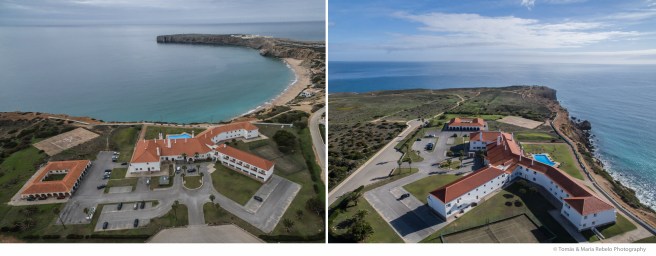
Pousada de Sagres

Every Portuguese kid learns that Sagres is the place “where land ends and the sea begins.” It was here that Henry the Navigator launched the voyages that led to the discovery of new worlds.

The Sagres pousada has a spectacular location on a cliff that overlooks the fort built by Henry the Navigator in the 15th century. In 1587, the fort was captured by the British pirate Francis Drake who used it as a base of operation for two turbulent months. Rebuilt after the 1755 earthquake, the fort stands as a tribute to the golden age of discovery.

There’s a lot to do and see near the pousada: alluring beaches, small fish restaurants, quaint villages, and expansive seascapes. But it is also great to relax in the veranda of our room and contemplate the sea that enticed the Portuguese to leave the safety of their homeland to venture into the unknown.

Here’s a link to the pousadas’ website. You can find a large collection of photos of the pousadas at www.mariarebelophotography.com.


The delights of Vale da Estrela

Composit Queijaria Vale da Serra

Our grandfather loved cheese from Serra da Estrela, the highest mountain in continental Portugal. He used to buy most of the cheese made by a small producer. Half of this cache he offered to friends. The other half was consumed in our house, either fresh or cured with olive oil and paprika. Every day of the year there was cheese on the table.

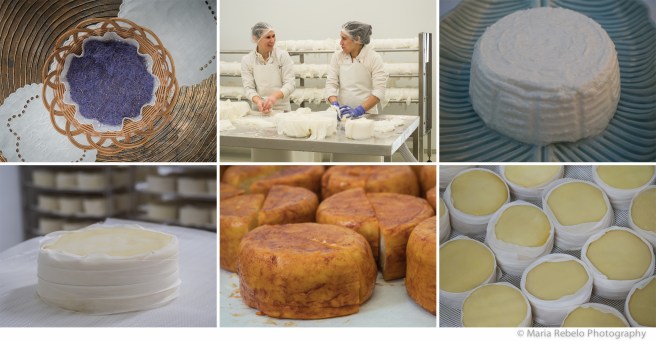
We were delighted when Maria João Coelho invited us to visit Queijaria Vale da Estrela, her father’s new artisanal cheese workshop in Mangualde near Viseu. The first thing we noticed when we entered the workshop were the wonderful cheese aromas, so familiar from our childhood.

Jorge Coelho, Maria João’s father, showed us around. He inherited his love for cheese from his grandfather Raul, an “affineur” who procured the best Estrela cheese to sell to gourmet stores in Lisbon.

Serra cheese is made with only three ingredients: sheep milk, thistle flower, and salt. Vale da Estrela only uses milk from Bordaleira ewes, which are indigenous to Serra da Estrela. The precious milk is collected at night and processed immediately to guarantee the best results.

All the cheese is made by hand with rhythmic gestures that transform humble ingredientes into something transcendent. The whey left over from the production process is heated to make “requeijão,” a soft, ricotta-style cheese.

“We make very good cheese but our requeijão is the best in the world,” said Jorge Coelho with pride. We first admired the cheese with its firm texture and delicate taste. Then, we tried the requeijão. As professional requeijão eaters we sampled many wonderful specimens over the years. But nothing as sublime as the requeijão from Vale da Estrela with its silky texture, depth of flavor, and exceptional freshness.

You can generally find the cheese and requeijão from Vale de Serra in supermarkets throughout the country. But when there’s a special occasion in heaven these products disappear from the shelfs because angels come in disguise to get them for the tables of paradise.

Queijaria Vale da Estrela is located in Mangualde on Estrada Nacional 16, n.º 43 São Cosmado. Click here for the queijaria’s website. 


Sun and rain

OLYMPUS DIGITAL CAMERA

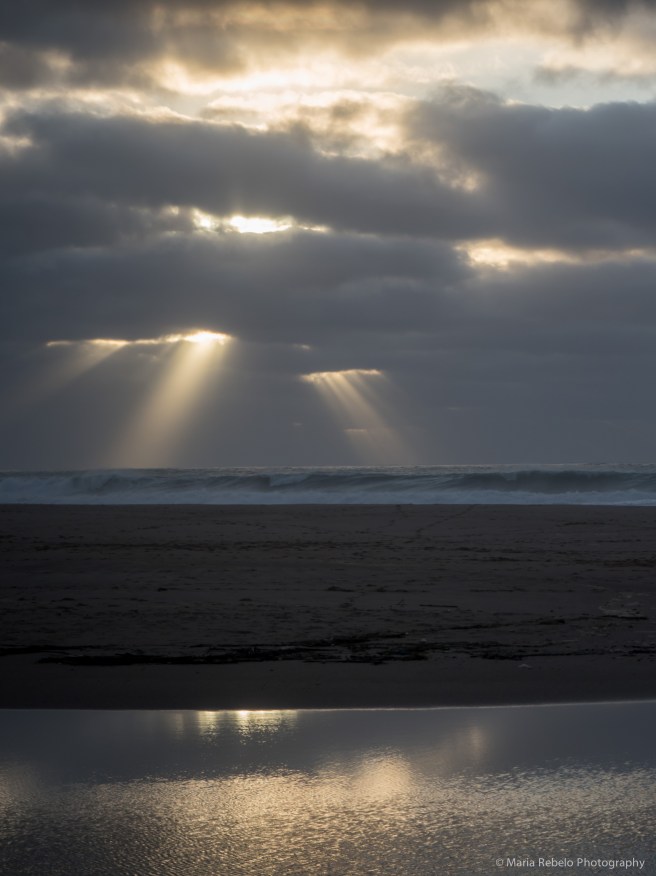
We can’t blame the moon for feeling unappreciated. Its life revolves around the earth and yet people prefer sunsets to moonrises. In the first day of the year, the full moon commanded the waves to bathe the beach sand and the clouds to sprinkle the earth with their blessed water.

The sun, feeling guilty about the droughts of the old year, let the moon have its way. But in the last few minutes of the day the star sent its rays to pierce the clouds and make everything shine.

We hope the New Year will have enough rain so you can come to Portugal to see lush green fields illuminated by brilliant sunshine.


Holiday cabbages

Couves de Natal

Codfish is the star of the Portuguese Christmas-eve supper, but a cabbage called “penca” plays an essential supporting role. It is a hardy variety, capable of surviving the frost that usually covers the fields in December.

Penca is often planted next to “couve galega” a cabbage similar to kale used to make the traditional “caldo verde” (green soup) served at midnight on New Year’s Eve.

We love to see the fields of Portugal planted with these cabbages, dressed for the holidays in stunning green hues.

Mister leitão

Mr. Leitão

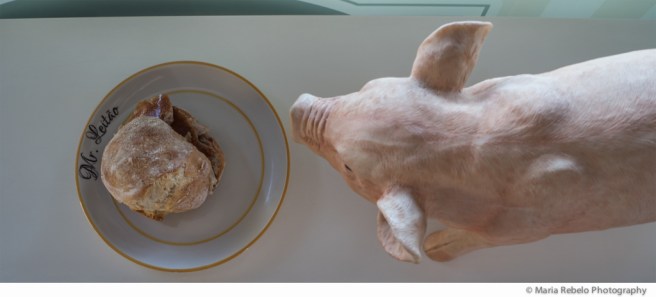
A completely reliable source told us that the best roasted suckling pig sandwich came not from Bairrada, the region famous for this culinary delicacy, but from a small café in Fátima called Mister Leitão. We couldn’t ignore this tantalizing tip, so we got on the road to Fátima to investigate.

We were advised to call in advance to reserve our sandwiches and we duly contacted José Miguel Vitório, the restaurant owner. He confirmed that they always run out of roasted suckling pig at some point in the early afternoon and that a reservation is indeed wise.

Mister Leitão has no place to sit, just a few counters where the sandwiches can be enjoyed. There’s always a line because the sandwiches are made to order. The air is filed with the smell of the roasted suckling pig and the bread baked in the premises. These appetizing aromas make the few minutes we waited seem like hours.

But the wait was well worth it. The sandwiches are amazing: the warm, crispy bread enfolds the succulent meat that is lean and has a deep taste reminiscent of prosciutto.

José Miguel is the heir to a tradition that started with his father in 1956. It takes a lifetime to learn how to roast a suckling pig. There are many details, seasoning the meat, sowing the animal, choosing the right fire wood, learning how to read and adjust the temperature of the oven. “But all the technique in the world will not matter if the ingredients are not great,” says José. He uses only fresh ingredients bought directly from selected farmers. “We peel by hand large quantities of fresh garlic. But that is what it takes to get the flavor we strive for,” he says. José carefully selects all the suckling pigs he uses, making sure that they were not fed with grain but were breastfed by their mothers.

After talking to José we felt hungry again. So we went back in line for another dose of suckling pig perfection.

Mister Leitão is located at Estrada da Batalha, 6, 2495 Fátima, tel. 249-538-120.


A Portuguese chair

Composit Chairs

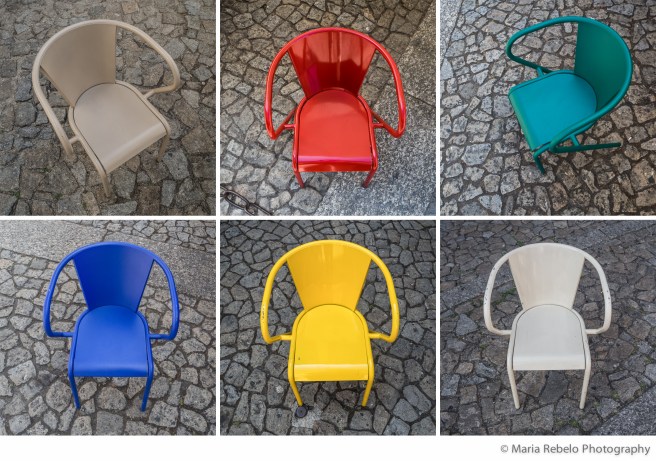
Late in the afternoon, groups of friends gather in cafés and esplanades all over Portugal to enjoy the last rays of sun and talk about their lives. They seat on metal chairs painted in bright colors that create a festive atmosphere.

These chairs were designed half a century ago by a craftsman called Gonçalo Rodrigues dos Santos. They are elegant but sturdy and can be stacked for storage. These virtues make them perfect pieces of urban furniture for enjoying leisure and celebrating friendships. If you visit Portugal be sure to try them!

The Gonçalo chair is produced by Arcalo. Click here for their web site.

A room with a view of the Estrela mountain

Pousada da Serra da Estrela (75)

The Serra da Estrela Pousada stands 1,200 meters above sea level, at the door step of Portugal’s highest mountain. It was designed in the 1920s by architect Cottinelli Telmo for those who needed to recover from respiratory ailments. The pure air did wonders. And so did the view of the mountain adorned with a mantle of snow or dressed with the grey hues of the granite and the green colors of the pine trees.

In the second half of the 20th century, the edifice fell into disuse. It was rebuilt in 2014 under the guidance of Eduardo Souto Moura, a Portuguese architect who won the Pritzker prize.

Souto Moura found ways to incorporate modern comforts like air conditioning, saunas and swimming pools into the old building. But, at the same time, he endeavored to preserve Cottinelli Telmo’s unusual design. The building is long and narrow so that most of the rooms have a view.

Almost one century after its inauguration, the pousada is the perfect place to rest our eyes on a magnificent landscape that makes problems look small and life large with possibilities.

Here’s a link to the pousadas’ website. You can find a large collection of photos of the pousadas at www.mariarebelophotography.com.

Fairy tales

Composit Fairy Tales

In October 1956, the Duke of Edinburgh embarked on a long tour of the Southern Hemisphere without his wife, Queen Elizabeth II. There were rumors that the couple was going to separate.

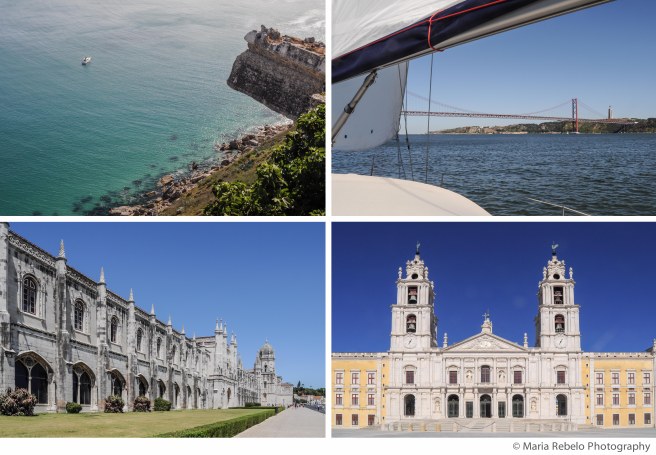
When the Duke arrived in Portugal in February 1957, the Queen flew from England to meet him. For four days the royal couple did what so many other tourists do in Portugal. They ate canned sardines, sailed on the Tagus river, toured the Jeronimos monastery,  visited Mafra and the Nazaré beach. Then, they flew back to England and lived happily ever after.

Portugal is a place where fairy tales can come true.

Missing Portugal

Baleal.JPG

When we’re away from Portugal, we miss the taste of the fruits of our land and sea.

We miss the golden light that guilds castles and palaces, valleys and hills.

We miss the touch of the breeze, the perfume of the ocean, the sound of the waves rehearsing their steps on the seashore.

Our solace is a glass of port wine shared with friends. Every sip is a reminder of the sweetness of Portugal.