Two geniuses

Fernando Pessoa

We often celebrate rulers and conquerers, but a country without artists is just a mount of dust. Artists are the tellers of tales, the architects of meaning. During the 20th century, Portugal was recreated by the writing of Fernando Pessoa and reshaped by the painting of José de Almada Negreiros. They left us a country with a richer identity and a deeper imagination.

The paintings in the photo bring together these two great Portuguese artists. The first painting (on the left) was commissioned in 1954 by the owner of a restaurant where Orpheus, a modernist group that included Almada and Pessoa, used to gather. The second painting (on the right), commissioned by the Calouste Gulbenkian Museum in 1964, is a mirror image of the original.

Pessoa visited Almada’s first exhibition and declared that the painter was not a genius. Out of respect, Almada did not paint Pessoa while the poet was alive. Because the exuberant portrait that the painter carried in his mind and later transferred to canvas shows that Almada was a genius.

If you’re in Lisbon, do not miss the exhibition of the works of Almada Negreiros on display at the Calouste Gulbenkian Museum until June 7, 2017.



The rain in Portugal

rainy-day

Billy Collins, a former U.S. poet laureate, has a new book called The Rain in Portugal. He says that the title is an admission of his difficulties in constructing rhymes.

The rhyming possibilities of “Portugal” are much more limited than those of “Spain.” Yet, Collins finds a way capture the poetry of life in Portugal. Here’s an excerpt of the poem that contains the title of the book.

On Rhyme

“[…] instead of recalling today where it pours mostly in Spain I’m going to picture the rain in Portugal.

How it falls on the hillside vineyards, on the surface of the deep harbors where fishing boats are swaying.

And in the narrow alleys of the cities where three boys in t-shirts are kicking a soccer ball in the rain ignoring the window cries of their mothers.”


Ephemeral gardens in Viseu

OLYMPUS DIGITAL CAMERA

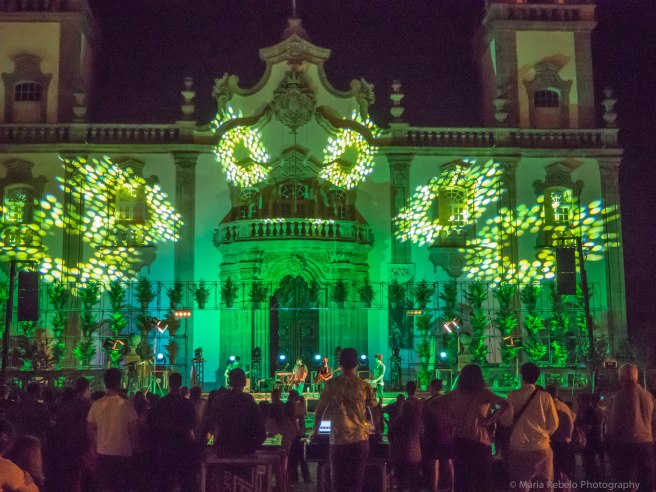
Every year, the Ephemeral Gardens festival jolts Viseu, a serene city in the interior of Portugal. Sandra Oliveira organizes this grand event, inspiring a large troupe of collaborators to adorn Viseu with modern art and serenade it with contemporary music.

Shops become installation spaces, ancient churches double as music venues, old walls serve as canvases for street art. Every plaza seems to have its own DJ, every garden its own sculpture show.

Stores, bookshops, restaurants, and bars stay open until late. The flowers of the linden trees blend their fragrance with the aromas of chocolate, vanilla and popcorn. There are workshops to attend, movies to watch, performances not to miss. It is a wonderful celebration of the many ways in which the old inspires the new.

The Ephemeral Gardens (Jardins Efémeros) festival runs from July 1 to 10, 2016. All events are free. Click here to see the program. 

Portuguese pop art

RBD_Pastéis de nata edit
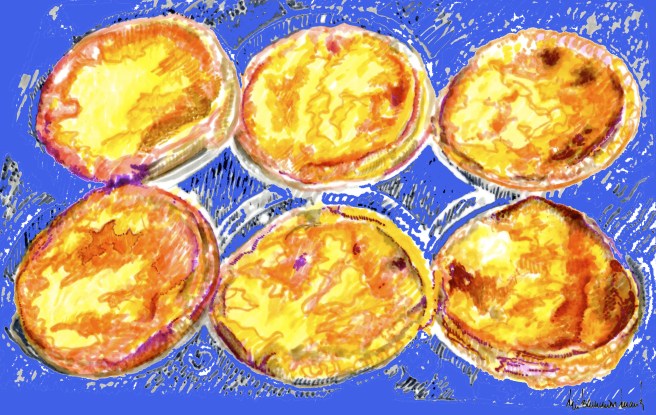
Pasteis de nata, Rui Barreiros Duarte, ink on paper, 2014.

Andy Warhol captured the essence of American culture using simple images: the appeal of convenience with cans of soup, the allure of fame with portraits of Marilyn Monroe, the love of brands with bottles of Coca Cola.

We wonder how Warhol would have captured the essence of Portugal. A good candidate image is the pastel de nata. It is sweet, with an exotic touch lent by vanilla and cinnamon. The crust gives it substance and the combination is unforgettable.

The great Vasco

OLYMPUS DIGITAL CAMERA

Vasco Fernandes worked as a painter in Viseu during the first half of the 16th century. His prodigious talent earned him the nickname Grão Vasco, the great Vasco. According to legend, he once painted a fly that looked so real that his apprentices tried to shoo it away.

It is easy to believe this story when you’re standing in front of his masterpiece, a painting called Saint Peter that is the crown jewel of Viseu’s Grão Vasco Museum. The intricate architectural elements and background scenes are influenced by the work of Italian, German and Flemish painters. But the pope’s rugged face and gentle look are Portuguese.

Who was the model for the painting?  We like to think that it was a shepherd from the Estrela mountain. That the great painter trusted the keys of heaven to someone who on earth lived a simple life.

The Grão Vasco museum is located at Adro Sé in Viseu, tel 232 422 049.


Artistic pots and pans


JV_114_HDR-Edit

Silampos (“seelumpoos”) is a Portuguese brand of cookware that has produced great pots and pans since 1951. Joana Vasconcelos, a Portuguese contemporary artist, used these pans to build giant high-heel shoes. These sculptures were given pride of place in the Room of the Throne when Vasconcelos showed her work at the Ajuda Palace in Lisbon.

What would D. Maria Pia, the queen who lived in this palace, think about Vasconcelos’ work? We like it. And we always liked Silampos pots and pans, even before they mingled with artists in the royal court.

The coolest place in Viseu

OLYMPUS DIGITAL CAMERA

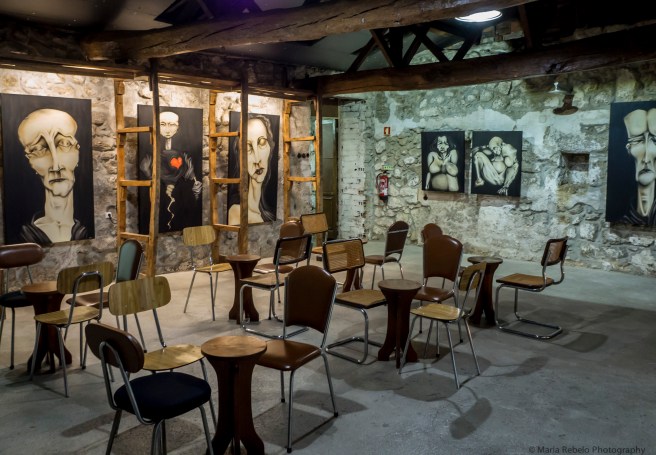
The coolest place in Viseu is called Carmo 81. It is an art gallery where you can have a drink, listen to live music, watch a movie, attend a workshop or simply hang out. Located on a winding street in the heart of the old city, the name of the gallery doubles as its address: Rua do Carmo, 81.

The gallery occupies a space that was for many years a farming equipment store. The thick granite walls and elegant oak beans retired from a hard life of selling irrigation equipment to pursue their dream of being surrounded by art.

Viseu is already the coolest place in Portugal during July, when the Ephemeral Gardens festival fills this ancient city with art installations, live music and modern dancing. Now, with Carmo 81, Viseu is cool all year round!

Carmo 81 is located on Rua do Carmo 81, Viseu, tel. 232 094 366. Click here to see a list of upcoming events.

Beauty in the details

Desenhos de Janelas
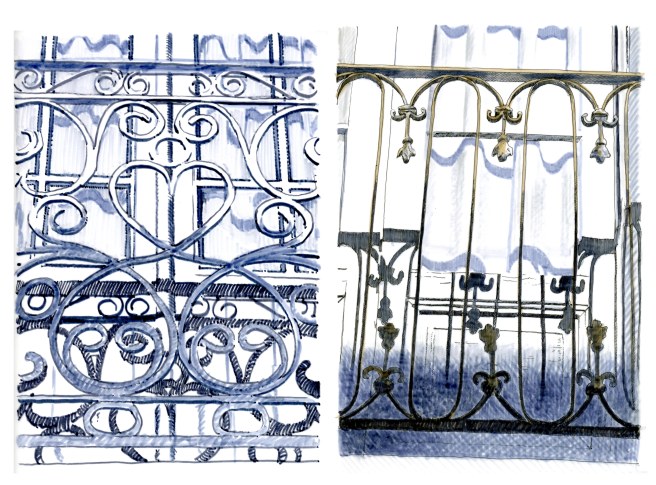
Varandas, Rui Barreiros Duarte, ink on paper, 2016.

When you visit Portugal you need to sleep well to rest your eyes, because as soon as you wake up there’s so much to see!

A walk in an old neighborhood is a visual feast of architectural details. Doors, windows, roofs, and balconies tell us about the craftsmanship of their builders and the dreams of their owners. Each is a distinctive brush stroke on the beautiful canvas that is Portugal.

The first sunset

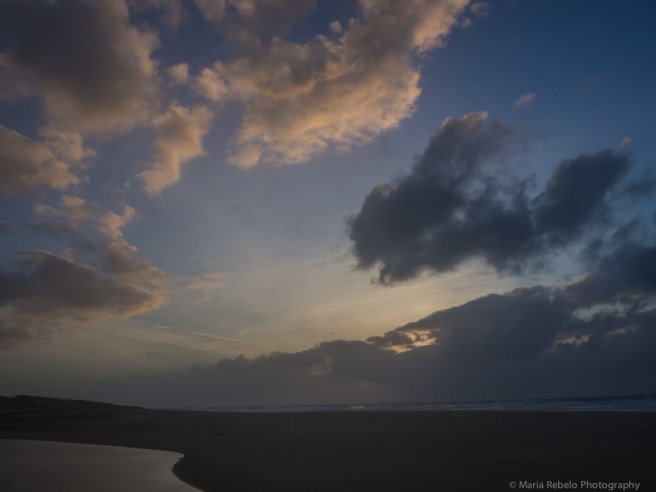
The Romans marked each new year by hammering a nail into the door post of the temple of Jupiter. We prefer to photograph the sunset on the first day of the year, hoping it holds a clue for what the year will bring.

Today, the sun slept all day behind clouds. But at the last moment, it spread its rays and lit the sky, as if to reassure us that there will be many beautiful sunsets in the New Year.  We hope you’ll come to Portugal to share some of these sunsets with us. Happy New Year!