The perfect wine party

Goliardos

A group of wine connoisseurs called “Os Goliardos” turned their love of wine into a business–they distribute interesting artisanal wines, made with passion and respect for the land.

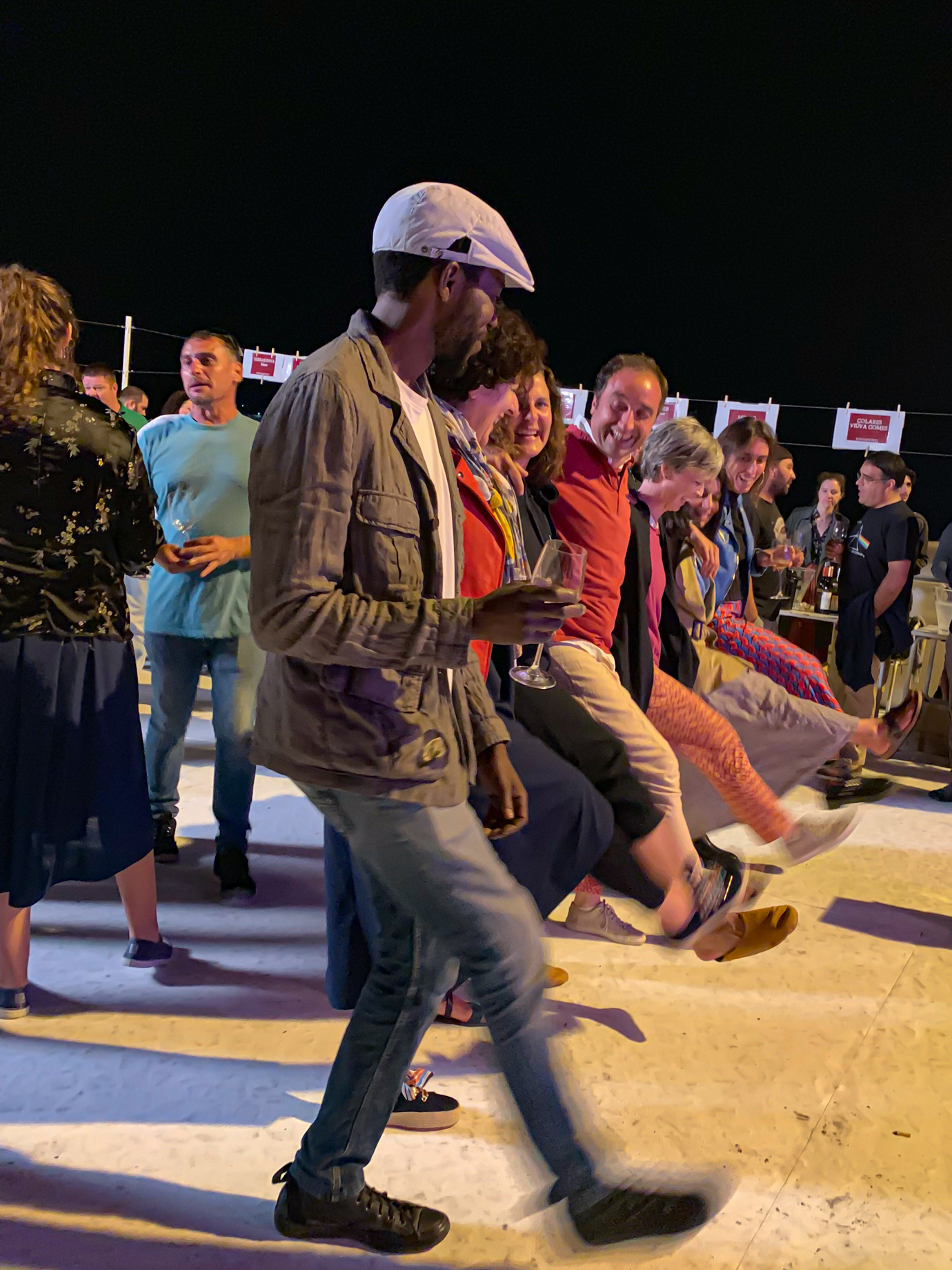
Every year in July, the Goliardos invite a group of their favorite wineries to showcase their wines at an event called Vinho ao Vivo (Wine Live). The setting is À Margem, an esplanade by the Tagus river with a view to the tower of Belém on one side and the monument to the discoveries on the other.

Portuguese wineries share the stage with producers from France, Spain, Germany and Italy.  There are musicians serenading our ears and food producers filling our bellies with black-pork prosciutto, sausages, oysters, cheese and much more. It is the perfect wine party. If you missed it this year, mark your calendar for next year.  And get a few bottles from the Goliardos’ wine list, they’ll make the wait seem much shorter.

You can find Os Goliardos at Rua General Taborda, nº91, in Lisbon’s Campolide neighborhood. They can be reached by phone (213 462 156) or email info@osgoliardos.com. Click here for their website.

Lumiares, our home in Bairro Alto

Hotel Lumiares Composit

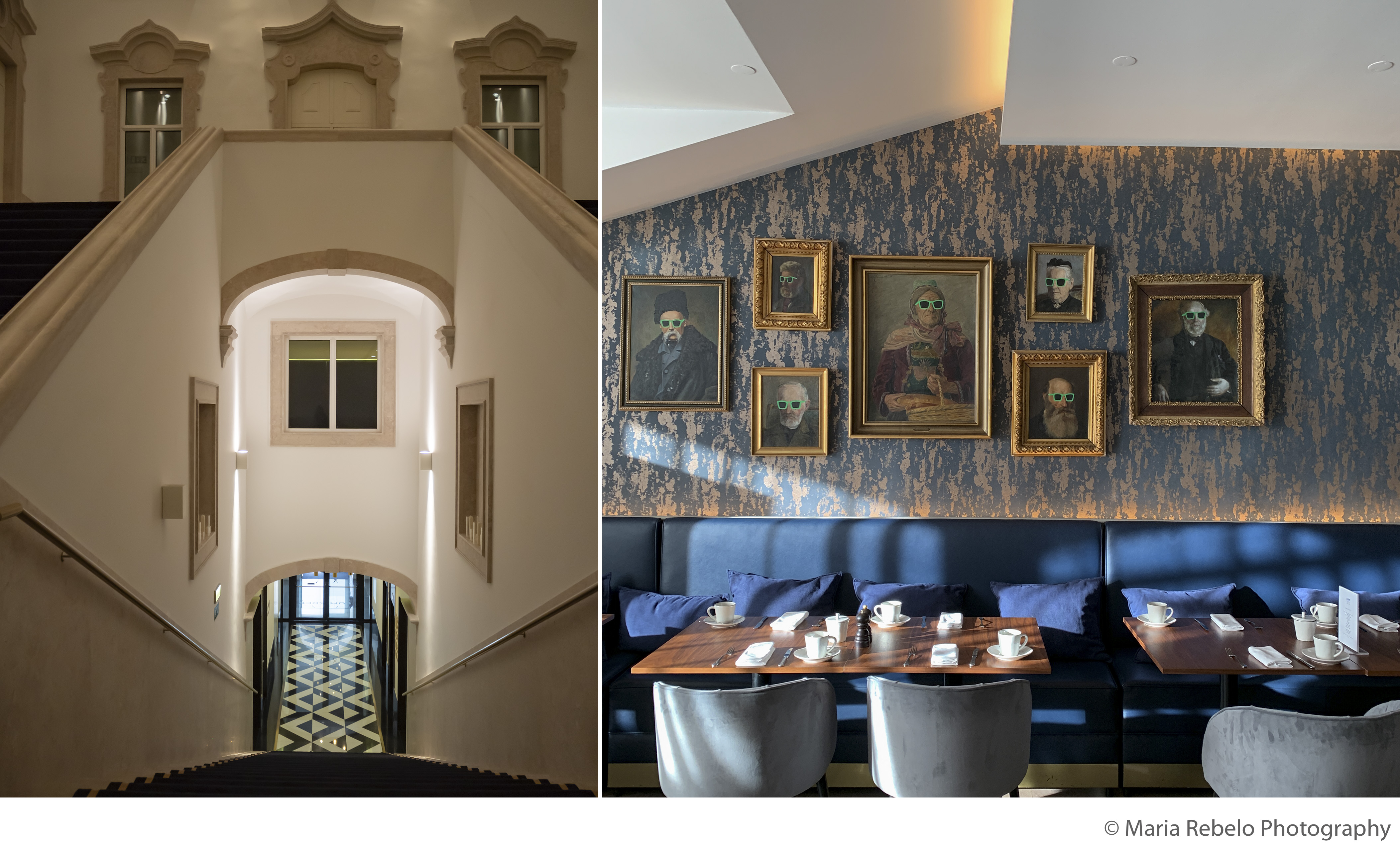
The grand palace built in the 18th century by the powerful widow of the count of Lumiares languished in ruins in the middle of Bairro Alto, an ancient neighborhood in Lisbon. Two years ago, the derelict building was transformed into a boutique hotel. The new structure preserves what remains of the old palace: imposing marble staircases and decorated doorways. But it adds to them a modern decor with humorous touches, such as  the green shades painted on the portraits that hang in the restaurant.

Instead of rooms, the hotel offers small suites equipped with everything we need to feel at home. The walls are adorned with cozy artisanal Portuguese rugs. The fridge is stocked with complimentary white wine, water and beer. The coffee machine is ready to pour a fragrant blend of arabica and robusta into elegant Vista Alegre cups.

The hotel’s best-kept secret is the wonderful rooftop, a place where we can seat above the hustle and bustle of Bairro Alto to enjoy panoramic views of St. Jorge’s castle and the Tagus river. How sweet it is to stay at Lumiares!

The Lumiares hotel is located at Rua do Diário de Notícias 142, Lisbon, tel. 21 116 0200. Click here for the hotel’s website. 

Taberna Sal Grosso

Taberna Sal Grosso

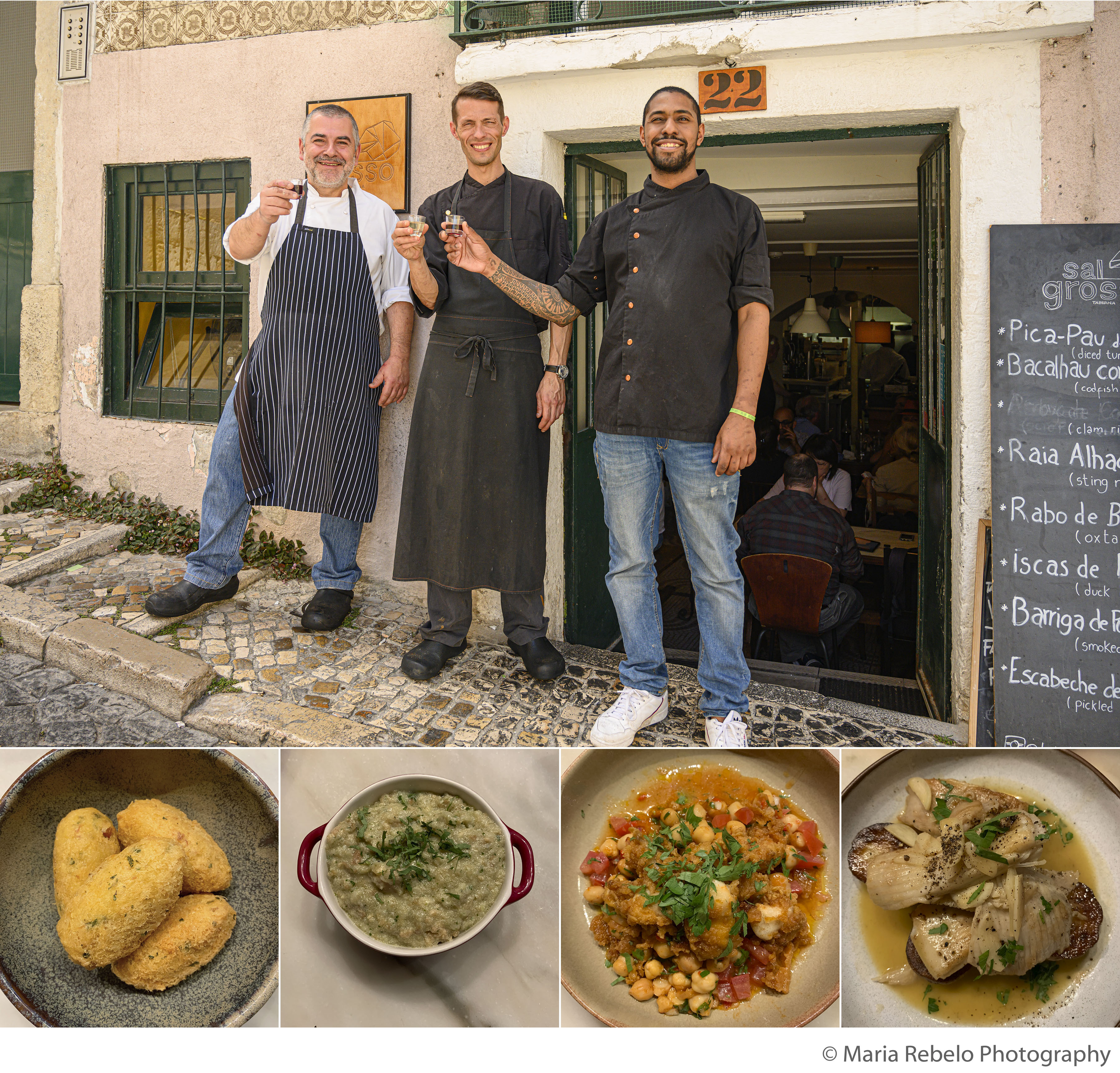
When we arrived at number 22, Calçada do Forte in Lisbon’s old Alfama neighborhood, there was a group of people congregated around the door. They were all trying to get a table in a small restaurant called Taberna do Sal Grosso (Coarse Salt Tavern). An exasperated waiter explained that he could not bend the laws of physics to accommodate more guests. No one was happy with the news that miracles could not be made. We too walked away disappointed. But we were so intrigued by the tavern’s atmosphere that we made reservations for lunch two days later.

As soon as we sat for lunch, it became obvious why the place is so popular. It serves delicious food with a happy vibe at modest prices. This trio of qualities is rare. It is hard to keep the quality of the food consistent and feel happy about serving inexpensive meals. Joaquim Saragga, the chef and owner, manages to do it because because he views his restaurant as more than just a business.

Joaquim lost his job, so he decided to change his life. When he was a student in London,  he used to cook for his roommates. He remembered feeling happy in the kitchen, so he enrolled in culinary school and went on to complete a Masters in gastronomy.

When he opened the tavern in 2015, he shunned the tricks that most eateries use to become more profitable. There are no couvert charges. He serves only two inexpensive but very drinkable house wines and a few artisanal beers. Desserts are modestly priced.

“I’m not trying to innovate, only to serve my favorite traditional recipes prepared with local, seasonal ingredients. I cook the food I like to eat.” he told us. Everything we tried was perfect: a watercress and orange salad, codfish cakes, manta ray and garlic, oxtail with quince, codfish and chickpeas.  “I needed to create my own job,” he explained, “but I also wanted to create a place where people feel at home.”

We proposed to take a photo of the staff at the door of the restaurant but then another wave of guests came in. Joaquim asked one of the chefs and the waiters to pose for us but he stayed inside the restaurant, clearing the tables and welcoming people. It is this dedication to serving others that make Taberna do Sal Grosso such a special place.

Taberna do Sal Grosso is located at Calçada do Forte, 22. Reservations are a must. They do not accept phone reservations. Reservations can only be made by sending a message through Facebook. You need to receive a confirmation in order for the reservation to be valid.

Where great views and delicious food go together

EPUR

It is often said that restaurants with good views serve lousy food. This aphorism doesn’t apply to EPUR, chef Vincent Farges’ new restaurant in Lisbon. Its windows offer beautiful views of the Tagus river and the rooftops of downtown Lisbon. But, once the food arrives, it is hard to choose between looking out the window and admiring the elegance of the sustenance on our plate. When we taste the food, our brain’s ability to process pleasurable sensations has to stretch even further.

Served on graceful white plates, the food looks ready for a Vogue photoshoot. Its beauty is not superficial, it stems from the quality of the ingredients and the meticulous preparations.

We tried a flavorful rabbit rillette with foie gras, seasoned with pear vinegar, a delicate avocado mousse topped with crispy Galician cabbage, the type of cabbage used to make caldo verde. Our lunch ended with a sumptuous soup starring a trio of marvelous fish: manta ray, sea bass, and monkfish.

It is hard to think of a better place to meet Lisbon for a lunch date than at Vincent Farge’s EPUR.

EPUR is located at Largo da Academia Nacional de Belas Artes 14, Lisboa, tel. 21 346 0519.


Santa Clara 1728

Silent Living Composite - 2

When João Rodrigues opened the doors of Santa Clara to greet us, the sun rushed in, eager to revisit this 1728 building that laid in ruins until two years ago.

João lives a double life. He manages Silent Living, an expanding group of exquisite hotels, while flying around the world as an airline pilot. We expected a short conversation, but instead we spent a leisurely afternoon getting to know him and his project.

This act of making time for his guests tells you why João’s hotels are so unique. “When people stay with us, we receive them as friends. If I could afford it, I wouldn’t charge for the rooms,” João explains in his soft voice. “We ask guests to pay in advance, so we do not have to collect money during their stay. That is also why everything is included, our breakfast, the drinks in the mini bar, all the amenities. Prices are constant throughout the year because our goal is not to generate high returns but to find a sustainable way of offering an extraordinary experience.” João pauses and then he reveals that “We like to surprise guests by picking them up from the airport in a vintage Rolls Royce. It is a gesture that sets the tone for their stay at Santa Clara, a way to tell them they will be cared for.”

We ask João how he finds time to do everything, renovate an historical building, create a team to run the hotel and operate Ceia, a high-end restaurant. He shrugs his shoulders and smiles with the equanimity of someone who often sees the world from above the clouds.

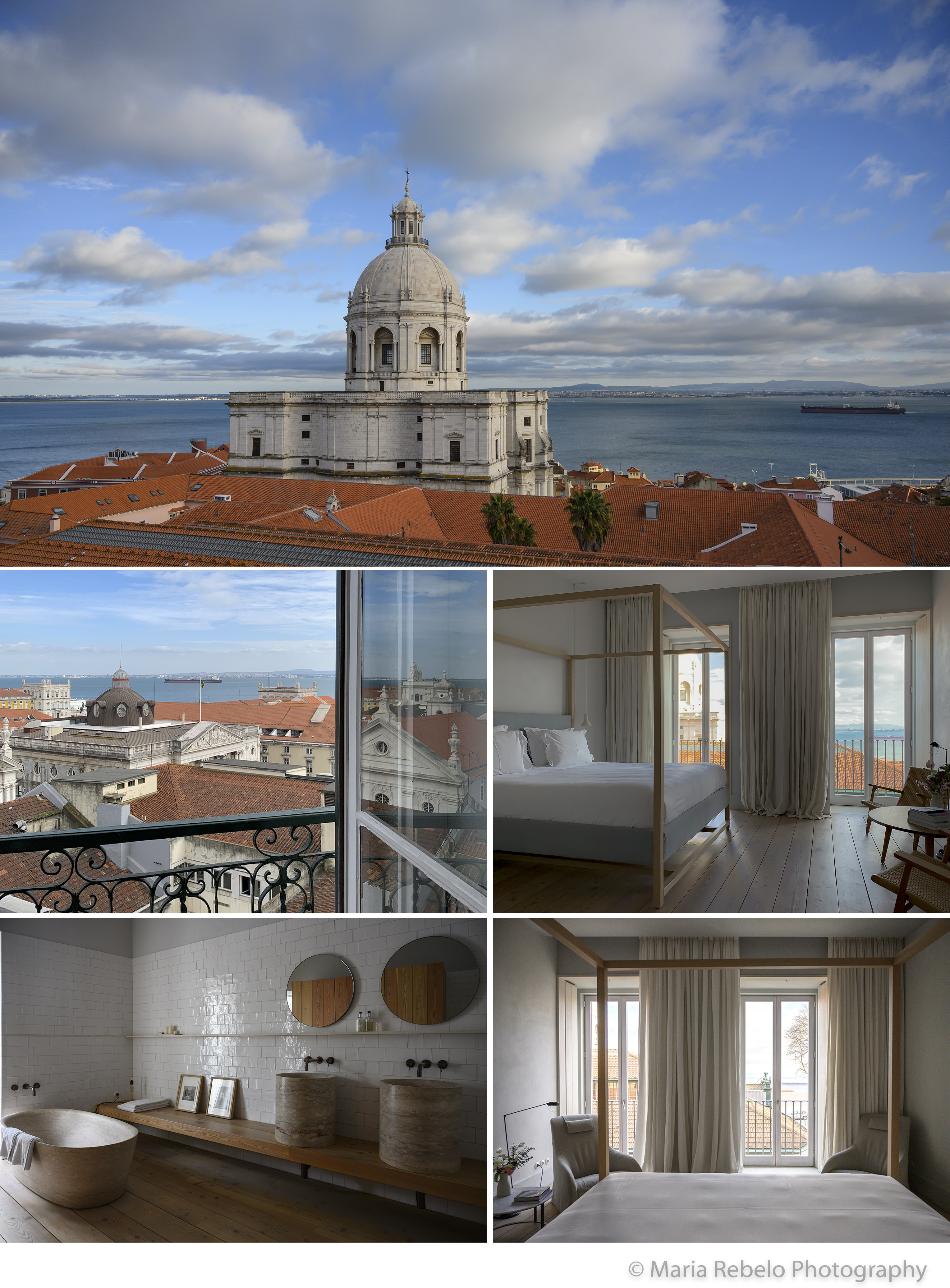
The hotel was designed by architect Aires Mateus, who is João’s habitual collaborator. The interiors are decorated with wood and stone, the same materials used to erect the nearby Pantheon. The colors used in the rooms seem to come from old black and white photographs. These monochromatic hues provide the ideal framing for the glorious views—the contrast of the blue river with the orange roofs punctuated by the white marble of the Pantheon.

A stay at Santa Clara offers the rarest of gifts: ease, simplicity and serenity. It took someone who constantly travels to create a place that is so hard to leave.

Santa Clara 1728 is located at Campo de Santa Clara, 128 in Lisbon, tel. 964 362 816, email booking@silentliving.pt. Click here for the hotel website.


The sea tavern

Taberna do Mar Composit.jpg

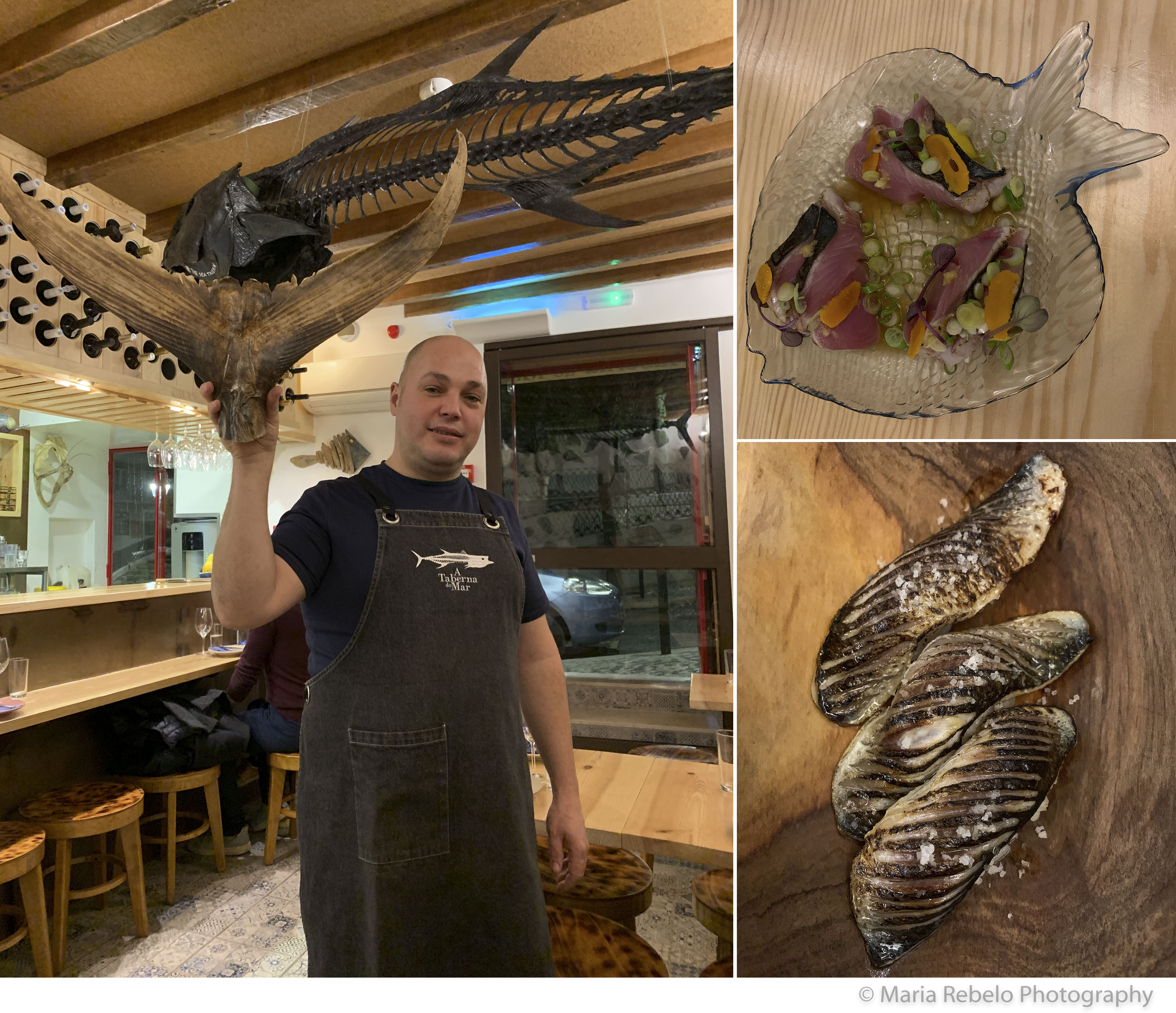
A dinner at A Taberna do Mar (the sea tavern) is a culinary plunge into the waters of Sesimbra, Trafaria and Costa da Caparica. These are the beaches near Lisbon where chef Filipe Rodrigues sources his fish.

Filipe was born in the Algarve. His grandparents were cannery workers who taught him some of the secrets of the sea. He discovered other secrets on his own, through years of hard work. After creating the menu for several popular restaurants, Filipe decided to open his own place. It is a cozy tavern with ancient stone walls and a quaint tile floor.

You can order a la carte or choose a menu prepared by the chef. Feeling adventurous, we went for the menu. The feast began with a warm tortilla decorated with cuttlefish ink topped with a cream of lupini beans, mint, and sea fennel, a plant that grows on sandy dunes. Then, we enjoyed a carob bun stuffed with dried horse mackerel accompanied by a miso mayonnaise. It came with a dumpling stuffed with tender veal tongue, seaweed and mushrooms. It was moist and delicious. We went back to the sea with a plate of sarrejão sashimi. Sarrejão is a fish from the bonito family that shines brightly when it is very fresh.

We were still savoring this delight when Filipe brought us his version of muxama. This prosciutto of the sea, made by salting and drying the best parts of the tuna, has been produced in the Algarve since Roman times. Filipe marinated the tuna in a mixture of soy and moscatel wine before he dried it. The muxama came with an exuberant combination of pumpkin pickle, sushi rice and a large shrimp from Algarve called “carabineiro.”

An appetizing bread seasoned with sardine sauce and a tasty mackerel soup came next. They were followed by xerem, an Algarve version of polenta, with berbigão and seaweed. Then the air filled with the aroma of grilled sardines that came from a tray where the sardine nigiri was being prepared. Our taste buds jumped for joy while the sardine melted in our mouth.

Filipe asked us whether we would like to repeat any of the items from the menu. We answered in unison:  yes, we would love some more sardine nigiri!

The meal ended with three desserts: a carob mousse served with tangerine sorbet, a bread pudding and a crème brulée where the milk was replaced with a berry puree.

A Taberna do Mar is a place where East meets West, where Japanese cooking techniques are used to recreate Portuguese flavors with delicious results.

Taberna do Mar is located at Calçada da Graça 20 B, in Lisbon, tel. 21 093 9360.


An unforgettable supper at Ceia

ceia composit 1

ceia composit 2

ceia composit 3

This article describes our experience in Ceia when Pedro Pena Bastos was the chef. Pedro is now at Cura. Ceio has a new star team, headed by chef Diogo Caetano.

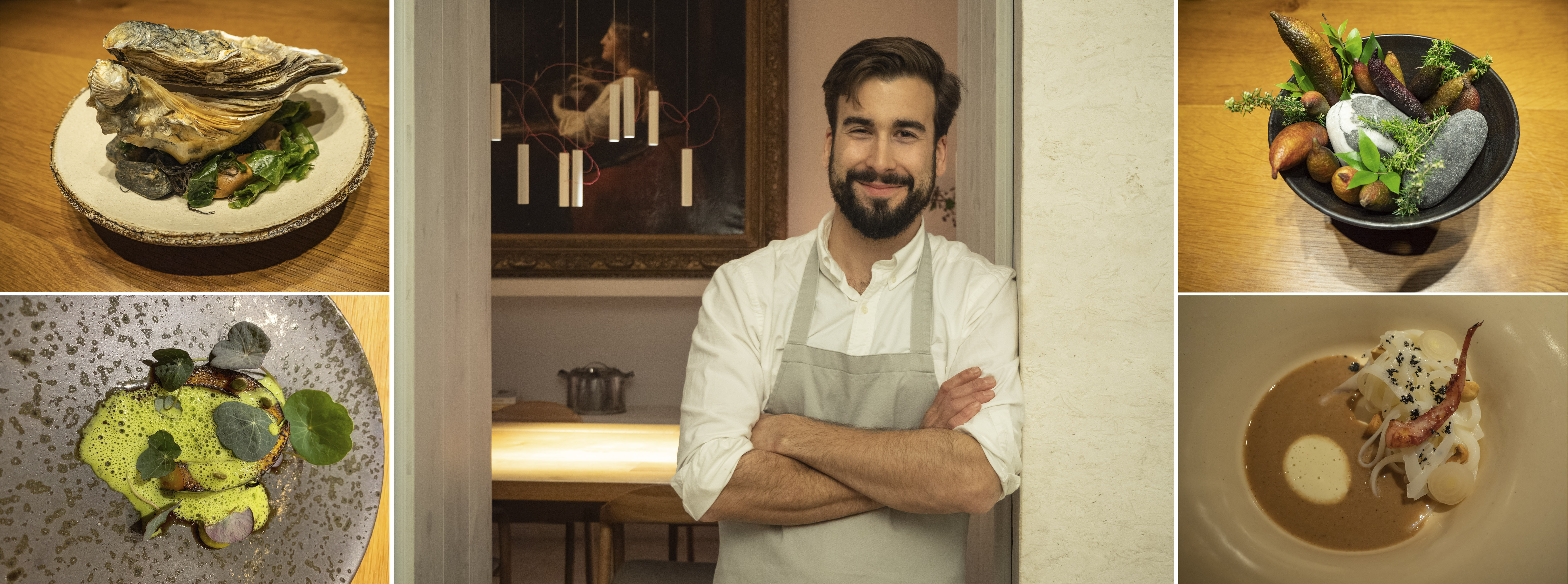
If food was just fuel for the body, how come there are meals that linger in our memory as incandescent moments? One of these moments was a lunch amid the vineyards of Herdade do Esporão prepared by a young chef called Pedro Pena Bastos. Another such moment was a recent dinner at a new Lisbon restaurant called Ceia, the Portuguese word for supper. The setting was different but the chef was the same.

We were received in the spacious courtyard outside the Ceia dining room by sommelier Mário Marques. He offered us a choice of two welcome drinks: cherry kombucha or a natural sparkling wine from Quinta da Serradinha. The drinks came with plates of beet beignets served with smoked codfish eggs. Like everything else in this enchanted evening, these choices seemed unusual until we tried them and perfect once we tried them.

Mário invited us into the serene dining room where a long wooden table awaited 14 lucky guests. Pedro welcomed us with three tantalizing bites: Jerusalem artichokes, French toast with seaweed and cockles, and venison from Alentejo served with fermented walnuts and black olives. They were followed by a precious taco made with rose prawns from Algarve, beetroot pearls and yuzu.

A Japanese-inspired tomato broth with mackerel and broccoli showcased Pedro’s ability to create unusual combinations that work perfectly. Then, a large oyster shell from Alvor was placed on the table surrounded by bowls with sweet oysters, fermented asparagus and lima caviar. We were still savoring this intense taste from the sea when flavors from the woods arrived: grilled Hokkaido pumpkin, mushrooms, and a beurre blanc made with Indian cress.

The service progressed with the pace of a sacred ritual that has been perfected throughout the ages. Alexandre Coelho, our amiable server, invited us to visit the adjacent room where chefs place final touches on their next offerings. It is fascinating to observe the choreographed precision that produces such refined food.

Each guest received a bowl of pasta, only it was not pasta—it was the freshest squid, delicately cooked, cut like tagliatelle and served with a sauce made with bergamot zest, hazelnuts and pickled onions. The flavors of the sea continued with a line-caught robalo (sea bass) dressed with chanterelle mushrooms, marjoram and fennel cooked in parsley oil.

A beautiful loaf of sourdough bread smoked with tomato and thyme created an intermission that separated the fish from the meat courses. It came with aged butter seasoned with salt from Castro Marim and a bright-green, spicy olive oil from Pedro’s family estate.

These rustic flavors prepared out palates for the next dish, a rectangular prism of slow-cooked bísaro pork jowl that melted in our mouths. The other meat course was a cylinder of beef from Simental cows, grilled on charcoal and adorned by collard greens and buckwheat.

Next, came a plate of lovage with compote, ganache and sorbet made from a huge Buddha’s hand lemon cultivated in Alentejo. The pungent citrus notes readied our palates for a trio of desserts made with enoki mushrooms, cocoa and quince.

Coffee, brewed in a double-globe glass coffee maker, was served with gum made from dehydrated beets and coriander, raspberry bonbons, and spicy cookies coated with a cream of turmeric and sweet potatoes.

Throughout the meal, Pedro Pena Bastos combines tastes, aromas, textures, and temperatures with the skill of a master orchestrator. His deep understanding of the subtle qualities of different ingredients allows him to create brilliant flavors and invent bold harmonies. The result is a culinary symphony that is unforgettable.

Ceia is located at Campo de Santa Clara, 128. Lisbon. Click here for the restaurant’s website.

Inspired beer at Musa

musa

Nuno Melo and Bruno Carrilho enjoyed so much the craft beers they tried in their travels abroad that they started gathering information about the art and science of beer production. Beer is made with only four ingredientes. You can buy the first three–yeast, malts and hops–all over the world. But the fourth ingredient—high-quality water–has to be locally available. When Nuno and Bruno discovered that Lisbon’s water is perfect for beer making, they bought a warehouse in an industrial suburb called Marvila and set to work.

They hired an accomplished British engineer to design and set up their factory and located suppliers of premium yeast, malts and hops. Then, they persuaded a talented American artisanal beer maker to create some unique beer recipes. Finally, they hired a dedicated crew willing to share the toil and joy of making great beer.

Nuno and Bruno called their project Musa, the Portuguese word for muse, to acknowledge the flashes of inspiration that kept the spirit of fun and irreverence alive.  This spirit is reflected in the rock-tinted names of their brews: Red Zeppelin, Mick Lager, Twist and Stout, Saison O’Connor, Born in the IPA, and Frank Apa.

The back of the Musa warehouse houses the factory. The front is a bar with beer on tap that provides immediate customer feedback about the new beers that are launched. Some of these new beers result from collaborations with restaurants, artists and gourmet-food producers like chocolate mavens Bettina and Niccolo Corallo.

Musa uses the bar to organize Sunday lunches prepared by well-known chefs and to throw awesome parties featuring singers, bands and DJs. One of the year’s biggest events, Ouro, Incenso e Birra (Gold, Incense and Byrrh), jointly organized with fellow craft-beer makers Dois Corvos and Lince, is coming up on January 12. If you’re in Lisbon this Saturday, it will be hard to find a better party!

Musa is located at Rua do Açúcar 83, in Lisbon. Click here for their website.

Mercearia Prado

Prado (loja) Composit

António Galapito, the chef of Prado, a new restaurant in Lisbon, had a problem. Despite his large ensemble of proficient waiters, service was at times slow. The reason was that customers asked many questions about the provenance of the ingredients used in the restaurant.

Galapito took an unusual step to solve this problem: he opened Mercearia Prado, a grocery store that stocks the products he cooks with. So now his waiters can say: you find our ingredients in the grocery store around the corner.

Mercearia Prado is the perfect place to enjoy a light lunch or to shop for a gourmet picnic. Its shelfs are brimming with wines, cheese, prosciutto, canned fish, bread, vegetables, gourmet sandwiches, jams, and desserts. The products are so carefully curated that you can shop blindfolded and be certain that everything you choose tastes great!

Mercearia Prado is located at Rua das Pedras Negras, 37, Lisbon, tel. 960 280 492. 

Mindful coffee from Flor da Selva

Flor da Selva Composit

Most cups of coffee are drank in a hurry. They’re just a flash of bitterness and a shot of caffeine. Flor da Selva (jungle flower), the coffee produced by the last traditional roaster in Lisbon, is a gateway to a very different experience. This is coffee made to be savored mindfully.

We spent a delightful afternoon with Francisco Monteiro at Flor da Selva’s roasting workshop in the Madragoa neighborhood. His family’s company, founded in 1950, has preserved the secrets of the traditional roasting processes abandoned by most producers. They source green coffee beans directly from the best plantations around the world and roast them gently with oak fire wood. The coffee acquires a round, harmonious taste that contrasts with the metallic tang often associated with gas roasting. Our visit helped us rediscover the taste, aroma, and mystery of coffee.

We took several Flor da Selva blends of Arábica and Robusta beans to try at home. Preparing the coffee is a ritual that deepens the appreciation for this fine beverage. We like to brew Flor da Selva with the pour-over method, using a filter that ensures that the water is in contact with the coffee for the time necessary to soak up all the flavor from the beans.

First, we weight 29 grams for two cups. Then, we grind it finely, but not as finely as if we were making espresso, otherwise the water takes too long to pour through. We heat  filtered water at 205 Fahrenheit and pour it slowly over the grinds. The air fills with delicate aromas. Then a thick, golden foam develops (if the foam is thin and white, the coffee is too weak). Finally, we heat the cups with hot water, discard the water and pour the coffee. We drink it slowly, enjoying its lush, exotic taste. And we smile.

Flor da Selva moved to Rua Academia Recreativa e Musical de Sacavém, Lote 49, Armazém nº 13,  Sacavém, tel. 213 965 384, email info@florselva.com. Click here for their website.