
If you arrive in Lisbon by ship, you might understand how Portuguese navigators felt as they entered the tranquil waters of the Tagus river to glide into the city’s warm embrace.
Every week, a Royal Caribbean cruise ship treads the same waters where Vasco da Gama once sailed to bring its passengers to Lisbon. The cruise operator asked us: what is the best way for our passengers to spend 10 hours in Lisbon? This post is about our suggestions.
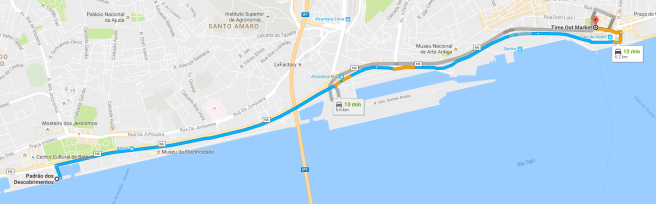
The most convenient way to travel in Lisbon is to take taxis. Their fares are relatively inexpensive and the drivers are experts at navigating the narrow streets of the old neighborhoods. Traffic can at times be heavy, so it is a good idea to plan on taking about 30 minutes to travel between the three locations we describe below (Belém, St. George’s castle, and Chiado).
Morning
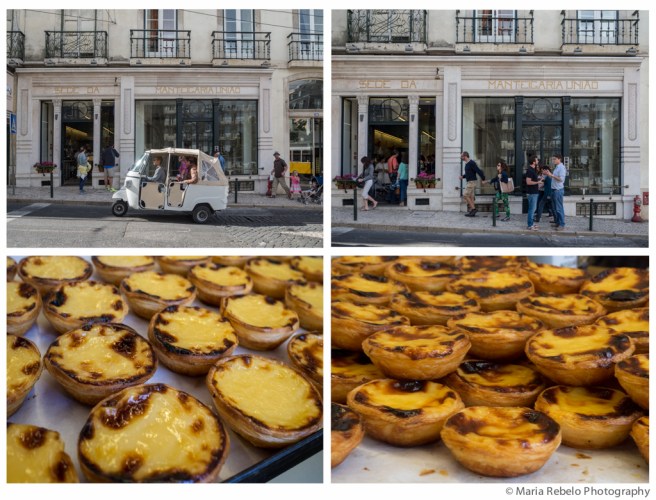
We recommend for your first stop the Antiga Confeitaria de Belém (Belém’s Old Pastry Store, Rua de Belém, 84-92).

When the religious orders were abolished in 1834, the monks of the Jerónimos monastery started selling custard tarts to earn some income. These tarts, which became known as “pasteis de Belém,” gained great popularity.

The convent’s pastry chef sold the recipe to an entrepreneur who opened the Confeitaria in 1937. Today, this pastry store continues to thrive as one of Lisbon’s most popular destinations.
Unlike the “pasteis de nata” you find elsewhere in the city, these custards are best enjoyed while they’re still warm. The Confeitaria is always full and there’s often a long line of people waiting to order. We suggest that you bypass the line and go to the large room in the back where you can sit down and enjoy these pastries without waiting.

Next, we recommend a visit to the Jerónimos monastery. Financed with a tax on the gold, silver and spices brought from Africa and the Far East, its construction began in 1501 and finished only one century later. It is a masterpiece of the Manueline, a Portuguese gothic style that uses nautical motifs, such as sirens, nets, ropes, corals, and seaweed. See if you can spot these motifs during your visit.
Inside Jerónimos, you’ll find monuments to two Portuguese heroes. The first is Luis Vaz de Camões, the author of a famous epic poem about the exploits of Portuguese navigators in “seas that had never been sailed, facing perils and wars with force that is rare in humans.” The second is Vasco da Gama, the navigator who discovered how to sail from Portugal to India. This discovery allowed Portugal to bring rare spices from the Orient, such as pepper, clover and cinnamon, and sell them for extravagant prices in Europe.
After visiting Jerónimos, walk towards the Tagus river to the monument to the discoveries. In the 15th century, the river came close to the monastery, so you are walking on land claimed from the Tagus.
The monument to the discoveries was first built in 1940 with plaster and then rebuilt in 1960 with cement and stone. It features the statues of navigators, and other important protagonists of the age of discovery.

Henry the Navigator, the prince who sponsored Portugal’s first naval explorations, has pride of place in front of the monument. Some say his stern demeanor comes from contemplating the perils that Portuguese explorers had to face. Others, think that he is afraid of being pushed into the river (despite his nautical fame, prince Henry did not know how to swim).
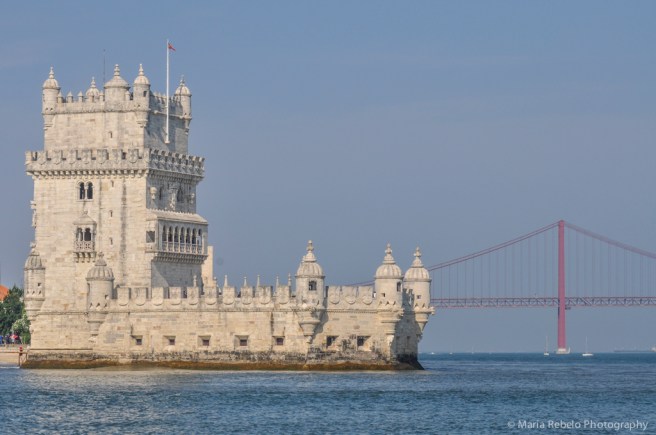
There are a few additional activities available in Belém. You can take the elevator to the top of the monument to the discoveries for a breathtaking view of the river and the city. You can also walk to the beautiful Tower of Belém, a defensive structure built in the 16th century to guard the city from pirates and other foes. If you’re traveling with kids, you might want to visit the nearby Coach Museum (Avenida da Índia, 136). It has a beautiful collection of ancient coaches.
Lunch

Afternoon
If you have lots of energy left, we suggest you take a taxi or a tuk tuk to St. Jorge’s castle.
Otherwise, take a taxi to Chiado.
St. George’s castle was occupied by the Romans, the Visigoths and the Moors. Dom Afonso Henriques, the first king of Portugal, conquered the castle in 1147 and built there the first royal palace. The castle has beautiful views of the city. It is great fun to wander around in Alfama, the neighborhood between the castle and the Tagus river.


It is Lisbon’s oldest neighborhood, the only one to survive the devastating 1755 earthquake.
Next, we recommend you go to Chiado. One fun way to get there is to board the famous tram 28 (but please watch out for pick pockets on the tram). Alternatively, you can take a taxi.

Once you reach Chiado, you can participate in an important debate. On the corner of the Camões plaza you’ll find Manteigaria (Rua do Loreto, 2), a new “pastel de nata” store. Try their custard tarts and compare them to the ones you tried in Belém. Which ones do you like the best? We eagerly await your views in the comments to this post!
You can now walk towards Lisbon’s most famous café, A Brasileira (Rua Garrett, 120).

Inaugurated in 1905 to sell coffee from Brazil, it quickly became a popular meeting point for painters and writers. Go in to see the interior. In the esplanade, you’ll find the bronze statue of Fernando Pessoa, a great Portuguese poet who often came to A Brasileira to write.
If you’d like to buy a gift for a friend, check out the Vista Alegre porcelain store (Largo do Chiado 20-23). They have beautiful plates and the world’s most perfect tea and espresso cups.

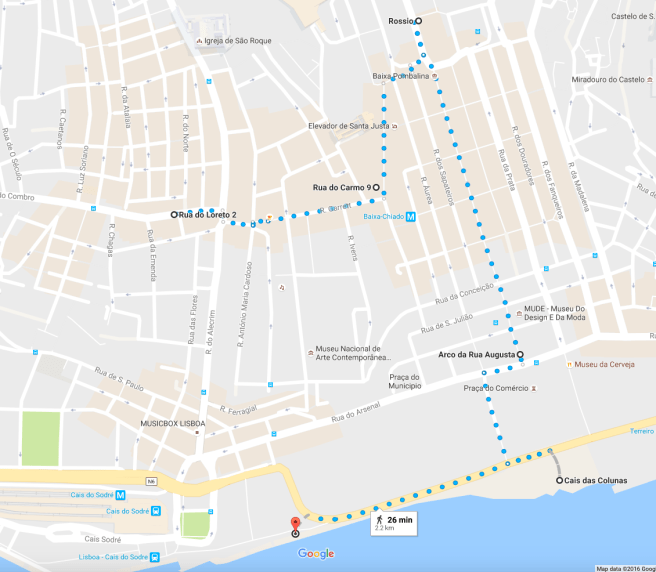
The second option is to take a self-guided walking tour.
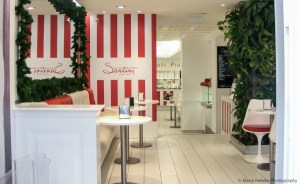
We recommend that you go down on Rua Garrett and turn left on Rua do Carmo. You can stop at Santini (Rua do Carmo, 9) to try one of their famous ice creams. Continue on Rua do Carmo until you reach Rossio, one of Lisbon’s main plazas.
Cross the plaza and find Rua Augusta. Keep walking towards the river until you reach the Rua Augusta arch. On your left, you can buy tickets to take an elevator to the top of the arch which offers spectacular views of downtown Lisbon.

Once you cross the arch, you are in Terreiro do Paço, also called Praça do Comércio (commerce plaza). This is the place where the second royal palace was located before it was destroyed by the 1755 earthquake. It was here that king Dom Carlos and his son were assassinated in 1908 by revolutionaries. Two years later, in 1910, Portugal became a republic.
We recommend that you walk past the statue of king Dom José towards the two columns on the river. This is the “cais das colunas” (the pier of the columns).

In the days when most visitors arrived in Lisbon by sea, this pier was the port of entry for VIPs. Now walk towards Ribeira das Naus, the place where the caravels used to be built and repaired.
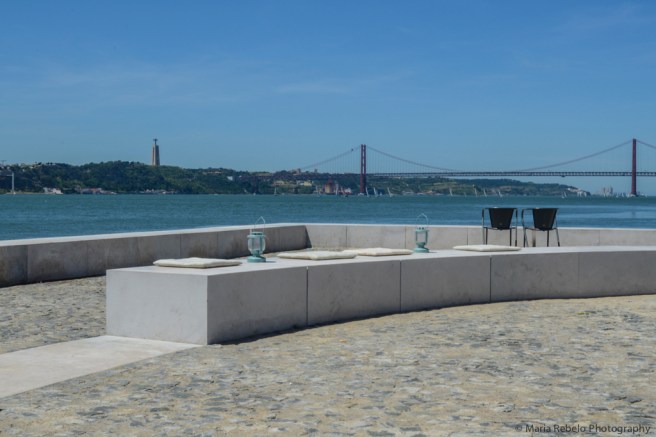
There you’ll find the most beautiful esplanade in Lisbon. We recommend that you order an aperitif from the kiosk. Our favorite is Favaios, made in the Douro from moscatel grapes. Sit on a chair and enjoy the magnificent view.


 Salt of Portugal