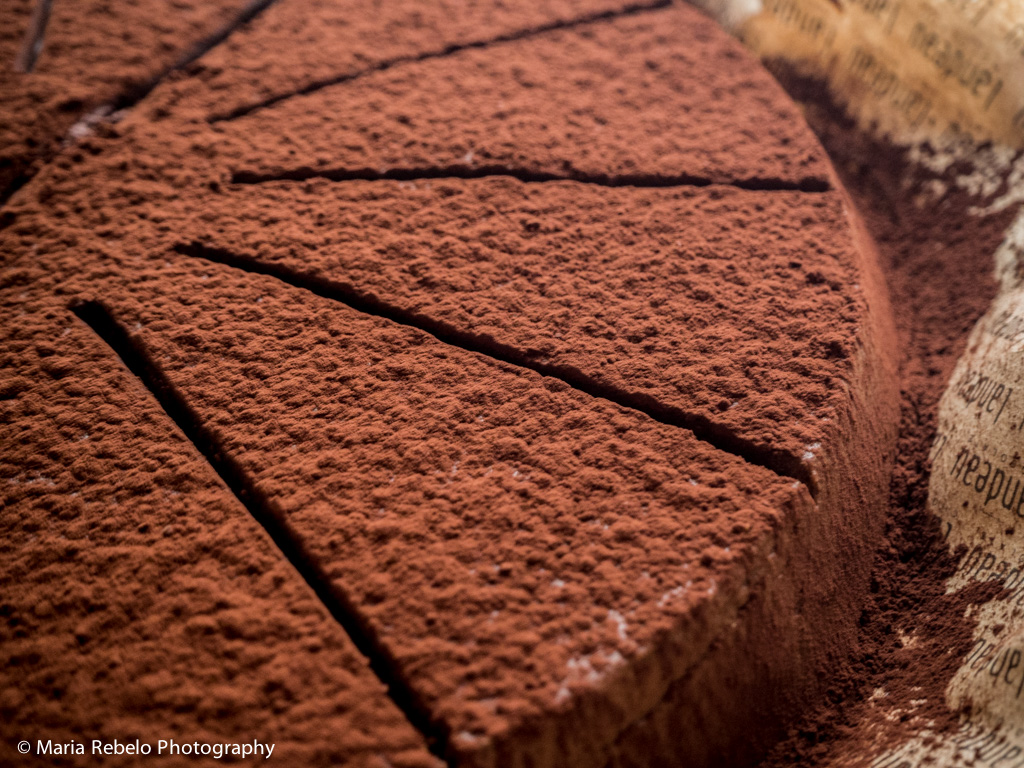
Isabel Landeau is a designer who, as a hobby, baked chocolate cakes to share with her friends. She loved so much the oohs and aahs that her cakes inspired, that she became obsessed with perfecting her recipe. For nine months, she experimented with different chocolates and cocoas. The result is a master piece, a cake that is deliciously light but layered with exquisite chocolate flavors.
When Landeau opened a store to share her creation with the world, she was surprised at the praise lavished by the international press (the New York Times called her cake “devilishly good”). Her store has become an obligatory place of pilgrimage for chocolate lovers.
Landeau makes chocolate taste as exciting as when it was brought to Europe in the 16th century, as exotic as when Aztecs used it in religious cerimonies. Try a slice of Landeau cake and you’ll see.
Landeau is located on Rua das Flores, N. 70, 911-810-801. Click here for their website.
President Charles de Gaulle asked how could people expect him to run a country with 246 kinds of cheese. Judged by this metric, Portugal is easier to govern than France. We have fewer cheese varieties. But there are still many regions, types of milk, producers, and styles.
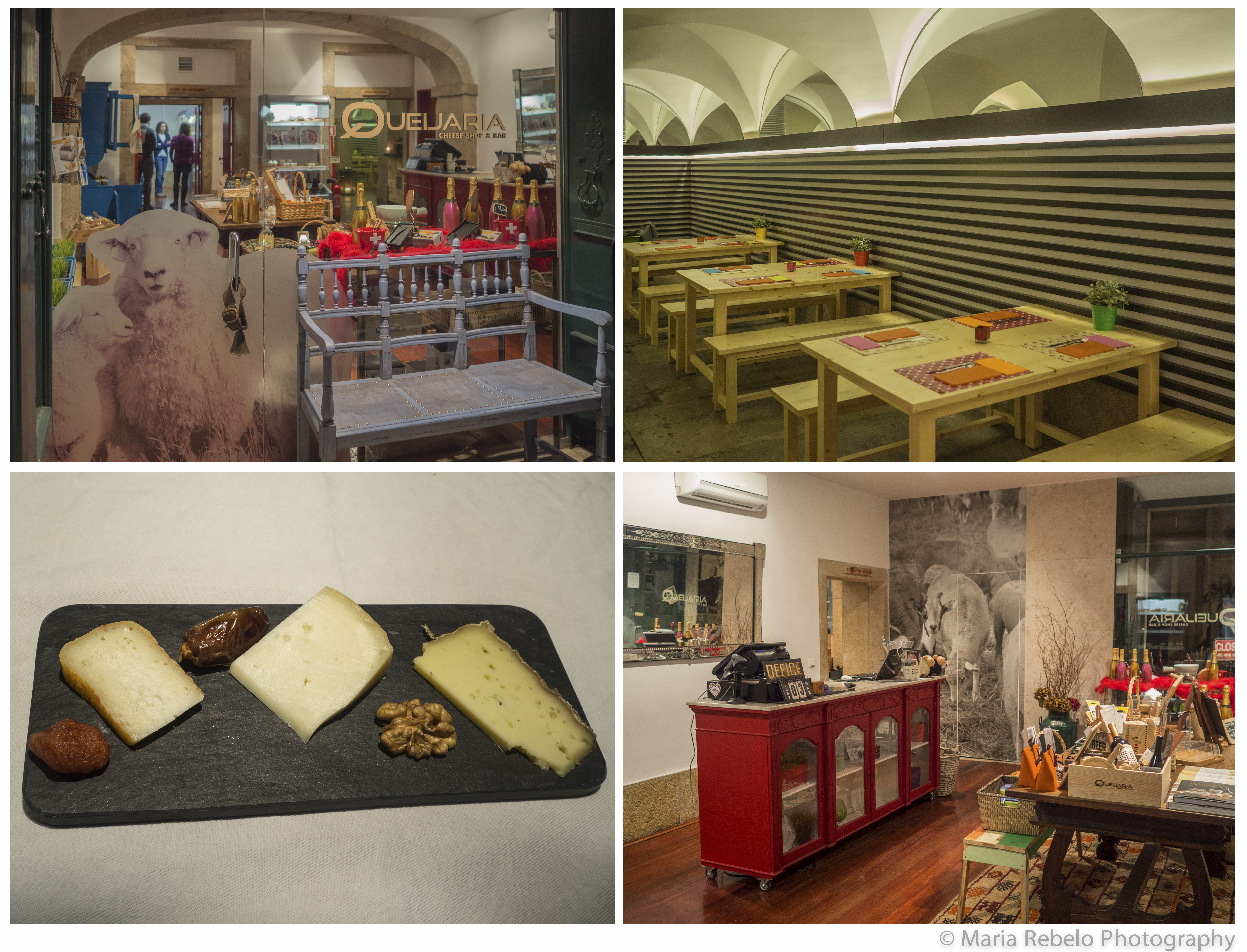
Many interesting Portuguese cheeses are hard to find. They are made in small quantities by artisanal producers and sold in local markets. Queijaria, a new store in Lisbon, makes it easy to sample these local specialties.
The store is run by people who are passionate about cheese and wine, so they are uniquely qualified to serve as your guide. They prepare a degustacion of different cheeses, perfectly sequenced and paired with great wines. In one sitting, your palate can travel from North to South, to the island of Azores and back to continental Portugal. It’s a gastronomical journey you will not forget!
Queijaria is in the Principe Real neighborhood at Rua do Monte Olivete, 40, tel. 21 346 0474. Click here for their web site.
The Portuguese like to eat their fish by the sea. Since Lisbon is located on the Tagus river, its residents have to drive to a nearby beach whenever they want to enjoy a serious fish meal. The Bugio lighthouse conveniently marks the place where the Tagus meets the sea. It is not a coincidence that Paço d’Arcos, the beach town that overlooks the Bugio, has several fish restaurants.
Os Arcos (which means “the arches”) serves some of the best fish we have ever had. The restaurant occupies an ancient building constructed shortly after the 1755 earthquake. The dining room features old wood beams and the brick and mortar arches that inspired the restaurant’s name.
The specialty of Os Arcos is “robalo no capote” (fish baked in bread). The fish is covered with a thin layer of bread and baked in the oven for about 30 minutes. That is just the right amount of time to enjoy some clams from Algarve and shrimp from Cascais.
When the fish-shaped bread arrives at the table, the experienced waiter gives the guests a couple of minutes to say their oohs and ahs. He then divides the fish, removing all the bones. Everybody eats in silence, for there are no words to describe the taste of the succulent robalo and the delicious bread that envelops it.
Any serious fish lover who visits Lisbon should drive, hike, bike, swim or run to Paço d’Arcos because eating “robalo” baked in bread at Os Arcos is simply unforgettable.
Os Arcos is located on Rua Costa Pinto, 47 in Paço de Arcos, tel. 214-433-374. Click here for their website.
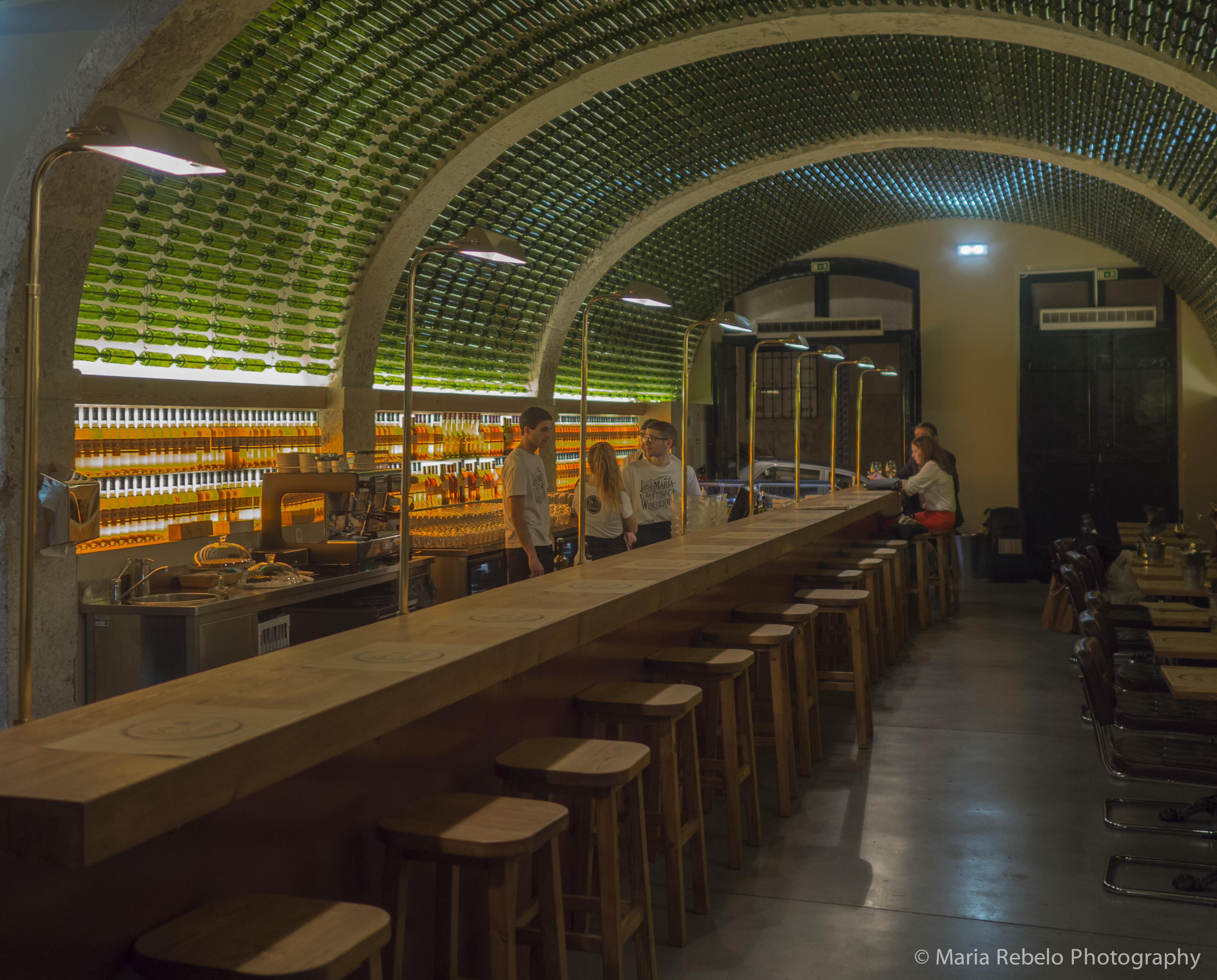
“By the wine,” the coolest bar in Lisbon, has a ceiling decorated with 3267 bottles of Periquita, one of the oldest table wines in Portugal. The bar belongs to Periquita’s producer, José Maria da Fonseca. This company has produced wine since 1834, including the famous Setúbal Moscatel.
“By the wine,” is the perfect place to have a few bites: slices of memorable sausages and prosciutto, cheese, and seafood.
José Maria da Fonseca stocks the bar with a great selection of wines, including some that are hard to find because they are produced in small quantities. It is a delight to try these unique wines surrounded by the beautiful people that give this bar a wonderful vibe!
By the Wine is on Rua das Flores, 41/43, near Chiado, tel. 213420319.
“Where did you get that?” people used to ask when they saw someone wearing an interesting piece of clothing or jewelry. This question is now rarely asked. Shopping centers all over the world carry the same goods made by the same brands. In a world of abundance, the thrill of the new has become hard to find.
But you can find it at Embaixada, a new shopping center in Lisbon’s Príncipe Real neighborhood. Housed in a sumptuous palace built in 1857, it features a collection of unique stores that sell original clothing and decorative pieces. Visiting Embaixada is like going on a treasure hunt. Take home a few prized possessions and people will ask: “where did you get that?”
Embaixada is located on Praça do Príncipe Real, n. 26. Click here for their website.
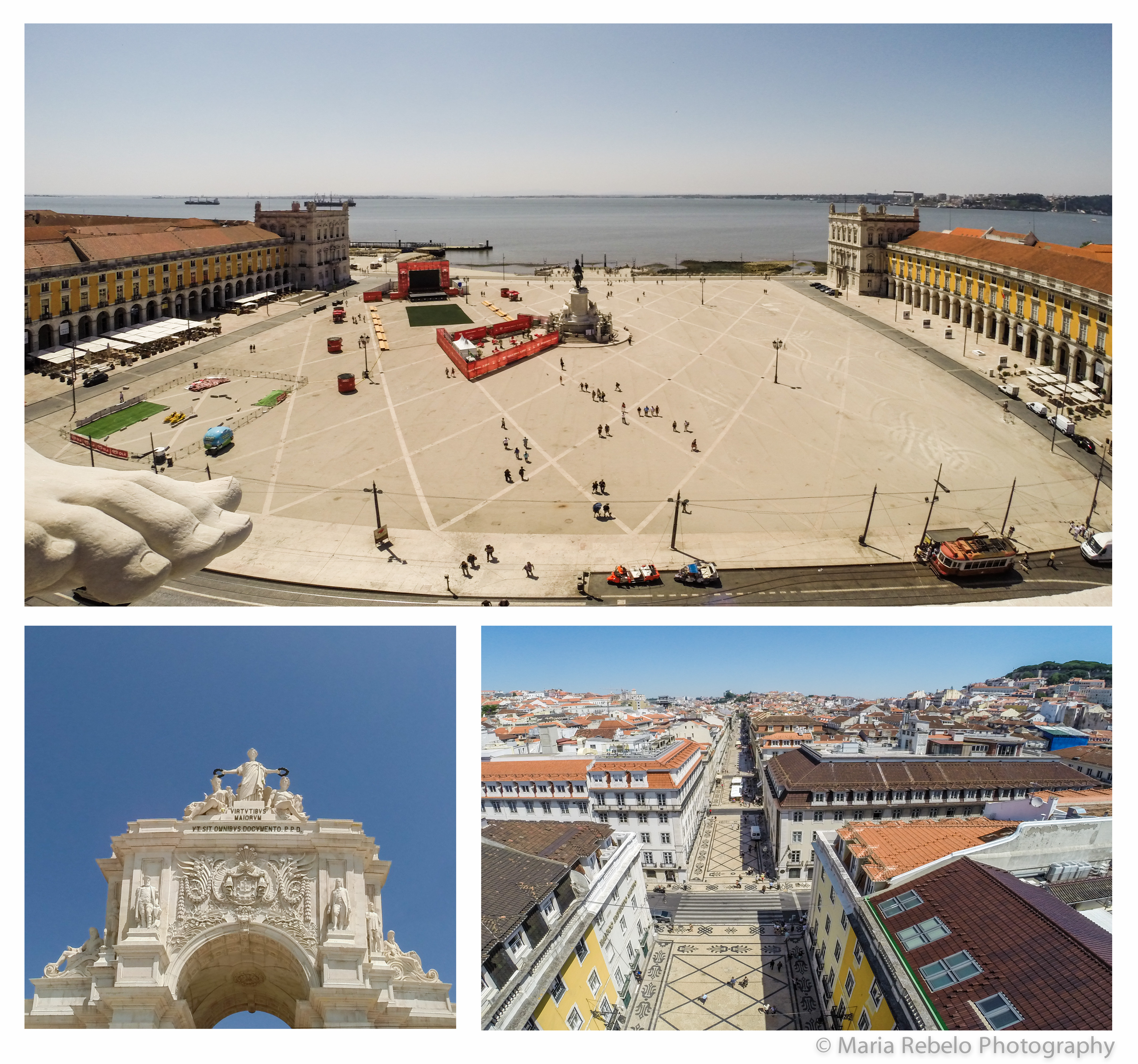
First impressions are important, so we recommend for your first stop in Lisbon the top of the Rua Augusta arch. More than a century in the making (from 1759 to 1875), the arch is a symbol of the reconstruction of the city after the devastating 1755 earthquake.
The three statues on top of the arch (glory, valor, and genius) remind us of what Portugal at its best can do. The two statues on the sides, which personify the Douro and Tagus rivers, are symbols of the country’s natural beauty. The remaining four statues represent important historical figures: Viriato, a military leader who resisted the Roman invasion, Nuno Alvares Pereira, the hero of a key medieval battle against Castile, Vasco da Gama, the famous navigator, and the Marquis of Pombal, who oversaw the efforts to rebuild Lisbon after the earthquake.
You can reach the top of the arch by elevator. The views are breathtaking. On the North side, you see St. Jorge’s castle, the ancient cathedral, and the spacious, orderly downtown district that replaced, after the earthquake, the narrow, irregular medieval streets. On the South side, you see Terreiro do Paço, the entry hall of the city, adorned by the Tagus river. And so you’ll meet Lisbon, a city that is rich and poor, extroverted and mysterious, an aristocratic old lady full of youthful charm.
If you’re an art lover, make sure to visit Ratton, a wonderful art gallery in Lisbon that commissions works in azulejo (the Portuguese word for glazed tiles) from contemporary artists.
When Ana Viegas opened the gallery in 1987, tiles were no longer considered an art medium; they were made cheaply for utilitarian purposes. To convince artists to create works for azulejo, Viegas procured the finest clay and searched for artisans who could paint and glaze tiles by hand, using techniques perfected in the 18th century. Soon, she had great artists like Paula Rego, Julio Pomar, and Menez working for Ratton. Today, you can see the gallery’s azulejos all over Portugal and as far away as Russia or Brazil.
The photo shows a piece by Lourdes de Castro inspired by the “invitations figures” that were popular in the 18th and 19th centuries. These panels of azulejos with life-size images of footmen, nobleman and aristocratic women were placed in stairs and patios to welcome visitors. Castro used her own silhouette, as if she is inviting us to experience her art.
It is this interplay between inspiration from past and present that makes the work exhibited at Ratton so unique.
Ratton is located on Rua da Academia das Ciências, 2C, tel. 21 346 0948.
The Portuguese are so obsessed with the freshness of their fish that they prefer to consume it on the coast, to make sure the fish does not need to travel. This obsession is the reason why there are so many restaurants on the “marginal,” the seaside road that connects Lisbon to Cascais. Our favorite is Porto de Santa Maria, which has served outstanding fish and seafood since 1947. Everything on the menu is wonderful: grilled fish, oysters, clams, shrimp, stuffed spider crab, and lobster rice.
Porto de Santa Maria is famous for its fish baked in bread, a technique to cook a whole fish that keeps it moist and succulent. Savoring this culinary delight while enjoying the magnificent ocean view is simply unforgettable.
Porto de Santa Maria is located in Guincho, 30 km from Lisbon. You can make reservations by telephone (351 214 879 450 ) or email (reservas@portosantamaria.com). Click here for the restaurant’s web site, here for a virtual visit to the restaurant, and here for a live camera view of the beach.
We were invited to meet two artists in a studio on the outskirts of Lisbon. We drove through the city until we turned onto a gravel road surrounded by lush vegetation. An old gate with an inscription that read Quinta de Mil Fontes (Thousand fountains farmstead) opened and we saw an ancient house designed in a mixture of styles, like an architectural compendium built out of stone.
Fountains and brooks whispered all around us as we walked to the art studio adjacent to the house. It is spacious, filled with light, decorated with a large Indian doorway and exotic furniture; the kind of place where Matisse would probably have felt at home.
The two artists were there to greet us. Graça Pereira Coutinho speaks with a contagious enthusiasm. Beatriz Horta Correia has a quiet intensity. They told us that in 2010 the S. Bernardo ceramics factory in Alcobaça was about to close. The owner, Manuel da Bernarda, decided to let artists use the factory while it was still open. So Beatriz, Graça, and four other artists began to spend their weekends at the factory. They would work late into the night, mesmerized by the power of clay, water and fire. Drawing on the knowledge of Manuel da Bernarda, they began to do highly experimental work, pushing the limits of the ceramics technology. They mixed porcelain paste with paper, cloth, and other materials. They cooked the pieces at temperatures so high they almost melted.
The results are poetic, ethereal works with edges so thin, so full of light they do not seem to belong in this world. These pieces found success and acclaim in the world market. As a result, the factory remains open, producing ceramic art instead of tableware.
Graça and Beatriz accomplish a remarkable feat with their ceramic work: they meld the heaviness of matter with the lightness of spirit.
Click here to see Graça Pereira Coutinho’s web site and here to see Beatriz Horta Correia’s website.
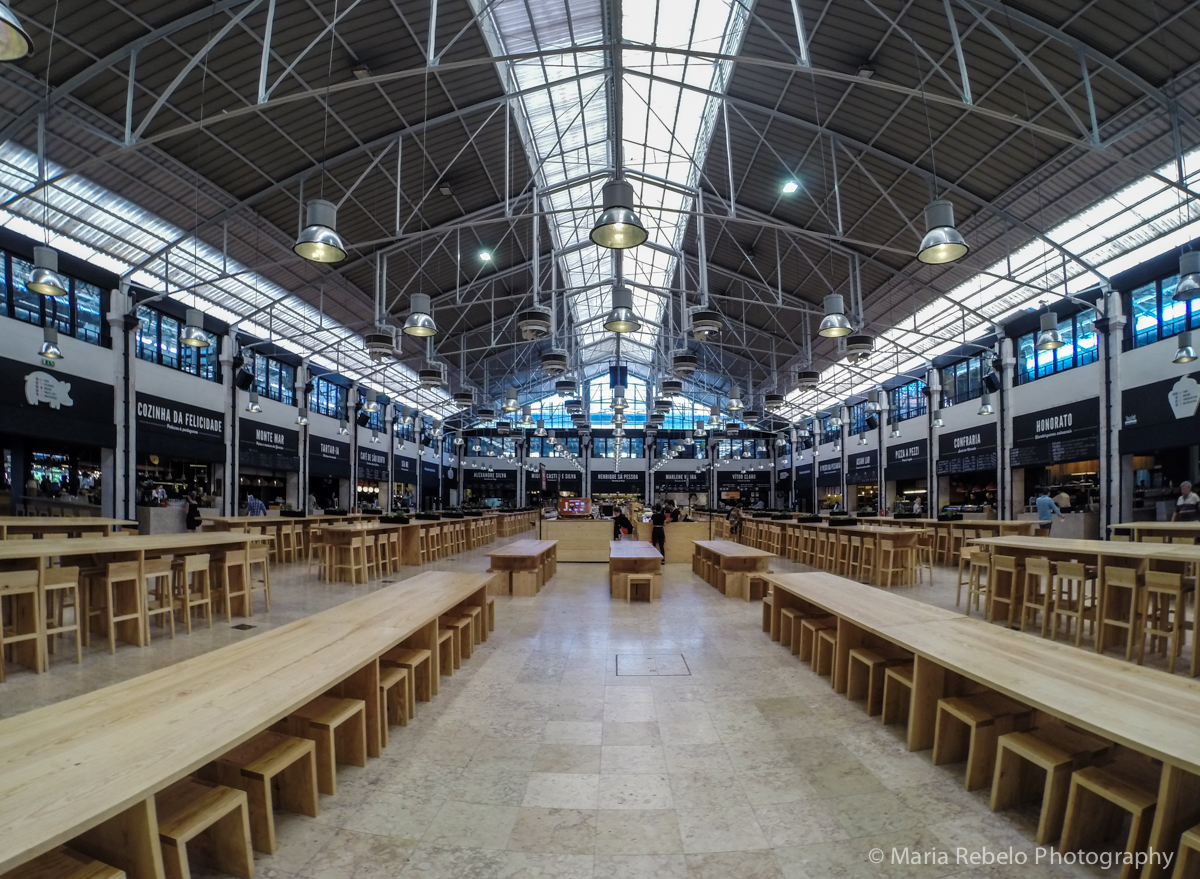
We dreamed we had died and gone to heaven. Paradise, it seemed, was a vast pavilion, sparsely furnished with long communal tables and bathed in a soft white light. To our astonishment, the air was perfumed not with incense but with the unmistakable aromas of Portuguese cooking: parsley and coriander, warm olive oil and garlic, salt cod, and cinnamon. All around us, great chefs beckoned, urging us to taste their creations. We sampled a delicate pastel de massa tenra by Miguel Castro e Silva, slow-roasted pork by Henrique Sá Pessoa, Marlene Vieira’s squid “pirolitos,” and a deeply comforting tomato soup by Alexandre Silva. Each dish felt like a small revelation.
When we woke up, we realized we had been dreaming about a real place. The magazine Time Out Lisbon transformed part of Mercado da Ribeira, one of the city’s historic food markets, into a hall where many of Lisbon’s finest restaurants maintain small outposts. For a modest sum, you can assemble a feast of your choosing, pair it with an excellent Portuguese wine, and dine at one of the long shared tables. It is, in its own unpretentious way, a little taste of heaven.