A convent carved in rock

Composit Capuchos

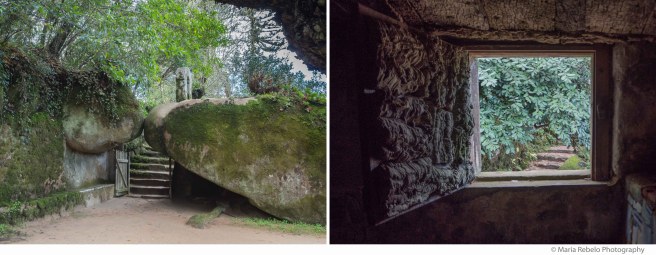
The most poignant monument in Sintra is not a palace or a castle. It is the Convent of the Capuchos, also known as the Convent of the Holly Cross. Founded in 1560, it is a place where monks lived a life of frugality and contemplation.

Long before architects designed buildings in harmony with their surroundings, this convent was built to blend into the landscape of the Sintra mountain. Made primarily out of rock, its interior is lined with cork to offer some protection against the cold and dampness of Winter.

In 1581, when Portugal was under Spanish domination, king Philip of Spain and Portugal visited the Sintra convent and declared: “In all my kingdoms there are two places that I highly prize, the Monastery of Escorial for being so rich and the Convent of the Holly Cross for being so poor.”

We wonder how the monks experienced the passage of time. Did time pass slowly in tiny droplets of interminable minutes? Did their minds transcend the discomfort of the body to find richness in the life of the spirit?

Cooking pork and clams on the trail of Jamie Oliver

OLYMPUS DIGITAL CAMERA

We asked Dália Soromenho, the chef/owner of Porto Santana in Alcácer do Sal,  what alchemy made her pork and clams so magical. “I don’t give out my recipes,” she said sternly. “But I have to confess that I taught the recipe to Jamie Oliver when he came to the restaurant,” she continued with pride. “That is like telling everybody!” we argued. Dália relented and shared her recipe with us. So, here it is dear reader, the recipe for the best pork and clams we ever tasted.

Dália Soromenho’s Pork and Clams Recipe

Dália likes to cook this recipe with two cuts of pork: either “pá” (shoulder) of black pork or “cachaço” (neck) of white pork. The quality of the ingredients is essential.

First, marinate the pork cut into cubes with minced garlic and “pimentão,” a paste made of red peppers and salt. Then, slowly simmer the pork in lard until it becomes deliciously tender. The cooked pork can be refrigerated at this point. When you are ready to serve, fry the pork in lard in a frying pan over high heat. Place the clams on top of the pork and cover until the clams open. Cut the potatoes into small pieces and fry them separately. Add the potatoes to the pork-and-clams combination, season with chopped coriander and serve your lucky guests

“You’re welcome to come back to cook the recipe with me,” Dália offered as we said goodbye. We surely will!

Porto Santana is located at Senhora Santana, Alcacer do Sal, tel. 969 020 740.


Eating pork and clams in Alcácer do Sal

OLYMPUS DIGITAL CAMERA

The staff of the pousadas, a network of historical hotels with fabulous locations, has always great restaurant tips, so when they recommended Porto Santana in Alcácer do Sal, we called to make reservations.

The restaurant remounts to the days when people traveled by horse to Alcácer and crossed the Sado river through a small wooden bridge to work in the fields. They left their horses by the restaurant building and came in for a bite before work. Later, the place became a tavern where people enjoyed a glass of wine. Later still, it became a “tasca,” a humble eatery that catered to local residents. The restaurant was purchased more than a decade ago by Dália Soromenho, a chef who learned from her mother the traditional recipes of Alentejo. She modernized the old place but preserved key elements of its past like the stone floor and the straw-padded roof.

Our waiter took us to a cozy table by the fireplace. The other tables were occupied by locals, most of whom seemed to be involved in agriculture. They were giving thanks for the rain that was blessing the fields and talked with excitement about their wines and their crops.

Our meal started with a soup made with clams, spinach and rice. The flavors blended perfectly and the rice grains were firm, so there was no starch from the rice clouding the flavorful broth. The meal continued with fried fillets of “peixe galo” accompanied by an “açorda” made with fish eggs. The fish was delicious, but it had a hard time competing with the magnificent açorda, the best we ever had. It was a culinary masterpiece made with fish broth, fish eggs, bread, olive oil, and garlic. Finally, we tried black pork “secretos” salted and grilled to perfection.

We told our waiter how much we liked our meal. “But you didn’t try our pork and clams Alentejo style, they are really outstanding.” he said in a tone that made us feel like we had gone to Rome and not seen the pope.

We repented and returned the next day to Porto Santana for lunch. We were received by Dália Soromenho who recommended we also try her tomato soup as a prelude to the pork and clams.

The meal started with a couvert composed of bread, olives, a delicious carrot salad seasoned with minced garlic and coriander, and fried sardines in an “escabeche” sauce made from olive oil, bay leaves and vinegar. The tomato soup was great, the acidity of the tomato contrasting with the creamy poached eggs. The pork and clams were indeed spectacular. They have everything that is lacking in ordinary preparations: the pork was succulent, the clams were not overcooked, and the fried potatoes were crisp and delicious. The dessert was a combination of eggs yolks and the famous pine nuts from Alcácer.

Dália sat at our table and asked us what we thought about the meal. We told her that it is people like her that make Portugal a place full of culinary treasures waiting to be discovered.

Porto Santana is located at Senhora Santana, Alcacer do Sal, tel. 969 020 740.

Sleeping in a medieval castle by the Sado river

Composite Alcácer

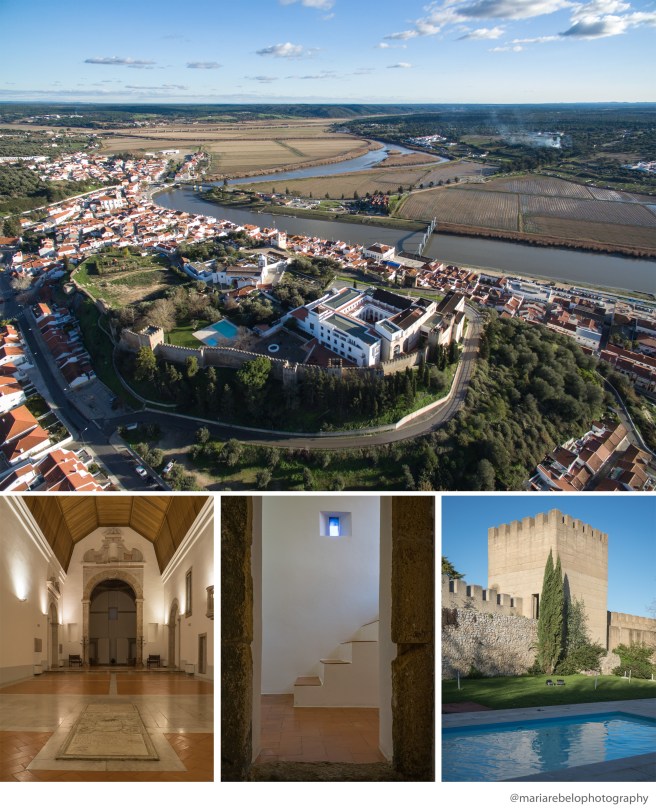
One hour away from Lisbon, you can stay in an historical hotel that occupies a medieval castle with wonderful views of the Sado river and the rice fields of Alcácer of Sal. It is a place where people have gathered since the Iron Age to worship the gods above.

For more than 2,000 years, people came to Alcácer do Sal to farm the land, tend to herds of sheep and goats and produce salt on the marshes of the Sado river. The Sado made it all possible, its waters bestowed fertility on the land and carried boats loaded with agricultural products to far away lands. Underneath the pousada there are remnants of Greek pottery and Egyptian jewelry, foreign luxuries purchased with the fruits of the Sado river.

In the 2nd century BC, Alcácer was conquered by the Romans who made it a center for the production of wool and salt. With their penchant for grandiose names, the Romans named the city Salacia Urbs Imperatoria.

In the 6th century AC, the Visigoths conquered the territory that is now Portugal. But life did not change in Alcácer until the moorish conquered the city in the middle of the 8th century AC. They built the caste and made the town an important trading outpost.

The first king of Portugal, D. Afonso Henriques, conquered Alcácer in 1160. But the moors fought back and it was only in 1217 that Alcácer became a permanent part of the Portuguese territory. The castle was then converted into a monastery occupied by the order of Saint James.

In the 17th century, the old monastery was adapted to welcome the nuns of Saint Claire of Assisi. The new building was called the Convent of Her Lady of Aracaeli.

The Pousada is a magical place. Every window frames a beautiful landscape. Every step reminds us that we are on hallowed ground. But hard decisions have to be made: should we stay by the spacious hotel pool relaxing or go see the gorgeous beaches of the coast of Alentejo?

Here’s a link to the pousadas’ website. You can find a large collection of photos of the pousadas at www.mariarebelophotography.com.

Reading Anna Karenina in Sagres

Composite Restaurant Os Arcos Algarve

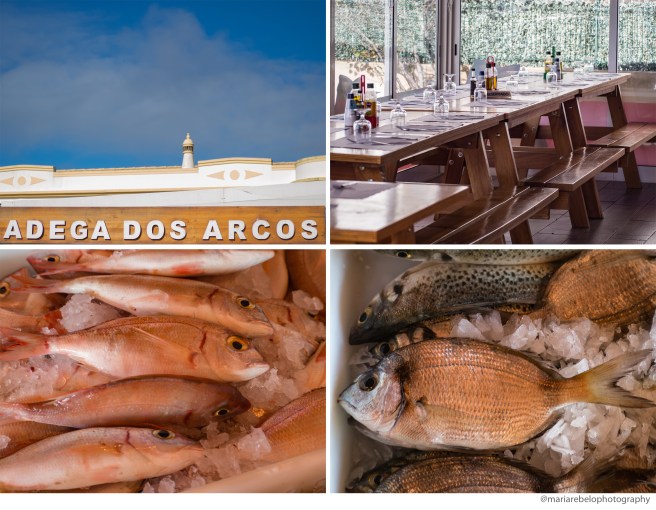
Adega dos Arcos (the cellar of the arches) is named after its many arches. It is an old “tasca,” a humble establishment that serves traditional fare. The restaurant changed owners over the years but the recipe for success has remained the same: fresh fish and grilled meats served with no frills at very modest prices.

We recommend the local fish species with names no one can translate into English. We had sargos, bicas, and liça. The sargo has a buttery taste and a wonderful consistency. Bicas have a more complex flavor reminiscent of the posh mullets. The liça has large white filets with a firm texture and delicate taste.

Everything comes with potatoes, boiled or fried and a traditional salad with lettuce, onion and tomato. The choice of wines is very limited and dominated by Caiado, a great inexpensive wine produced by Adega Mayor.

Even in the Winter, Adega dos Arcos is busy with locals and visitors. “In the Summer forget it,” says the waiter, “the lines are huge.” But the food is worth it. You can take a long Russian novel like Anna Karenina to read while you’re waiting. The novel might end badly, but we guarantee that your wait will have a happy ending.

Adega dos Arcos is located on Rua Roca da Veiga, Sagres, tel. 960 294 290.

The bells of Mafra

RBD_Mafra_dezembro
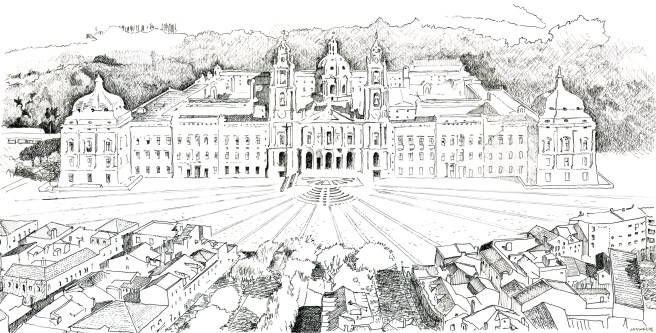
The Mafra Convent, Rui Barreiros Duarte, ink on paper, December 2016.

In 1711, king Dom João V vowed that if he was blessed with a son, he would construct a convent in Mafra. When a son was born in 1714, Dom João V spared no expense to fulfil his promise. By one count, the building has 880 rooms and 4,500 doors and windows. The convent includes a magnificent palace for the royal family and a basilica made of the purest marble, with intricate altars lavishly decorated with gold leaf.

To top it all, the king commissioned a 200-ton carillon. According to legend, when the craftsmen quoted the price of the carillon, they remarked that the cost seemed too dear for a small country like Portugal. Offended, the king replied: “I didn’t realize the bells were so cheap! I would like two sets.”   And so, two sets were made. Nicholas Levach made 57 bells for the North tower in Liége.  Willem Witlockx made 49 bells for the South tower in Antwerp.

The convent has many other bells: liturgical bells used in religious ceremonies, lecture bells that signaled the beginning and end of study periods, agony bells that rang when a monk was dying, refectory bells that reminded monks of their meal times, and the codfish bell that sounded in days when people should abstain from eating meat.

The carillon and some of the other bells were used to mark the passage of time with minuets and other compositions. In a world where musical sounds were rare, the bells of Mafra filled the village with harmony and grace.

Finding happiness in Sintra

Market products

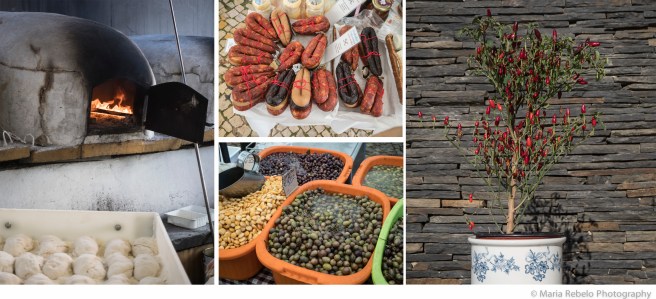
There’s a farmer’s market in São Pedro de Sintra since the 12th century. Nowadays it runs every second and fourth Sundays of each month. It is a great place to buy local fruits and vegetables, artisanal sausages, olives and cheese. Wood-fired ovens bake chouriço bread, filing the air with appetizing aromas.

We saw a farmer selling a small capsicum frutescens tree loaded with little red peppers.  Five centuries ago, Portuguese navigators brought this plant from South America to Africa, where the Bantu people called its fiery pepper “piri piri.” From Africa, the Portuguese took the plant to India where it changed the course of Indian cuisine.

How could we resist bringing home this symbol of the first age of globalization? “Trim the tree in March and you’ll have piri piri peppers between August to January,” advised the genial farmer. We got into the car feeling ecstatic at this unexpected find. Who knew that happiness is a piri piri tree?

The São Pedro market is located on Largo D. Fernando II, São Pedro de Sintra.

Sweet gratitude

Casa do Gato Preto

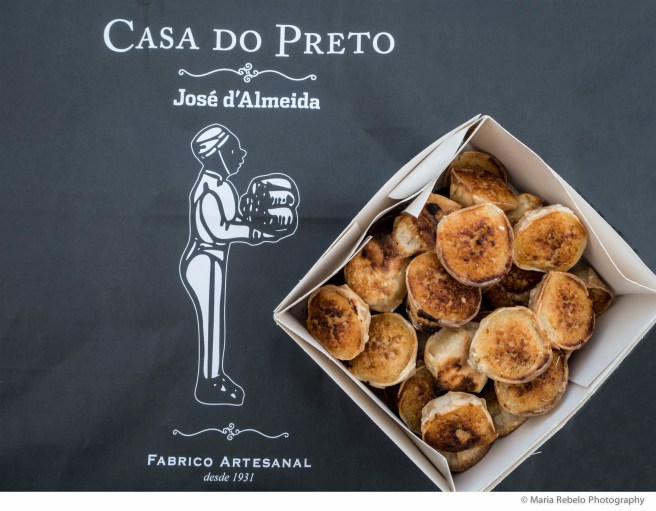
The recipe for Sintra’s queijadas was created in the 13th century by friar João da Anunciação at the Penha Longa convent. We know that the voluptuously thin crust is made with flour, lard, water, and salt. And that the indulgent filling has requeijão (a ricotta-style cheese), egg yolks, and two ingredients added in the 15th century: sugar and cinnamon. Each pastry store in Sintra has its own secret version of the recipe.

What are the best queijadas in Sintra? We’ve been pondering on this question for years, but the answer still eludes us. When we try the queijadas at Piriquita, we think nothing can be better. But then we taste the queijadas from Pastelaria Gregório and we fall in love with the crispness of the shell and the sweetness of the filling. Lately, we went to Casa do Preto and were astonished by the harmonious marriage of filling and shell.

One thing we know: these queijadas lift our minds above everyday concerns and fill our souls with sweet satisfaction. Thank you friar João!

Casa do Preto is located at Estr. Chão de Meninos 40, in Sintra, tel. 21 923 0436.


Quinta Dona Maria

Quinta D. Maria Winery

Estremoz is a town in Alentejo famous for its white marble. The same geological conditions that fashioned its pristine stones created limestone soils perfect for wine production. So it’s no wonder that there are so many wineries around Estremoz.

The prettiest of them all is Quinta Dona Maria. The estate, which dates back to 1718, was purchased by King João V and offered to Dona Maria, a courtesan with whom he fell in love. In the 19th century, the estate was bought by the Reynolds, a family of British merchants who came to Portugal to produce cork and wine. The current owner, Julio Bastos, inherited the estate from an aunt who married into the Reynolds family.

Bastos got his passion for wine from his father. Every year, father and son came to the harvest so that young Julio could be initiated into the mysteries of wine making. Bastos is particularly fond of Alicante Bouschet, a varietal brought to Alentejo by his family in the 19th century.

Eager to produce extraordinary wines, Bastos entered into a partnership with Lafite Rothschild. But when the Rothschild team started uprooting his old family vines to plant French varietals, Basto decided to go his own way.

He nurtured the old vines and used 17th century marble tanks to tread the grapes. The result are wines with a unique personality: rich and earthy with elegant aromas and a smooth finish.

Production volumes are low, so these wines are hard to find. If you’re traveling in Alentejo, stop by Quinta Dona Maria and take home these exquisite wines made in soils nourished by the love of the land and blessed by the richness of marble.

Click here for the website of Quinta Dona Maria.

A noble crab soup

IMG_1905 2

Almost three decades ago, a friend took us to a new restaurant called Nobre in the Ajuda neighborhood. The name, which means noble, came from the surname of the chef, Justa Nobre. We recall with fondness the meals we enjoyed there. After a successful run, Nobre closed so that the chef could pursue other projects,

Last week, the same friend invited us for lunch. We were delighted to discover that we were going to a new restaurant that marks Justa Nobre’s return to Ajuda. It is called “À Justa,” an expression based on the chef’s first name that means “just right.”

The menu offers a cuisine without foreign accents that has the satisfying taste of authenticity. The recipes are grounded in the cooking of Justa’s grandmothers. But they are not a copy of the past. They reflect years of refinements shaped by the personality and creativity of this self-taught chef.

The restaurant was full. The Portuguese like to flirt with contemporary food trends but they always come back to their one true love, which is the traditional cooking of Portugal.

We had a great meal that included bright green fava beans, chickpeas with codfish, codfish “pataniscas,” and fried cuttlefish. These delights were preceded by a classic of Justa Nobre’s repertoire: the spider crab soup. Its aristocratic taste makes all other seafood soups in Lisbon look common by comparison.

Many chefs keep their secrets, but Justa generously shared some of her recipes in a book titled Passion for Cooking. We translate her recipe for spider crab soup below. But you must try the original at À Justa where they make it just right.


Justa Nobre’s spider crab soup

Ingredients: 2 large spider crabs weighing about 1 kg. each, 3 liters of water, 3 tablespoons of sea salt, 150 grams of margarine, a large onion, 2 cloves of garlic, a parsley bunch, a sliced fennel head, 4 tablespoons of tomato paste, half liter of cream, 0.1 liter of dry white port, one teaspoon of powdered ginger, one teaspoon of saffron, 2 tablespoons of potato starch.

Preparation: Boil the crabs in the salted water for 8 minutes. Remove them, let then cool off and extract all the meat. Return the shells to the pan. Add some shrimp shells and let them boil for 10 minutes. In a large pot, melt the margarine and add the sliced onion, fennel and garlic. Let these ingredients cook briefly and then add the white port, the cream, the tomato paste, the spices, and two liters of the crab broth. Mix the potato starch with some cold water and add it to the soup. Check the seasoning and strain the soup. Add the crab meat and serve the soup it in the shell of the spider crab.

À Justa is located at Calçada Ajuda 107, in Lisbon. The restaurant seats only 36 people, so reservations are a must. Call 21 363 0993 or email reservas@ajusta.pt. Click here for Justa Nobre’s web site.