Lisbon treasures

Composit Viuva Lamego

We’re often asked whether you can see Lisbon in a day or two. Sure, you can drink an espresso at Brasileira, take a brisk walk through Rossio and Terreiro do Paço, climb to Alfama to tour the castle, and rush right back down to go to Belém. Once there, you can try the famous Pasteis de Belém and go for a quick visit of the Jerónimos monastery and the Belém tower.

You’ll have seen a lot, but you will not know Lisbon. The city doesn’t reveal itself on a one night stand. To understand Lisbon, you must take the time to walk around and discover its many hidden gems.

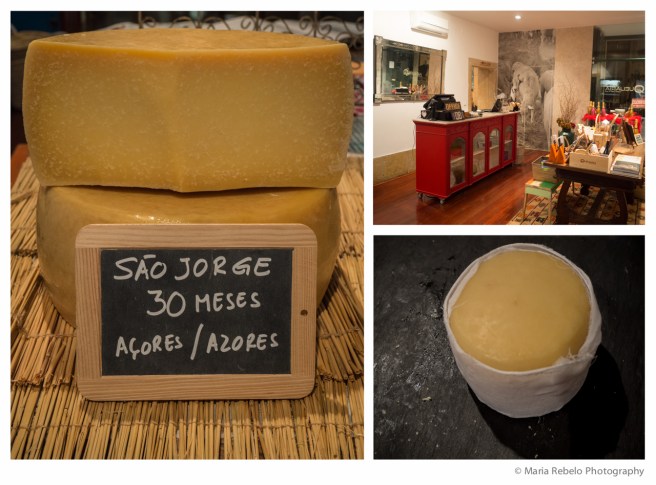
One of these gems is Viúva Lamego, a store that has sold handmade tiles and ceramics since 1849. The blue-tiled back of the building faces the bustling Avenida Almirante Reis. If you walk around in search of the main entrance, you’ll be rewarded with the sight of one of the most exuberant facades in Lisbon.

There are many other jewels to discover in Lisbon: beautiful gardens, graceful architecture, quaint shops, enticing vistas, and wonderful neighborhood restaurants.

Those who discover some of these treasures get hooked and as soon as they depart, they start planning to come back.

The Viúva Lamego building is located on Largo do Intendente Pina Manique, 25.

Eating by the sea in Azores

OLYMPUS DIGITAL CAMERA

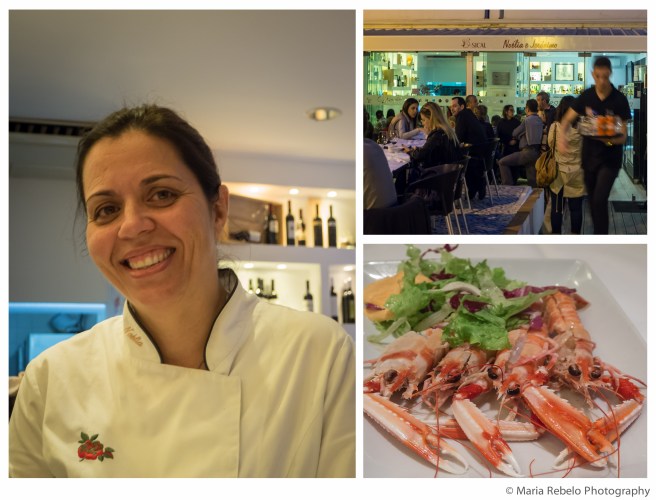
Beira Mar, a family-owned restaurant in the Azores island of Terceira, has been a favorite dinning destination for four decades. It is always busy so, if you don’t have a reservation, you’ll probably have to wait for a table.

The service is orchestrated by a small troupe of waiters who move with elegance and speak with eloquence about fish and seafood. We could not tell whether they had trained as ballet dancers or as marine biologists.

Our meal started with “cracas,” a local type of seafood that has a delicate crab-like meat and a wonderful salty juice. We then sampled some orange delicacies called “lapas” that were briny and full of flavor.

Next, we had some amazing boca negra (black mouth), a fish that in continental Portugal we call cantaril. We also tried some wonderful species that were new to us: cântaro, bicudas, and lírio. They were all incredibly fresh and arrived at the table grilled to perfection. Terras de Lava, a white wine from the nearby Pico island, was the perfect complement to all this bounty from the sea.

Beira Mar is a simple place; no money was wasted on decoration or fancy silverware. And yet, the restaurant feels luxurious because we can enjoy the sunset over the harbor while feasting on the precious flavors of the sea. It is the kind of luxury we love.

Beira Mar’s address is Canada do Porto, number 46, São Mateus, Terceira, Azores, tel.  295 642 392. Reservations are highly recommended.

A tavern called Wednesday

Quarta-Feira rest composite

André Freire, the manager of the beautiful Évora pousada, urged us to try a tavern called Quarta Feira (the Portuguese word for Wednesday). “It’s a special place,” André said with a smile. “There’s no menu; you have to trust Zé Dias, the owner, and go with the flow.”

As soon as we entered the restaurant, we became friends with Zé Dias. He moved to Évora from a village in Beira Alta called Quarta Feira, the name he used for the restaurant. Dias worked as a typographer until he opened this tavern 25 years ago with Luisa Batista, a great local cook.

Dias’ enthusiasm for food, wine and life in Alentejo is infectious. Everything he serves comes from people he knows well, from the producers of cheese and sausages to the maker of the clay pots that are integral to Luisa Batista’s cooking. When we asked Dias how he managed to convince Paulo Laureano, a renowned Portuguese enologist, to make the house wine for Quarta Feira, Dias replied “Of course he said yes; we’ve been friends for a long time.”

Our dinner started with slices of local sausages and prosciutto made with black pork from Alentejo. Then a warm sheep cheese seasoned with oreganos arrived, busting with flavor. Next, we had some wonderful mushrooms cooked in mushroom water, seasoned with olive oil, garlic and coriander. “The secret is all in the timing,” Dias tells us and we believe him because at this point we believe everything he says.

The meal’s main event was the house specialty: black iberian pork shoulder marinated in wine cooked slowly in a clay pot. It was so delicious that our taste buds scintillated with delight. The dessert was composed of dried figs, walnuts, cooked quince, and samplings of two conventual desserts.

The meal ended with a glass of licoroso from Herdade do Mouchão. This sweet wine with notes of fruits and spices was a perfectly simple ending to a simply perfect meal.

Zé Dias is a philosopher king who disguises as a tavern owner so that he can share with his guests the joy of living in Alentejo.

Taberna Típica Quarta Feira is on Rua do Inverno 18, Évora, tel. 266 707 530.

Quinta do Vallado

Quinta do Valado Composit

We wonder whether god created the Douro as a test. It gave the region poor soils and a mountainous terrain, scorching Summers and freezing Winters. But if humans persevered and made a living in this land, they would be rewarded with magnificent wines.

The soil, composed of schist and granite, forces the vines to struggle and produce small grapes that are full of flavor. No one believed more in these grapes than Dona Antónia Ferreira. She made a fortune producing port wine in the beginning of the 18th century and reinvested it all in the Douro, owning at one point 37 vineyards.

This Summer we had the privilege of visiting one of these vineyards, the Quinta do Vallado,  which dates back to 1716. We toured the cellars and tasted some of the quinta’s great table wines.

At the end of our visit, we drank some wonderful old tawny port. With our glasses full of this golden nectar, we toasted the people of the Douro and their magnificent wines.

Quinta do Vallado is located in Vilarinho dos Freires, Peso da Régua, tel. 254 323 147. Click here for their web site.

Wedding by the sea

OLYMPUS DIGITAL CAMERA

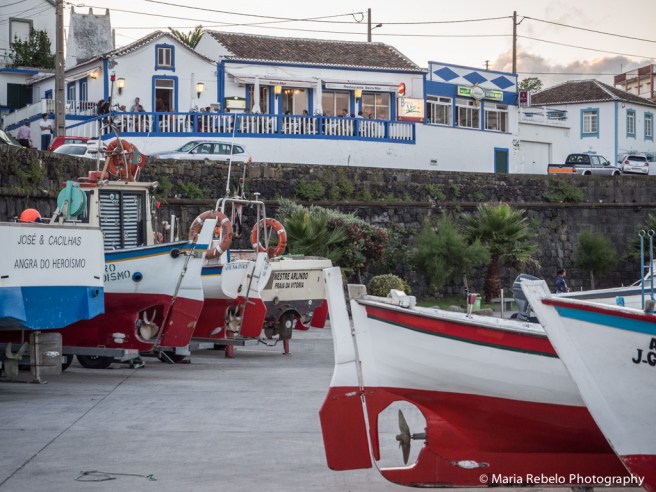
If you can, get married by the sea. You’ll see boats sailing trough the waves without a care in the world. And you’ll realize that boats have keels that keep them stable during storms.

That is what marriage is. Two people who are each other’s keels so they can remain steady in the face of storms and sail joyfully through the waves of life.

The photo is from the Pousada de Angra do Heroísmo, located in the beautiful São Sebastião fort in Azores. Click here for the Pousada’s web site.

Ebora cerealis

OLYMPUS DIGITAL CAMERA

If you’re traveling in Alentejo, follow the advice of ancient travelers and spend some time in Évora. The city is included in the Antonine itinerary and is mentioned in Pliny the Elder’s Natural History as Ebora Cerealis in reference to the surrounding fields of cereals.

Évora was occupied by Celts, Gauls, Phoenicians, and Persians. But it was Quintus Sertorius, the general who conquered the city in 80 B.C., that gave Évora its architectural jewel: a Roman temple with elegant corinthian columns. Known as the temple of Diana, it is more likely to have been dedicated to Jupiter.

There’s much to see in Evora: a beautiful basilica, elegant university buildings, and peaceful convents. And the food and wine are great everywhere.  You can choose a restaurant blindfolded and have a wonderful meal. If Pliny was writing today, he might call the city Ebora Delicia.

The Lisbon Pousada

PousadaLisboaLisbon has a wonderful new historical hotel: the Lisbon Pousada, located in the old royal-palace courtyard known as Terreiro do Paço.

Until the middle of the 18th century, ministers, nobles and other power brokers constantly stamped the soil of this courtyard with their footprints. But, after the 1755 earthquake destroyed the royal palace, the king moved to Ajuda and the courtyard lost its illustrious traffic.

In the 20th century, Terreiro do Paço regained its status as the walkway of power. The new hotel occupies the Ministry of Internal Affairs building. It was here that Salazar, the man who ruled Portugal from 1926 to 1970, had his office.

The pousada is decorated with numerous historical artifacts, including models for many of the statues that adorn the city. The rooms are elegant and comfortable with windows that frame beautiful views of downtown Lisbon: stucco buildings, ancient tiles, pink roofs, the walls of St. Jorge’s castle, and the northern margin of the Tagus river. Salazar’s old office is now a spacious bedroom suite.

It is said that in stressful times, Salazar avoided the main entrance of the building, using instead a discreet back door. This back door is now closed. Surrounded by elegance and comfort, pampered by the hotel’s well-trained staff, stress is the last thing on the mind of the guests of the Lisbon Pousada.

The Lisbon Pousada is located at 31, Praça do Comércio, tel. 351 21 040 7640. Click here for the pousadas’ website and here for a large collection of photos of the hotel.

The Estrela Basilica

OLYMPUS DIGITAL CAMERA

One of the buildings often found next to a Roman forum is the basilica. It served as a place where people could meet. Basilicas had no statues of Roman gods and had beautiful light that came in through windows near the roof, so they were a favorite gathering place for early Christians.

The plan of the basilica was later adopted for the construction of important churches. Lisbon has an elegant basilica at Estrela, built in 1790 by Queen  Maria I.

Few people seem to know that one can climb the stairs to the roof of the Estrela basilica and enjoy in peaceful silence breathtaking views of the city. It is a perfect place to meet Lisbon.

Ruby, Vintage or Tawny?

2 Port wines

People in the Douro valley say that babies and port wines are often born at night. Port producers let the grape juice ferment for about three days. They choose the perfect moment to add a neutral grape spirit (aguardente) that stops the fermentation before the yeast eats all the grape sugar. This moment often comes in the middle of the third night.

Most of the Douro grapes are used to produce ruby ports. These ports are first stored in cement or stainless-steel vats to prevent oxidation, then bottled. The result is a wine that retains a dark ruby color and fresh fruit flavors.

When the quality of the grapes is exceptional, port-wine producers declare a vintage year. These ports are stored in wood casks for one or two years and then bottled. With little exposure to air, the wine is dark red. Aging brings out complex flavors, such as notes of vanilla, chocolate, and blackberry.

The best grapes are also used to produce tawnies. These ports are aged for many years in casks made of Portuguese chestnut and oak. This aging process creates complex flavors and gives the wine a silky mouthfeel. The small amount of air that circulates through the tiny pores of the wood oxidizes the wine slightly, changing its color from red to amber.

It is wonderful to share a glass of ruby port with new friends. But there’s nothing like drinking old vintages and tawnies with old friends.

The rebirth of Lisbon

DCIM103GOPRO

One of the most beautiful monuments in Lisbon is a ruin. The Carmo convent, founded in 1389, was destroyed by the earthquake that stroke Lisbon on November 1, 1755. The convent’s gothic arches were left reaching towards the sky, asking questions for which we have no answers.

Today, Carmo is a place of peace and tranquility. For we know that from the ashes of the old city, a new Lisbon was reborn.

The Carmo convent is located in the homonymous Largo do Carmo in Lisbon.