Spending time at the Arraiolos Pousada

Arraiolos CompositWhen you need to rest your body and nurture your soul, there is no place like Alentejo. It is a land of great natural beauty, blessed by the sun and far from the concerns of daily life.

One of our favorite places in Alentejo is the Arraiolos Pousada, a 16th century monastery that was converted into a wonderful hotel.

There’s a lot to do in the vicinity of the Pousada. You can take horseback-riding lessons, visit wineries, shop for the famous Arraiolos rugs, or do some sightseeing. But it is also great to relax in the spacious balconies that overlook the countryside or to seat by the pool, enjoying the view of the perfectly-round Arraiolos castle.

When we first arrived at the Pousada, we walked to our room through a sequence of hallways of different sizes that took us from light to shade and then back to light. This walk felt like an initiation rite. And indeed it was. Our stay at Arraiolos was an introduction to the art of enjoying the passage of time. We now need to return to continue our apprenticeship.

Click here for the Pousadas’ website and here for more photos of the Arraiolos Pousada.

Adega Mayor

Adega Mayor

If you’re a wine lover traveling in Alentejo, don’t miss the chance to visit a wonderful winery called Adega Mayor. It is located in Campo Maior, a region on Portugal’s border with Spain that was once the stage of fierce battles between the two countries.

Adega Mayor was designed by Álvaro Siza Vieira, a Portuguese architect who received the Pritzker prize. He is famous for his ability to create buildings that are in harmony with their surroundings. At Adega Mayor, he succeeded brilliantly. The winery is a subtle white accent on the Alentejo landscape, toped by a terrace with amazing vistas. It is extraordinary to sit on the terrace at sunset and watch the Alentejo sky painted with colors others skies can only dream of.

The wines of Adega Mayor are produced with immense skill and care. But they offer much more than technical perfection. They carry in them the soul of Alentejo.

We left Adega Mayor with a warm feeling of optimism. We saw ancient battle fields turned into peaceful vineyards that produce extraordinary wines.

Click here for Adega Mayor’s website.

Our favorite restaurant in Évora

BotequimdaMouraria-Edit©

Our favorite restaurant in Évora, Botequim da Mouraria, seats only eight people and takes no reservations. There are no tables, everybody eats at the counter. Domingos Canelas, the restaurant’s owner, recites the menu, an endless list of delicacies that includes wild asparagus, eggs laid by blissful chicken, incredible prosciutto from Alentejo, luscious figs, briny clams, succulent fish and meat. In the kitchen, his wife Florbela cooks these ingredients with great skill and refinement. When Domingos brings the food he smiles, anticipating our enjoyment.

We asked him to select a wine from the restaurant’s amazing list. Instead of choosing an expensive bottle, he decided to impress us with a perfectly chilled white wine from Herdade Grande. “In Portugal,” he said, “you don’t need to spend much money to drink great wine.” And we agreed, marveling at the perfect harmony between the wine and the food.

During our leisurely lunch, many customers came to the door and left because there were no seats available. And yet, Domingos didn’t  try to rush us. “You need time to enjoy the food of Alentejo,” he said.

We asked whether he planed to expand the size of the restaurant. He answered without hesitation: “I can only maintain this quality if I stay small.” At Botequim da Mouraria small is wonderful.

Botequim da Mouraria is at Rua da Mouraria, 16-A in Evora, tel. 266-746-775, email: botequim.mouraria@sapo.pt.

Viseu turned upside down

Mesas

Roman cities are generally organized around two perpendicular streets, the “cardo” and the “documanus.” In Viseu, an elegant city in the interior of Portugal, the cardo is called Rua Direita. This ancient street has been turned upside down by an installation called Mesas (the Portuguese word for tables). Artists Pedro Rebelo and Ricardo Jacinto suspended in the air tables once used by jewelers, tailors, office workers, school children, card and ping-pong players. These tables project sounds recorded while they were in use, inviting us to celebrate the people who study, work, and play in this city.

Mesas is part of Ephemeral Gardens, a great annual event which fills the streets of Viseu with art, music, dance, theater, and gastronomy. Click here for more information.

The place to be in Lisbon

Palácio Valle Flôr compositF©For the price of ordinary accommodations in London or Paris, you can stay in an extraordinary palace in Lisbon. It’s all thanks to José Dias, an entrepreneur who made a fortune producing cocoa to feed Europe’s insatiable appetite for chocolate. After many years of hard work on the island of São Tomé, Dias returned to Lisbon. He received the title of Marquis of Valle Flor and began the construction of a magnificent palace.

The Marquis bought land with breathtaking views of the Tagus river and hired architects to design a building with perfect proportions. He then decorated it with great refinement, commissioning elegant furniture, beautiful paintings, graceful sculptures, and radiant stained-glass windows. After its inauguration in 1915, the palace became a fashionable gathering place for the royal family, celebrities, and nobility.

With the death of the Marquis in 1932, the edifice entered a period of slow decay. To save this work of art from oblivion, Dionísio Pestana, a successful hotelier, bought the building in 1992 to convert it into a luxury hotel.

It took almost ten years to restore the edifice and equip it with modern comforts. The result is the Pestana Palace, a hotel favored by a long list of celebrities that includes Bill Clinton and Madonna. The Marquis of Valle Flor would surely love to see that his palace is, once again, the place to be in Lisbon.

The Pestana Palace is located at Rua Jau, 54, tel. 210401711 , email: guest@pestana.com. Click here for the hotel’s web site and here to see more photos of the palace.

Quinta do Monte d’Oiro

DCIM101GOPRO
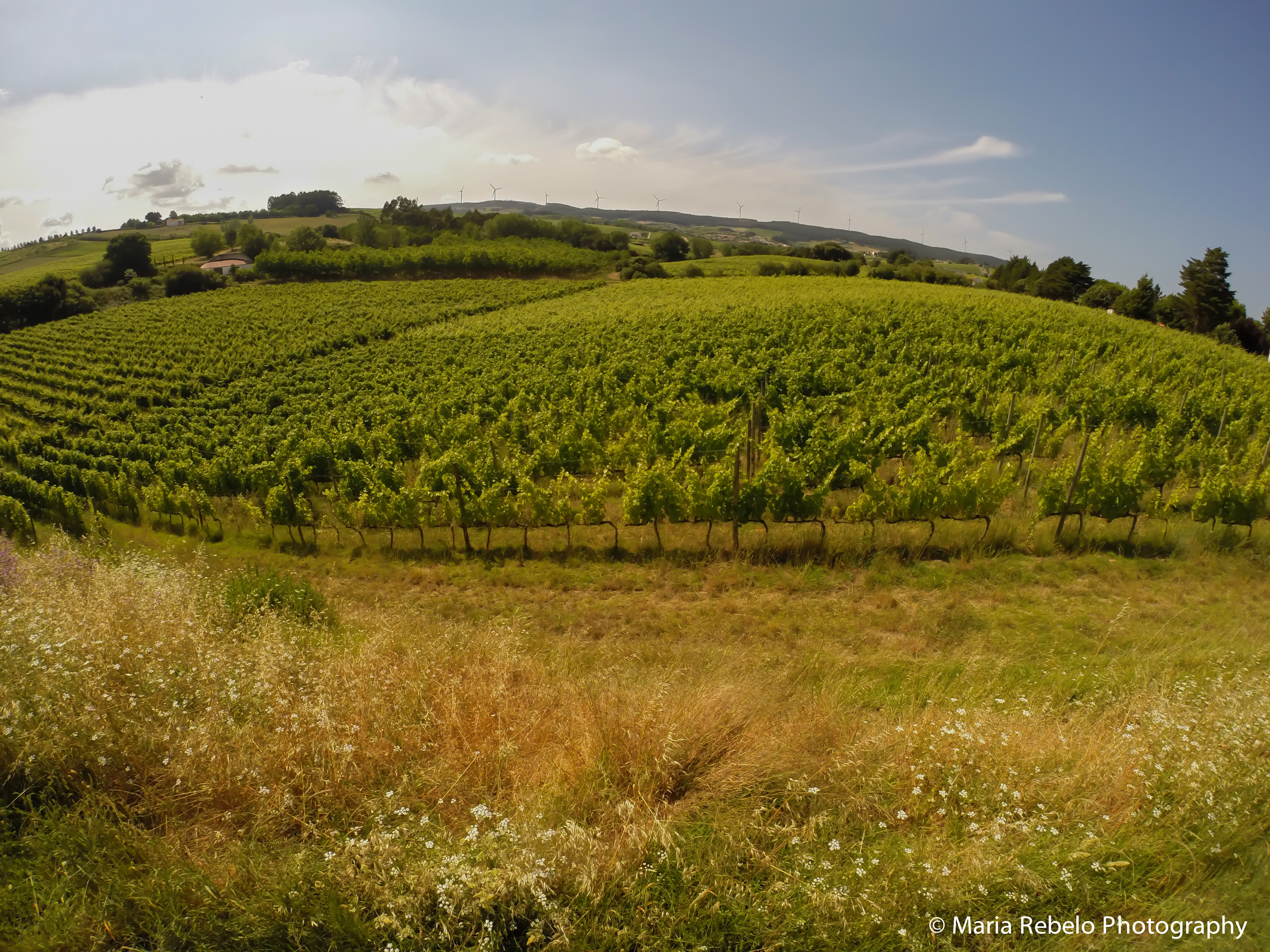
The name of this wine estate near Lisbon means golden hill farm. It is a fitting designation because this is a place where grapes are treated like gold and wines are made with a jeweler’s precision.

The soil of the farm is similar to that of Côtes du Rhône, so José Bento dos Santos, the farm’s owner, planted the same grape varieties that thrive in that French region: Syrah and Viognier.

Graça Gonçalves, the estate’s enologist, talks about each parcel of the farm as if they are old friends. She knows their qualities and shortcomings and choses cultivation methods that help each of them thrive. We ask which is her favorite parcel and quickly realize it is an impolite question. Graça does not answer, but when she talks about parcel 24 her eyes shine more than usual. This parcel is planted with Syrah grapes that came from old vines in Côtes du Rhône. Each plant is different and it is this variety that creates the quinta’s top wines, such as the aptly named Syrah 24.

When harvest time approaches, Graça walks through the vines, taking samples to analyze in the lab, tasting the grapes, imagining the wines that will be produced. When the time is right, the grapes are picked by hand and carefully selected. There are then numerous decision to make, such as how to press the grapes and whether to stage the wine in French oak barrels or stainless steel vats. Why such meticulous care? Graça explains: “Wine is roughly 14 percent alcohol and 85 percent water, so there is only one percent for the fruits of the vine to create emotion.” It is impossible not to feel this emotion when you open a bottle of Quinta do Monte d’Oiro wine.

Click here for the Quinta do Monte d’Oiro website.

The best of both worlds

Azeitonas Bel Canto-F

Portugal is a country with century-old traditions. But it is also a place where a new generation is creating the future.

Consider the fruits of the Olea europaea, commonly know as olives. If you visit a Portuguese farmers market, you’ll find delicious olives cured in traditional ways. But if you dine at Belcanto, José Avillez’s wonderful restaurant in Lisbon, you’ll be served three invented olives. The first, a spherical olive that explodes in the mouth, is an homage to Avillez’s apprenticeship at elBulli. The second is a delicious black olive in a light crunchy tempura. The third is an inverted dry martini: the liquid is olive juice and the “olive” is a sphere of gin.

Which do you prefer, tradition or modernity? In Portugal you don’t have to choose.

Belcanto is located at Largo do São Carlos in Lisbon, tel. 21-342-0607.

Amazing produce

DCIM100GOPRO

Older people often complain that food doesn’t taste as good as it once did. Are they right or it is just that everything tastes better when we’re young? We can answer this question thanks to Herdade do Freixo do Meio, an Alentejo estate.

In 2001, the Herdade adopted organic production methods and planted old varieties of fruits and vegetables that were left behind by the industrialization of agriculture. They also started to raise black pigs, Barrosa cows, Alentejo turkeys, and other animals, letting them roam free. You can see and taste the amazing results by visiting their store in Lisbon’s Ribeira market.

When you try their products, you quickly realize that older people are right: food used to taste much better. The good news is that Herdade do Freixo is bringing that taste back!

Click here for the Herdade do Freixo do Meio web site.

Wild life in Mafra

TapadaMafra2

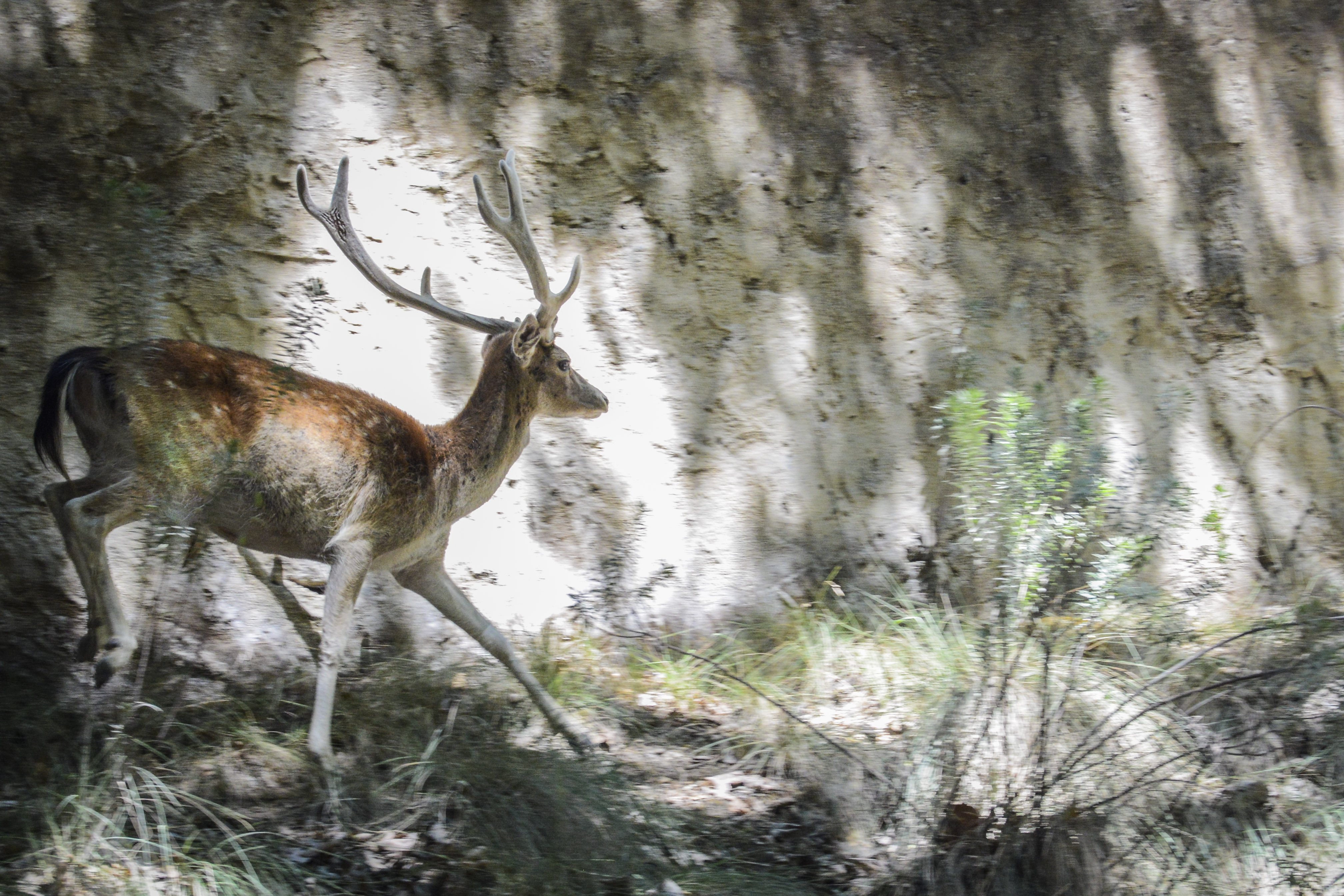
When the Portuguese kings and queens stayed at the Mafra Palace, they enjoyed hunting at a local game reserve called Tapada de Mafra. The Tapada is now a national park that offers many fun activities for kids. There are train rides, donkey rides, archery lessons, and falconry demonstrations. You can see deer, wild boar, foxes, and other animals in their natural habitat.

Our favorite activity at Tapada is taking horse-ridding lessons. A 30-minute lesson costs only 5 euros. But riding an elegant horse in the beautiful Tapada grounds, always makes us feel like royalty.

Click here for the Tapada’s web site. Mafra is an easy 40 km drive from Lisbon on the A8 highway. Horse-ridding lessons are offered between 9:30 am and 12:00 pm. It is a good idea to call in advance to make reservations (Tel. 261 81 4240 or reservas@tapadademafra.pt).

Taberna da Rua das Flores

Taberna da rua das flores

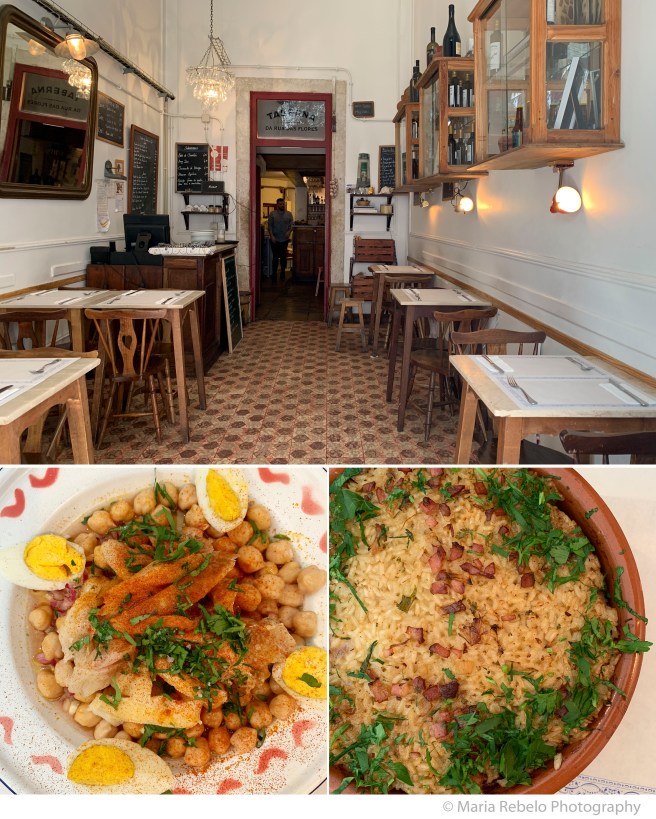
The name of this restaurant on Rua das Flores (flower street) combines the Portuguese word for tavern with the title of a famous novel: Tragedy on Rua das Flores, by the great 19th-century writer Eça de Queiroz.

The Taberna serves traditional home cooking. If you’re adventurous, try the excellent “iscas” (marinated liver).  Otherwise, you’ll find many other great choices, such as carrot and coriander soup, pork with sweet potato and zucchini, duck rice, and codfish with chickpeas. The quirky antique furniture helps create an unpretentious atmosphere. Prices are modest, so every meal has an happy ending.

Eça de Queiroz complained, through the words of one of his characters, that Lisbon lacked a fun place to eat supper after the Opera. One century later, this place exists. It is called Taberna da Rua das Flores.

The Taberna is located on Rua das Flores 103, tel. 351 21 347 9418, email: tabernadasflores@gmail.com.