The timeless Quinta do Seixo

Quinta do Seixo in the Douro valley is a place of timeless beauty. Here’s how Henry Vizetelly described it in his book “Facts about Port and Madeira,” published in 1880:

“It occupies the spurs and slopes of a mountain, one side of which bounds the Douro, and the other the Rio Torto valley. Scattered over the heights above are the white cottages of the village of Valença, the vineyards of which produce a considerable quantity of first-class wine. The buildings of the Quinta do Seixo , which is entered through an imposing gateway, surmounted by the armorial bearings of its owner, are very extensive. The casa is both commodious and well arranged, and has a certain air of pretension about it, while the lagares and the adega are on a scale proportionate to the extent of the surrounding vineyard.”

This description remains remarkably apt. The main house still offers spectacular views of the surrounding vineyards, some of which are centenarian. But Vizetelly would be amazed to see that inside the traditional building, there’s a state-of-the-art winery. 

Our guide explained what makes the Douro different: the stone terraces built to support the vines, the “field blends” made from varietals planted together in the vineyards, the poor soils that force the plants to struggle, making the berries small but full of flavor, and the methods used to produce tawnies, vintages, and late-bottled vintages. 

She also told us about Georges Sandeman, the Scottish merchant who founded Sandeman in 1790. The company quickly became the largest port-wine shipper. Its mysterious logo, created in 1928, was inspired by its two product lines: ports from Portugal and sherries from Spain. It is a silhouette of a man wearing a Spanish hat and dressed in the cloak used by students in Coimbra, Portugal’s oldest university.

At the end of the tour, we tasted four wines—first, a harmonious white Vinha Grande with fine tannins and a pleasing acidity. Then, an exuberant red Callabriga made with grapes from the Callabriga hill, which was originally planted by the Romans. Next, a delicious 2019 Vintage Port from Quinta do Seixo that tastes even better with a view of the vines that produced it. And, finally, a great Sandeman Vau port wine from the 1999 vintage.

A visit to Quinta do Seixo is a delightful introduction to the wonders of the Douro valley.

Click here for Quinta do Seixo’s website.

Chocapalha’s fascinating wines

Some of our favorite wines come from an estate near Lisbon called Chocapalha. It has a privileged location. The Montejunto mountain protects the land from cold winds and the Atlantic breeze lends the wines an enticing freshness and acidity. The farm, which is known for its wines since the 16th century, has a hilly terrain with different sun exposures and soils rich in clay and limestone.

Chocapalha belonged since the 19th century to the family of Diogo Duff, a Scottish noble who came help the Duke of Wellington fight the Napoleonic troups. Paulo Tavares da Silva, a retired Portuguese Navy officer, and his Swiss wife Alice bought the estate from the Duff family in 1987. 

The journey to the glorious wines produced today was long and arduous. There was a modern winery to build, laborers to hire, new vineyards to plant, sustainable practices to implement, and many other tasks. When we first met Paulo, he told us that a visiting producer tried to discourage him by quoting a French aphorism: “wine is an easy business; only the first 200 years are hard.” But he and Alice were not deterred. They were driven by a passion for the land and a desire to create a legacy for future generations. For this reason, they paid from the start close attention to environmental issues. They want to see that the soil is alive, the vineyards are healthy, and the birds and animals are thriving. 

The family worked so hard that success came much sooner than anticipated. Alice and Paulo enlisted two of their daughters, Sandra and Andrea, to work at Chocapalha. Sandra, a renowned enologist, took time from Wine & Soul, the project she has in the Douro valley with her husband, to oversee the planting of the vineyards and the making of the wines. Andrea left a lucrative career in finance to manage the estate. Paulo works tirelessly in the vineyards. Alice graciously receives the many guests that visit the farm. 

The wines speak for themselves: they are pure and refined, produced with minimal intervention so that each glass can take our palate to the sunny hills of Chocapalha. 

There are many wines to try. There’s a Castelão with the elegance of a Pinot Noir and a Viosinho with the charm of a Chardonnay. Vinha Mãe has rich tannins and great concentration; it is a perfect companion for a cold winter night. The CH white, made with Arinto from old vines, is an aristocratic wine with subtle salinity. The wine is an homage to Alice (CH is the symbol of Switzerland, her homeland). The red Guarita, named after the farm’s sentry house, is an homage to Paulo. Produced with Alicante Bouschet, it is a symphony for the palate.

When you visit Chocapalha, you can taste their wines, visit the picturesque vineyards, and get to know a family passionate about creating some of the world’s most fascinating wines.

Chocapalha is located at Aldeia Galega da Merceana, 50 km from Lisbon. You can schedule a wine tasting by emailing chocapalha@chocapalha.com. Click here for their website.

Dining by candlelight at Quinta Dona Maria

We arrived late in the afternoon and waited outside the imposing marble gate. Before we could say ‘abracadabra’ or some other incantation, the gate opened, welcoming us to Quinta Dona Maria, a magnificent wine estate in Alentejo. 

Isabel Bastos came to greet us. We walked with her to the palace’s chapel and sat down to hear her recount the story of Quinta Dona Maria. The estate was a gift from King John V to Dona Maria, a lady of the court with whom the king fell in love. Dona Maria left no descendants, so the property was sold in a public auction upon her death. The Reynolds, a family of merchants from southern England, purchased it. They renamed the estate Quinta do Carmo in honor of an image of the Lady of Carmo they bought for the chapel in 1752. The estate currently belongs to Júlio Bastos, Isabel’s husband, who descends from the Reynolds family. 

Júlio’s grandfather started producing fine wines on the estate. The project was so successful that in a blind tasting with the Rothschilds held in the late 1980s, the wines from Quinta do Carmo tied with Lafitte Rothschild. Impressed by this feat, the Rothschilds proposed Júlio Bastos a partnership. But the two winemakers had different objectives and approaches. Júlio is passionate about the old vines planted with the traditional varietals of Alentejo, most of all Alicante Bouschet, a varietal brought by the Reynolds from France to Alentejo. The Rothschilds wanted to replant the vineyards with French varietals that could appeal to the international market. Eventually, the two parties separated. In this process, the Rothschilds kept the brand Quinta do Carmo, so Júlio renamed his wines and estate Quinta Dona Maria. 

We walked to the wine cellar to see the 18th-century marble tanks where the grapes are still crushed by foot treading. The tanks were brimming with grapes that were starting the fermentation process that transmutes earthly grape juice into heavenly wine. Isabel served us an enticing rosé with pleasing fruit notes and refreshing acidity. Next, we tried a delightful white Viognier that shows how much this French grape shines in the soils of Alentejo. The tasting ended with pomp and circumstance provided by two sumptuous Dona Maria red reserves from 2005 and 2008.

It was time to go to the palace. The large door creaked as it slowly opened to show us rooms lit by candlelight that made us feel like we were back in the 18th century. Júlio joined us for dinner. His love for the land, food, and wine of Alentejo were evident throughout the meal. 

The dinner, prepared by Filipe Ramalho from Páteo Real and Beatriz Tobinha, the palace’s resident chef, was a memorable feast. It started with Filipe’s famous tart made from chestnut-flower sausage, pears cooked in wine, quince marmalade, and chard. Then there was a slew of appetizers: tomato and watermelon salad, roasted peppers with bacon, slices of the brilliant sausages made at Salsicharia Canense, plates with savory Alentejo cheeses, and chickpeas with pickled codfish salad. A rich white Dona Maria reserve delicately aged in oak was an enthralling gastronomical companion.

Next came the main dishes: cação (a fish popular in Alentejo) in coriander sauce, pheasant in escabeche sauce and marinated carrots, and duck croquettes with black garlic mayonnaise. A splendid Dona Maria red reserve from 2017 made from old vines complemented the food with its festive taste of berries and hints of spices. 

The dessert was an almond and pumpkin tart paired with the famed Júlio B. Bastos Alicante Bouschet, named after Júlio’s father. The wine’s acidity, tannins, and fruit sing to the palate in perfect harmony.

Glancing at the watch, we saw the two hands pointing to midnight. We knew from fairy tales that it was time to leave. We thanked Isabel and Júlio for their warm hospitality and drove back to our hotel. We slept peacefully but woke up wondering: was the dinner at Quinta Dona Maria a dream? 

Click here for the website of Quinta Dona Maria.

Enchantment at Ceia

Standing in the shadow of Lisbon’s old pantheon, we knock on an inconspicuous door that opens into a courtyard erected in 1728. On our right is the entrance to one of Lisbon’s most hallowed dining rooms: a restaurant called Ceia. Those who’ve been here before experienced much more than superb food, exquisite wines, and courteous service. We had an enchanted evening.  

João Rodrigues, Ceia’s owner, is an alchemist who knows how to transform a meal that nourishes the body into a celebration that nurtures the soul. He gathered a star team, headed by chef Diogo Caetano and sous-chef Tiago Silva, and trusted them with precious ingredients: pristine organic produce freshly picked at Herdade do Tempo in Alentejo.

Ivo Custódio, the sommelier, greets us with an old acquaintance: a white wine made by Luís Mota Capitão, the iconoclast winemaker of Herdade do Cebolal. We enjoy the wine and the conversation with the other guests. Then, Ivo invites us into the dining room. We gather around a long wooden table to hear him explain that the meal is a journey through Portugal’s culinary and enological landscapes.

The voyage starts at the bottom of the ocean with tuna tartare on crunchy seaweed crackers, seaweed sponge cake, and gooseneck barnacles. An Atlantis rosé made with Negra Mole on the Madeira Island enhances the sea flavors.

We rise to the ocean’s surface with the taste of briny oysters paired with tart apples from Alcobaça and seaweed ice cream. The oysters come with a magnificent 2014 white wine from Colares, a small region near the sea where the vines, planted in the sand, survived the phylloxera scourge that decimated Europe in the 19th century. Made by Chitas (the nickname of an old producer called Paulo da Silva) it is a complex wine that fascinates and delights.

We arrive at the beach with a delicately cooked turbot seasoned with smoky olive oil powder and served in a Bulhão Pato sauce. It is so delicious we barely resist the urge to ask for seconds. 

But we find new joys in the lowlands where a sourdough bread fermented for three days and a cornbread baked with dried fruits await us. They come with Amor é Cego, a piquant oil made from Galega olives. There are also plates of luscious butter from Pico, an island in the Azores archipelago.

Ivo serves an elegant 2012 red from Quinta de Lemos in the Dão region. It is made with Jaen–a grape varietal brought to Portugal by pilgrims who traveled to Santiago de Compostela. Like the wine, the conversation flows freely around the table.

In the plains, there is rabbit served with an ice cream made from escabeche, a traditional sauce prepared with vinegar and olive oil. Kompassus, a sparkling wine made from Baga, a red grape from Bairrada, refreshes our palate. 

We climb up the mountain with a roasted purple cabbage dressed with a pennyroyal and champagne sauce. It comes with Sousão, a vibrant red wine from Vale da Raposa in the Douro valley. 

At the top of the mountain, we taste pigeon and potatoes from Trás-os-Montes served with a fermented garlic sauce. There’s also a mystery box with a delightful croquette and a scrumptious Philo-dough cup filled with sorrel leaves. 

Ivo serves a celebratory Breijinho da Costa, a fortified wine made in Setúbal with purple muscatel grapes. The meal ends with sweet fireworks: a noisette pave, petals of roasted peach, thyme ice cream, and lemon curd. And there are mignardises: a traditional Abade de Prisco pudding, coconut biscuits, cinnamon and strawberry truffles.  

Everybody lingers around the table feeling a sense of camaraderie. Then, we say our thanks and goodbyes and walk into the warm night in a state of enchantment. 

Ceia is located at Campo de Santa Clara, 128. Lisbon. Click here for the restaurant’s website.

Susana Esteban’s thrilling wines

Susana Esteban agreed to present her wines at the Arraiolos Pousada in September. It was an act of generosity because the harvest was in full motion, and she’s a perfectionist. Like the photographer Cartier-Bresson, she’s always looking for the decisive moment. The moment when the grapes are perfectly ripe to be gently harvested by hand, when the fermentation has run its course and worked its magic, when the oak barrels have refined the wine without changing its temperament.

As soon as Susana started talking, the sun set as if sensing that another star had arrived. Her Portuguese is seasoned with a charming accent–she was born in a Spanish region called Galicia. After graduating in enology, she decided to do an internship in the Douro valley, a place that was then remote and isolated. She stayed and worked in the Douro during her formative years. Then, like the swallows, she went south in search of something new– vineyards where she could develop her style and make wines that can age and evolve for many decades.

She made her first wine in 2011. It is called Procura, the Portuguese word for search. Susana found what she was searching for in the hills of São Mamede in Portalegre–centenarian vines full of character. They needed a lot of care, but Susana nursed them back to health with patience and affection.

Susana is cloning the old vineyards to preserve their genetic material and pass it onto the new vineyards that she is planting. None of her vineyards, new or old, are irrigated. The thirsty vines produce low quantity but high quality. 

We first tried a rosé made from Aragonês and purple muscatel that is pleasantly aromatic and light in alcohol–a perfect summer drink. 

Then, we tasted an exquisite white wine made in amphoras called Tira o Véu (removing the veil). The first time Susana made it, in 2019, she witnessed a rare phenomenon: a veil formed on top of the amphora. It is a film created by yeast highly prized in the production of sherries. No one knows what makes it occur, but every year the veil returns to make this wine more seductive and mysterious.

Next, we drank an alluring red wine made with Touriga Nacional and Aragonês. For Susana producing wine is an adventure, so she calls it Aventura. We’re lucky to be part of this thrilling experience that results in a wine full of freshness and minerality.

Finally, we tried the wonderfully harmonious 2016 red Procura. It combines a field blend with Alicante Bouschet from ancient vines aged in oak to round the tannins. It is a “vinho de guarda,” a wine with great longevity that will improve and surprise with the passage of time. We’re so lucky that Susana found the vineyards she was looking for!

Dona Octávia’s culinary wealth

We loved the sausages served during our epic lunch at Páteo Real. Chef Filipe Ramalho offered to call Dona Octávia, the sausage maker, to see if we could meet her. She agreed, so we drove through the golden plains of Alentejo to a small village called Cano. Blinded by the exuberant sunlight, we knocked on a green door marked Salsicharia Canense. Dona Octávia welcomed us inside, greetings us with glasses of cold water that quenched our thirst. 

She’s been making sausages for 40 years. Her parents had eight children, so there were many mouths to feed. Everybody had to work to help out. The only education available to Dona Octávia was learning how to make sausages with her grandmother. 

She opened Salsicharia Canense with her husband in 1997. People quickly noticed that her sausages were finer than the rest. “I enjoy my work and try to make everything I do special,” Dona Octávia confided. She has always used local ingredients–pigs raised in Alentejo and herbs from her garden or the nearby Portalegre mountain. She uses no preservatives or foreign spices, and all her sausage casings are natural and hand-sewn.

Dona Octávia says she was born poor but now feels rich because her son João returned to Cano to work with her and preserve her culinary knowledge. It’s the kind of wealth that trickles down to us all.

Salsicharia Canense is located at Rua de São José, Cano. You can order their products by calling 962 938 107.

Funchal’s farmers market

If you’re visiting Funchal, the capital of the Madeira archipelago, make sure you stop by Mercado dos Lavradores, the farmer’s market. It is a place full of color—exuberant fruits fight for attention with fragrant spices and strings of hot red and yellow peppers. 

The fish stalls overflow with large tuna, red and black bodião, and slender scabbardfish. The latter lived inconspicuously, deep in the ocean, until fishermen discovered them in the 17th century. Despite their scary look, scabbardfish became a mainstay of Madeira cuisine. Often served fried accompanied by fried bananas, it is delicious!

Howard’s Folly

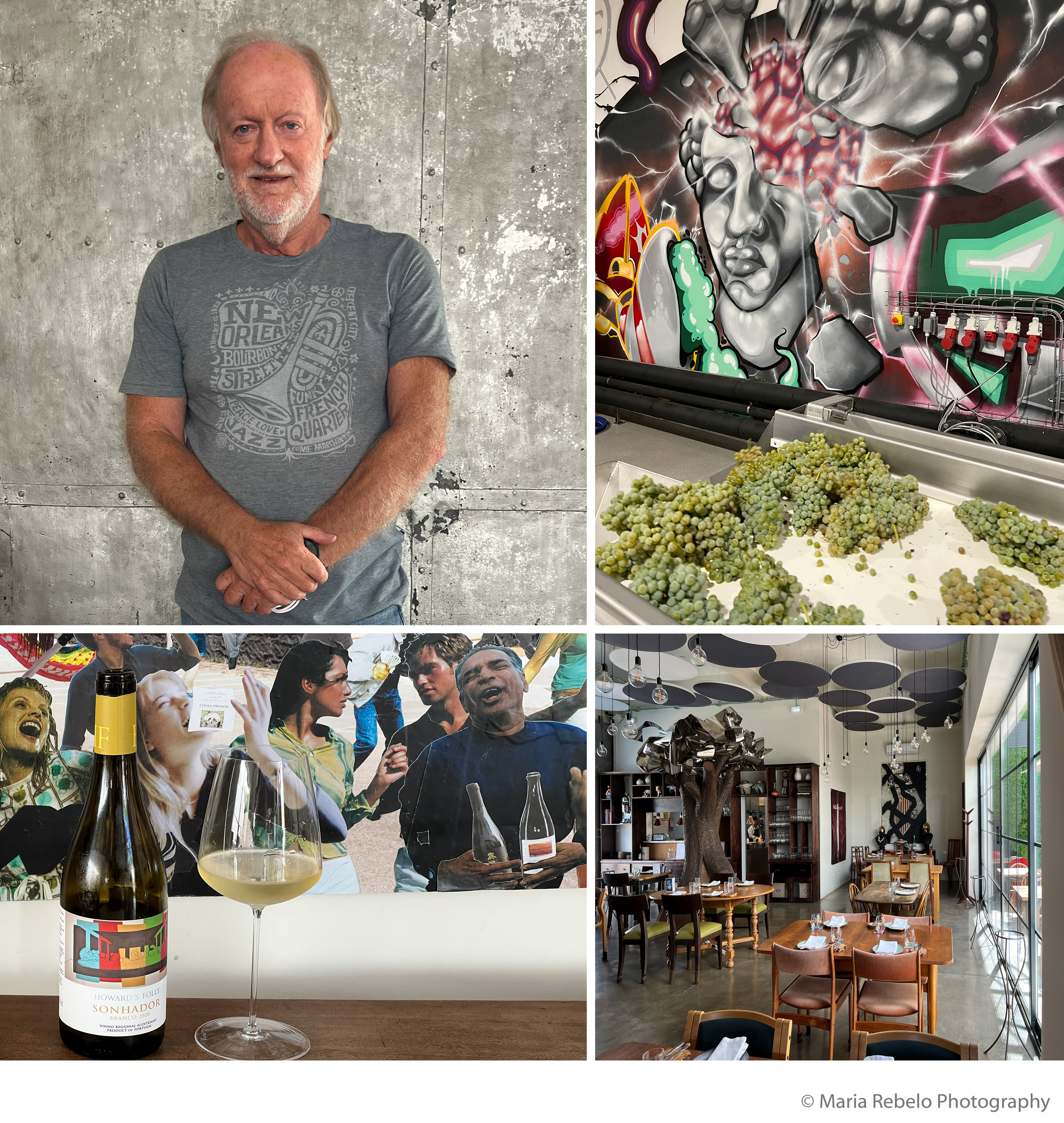
It is great fun to visit Howard’s Folly in Estremoz. The restaurant, winery, and art gallery are a joint venture between Howard Bilton, a British financier, and David Baverstock, a legendary winemaker. 

After studying enology in his home country, Australia, David worked in France and Germany. Before returning home, he vacationed in Portugal and met his future wife, Maria Antonieta. He returned to Australia to work in the Barossa Valley, where Maria joined him. But Maria was homesick, and in 1982 the couple came back to Portugal. David worked in the Douro valley until 1992, when he became chief winemaker at Herdade do Esporão in Alentejo. He felt at home in the endless plains that reminded him of Australia. His thirty harvests at Esporão helped establish Alentejo as an important wine region.  

Howard’s Folly is an exuberant place. It occupies a large building that was once a “grémio da lavoura,” an agriculture association. There is art everywhere. Sewing machines turned into miniature tractors bought in the local market, pig sculptures, and much more.

David shows us the winery with its colorful walls painted by a graffiti artist. Freshly picked grapes are arriving to be sorted, crushed, and cooled with dry ice. 

We head to the restaurant. The food, prepared by chef Hugo Bernardo, is Portuguese with a whimsical British twist. The butter has a strong umami taste because it is mixed with Marmite, a salty yeast extract popular in Britain. 

David opens a delightful white wine called Sonhador (dreamer), made from old vines planted in the hills of São Mamede in Portalegre. It is an excellent companion for the codfish and chips that soon arrived at the table. Then we try the Winemaker’s Choice, a velvety red that pairs beautifully with a delicious shitake mushroom salad.

Lunch ends with a glass of 1991 Carcavelos. The wine, produced at Quinta dos Pesos by the Manuel Bulhosa family, was stored in barrels and almost forgotten. David and Howard convinced the family to sell them some barrels so that David could make a blend. The result is spectacular.  

David retired from Esporão and was planning to take it easy. But Ravasqueira convinced him to join them as chief winemaker. And that is lucky for us. We’ll be able to enjoy many more of David’s harvests to come!

Howard’s Folly is located at Rua General Norton de Matos in Estremoz, tel. 268 332 151.

How do we tell the king?

We used to buy jams endorsed by the British monarchs, figuring that centuries of sampling jams at tea time gave them the practice required to select the cream of the jam crop.

We quite liked the British jams until one fateful lunch at Toca da Raposa in Ervedosa do Douro. A sampling of jams arrived without fanfare at dessert time. When we tried them, we experienced a whole new level of deliciousness!  

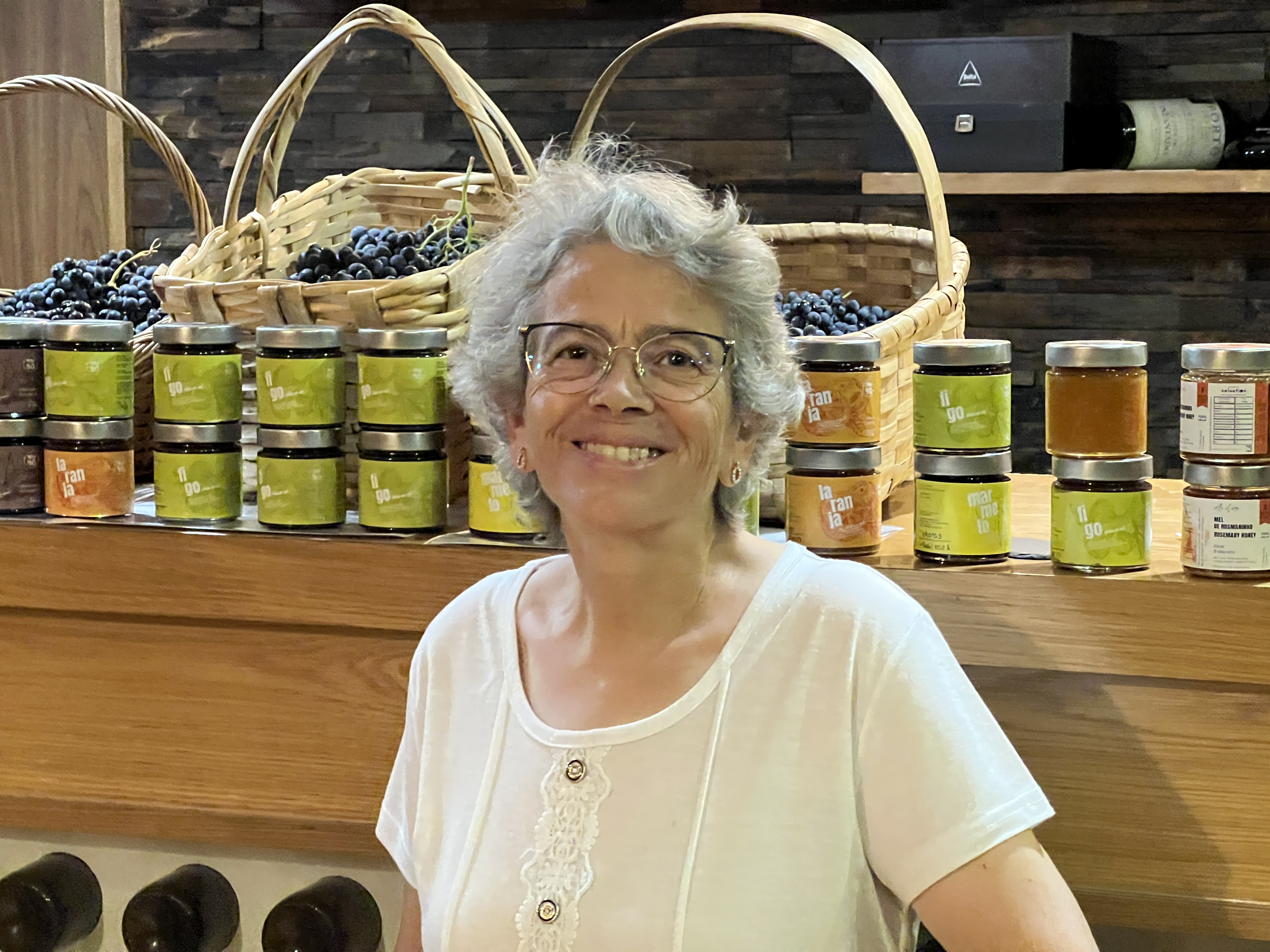
What makes these jams so sublime? Their fruit comes from the Douro valley, a place where the scorching summer heat and a wealth of soil micronutrients create unique conditions that intensify aromas and flavors. And each batch is handcrafted by Dona Graça, a legendary cook, and her talented daughter, Rosário. The two leave nothing to chance, shunning the use of preservatives and making adjustments small and large to ensure that the results are perfect. 

There is an orange jam chockfull of strips of orange rind that delight the palate and an orange and hot pepper jam with the ideal combination of sugar and spice. There are jars of jam brimming with perfectly ripe whole figs; a surprisingly delicious zucchini jam; amazing jams made with must from grapes used to produce port wine; jams made from a rare peach variety that grows amidst the vines, and much more.

The jams favored by his royal majesty pale by comparison with the wondrous jams from Toca da Raposa! The question is: how do we tell the king?

Toca da Raposa is located at Rua da Praça in Ervedosa do Douro, tel. 254 423 466.

Alentejo’s star wine grape

In the middle of the 19th century, Henri Bouschet crossed Petit Bouschet, a combination of Aramon and Teinturier de Cher conceived by his father, with Grenache. The new varietal, Alicante Bouschet, produces wines with a beautiful dark-red color. 

Over time, the French lost interest in Alicante Bouschet. But the grape found its home in Alentejo, where it flourished and transformed, becoming one the region’s most emblematic varietals. 

Alicante Bouschet was first planted in Alentejo at the end of the 19th century by the Reynolds, a British family that purchased Herdade de Mouchão. It is the star of the wines made by Julio Bastos, an heir to the Reynolds family, at Quinta Dona Maria

The photo shows some beautiful Petit Verdot (on the right) and Alicante Bouschet (on the left) grapes picked at Monte da Ravasqueira. Like Petit Verdot, most red grapes have white pulp. That is why we can make white wine from red grapes (“blanc de noirs”). If we extract the red-grape juice and avoid contact with the skins, the result is a white wine. If we allow for some skin contact, we get a rosé.  

Both the skin and pulp of Alicante Bouschet grapes are red. This type of grape is called tintoreira (dyeing) because it gives color to the wine. But it has much more to offer: enticing aromas, structure, concentration, and aging ability. Open up a bottle of Alentejo wine, and you’ll see!