Belcanto

Composit Bel Canto

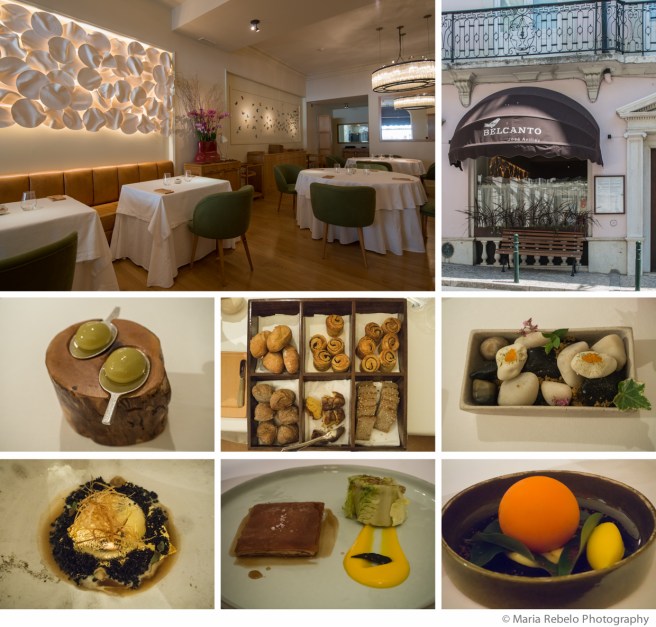
Perhaps it’s not a coincidence that Belcanto, the most celebrated restaurant in Lisbon, is close to the São Carlos opera house. Decorated with whimsical porcelain plates, the restaurant looks like a stage and its meals are as thrilling as a great opera performance.

Our lunch’s overture was composed of small bites often included in the couvert of traditional restaurants:  tremoços (lupini beans), olives, and a carrot and garlic salad. The presentation was unusual–they were served on top of Portuguese cobblestones. But the real surprise was that they all turned liquid once we bit into them, filling our mouth with explosions of flavor. This culinary prelude was accompanied by Vicentino, a wine from Zambujeira do Mar that left our paletes refreshed with hints of green pepper.

There were more surprises. First, a fake edible stone covered with salmon caviar. Then, crispy chicken skin with corn coriander and liver, a combination that tastes like roasted chicken. Next, a delicious algae cornet filled with tuna served inside a flower pot.

A genial waiter introduced a chorus of breads made from corn, buckwheat, quinoa, and puff pastry. Next came a duet for clams and “lingueirão” (razor clams) accompanied by a 1979 Porta dos Cavaleiros, a velvety red wine from the Dão region produced in the birth year of chef Avillez.

Then the arias started. The first was a Golden Egg–an egg cooked at a low temperature, covered with gold leaf and adorned with threads of fried leek. It arrived with a lively Arinto white wine made by António Maçanita in Pico, a volcanic island in the Azores archipelago.

The second aria was called Ocean Dive: a pristine sea bass (robalo) cooked in sea water with seaweed, “salicórnia” (samphire), razor clams, and mussels. We were still savoring the final chords of this crowd pleaser when a new theme was introduced: a flavorful remake of the bucolic “cozido” that the chef’s grandmother used to prepare with boiled meats and cabbage. It came with a vigorous 2012 Bruto from the Douro region.

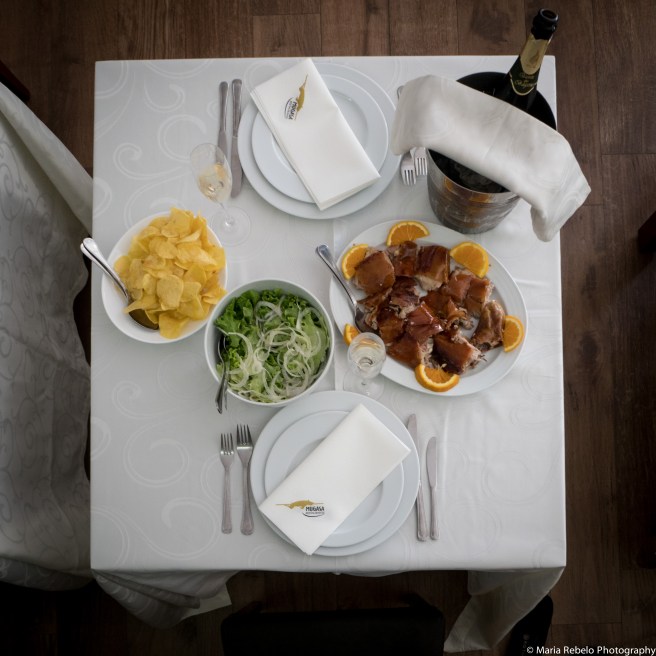
The performance reached its climax with another traditional recipe reinvented: the roasted piglet from Bairrada. We don’t know what culinary sorcery was used to produce this perfect combination of crispy skin and juicy roasted meat. All we can tell you is that the result is magical.

A new theme was introduced by a duo of pre-desserts: a raspberry sorbet and an “abade de priscos” pudding. They were followed by a tangerine dream made from frozen juice and filed with tangerine sorbet. Vila Oeira, a rare dessert wine from Carcavelos harmonized with these sweet delights. Coffee and mignardises brought our meal to a blissful finale.

You have to be patient to dine at Belcanto. The restaurant is booked for weeks in advance. But it’s worth the wait to experience such an unforgettable culinary performance.

Belcanto is located at Largo do São Carlos in Lisbon, tel. 21-342-0607.


Serra d’Ossa

Composit Serra D'Ossa.JPG

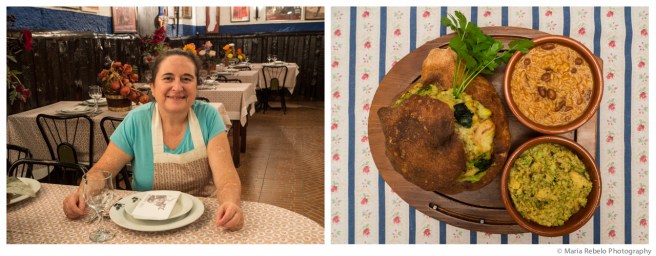
It was an act of bravery. We drove up the serpentine road to Serra d’Ossa to dine at a restaurant we couldn’t find on trip advisor!  But a trusted local source told us that this was the place to go if we wanted to taste the rustic food of Alentejo. And so we went.

We were welcomed by Paula Patinho who owns the restaurant with her husband Francisco. Her mother cooks and her father makes the house wine. We were surprised by the menu prices: they were half of what we would have paid in Évora or Estremoz.

Francisco suggested that we start with “sopa de cação” (dogfish soup), continued with a tomato and fried meat soup, and ended with “lagartos,” thin strips of black pork grilled to perfection. The flavors are bold but harmonious perhaps because all the ingredients were local, cultivated in the same lands by the same people.

The house wine is staged in stainless steel. It tastes pure and smooth and pairs perfectly with the food.

We asked Francisco what makes the food taste so great. “There is a deceiving complexity to the cuisine of Alentejo,” he explained. “The preparations look simple but pushing the flavors to a higher level takes time and requires many ingredients.”

Our audacity was greatly rewarded. We discovered an inexpensive restaurant that does justice to the rich culinary tradition of Alentejo.

Serra d’Ossa is located on Rua Principal, 77, Aldeia da Serra D’Ossa, Redondo, tel. 266-909-037.

Buxa

OLYMPUS DIGITAL CAMERA

Natália Maia, the manager of the Guimarães pousada, recommended Buxa, a small restaurant right in the center of the Guimarães historic district.

As soon as we arrived, we recognized all the traits of the restaurants we favor.  First, the place was completely full. Second, there were people without reservation trying to charm the waiters into giving them a table (can you believe their nerve?) Third, there was a rhythm to the service: waiters moved with agility and grace to the beat of the kitchen drums. Fourth, the menu is small, focused on a few perfect preparations. And fifth, the price is right.

We loved the codfish with broa, a symphony of traditional flavors of the Portuguese cuisine: codfish, olive oil, corn bread (broa) and potatoes. The black pork was grilled to perfection, salty and satisfying. The tripe cooked with beans had layers of wonderful flavors (if tripe is too adventurous for you it is worthwhile ordering it just to eat the amazing beans). The octopus was tender and delicious. And the “alheira,” a sausage from nearby Mirandela, was spectacular.

We confess that we arrived at Buxa without reservations and charmed the waiter into giving us a table. But we promptly made reservations for the next day. The food at Buxa is too good to leave to chance!

Buxa is located at Largo da Oliveira 23 in Guimarães, tel. 252 058 242. Reservations are a must.

Magano

Composit Magano

When lunch time comes, some Lisbon residents dream about being magically transported to the plains of Alentejo. “O Magano,” a restaurant in the Campo de Ourique neighborhood, is a place where these dreams come true. Open for more than a decade, it brings to the capital untranslatable Alentejo delights such as “pézinhos de coentrada” and “carne de alguidar.”

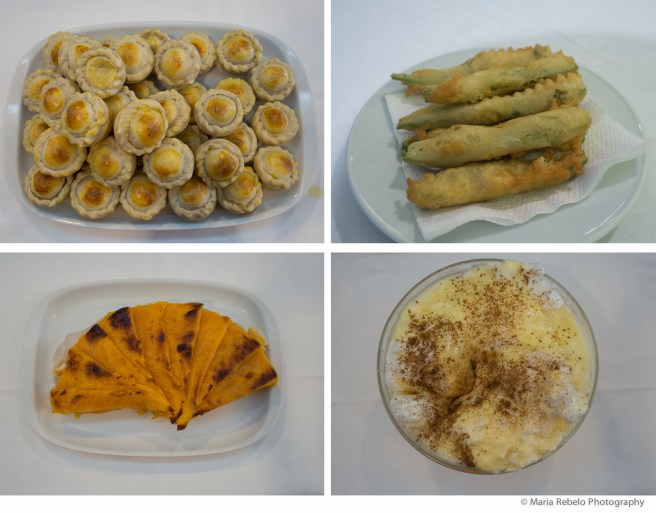
We told our waiter that we wanted to try a little of everything. “I can bring you the menu or you can leave it up to me,” he said with a twinkle in his eyes. We agreed to put him in charge and soon the table was covered with small plates of codfish with chickpeas, grilled peppers, favas with chouriço, miniature pies, green bean tempura, and marinated partridge with razor-thin fried potatoes.

“This was a wonderful lunch,” we said, complimenting our waiter on his choices “It’s not a problem if you want to skip it,” he said “but I had something else for you to try.” He went to the kitchen and brought back a steaming terrine of tomato broth. He carefully placed a piece of bread on each soup plate. Then, he poured the tomato broth and toped each piece of bread with a slice of grouper. The result was pure culinary satisfaction.

We made it clear that we didn’t have room for dessert. “I understand,” our waiter said with an enigmatic smile. He then brought us a plate with “queijadas,” “lérias,” “fidalgo,” and a Portuguese version of “îles flottantes.” “Just in case you change your mind and decide to end the meal on a sweet note,” he said. It was a pleasure to succumb to these temptations.

Magano means mischievous boy in the slang of Alentejo. Our waiter is a magano who knows that no one can resist the brilliant simplicity of the food of Alentejo.

O Magano is located at Rua Tomás Anunciacão 52 in Lisbon, tel. 21 395 4522. Reservations are a must. 

The last harbor

OLYMPUS DIGITAL CAMERA

The existence of one of Lisbon’s best fish restaurants has been a closely guarded secret for more than half a century. Its name is “Último Porto” (the last harbor). Now that the secret is out, we might as well confess everything.

The restaurant is tucked away in the corner of one of Lisbon’s harbors (Rocha do Conde de Óbidos). It is not a glamorous place. But for fish lovers it is heaven.

There are tables inside and an esplanade surrounded by containers that is very pleasant when the weather is warm. It is easy to park and the walk to the restaurant is beautiful with the river in front of us and the city on our back.

“Último Porto” opens only for lunch and it is always full of locals. Grilled fish is the main event and the stars of the show are the “salmonetes” (mullets). Their skins are colored with yellow and orange hues, their flavors as bold as their colors. But, there are many other great choices, from sea bass to codfish.

Many restaurants showcase their fish in a refrigerated display. Others bring a fish platter to the table so that customers can choose what they want. At Último Porto, the fish is treated like a work of art—shielded from light and protected from the elements. It only leaves the refrigerator to go to the grill where it is cooked to perfection. It is this care that makes the last harbor our first choice for grilled fish in Lisbon.

Último Porto is located in the Estação Marítima Da Rocha Conde d’Óbidos, tel. 21 397 9498. It only serves lunch and reservations are a must. 


Salt-water tea

composit-cha-com-agua-salgada

Two architects working in Lisbon, Paulo Esteves and Sandra Gomes, went to the Algarve to visit their family. By happenstance, they heard about a competition for the concession of a restaurant at the entrance of the Manta Rota beach. They were tired of their busy lives in the capital and yearned to be closer to nature, so they decided to apply.

A long time passed until one day, when they had almost forgotten about the competition, they learned they had won!

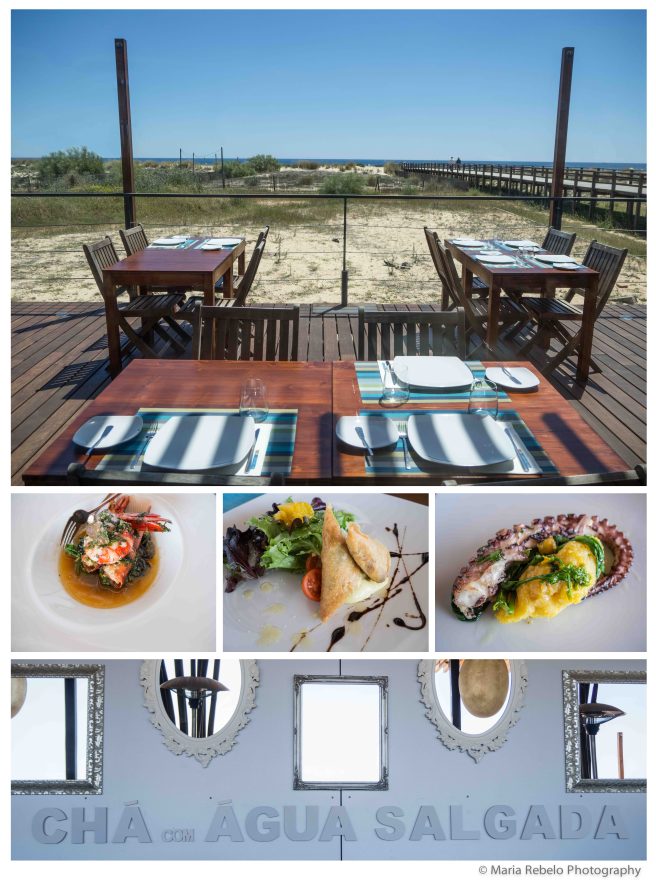
They called their restaurant Chá com Agua Salgada (salt-water tea). It is a beautiful place with a terrace overlooking the ocean. The food is great and tastes even better because the appetizing aromas are mixed with the ocean breeze.

Our meal started with octopus samosas that were crispy and flavorful, seasoned with a curry mayonnaise. Then came carabineiros, large shrimps from Algarve, paired with spinach wilted in oil and garlic. Next, we enjoyed a luminous corvina cooked with lemon and a delicate algae called sea lettuce. The octopus returned to end the meal, this time seared and adorned with migas, a bread-based accompaniment.

The food looks deceptively simple, but it is prepared with great expertise by chef Marco Jacó. The service is flawless, we felt like we were having lunch at a friend’s house. And the location is heavenly.

Chá com Água Salgada is located at the entrance of the Manta Rota beach, tel. 281 952 856. Click here for their website.

Dona Luisa’s famous codfish recipe

composit-solar-dos-amigos-2

A year ago, we had a memorable meal at Solar dos Amigos, a restaurant in the small village of Guisado near Caldas da Rainha. We returned this year for another great experience. Our lunch started with succulent lamb chops, grilled to perfection. They were followed by a wispy, tasty “Bacalhau à Campino” (peasant style codfish) served inside the hearty country bread that is baked at the restaurant.

Dona Luisa Nunes, the restaurant’s owner and chef, is in great form and so is her octogenarian father who continues to produce a delightful wine that pairs perfectly with the food served at the Solar.

When we praised her famous codfish Campino style, dona Luisa offered to give us the recipe so we could share it with you, dear reader. Follow the instructions and you’ll have a delicious codfish meal. But, will it taste as good as when dona Luisa prepares it?  Not a chance!

Codfish Campino style

Soak 4 slices of salted codfish for two days, changing the water periodically to remove the salt.

Boil the cod for 15 minutes. Reserve the water, remove the skin and the bones, and shred the fish by hand. Boil a green cabbage and drain the water (dona Luisa favors a pusa-drum-head cabbage, known in Portugal as “repolho coração de boi”).  Open the top of a country bread, remove the inside of the bread and soak it for 5 minutes in the water used to boil the codfish. Carefully drain the water from the bread.

Combine olive oil and sliced garlic in a frying pan. Add the soaked bread, the shredded codfish, the cabbage and 2 pounds of cooked red beans. Season with salt and pepper and let the mixture simmer gently for a few minutes. Place the mixture inside the country bread, cover with the bread lid, season with olive oil and place in the oven for a few minutes, until the bread turns golden. Decorate with parsley sprigs and serve.

Solar dos Amigos is located on a small village called Guisado, 100 km north of Lisbon. The restaurant’s address is Rua Principal, 49, Guisado, Caldas da Rainha. Even though the restaurant is large, it is a good idea to make reservations. Their telephone number is 262-877-135. Click here for their website.

Extraordinary food in Estremoz

Composit Gadanha Mercerearia.jpg

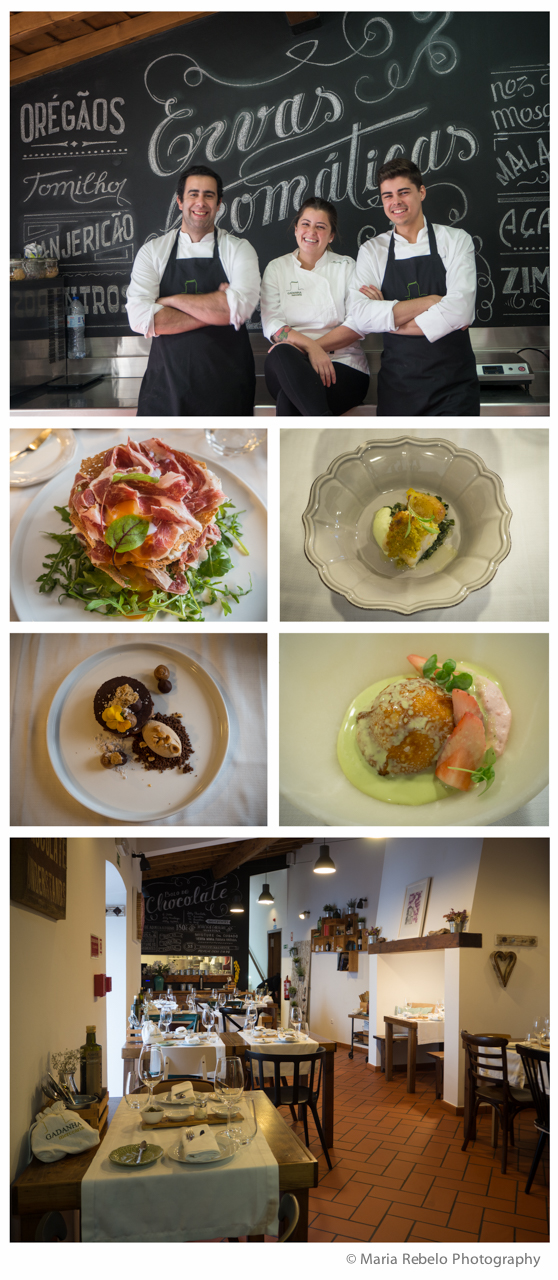
As soon as we entered, we felt that there was something special about Gadanha, a small restaurant in downtown Estremoz. The back wall is decorated with a chocolate cake recipe hand written by Michele Marques, the Brazilian chef who runs the restaurant. The dining room is furnished with old chairs and tables that give the place a cozy feeling.

We asked our waitress whether it was possible to sample a few items from the menu. Our culinary feast began with a plate of goat cheese, pears, walnuts and honey, accompanied by a thyme ice cream. This ethereal combination of flavors from Greece made us feel like gods dining on Mount Olympus.

A plate of delicious lamb croquettes paired with a roasted garlic aioli brought us back to earth. They were followed by one of the restaurant’s signature dishes: an ingenious “mille feuilles” constructed with thin slices of Alentejo bread, codfish and black pork prosciutto. The flavors of Alentejo shined on the next plate: a sausage called “farinheira” toped with fried quail eggs and accompanied by apple purée. The savory part of the meal ended with another signature dish: a delicious slow-cooked codfish topped with a crust made from cornbread, rosemary and thyme.

An extravagant combination of hazelnut and chocolate brought us to the realm of sweetness. It was followed by graceful “îles flottantes” covered with an orange crust, served with strawberries and a basil-infused crème anglaise.

We asked our waitress whether we could compliment the chef on our extraordinary meal. Michele came to our table with a radiant smile. We asked her an indiscreet question: “How does a Brazilian chef open a restaurant in the middle of Alentejo? “I fell in love with someone from Alentejo,” she told us. “That love waned but I liked Alentejo so much that I stayed.” We asked Michele where she gets her inspiration. “I did not grow up with the traditional recipes of Alentejo, I have a different culinary background.” she answered. “But I am inspired by the amazing products that the region has to offer.”

Michele introduced us to her business partner, Mário Vieira, her close collaborators, sous chef Alberto Muralha and pastry chef Gonçalo Carvalho, and all the dining room staff. “The restaurant is a team effort,” she stressed. “We’re all essential to the quality of the food and service. I have to pick the right people to make sure that everything we do, we do with love.“

It is clear that someday soon stars will shine on this restaurant in Alentejo. But we don’t need official accolades to know that Gadanha serves extraordinary food prepared with love.

Gadanha is located at Largo Dragões de Olivença, 84 A in Estremoz, tel. 268 333 262. Click here for their website.


Eating with the best people in Vila Real

OLYMPUS DIGITAL CAMERA

“I’m sorry, but we cannot accommodate you. We won’t have a free table any time soon,” said Eleutério Lameirão in a serious tone that agrees with his solemn name. His small restaurant, located in a residential area of Vila Real, was full of regular customers.

Before we left, we took a glance at the menu and found a quote by Julia Child: “People who love to eat are always the best people.” Inspired by this quote, we decided to wait. Eleutério gave us a puzzled look, but fifteen minutes later he had a table for us.

We ordered rissois, fried breaded dough shaped like a half moon with a shrimp or meat filling. Eleutério brought them to the table and waited around to see our reaction. They were crispy on the outside and full of flavor on the inside.  When we said “wow, these are amazing!” Eleutétio abandoned his shy demeanor and smiled, pleased by our reaction. He went back into the kitchen and brought us a plate of codfish cakes. These were also extraordinary: light, airy and slightly crunchy, a four-part harmony of cod, parsley, egg, and potato.

Finally, we had small sardines called “petingas,” incredibly fresh, fried and seasoned to perfection. They came with an hearty bean rice that melted in the mouth and blended with the salty sardines.

The restaurant was still very busy but Eleutério came to chat with us. He told us that the menu is always small, three or four items made with the best fresh ingredients and modestly priced. The recipes have been refined over many years and require great attention to detail. “It is hard work because there’s no room for distractions. Everything has to be right, the timing, the temperature, the seasoning. But it is worth it because when everything is right the taste is amazing,” he said. If you ever have the privilege of eating at O Lameirão, we think you’ll agree.

The restaurant O Lameirão is located on Rua da Cruz, Vila Real, tel. 259 346 881.

Perfection at Adraga

Composit Adraga.JPG

When we were very young, our parents used to take us to an idyllic beach with crystal blue waters and natural rock archways sculpted by the sea. In the end of the afternoon, we often had dinner in a small restaurant right on the beach.  It was simple fare: “percebes” (gooseneck barnacles), grilled fish, and salad. But the flavor and aromas were amazing and so was the spectacle of the sun setting on the ocean. We forgot the name of the beach and that is just as well, for places change and fail to live up to our memories of them.

During a visit to Sintra this summer, we decided to have lunch in the nearby Adraga beach. As soon as we arrived, we realized that this was the beach from our childhood!  There were little kids playing in the same rock archways we once loved and bathing in the same blue waters we so much enjoyed.

We sat at the beachside restaurant and ordered “percebes,” grilled fish, and salad. We kept our expectations low. Surely, the food has changed. Then the seafood and fish arrived, fresh, full of flavor, meticulously prepared. It was as if we were going back in time, to a simplicity and authenticity that are so rare today.

We complimented Jorge Pimenta and his mother Suzette, the restaurant owners, on the quality of their food. They responded with modesty: “Everything we do is simple but we try to do it well.  The percebes were caught this morning right on the beach. The fish is very fresh. All we do is respect the ingredients that the sea brings to us.”

The reasonably-priced wine list has many great choices. But in a restaurant where everything is local, it makes sense to drink the magical wine produced nearby in Casal de Santa Maria by a Russian Baron who is 103 years old.

The same family has owned the Restaurante da Adraga for four generations. In the beginning of the 20th century, queen Dona Amélia used to come here to eat fish while the king hunted in the Sintra mountain. One century later, the Adraga restaurant continues to delight anyone who loves great food, whether or not they have royal blood.

Restaurante da Adraga is located at Praia da Adraga, 143, Sintra, tel. 219280028. Reservations are a must. Ask for a table near the windows facing the beach for a spectacular view.