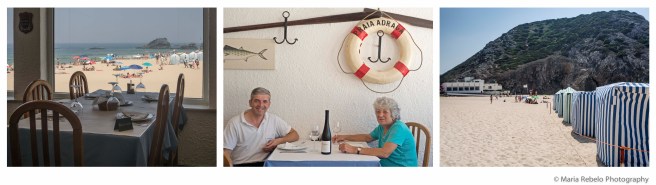
Sweet moments in Lisbon

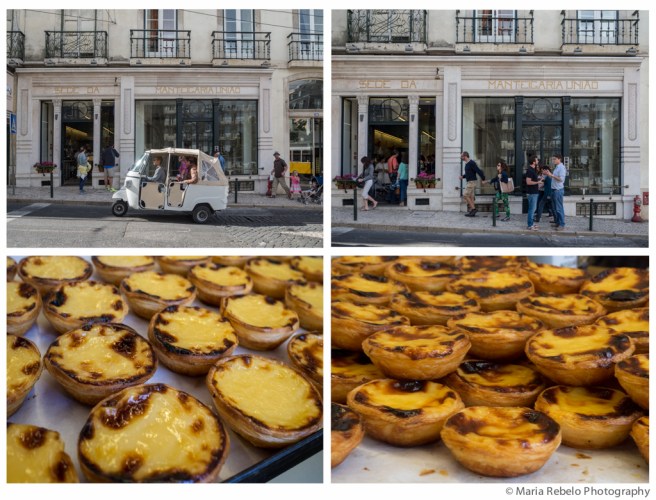
Composit Manteigaria

What is the best pastel de nata in Lisbon?  The answer depends on our mood. Some days, we like them perfumed with lemon. Other days, we prefer them scented with vanilla.

Our current favorites are the lemony kind. They are made by Manteigaria in Praça Camões near Chiado at a location that was once occupied by a butter shop (manteiga is the Portuguese word for butter). Perhaps as an homage to the past, Manteigaria’s pasteis have a buttery taste. The crispy crust and the rich filling are so satisfying that they make us feel, for a moment, that we discovered the meaning of life.

Whenever a new batch of pasteis comes hot out of the oven, Mantegaria’s cashier rings a bell. You’ll see people dropping what they’re doing and rushing to Manteigaria in search of a moment of sweetness.

Manteigaria is located on Rua do Loreto, 2 near Chiado in Lisbon, tel. 21-347-1492.

Avillez’s neighborhood

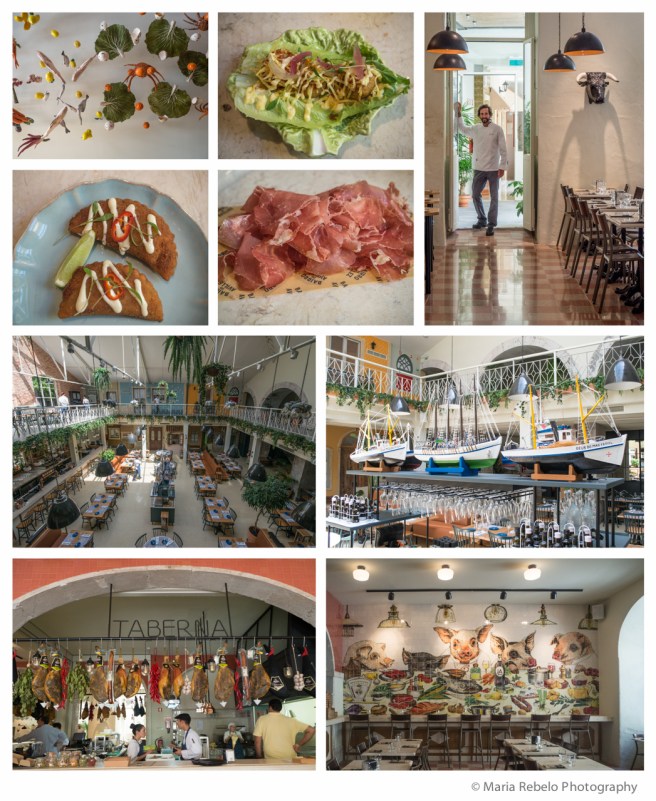
Bairro do Avillez

It is common for writers to imagine new worlds and share them with us. But it is uncommon for chefs to pursue this creative strategy. José Avillez, the Michelin-starred chef of Belcanto, dreamed of an old Lisbon neighborhood where friends gathered to share great food. He imagined timeworn buildings guarded by carved wooden doors with windows adorned by crocheted curtains.

When the space once occupied by the 13th-century Convent of Trindade became available, Avillez seized the opportunity to make his dreams come true. He invited architect Joana Astolfi to design an installation inspired by old building facades, artist Cátia Pessoa to create ceramic sculptures representing fish and vegetables, and painter Henriette Arcelin to produce a large tile panel at the famous Viúva Lamego factory.

The result is a fun atmosphere perfect to enjoy the classics of Portuguese cuisine, refined and, in some cases, reinvented. Bairro do Avillez (Avillez’s neighborhood) has a grocery store (Mercearia) with some of the chef’s favorite products, a tapas bar (Taberna), and a restaurant (Páteo).

In the Taberna, you can eat a wide variety of “petiscos” (the Portuguese word for tapas), from Portuguese prosciutto and sausages, to codfish with cornbread, and roasted piglet.

The Páteo offers pristine fish from the Portuguese coast, grilled, cooked with rice, or combined with bread, olive oil and garlic in a fragrant “açorda.” The menu also includes great seafood (lobster, shrimp, clams, crab, and razor clams), delicious steaks, and grilled black pork from Alentejo.

There’s a wonderful house wine made in collaboration with Quinta do Monte d’Oiro. And there is also a great new line of artisanal beers called Selection 1927.

We told José Avillez that we were impressed to see him take time to welcome the people who walked in to see the new space. He told us that these gestures are important to him: “What makes Portugal unique is the combination of great ingredients and a rich culinary tradition with our warm hospitality.”

Chef José Avillez is a dreamer who makes Lisbon more fun with his gracious demeanor and delicious food. It is a privilege to be in his neighborhood.

Bairro do Avillez is located at Rua Nova da Trindade, 18, Lisbon, tel. 215 830 290.

The tavern of the tides

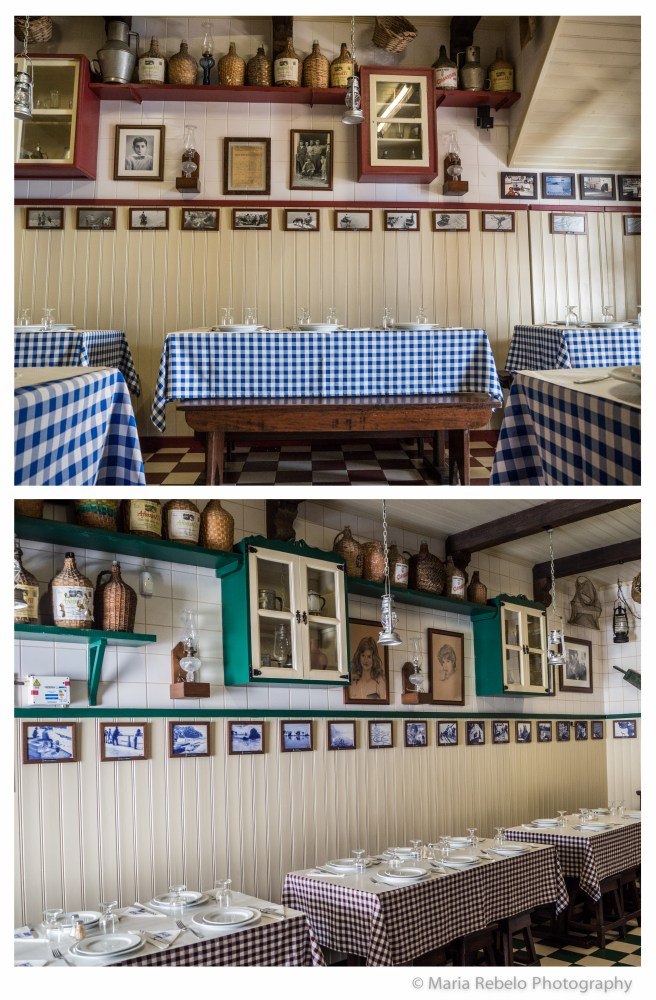
Taberna da Maré - Tavira.JPG

Portimão, a city in the Algarve, is famous for the quality of its sardines. Our favorite place to enjoy the silver of the sea is Taberna da Maré (tavern of the tides), which opened in 1946. The current owner, Zeca Pinhota, restored the restaurant with great sensitivity and care, using the original floor mosaic, vintage furniture, and photos by Julio Bernardo, a photographer born a century ago in nearby Ferragudo.

The food is wonderful. When they are in season, between June and September, the sardines are the main event. But there are many other delicacies. We had a feast composed of razor-clam rice, fried fish with “açorda,” clams Bulhão Pato, and grilled fish eggs.

We told Zeca that his clams are amazing. “That’s because they come from the sea to the restaurant. They do not spend time in tanks, shedding weight and flavor.” Zeca explained. “I call the local fisherman first thing in the morning to ask about the catch of the day. I want to cook the best of what the tide brings.” And that is indeed what you get at the tavern of the tides.

Taberna da Maré is located at Travessa da Barca 9, Portimão, tel. 282 414 614.

Finding truffles in Bombarral

composit D. José

Bombarral’s rolling hills offer their vines daily to the sun. In return, the star ripens the grapes so they can make intense, aromatic wines. The region is full of small wineries and traditional restaurants waiting to be discovered.

Our latest find is a restaurant called Dom José. It is named after José Louro who in 1992 left his job in London to open a restaurant in his hometown. His son Nelson told us that “My father used the honorary prefix Dom to name the restaurant, but we don’t have royal blood.”

Nelson was working in London in the real estate industry when, in 2012, his father announced he was selling the restaurant. Nelson quit his job and came to Bombarral to run Dom José. “I have no regrets,” he said. “I like the idea of building on what my father did and making the restaurant better every day.”

The menu offers traditional food prepared with great care using the wonderful ingredients that the region offers. Our meal began with clams bulhão Pato. The clams were succulent and their sauce was a poem to the brilliant simplicity of Portuguese gastronomy. Next, Nelson brought out his version of “fish and chips.” The fish was moist and the batter crisp. The chips were replaced by a hearty bean and spinach rice. The last dish was a wonderful “feijoada” (stewed beans and cabbage) made with black pork. It is so popular that it always on the menu.

We told Nelson that we were too full to venture into dessert territory. “But I saved the best for last,” he said as he placed on the table a plate of chocolate truffles. They melted in our mouths filling our palates with caramel, lime, and chocolate sensations. “Where do you get these magnificent truffles?” we asked. “After I started running the restaurant, my sister Carla left her banking job in London to study with William Curley, a famous British chocolatier. Then, she joined me at the restaurant. Her truffles are a great success. They’re already sold in many gourmet shops and we are starting to export them to England.”

We left the restaurant inspired by the nobility of what Carla and Nelson are doing. And certain that, somewhere in their ancestry, there is royal blood.

Dom José is located at Rua Dr Alberto Martins dos Santos 4, in Bombarral, tel. 262 604 384.

Lunch at Herdade do Esporão

composit Herdade do Esporão

We should have known that it is hard to get to paradise. We drove from Vila Viçosa to Herdade do Esporão guided by a GPS system that chose an old dirt road over the new road from Reguengos. Taking the slow road helped us understand that Esporão is an oasis. A place in the dusty interior of Alentejo where a blue lake nurtures pristine vines that produce some of Portugal’s best wines.

The road to the success of Esporão was also slow. José Roquette bought the estate in 1973 at a time when Alentejo was not a major producer of great wines. Shortly after the 1974 revolution, the estate was nationalized. It was returned to its owner only in 1984. The first wine was bottled in 1985 and released in 1987. The success of this vintage and of those that followed put Alentejo on the world wine map.

Maria Roquette, José’s daughter in law, welcomed us to the dinning room. It is a tranquil space that overlooks the lake and the vines. The walls are decorated with art that Esporão commissioned over the years to use in the labels of its reserve wine.

Maria introduced us to the chef, Pedro Pena Bastos. We did not guess that this unassuming 25-year-old was about to take us on an extraordinary culinary journey.

To prepare our senses, Pedro brought us a heavenly concoction of chick peas, seaweed, codfish eggs, and citrus caviar.  Next, came a marriage of peasant food and contemporary cuisine: pig’s feet with coriander in a red shiso gelatin. We visited the woods to taste wild mushroom beignets and a green garlic custard with truffles. We cruised rivers to enjoy crayfish and sailed seas to eat mackerel and porgy. Back on land, we had lamb from Alentejo with artichokes and apricots.

Finally, we entered the garden of delights: a green-almond ice cream, a lavender and peach tart, a gelatin of late-harvest wine, and marshmallows made of hazelnuts and chocolate.

Our traveling companions were the wonderful wines of Esporão. There were many different personalities and styles. Some, like the experimental white made from the Sardinian varietal Vermentino, were new and festive. Others, like the classic reserve red, were gracious and wise. The meal ended with fireworks provided by a wonderful tawny-style dessert wine.

If you’re visiting Portugal, travel the road to Herdade do Esporão, a place where you can taste the food and wine of paradise.

The Herdade do Esporão is located at Reguengos de Monsara, near Évora, Alentejo. Their telephone and email are 266 509 280
 and reservas@esporao.com , respectively. The Herdade’s GPS coordinates are: latitude: 38.398611 and longitude: -7.546111. Chef Pedro Pena Bastos is the fifth from the left on the photo above.

A school lunch

OLYMPUS DIGITAL CAMERA

In 1940, the Portuguese government announced its “centennial plan,” a program to build a large number of primary schools. The schools in the north of the country, designed by Rogério de Azevedo, look austere with their granite and schist exteriors. The schools in the south, designed by Raul Lino, have graceful arches and whitewashed walls. Both designs used elements of the vernacular architecture and became integral parts of the Portuguese landscape.

With the number of children in decline, some of these schools have been closing. The school in the village of Cachopos near Comporta in Alentejo closed in the late 1990s but found new life as a restaurant appropriately called A Escola (the school).

The building is located in a beautiful woodland. Our arrival was greeted by the chirping of birds and perfumed by the scent of eucalyptus.

As we sat at the table remembering learning the three Rs, a plate of marinated rabbit and a carrot salad arrived. The menu has lots of great offerings, including cuttlefish rice with shrimp, fried eels, pasta with sea bass, stewed partridge, and rabbit pie with pine nut rice. The portions are generous and the food is delicious. A Escola is a great place to enjoy the simple, hearty cuisine of Alentejo.

On the school wall there’s an old map of the Portuguese empire. Those vast possessions of land and sea are long gone. But the empire of the senses–Portugal’s wonderful culinary tradition–continues to thrive.

A Escola is located at Estrada Nacional 253, Cachopos, Alcácer do Sal, tel. 265 612 816.


A comet called Noélia

Noélia composit

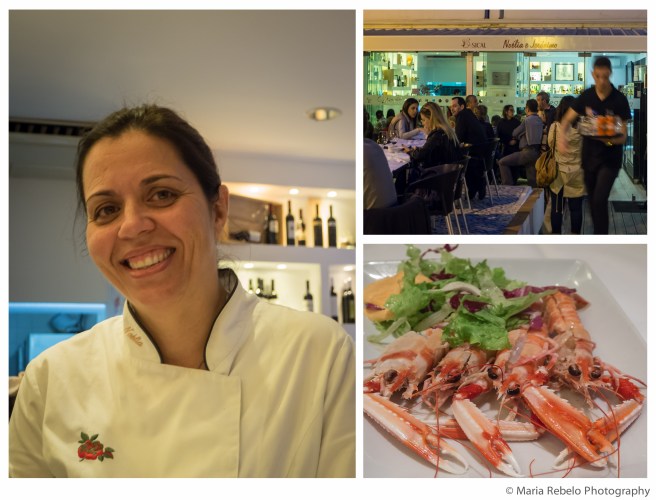
“One good thing about Winter is that it is easier to dine at Noélia” our Algarve friends told us. “In the Summer it is impossible to get in.” Curious, we made reservations a week in advance.

As soon as we sat down in this seaside restaurant in the village of Cabanas, we knew we were in for something special. There was a festive atmosphere and the aromas of the sea filled the air.

The restaurant is noisy but our waiter was a mind reader who guessed what we wanted without the need for much verbal communication. And so a perfectly chilled bottle of sparkling wine arrived, followed by a plate of steamed langoustines. “They were caught this morning” the waiter told us. “I know you’ll like them.” We were so impressed by the crustaceans’ exquisite taste that we vowed never to eat frozen seafood again.

Our main dish was rice with lemon, corvina, and conquilhas, small cockles that only exist in the Algarve. We appreciated in silence the sublime combination of flavors. A Dom Rodrigo, a sweet combination of fios de ovos (egg threads) and almonds, rounded the meal.

Noélia, the chef, seemed to be everywhere: cooking, talking to regulars, giving instructions to the staff, making final adjustments to the plates before they were brought out. She is a culinary comet that brightens everything she touches.

Suddenly, she arrived at our table and asked: “did you like the food?” “We loved it,” we replied. “But we’re sorry we’re too full to try other dishes.” “Next time order oyster risotto and favas with cuttle fish,” she said. “I get up at 6:00 am to make sure I buy the best oysters in Algarve.” And she was gone as quickly as she had arrived.

Outside, the moon was painting the sea with its silver light. But no one in the restaurant paid any attention. The moon cannot compete with a comet called Noélia.

The Restaurante Noélia & Jerónimo is located in the village of Cabanas near Tavira, Algarve at Rua da Fortaleza, Edifício Cabanas-Mar, Loja 6, tel, 281370649. Reservations are a must.


A roadside restaurant

Composit Pombal

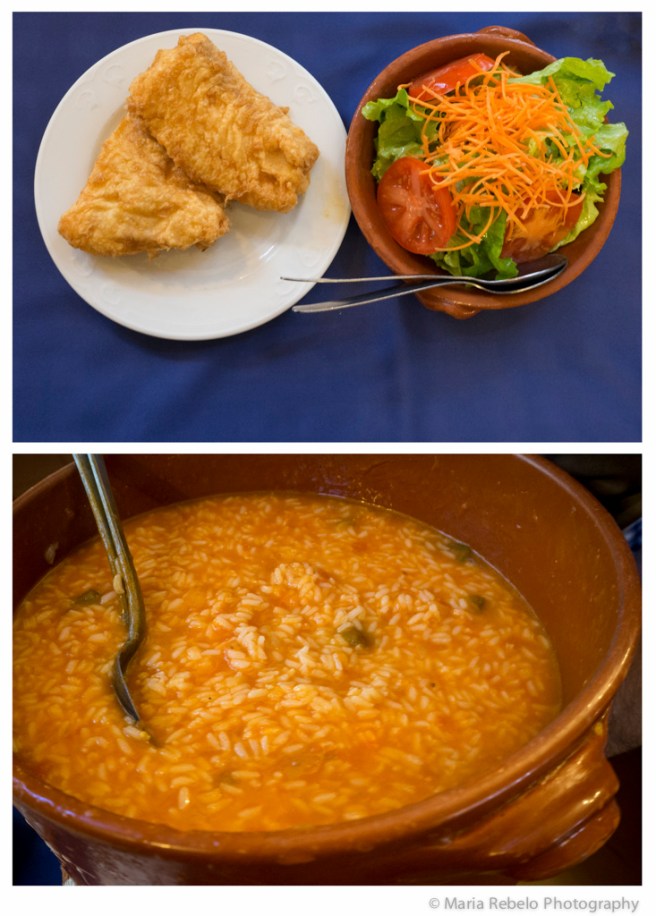
Before highway A1 was built, it took a long time to drive from the north of Portugal to Lisbon. To make the trip easier to endure, our parents liked to stop at a small roadside restaurant in Pombal called Manjar do Marquês. As soon as we sat down, we were served a delicious tomato rice with a choice of accompaniments, such as codfish cakes, veal milanese, or fried hake.

After a long hiatus, we recently returned to Manjar do Marquês. We entered the restaurant’s new premises just off highway A1 with some trepidation. What if the food is not as wonderful as we remember it? Would we destroy our childhood memories? Luckily, some things never change: the tomato rice is as appetizing as ever.

We asked the owner, Maria Graça, what makes her rice taste so good. She smiled and answered: “My husband really wanted to have a restaurant. I worked for the phone company and had no cooking experience. But I was very much in love with him, so I quit my job to become a cook. My food was different because everything I did, I did with love. And that continues to be true.”

Today Maria Graça is 84 years old and still works 10 hours a day at the restaurant. Could her hearty tomato rice be the key to longevity?  It’s worth stopping by Manjar do Marquês to find out.

Manjar do Marquês is located on Estada Nacional 1 (IC2), Pombal, 170 km north of Lisbon, tel. 236-218-818. Click here for the restaurant’s website.

Eating by the sea in Azores

OLYMPUS DIGITAL CAMERA

Beira Mar, a family-owned restaurant in the Azores island of Terceira, has been a favorite dinning destination for four decades. It is always busy so, if you don’t have a reservation, you’ll probably have to wait for a table.

The service is orchestrated by a small troupe of waiters who move with elegance and speak with eloquence about fish and seafood. We could not tell whether they had trained as ballet dancers or as marine biologists.

Our meal started with “cracas,” a local type of seafood that has a delicate crab-like meat and a wonderful salty juice. We then sampled some orange delicacies called “lapas” that were briny and full of flavor.

Next, we had some amazing boca negra (black mouth), a fish that in continental Portugal we call cantaril. We also tried some wonderful species that were new to us: cântaro, bicudas, and lírio. They were all incredibly fresh and arrived at the table grilled to perfection. Terras de Lava, a white wine from the nearby Pico island, was the perfect complement to all this bounty from the sea.

Beira Mar is a simple place; no money was wasted on decoration or fancy silverware. And yet, the restaurant feels luxurious because we can enjoy the sunset over the harbor while feasting on the precious flavors of the sea. It is the kind of luxury we love.

Beira Mar’s address is Canada do Porto, number 46, São Mateus, Terceira, Azores, tel.  295 642 392. Reservations are highly recommended.

A tavern called Wednesday

Quarta-Feira rest composite

André Freire, the manager of the beautiful Évora pousada, urged us to try a tavern called Quarta Feira (the Portuguese word for Wednesday). “It’s a special place,” André said with a smile. “There’s no menu; you have to trust Zé Dias, the owner, and go with the flow.”

As soon as we entered the restaurant, we became friends with Zé Dias. He moved to Évora from a village in Beira Alta called Quarta Feira, the name he used for the restaurant. Dias worked as a typographer until he opened this tavern 25 years ago with Luisa Batista, a great local cook.

Dias’ enthusiasm for food, wine and life in Alentejo is infectious. Everything he serves comes from people he knows well, from the producers of cheese and sausages to the maker of the clay pots that are integral to Luisa Batista’s cooking. When we asked Dias how he managed to convince Paulo Laureano, a renowned Portuguese enologist, to make the house wine for Quarta Feira, Dias replied “Of course he said yes; we’ve been friends for a long time.”

Our dinner started with slices of local sausages and prosciutto made with black pork from Alentejo. Then a warm sheep cheese seasoned with oreganos arrived, busting with flavor. Next, we had some wonderful mushrooms cooked in mushroom water, seasoned with olive oil, garlic and coriander. “The secret is all in the timing,” Dias tells us and we believe him because at this point we believe everything he says.

The meal’s main event was the house specialty: black iberian pork shoulder marinated in wine cooked slowly in a clay pot. It was so delicious that our taste buds scintillated with delight. The dessert was composed of dried figs, walnuts, cooked quince, and samplings of two conventual desserts.

The meal ended with a glass of licoroso from Herdade do Mouchão. This sweet wine with notes of fruits and spices was a perfectly simple ending to a simply perfect meal.

Zé Dias is a philosopher king who disguises as a tavern owner so that he can share with his guests the joy of living in Alentejo.

Taberna Típica Quarta Feira is on Rua do Inverno 18, Évora, tel. 266 707 530.