Howard’s Folly

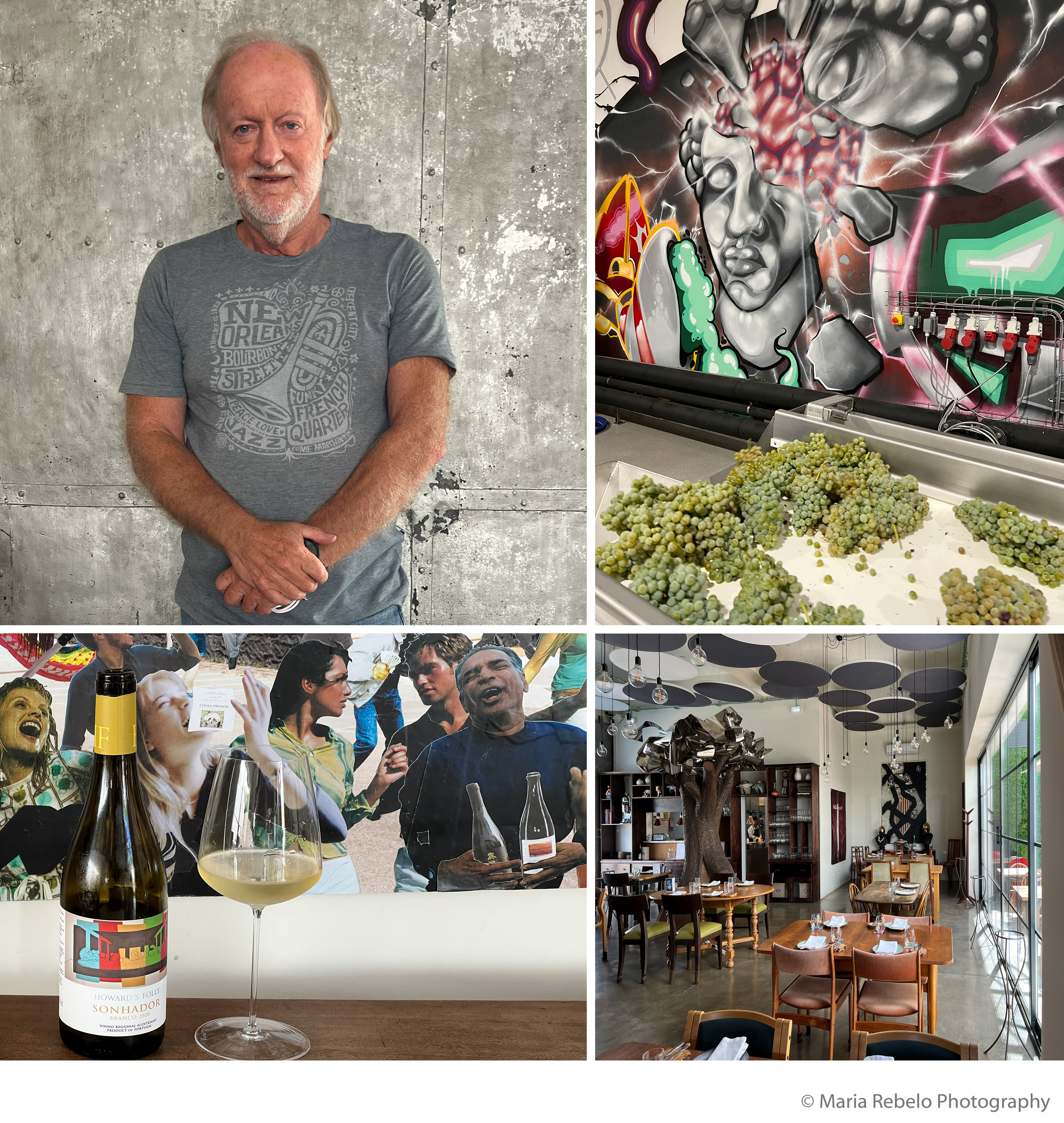
It is great fun to visit Howard’s Folly in Estremoz. The restaurant, winery, and art gallery are a joint venture between Howard Bilton, a British financier, and David Baverstock, a legendary winemaker. 

After studying enology in his home country, Australia, David worked in France and Germany. Before returning home, he vacationed in Portugal and met his future wife, Maria Antonieta. He returned to Australia to work in the Barossa Valley, where Maria joined him. But Maria was homesick, and in 1982 the couple came back to Portugal. David worked in the Douro valley until 1992, when he became chief winemaker at Herdade do Esporão in Alentejo. He felt at home in the endless plains that reminded him of Australia. His thirty harvests at Esporão helped establish Alentejo as an important wine region.  

Howard’s Folly is an exuberant place. It occupies a large building that was once a “grémio da lavoura,” an agriculture association. There is art everywhere. Sewing machines turned into miniature tractors bought in the local market, pig sculptures, and much more.

David shows us the winery with its colorful walls painted by a graffiti artist. Freshly picked grapes are arriving to be sorted, crushed, and cooled with dry ice. 

We head to the restaurant. The food, prepared by chef Hugo Bernardo, is Portuguese with a whimsical British twist. The butter has a strong umami taste because it is mixed with Marmite, a salty yeast extract popular in Britain. 

David opens a delightful white wine called Sonhador (dreamer), made from old vines planted in the hills of São Mamede in Portalegre. It is an excellent companion for the codfish and chips that soon arrived at the table. Then we try the Winemaker’s Choice, a velvety red that pairs beautifully with a delicious shitake mushroom salad.

Lunch ends with a glass of 1991 Carcavelos. The wine, produced at Quinta dos Pesos by the Manuel Bulhosa family, was stored in barrels and almost forgotten. David and Howard convinced the family to sell them some barrels so that David could make a blend. The result is spectacular.  

David retired from Esporão and was planning to take it easy. But Ravasqueira convinced him to join them as chief winemaker. And that is lucky for us. We’ll be able to enjoy many more of David’s harvests to come!

Howard’s Folly is located at Rua General Norton de Matos in Estremoz, tel. 268 332 151.

Alentejo’s star wine grape

In the middle of the 19th century, Henri Bouschet crossed Petit Bouschet, a combination of Aramon and Teinturier de Cher conceived by his father, with Grenache. The new varietal, Alicante Bouschet, produces wines with a beautiful dark-red color. 

Over time, the French lost interest in Alicante Bouschet. But the grape found its home in Alentejo, where it flourished and transformed, becoming one the region’s most emblematic varietals. 

Alicante Bouschet was first planted in Alentejo at the end of the 19th century by the Reynolds, a British family that purchased Herdade de Mouchão. It is the star of the wines made by Julio Bastos, an heir to the Reynolds family, at Quinta Dona Maria

The photo shows some beautiful Petit Verdot (on the right) and Alicante Bouschet (on the left) grapes picked at Monte da Ravasqueira. Like Petit Verdot, most red grapes have white pulp. That is why we can make white wine from red grapes (“blanc de noirs”). If we extract the red-grape juice and avoid contact with the skins, the result is a white wine. If we allow for some skin contact, we get a rosé.  

Both the skin and pulp of Alicante Bouschet grapes are red. This type of grape is called tintoreira (dyeing) because it gives color to the wine. But it has much more to offer: enticing aromas, structure, concentration, and aging ability. Open up a bottle of Alentejo wine, and you’ll see!

Tasting Malvasias in Madeira

Prince Henry the Navigator was an early-day venture capitalist. He financed expeditions on small boats called caravels to find new lands, keeping 20 percent of the resulting profits. His first big success came in 1419 when his navigators discovered an island covered by a laurel forest. They named it Madeira, the Portuguese word for wood.  

The prince brought sugar cane from Sicily to Madeira, where it thrived because of the abundance of water and subtropical climate. The island became Europe’s leading sugar producer until the first half of the 16thcentury, when Brazil supplanted it.

Prince Henry was also interested in wine, in part because of its use in liturgic services. The best 15th-century wine was made in Crete from a white varietal called Malvasia Cândida and produced with overripe grapes. 

The Jesuits planted Malvasia Cândida from Crete in a small region of Madeira called Fajã dos Padres. Today, this varietal is rare on the island. It was superseded by Malvasia de São Jorge, a hybrid created in the 1950s by Leão Ferreira de Almeida and generally used to make Madeira Malmsey. 

Manuel Malfeito, our friend who’s an enology professor, brought to Madeira a bottle of fortified wine made in Crete from Malvasia Cândida so we could compare it with Malmsey. “Perhaps this is the first time in 500 years that a wine from the original Malvasia Cândida is drunk on the island of Madeira!” said Manuel with glee. 

How do the two wines compare? The wine from Crete is pleasant and intensely sweet. The Madeira Malmsey has much more depth because of its acidity. This acidity comes in part from Madeira’s volcanic soils, which are rich in iron, manganese, and magnesium. 

It is the combination of sweetness and acidity that makes Madeiras so exquisite. Each glass of Madeira wine is a gift from a prince.

Casa Cadaval

Manuel Malfeito, our friend who teaches enology, invited us to meet a German countess. We traveled to Ribatejo, a region near Lisbon, where Teresa Schonbörn, countess of Schonbörn and Wiesentheid, lives in Casa Cadaval. It is a sprawling estate with 5,000 hectares of agricultural land that has been in Teresa’s family for 11 generations. 

Teresa was born in Germany and studied in Switzerland and England. But her Portuguese mother made sure she spent her vacations in Portugal. The memories of those carefree summers probably played a significant role in her decision to live in Cadaval.

The property was the dowery of the countess of Odemira when she married the 1st duke of Cadaval in 1660. The countess brought a herd of mares from one of her estates in Alentejo, starting a tradition of breeding pure-blood Lusitano horses at Casa Cadaval that continues to thrive. 

Teresa invited us into her Mercedes for a tour of the estate. Her three dogs came along for the ride. Our first stop was a field where the estate’s famous Lusitano horses roam free. Teresa stopped the car, and the horses came to greet her. She addressed each one by name as if they were part of her family. 

A flock of herons followed us on the way to the vineyard that is the estate’s ex-libris. It has 70-year-old trincadeira vines planted by the countess’s parents. When we returned to the car, the dogs sat on our laps, teaching us about the terroir by covering our clothes with the sandy soil.

Next, Teresa drove us to a field covered by a flock of storks. We stopped to admire their elegant dance. The storks rehearse their flight maneuvers for three straight weeks before flying to Africa. There are no signs of modern civilization around us, only majestic pines, oaks, and holms. We could well be in a different century. Archeologists discovered, in these fields, silex from 7,000 years ago. They also found many shells of pre-historic cockles (berbigão) that lived on a river delta.

Cadaval has produced wine since the 17th century. The property is near a village called Muge. Tong in cheek, the countess calls the new wine they make Moujolais Nouveaux. 

We tried a few wines with Tiago Correia, the estate’s enologist. The first was a 2016 Riesling with a flint aroma. The grapes were harvested early in the season, resulting in low alcohol content and enticing acidity. Manuel noticed the influence of the Berlengada, the cold wind from the Berlengas islands.

Next, we sampled a delicate Pinot noir that filled our palate with joy. Finally, we tried a 2017 Trincadeira old vines. It has a vibrant, fresh taste that is enticing. Made only in exceptional years, it bears the hallmarks of Casa Cadaval: understated elegance, aristocratic charm, and remarkable longevity.

Click here for Casa Cadaval’s website.

A port wine toast

In much of the world, old vines are thorn out and replaced with new ones. But not in the Douro valley. There, old vines are nurtured and treasured. Their grapes are few in number and small in size, but they make sublime wines.

We raise this glass to wish you all health and longevity. And to remind us of what we can learn from the old vineyards that make this port. We can produce a lot when we’re young, but we need to age before we can make something precious. Cheers!

The sublime wines of the Madeira island

Novice wine drinkers like slightly sweet wines, while wine connoisseurs favor wines with acidity. Madeira wines have the best of both worlds, a pleasant sweetness and a refined acidity. 

These wines are named after their terroir—a volcanic archipelago of captivating beauty. When Portuguese navigators discovered it in 1419, it had lush woods, so they called it Madeira, the Portuguese word for wood.

Like Ports, Madeiras are fortified wines. The process by which yeast turns fructose into alcohol is interrupted by adding neutral, vinic alcohol. As a result, some fructose remains, giving the wine its sweetness.

Producers begin the aging process by gently heating the wine. Winemakers developed this technique after discovering that wines improved significantly when subject to tropical temperatures during sea voyages. 

Entry-level wines are heated in large tanks for at least three months, a process called “estufagem.” More noble wines are stored in hot, humid attics for at least two years, a process known as “canteiro.” Heat ruins most wines. But not Madeiras—their acidity gives them the fortitude to survive the heat and age beautifully.

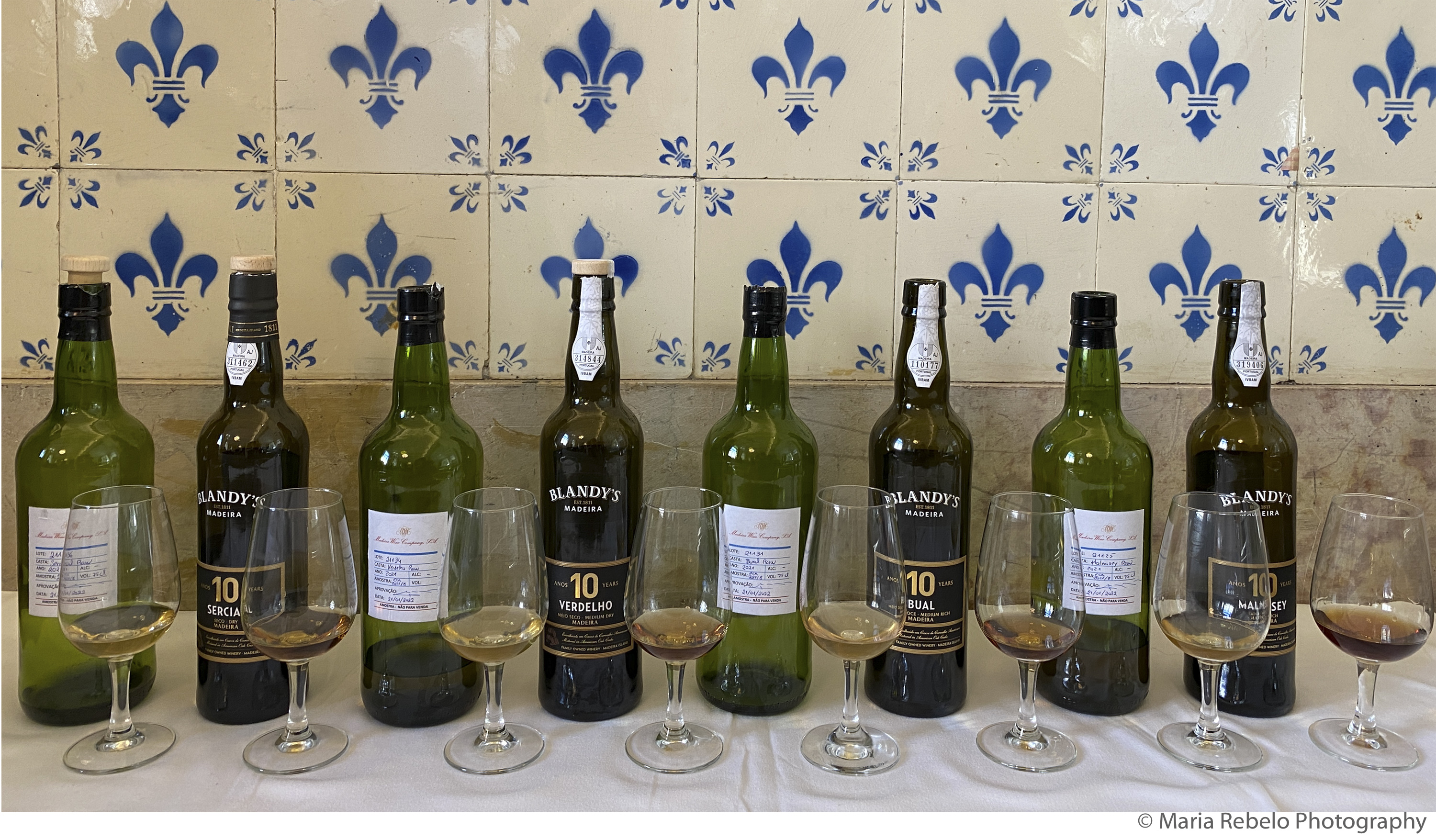
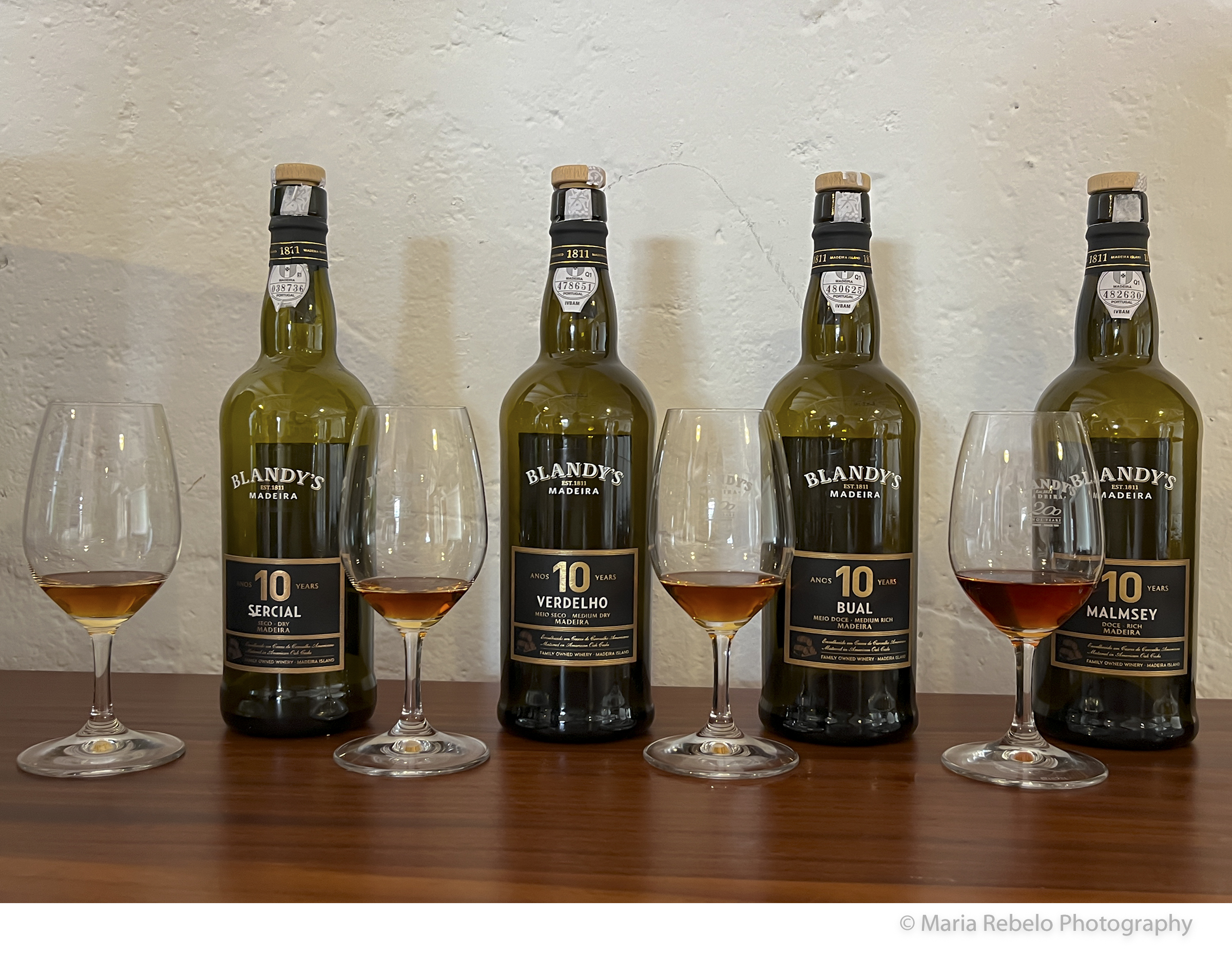
There are five main grape varietals used in Madeira production. Sercial makes dry wines, Verdelho medium-dry, Bual semi-sweet, and Malmsey sweet. Tinta Negra is perhaps the most versatile of all the Madeira varietals, capable of producing a range of styles, from nutty dry to luscious rich.

The drier wines are generally served as aperitifs and the sweeter wines as dessert wines. But Madeiras are very versatile. For example, Sercial is an excellent pairing for oysters and sashimi. 

We had the privilege of tasting Madeiras with Chris Blandy, the CEO of Blandy’s, a company that has produced Madeira wine since 1811. We compared wines made from Sercial, Verdelho, Bual, and Malmsey with “raw” versions of these wines. The raw wines have just been fortified but have not been heated or aged. This tasting showed us the enormous impact of heating and aging on wine quality. Water evaporates, concentrating and refining flavors. In some 20-year-old Madeiras, only 8 percent of the original wine remains, but what is left is sublime. 

Chris refilled our tasting glasses. “These wines are moreish,” he says, using a quaint British expression that refers to food or drink that make us ask for more. No wonder that in Shakespeare’s play Henry IV, Sir John Falstaff sells his soul to the devil for a glass of Madeira. We’re so lucky to drink these extraordinary wines without losing our souls!

Click here for the Blandy’s website.

An Altar wine

Vinha do Altar is a poem without words. Its authors, Jorge Serôdio Borges and Sandra Tavares da Silva, are two enologists known for masterpieces like the unforgettable white Guru and the iconic red Pintas. 

Their new wine is elegant and fresh, delightful to drink now, and sure to improve with age. Its grapes come from vines planted in a north-facing plateau that overlooks the Douro valley. Jorge’s great grand uncle purchased the land in 1939, and it became part of Casa Quintães, an estate where Jorge spent stretches of his youth. The land produced wine until the 1990s, but then the vineyard was abandoned. 

Jorge’s uncle dreamed of replanting the vineyard, but he died, and the land remained fallow. A few years ago, his widow, Márcia, asked Jorge and Sandra whether they could make the dream come true. The couple meticulously prepared the land and planted a new vineyard, called Altar, with a virtuoso trio of white grapes: Arinto, Gouveio, and Viosinho. 

The first harvest was in 2019, and now we can drink this wine that speaks without words about ties of family, memories of youth, and the magic of winemaking. 

Click here to visit Wine & Soul’s website.

Tasting old white wines with Manuel Malfeito

“White grapes come from a rare mutation of red grapes that probably occurred in Egypt in the 3rd millennium BC. Because of their rarity and the intense aromas of varietals like Muscat and Malvasia, white wines quickly gained the preference of rulers and aristocrats. In ancient times, old white wines were particularly prized. If a white wine survived the passage of time and was still drinkable, it was a great wine,” said Manuel Malfeito, a professor of enology, as a way of introduction. 

Manuel insists on always tasting blind. “Tasting wine is tricky because our brain is an analogy machine, it starts asking: where did I try a wine like this one? And that is when we get in trouble. It is best to taste blind so we have no preconceptions.”

After dispensing these instructions, Manuel retreated to fill our glasses in the kitchen, so we had no chance of getting a glimpse of the bottles that guarded the precious nectars about to be served. He brought the glasses to the table and our sensorial work began. 

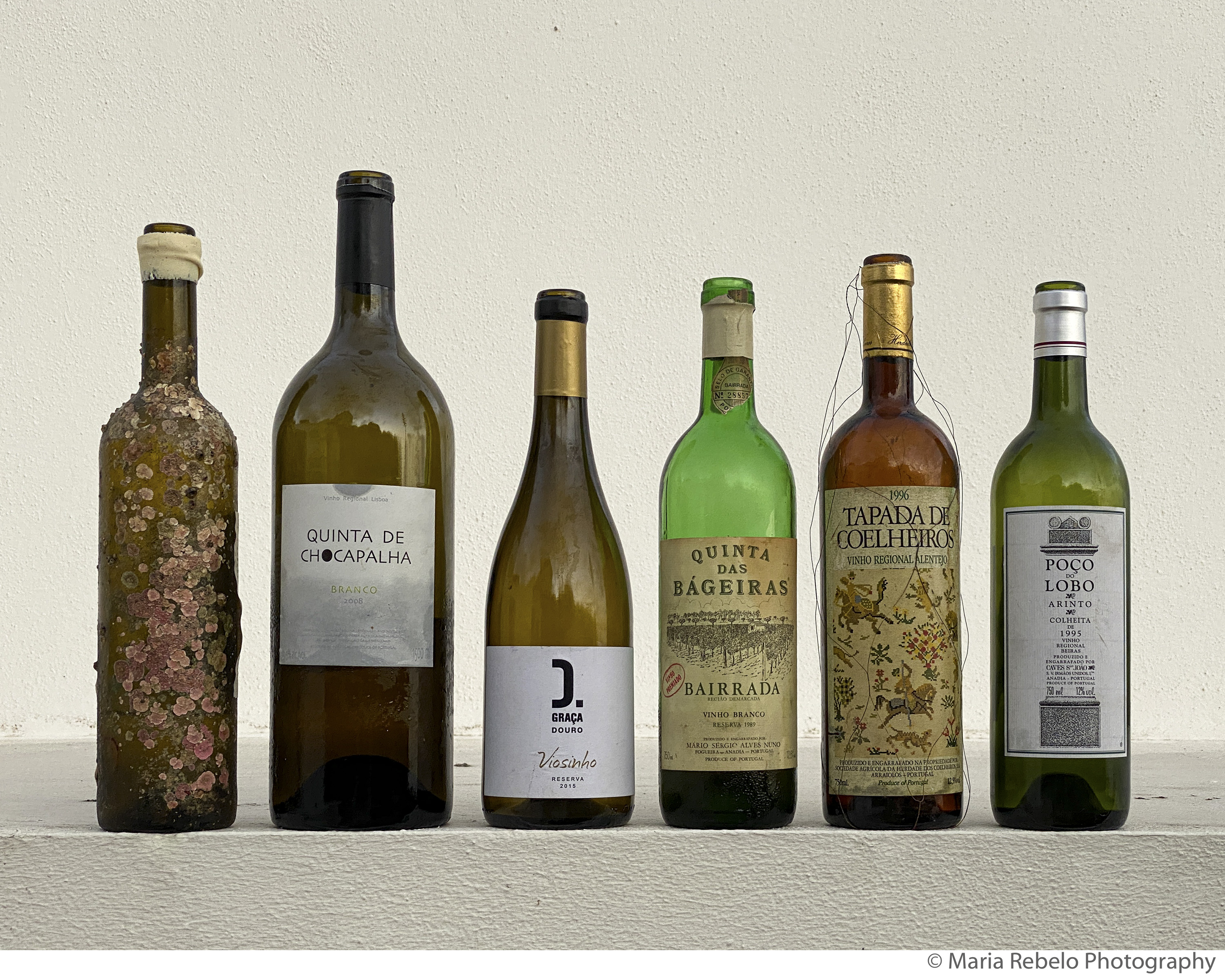
The first wine had a pale-yellow color and a seductive citrus flavor. “Is it a high-altitude wine from the Douro region?” one of the friends asked. Manuel revealed nothing. Later, we learned that this wine was relatively young: it was a 2018 Serenada produced by Jacinta Sobral in Alentejo. It has a mature taste because it staged in the bottle for 9 months, 15 meters deep in the ocean near Sines. After the identity of the wine was revealed, we tasted it again and detected salty notes. Our brain is easily influenced by the information we feed it!

The second wine had a bright, luminous yellow color. Its aroma was discreet, almost imperceptible. But its taste was sumptuous, reminding us that wines are made to be drunk, not to be described. Yes, we can talk about the wine’s minerality and flint stone aroma. But words pale in comparison with the liquid radiance of this wine. It turned out to be everybody’s favorite. Later, we learned that this crowd-pleaser was a 2008 Quinta de Chocapalha magnum made by Sandra Tavares da Silva in her family estate near Lisbon. 

The third wine was an elegant mineral wine that has great acidity and persistence in the mouth. This joyous nectar turned out to be the 2015 D. Graça produced by Manuel Malfeito and Virgilio Loureiro in the Douro valley. 

The fourth wine tasted like an old sherry or Madeira; it was dry and evolved. It turned out to be a wine produced by Mário Sérgio at Quinta das Bageiras in 1989!  

The fifth wine was a vivacious old wine with aromas of dried fruit and beeswax. It was dried and had a pleasant acidity. Where was it made? We would never guess. It was a 1996 Tapada dos Coelheiros, a famous estate in Alentejo, a warm region that is not expected to produce this type of wine.

The tasting ended with another outstanding wine: a 1995 Poço dos Lobos made from Arinto, a grape that is famous for producing wines that age well. This wine was no exception. It has a long, seductive finish and a bright freshness with notes of orange peel.

What did we learn from another master class with Manuel Malfeito? That we should taste wines without preconceptions in order to better discover and appreciate their qualities. And that the occasion makes the wine. The best wines are always those we share with friends! 

The natural wines of Herdade do Cebolal

Seven years ago, we booked a table at Boi-Cavalo in Lisbon, and chef Hugo Brito told us that dinner included a pairing with wines from a great family winery in Alentejo called Herdade do Cebolal. The wonderful food and wine turned the dinner into a party in which everybody talked to each other as if we were longtime friends.

We experienced the same festive feeling during a memorable lunch at the Lamelas restaurant in Porto Côvo. The spectacular food prepared by chef Ana Moura was accompanied by wines from Herdade do Cebolal. What is it about these wines that hang out with chefs who know how to turn meals into celebrations?  

Ana told us that Herdade de Cebolal is a stone’s throw from the restaurant, so we called the winery to see whether we could go by for a visit. We were received by enologist Luis Mota Capitão. The winery has been in his family since 1880. His great-grandfather made wines and vinegars to sell to doctors for medicinal use. 

Luís also wants his wines to be good for us. He avoids as much as possible using chemicals in wine production. And he is passionate about creating an ecosystem that is healthy and sustainable. The 20 hectares of vineyards are surrounded by 65 hectares of forest planted with cork and holm oaks, carob and lime trees, and many other species. He uses algae, including sargassum harvested in Porto Côvo, to fertilize the land because he believes it produces superior grapes. Luís encourages animals to roam the farm. There many bees, as well as chicken, hares, and sheep. Even foxes, lynxes, wild boars, and saca-rabos (Egyptian mongese), which are often considered a nuisance in other farms, are welcome at Herdade de Cebolal. “They all have a role to play and this land belongs to them too,” says Luís. Later, as we were leaving the herdade, we saw a large wild boar crossing the road. 

Luís’ grandfather used to age the wines he served at Christmas time inside a water well. Inspired by this experience, Luís started aging wine in bottles immersed in sea water. The wines age faster and something magical happens, perhaps because of higher pressure, cooler temperatures, and less oxygen. 

The herdade has many different types of soils and sun exposures. Luís says that the best way to illustrate this diversity is to go to the cellar and try some wines from the barrels. We first sampled a white from a vineyard planted in sal gema (rock salt) soil. It has great persistence and acidity. Then, we tried a complex white from “vinha do Rossio,” a vineyard planted by Luis’ great-grandfather 82 years ago. His grandfather added to the vineyard resulting in a mixture of 13 varietals, include some rare species like Tamarez and Tália. Next, we tasted an elegant blend of Arintos that is bright and fresh.

We moved from the cellar to a terrace overlooking the vineyards to try two fascinating reds: a clarete (claret) and a palhete. The clarete is made from Castelão, a grape popular in the Setúbal region. The palhete is made from a mixture of white (Antão Vaz) and red (Aragonês) grapes. These are highly enjoyable wines that can quench the thirst on a hot summer day. In old times, when drinking water was unsafe because of possible contamination with pathogenic bacteria, these were the wines preferred by farmers. Their alcohol content is relatively low (12.5 for clarete and 10.5 for palhete) but high enough to kill any pathogens.

Luís brought us some food to pair with the next two wines: a plate with wonderful sausages made in Alentejo from black pork, small cups of stewed chicken gizzards, an assortment of cheeses, and a delicious honey made from esteva (rock rose) and tojo (gorse). 

A 2017 white made from Fernão Pires and Arinto paired perfectly with the cheeses. Then came the grand finale: a red called Caios, which was the name of Luis’ great-great-grandfather. It is produced only in exceptional years and it includes grapes from vines planted by different generations: Alicante Bouchet planted by Luís, Petit Verdot planted by his father and grandfather, and old vines brought from Saint-Émilion by his great-grandfather.

The sun had long retired and the Alentejo stars shined brightly on the vineyards. Luis kept talking with revolutionary zeal about the legacy he wants to leave to future generations: a way of producing wine that is good for us and good for the earth.

Herdade de Cebolal is located at Vale das Éguas. Click here for their website (in Portuguese).

A precious white port

Time is a great equalizer of port wines. Tawnies are red ports aged for many years in large barrels made from oak and chestnut wood. These wines mellow with age, trading the red colors and brash tannins of their youth for discreet amber hues and complex flavors. 

White ports can be frivolous when young. But, as they age, they gain depth and character. After about three decades, whites and reds retain different flavors and aromas but they agree to wear the same colors.

Old tawnies are rare pleasures. But old white ports, like the magnificent 1963 Dalva, are rarer still. This wine has everything a great red tawny offers: harmony, complexity, and depth. But it has a lightness that is magical. 

There are very few bottles left of 1963 Dalva white port. If you manage to find one, do not save it for a special occasion. Create instead a special occasion to enjoy it!