A superb vermouth

Soberbo Vermouth

The summer winds brought a wonderful gift, a vermouth called Soberbo, the Portuguese word for superb. It is made with white port by Poças, a centenarian port-wine house, according to an updated version of a 1930s recipe.

The sweetness of the white port balances the bitterness of the aromatic herbs to create an harmonious vermouth. Enjoying a glass of this nectar is the perfect way to prepare our palates for an elegant dinner.

Click here for the Poças web site.

Paulo Laureano

Paulo Lauriano

Now we know how it feels to go from purgatory to heaven. After many hours of delays in Newark, we arrived in Lisbon and drove to Vidigueira to meet with Paulo Laureano, a famous Portuguese enologist. The encounter was five years in the making because he is a busy man and our schedules never intersected.

Paul greeted us at the door of his winery with the easy smile of a man who has found his place in the world. Many harvests ago he graduated in enology in Évora. After an internship in Australia, he was invited to teach at the university. But soon he became involved with so many wineries that he left academia to practice enology full time. He bottled the first wines under his name in 1999. Since then, he has produced a steady stream of remarkable nectars.

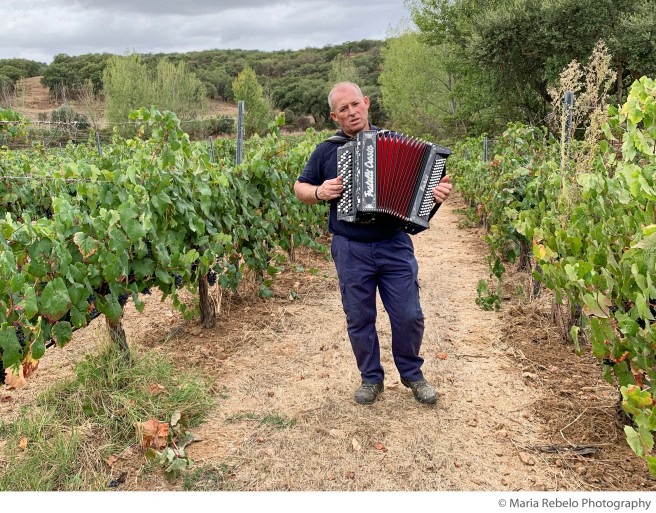
Our visit started with a tour of the winery. “There is no technology here,” he says proudly. “Our work is all done in the vineyards. We use old vines and we harvest the grapes by hand, that is our secret.”

Paulo is passionate about the terroir of Vidigueira. He explains to us how the hard schist soils give minerality and freshness to the wines. How the winds travel from the sea to Vidigueira to bring humidity. How the slopes of the terrain create different exposures to the sun. How the varietals change when planted in this soil. And how the indigenous varietal Tinta Grossa creates wines like no others.

Since wines cannot be understood without drinking them, Paulo took us to a tasting room that overlooks the vineyards. We started with a white wine produced from old vines made from Antão Vaz, Arinto and Fernão Pires. We would have been happy continuing drinking it, but there were more wines to taste.

Paulo showed us two wonderful wines he makes for the U.S. market. When his long-time U.S. distributor visited with his little daughter, Ema, the girl asked whether she could have her own vineyard. Remembering this endearing moment, Paulo called the white and red blends Ema’s vineyard.

Next. our glasses filled with an Old Vines Private Selection white. It showcases the brilliance of the Antão Vaz from Vidigueira. “Antão Vaz can be heavy and boring but here in Vidigueira it is always interesting and elegant,” says Paulo.

It is time for two more reds. The Old Vines Private Selection is smooth and refined, an harmonious combination of Aragonês, Trincadeira, Alicante Bouchet and Touriga Nacional.  Our tasting ended with fireworks: we tried one of the 5,000 bottles of Tinta Grossa produced in 2015. It is a remarkable wine full of depth and character.

Wherever you are, if you see a bottle of Paulo Laureano’s wine grab it without hesitation. And then you too can have a taste of these heavenly wines made in the unique terroir of Vidigueira.

Paulo Laureano’s winery is located in Monte Novo da Lisboa, Vidigueira, tel. 284-437-060.


The perfect wine party

Goliardos

A group of wine connoisseurs called “Os Goliardos” turned their love of wine into a business–they distribute interesting artisanal wines, made with passion and respect for the land.

Every year in July, the Goliardos invite a group of their favorite wineries to showcase their wines at an event called Vinho ao Vivo (Wine Live). The setting is À Margem, an esplanade by the Tagus river with a view to the tower of Belém on one side and the monument to the discoveries on the other.

Portuguese wineries share the stage with producers from France, Spain, Germany and Italy.  There are musicians serenading our ears and food producers filling our bellies with black-pork prosciutto, sausages, oysters, cheese and much more. It is the perfect wine party. If you missed it this year, mark your calendar for next year.  And get a few bottles from the Goliardos’ wine list, they’ll make the wait seem much shorter.

You can find Os Goliardos at Rua General Taborda, nº91, in Lisbon’s Campolide neighborhood. They can be reached by phone (213 462 156) or email info@osgoliardos.com. Click here for their website.

The Marquis of Pombal and his dessert wine

OLYMPUS DIGITAL CAMERA

Almost everyone who visits Lisbon runs into the statue of Sebastião José de Carvalho e Melo, the Marquis of Pombal. It stands on top of a giant pedestal facing the downtown neighborhood that the Marquis helped rebuild after the 1755 earthquake.

The Marquis had a profound influence on the production of port wine.  In 1757, he ordered the first classification of port-producing vineyards, making the Douro one of the world’s oldest demarcated wine regions. He also founded the Royal Company which controlled the exports of port to England and Brazil. These measures were unpopular, but they greatly improved the quality of the port produced.

We wonder whether, after doing what he thought was right for the Douro region, the Marquis had second thoughts. He owned a large wine estate in Oeiras, in the outskirts of Lisbon, that produced an excellent fortified wine. But according to the rules he helped create, he couldn’t call it port wine. Instead, the wine was known as Carcavelos, after one of the region’s seaside villages.

An early coup for Carcavelos wines came in 1752. King Dom José gathered a collection of luxurious gifs chosen to impress the emperor of China. One of these gifts was a red velvet box with two bottles of Carcavelos wine.

Half a century later, the winds of history interceded in favor of the Carcavelos wine. When Napoleon’s troops invaded the north of Portugal, it became difficult to export port wine to England. Carcavelos wine emerged as an excellent alternative, gaining fame and prestige among British wine connoisseurs.

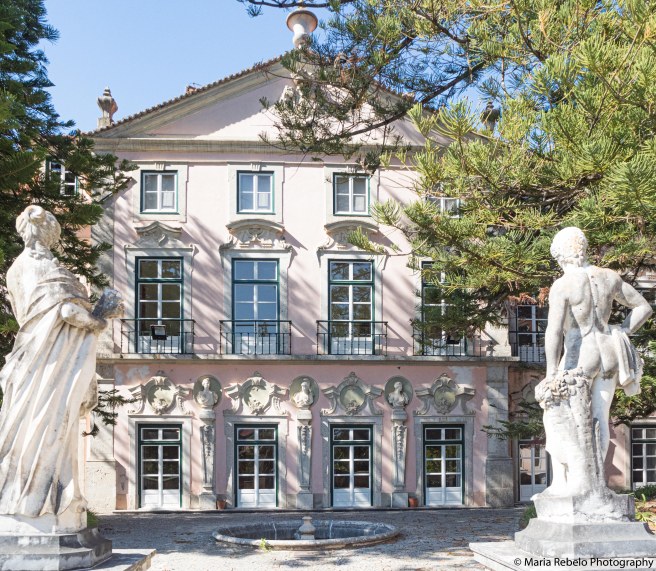
In the 1930s, the Carcavelos vines started to be uprooted to make space for suburban homes. As a result, wine production dwindled. In 1997, the Oeiras city council decided to invest in the preservation of the vineyards that were left, saving this historical wine from oblivion. The city also restored the palace that belonged to the Marquis of Pombal.

If you’re looking for an outing near Lisbon, a visit to this palace is a great choice. You can stroll through elegant salons and manicured gardens. And you can try a glass of Carcavelos wine. Drier than port, it has enticing aromas and exquisite flavors that enchant the senses. A sip of this nectar is a trip back in time, a taste of the wine enjoyed by a Chinese emperor and served at the lavish parties staged by the Marquis of Pombal . 

The Palace of the Marquis of Pombal is located at Largo Marquês de Pombal, in Oeiras, tel. 214.430.799. You can reach Oeiras by taking the Lisbon/Cascais train.

The elegant intensity of Dona Matilde’s wines

Quinta D. Matilde Composit

It was an unexpected honor–to spend a lazy afternoon with Manuel Ângelo Barros, an icon of the Douro valley. We met in the terrace of his home, sheltered from the hot sun, cooled by a timid breeze. Below, the waters of the Douro river tried to stand still so they could eavesdrop on our conversation.

The landscape reminded us that producing Douro wines is an extraordinary feat. Generations of men and women toiled in freezing Winters and scorching Summers to build the terraces that support the vines and prevent the soil from washing into the river.

Manuel’s family owned two legendary port-wine houses: Barros, the family brand, and Kopke, the oldest port-wine house, established in 1638. They also owned a portfolio of vineyards amassed over the last century. The third Barros generation decided to sell the brands and the vineyards. But once the sale closed, Manuel missed the magic of having land that turns water into wine. He managed to buy back one of the Barros properties in 2006, Quinta Dona Matilde, famous for its high-quality grapes, produced in schist soils near the river. Originally purchased by his grandfather in 1927 and named after his grandmother, the quinta is a place where Manuel spent much of his youth.

The table was set with “bola de carne,” a traditional meat pie, because Dona Matilde produces gastronomic wines that are best enjoyed with some food. Most wine makers like to explain the enological properties that make their wines distinct. Instead, Manuel filled our glasses in silence, letting the wines speak for themselves. Whenever we asked a question, he paused to reflect. Then he answered in a gracious, literary Portuguese, choosing his words with the same care he devotes to making wine.

Manuel is proud of the team he assembled at Dona Matilde. His younger son, Filipe Barros, plays a key role as marketing director. The viticulturist José Carlos Oliveira takes care of the quinta’s 28 hectares, which include 60-year-old vines that produce wines with great complexity and character. Enologist João Pissara strives to use production methods that highlight the outstanding qualities of the Dona Matilda grapes. To make the reserve red wine, he favors the traditional method of treading the grapes by foot in the quinta’s old granite tanks.

We tried two whites and two reds. Even though the estate has low altitude and a sunny exposure, the wines are balanced with great freshness and acidity. Harvesting the grapes early is key to producing these wonderful results.

Each Dona Matilda wine has a distinct voice. But they all have the same quiet intensity and aristocratic elegance that make Manuel such a pleasure to be with.

Click here for Dona Matilda’s web site.


A great beginning

Chip Dry Port

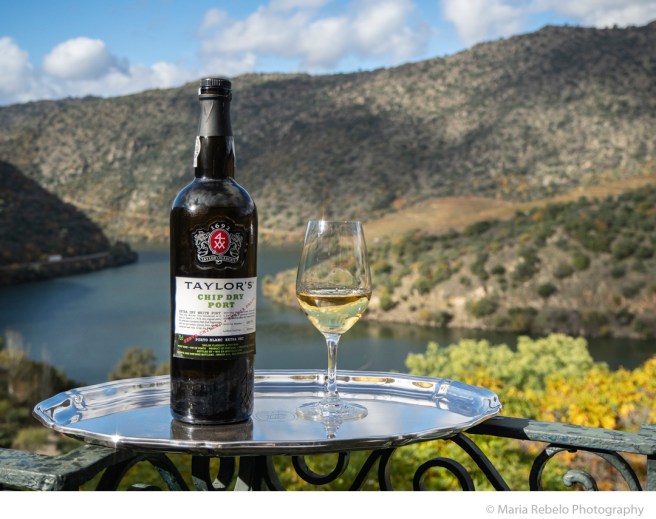
Beginnings are hard. We don’t know how to pen the first sentences of a novel, compose the introduction of a sonata, or craft the opening scene of a play. But we do know an elegant way to start a dinner party. Get a bottle of Taylor Chip Dry port and chill it in the fridge. When the guests arrive, pour everyone a glass of this marvelous white port. Then,  toast to a great beginning.

The magic of a dinner at the Yeatman

Yeatman restaurant

At the end of our dinner at the Yeatman last November, chef Ricardo Costa gave us an envelope sealed with wax stamped with the hotel’s Y symbol. We brought the envelope home where it’s been sitting on our desk. A couple of days ago, we woke up to the sight of grey skies and the sound of howling winds. We reached for the envelope and broke the seal, hoping to summon some of the magic of our Fall evening at the Yeatman. Inside, we found the dinner’s menu.

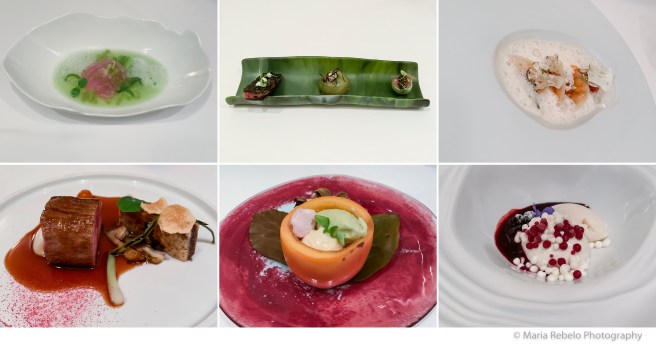
We recalled that our meal started softly, with a cup of tea made from kombu, an Asian algae. Then, there were oysters with foie gras and an apple gel that accentuated their  briny taste. They harmonized with a glass of bright, sparking wine from Murganheira. The meal continued merrily with a miniature piece, three inventive combinations of algae and tuna.

This preamble was followed by a chicken oyster–a small oval cut with intense flavor. It was delightfully roasted, seasoned with dehydrated chili pepper, served with a mushroom broth and topped with a cheese sauce.

Beautiful slices of lírio, a fish from the Azores, arrived on top of a cylinder bathing is sea foam and decorated with pearls.  The pearls, cylinder and foam were all made of cucumber. The delicate flavors paired perfectly with a glass of Quinta de Baixo Vinhas Velhas, a great white wine made by Dirk Niepoort from old vines in Bairrada.

The white wine refreshed our palate so that we could fully appreciate the next course: a succulent lobster with cauliflower puré and a whimsical bloody Mary made from lobster jus. Then, more of our favorite flavors gathered on the plate: xarem, a polenta-like preparation popular in Algarve, topped with a corn cream, a cockle called berbigão, black-pork prosciutto, egg, and a coriander broth.

A refined bouillabaisse arrived at the table, meticulously prepared with imperador fish accompanied by small, flavorful shrimps from the Portuguese coast and dehydrated algae. What would Marcel Pagnol think if he saw Marseille’s rustic bouillabaisse  prepared with the artistry of a Cartier jeweler?

A glass of a great red from the Dão region produced by Quinta do Perdigão heralded the arrival of the luxurious meat dishes. First, succulent veal with spring onions, Jerusalem artichokes. Then, crispy roasted piglet with spices and tropical fruits.

The meal ended with a delightful persimmon filled with pistachio sorbet topped with a cream of vanilla and saffron. But this was a deceptive ending  because soon another pleasing dessert arrived: blueberries with mascarpone ice-cream and kafir limes. And just when we thought it was time to leave, our waiter arrived with a serving cart full of irresistible chocolates, caramels and nuts. It was an epic dinner!

We finished reading the menu and looked up. The wind had waned and the sky was blue.

The Yeatman is located at Rua do Choupelo, (Santa Marinha), in Vila Nova de Gaia. Click here for the hotel’s website. 


Drinking amphora wine in Amareleja

Amareleja Composite

Manuel Malfeito, a professor of enology at the famed Instituto Superior de Agronomia, invited us to go to Amareleja to try some wines made in amphoras. The drive from Lisbon to this small town in Alentejo takes about three hours, time fruitfully used by Manuel to lecture us about what we are about to experience.

He tells us that that we’re taking a journey back in time, to the way wines were made 8000 years ago in the Caucasus. These techniques, brought to Portugal by the Romans 2000 years ago, worked particularly well in the dry, warm climate of Alentejo where they say “while there’s amphora wine, we drink nothing else.”

Right after the harvest, the grapes are crushed, destemmed and placed in huge amphoras that hold 1,000 liters. One or two days later, the fermentation starts. The wine is stirred everyday for two weeks to make sure it doesn’t spoil. Then, the amphoras are sealed with cloth and the wine is left alone. By November, the seeds and skins have dropped to the base, forming a natural filtration system. The wine is extracted through straws inserted into an opening at the bottom of the amphoras. It comes out very slowly, first muddy and then crystal clear.

Amphora wines are now so trendy that some producers ferment the wine in stainless steel tanks and then age them in amphoras, so they can call them amphora wines. At Amareleja, amphora wines are the real deal. The locals continued to make amphora wines even when no one outside of Alentejo cared for them, so knowledge of the myriad production details has been preserved.

The arrival at Amareleja marks the end of our theory lesson. It is time to put our knowledge into practice. “We’ll try several wines, so the secret is to take small sips,” advises Manuel.

Our host, Zé Piteira, is waiting for us at his eponymous restaurant, Adega Piteira. He is tall, affable, and full of confidence. Zé introduces us to his wife Paula who heads the kitchen. The restaurant occupies a narrow building with a straw roof and a tower in the middle. It was constructed in 1938 to house Amareleja’s open-air cinema. Greta Garbo and Humphrey Bogart have been here on the silver screen.

On our table there are sausages, cheese, olives, and the best “torresmos” (pork rind) we ever tried. “Wine is all about context,” explains Manuel. “We’re going to try a white amphora wine from 2015 that is still too young but pairs well with the strong flavors of these appetizers.” The symbiosis of wine and food is indeed perfect. Our glasses have the aroma of a recently struck match that is the hallmark of great Chardonnays. The wine is made with a varietal called Roupeiro combined with a table grape called Diagalves, sometimes known as “pendura,” the Portuguese word for hanging, because it used to be hung up to dry to serve during Christmas.

Soup plates with scrambled eggs, potatoes, spinach, and goat cheese arrive. Paula brings a large pot brimming with codfish broth to spoon on our plates. This rustic, flavorful soup is a great match for the bold personality of the wine.

Zé pours from a jar of 2018 white wine taken directly from an amphora.  The contrast between the 2015 and the 2018 wines is fascinating. The 2018 is more astringent and the yeast aromas that come from the fermentation process are still present.

The varietal used to make red amphora wines in Alentejo is called Moreto. “Land good for grain is bad for wine,” says an old proverb. That is why Moreto flourishes in the poor soils of the left margin of the Guadiana river. The 2018 Piteira Moreto is very interesting and full of freshness. It is a great pairing for our next course: pork ribs seasoned with “massa de pimentão,” a magical paste made with red pepper.

For comparison, we try the 2016 Moreto. It is more refined and has a complex aroma. “Primary aromas—fruit, flowers, herbs–are pleasant during fermentation but worsen with time. That is why we say if the wine smells good, it tastes bad,” explains Manuel. “Secondary aromas—yeast, nuts and spices–come from the fermentation process. This wine has tertiary aromas—hazelnut, dried tobacco—that are acquired through aging.”

Zé comes back from the cellar with a bottle of Nativo, an amphora white wine bottled in 1999! It was made by the man who used to own the open-air movie theater, Zé’s godfather. This white wine has aged amazingly well, it is crisp and dry and has a beautiful amber color.

Dessert is a Moreto festival: Moreto ice cream accompanied by a pear cooked in Moreto wine and “encharcada” a medieval convent sweet made with eggs, cinnamon, lemon and sugar. Zé fills our glasses with a dessert wine. “In Roman times, the dry wines spoiled quickly, so aristocrats preferred this style of dessert wine. These were also the wines that  Roman gods were thought to like,” says Manuel. The wine fills our palate with the taste of spices and caramel. The Roman gods had impeccable taste!

We spent the afternoon hiking on the new wine estate that Zé Piteira has purchased, a place with panoramic views of the plains of Alentejo. Later, on the way back to Lisbon, Manuel quizzed us about everything we saw and tasted. We hope to have passed the exam, so we can take another course with him!

Adega Piteira is located at Rua da Fabrica 2, Amareleja, Moura, tel. 965 787 024.

Dona Antónia’s great grandson

Composite Quinta S. José

João Brito e Cunha is the great grandson of the legendary Dona Antónia Ferreira, the woman who shaped the future of wine production in the Douro valley.  Born in 1811 to a family of rich wine makers, Dona Antónia seemed destined to enjoy a life of leisure. Instead, she had to contend with two plagues that decimated European vineyards, the oidium in 1850 and the phylloxera in 1870. Dona Antónia rose to the occasion, making shrewd choices and taking calculated risks. She made great wine and amassed a large fortune. When she died in 1896, she owned 24 wine estates and huge wine cellars in Vila Nova de Gaia.

João’s grandfather was a taster for the renowned Real Company Velha. His father managed the famous Quinta do Vesuvio, which in Dona Antónia’s time produced some of the most expensive wines in the Douro valley.

We tell you this family history so that you know that João Brito e Cunha had no choice, the love of wine runs in his blood. He studied enology, first in Vila Real’s UTAD and then in Australia. He interned in Champagne and in many other wine regions. When he felt ready, he bought Quinta Dom José from his father and moved to the estate with his wife Sofia and their kids.

We arrived at Quinta Dom José late in the afternoon, just as the sun was getting tired of making the brilliant light that shines on the Douro valley. João is very intense and his energy is contagious. He wanted to show us everything, the vines, the cellars, the different viewpoints. As soon as we got into his jeep, he accelerated up the steep, treacherous road leaving being a colorful dust cloud.

We stopped on a hill top with breathtaking views of the Douro river. João wants us to understand that in a region where beauty abounds, this quinta is like no other. He shows us with pride the schist soil that preserves humidity during the scorching Summers and the vine roots that dig deep in search of water.

João drove us up to the tasting room to try his wines. The Flor de São José white Reserva is an aristocratic wine that enchants the palate with its refined elegance. The Touriga Nacional Reserva is an indulgent red, with a full body and an understated intensity. The Grande Reserva is a profound wine, full of wisdom, finesse and subtlety. The 3,400 bottles produced last year quickly sold out.

We stayed in the terrace outside the tasting room talking to João for hours. It was a warm night with a sky full of stars.  A choir of crickets sang in the background. João told us about his vines, his wines and his dreams.

Dona Antónia regretted every moment she spent away from the Douro. João feels the same way–he inherited his great grandmother’s passion for the Douro valley. And like her, João is destined to make great wine.

Quinta de São José is located on Ervedosa do Douro, tel. 93 4041413. Click here for their website. 

100 years of great ports

C0mposite Poças Wines

Making great port requires exceptional grapes and a deep knowledge of the production process. But most of all, it requires time, lots of time. Time for the nectars to lose the brashness of youth and mellow with age. That is why we cannot produce port wine by ourselves. We need our children and grandchildren to help. And if our great grandchildren can also lend a hand, even better.

The British port-wine families guarantee their longevity by leaving the business to a single son or daughter and compensating their siblings with cash. In contrast, Portuguese families generally sell their estates to divide the proceeds among the heirs. There is why there are almost no major Portuguese port houses left. The one remarkable exception is Poças, a company that celebrated 100 years in August 2018.

In 1918, Manoel Poças Júnior started buying brandy to supply port-wine producers. He was at times paid with barrels of port, so gradually he also became a port-wine merchant. In 1932, one of Manoel’s brandy clients paid a large debt with a wine estate called Quinta das Quartas. Manuel loved the estate which has granite tanks dating back to 1873.  Every week, he made the arduous trip from Oporto to Quinta das Quartas to visit the vineyards.

This passion is shared by his great granddaughter, Maria Manuela Maia, the viticulturist in charge of Quinta das Quartas and of the other two estates acquired by the family, Quinta de Santa Bárbara and Quinta de Vale de Cavalos. Even though today it is much easier to drive from Oporto to the Douro, Maria moved to the Douro valley to be closer to the vineyards.

We met with Maria in Vila Nova de Gaia, at the cellars where barrels full of precious nectars produced by past generations are stored. She shared with us some superb ports: a Vintage from 1997, a Reserva from 2014, and a Vale dos Cavalos from 2015. Our tasting ended with fireworks provided by a remarkable 1967 Tawny, full of freshness and acidity. We filled our glasses with this liquid treasure and made two toasts: to Manoel Poças for the successes of the past and to Maria for the successes of the future.

Click here for the Poças web site. To visit the Poças cellars email visitors@pocas.pt or call 223 203 257.