A great beginning

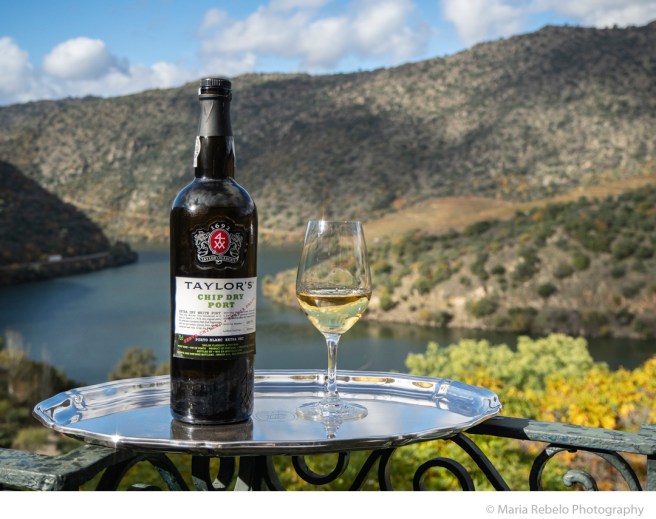
Chip Dry Port

Beginnings are hard. We don’t know how to pen the first sentences of a novel, compose the introduction of a sonata, or craft the opening scene of a play. But we do know an elegant way to start a dinner party. Get a bottle of Taylor Chip Dry port and chill it in the fridge. When the guests arrive, pour everyone a glass of this marvelous white port. Then,  toast to a great beginning.

The magic of a dinner at the Yeatman

Yeatman restaurant

At the end of our dinner at the Yeatman last November, chef Ricardo Costa gave us an envelope sealed with wax stamped with the hotel’s Y symbol. We brought the envelope home where it’s been sitting on our desk. A couple of days ago, we woke up to the sight of grey skies and the sound of howling winds. We reached for the envelope and broke the seal, hoping to summon some of the magic of our Fall evening at the Yeatman. Inside, we found the dinner’s menu.

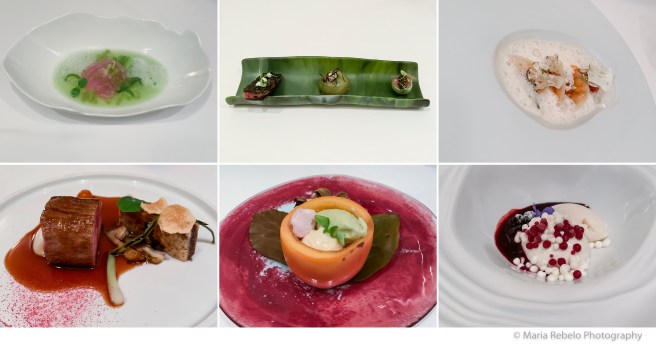
We recalled that our meal started softly, with a cup of tea made from kombu, an Asian algae. Then, there were oysters with foie gras and an apple gel that accentuated their  briny taste. They harmonized with a glass of bright, sparking wine from Murganheira. The meal continued merrily with a miniature piece, three inventive combinations of algae and tuna.

This preamble was followed by a chicken oyster–a small oval cut with intense flavor. It was delightfully roasted, seasoned with dehydrated chili pepper, served with a mushroom broth and topped with a cheese sauce.

Beautiful slices of lírio, a fish from the Azores, arrived on top of a cylinder bathing is sea foam and decorated with pearls.  The pearls, cylinder and foam were all made of cucumber. The delicate flavors paired perfectly with a glass of Quinta de Baixo Vinhas Velhas, a great white wine made by Dirk Niepoort from old vines in Bairrada.

The white wine refreshed our palate so that we could fully appreciate the next course: a succulent lobster with cauliflower puré and a whimsical bloody Mary made from lobster jus. Then, more of our favorite flavors gathered on the plate: xarem, a polenta-like preparation popular in Algarve, topped with a corn cream, a cockle called berbigão, black-pork prosciutto, egg, and a coriander broth.

A refined bouillabaisse arrived at the table, meticulously prepared with imperador fish accompanied by small, flavorful shrimps from the Portuguese coast and dehydrated algae. What would Marcel Pagnol think if he saw Marseille’s rustic bouillabaisse  prepared with the artistry of a Cartier jeweler?

A glass of a great red from the Dão region produced by Quinta do Perdigão heralded the arrival of the luxurious meat dishes. First, succulent veal with spring onions, Jerusalem artichokes. Then, crispy roasted piglet with spices and tropical fruits.

The meal ended with a delightful persimmon filled with pistachio sorbet topped with a cream of vanilla and saffron. But this was a deceptive ending  because soon another pleasing dessert arrived: blueberries with mascarpone ice-cream and kafir limes. And just when we thought it was time to leave, our waiter arrived with a serving cart full of irresistible chocolates, caramels and nuts. It was an epic dinner!

We finished reading the menu and looked up. The wind had waned and the sky was blue.

The Yeatman is located at Rua do Choupelo, (Santa Marinha), in Vila Nova de Gaia. Click here for the hotel’s website. 


Drinking amphora wine in Amareleja

Amareleja Composite

Manuel Malfeito, a professor of enology at the famed Instituto Superior de Agronomia, invited us to go to Amareleja to try some wines made in amphoras. The drive from Lisbon to this small town in Alentejo takes about three hours, time fruitfully used by Manuel to lecture us about what we are about to experience.

He tells us that that we’re taking a journey back in time, to the way wines were made 8000 years ago in the Caucasus. These techniques, brought to Portugal by the Romans 2000 years ago, worked particularly well in the dry, warm climate of Alentejo where they say “while there’s amphora wine, we drink nothing else.”

Right after the harvest, the grapes are crushed, destemmed and placed in huge amphoras that hold 1,000 liters. One or two days later, the fermentation starts. The wine is stirred everyday for two weeks to make sure it doesn’t spoil. Then, the amphoras are sealed with cloth and the wine is left alone. By November, the seeds and skins have dropped to the base, forming a natural filtration system. The wine is extracted through straws inserted into an opening at the bottom of the amphoras. It comes out very slowly, first muddy and then crystal clear.

Amphora wines are now so trendy that some producers ferment the wine in stainless steel tanks and then age them in amphoras, so they can call them amphora wines. At Amareleja, amphora wines are the real deal. The locals continued to make amphora wines even when no one outside of Alentejo cared for them, so knowledge of the myriad production details has been preserved.

The arrival at Amareleja marks the end of our theory lesson. It is time to put our knowledge into practice. “We’ll try several wines, so the secret is to take small sips,” advises Manuel.

Our host, Zé Piteira, is waiting for us at his eponymous restaurant, Adega Piteira. He is tall, affable, and full of confidence. Zé introduces us to his wife Paula who heads the kitchen. The restaurant occupies a narrow building with a straw roof and a tower in the middle. It was constructed in 1938 to house Amareleja’s open-air cinema. Greta Garbo and Humphrey Bogart have been here on the silver screen.

On our table there are sausages, cheese, olives, and the best “torresmos” (pork rind) we ever tried. “Wine is all about context,” explains Manuel. “We’re going to try a white amphora wine from 2015 that is still too young but pairs well with the strong flavors of these appetizers.” The symbiosis of wine and food is indeed perfect. Our glasses have the aroma of a recently struck match that is the hallmark of great Chardonnays. The wine is made with a varietal called Roupeiro combined with a table grape called Diagalves, sometimes known as “pendura,” the Portuguese word for hanging, because it used to be hung up to dry to serve during Christmas.

Soup plates with scrambled eggs, potatoes, spinach, and goat cheese arrive. Paula brings a large pot brimming with codfish broth to spoon on our plates. This rustic, flavorful soup is a great match for the bold personality of the wine.

Zé pours from a jar of 2018 white wine taken directly from an amphora.  The contrast between the 2015 and the 2018 wines is fascinating. The 2018 is more astringent and the yeast aromas that come from the fermentation process are still present.

The varietal used to make red amphora wines in Alentejo is called Moreto. “Land good for grain is bad for wine,” says an old proverb. That is why Moreto flourishes in the poor soils of the left margin of the Guadiana river. The 2018 Piteira Moreto is very interesting and full of freshness. It is a great pairing for our next course: pork ribs seasoned with “massa de pimentão,” a magical paste made with red pepper.

For comparison, we try the 2016 Moreto. It is more refined and has a complex aroma. “Primary aromas—fruit, flowers, herbs–are pleasant during fermentation but worsen with time. That is why we say if the wine smells good, it tastes bad,” explains Manuel. “Secondary aromas—yeast, nuts and spices–come from the fermentation process. This wine has tertiary aromas—hazelnut, dried tobacco—that are acquired through aging.”

Zé comes back from the cellar with a bottle of Nativo, an amphora white wine bottled in 1999! It was made by the man who used to own the open-air movie theater, Zé’s godfather. This white wine has aged amazingly well, it is crisp and dry and has a beautiful amber color.

Dessert is a Moreto festival: Moreto ice cream accompanied by a pear cooked in Moreto wine and “encharcada” a medieval convent sweet made with eggs, cinnamon, lemon and sugar. Zé fills our glasses with a dessert wine. “In Roman times, the dry wines spoiled quickly, so aristocrats preferred this style of dessert wine. These were also the wines that  Roman gods were thought to like,” says Manuel. The wine fills our palate with the taste of spices and caramel. The Roman gods had impeccable taste!

We spent the afternoon hiking on the new wine estate that Zé Piteira has purchased, a place with panoramic views of the plains of Alentejo. Later, on the way back to Lisbon, Manuel quizzed us about everything we saw and tasted. We hope to have passed the exam, so we can take another course with him!

Adega Piteira is located at Rua da Fabrica 2, Amareleja, Moura, tel. 965 787 024.

Dona Antónia’s great grandson

Composite Quinta S. José

João Brito e Cunha is the great grandson of the legendary Dona Antónia Ferreira, the woman who shaped the future of wine production in the Douro valley.  Born in 1811 to a family of rich wine makers, Dona Antónia seemed destined to enjoy a life of leisure. Instead, she had to contend with two plagues that decimated European vineyards, the oidium in 1850 and the phylloxera in 1870. Dona Antónia rose to the occasion, making shrewd choices and taking calculated risks. She made great wine and amassed a large fortune. When she died in 1896, she owned 24 wine estates and huge wine cellars in Vila Nova de Gaia.

João’s grandfather was a taster for the renowned Real Company Velha. His father managed the famous Quinta do Vesuvio, which in Dona Antónia’s time produced some of the most expensive wines in the Douro valley.

We tell you this family history so that you know that João Brito e Cunha had no choice, the love of wine runs in his blood. He studied enology, first in Vila Real’s UTAD and then in Australia. He interned in Champagne and in many other wine regions. When he felt ready, he bought Quinta Dom José from his father and moved to the estate with his wife Sofia and their kids.

We arrived at Quinta Dom José late in the afternoon, just as the sun was getting tired of making the brilliant light that shines on the Douro valley. João is very intense and his energy is contagious. He wanted to show us everything, the vines, the cellars, the different viewpoints. As soon as we got into his jeep, he accelerated up the steep, treacherous road leaving being a colorful dust cloud.

We stopped on a hill top with breathtaking views of the Douro river. João wants us to understand that in a region where beauty abounds, this quinta is like no other. He shows us with pride the schist soil that preserves humidity during the scorching Summers and the vine roots that dig deep in search of water.

João drove us up to the tasting room to try his wines. The Flor de São José white Reserva is an aristocratic wine that enchants the palate with its refined elegance. The Touriga Nacional Reserva is an indulgent red, with a full body and an understated intensity. The Grande Reserva is a profound wine, full of wisdom, finesse and subtlety. The 3,400 bottles produced last year quickly sold out.

We stayed in the terrace outside the tasting room talking to João for hours. It was a warm night with a sky full of stars.  A choir of crickets sang in the background. João told us about his vines, his wines and his dreams.

Dona Antónia regretted every moment she spent away from the Douro. João feels the same way–he inherited his great grandmother’s passion for the Douro valley. And like her, João is destined to make great wine.

Quinta de São José is located on Ervedosa do Douro, tel. 93 4041413. Click here for their website. 

100 years of great ports

C0mposite Poças Wines

Making great port requires exceptional grapes and a deep knowledge of the production process. But most of all, it requires time, lots of time. Time for the nectars to lose the brashness of youth and mellow with age. That is why we cannot produce port wine by ourselves. We need our children and grandchildren to help. And if our great grandchildren can also lend a hand, even better.

The British port-wine families guarantee their longevity by leaving the business to a single son or daughter and compensating their siblings with cash. In contrast, Portuguese families generally sell their estates to divide the proceeds among the heirs. There is why there are almost no major Portuguese port houses left. The one remarkable exception is Poças, a company that celebrated 100 years in August 2018.

In 1918, Manoel Poças Júnior started buying brandy to supply port-wine producers. He was at times paid with barrels of port, so gradually he also became a port-wine merchant. In 1932, one of Manoel’s brandy clients paid a large debt with a wine estate called Quinta das Quartas. Manuel loved the estate which has granite tanks dating back to 1873.  Every week, he made the arduous trip from Oporto to Quinta das Quartas to visit the vineyards.

This passion is shared by his great granddaughter, Maria Manuela Maia, the viticulturist in charge of Quinta das Quartas and of the other two estates acquired by the family, Quinta de Santa Bárbara and Quinta de Vale de Cavalos. Even though today it is much easier to drive from Oporto to the Douro, Maria moved to the Douro valley to be closer to the vineyards.

We met with Maria in Vila Nova de Gaia, at the cellars where barrels full of precious nectars produced by past generations are stored. She shared with us some superb ports: a Vintage from 1997, a Reserva from 2014, and a Vale dos Cavalos from 2015. Our tasting ended with fireworks provided by a remarkable 1967 Tawny, full of freshness and acidity. We filled our glasses with this liquid treasure and made two toasts: to Manoel Poças for the successes of the past and to Maria for the successes of the future.

Click here for the Poças web site. To visit the Poças cellars email visitors@pocas.pt or call 223 203 257.


Do you know the Bishop of Norwich?

OLYMPUS DIGITAL CAMERA

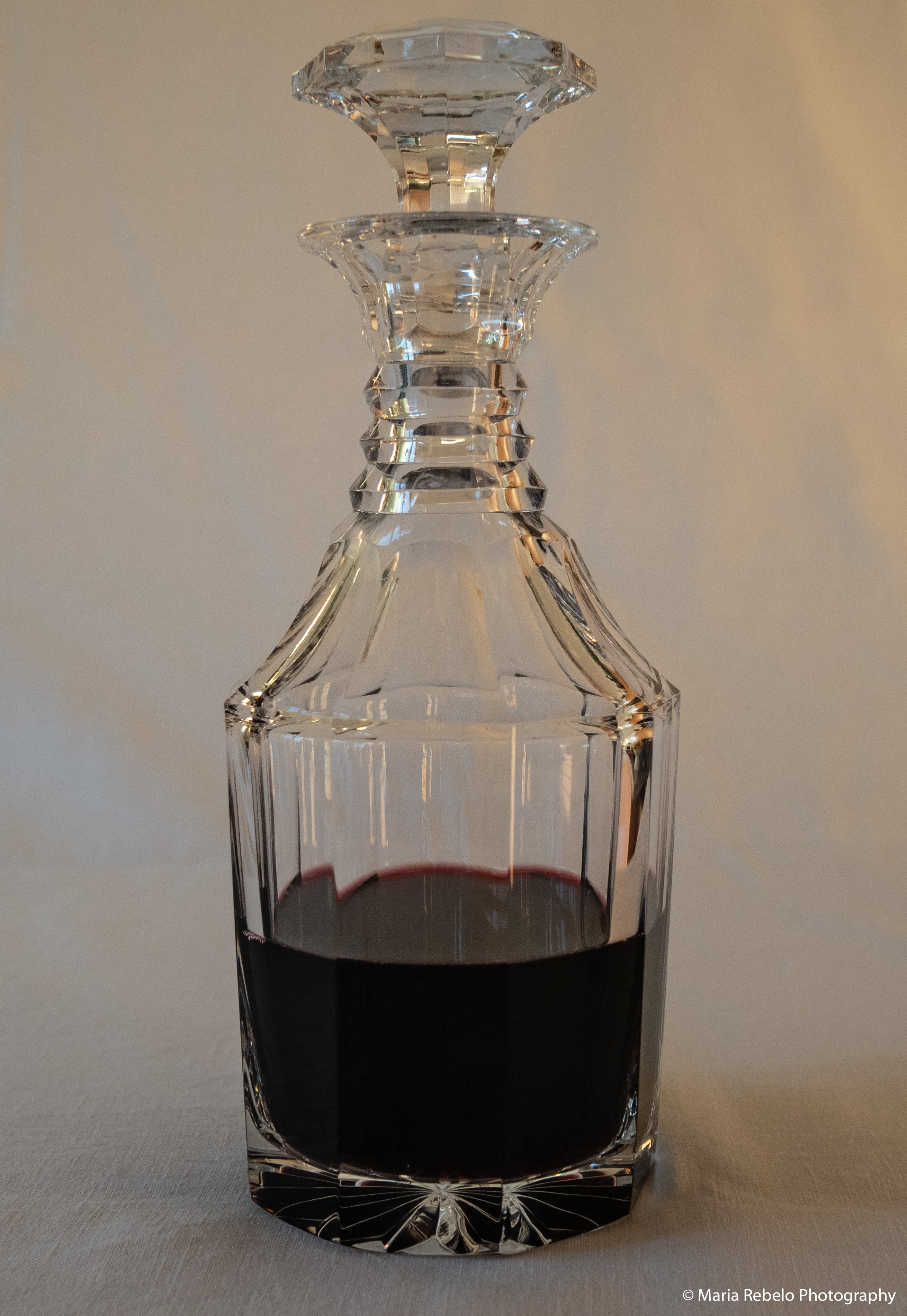
According to an old British tradition, Vintage Port is served in a decanter, passed from right to left at the end of the meal. When someone forgets to pass the decanter, instead of saying. “Would you mind passing the Port?” the British like to ask: “Do you know the Bishop of Norwich?”  They will then explain that the bishop was a very nice fellow except for his annoying proclivity to forget to pass the Port decanter. Henry Bathurst, the Bishop of Norwich from 1805 to 1837, often fell asleep at the table, interrupting the flow of Port that fueled the conversation.

The British Port-wine merchants and producers gather every Wednesday for lunch at the Feitoria Inglesa, an elegant 18th-century building in Porto. It is a place where the slightest hesitation about passing the port results in a lecture about the Bishop of Norwich.

One day, two members of the Feitoria Inglesa conspired to invite the current bishop of Norwich to lunch. The bishop arrived incognito. One of the conspirators failed to pass the Port and was promptly asked by his neighbor, “Do you know the Bishop of Norwich?” He responded, “I do, in fact, I can introduce you to him because he is sitting at the table!” The bishop rose and told the guests that he was indeed the Bishop of Norwich and that he always passed the Port.

The art of growing old

OLYMPUS DIGITAL CAMERA

A friend brought a precious gift to a recent dinner party:  a bottle of Madeira from 1853! The wine was produced at a time when the future of Madeira looked bleak. Robert White and James Johnson in the 2nd edition of their book “Madeira its Climate and Scenery,” published in 1856, offered the following prognosis:

“The wine of Madeira, which has acquired worldwide celebrity, will soon be no more than a thing of history. In the Spring of 1852, a disease suddenly showed itself which, in process of time, destroyed the grape and ruined the prospects of the hardly-tasked cultivators. […] it is calculated that in two or at most three tears not a pipe of wine will be left in the island.”

The disease was caused by a fungus called oidium tuckeri. According to White and Johnson, production dwindled from roughly 8,000 pipes in 1851 to roughly 2,000 pipes in 1854. Luckily, the discovery that oidium could be controlled by dusting the vines with sulphur saved Madeira’s vineyards from oblivion.

It was with great expectation that we broke the 165-year-old crimson seal to persuade the steadfast cork to retire from the job of guarding the priceless nectar. The wine left the bottle full of vigor, with a crystalline amber color and an enchanting aroma. No wonder Madeira was once used as a perfume in the court of Russia!

Less sweet than more recent vintages, the taste has an elegant “vinagrinho,” the name for the volatile acidity produced by the passage of time. It is a wine that has much to teach us about the art of growing old.

The Yeatman hotel

Composit Yeatman

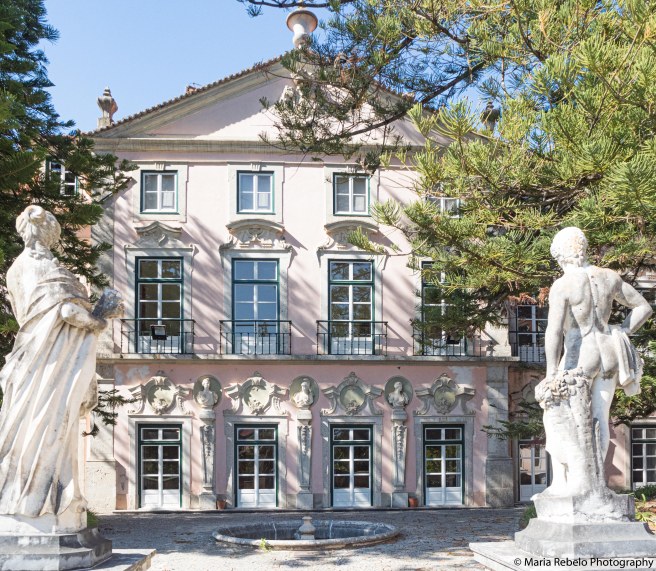
There’s no better place to appreciate the beauty of Oporto than sitting in great comfort at the Yeatman hotel, sipping a glass of chilled Taylor’s Chip Dry white port before dinner.

The hotel was built by the descendants of the Yeatmans, a British family that started trading port wine in 1838. Draped around a hill in Vila Nova de Gaia, near the cellars where priceless vintage ports are stored, the hotel offers exuberant views of the river Douro and the city of Oporto.

A stay at the Yeatman is an initiation into the secrets of Portuguese wine. Each room is decorated by a different wine producer. The public spaces are adorned with artisanal artifacts and objects that highlight the connections between wine making and the history of Portugal.

The Yeatman’s main restaurant has two Michelin stars. Here, the exquisite food prepared by chef Ricardo Costa harmonizes with extraordinary wines curated by enologist Beatriz Machado, a graduate of the University of California at Davis.

The hotel organizes wine tastings, wine masterclasses, and weekly vinic dinners hosted by wine producers. These activities combine with the perfect location to make the Yeatman the perfect pairing for wine lovers visiting Oporto.

The Yeatman is located at Rua do Choupelo, (Santa Marinha), in Vila Nova de Gaia. Click here for the hotel’s website. 

Three lessons at Quinta de Vargellas

Quinta de Vagellas

It is easy to arrive at Quinta de Vargellas because this heavenly wine estate in the Douro valley has its own train station. The old carriages stop there with a screech, huffing exhausted from racing with the river waters. It is then up to the guests to walk up the granite steps that lead to the manor house.

We sat in the porch, mesmerized by the schist terraces built by generations of workers to create the perfect environment for the exuberant vines. It was here that we learned our first lesson: that the greatest beauty is created by humans in harmony with nature.

Our second lesson, was about the importance of generosity. David Guimaraens, the head winemaker of Taylor’s Fladgate, Fonseca and Croft has an hectic schedule. But he takes time to share the magic of Vargellas with his guests. He explained to us the uniqueness of the terroir and described the vines as if they were his children. We drank his words and saw the brilliance of the vineyards through his eyes, green like the Douro river.

The grapes from the quinta are used to make the famed Quinta de Vargellas Vintage and form the base of the great Taylor Vintage Ports. We walked down to the cellar to sample the port made in 2018, which is still full of vigor but promises to age gracefully.

David discussed some of the intricacies of port-wine making and told us about the new vines he is planting so that his children can continue to produce great ports.  It takes 10 years for new vines to produce usable grapes. Between ages 10 and 20, the vines are adolescents, they have some good years but are moody and inconsistent. From ages 20 to 40, they mature and acquire consistency. From ages 40 to 60, the yields are low but the quality is great. Beyond 60 years, production dwindles but the few grapes that grow are drenched with wisdom.

A lifetime is too short to plant the vines and gather the knowledge required to produce great port. And so, we learned our third lesson: life is a relay race. We have to learn  from our ancestors and add to that learning to sow the seeds of the future.

It was hard to leave Quinta de Vargellas. But the memories of our visit stay with us. And from now on, every sip of the quinta’s holly wines will take us back to this paradise in the Douro valley.

Click here to see the Quinta de Vargellas web page.

A glass of Jampal wine?

OLYMPUS DIGITAL CAMERA

André Manz, a Brazilian soccer player turned entrepreneur, was searching for a place to build offices on the outskirts of Lisbon. He liked a small village near Mafra called Cheleiros. There, he bought the Orchard of the Holy Spirit (Pomar do Espírito Santo), named for its proximity to the Holy Spirit chapel. His wife Margarida fell in love with the orchard and convinced André to use it to build their home and locate the offices elsewhere.

When they moved to Cheleiros, an elderly lady called Dona Celeste told André that in the old days everybody in the village made their own wine. There were 43 wine presses in a village with only 800 people. André said that it would be cool to produce wine and Dona Celeste seized the opportunity to sell him her abandoned vineyard.

When enologists came to study the old vines, they concluded that the red grapes were “castelão” but they couldn’t identify the white grapes. André told Dona Celeste about their difficulties and she replied “Young people don’t know anything! Those grapes are jampal.” This is a grape varietal that was considered extinct. It produces small grapes so, in years gone by when quantity trumped quality, farmers replaced it with higher-yielding varietals. The wine institute sent technicians to certify that the grapes are indeed jampal and André became the world’s sole producer of jampal wine.

In the first few years, André bottled the wine in plain bottles. He gave a few to his friends and consumed the rest in his household. On the occasion of an important lunch, André decided to put some labels on the wine. He called it Dona Fátima, the name of his mother in law. When the bottles arrived at the table, Dona Fátima was delighted. “Why did you name the wine after me?” she asked André with curiosity. “Because of its acidity,” quipped André.

When Julia Harding and Jancis Robinson were working on their book, The World of Grapes, they contacted André to see if they could get a bottle of jampal wine. They liked it so much that they included it in their selection of the 50 best Portuguese wines.

Since then, it has become very hard to buy one of the 6,000 bottles of Dona Fátima produced every year.  If you see one in a wine store make sure you get it. If not, drive to the village of Cheleiros, to try one of the world’s most unique wines.

Click here for Manzwine’s web site.