Every cup of coffee is a voyage

Sr. Adelino Delta

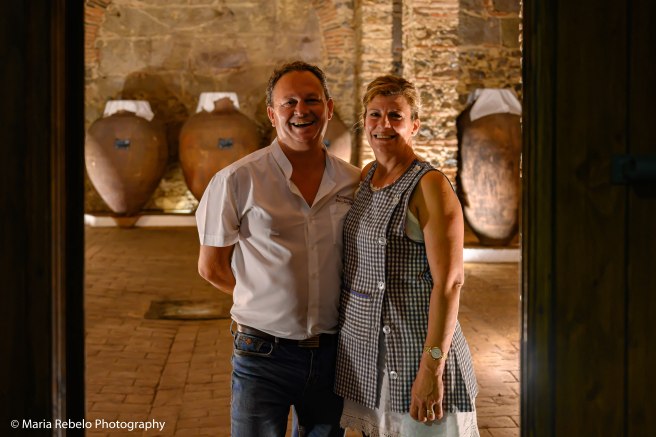
It was with anticipation that we drove to Campo Maior to meet Adelino Cardoso. For 41 years he has tasted, tested and roasted the coffees made by Delta, a renowned Portuguese coffee brand.

When Adelino joined Delta, he first had to prove his worth by roasting humble ingredients like barley and chicory. It was only then that Comendador Nabeiro, the legendary founder of Delta, took Adelino under his wing and started introducing him to the secrets of coffee production.

Adelino speaks about coffee with great  passion. “Every cup of coffee is a voyage,” he tells us. “To places like Brazil, Kenya and Vietnam where the coffee is cultivated. Every day containers arrive from faraway lands.  We take samples that are visually inspected and analyzed in the laboratory. If these tests are satisfactory, we roast the beans, grind them and brew coffee. We taste the coffee in a quiet room where nothing distracts us from the appreciation of the aromas and flavors. When the coffee does not meet Delta’s rigorous standards, the container is returned to the seller. We stand by quality, we want our clients to love our coffee. Comendador Nabeiro’s motto is that every client is a friend.”

“What is the secret of producing a great blend?” we ask. Adelino hesitates because this is a naive question, one that takes a life-time of experience to answer. He finally tells us that “It is complex. At a basic level, the Arabica beans lend aroma and acidity and robusta beans lend the viscosity that we often call body or intensity. But there are many other important elements. At what altitude was the coffee produced, how and when was it harvested, how was it processed after the harvest. Then there is the roasting. How long did the roasting last, how quickly did the temperature rise, how high did the temperature get.  The coffee beans have to be ground in a way that is appropriate to the method used to brew the coffee. The amount of coffee used has to be exact. The coffee cups have to be heated before the coffee is served. All these factors determine the quality of the coffee. A good espresso has a thick hazelnut cream that protects the delicate coffee aromas. As it comes out of the machine, the last drop should be white.”

“I would like to invite you for a cup of coffee.” Adelino says.  We walk with him to the lab and watch the meticulous preparations. The way he measures the coffee and drains hot water from the machine before brewing. The way he heats the cups. Finally, the coffee comes out of the machine. “For me, the ideal espresso has 35 ml of coffee, not too short, not too long,” he says stopping the machine at the right moment. “You should not drink the coffee right after it is brewed. The coffee pours out of the machine like a wave crashing on the shore. We have to wait until it settles down.”

The coffee has a gorgeous hazelnut cream adorned by a white drop. We wait for a moment and then take a sip.  It is fantastic. We enjoy it slowly aware of the length of the journey, the depth of the knowledge, and the strength of the passion that produced this perfect cup of coffee.

You can visit Delta’s Center for Coffee Science at Herdade das Argamassas in Campo Maior, tel. 268 009 630, email geral@centrocienciacafe.com. It is a great place to learn about coffee and to enjoy a perfect cup of espresso.


Provesende, a fairy tale village

ProvesendeIn the first half of the 18th century the production of port wine was in dire straits. Inferior wines were often mixed with sugar, spices and elderberry juice to be sold off as port wine. In 1756, the Marquis of Pombal, the autocratic prime minister of King Dom José, created the Royal Company to regulate the production of port wine in order to protect its authenticity.

Pombal sent officials to define the boundaries of the Douro region and classify all its vineyards, creating one of the world’s oldest demarcated wine regions. Vineyards classified as “vinho de ramo” could only produce wine for domestic consumption. Vineyards classified as “vinho de feitoria” could export their wine. These classifications had an enormous impact on property values.

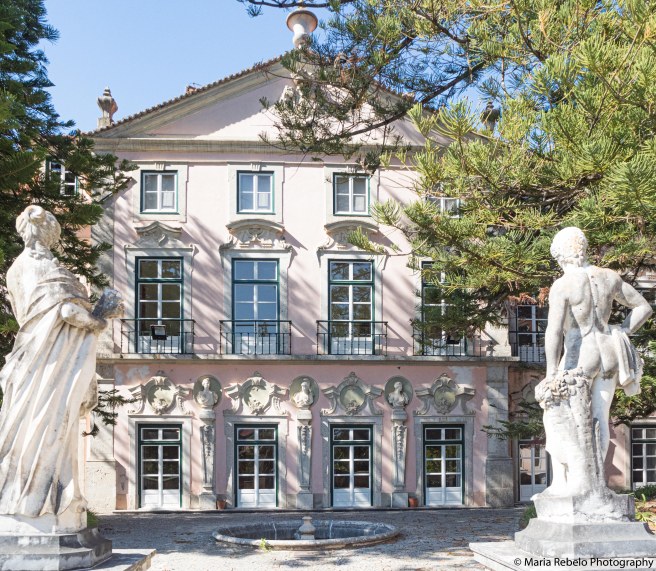
The officials charged with classifying the vineyards and regulating the port-wine trade settled in a small village called Provesende. Over the following decades, the village experienced a construction boom. Large land owners built imposing manor houses so they could spend time in Provesende and rub shoulders with government officials.

The memories of the parties hosted in these mansions have faded in time. What we have left is a charming village that belongs in a fairy tale.

Ancient wheat, dancing in the wind

Adolfo Henriques

Another wondrous lunch with Adolfo Henriques at Maçussa. A taste of another recipe that almost got lost: “manja,” a combination of bread, potatoes, garlic and olive oil that goes great with grilled sardines.

The meal started with Adolfo’s legendary goat cheeses served with bread made from barbela wheat and a baked mixture of cornbread and olive oil called gaspiada. “I call this one cabrabert,” says Afonso, pointing to a round cheese, proud of his play on the Portuguese word for goat (cabra) and the word camembert. The cheese was followed by a variety of wonderful sausages, codfish liver, gravlax, and figs.

After lunch, Adolfo took us to a field planted with barbela wheat. Barbela is an ancient Egyptian variety abandoned after World War I in favor of wheats that offer larger yields in exchange for less taste and nutrition. “People often choose quantity over quality,” laments Adolfo.  It took him several years to harvest enough wheat to make bread. He grinds his crop in windmills that only process traditional grains, like Valentim da Silva’s Moinho do Boneco at Moita dos Ferreiros and Miguel Nobre’s Moinho de Avis in the Montejunto mountain. The result is the type of flour used a century ago. It that makes a rustic, delicious, nutritious bread.

Adolfo does not use fertilizers or pesticides. After each crop, he lets the field rest for a year so that the soil can recover. Standing in the middle of a field planted with his prized crop, Adolfo smiles and says: “Look at how the wheat dances in the wind.”

Adolfo Henriques’ company, Granja dos Moinhos, is located on Rua do Moinhos 3, Maçussa, Azambuja, tel 919 474 476, email granjadosmoinhos@sapo.pt. 


The perfect wine party

Goliardos

A group of wine connoisseurs called “Os Goliardos” turned their love of wine into a business–they distribute interesting artisanal wines, made with passion and respect for the land.

Every year in July, the Goliardos invite a group of their favorite wineries to showcase their wines at an event called Vinho ao Vivo (Wine Live). The setting is À Margem, an esplanade by the Tagus river with a view to the tower of Belém on one side and the monument to the discoveries on the other.

Portuguese wineries share the stage with producers from France, Spain, Germany and Italy.  There are musicians serenading our ears and food producers filling our bellies with black-pork prosciutto, sausages, oysters, cheese and much more. It is the perfect wine party. If you missed it this year, mark your calendar for next year.  And get a few bottles from the Goliardos’ wine list, they’ll make the wait seem much shorter.

You can find Os Goliardos at Rua General Taborda, nº91, in Lisbon’s Campolide neighborhood. They can be reached by phone (213 462 156) or email info@osgoliardos.com. Click here for their website.

The Marquis of Pombal and his dessert wine

OLYMPUS DIGITAL CAMERA

Almost everyone who visits Lisbon runs into the statue of Sebastião José de Carvalho e Melo, the Marquis of Pombal. It stands on top of a giant pedestal facing the downtown neighborhood that the Marquis helped rebuild after the 1755 earthquake.

The Marquis had a profound influence on the production of port wine.  In 1757, he ordered the first classification of port-producing vineyards, making the Douro one of the world’s oldest demarcated wine regions. He also founded the Royal Company which controlled the exports of port to England and Brazil. These measures were unpopular, but they greatly improved the quality of the port produced.

We wonder whether, after doing what he thought was right for the Douro region, the Marquis had second thoughts. He owned a large wine estate in Oeiras, in the outskirts of Lisbon, that produced an excellent fortified wine. But according to the rules he helped create, he couldn’t call it port wine. Instead, the wine was known as Carcavelos, after one of the region’s seaside villages.

An early coup for Carcavelos wines came in 1752. King Dom José gathered a collection of luxurious gifs chosen to impress the emperor of China. One of these gifts was a red velvet box with two bottles of Carcavelos wine.

Half a century later, the winds of history interceded in favor of the Carcavelos wine. When Napoleon’s troops invaded the north of Portugal, it became difficult to export port wine to England. Carcavelos wine emerged as an excellent alternative, gaining fame and prestige among British wine connoisseurs.

In the 1930s, the Carcavelos vines started to be uprooted to make space for suburban homes. As a result, wine production dwindled. In 1997, the Oeiras city council decided to invest in the preservation of the vineyards that were left, saving this historical wine from oblivion. The city also restored the palace that belonged to the Marquis of Pombal.

If you’re looking for an outing near Lisbon, a visit to this palace is a great choice. You can stroll through elegant salons and manicured gardens. And you can try a glass of Carcavelos wine. Drier than port, it has enticing aromas and exquisite flavors that enchant the senses. A sip of this nectar is a trip back in time, a taste of the wine enjoyed by a Chinese emperor and served at the lavish parties staged by the Marquis of Pombal . 

The Palace of the Marquis of Pombal is located at Largo Marquês de Pombal, in Oeiras, tel. 214.430.799. You can reach Oeiras by taking the Lisbon/Cascais train.

Lumiares, our home in Bairro Alto

Hotel Lumiares Composit

The grand palace built in the 18th century by the powerful widow of the count of Lumiares languished in ruins in the middle of Bairro Alto, an ancient neighborhood in Lisbon. Two years ago, the derelict building was transformed into a boutique hotel. The new structure preserves what remains of the old palace: imposing marble staircases and decorated doorways. But it adds to them a modern decor with humorous touches, such as  the green shades painted on the portraits that hang in the restaurant.

Instead of rooms, the hotel offers small suites equipped with everything we need to feel at home. The walls are adorned with cozy artisanal Portuguese rugs. The fridge is stocked with complimentary white wine, water and beer. The coffee machine is ready to pour a fragrant blend of arabica and robusta into elegant Vista Alegre cups.

The hotel’s best-kept secret is the wonderful rooftop, a place where we can seat above the hustle and bustle of Bairro Alto to enjoy panoramic views of St. Jorge’s castle and the Tagus river. How sweet it is to stay at Lumiares!

The Lumiares hotel is located at Rua do Diário de Notícias 142, Lisbon, tel. 21 116 0200. Click here for the hotel’s website. 

Taberna Sal Grosso

Taberna Sal Grosso

When we arrived at number 22, Calçada do Forte in Lisbon’s old Alfama neighborhood, there was a group of people congregated around the door. They were all trying to get a table in a small restaurant called Taberna do Sal Grosso (Coarse Salt Tavern). An exasperated waiter explained that he could not bend the laws of physics to accommodate more guests. No one was happy with the news that miracles could not be made. We too walked away disappointed. But we were so intrigued by the tavern’s atmosphere that we made reservations for lunch two days later.

As soon as we sat for lunch, it became obvious why the place is so popular. It serves delicious food with a happy vibe at modest prices. This trio of qualities is rare. It is hard to keep the quality of the food consistent and feel happy about serving inexpensive meals. Joaquim Saragga, the chef and owner, manages to do it because because he views his restaurant as more than just a business.

Joaquim lost his job, so he decided to change his life. When he was a student in London,  he used to cook for his roommates. He remembered feeling happy in the kitchen, so he enrolled in culinary school and went on to complete a Masters in gastronomy.

When he opened the tavern in 2015, he shunned the tricks that most eateries use to become more profitable. There are no couvert charges. He serves only two inexpensive but very drinkable house wines and a few artisanal beers. Desserts are modestly priced.

“I’m not trying to innovate, only to serve my favorite traditional recipes prepared with local, seasonal ingredients. I cook the food I like to eat.” he told us. Everything we tried was perfect: a watercress and orange salad, codfish cakes, manta ray and garlic, oxtail with quince, codfish and chickpeas.  “I needed to create my own job,” he explained, “but I also wanted to create a place where people feel at home.”

We proposed to take a photo of the staff at the door of the restaurant but then another wave of guests came in. Joaquim asked one of the chefs and the waiters to pose for us but he stayed inside the restaurant, clearing the tables and welcoming people. It is this dedication to serving others that make Taberna do Sal Grosso such a special place.

Taberna do Sal Grosso is located at Calçada do Forte, 22. Reservations are a must. They do not accept phone reservations. Reservations can only be made by sending a message through Facebook. You need to receive a confirmation in order for the reservation to be valid.

The elegant intensity of Dona Matilde’s wines

Quinta D. Matilde Composit

It was an unexpected honor–to spend a lazy afternoon with Manuel Ângelo Barros, an icon of the Douro valley. We met in the terrace of his home, sheltered from the hot sun, cooled by a timid breeze. Below, the waters of the Douro river tried to stand still so they could eavesdrop on our conversation.

The landscape reminded us that producing Douro wines is an extraordinary feat. Generations of men and women toiled in freezing Winters and scorching Summers to build the terraces that support the vines and prevent the soil from washing into the river.

Manuel’s family owned two legendary port-wine houses: Barros, the family brand, and Kopke, the oldest port-wine house, established in 1638. They also owned a portfolio of vineyards amassed over the last century. The third Barros generation decided to sell the brands and the vineyards. But once the sale closed, Manuel missed the magic of having land that turns water into wine. He managed to buy back one of the Barros properties in 2006, Quinta Dona Matilde, famous for its high-quality grapes, produced in schist soils near the river. Originally purchased by his grandfather in 1927 and named after his grandmother, the quinta is a place where Manuel spent much of his youth.

The table was set with “bola de carne,” a traditional meat pie, because Dona Matilde produces gastronomic wines that are best enjoyed with some food. Most wine makers like to explain the enological properties that make their wines distinct. Instead, Manuel filled our glasses in silence, letting the wines speak for themselves. Whenever we asked a question, he paused to reflect. Then he answered in a gracious, literary Portuguese, choosing his words with the same care he devotes to making wine.

Manuel is proud of the team he assembled at Dona Matilde. His younger son, Filipe Barros, plays a key role as marketing director. The viticulturist José Carlos Oliveira takes care of the quinta’s 28 hectares, which include 60-year-old vines that produce wines with great complexity and character. Enologist João Pissara strives to use production methods that highlight the outstanding qualities of the Dona Matilda grapes. To make the reserve red wine, he favors the traditional method of treading the grapes by foot in the quinta’s old granite tanks.

We tried two whites and two reds. Even though the estate has low altitude and a sunny exposure, the wines are balanced with great freshness and acidity. Harvesting the grapes early is key to producing these wonderful results.

Each Dona Matilda wine has a distinct voice. But they all have the same quiet intensity and aristocratic elegance that make Manuel such a pleasure to be with.

Click here for Dona Matilda’s web site.


Where great views and delicious food go together

EPUR

It is often said that restaurants with good views serve lousy food. This aphorism doesn’t apply to EPUR, chef Vincent Farges’ new restaurant in Lisbon. Its windows offer beautiful views of the Tagus river and the rooftops of downtown Lisbon. But, once the food arrives, it is hard to choose between looking out the window and admiring the elegance of the sustenance on our plate. When we taste the food, our brain’s ability to process pleasurable sensations has to stretch even further.

Served on graceful white plates, the food looks ready for a Vogue photoshoot. Its beauty is not superficial, it stems from the quality of the ingredients and the meticulous preparations.

We tried a flavorful rabbit rillette with foie gras, seasoned with pear vinegar, a delicate avocado mousse topped with crispy Galician cabbage, the type of cabbage used to make caldo verde. Our lunch ended with a sumptuous soup starring a trio of marvelous fish: manta ray, sea bass, and monkfish.

It is hard to think of a better place to meet Lisbon for a lunch date than at Vincent Farge’s EPUR.

EPUR is located at Largo da Academia Nacional de Belas Artes 14, Lisboa, tel. 21 346 0519.


Vinum acer from Bairrada

OLYMPUS DIGITAL CAMERA

Most vinegar consumed around the world is made through industrial processes that work fast but generally produce insipid results. Luckily, there is an increasing number of producers making delicious artisanal vinegars.

“It is easy to make fine vinegar, all you need is good wine and patience,” says Mário Sérgio, the winemaker of Quinta das Bageiras in Bairrada. “Fill about two-thirds of an oak barrel with good-quality wine and forget about it for 10 years. Sure enough, the wine will turn into vinegar.” The Romans seem to have followed a similar recipe–the Latin word for vinegar, vinum acer, means sour wine.

We took a bottle of Mário Sérgio’s artisanal vinegar home and were amazed at the difference it made. Its tangy taste transforms salads from good to great. Cooking with this vinegar enhances the food we prepare in ways that are subtle but profound.