Alcobaça

RBD_Alcobaça
Alcobaça, ink on paper, Rui Barreiros Duarte, 2014.

To understand Portugal, you have to visit Alcobaça. It was here that the first king of Portugal, Dom Afonso Henriques, founded a monastery in thanksgiving for his conquests. He laid the first stone in 1148 on a beautiful valley irrigated by two rivers, Alcoa and Baça.

Alcobaça became a center of agricultural research with a vast library that included volumes printed by Gutenberg. The monastery served as a luxury hotel for the royal family and their guests, but it also baked bread to feed the poor. The kitchen of the monastery was famous throughout the kingdom. Water from the river Alcoa runs through the kitchen, providing water for cleaning and cooking.

Built in an early gothic style, the monastery was expanded and renovated throughout the centuries. King Dom Pedro erected sumptuous tombs to celebrate his eternal love for Inês de Castro. Henry the Navigator, who was the abbot of Alcobaça, built a palace inside the abbey. Every stone of the Alcobaça monastery is a page of the history of Portugal.

Visiting the Middle Ages

DCIM102GOPRO

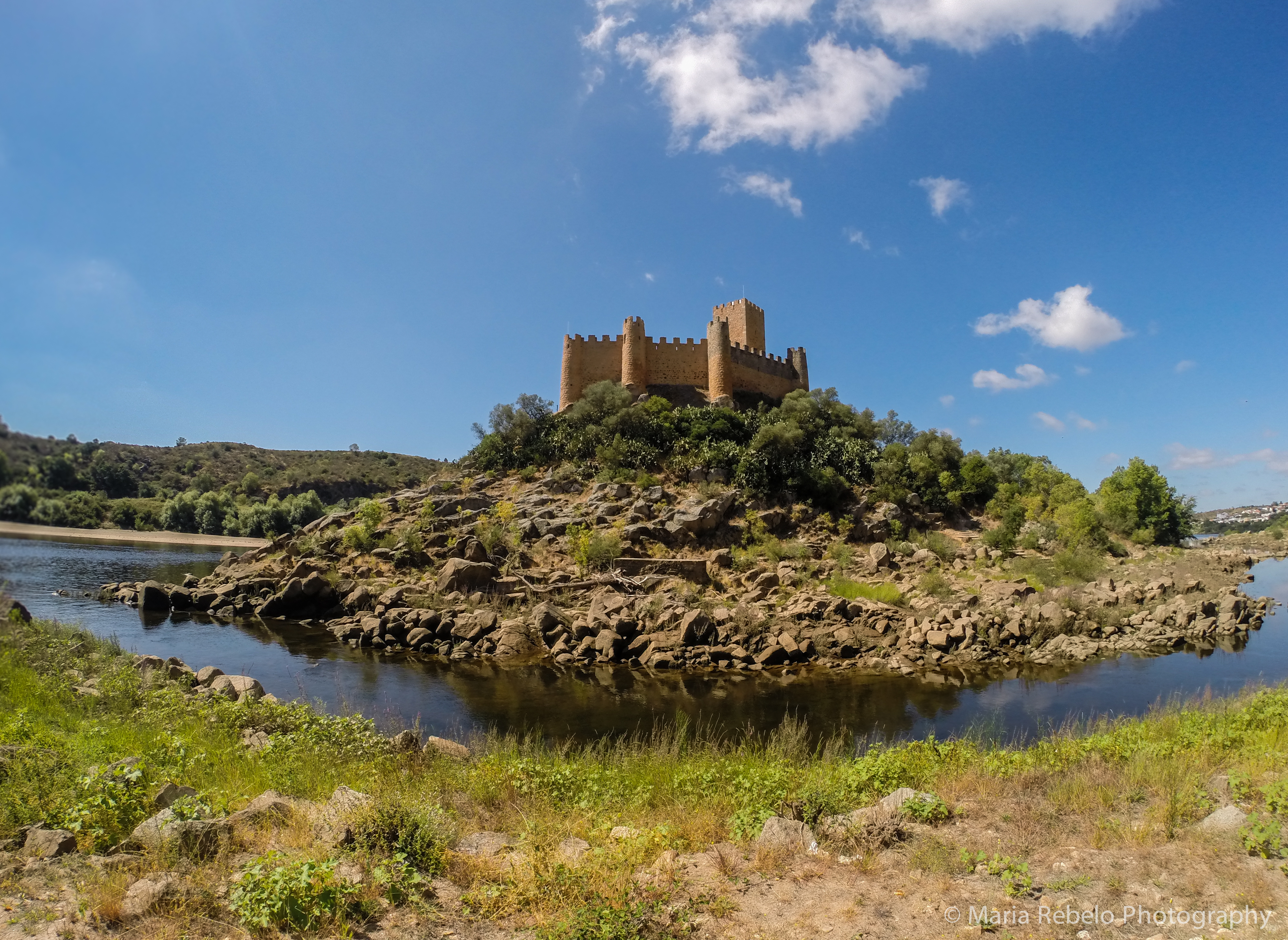
The castle of Almourol was built by the Romans and rebuilt in the 12 century by the Knights Templars. Situated on a small island in the middle of the Tagus river, it was part of the defensive structure set up by Dom Afonso Henriques, the first king of Portugal. The castle quickly lost its strategic importance but retained its romantic appeal. At Almourol time stands still so we can get a glimpse of the Middle Ages.

It is tempting to sit on the river bank, enjoying the view of the castle, dreaming about chivalry and courtly love. But don’t miss the chance to cross the river by boat to visit the castle. You might arrive in time to free a beautiful princess or slay a nefarious dragon.

Heaven in Lisbon

DCIM101GOPRO

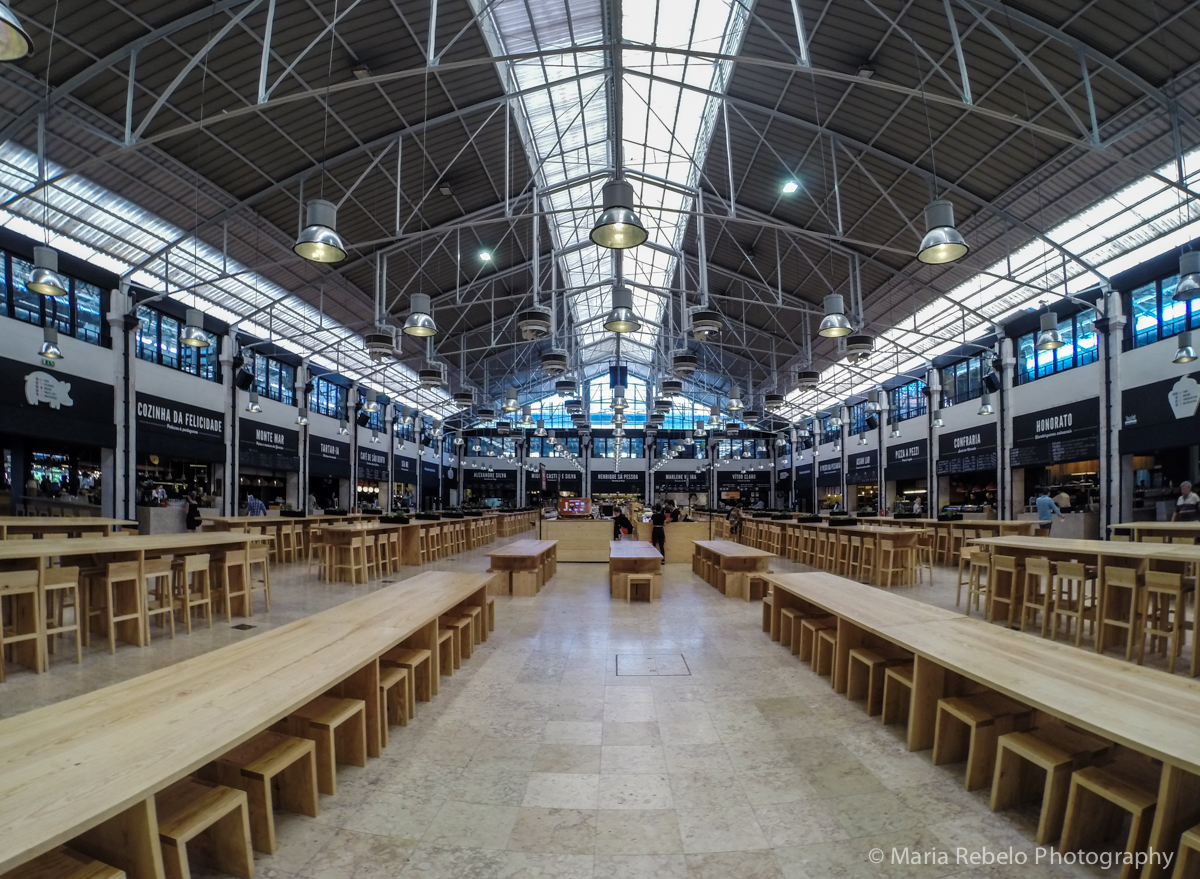
We dreamed we had died and gone to heaven. And heaven was a large pavilion sparsely furnished with long tables and bathed in white light. To our surprise, paradise was scented with the aromas of Portuguese cuisine: parsley, coriander, olive oil, garlic, codfish, and cinnamon. And there were many great chefs urging us to try their creations. We had a “pastel de massa tenra” cooked by Miguel Castro e Silva, roasted pork cooked at low temperature by Henrique Sá Pessoa, squid “pirolitos” made by Marlene Vieira, and a delicious tomato soup prepared by Alexandre Silva. We loved them all.

When we woke up, we realized we had been dreaming about a real place. The magazine Time Out Lisbon created a space in Mercado da Ribeira, one of the city’s food markets, where many of the best restaurants in Lisbon have stands. For a modest sum you can pick the food you like, pair it with some great Portuguese wine and enjoy the meal at one of the many tables. It is a heavenly way to experience the delights of Portuguese cuisine.

A beach fling

PraiadoAbano

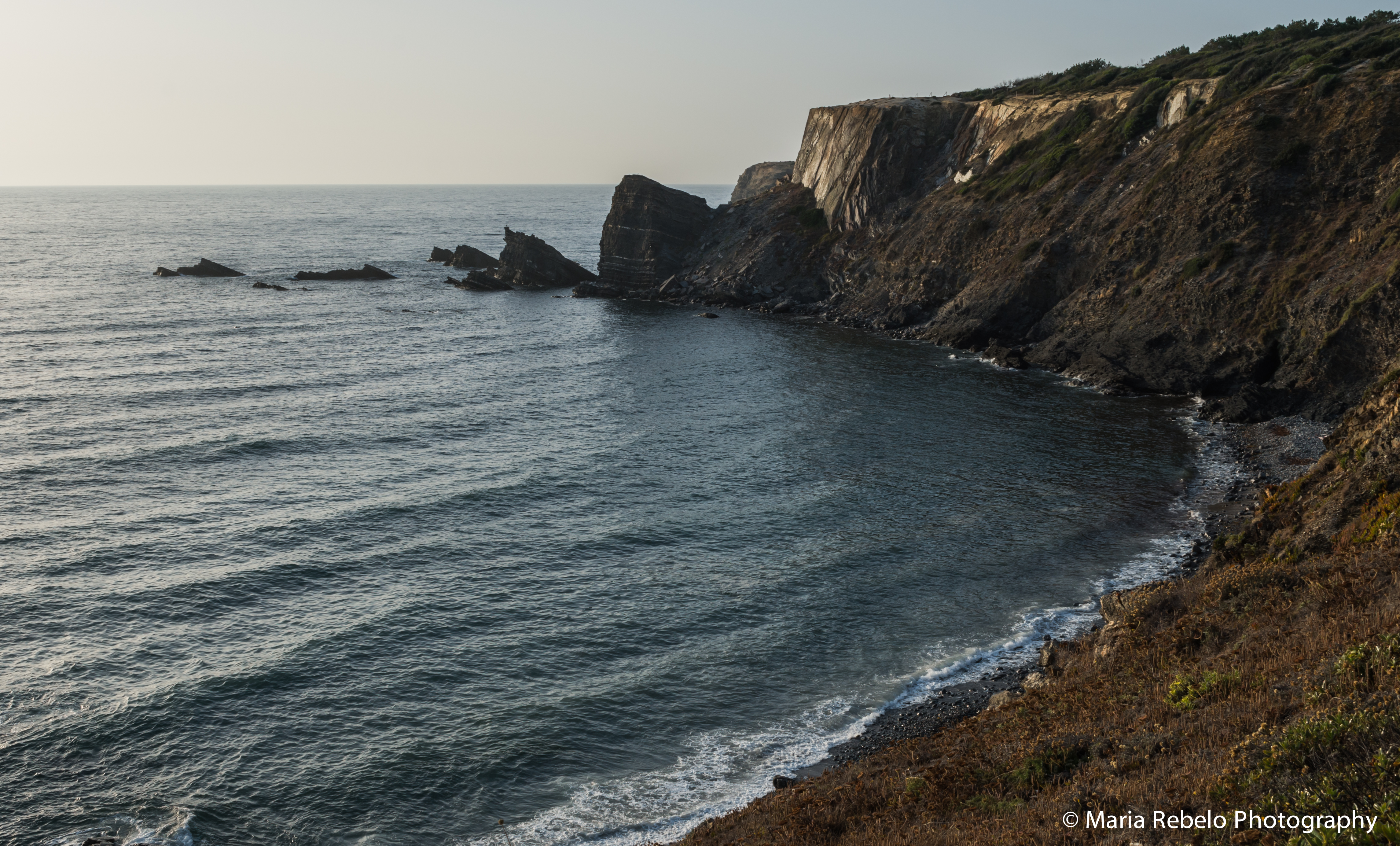
First-time visitors to Lisbon are often surprised by its beauty. But, when you live in the capital city, you begin to take this beauty for granted and look around for something new. You don’t have to look far. Drive a few miles down the coast and you’ll find secluded beaches that will tempt your heart.

One of these beaches is Praia do Abano, on the coast of Cascais. Its cliff top offers breathtaking views of the Sintra mountain and the endless sea. Sheltered from the wind, Abano is the perfect place to enjoy a day in the sun.

There is a rustic restaurant on top of the cliff that you won’t find in tourist guides. It serves simple, wonderful food, such as amazing clams with irresistible country bread, delicious rabbit cooked in wine, and flavorful shrimp “açorda.” It is an unforgettable experience to dine there while the sun melts and the moon comes out to gild the sea with silver light.

An afternoon at Abano feels like a vacation. You return to Lisbon relaxed and content and, when you arrive at the capital, you are surprised by its beauty all over again.

The Abano beach is 21 miles from Lisbon. The telephone number of Restaurant Abano is 214870342.

A magical Summer soup

Composit 3F©

When we sat down for dinner in the beautiful esplanade of the Arraiolos Pousada, we expected good food and attentive service. We got much more than that. We were served a series of delicious dishes that harmonized perfectly with Alentejo wine and made us feel we were at the right place, at the right time.

The dinner started with two soups, a Summer cucumber soup, followed by a tomato soup with quail egg. We then had “migas” (an Alentejo specialty made with bread) with wild asparagus and lamb grilled with rosemary. The grand finale was a sampling of traditional convent desserts updated with great refinement.

We congratulated the chef, Elizabete Velez, who told us that she learned to cook with her mother and grandmother in a small village in Alentejo. She offered to give us the recipe for her delicious Summer cucumber soup because it is very easy to make. Here it is.

Elizabete Velez’s Summer cucumber soup

Get the very best cucumbers you can find. Peel them (this step is key because the peel is very bitter) and remove their seeds. Dice the cucumbers, season them carefully with salt, pepper, and great olive oil. Puree the mixture in a blender. Pour into small bowls, placing one or two ice cubes in each bowl. Garnish with toasted slivered almonds, small strips of cucumber peel, and Portuguese sausage (preferably from Alentejo!).

Imagine eating this soup in a warm Summer evening, as the sun sets over a grove of olive trees and the stars wait their turn to shine on the Arraiolos castle. It’s magical!

Click here for the Pousadas’ website and here for more photos of the Arraiolos Pousada.

Spending time at the Arraiolos Pousada

Arraiolos CompositWhen you need to rest your body and nurture your soul, there is no place like Alentejo. It is a land of great natural beauty, blessed by the sun and far from the concerns of daily life.

One of our favorite places in Alentejo is the Arraiolos Pousada, a 16th century monastery that was converted into a wonderful hotel.

There’s a lot to do in the vicinity of the Pousada. You can take horseback-riding lessons, visit wineries, shop for the famous Arraiolos rugs, or do some sightseeing. But it is also great to relax in the spacious balconies that overlook the countryside or to seat by the pool, enjoying the view of the perfectly-round Arraiolos castle.

When we first arrived at the Pousada, we walked to our room through a sequence of hallways of different sizes that took us from light to shade and then back to light. This walk felt like an initiation rite. And indeed it was. Our stay at Arraiolos was an introduction to the art of enjoying the passage of time. We now need to return to continue our apprenticeship.

Click here for the Pousadas’ website and here for more photos of the Arraiolos Pousada.

The king of Portugal’s favorite fish

Desenho RBD_20140826_salmonete
A noble mullet, pencil on paper, Rui Barreiros Duarte, 2014.

King John II, who reigned in Portugal in the late 15th century, liked to say that “a nation is like an ocean. There are many types of fish in the ocean. The sardine tastes good and it is abundant, so it is cheap. The mullet also tastes good, but it is rare, so it is expensive. I prefer the sardine.”

Historians debate whether this aphorism, in which the mullet represents the nobility and the sardine the people, was good court politics. But it is good advice to those going to the fish market.

Adega Mayor

Adega Mayor

If you’re a wine lover traveling in Alentejo, don’t miss the chance to visit a wonderful winery called Adega Mayor. It is located in Campo Maior, a region on Portugal’s border with Spain that was once the stage of fierce battles between the two countries.

Adega Mayor was designed by Álvaro Siza Vieira, a Portuguese architect who received the Pritzker prize. He is famous for his ability to create buildings that are in harmony with their surroundings. At Adega Mayor, he succeeded brilliantly. The winery is a subtle white accent on the Alentejo landscape, toped by a terrace with amazing vistas. It is extraordinary to sit on the terrace at sunset and watch the Alentejo sky painted with colors others skies can only dream of.

The wines of Adega Mayor are produced with immense skill and care. But they offer much more than technical perfection. They carry in them the soul of Alentejo.

We left Adega Mayor with a warm feeling of optimism. We saw ancient battle fields turned into peaceful vineyards that produce extraordinary wines.

Click here for Adega Mayor’s website.

Portuguese melon


Fatia de Melão-2

One of the pleasures of the Portuguese summer is eating melon. But melons are like lottery tickets. You can win the grand prize, a perfectly ripe melon bursting with sweetness, or strike out and get a tasteless specimen. There’s a coloquial expression that reflects this uncertainty. We say “que melão,”  which means “what a melon,” when we suffer a minor disappointment.

Melon sellers have some curious idiosyncrasies. They like to boast that their melons come from Almeirim, a region that is famous for its melon but has a small production volume.  They also take pride in being able to pick a ripe melon, even though their track record is often spotty.

Restaurant waiters talk about melon with great diplomacy. When they say: “The melon is usually great but I didn’t try it today,” it means that the melon is a dud.

There are restaurants that always serve good melon. No one seems to know how they do it. Perhaps they buy many melons and throw away the bad ones.

According to an old proverb, “por cima de melão, vinho de tostão,” which means “after melon, drink wine that costs a penny.” Since a penny was a lot of money in old times, the proverb recommends drinking good wine after eating melon.

So, here’s our advice. Ask a melon seller to pick a ripe melon from Almeirim for you. If the melon is lousy, just say “que melão” and move on. If the melon is great, celebrate with a great bottle of wine!

Our favorite restaurant in Évora

BotequimdaMouraria-Edit©

Our favorite restaurant in Évora, Botequim da Mouraria, seats only eight people and takes no reservations. There are no tables, everybody eats at the counter. Domingos Canelas, the restaurant’s owner, recites the menu, an endless list of delicacies that includes wild asparagus, eggs laid by blissful chicken, incredible prosciutto from Alentejo, luscious figs, briny clams, succulent fish and meat. In the kitchen, his wife Florbela cooks these ingredients with great skill and refinement. When Domingos brings the food he smiles, anticipating our enjoyment.

We asked him to select a wine from the restaurant’s amazing list. Instead of choosing an expensive bottle, he decided to impress us with a perfectly chilled white wine from Herdade Grande. “In Portugal,” he said, “you don’t need to spend much money to drink great wine.” And we agreed, marveling at the perfect harmony between the wine and the food.

During our leisurely lunch, many customers came to the door and left because there were no seats available. And yet, Domingos didn’t  try to rush us. “You need time to enjoy the food of Alentejo,” he said.

We asked whether he planed to expand the size of the restaurant. He answered without hesitation: “I can only maintain this quality if I stay small.” At Botequim da Mouraria small is wonderful.

Botequim da Mouraria is at Rua da Mouraria, 16-A in Evora, tel. 266-746-775, email: botequim.mouraria@sapo.pt.