On the night before Christmas, Portuguese tables are graced with food from near and far. Local staples like cabbage and olive oil accompany codfish from the icy waters of Norway, Iceland, and Newfoundland. Potatoes, originally brought from South America in the 16th century, are a mainstay of the culinary feast.
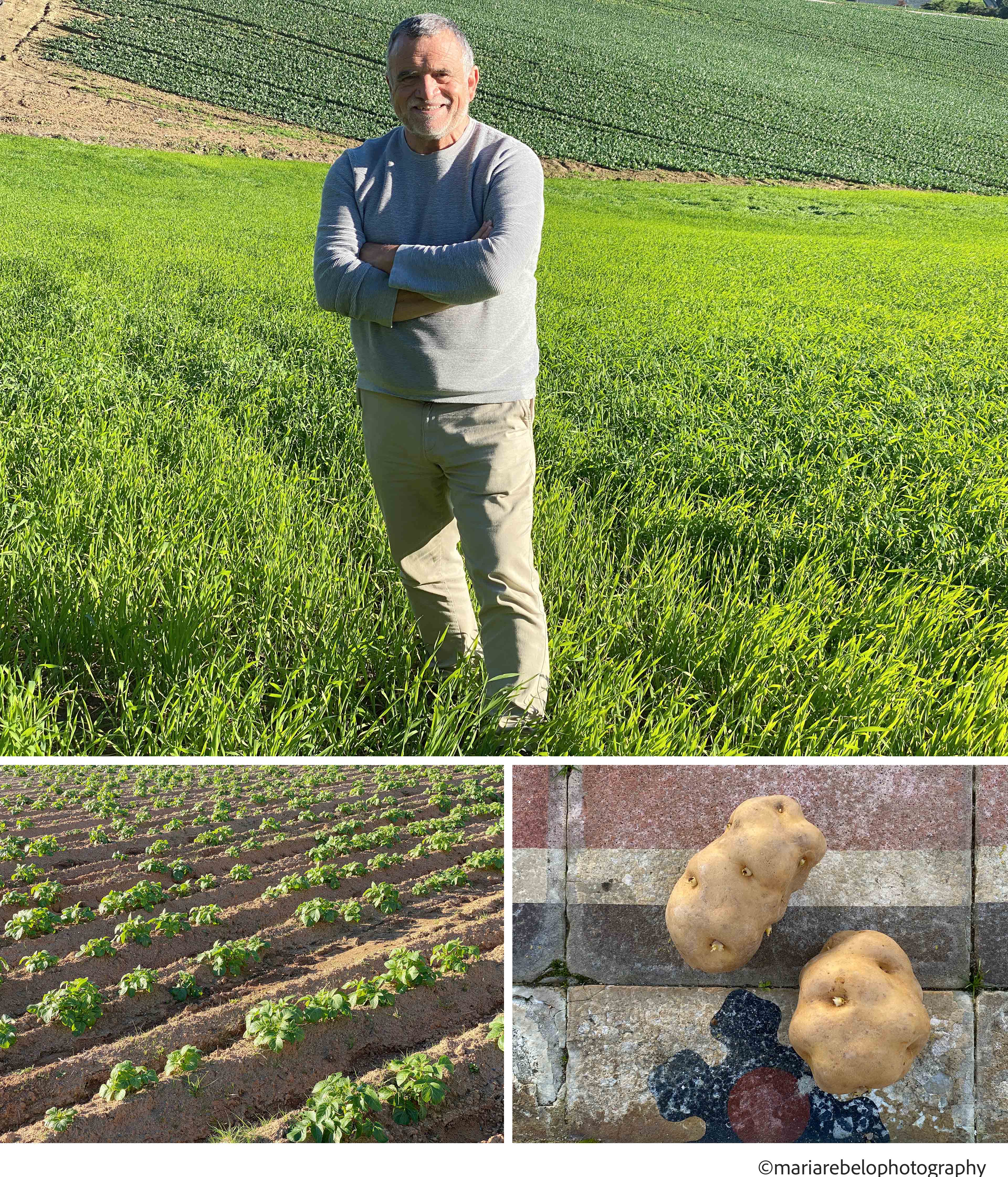
It is thought that the first potato planted on Portuguese soil was “raíz de cana.” It became popular on the west coast of Portugal because its firm texture makes it ideal to use in fish stews or cook with salted skate, a local delicacy.
Raiz de cana has an irregular shape that makes it difficult to peel, so over time, it lost favor with cooks. It might have vanished if it weren’t for Raul Reis, an entrepreneur who moved from Luxembourg to Sobral, near Lourinhã. He discovered raíz de cana in a small village called Cesaredas and began cultivating it. Thanks to Raul, these potatoes are now featured in Portugal’s finest restaurants.
João Rodrigues, a famous Portuguese chef, liked raíz de cana so much that he created some recipes that showcase it. One of them is the recipe for potato salad we share below.
You can try the recipe with another potato variety or visit João Rodrigues’ new restaurant in Lisbon (Canalha) to taste the real thing!
Potato salad
Ingredients
8 raíz de cana potatoes
2 large pickled cucumbers (cornichons)
One rose onion
3 tablespoons of chives
One egg
½ garlic clove
Sweetened yogurt
1 tablespoon of mustard
Water from the pickles
White wine vinegar
Sunflower oil
Salt
Fleur de sel
Pepper
Olive oil
Preparation
In a glass, combine the egg, mustard, sunflower oil, olive oil, and vinegar. Use an immersion blender to mix everything very slowly and thoroughly.
Season the mixture with salt and pepper.
Add yogurt, grate the garlic into it, and put in a little bit of the pickle juice to taste. Mix everything well.
Thoroughly wash the potatoes with their skins on.
Place the potatoes in a pot with cold water and salt, then bring them to a boil to cook.
Once cooked, remove the potatoes, peel them, and season with olive oil and fleu de sel.
Cut the potatoes in halves and arrange them on a serving dish.
Top the potatoes with the previously prepared mayonnaise.
Finish by sprinkling chopped red onion, cucumber pickles, and chives over the top.
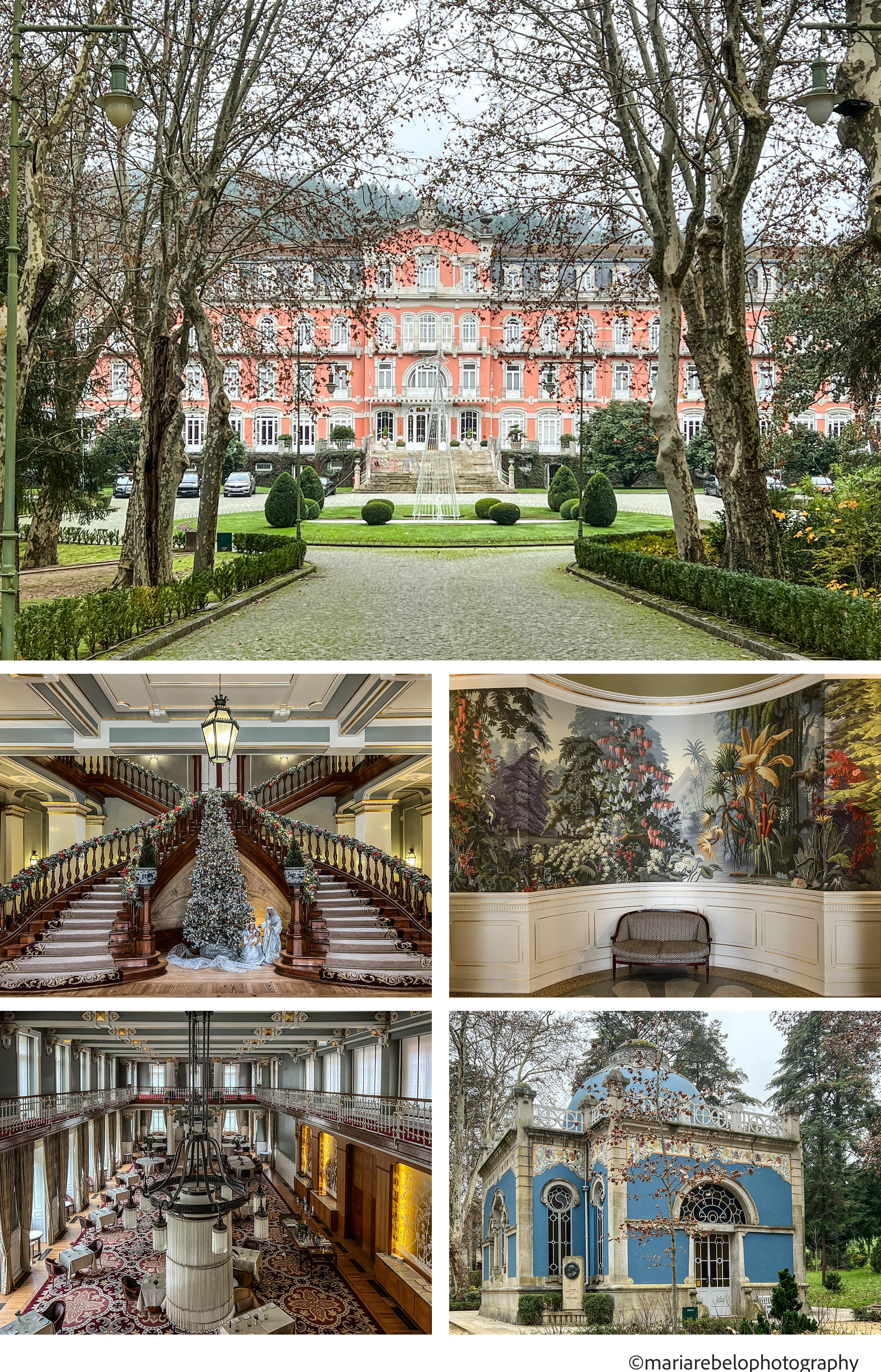
Vidago is a spa town in the north of Portugal favored by the aristocracy and the royal family for the curative powers of its waters. King Carlos commissioned the building of the Vidago Palace Hotel. However, in 1908 the king was assassinated, and by the time the hotel opened its doors on October 6, 1910, Portugal had just become a republic.
A century after its inauguration, the Vidago Palace welcomed guests once more in 2010 after extensive renovations guided by the Portuguese architect Álvaro Siza Vieira, a Pritzker Prize laureate.
As you veer off the main road and pass through the entrance gate, an impressive pink edifice with 365 windows, one for each day in a common year, comes into view. Upon crossing the entryway, we are greeted by regal purple columns framing an expansive staircase reminiscent of those seen in classic Hollywood films. For a moment, you might expect Rita Hayworth, dressed in a glamorous gown, descending the stairs to rendezvous with Cary Grant.
The walls of the ground floor corridors are adorned with exuberate paintings. The former ballrooms, now transformed into the dining room and breakfast area, have a mezzanine level to accomodate the orchestras that enchanted the dance floor with their smooth melodies.
Surrounding the hotel, there’s a picturesque golf course and a lush park with many trails to explore, as well as charming water stations that look straight out of a fairy tale.
Álvaro Siza Vieira made every corner of the palace more elegant while remaining faithful to the original architecture. The result is a hotel that captures the allure and optimism of the Belle Époque.
In 2010, a leisurely lunch in the picturesque Dão region brought together four wine producers. Three came from the Douro Valley: Jorge Serôdio Borges, Jorge Moreira, and Francisco Olazabal. Their host was Álvaro de Castro, a renowned winemaker from the Dão region, known for the finesse of his wines.
Jorge Serôdio Borges and his wife lead Wine & Soul, a cornerstone of excellence in the Douro Valley. Jorge Moreira has achieved great recognition for his project, Poeira, and for the wines he has made at Quinta de La Rosa. Francisco Olazabal heads the iconic Quinta do Vale Meão. This estate was planted in the late 19thcentury by his great-grandmother, Dona Antónia Ferreira, the person who sowed the seeds of the success that the Douro Valley enjoys today.
The three friends are passionate about the freshness and refinement that can be found in old Dão wines. During lunch, they mused about one day making wine together in the Dão region.
A year later, Álvaro de Castro reached out, encouraging them to make this dream come true: “I need your help to promote the Dão region. There’s an aging producer looking to lease his estate, Quinta do Corujão, in Seia. If you’re serious about launching a project in the Dão region, this is a good opportunity.”
The Douro winemakers visited the 10 hectares of vineyards cultivated on granite terroir at 550 meters of elevation at the base of the Estrela Mountain. They decided to lease the property to make wine together. They called their brand M.O.B., a memorable name composed from the initials of their surnames.
By going to a different region, the three masters of the Douro Valley became students once again. The same varietals behave very differently in Dão and in the Douro Valley. In the Dão region, the climate is cooler, and the soils are granitic. In the Douro region, the summers are hot, and schist is prevalent in the soils.
Douro wines are famous for their intensity. In the Dão, the trio embraced a low extraction approach, aging the wine in old oak barrels that round the tannins without imparting new flavors to the wine. The result is lighter wines that are delicate and transparent, preserving the fruit’s freshness and showing an almost floral character.
M.O.B. was a success because wine enthusiasts quickly recognized the exceptional quality-to-price ratios of the wines. Five years after their first harvest, the trio purchased Quinta do Corujão and leased five hectares of old vineyards in Gouveia, where white and red grapes are planted together.
Their outstanding introductory wine is called “Lote 3” because it is a harmonious blend of the three emblematic grape varietals from the Dão region: Touriga Nacional, Afrocheiro, and Jaen. Their stellar premium wines bear the names of Seia and Gouveia before the Roman occupation (“Senna” and “Gauvé”).
A crucial element in the M.O.B. project is the strong camaraderie and mutual respect the winemakers have for each other. Like in Alexandre Dumas’s famous novel, their motto is: “All for one, and one for all.”
Throughout the harvest season, they take turns visiting the vineyards daily, each making decisions informed by the insights of the vintner who visited the day before and leaving information for the one who follows the next day. This relay race produces wines that win our palate with their charm and elegance.
M.O.B. is a story of three musketeers who journeyed from the Douro Valley to the Dão region, where, thanks to a close-knit friendship, they conquered a new terroir and crafted exceptional wines.
Perhaps it’s the way the sunlight falls on the steep hill that slopes down to the river or the breathtaking vistas of century-old vineyards. Quinta da Côrte has an enchantment all its own.
This 18th century estate in the Douro Valley once belonged to a family that supplied their prized grapes to renowned port winemakers. Philippe Austruy, a French entrepreneur and wine enthusiast, fell in love with the estate and purchased it in 2013. The boutique hotel opened its doors in 2018.
The restoration of the buildings and wine cellars was a labor of love, meticulously executed in the traditional style, featuring clay-tiled roofs and yellow-ochre trims around windows and ceilings.
The interior spaces were curated by Pierre Yovanovitch, a designer whose taste was honed during his tenure with Pierre Cardin. Yovanovitch created warm, inviting interiors that blend a sense of place with whimsical elements that surprise and delight.
Each of the eight rooms has a unique personality. All offer great comfort and sweeping views of the Douro Valley. The bathrooms in the main house are adorned with traditional tiles and ceramics that harken back to an era gone by.
Mornings at Quinta da Côrte start with a splendid breakfast served in the kitchen, right by the spacious chimney where sausages used to be smoked.
Then, there’s a world of possibilities waiting outside. Explore the many trails through the vineyards, take a dip in the granite swimming pool, rest in one of the lookout points, enjoying the spectacular landscape, or visit the cellars, where you can savor the estate’s precious ports and elegant table wines. The port wine cellar stores impressive chestnut barrels, too big to fit through the doors. How did they get in? They were assembled inside the cellar in 1938.
The dedicated staff attends to every detail. A stay at Quinta da Côrte isn’t a typical hotel experience; it’s more like being a guest at the home of a dear friend with impeccable taste.
Quinta da Côrte is located near Valença do Douro, near Pinhão. Click here for their website.
Blessed are those who open affordable restaurants that serve delicious food, for they bring joy to the world. Diogo and Tiago de Jesus, two brothers born into a family of restaurateurs, opened a pizzeria in Rua da Guiné, a quiet street near the busling Almirante Reis Avenue. Tong in cheek, they called it Jezzus.
Inside the small restaurant, a dedicated team of cooks fires up mouthwatering Napolitan-style pizzas in an Italian oven fitted with a volcanic stone from Mount Vesuvius. The menu offers a mix of classics, like the timeless Margherita, and inventive creations inspired by Portuguese cuisine. These nouvelle pizzas include “Bulhão Pato,” which tastes like the namesake clam sauce, “Oh Pear,” featuring Rocha pears, and “Oh Diabo!,” adorned with slices of sinnfully spicy Portuguese sausage.
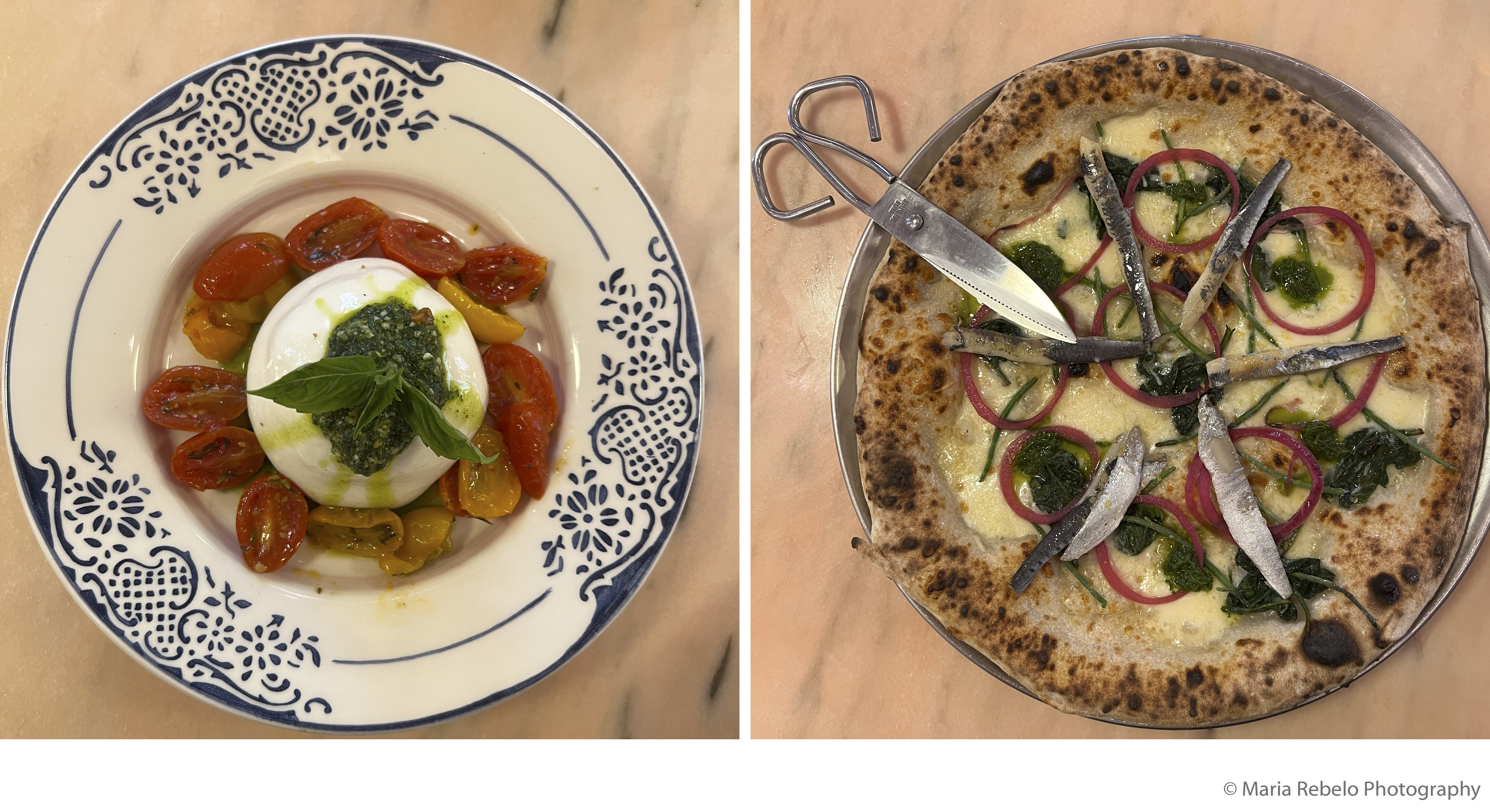
The five-cheese pizza adds to the traditional parmesan a tetrad of Portuguese cheeses: blue cheese from Azeitão, a rare velvet cheese made from the milk of serpentine goats, and “grande do viso,” a cow milk cheese with a rind washed in red wine. Our favorite pizza is Holly Sardine, made with immaculate marinated sardines from the Algarve.
While you wait for your pizza to cook, you can feast on a plate of savory black pork sausages or try the luscious artisanal burrata with tomato confit and basil pesto.
The exceptional quality of the ingredients, sourced from small, local producers, stands out. The pizzaria buys its flour from Paulino Horta, an artisanal miller. They ferment the dough from 47 to 72 hours using sourdough yeast, resulting in a light, easily digestible crust.
Diogo and Tiago say that making pizzas as good as theirs at home would be a miracle. We wholeheartedly agree.
Jezzus is located at Rua da Guiné, 1A, Lisboa, tel. 21-814-2186.
Turning from the asphalt road onto the rustic path that leads to Mouchão is like entering another century. The route is lined with secular eucalyptuses that perfume the air with their fragrance. On the left, there are picturesque vineyards. At the road’s end, the winery comes into view. It is where, for more than 140 years, some of the most renowned wines in Alentejo have been produced.
“The winemaking style remains faithful to tradition,” explains Hamilton Reis, Mouchão’s enologist. “We embrace a philosophy of minimal intervention and meticulous attention to every detail. However, we also harness modern viticultural and oenological knowledge to anticipate and solve problems.”
What sets Mouchão apart is its unique location. The vineyards are planted on an old riverbed that creates a microclimate, lending freshness to the wines. The underground water sustains the vines during the scorching summers, so they don’t need to be irrigated. To access this subterranean water, the vines develop deep roots that absorb the polyphenols that contribute to the wines’ remarkable richness.
The grapes undergo gentle foot-treading to ensure a delicate extraction and avoid herbaceous notes. The wine ages in large barrels crafted from Brazilian macacaúba, mahogany, Portuguese oak, and chestnut. These old barrels no longer influence the wine’s taste but provide the right amount of micro-oxygenation.
Mouchão is famous as the birthplace of Alicante Bouschet in Portugal. This grape variety, created by French viticulturist Henri Bouschet, failed to thrive in France. At the end of the 19th century, two professors from Montpelier planted some Alicante Bouschet cuttings in Mouchão. Here, basking in the sunny Alentejo climate, the vines flourished, producing wines of intense color and flavor. Alicante Bouschet spread throughout the region and eventually found its way to the Douro Valley.
For six generations, Mouchão has belonged to the Reynolds, a Scottish family. Iain Reynolds Richardson, Mouchão’s current general manager, descends from Thomas Reynolds, who arrived in Portugal in 1824 to trade cork, wool, and other agricultural products. Thomas moved to Alentejo in 1932 and started producing cork in Mouchão. Making wine was a natural extension of his business. In 1890, John Reynolds his grandson, built a family home and some agricultural buildings on the estate. The iconic wine cellar was inaugurated in 1901.
For generations, the Alabaças, a traditional Alentejo family, worked on the estate tending to the vines and making the wines. It was hard manual labor–electricity only arrived in 1991.
In the aftermath of Portugal’s 1974 revolution, the estate was nationalized. The vineyards were abandoned, and the buildings and equipment fell into disrepair. João Alabaça worked tirelessly to minimize the destruction. But, despite his best efforts, by the time the estate was returned to the Reynolds family in 1986, the precious barrels had suffered serious damage. It took a dedicated team of coopers two years to painstakingly restore them. In the meantime, the best grapes were aged in the two barrels that had survived unscathed, labeled 3 and 4. The wine from these barrels, known simply as “Tonel No. 3-4,” achieved mythical status. However, as Hamilton explains, “The real magic lies not in the barrels, but in the quality of the grapes.”
The estates’ flagship wine, simply called Mouchão, was first bottled in 1949. It marries the robust Alicante Bouschet with various varietals, most notably Trincadeira. This wine is a true marvel, with a freshness and elegance unusual in Alentejo. It is a fitting homage to the unwavering dedication of generations of Reynolds and Alabaças.
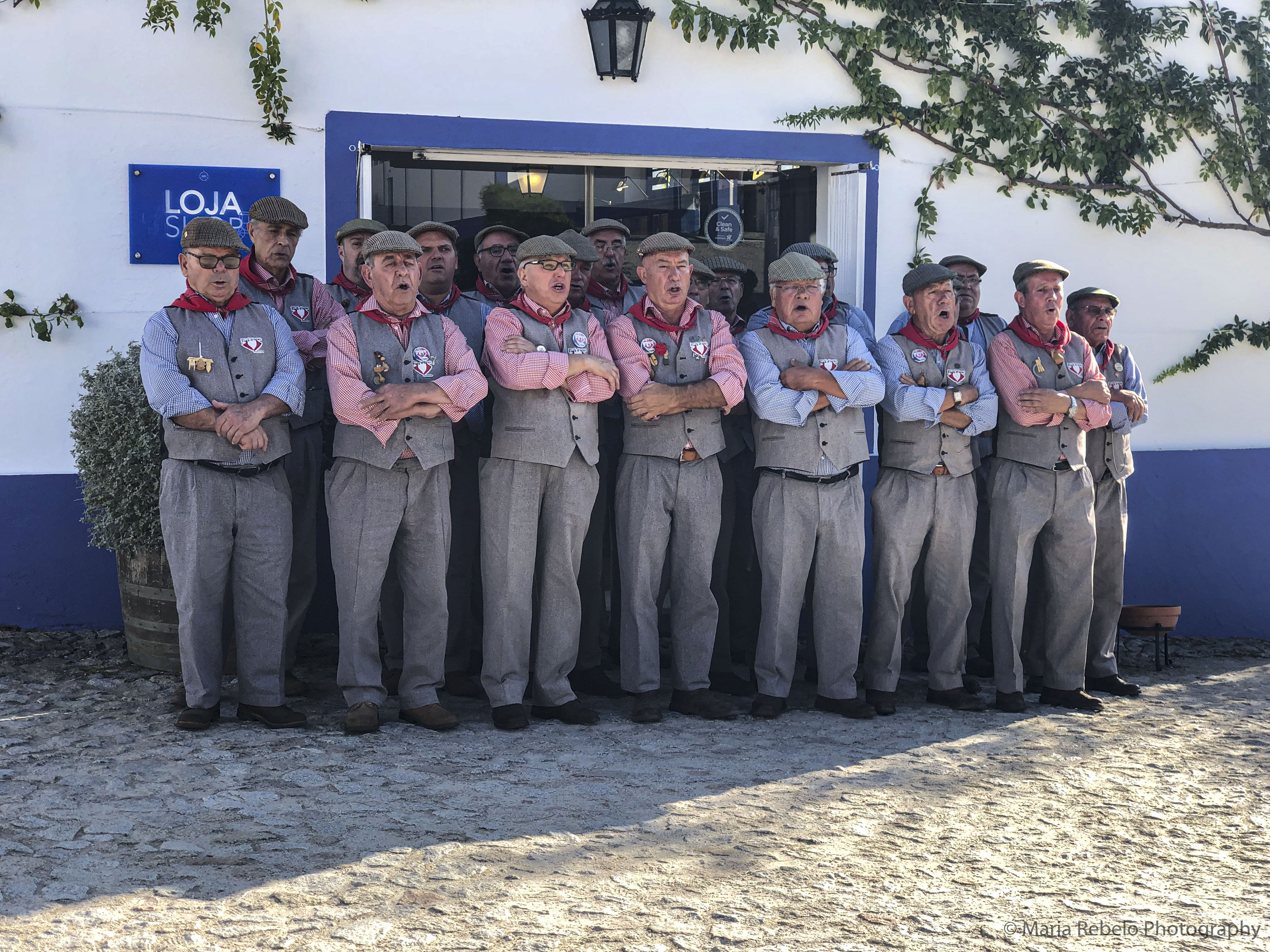
Rows of laborers stand motionless, like a battalion poised for battle. The “ponto” starts singing a few verses alone. The “alto” responds often singing the same melody a major third above the ponto. Then, the choir sings, their voices soaring towards the sky. This style of music is called “cante.” UNESCO recognized it in 2014 as part of the Intangible Cultural Heritage of Humanity.
The tunes are generally in a major key, but the people of Alentejo imbue their singing with such a sense of longing that they make major scales sound minor. The tempo is languid, like the rhythm of life in Alentejo, a place where the summer’s sweltering heat eases the pace of everything.
The verses are simple and sincere. They speak about toiling in the fields, love, faith, the fruits of the land, and the hardships of life.
As the day winds down, people often congregate at local taverns to drink a glass of amphora wine with bread, olives, and some black-pork sausages. Someone sings a few verses, someone else responds, and the group spontaneously burst into song. It is a privilege to hear these voices that carry with them the soul of Alentejo.
Field recording of Fora d’horas group singing at Monte da Ravasqueira by Vasco Rosa Santos. Sound editing by Pedro Rebelo.
We met Filipa Pato and her husband, William Wouters, at Costa Nova, the beach where Filipa used to vacation as a child. Our dinner at Clube da Vela, a restaurant resembling a ship adrift on the waters of Aveiro’s Ria, was unforgettable.
Even though her family has produced wine for five generations, it was not easy for Filipa to start making wine. She didn’t own land, and she is the daughter of a legend. Her father, Luís Pato, is the visionary who placed wines made from baga, the red varietal from Bairrada, on the pantheon of the world’s finest wines. But, over time, Filipa painstakingly crafted splendid wines and forged her own legendary status. “In New York, they know me as Filipa’s father,” says Luís with pride.
After studying chemical engineering in Coimbra, Filipa interned at vineyards in France, Australia, and Argentina. She returned to Bairrada in 2001 for her inaugural harvest and bottled the wine in 2003. A Belgian distributor acquired half of the production. He sold some bottles to William Wouters, a genial chef and sommelier who owned Pazzo, an acclaimed brasserie and wine bar in Antwerp. William became a fan of Filipa’s wines. “At the time, no one knew the white grapes that Filipa uses–bical, arinto, cercial—so I called the wine a Portuguese Chablis,” says William.
William and Filipa frequently crossed paths at wine events. Like in a fairy tale, their connection blossomed into love, culminating in their marriage in 2008. Filipa, who is intense, inquisitive, and creative, found a perfect partner in William, who is funny, focused, and organized. There is a great rapport between the two. Both are artists at heart, driven by a passion for crafting exceptional wines.
Their wines have achieved tremendous success, earning a place in the lists of many renowned restaurants. The demand is so high that they sell through allocations—restaurants and distributors receive only a fraction of what they order. Each January, the couple runs out of wine to sell.
Enthusiasts from all corners of the globe make pilgrimages to meet these trailblazing winemakers. Just last autumn, Jonny Buckland, Coldplay’s guitarist and wine enthusiast, paid them a visit.
The couple lives in Óis do Bairro, a picturesque village of 200 people that dates back to the Middle Ages. They employ ten people who do everything by hand. “We prioritize investing in people over machines,” says William.
Their terroir is exceptional, with soil composed of clay and limestone from the Jurassic era. The proximity to the sea infuses the wines with a delightful salinity. The vineyards have low yields, but the quality of the grapes is superb.
They own 32 parcels of land spanning 20 hectares. “Visiting our properties is like going on a safari,” says William. The portfolio includes centenary vines as well as vineyards that predate the phylloxera outbreak in the second half of the 19th century. One of their jewels is Missão, a vineyard planted with baga in 1864.
A significant turning point in Filipa and William’s journey was their adoption of biodynamic farming practices. After enduring three years of reduced yields, their efforts began to bear fruit. Yields rebounded, and the grapes acquired a new vibrancy.
Eliminating chemicals attracted snails to the vineyards. To divert these mollusks from the grapevines, the couple planted foods that the snails find irresistible like fennel and fava beans. The biodynamic practices turned the fields into hubs of life, teeming with blooming flowers, wildlife, ladybugs, and other beneficial insects.
Because the space between vines is narrow, they employ sheep, pigs, and chickens instead of horse-drawn plowing. The pigs eat lots of grapes but, instead of lamenting the production losses, the couple takes pleasure in the pigs’ satisfaction.
Our tasting began with the festive 3B rosé sparkling wine, a perfect summer wine. The three Bs stand for Bairrada, the wine region, baga and bical, the two grape varietals. The color of the wine changes from year to year. “My wines wear no makeup; I work with what Mother Nature gives me,” says Filipa.
Next, we savored a beguiling Blanc de Blancs sparkling made from a trio of white grapes: bical, cercial, and Maria Gomes. Its creamy and refreshing character delighted our senses.
Our glasses were then filled with a 2020 Nossa Calcário white made from bical, ranked high on the Wine Spectator list of the world’s finest wines. You do not need wine critics to appreciate the excellence of this wine, with its exquisite minerality and saline notes. It is made in their village, which in the 19th century was considered the best terroir for white wines in Bairrada.
We embarked on a journey back in time with Post Quer..s Baga, a red wine produced in amphoras. This delicate wine has a transparency and purity that is rare in modern wines. Filipa does not coat the amphoras, so the porous clay naturally softens the tannins of the baga.
Next came their flagship Nossa Calcário Red. It is made from baga grapes grown on small centenary vines. The result is an opulent wine with fine tannins that is wonderful to drink now but promises even greater rewards with age.
“In Bairrada, it is a tradition to start the meal with sparkling wine and end with sparkling wine,” says Filipa. The grand finale was a stunning sparkling made with a solera process initiated in 2001.
The solera system uses a sequence of barrels. Every year, Filipa removes wine from the top barrel to use as the base for sparkling wine. This barrel is filled with wine from the barrel just below, which in turn gets filled by the barrel just below, etc. Finally, the bottom barrel is filled with new wine. The result is a moving average of all the harvests going back to 2001.
The wine was poured into a decanter designed by William and then served in white wine glasses. Just one sip of this nectar revealed why it was elected Wine of the Year by Portugal’s leading wine magazine—an exceptional honor in a country with so many distinguished winemakers.
Filipa and Williams love traveling and meeting other winemakers. They return from these trips to Óis de Bairro inspired and energized, ready to craft wines like these that bring joy to the world.
Clike here for Filipa Pato and William Wouters’ website.
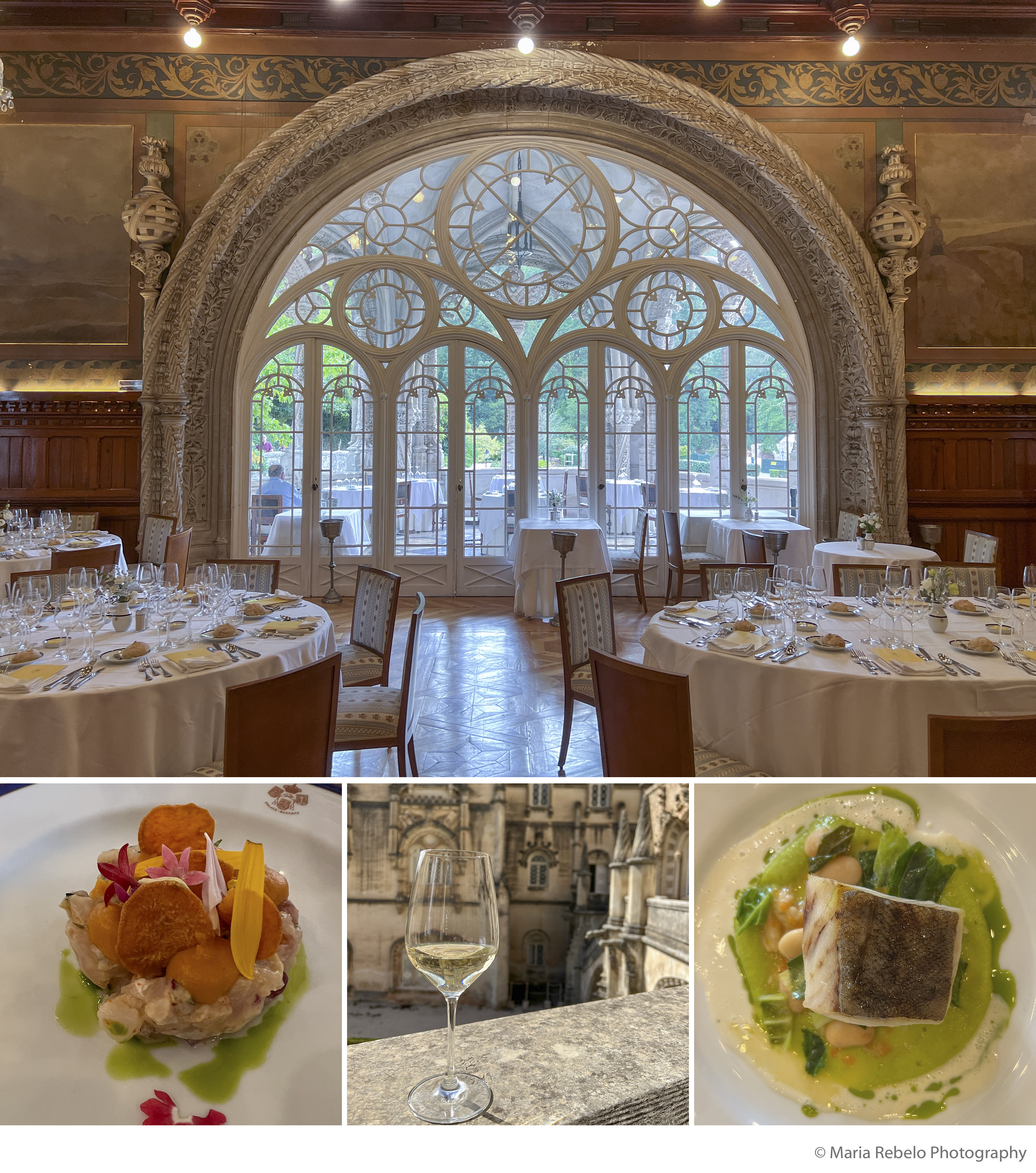
We drove through Bairrada without a GPS device, navigating the narrow, winding road by following signs pointing to Bussaco. Eventually, we arrived at a time-worn toll booth where we willingly paid a modest fee to enter the enchanted Mata do Bussaco. It is a verdant forest with ancient trees that sheltered us from the feisty midday sun. After a short drive, we glimpsed an edifice seemingly made of sand. As we drew closer, we saw a palace constructed from limestone intricately carved by artisans whose names time forgot. One of the last Portuguese kings converted an old Carmelite monastery into a place where his family could stay while he hunted in the forest. The grandfather of Alexandre de Almeida, the CEO of the group that manages the Bussaco Palace Hotel, converted the building into a luxury hotel at the beginning of the 20th century.
The palace hallway is decorated with exuberant tiles depicting scenes from the 1810 clashes between Napoleon’s troops and the Portuguese army. The dining room is magnificent, its walls painted with literary motifs and its furnishings crafted from rare, precious woods.
Alexandre de Almeida introduced us to his gifted chef, Nelson Marques, whose youth is artfully concealed by a well-groomed beard. We settled into the dining room, and soon, a delicate seabass freshly caught at Figueira da Foz arrived. It was marinated with citrus, adorned with crisp slices of sweet potatoes, and accented with purple onion pickles. Shortly after, the servers brought us a briny soup made from Peniche crabs, clams, mussels, and algae harvested from the Aveiro Ria.
António Rocha, responsible for the palace’s iconic wines, paired these offerings with the 2021 Bussaco Rosado, a refreshing rosé with pleasing acidity and beguiling color.
The first entrée was a delightful codfish confit with savory white beans paired with the elegant 2019 white Bussaco Reservado.
The second entrée was a game pie served with chutney from Baga, Bairrada’s iconic grape varietal. The servers generously poured glasses of the 2016 red Bussaco Reservado, a wine with grace and intensity that harmonized seamlessly with the pie.
The same wine was a superb companion for a quartet of Portuguese cheeses–Rabaçal, Serra da Estrela, Nisa, and São Jorge–served with freshly harvested grapes.
Our exquisite meal ended with a Morgado, the palace’s signature dessert, and a 10-year-old tawny produced by the renowned Dirk Niepoort, a good friend of António Rocha.
It’s worthwhile traveling to Bussaco just to enjoy delicious food prepared in an old palace by a young chef to pair perfectly with timeless wines.
France is famous for the sparkling wine produced in the Champagne region. But there are exceptional sparkling wines in other parts of the world. We’re particularly fond of the sparklings from Bairrada, which have a unique vibrancy and remarkable aging ability.
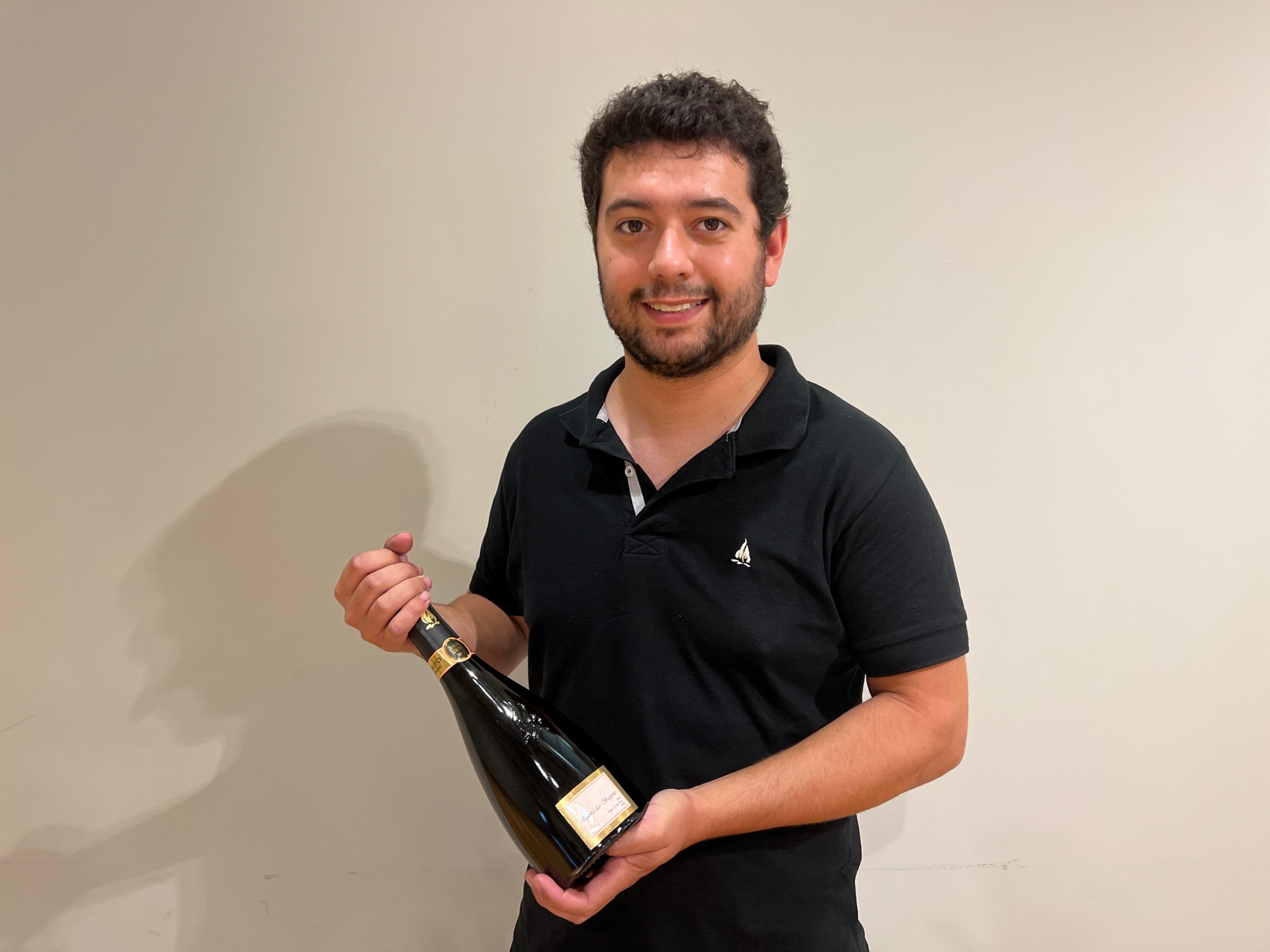
During a recent visit to Bairrada, renowned winemaker Mário Sérgio from Quinta das Bageiras asked his son Frederico Nuno to teach us the art of uncorking a bottle of sparkling wine.
Everybody knows the wine should be properly chilled and that, unless you won the grand prix, you should not shake the bottle. Start by carefully cutting away the foil covering the cork. Here’s the key tip: leave the wire cage encasing the cork intact. Removing it causes the cork to expand, making it challenging to extract. Instead, gently twist the cork with the wire cage in place. The cork should effortlessly leave the bottle with no wine spillage, letting only the delightful fragrances waft into the air.
“If the boss is in the house,” Frederico says, referring to his father, “we twist the cork slowly to ensure it comes out silently. If the boss is away, we remove the cork more briskly to hear the celebratory pop we associate with sparkling wine.”
To demonstrate the technique, Frederico opened a bottle of the splendid 2018 Quinta das Bageiras Grande Reserva, rosé sparkling wine. Once the bottle was open, there was no going back. Frederico poured the exquisite sparkling into elegant white wine glasses, allowing the wine to breathe and revealing its intricate aromas. We raised our glasses and toasted to Bairrada, a region that produces sparkling wines that rival the finest champagnes.





 Salt of Portugal