
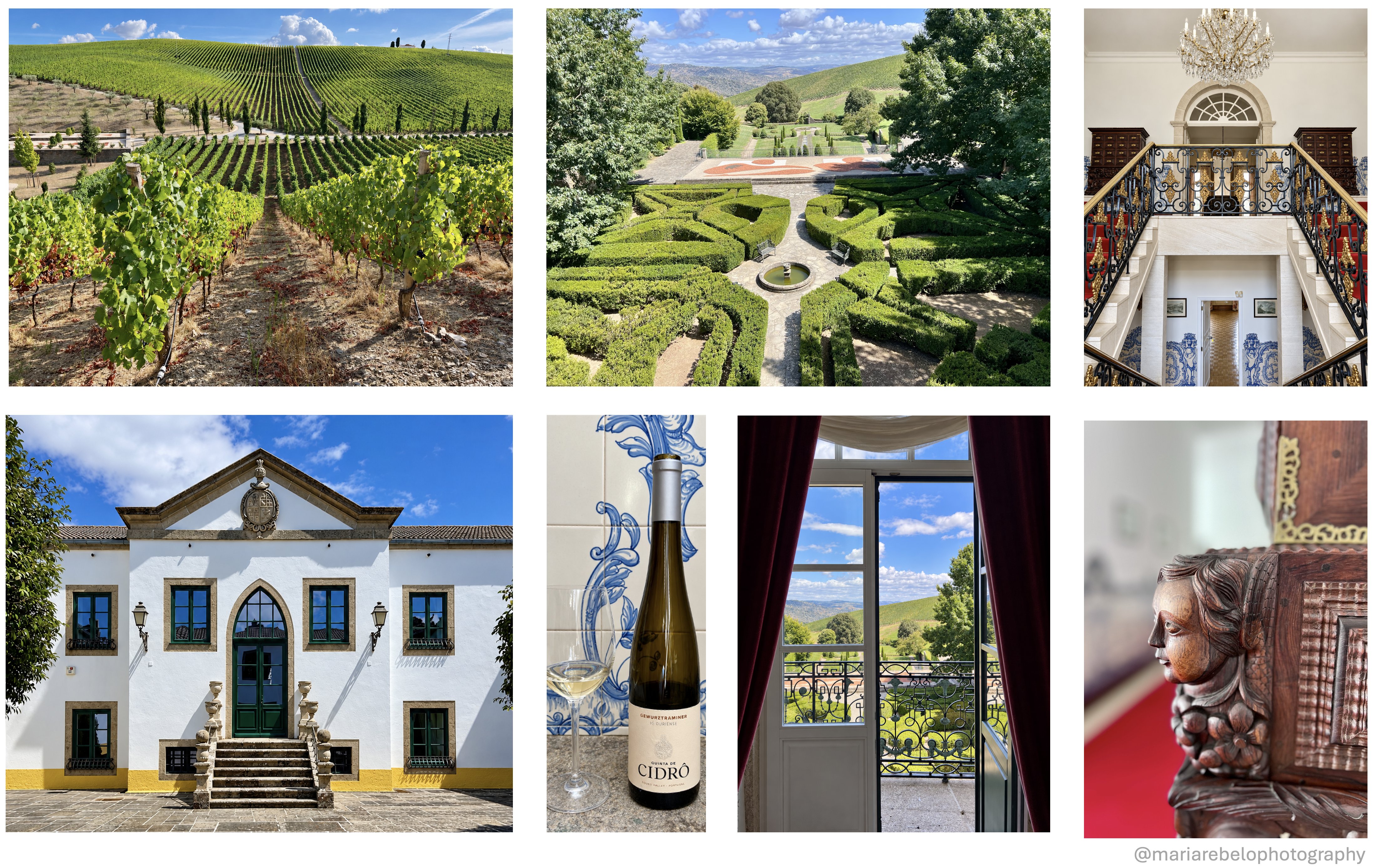
The road from Quinta das Carvalhas to Quinta de Cidrô winds through vine-covered hillsides. The harvest was at its peak, and the leaves were a bright yellow-green. A few white clouds dotted the sky. To us, they added to the beauty of the landscape; to farmers, they hinted at rain that could spoil the harvest.
We imagine painters once stood here in straw hats, working en plein air at their easels, but gave up, unable to fit the Douro onto small canvases.
As we climbed toward Cidrô, the Douro’s ancient terraces gradually gave way to long rows of vines planted ao alto, running straight up the slopes and disappearing into the distance.
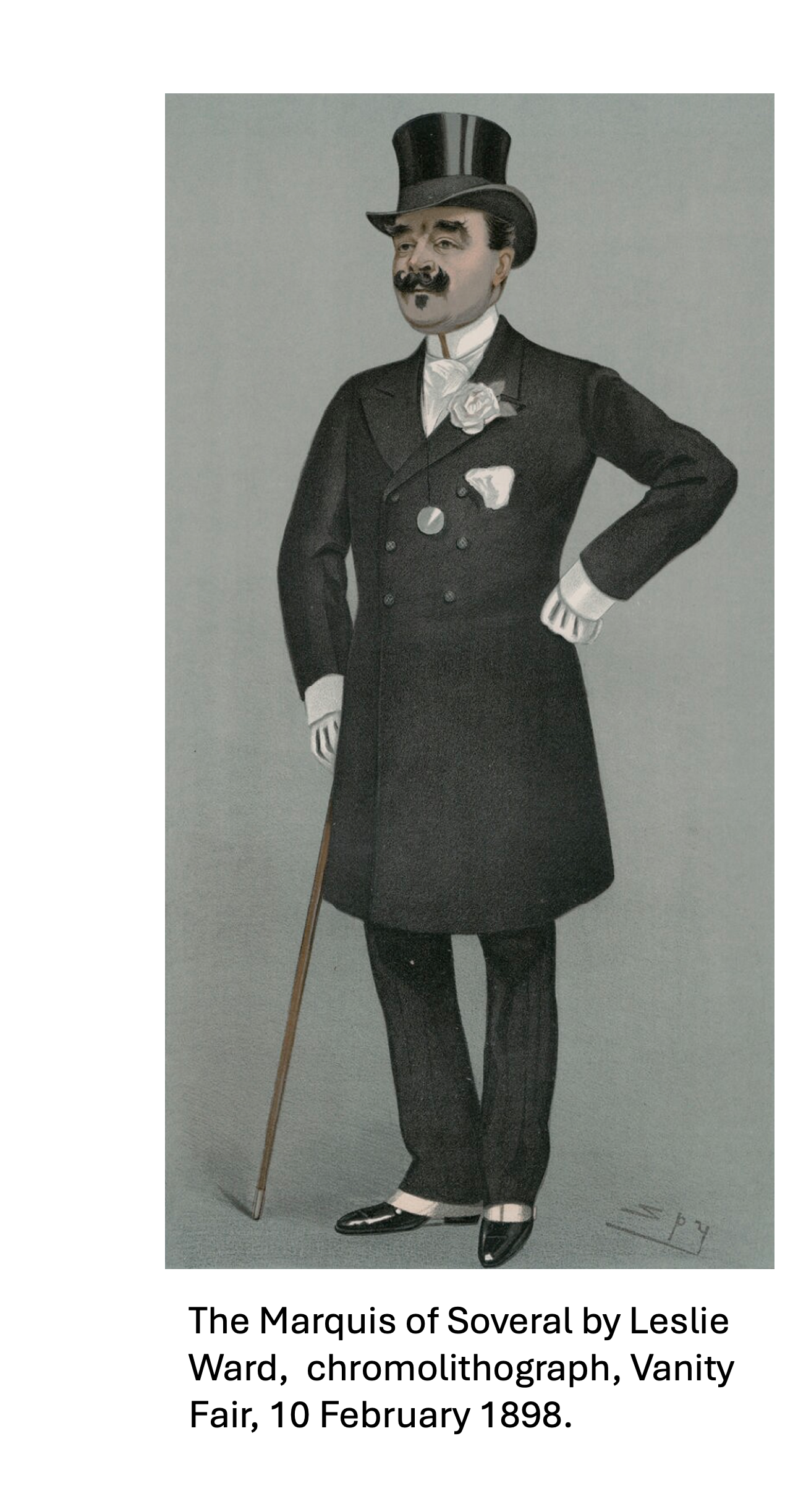
Cidrô belonged to the Soveral family for generations. Its austere granite palace and its first vineyards date from the nineteenth century. Luís Maria Augusto Pinto de Soveral was born here in 1851. In 1900, King Carlos I made him the first and, as it turned out, only Marquis of Soveral.
He served as Minister of Foreign Affairs and, for many years, represented Portugal at the Court of St. James’s. The Marquis was close to King Carlos and Queen Amélia and a confidant of the future King Edward VII. His contemporaries were so impressed by his intelligence, elegance, and wit that they coined an adjective in his honor: soveralesco.
According to oral tradition, Queen Amélia sought seclusion at Cidrô after her husband and their son, Crown Prince Luís Filipe, were assassinated in Lisbon’s Terreiro do Paço in 1908. Two years later, the monarchy fell, and the queen went into exile. No documents confirm her stay at Cidrô, an absence in keeping with the Marquis’s reputation for discretion. The close bond between Queen Amélia and the Marquis is better documented: when he died in Paris in 1922, the queen was at his side.
Cidrô passed into the hands of the Viscount of Asseca and later, according to local tradition, to a most unlikely proprietor. Francisco Lopes, a farmhand at Cidrô, rebelled against an overbearing foreman and vowed to emigrate to Brazil, make his fortune, return to Portugal, buy Cidrô, and fire the foreman.
Nearly everything unfolded according to Lopes’ plan. He prospered in Brazil, returned to Portugal, and bought Cidrô. But his revenge eluded him: by then, the foreman had died. Lopes occupied only a small part of the palace, letting the rest of the house and the farm slowly slip into disrepair.
The Real Companhia Velha acquired Cidrô in 1973 and began restoring the palace, the grounds, and the vineyards. The estate has since become one of the Douro’s leading centers for viticultural experimentation, with almost 140 hectares of vines planted in a continuous sweep across its high, gently undulating slopes.
Pedro Silva Reis tells us that Cidrô is particularly well suited to white wines. Portuguese varieties such as Alvarinho, Arinto, Samarrinho, and Gouveio share the land with foreign guests, including Chardonnay, Sauvignon Blanc, and Gewürztraminer. The Marquis would surely have approved of this international gathering.
The palace windows frame views of the garden, the Douro River and the rugged schist mountains. Inside, Portuguese tiles with floral motifs decorate the rooms with restrained elegance.
We tasted Douro almonds with a bright Gewürztraminer. Its rose and lychee aromas suggest sweetness, yet it is dry on the palate.
In the dining room, we were served Marquis Branco, a pure Sauvignon Blanc created in homage to the diplomat. Intense and precise, with a saline edge, it is an international variety speaking with an unmistakably Douro accent.
Finally came a Pinot Noir so elegant and charming that it deserved to be called soveralesco. Like the Marquis himself, it is at home both in the Douro and in the world.
Click here for information on how to arrange a visit to Quinta de Cidrô.

