Tasting moscatel in Setúbal

composit-jmf

No one knows for sure how moscatel, a white grape from Egypt, arrived in the Setúbal peninsula, near Lisbon. What we know is that moscatel took to the region, producing wines that are perfect to start or end a meal. Over the years, the grape mutated into a new varietal—purple moscatel—that only exists in Setúbal. It is sweeter and more aromatic than its white cousin.

Moscatel wines are produced in the same way as port wine. The grapes are fermented for 4 or 5 days. The fermentation is then arrested before the yeast turns all the sugar into alcohol by adding “aguardente vínica” (brandy) to kill the yeast. The result is a fortified wine that is sweet and has 17 to 18 degrees of alcohol.

A great way to learn about moscatel is to visit José Maria da Fonseca’s winery in Azeitão. Founded in 1834 by a mathematician turned wine maker, it is one of the oldest wine companies in Portugal.

After one of his moscatel wines won a prestigious prize in Paris in 1855, Fonseca decided to export his wines to Brazil. A ship loaded with barrels of moscatel crossed the Atlantic. But the wine did not sell in Brazil and the ship returned with most of its original cargo. The sea voyage did wonders for the wine: in nine months the wine seemed to have aged 15 years, gaining complexity and depth. This moscatel, known as “torna viagem” (round trip), continues to be produced today with barrels carried by Sagres, a beautiful sailboat owned by the Portuguese navy.

José Maria da Fonseca ’s moscatel cellar contains bottles from every vintage since 1880 except for 1936-37 and 1939-40 when production was disrupted by the Spanish civil war and the Second World War, respectively.

It is great fun to do a blind tasting of moscatel wines at José Maria da Fonseca’s. Everybody has preconceptions about which wine will be their favorite. Some are sure they will favor the rarer purple moscatel or the older vintages. Others think that they will prefer the newer wines. Surprises abound. You will learn a lot about moscatel and a little about yourself.

Click here for information about visits to José Maria da Fonseca’s winery.


Wine heritage at Sanguinhal

composit-quinta-do-sanguinhal

The Quinta das Cerejeiras Reserva is a smooth, beguiling red wine that has enlivened many of our dinner parties. So, it was with great anticipation that we drove to Bombarral, 70 km north of Lisbon, to meet the producer of this precious nectar.

We were received by Ana Reis. She is the great-granddaughter of a wine legend: Abel Pereira da Fonseca who, early in the 20th century, owned more than 100 taverns in Lisbon. In 1926, Pereira da Fonseca bought three estates in Bombarral (Sanguinhal, Cerejeiras and São Francisco) to venture into wine production. Almost a century later, these “quintas” remain in his family, producing wines that every year earn more accolades and awards.

Bombarral is the Napa valley of Portugal, a region near the ocean with exceptional conditions for wine production. The soils have a high clay content and the Montejunto mountain joins forces with the Atlantic breezes to create a microclimate with mild summers and temperate winters.

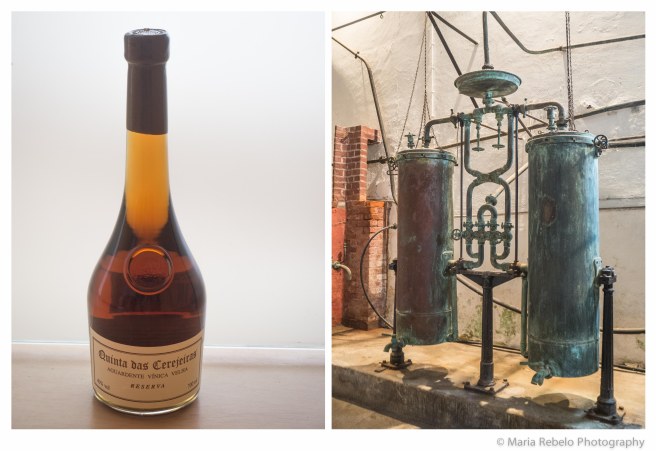
We started our tour in the shade of an old cork tree to learn about the production of cork in Portugal. Then, we stepped into the wine cellar. The temperature was a few degrees lower and the air was perfumed with voluptuous aromas. The ancient oak barrels are full of precious brandies and fortified wines. Produced decades ago, they wait in the dark for the perfect moment to be brought to light. “This is barrel #6, we’ll later try some of its content,” promised Ana with a twinkle in her eyes.

Next, we visited the distillery, the place where the magical “aguardente” (fire water) was once produced. Grapes were crushed and distilled to make brandy (“aguardente vínica”). The stems and remnants from brandy production were then distilled to make “aguardente bagaceira,” which is what Italians call grappa. Nothing was wasted: the leftovers from this second distilling were used to fertilize the land.

We toured the vineyards near the house which are planted with muscatel grapes. There is a rose bush in every row. Roses are very sensitive to diseases like mildew, so they give advanced warning of any problems that might affect the grapes.

The quinta is full of memories of times gone by: ancient mulberry trees whose leaves were once used to make silk, a romantic 19th-century garden, old vines with varietals like carignan, brought by French peasants during the Napoleonic invasions.

Our final stop was the “adega,” the place where the wines from the three quintas were produced until 1960. It has large stone tanks and wooden presses built in 1871. We sat at a table, sampling Portuguese cheeses and sausages while listening to Ana speak with eloquence and passion about the secrets of wine making.

There was a treasure trove of wines for us to try. The feast started with Sottal, a flirtatious, light aromatic wine made with muscatel grapes. Next, we tried the Cerejeira Seleccionado Rosé, a perfect Summer companion, fruity, full bodied with a gorgeous color. Things got serious with the 1998 Quinta do Sanguinhal DOC, a wine of great depth and charm. We then fell in love with the white Quinta da Cerejeira Reserva. After a 40-year hiatus, this wine, made with chardonnay and aged in oak, was brought back into production two years ago. Its smooth, elegant flavors left our palates in a state of bliss.

After trying several other interesting wines, we tasted the content of barrel #6, a Quinta de São Francisco licoroso. It is a sweet, fortified wine with great complexity, the perfect ending to a perfect wine tasting.

The great poet Fernando Pessoa made a living as a translator. In the middle of the afternoon he would often take a break and tell his workmates he was going to see Abel. He then walked to one of Abel Pereira da Fonseca’s taverns to enjoy a glass of wine.

The wines from Sanguinhal, Cerejeiras and São Francisco inspire conversation, friendship and, if you’re lucky, immortal poetry.

Click here for information on how to book a visit or a wine tasting at Quinta do Sanguinhal. 


Wines of the future

Quinta da Pedra composit

Carlos Dias is a Portuguese entrepreneur who had great success making design furniture in Italy and luxury watches in Switzerland. When he decided to produce wine in Portugal, he brought with him the determination and ambition that have been key to his success. He wants to produce Portuguese Grand Crus, wines that stand head and shoulders with the famous nectars from Bordeaux and Burgundy. You might think this is a lofty goal, but the Italian magazine Spirito di Vino has already listed Principal, one of his wines, among the world’s top 10.

We drove to Monção in the north of Portugal, to visit Dias’ Quinta da Pedra. We’ve been to many wine estates and we knew what to expect. But that is not what we found. There is no emphasis on history and tradition. Instead, we saw angular buildings built in red concrete surrounded by vineyards planted with geometric precision. Everything at Quinta da Pedra is about the future.

Miguel Pinho, the firms’ Chief Commercial Officer, described the meticulous production process. The vineyards are divided into micro lots controlled by GPS to ensure that the grapes in each lot are picked only at the right moment. After picking, the fruit travels in refrigerated trucks to the winery where they are immersed in a nitrogen bath to avoid further contact with oxygen. The grapes are gently pressed over an extended period of time, a process that allows both whites and reds to age gratefully in the bottle. Pascal Chatonnet, a famous enologist, makes the wines without using enzymes or any form of chemical manipulation.

The first wine we tried was a Quinta da Pedra made with Alvarinho grapes. This varietal is often used to make young vinho verdes (green wines) that are easy to drink and even easier to forget.  We were surprised to hear that this wine, produced in 2012, aged first in wood barrels and then in the bottle. And even more surprised by its complex aroma and the way it left our mouth refreshed and enchanted.

This stunning first act was followed by a procession of amazing wines. Eminência and Royal Palmeira, two wonders made of Loureiro, another green wine varietal. Colinas, a joyous sparkling wine made in the salty limestone soils of Bairrada. A Principal rosé that staged in the bottle for five years to get ready to astonish us with its elegance and poise. Dom Bella, an impressive  Touriga Nacional wine made in the granite plateaus of the Dão region.

The atmosphere inside the beautiful building, the taste of these unique wines, and the passion and eloquence with which Miguel talked about the project made our experience feel like an initiation rite. We are part of a small sect of people who have tasted the wines of the future.

Click here for the website of Carlos Dias’ company, idealdrinks.


Lunch at Herdade do Esporão

composit Herdade do Esporão

We should have known that it is hard to get to paradise. We drove from Vila Viçosa to Herdade do Esporão guided by a GPS system that chose an old dirt road over the new road from Reguengos. Taking the slow road helped us understand that Esporão is an oasis. A place in the dusty interior of Alentejo where a blue lake nurtures pristine vines that produce some of Portugal’s best wines.

The road to the success of Esporão was also slow. José Roquette bought the estate in 1973 at a time when Alentejo was not a major producer of great wines. Shortly after the 1974 revolution, the estate was nationalized. It was returned to its owner only in 1984. The first wine was bottled in 1985 and released in 1987. The success of this vintage and of those that followed put Alentejo on the world wine map.

Maria Roquette, José’s daughter in law, welcomed us to the dinning room. It is a tranquil space that overlooks the lake and the vines. The walls are decorated with art that Esporão commissioned over the years to use in the labels of its reserve wine.

Maria introduced us to the chef, Pedro Pena Bastos. We did not guess that this unassuming 25-year-old was about to take us on an extraordinary culinary journey.

To prepare our senses, Pedro brought us a heavenly concoction of chick peas, seaweed, codfish eggs, and citrus caviar.  Next, came a marriage of peasant food and contemporary cuisine: pig’s feet with coriander in a red shiso gelatin. We visited the woods to taste wild mushroom beignets and a green garlic custard with truffles. We cruised rivers to enjoy crayfish and sailed seas to eat mackerel and porgy. Back on land, we had lamb from Alentejo with artichokes and apricots.

Finally, we entered the garden of delights: a green-almond ice cream, a lavender and peach tart, a gelatin of late-harvest wine, and marshmallows made of hazelnuts and chocolate.

Our traveling companions were the wonderful wines of Esporão. There were many different personalities and styles. Some, like the experimental white made from the Sardinian varietal Vermentino, were new and festive. Others, like the classic reserve red, were gracious and wise. The meal ended with fireworks provided by a wonderful tawny-style dessert wine.

If you’re visiting Portugal, travel the road to Herdade do Esporão, a place where you can taste the food and wine of paradise.

The Herdade do Esporão is located at Reguengos de Monsara, near Évora, Alentejo. Their telephone and email are 266 509 280
 and reservas@esporao.com , respectively. The Herdade’s GPS coordinates are: latitude: 38.398611 and longitude: -7.546111. Chef Pedro Pena Bastos is the fifth from the left on the photo above.

Bussaco’s mystical wines

Buçaco Branco

Karl Baedeker, the famous guidebook writer, recommended a visit to Bussaco in his “Spain and Portugal, a Handbook for Travelers,” published in 1908. Here’s what he wrote:

“The royal domain of Bussaco vies with Sintra in natural beauty. In variety of trees and shrubs, the woods are without a rival in Europe and the views ranging from the Atlantic to the Estrela mountain are as picturesque as they are extensive. […] The woods […] include not only trees indigenous to Portugal but also a large number of exotic varieties, some brought home by the Portuguese navigators as early as the 16th century.”

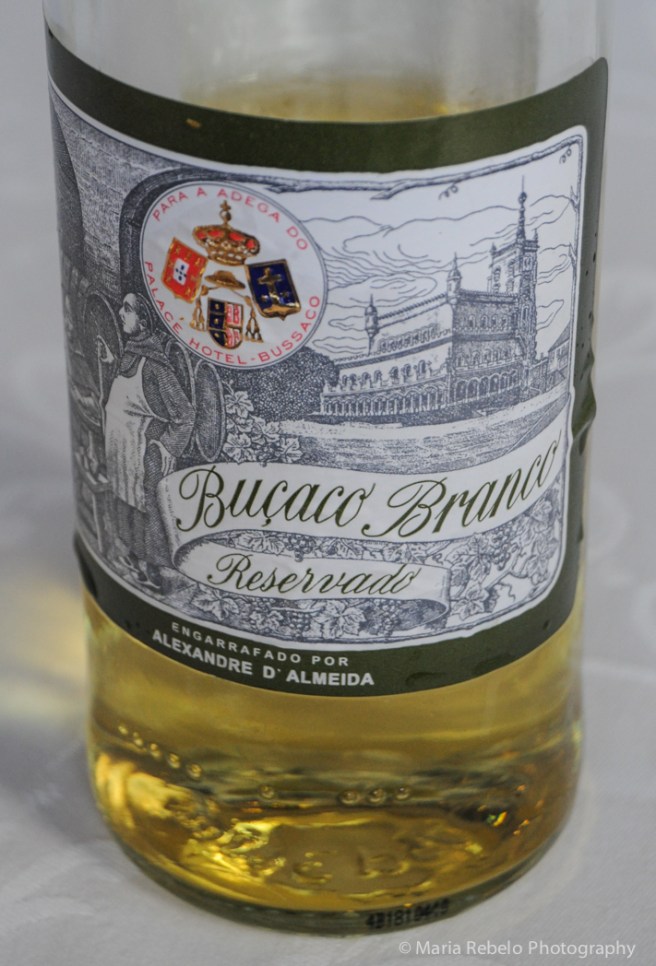
Baedeker arrived too early to appreciate one of the great pleasures of Bussaco, which is the wine produced by the Bussaco Palace Hotel. The first bottles date back to 1917.

The Palace Hotel owns no vineyards, it buys its grapes from the Bairrada and Dão region. The quality of the wine comes from the careful grape selection and the meticulous traditional methods used in production. Bussaco wines taste great when they are young and taste even better when they lived for some decades. Both whites and reds are famous for their longevity.

These wines are difficult to buy, the easiest way to try them is to stay at the magnificent Palace Hotel. The cellar of the palace stores thousands of bottles going back to the 1920s. Trying these old Bussacos can be a mystical experience. The cellar walls are used to hearing visitors say words like divine, blessed, and sacred. These words would have delighted Friar João Batista, the Carmelite monk who started making wine in Bussaco in the 17th century.

Click here, for the Bussaco Palace web site.

Quinta do Vallado

Quinta do Valado Composit

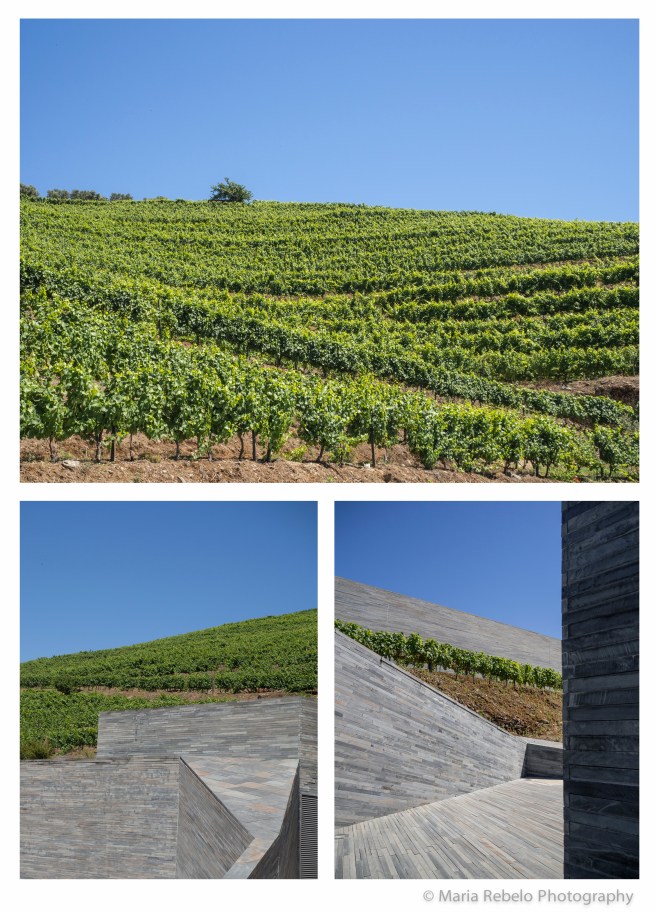
We wonder whether god created the Douro as a test. It gave the region poor soils and a mountainous terrain, scorching Summers and freezing Winters. But if humans persevered and made a living in this land, they would be rewarded with magnificent wines.

The soil, composed of schist and granite, forces the vines to struggle and produce small grapes that are full of flavor. No one believed more in these grapes than Dona Antónia Ferreira. She made a fortune producing port wine in the beginning of the 18th century and reinvested it all in the Douro, owning at one point 37 vineyards.

This Summer we had the privilege of visiting one of these vineyards, the Quinta do Vallado,  which dates back to 1716. We toured the cellars and tasted some of the quinta’s great table wines.

At the end of our visit, we drank some wonderful old tawny port. With our glasses full of this golden nectar, we toasted the people of the Douro and their magnificent wines.

Quinta do Vallado is located in Vilarinho dos Freires, Peso da Régua, tel. 254 323 147. Click here for their web site.

Ruby, Vintage or Tawny?

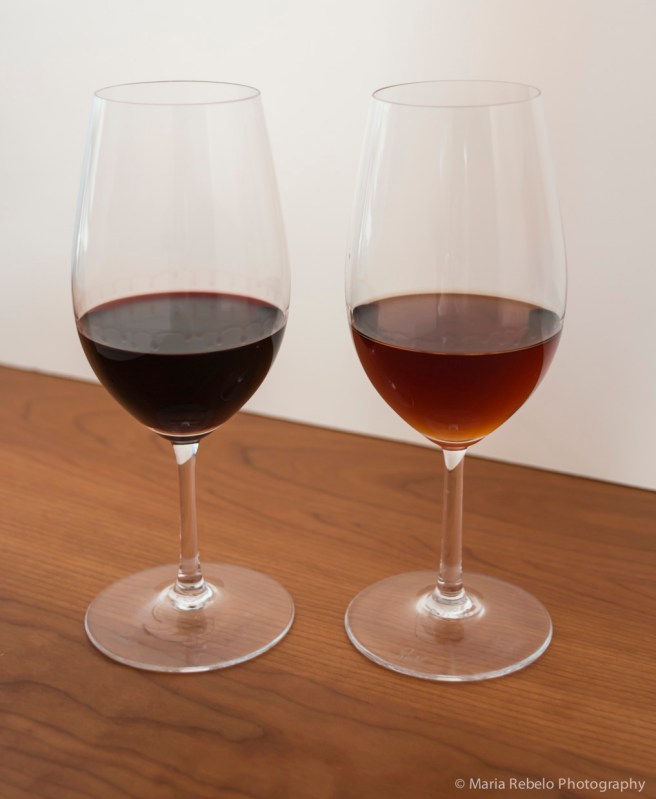
2 Port wines

People in the Douro valley say that babies and port wines are often born at night. Port producers let the grape juice ferment for about three days. They choose the perfect moment to add a neutral grape spirit (aguardente) that stops the fermentation before the yeast eats all the grape sugar. This moment often comes in the middle of the third night.

Most of the Douro grapes are used to produce ruby ports. These ports are first stored in cement or stainless-steel vats to prevent oxidation, then bottled. The result is a wine that retains a dark ruby color and fresh fruit flavors.

When the quality of the grapes is exceptional, port-wine producers declare a vintage year. These ports are stored in wood casks for one or two years and then bottled. With little exposure to air, the wine is dark red. Aging brings out complex flavors, such as notes of vanilla, chocolate, and blackberry.

The best grapes are also used to produce tawnies. These ports are aged for many years in casks made of Portuguese chestnut and oak. This aging process creates complex flavors and gives the wine a silky mouthfeel. The small amount of air that circulates through the tiny pores of the wood oxidizes the wine slightly, changing its color from red to amber.

It is wonderful to share a glass of ruby port with new friends. But there’s nothing like drinking old vintages and tawnies with old friends.

The past and future of Portuguese wine

AmphorasCrato

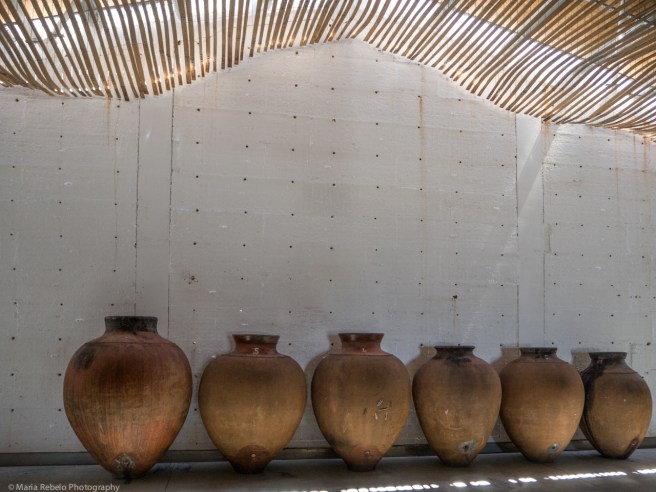
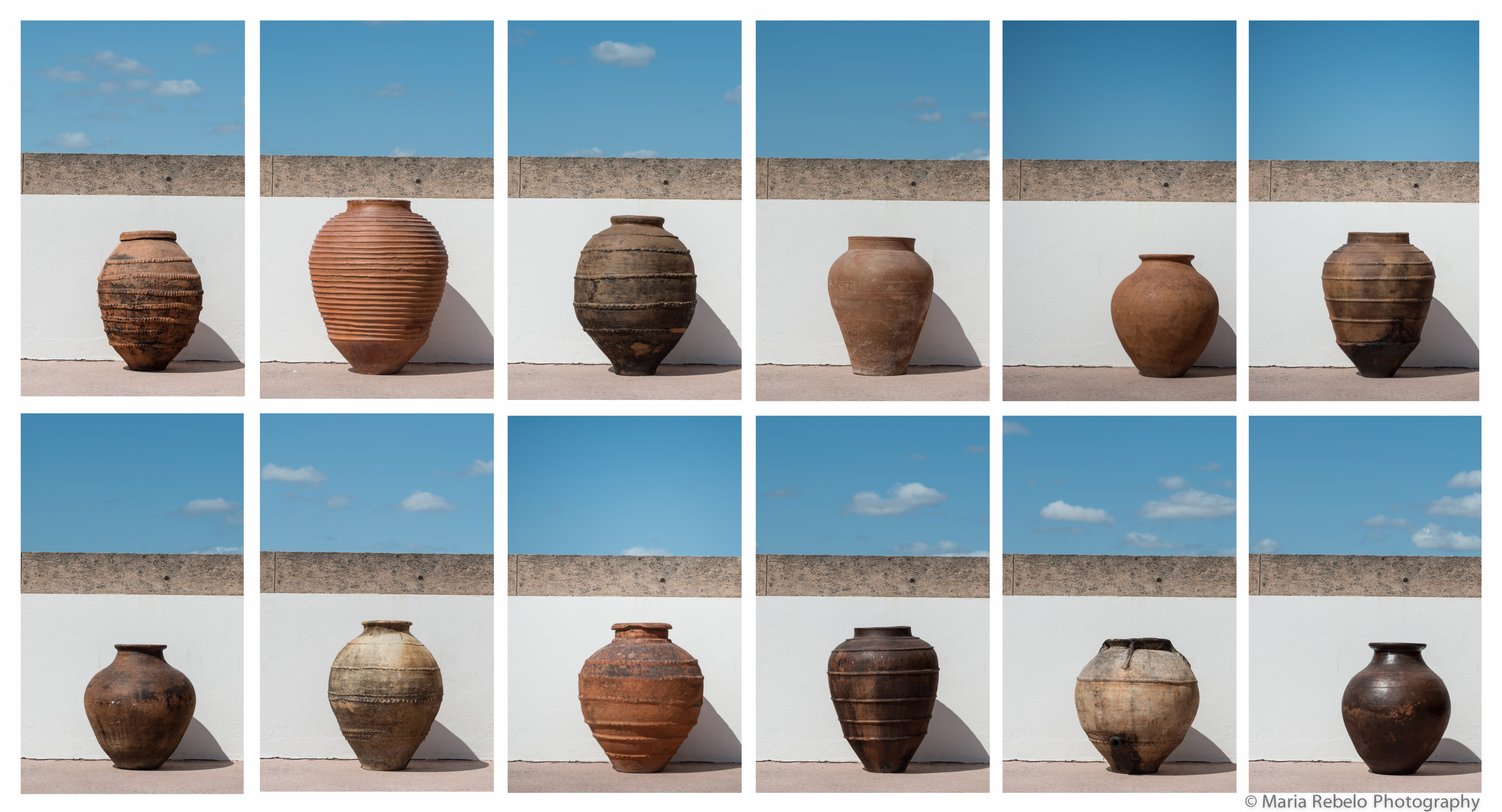
The Flor da Rosa Pousada in Crato has a beautiful collection of “talhas” (clay amphoras) made by potters in Alentejo.  The small amphoras were used to store olives or olive oil. The large ones were used to produce wine, a tradition that goes back to Roman times.

Several Portuguese wine makers are rediscovering the lost art of producing wine in amphoras. One of them is Dirk Niepoort, a great producer from the Douro region. We can’t wait to try these wines which bring the past into the future!

Click here for the Pousadas’ website and here for more photos of Flor da Rosa.

Europe’s most western vineyards

DCIM103GOPRO Baron Bodo Von Bruemmer, born in Tsarist Russia in 11/11/1911, made a fortune working as a banker in Switzerland. Then, at age 51, he was diagnosed with a terminal disease and told he had two years to live. He decided to look for a place where, after his passing, his wife could live without worrying about money.

Von Bruemmer came to Portugal and fell in love with the country. He bought Casal de Santa Maria, a farm in Colares near Sintra. There, he spent his days breeding Arabian horses and planting roses. The airs of Colares nursed the baron back to health and today, at 104 years of age, he continues to thrive.

In 2007, shortly after his 96th birthday, Von Bruemmer felt the urge to plant a vineyard. He knew nothing about wine making, but was eager to learn. Since then, he has become a legend. With the help of a talented team of enologists, he planted the most western vineyard in continental Europe. Close to the sea, cooled by the Atlantic winds, its unique terroir produces amazing wines, salty, aromatic, and with great minerality.

The baron continues to plant new vines and supervise new projects. He makes his decisions using a small brass pendulum. If the pendulum rotates clockwise the answer is yes. Otherwise, it is no.

Every day, Von Bruemmer drinks a glass of champagne. But soon, he will drink instead the sparkling wine that, with the help of his pendulum, he decided to produce.

Casal de Santa Maria is a magical place, where vineyards surrounded by roses produce some the world’s most interesting wines.

Postscript: Baron Bodo Von Bruemmer passed away in November 2016 at 105 years of age. He set up a foundation so that Casal de Santa Maria can continue to produce the wines of a Russian Baron who fell in love with Portugal.

Casal de Santa Maria is located on Rua Principal Casas Novas, n. 18/20, Colares, tel 219-292-117, email geral@casalstamaria.pt.

The coolest bar in Lisbon

OLYMPUS DIGITAL CAMERA

“By the wine,” the coolest bar in Lisbon, has a ceiling decorated with 3267 bottles of Periquita, one of the oldest table wines in Portugal. The bar belongs to Periquita’s producer, José Maria da Fonseca. This company has produced wine since 1834, including the famous Setúbal Moscatel.

“By the wine,” is the perfect place to have a few bites: slices of memorable sausages and prosciutto, cheese, and seafood.

José Maria da Fonseca stocks the bar with a great selection of wines, including some that are hard to find because they are produced in small quantities. It is a delight to try these unique wines surrounded by the beautiful people that give this bar a wonderful vibe!

By the Wine is on Rua das Flores, 41/43, near Chiado, tel. 213420319.