Mister Baga

Luis Pato Composit

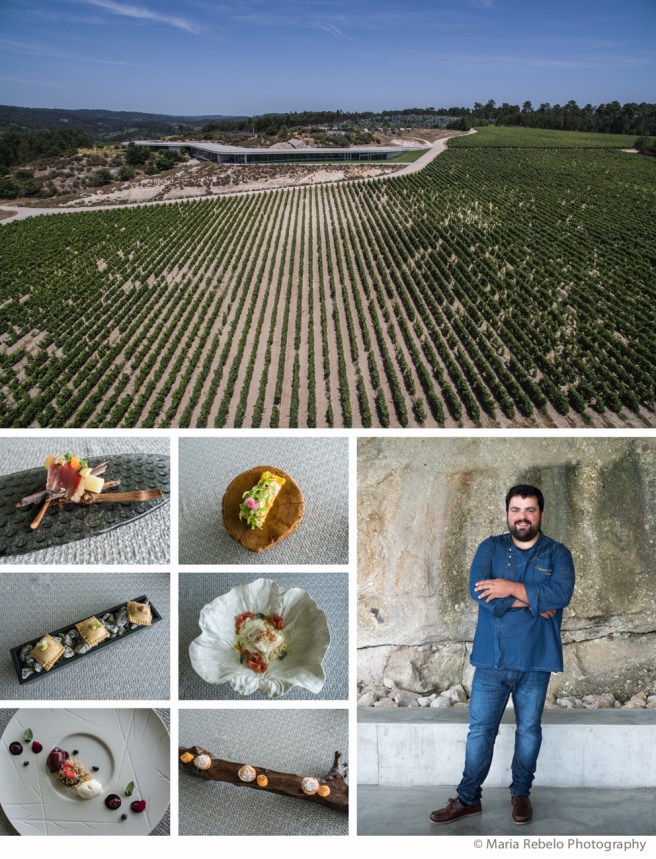
Bairrada is a region in the center of Portugal with unique conditions for wine production. Close to the Atlantic Ocean, it has sandy soils like those of Bordeaux and chalky soils like those of Burgundy. The vineyards are surrounded by pine trees and eucalyptuses that infuse the grapes with delicate flavors.

The queen varietal of the Bairrada region is the indigenous baga and the king of the baga is Luís Pato. The heir to a line of Bairrada wine makers that can be traced back to 1860, he rebelled against the idea of planting foreign varietals. “Mister Baga,” as people like to call him, has been proved right: today his baga wines are served in many of the world’s great restaurants.

On our first visit, we were received by his daughter Maria Pato. She talks about her father’s wines as if they are part of the family. Her green eyes shined when she opened two bottles of wine from a vineyard called Vinha Formal. The first was a sparkling wine with an enticing brioche aroma. The second was an elegant white made only with bical, a local white varietal.

Next, we tried a 2000 Quinta dos Moínhos, a captivating red wine made with baga. It tastes to red fruit but the tannins have been tamed by the aging process, giving the wine an aristocratic feel.

We sampled a very interesting fortified wine. Luís Pato stopped fermentation before the yeast converted all the sugar into alcohol by freezing the grape must instead of following the traditional process of adding alcohol to kill the yeast.

On our second visit, Luís Pato took us to the cellar to sample some Pé Franco wines made from ungrafted vines that predate the onset of phylloxera. They are complex and have a wonderful acidity that will help them age gracefully.

Pato talked about how much he has learned over the years. “People in Bairrada used to say that baga wines are good in only two years out of ten. When it rained before the harvest, the grapes gained a watery taste which together with rot ruined the wine.” He had the idea of pruning the grapes early in the season and use the pruned grapes to make sparkling wine. “Pruning gives the grapes more space to breathe, preventing rot and allowing me to make good wines in years with rainy Summers.”

Some of Pato’s new projects, like his 19th century-style wines, are inspired by tradition. Others, like his sweet white wine made with from red grapes using hyper-oxygenation, defy tradition.

We asked him about his daughter Filipa Pato, who is also a wine maker. “Our wines are quite different, but we share a lot of information. In New York they know me better for being Luisa’s father than for my wines.” he said with pride.

Both wine makers are experimenting with sercealinho, a grape varietal that only exists in their properties. These vines have to be watched closely because they are highly susceptible to disease. Luís’s father kept a plot of sercealinho alive that shows great potential.

Pato told us that “As a wine maker I cannot stop, I have to continue to evolve and accept new challenges. I want to make wines that my grandchildren will drink in 30 years and say, wow this wine is great.”

Every time we try Luís Pato’s brilliant, original wines we wonder: is Bairrada the best wine region in Portugal and one of the best in the world?  If you’re a wine lover, visit Luís Pato’s winery to find out.

Click here for information on how to schedule a visit to Luís Pato. 

Lunch with Dirk Niepoort

Niepoort Composit_

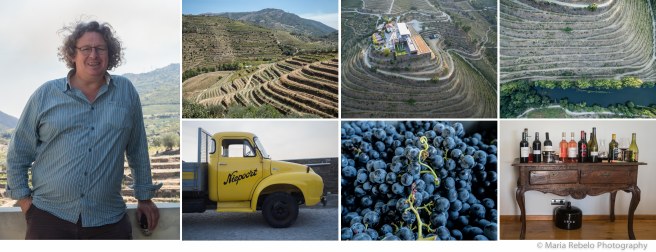
We got in touch with Dirk Niepoort, a legendary Douro valley wine maker, through a common friend. We asked Dirk whether we could come by Quinta de Nápoles to take some photographs. “Why don’t you come for lunch?” he replied. And so we did.

Dirk welcomed us to the dining room and started opening a few wine bottles. There were 20 people getting seated around the table. A few were Summer interns who came from afar to apprentice with Dirk. Others were people related to the wine business, enologists, producers, sommeliers of starred Michelin restaurants.

There were no speeches, Dirk circulated around the table sitting in different places so that he could talk to everybody. His demeanor is shy but his charisma is obvious. When he talks to someone, he makes them feel like they are the only people in the room.

The table was set with pataniscas (fried cod) and pasteis de massa tenra (turnovers) made with a sausage called alheira.  Dirk poured everybody some Redoma Reserva, his brilliant white wine made from 80-year old vines. Plates steaming with a hearty country soup were passed around. Soon our glasses were filled with an experimental “vinho verde” (green wine). We were still savoring its bright, lightly sparkling taste when another star white wine from the Niepoort stable arrived: the luxurious Coche.

When Dirk sat in our table corner, we asked him to explain his wine-making philosophy. Discussing wine with Dirk Niepoort is like playing chess with Gary Kasparov. Both are so many moves ahead that they are playing a different game. Most of the world is producing bolder wines with higher alcohol, more taste, deeper color. Dirk is doing the opposite. He wants to produce wines that are fresher, more aromatic, with less alcohol, less extraction and concentration. “Once we start drinking these lighter wines, we might find the old styles boring,” he says.

Dirk created a new project called Nat’cool to promote some of these new wines. He generously invited a few young wine makers to join this project. One of these wine makers, Luís Cândido Silva, was with us at lunch. Luis served his Primata, a wine that is easy to drink with bright acidity and only 9 percent alcohol.

Terrines of savory octopus rice filled the table as Dirk poured Blah, Blah, Blais a wine that is a testament to his generosity. Dirk gave Frederick Blais, a regular Summer intern from Canada, the opportunity to make this wine with old vines from one of the Niepoort’s estates!

A serra cheese started to circulate, accompanied by a wine with a tong-in-cheek name: Clos de Crappe. “It’s a technical disaster that worked out great,” Dirk said grinning.

Local pastries were served with an ice wine made by Dirk’s young daughter. She floated around the table like a fairy, serving her wine and enchanting everybody.

Finally, we tried two Niepoort port wines from 2005, a Late Bottled Vintage and a Colheita. These twin wines have different personalities but both share the richness and depth that only the Douro can produce.

It was time to say goodbye. We thanked Dirk for his generosity and walked towards the parking lot with the other guests. We have different professions, backgrounds and nationalities. But we all felt the same: we were descending from the mount Olympus of wine, where we had tasted nectars made for the gods.

Click here for the Niepoort wines website.

The painter arrived!

OLYMPUS DIGITAL CAMERA

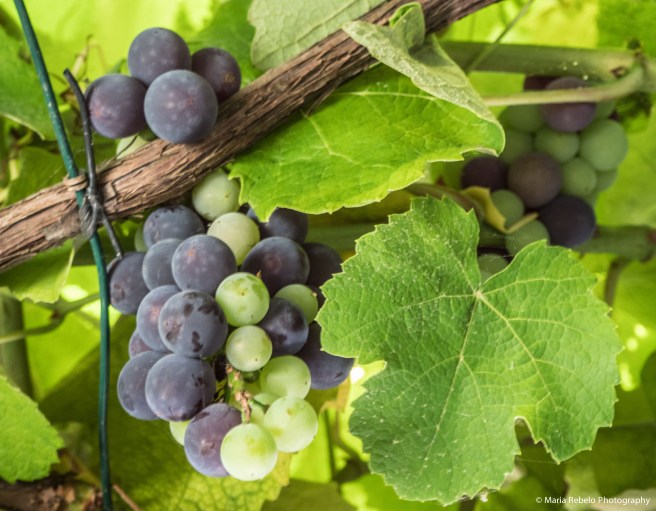
Between March and July the grapes wear bright green colors. But, once August comes, some grapes trade their green garments for red clothes, others change into bright yellow hues. When this makeover occurs, wine makers say that the “painter arrived,” as if some celestial artist came to color the grapes one by one.

After the painter arrives, the period of maturation begins. A few weeks later, it is time for the harvest, the culmination of all the work done by man, women and nature in the vineyard.

In Portugal, the painter has arrived everywhere and in some areas of the Douro valley and Alentejo the harvest is well under way. All we can do is wait until the colorful grapes turn into memorable wines we can share with friends.

Making Alenquer a food destination

Casta 85.jpg

In the 19th century, Alenquer was one of Portugal’s premier wine regions. Its fortunes waned for much of the 20th century. But the tide turned and Alenquer rightly regained its status as a prized wine destination. A young chef called João Simões wants to help Alenquer become a food destination as well.

João apprenticed at the Ritz and worked in many posh hotels and restaurants. Three years ago, he decided to return to his roots to recover and renew the culinary traditions of the region where he was born. He uses local products like quails and Rocha pears and works with farmers on projects like producing goat cheese in the Montejunto mountain. His restaurant is called Casta 85. Casta means varietal, a reference to the region’s wine tradition. The number 85 refers to the chef’s birth year.

The dining room is decorated with furniture procured in the chef’s village. It is a pleasant space that overlooks the Alenquer river. This tributary of the Tagus flows proudly through town, reveling from the praise it received in Luis Vaz de Camões’ epic poem, the Lusíadas.

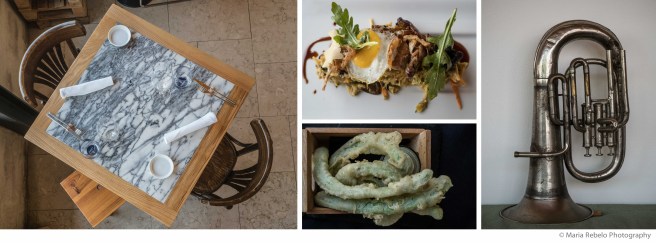
Casta 85’s service is relaxed and attentive. Ana Santana, our genial server, met the chef when they both played in a brass band. The chef’s old instrument is now part of the decoration and some of the band’s brashness inspires the intense, harmonious food.

We tried appetizing alheira croquettes with apple sauce and crisp green bean tempura with garlic mayonnaise. Next, came a delicious quail Brás style served with a quail egg, fried onion and cassava chips. Our meal ended with a luscious duck leg served over a risotto of mushrooms and asparagus.

We returned from Alenquer through a scenic road that took us though countless vineyards. We can’t wait to go back to visit the wine quintas and have another great lunch at Casta 85!

Casta 85 is located at Largo do Espírito Santo, 31 in Alenquer, tel. 915 761 911.

Wine & Soul

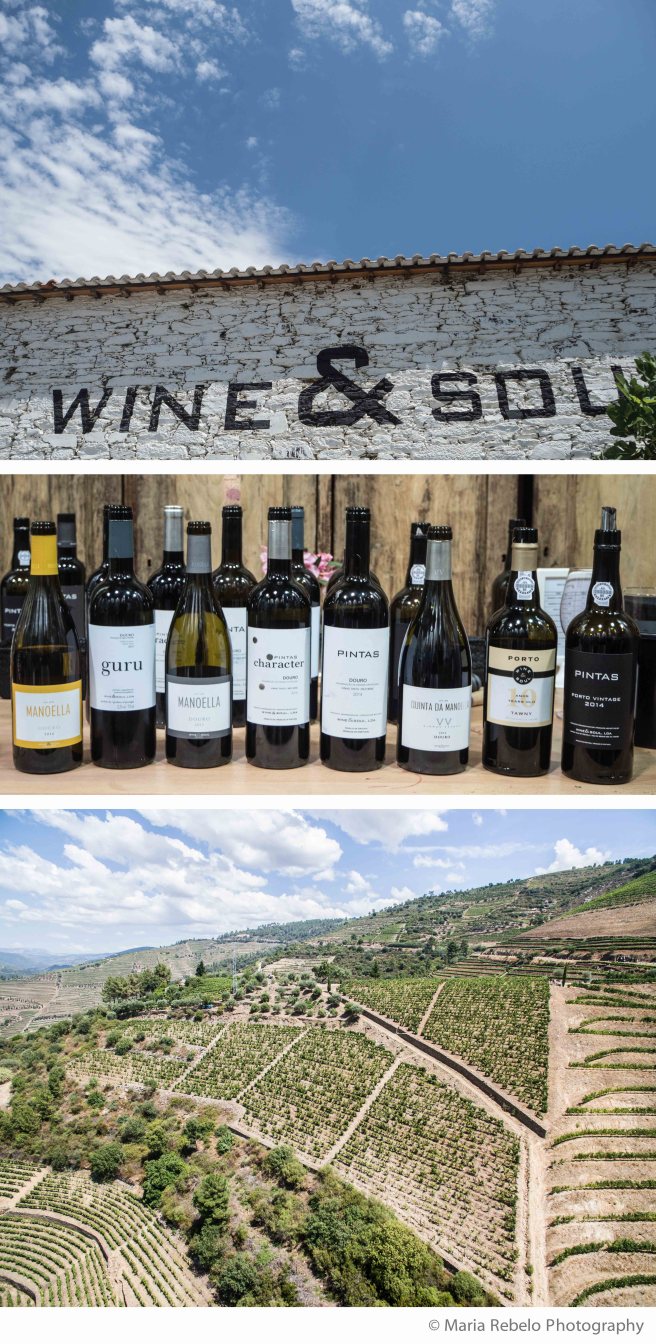
Wine & SoulJorge Serôdio Borges is an enologist who belongs to the 5th generation of a family of Douro wine makers. In 2001, he married Sandra Tavares da Silva, a fellow enologist. The new couple decided to celebrate their wedding by making a wine together. They called their project Wine & Soul.
Jorge and Sandra found the perfect vineyard in the Douro valley. Its vines were planted about 85 years ago on a steep incline at high altitude in schist soil that makes the vines struggle to produce small grapes full of flavor. The owner of the vineyard used to sell his grapes to port wine producers, but he was charmed by the young couple and agreed to sell the grapes to them.

The two enologists watched carefully every step of the production process from harvest to bottle. They made the wine with traditional methods, treading the grapes by foot in granite tanks to avoid breaking the pits.

Jorge and Sandra liked their wine so much that they decided to make a purchase offer to the vineyard owner. Perhaps thinking that the offer price was inflated by the couple’s youthful enthusiasm, the owner accepted it.

In a gesture of irreverence, the two enologists named the wine after their dog, Pintas. Soon after it was released in 2003, Pintas became a symbol of a new era for the Douro valley. An era in which young wine makers produce superb table wines from grapes traditionally reserved for port production.

Another dog, Guru, provided the name for a brilliant white wine first released in 2004.  It is inspired by the great whites of Burgundy. But, like Pintas, it is made only with indigenous varietals (Códega do Larinho, Gouveio, Rabigato, and Viosinho) that give the wine a distinct flavor and aroma.

In 2008, Jorge inherited Quinta da Manoella, a wine estate established in 1838. It has been hard work to improve the quality of these old vines. The steep terrain makes mechanization impossible so, like in Roman times, the work is manual and the land is tilled by horse-drawn ploughs. But the results are extraordinary, every time these wines grace our table, our meals turn into a celebration.

In 2014, Wine Spectator awarded Pintas’ 2011 vintage 98 points. It is a score rarely given, the highest ever awarded by the magazine to a Portuguese table wine. This success doesn’t surprise us because Jorge and Sandra make their wines with two unique ingredients: love and the grapes of the Douro valley.

A visit to Wine & Soul is a wonderful way to experience the beauty of the Douro Valley. Click here for more information about how to book a visit.


A perfect blend in Alentejo

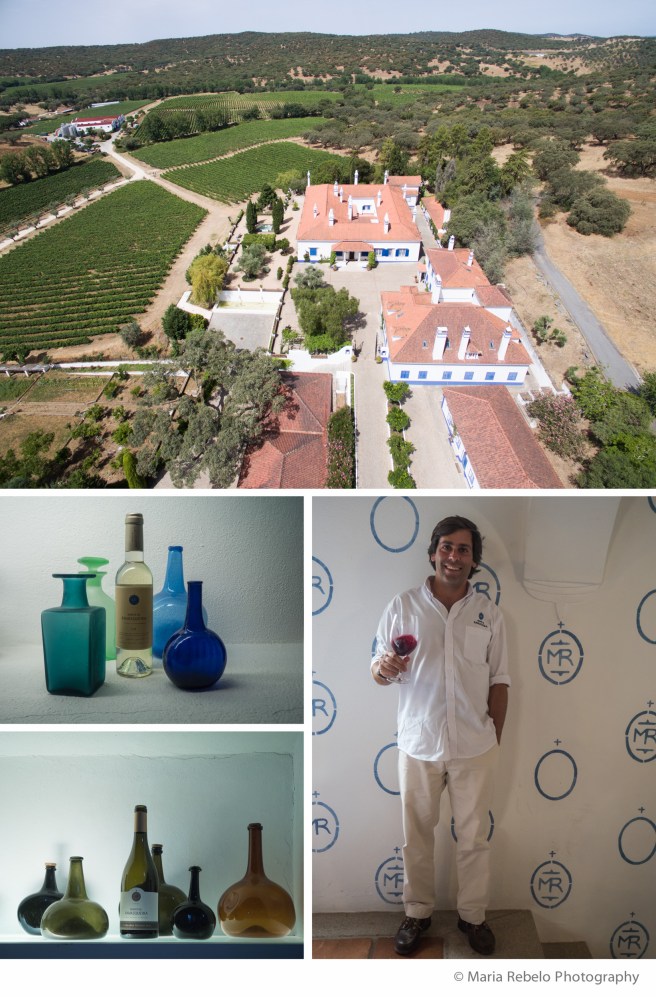
Composit Monte da Ravasqueira- 2Sometimes you have to look far to find what you have near. The enologist Pedro Pereira Gonçalves left his homeland in search of a new world, first in Australia and then in Chile. But he found his calling back in Portugal at Monte da Ravasqueira, in the heart of Alentejo.

The estate was purchased by José Manuel de Mello, a successful entrepreneur, in 1943. He turned the 3,000 hectares into a family retreat where he bred Lusitano horses and planted vines, cork and olive trees.

What attracted Pedro to the property, still owned by the Mello family, are its unique virtues. Twelve dams help create a micro climate with cooler temperatures.  And even though the Atlantic Ocean is 120 km away, it cools the nights because there are no mountains in its way. While most of Alentejo is flat, Ravasqueira has slopes with different sun exposures that produce diversity in sugar and acid levels.

Pedro uses high-resolution aerial photographs to study each individual vine so that grapes can be combined into ideal blends. The result is wines that are truly made in the vineyard.

We tried some great examples. An enticing 2015 dry premium rosé with delicate fruit flavors and rich minerality. A 2014 premium white, aged in contact with the lees, that combines freshness with complexity. An elegant 2014 red called Vinha das Romãs, made from vines planted where an ancient pomegranate orchard once grew. The pomegranate roots are still there, lending the wine unique flavors and aromas.

Our wine tasting was followed by an appetizing lunch during which the Ravasqueira wines proved their ability to pair perfectly with food. The feast started with a gazpacho and continued with two traditional main courses: codfish with cornbread and roasted goatling.  The finale was a “mille feuilles” layered with artisanal jams made on the property, accompanied by exuberant port-style fortified wines.

Monte da Ravasqueira is a perfect blend of passion and technique, of tradition and modernity. It is a place where the Atlantic breezes join forces with the Alentejo sun to create exquisite wines.

Monte da Ravasqueira is located near Arraiolos, tel. 266-490-200, email ravasqueira@ravasqueira.com. Click here for information about how to schedule a visit.

The gift of friendship

OLYMPUS DIGITAL CAMERA

We have a friend who’s always there for us when we need wise advice, a word of encouragement or someone to intercede for us. As if these prodigious gifts were not enough, every time he visits us, he brings wonderful wines. His latest present was a bottle of Syrah 24.

The wine is produced by José Bento dos Santos in a magical 17th century farm near Lisbon called Quinta do Monte d’Oiro (golden hill farm). The wine is a result of the friendship between Bento dos Santos and famed Rhone Valley producer Michel Chapoutier.

Chapoutier offered Bento dos Santos an extraordinary gift: a large collection of cuttings from Chapoutier’s old Syrah vines in Hermitage. These precious vines were planted in parcel 24 at Quinta do Monte d’Oiro.

In an estate that produces noble wines with meticulous care, the Syrah made with the fruit from parcel 24 is treated like royalty. And it shows. Syrah 24 is a graceful, elegant wine, perfect to celebrate the gift friendship.

Click here for the Quinta do Monte d’Oiro website.

In vino veritas

OLYMPUS DIGITAL CAMERA

In Roman times, wine making was a simple affair. The grapes were crushed and stored in large clay amphoras where the fermentation occurred naturally. The skins, seeds, and stems were stirred. Then, the pomace fell to the bottom of the amphora, acting as a filter so that the wine, extracted through a spigot, ran clear.

Wine makers in Alentejo are using old amphoras, too large to be made in modern ovens, to revive these ancient ways of making wine.

We’ve been looking forward to trying these wines. After our recent visit to Esporão, we finally got our chance—we brought home a bottle of their amphora-made Moreto wine.

Drinking it was a grand occasion. After all, this was the kind of wine with which Caesar celebrated the conquest of Gaul, the wines with which Mark Anthony wooed Cleopatra. We closed our eyes and sipped the precious liquid. It tasted pure and clean. Suddenly, the Romans adage ‘in vino veritas,’ in wine truth, had a new meaning.

Gold from Bombarral

aguardente-sanguinhal

“In Bombarral, each generation produces brandy for the next,” explained Ana Reis, one of the heirs of Quinta do Sanguinhal, a wine estate in Bombarral that dates back to 1871. We were standing in a room full of contraptions that were used to distill brandy a century ago. After distillation, the precious liquid sleeps for decades in oak barrels before it emerges with a beautiful orange color and a bouquet of alluring aromas.

The Bombarral region has ideal conditions to produce fine brandies. Everyone there seems to have an old casket of brandy at home to share with friends on special occasions.

If you don’t have friends in Bombarral, you can buy the wonderful brandy made by Ana Reis’ family at Quinta das Cerejeiras. It has a smooth taste, full of depth and wisdom. We love drinking it in the Winter, imagining the sunshine of the ancient Summer that produced this liquid gold.

Click here for information about the wines and brandies produced at Quinta do Sanguinhal and Quinta das Cerejeiras.

Tasting moscatel in Setúbal

composit-jmf

No one knows for sure how moscatel, a white grape from Egypt, arrived in the Setúbal peninsula, near Lisbon. What we know is that moscatel took to the region, producing wines that are perfect to start or end a meal. Over the years, the grape mutated into a new varietal—purple moscatel—that only exists in Setúbal. It is sweeter and more aromatic than its white cousin.

Moscatel wines are produced in the same way as port wine. The grapes are fermented for 4 or 5 days. The fermentation is then arrested before the yeast turns all the sugar into alcohol by adding “aguardente vínica” (brandy) to kill the yeast. The result is a fortified wine that is sweet and has 17 to 18 degrees of alcohol.

A great way to learn about moscatel is to visit José Maria da Fonseca’s winery in Azeitão. Founded in 1834 by a mathematician turned wine maker, it is one of the oldest wine companies in Portugal.

After one of his moscatel wines won a prestigious prize in Paris in 1855, Fonseca decided to export his wines to Brazil. A ship loaded with barrels of moscatel crossed the Atlantic. But the wine did not sell in Brazil and the ship returned with most of its original cargo. The sea voyage did wonders for the wine: in nine months the wine seemed to have aged 15 years, gaining complexity and depth. This moscatel, known as “torna viagem” (round trip), continues to be produced today with barrels carried by Sagres, a beautiful sailboat owned by the Portuguese navy.

José Maria da Fonseca ’s moscatel cellar contains bottles from every vintage since 1880 except for 1936-37 and 1939-40 when production was disrupted by the Spanish civil war and the Second World War, respectively.

It is great fun to do a blind tasting of moscatel wines at José Maria da Fonseca’s. Everybody has preconceptions about which wine will be their favorite. Some are sure they will favor the rarer purple moscatel or the older vintages. Others think that they will prefer the newer wines. Surprises abound. You will learn a lot about moscatel and a little about yourself.

Click here for information about visits to José Maria da Fonseca’s winery.