Ângelo Ataíde, a judge passionate about wine, decided to plant a vineyard on the Alentejo estate his wife, Rosário, had inherited. Local farmers advised him against it. The site, in a valley near the Montargil dam, has a humid microclimate where downy and powdery mildew thrive. Undeterred, the judge planted the first vines in 2000.
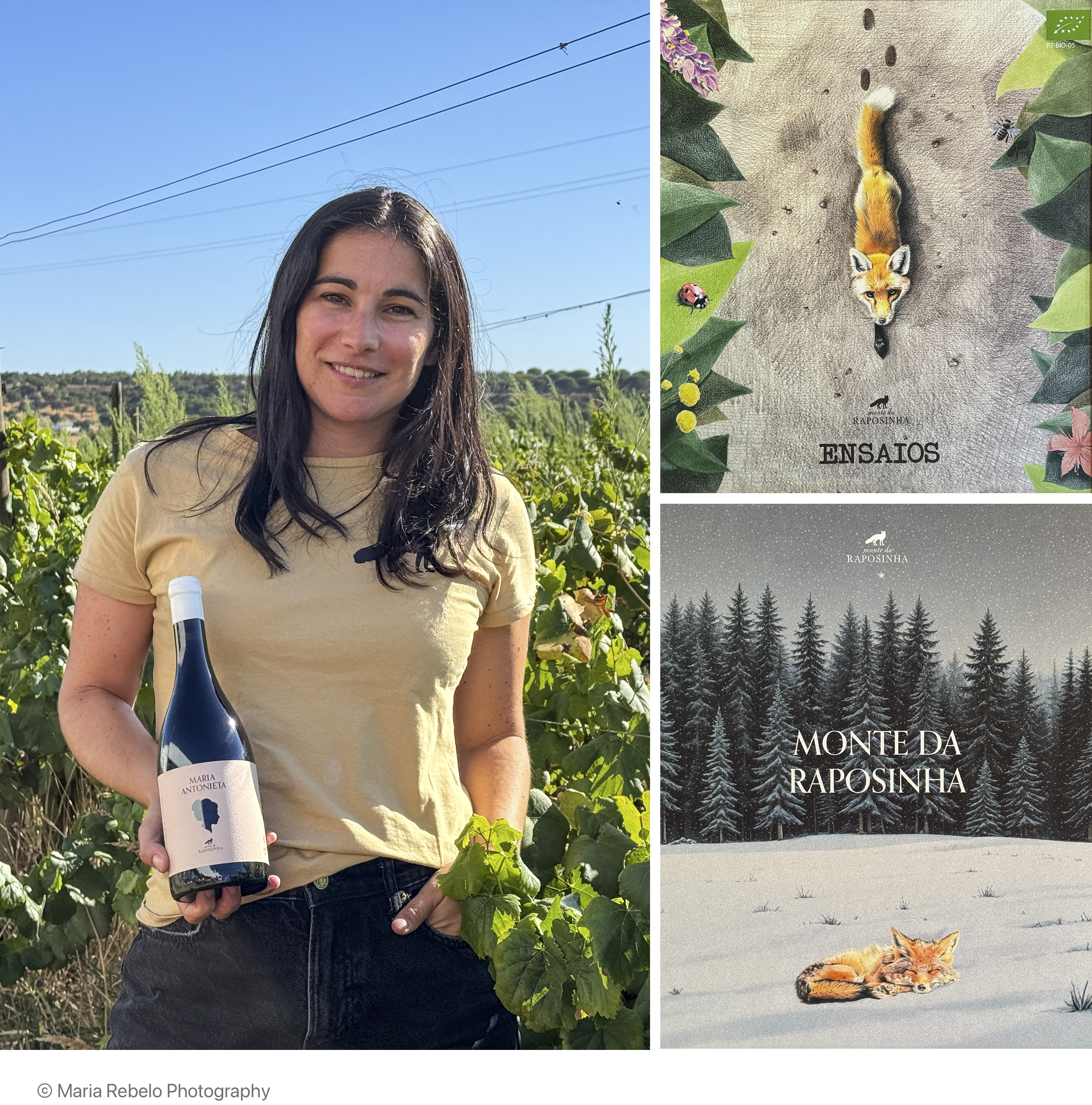
Rosário’s father used to call her raposinha (little fox). When foxes began strolling through the young vines at dusk, Ângelo and Rosário renamed the farm Monte da Raposinha.
Today, the estate is in the hands of the next generation: Rosário’s son, João, oversees the business, while his wife, Paula, leads viticulture and enology.
João followed the family tradition and studied law, but he never took to office life. He preferred the freedom of the open fields.
Paula’s father, a doctor fascinated by wine, invited her as a child to smell different wines and describe their aromas. She grew up loving animals and plants, and later studied agronomy in Lisbon, specializing in viticulture. As a student, she often passed Monte da Raposinha on her way to her grandmother’s house, sometimes stopping to buy a few bottles whose distinctive character intrigued her.
She met João through mutual friends. They fell in love and married at Monte da Raposinha, which became their life’s project. João and Paula do nearly everything themselves: pruning and harvesting, fermenting and aging, bottling and labeling.
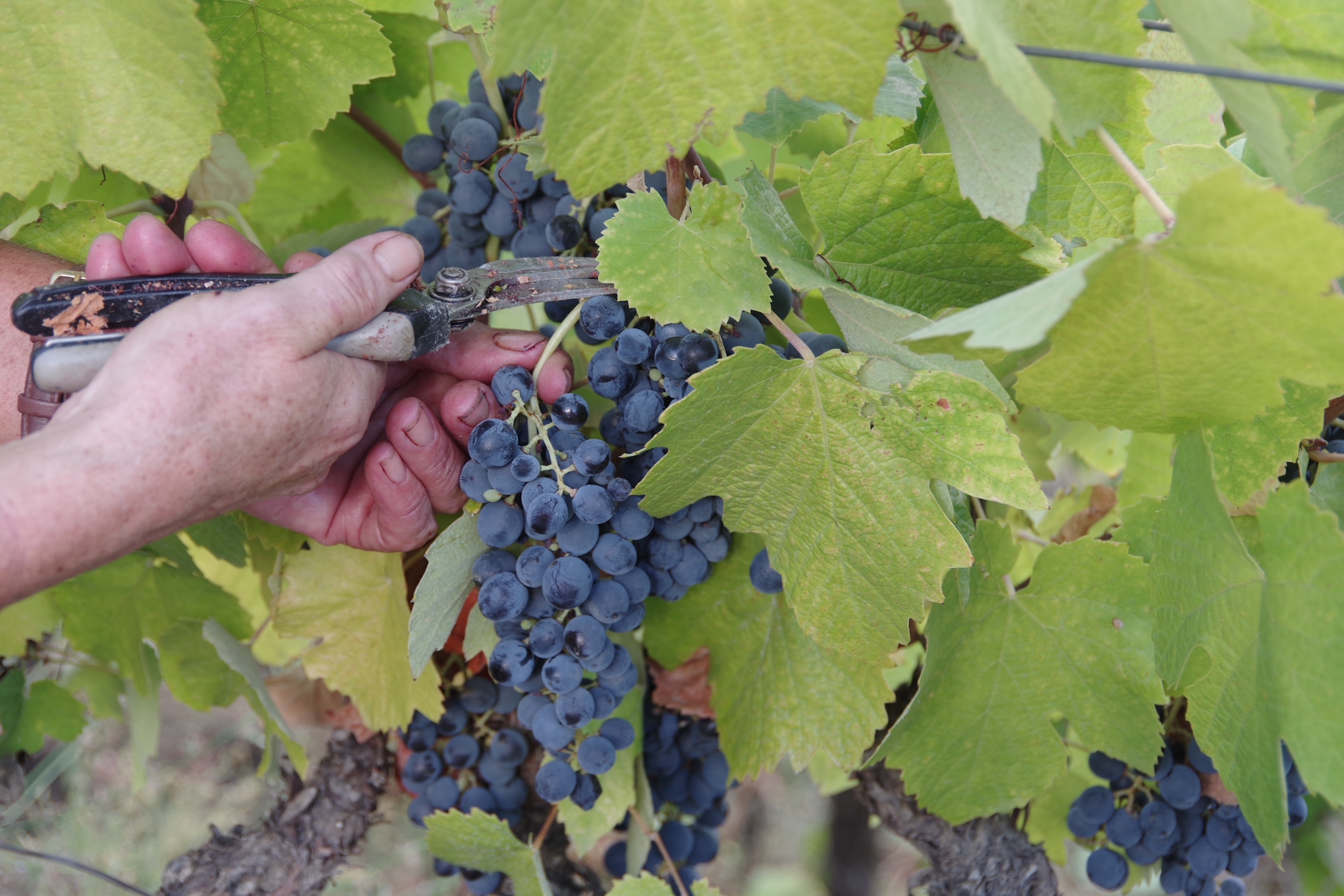
Paula explains how the morning dew brings freshness to this otherwise hot region, cooling the grapes and slowing maturation. To preserve the fruit’s character, she relies entirely on the wild yeasts that live on the grape skins, rather than adding commercial strains. The result is less predictable, but truer to the vineyards.
They practice regenerative, organic farming, no small challenge in such a humid climate. The vines are protected with the traditional Bordeaux mixture, a solution of copper sulfate, lime, and water. They also spray infusions of acacia, nettle, and willow. In difficult years, João and Paula accept losses; in 2025, they lost 80 percent of their production.
And what do they get in return? “A land that is alive,” Paula says. She speaks passionately about the worms in the soil, the legumes that fix nitrogen, the birds and bees that share the vineyard. Her affection for these creatures runs so deep that she asked designer Francisco Eduardo to include them on the wine labels.
The estate has a guest house with expansive views over the fields and an inviting swimming pool. Staying there is the best way to understand their work: mornings in the vines, afternoons in the cellar, evenings around the table, enjoying the wines born from their soil.
For João and Paula, the health of the land, the authenticity of place, and the singular voice of their wines come first.
Their rosé, made from Touriga Nacional, is bright and expressive, all freshness and immediacy. The white reserve draws its body from Viosinho, ripened under the generous Alentejo sun, while Arinto and Esgana Cão lend tension and acidity. The blend carries delicate aromatics and a long, persistent finish that both cleanses and lingers. The extraordinary Maria Antonieta, named in homage to João’s great-grandmother, is made from Touriga Nacional grown on a small plot with soil made from river stones.
Monte da Raposinha proves that great wines can come from improbable places, but only for those with the courage and endurance to care for them.
Monte da Raposinha is located at Estrada do Couço, S/N. 7425-144 Montargil. Click here for their website.
At the beginning of the last century, the German poet Rainer Maria Rilke wrote a series of letters to a young man who aspired to become a poet, urging patience, humility, and trust in the slow ripening of ideas.
In that spirit, we invited viticulturist António Magalhães to write a letter to a young Douro farmer. This eighth masterclass takes that form.
Peso da Régua, February 7, 2026
My dear colleague,
You asked me for advice on how to begin a life in the vineyards of the Douro Valley. I will try to answer simply, because in viticulture simplicity is often the most difficult achievement.
On tradition
First, understand that making great wine in a mountain region is never the work of a single lifetime. It is a relay race: you receive the vineyard, care for it as best you can, and pass it on to the next generation. You did not choose your starting point, and you will not see the finish line. This realization should make you both humble and demanding of yourself. Viticulture is the art of continuity: your vineyard must be able to thrive far into the future.
Learn from those who pruned your vines before you. In our profession, novelty is often overvalued. The vine breeder François Morisson-Couderc, successor to the great Georges Couderc, whose rootstocks helped rescue Europe’s vineyards after phylloxera, once said that a good idea in viticulture is one that remains a good idea twenty years later.
During the phylloxera crisis, Douro growers learned which sites to abandon and which never to plant at all. They set aside ill-adapted varieties such as Bastardo and Donzelinho Tinto, and created new ones, most notably Touriga Francesa, by crossing rustic, phylloxera-resistant Mourisco Tinto with Touriga Nacional, which the Baron Forrester called “the finest.” They also knew how to shape the post-phylloxera terraces, so that vineyards could once again thrive.
On respect
Unless your vineyard has a human scale that allows you to tend to it by yourself, you will have workers in your employ. Agricultural work is hard, and those who do it deserve our deep respect. Never ask anyone to perform a task without first explaining its purpose and why it matters.
Respect is owed not only to people, but also to the land.
Hand-built vineyard hedges
On caring for the soil
Care for the soil by embracing organic viticulture. It is prudent to first gain experience on a small parcel. That is how, more than three decades ago, David Guimaraens, the head winemaker of Taylor Fladgate, and I took our first steps into organic viticulture, guided by David’s father, Bruce Guimaraens.
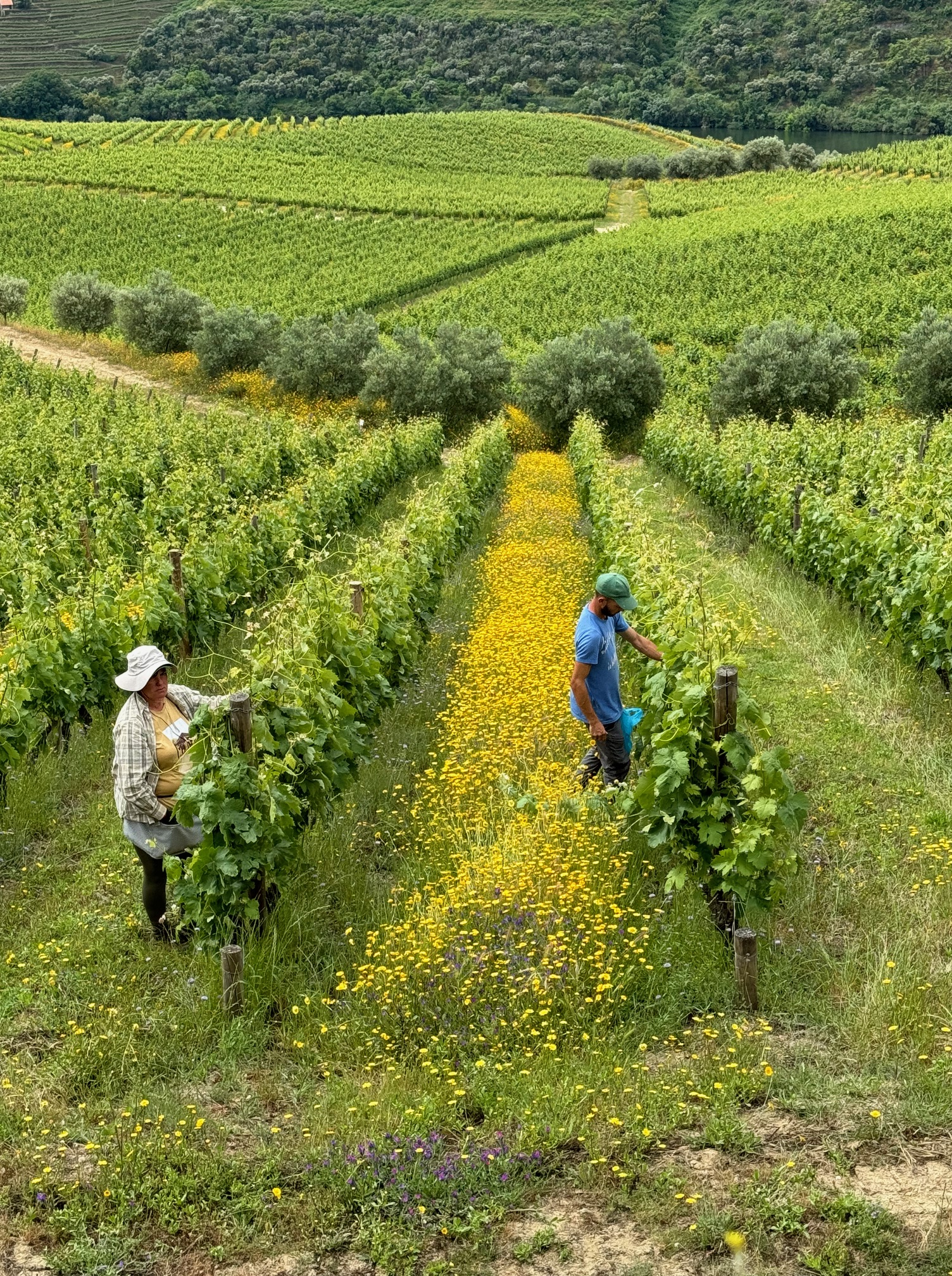
Learn to live more harmoniously with spontaneous vegetation, to accept its life cycle, and to intervene only as much as necessary to prevent these plants from harming the vines or carpeting the vineyard and raising the risk of fire.
Copper and sulphur are effective, irreplaceable, and complementary fungicides in maintaining vineyard health. Their effectiveness is greatly enhanced by choosing the right moment to intervene.
Taste Terra Prima, the ruby Port produced by Fonseca Guimaraens with grapes from an organic vineyard and fortified with organic brandy. I hope it inspires you to create an organic dry white Port. There is none on the market, a significant gap worth filling.
Spontaneous vegetation
On the ideal vineyard
Only after learning to respect tradition, people, and the soil can you begin to ask the most difficult question of all: where should a vineyard be planted?
I am firmly convinced that, during the post-phylloxera period through 1965, growers planted the finest vineyards, deliberately choosing sites where vines could naturally thrive. After 1965, and even more after 1980, bulldozers enabled large-scale expansion, and earthen terraces replaced traditional dry-stone walls. Often, these new sites have soils that are either deep or stony and shallow, with poor exposure and a fragile natural water balance. They lack intrinsic viticultural character. Why plant vines in inferior terrain to make room for tractors? A vineyard that does not thrive naturally rarely rewards you with great wine.
Listen to what the landscape is telling you. The old walls indicate where vines once survived without irrigation. The abandoned terraces often mark the limits beyond which quality becomes uncertain. The best lessons are written in stone, not on maps.
As we travel east from Baixo Corgo to Douro Superior, vineyard density decreases. This fall reflects dwindling rainfall and rising heat. Why defy the logic suggested by the climate by planting vineyards where irrigation becomes necessary?
Planting a new vineyard
On the importance of olive trees
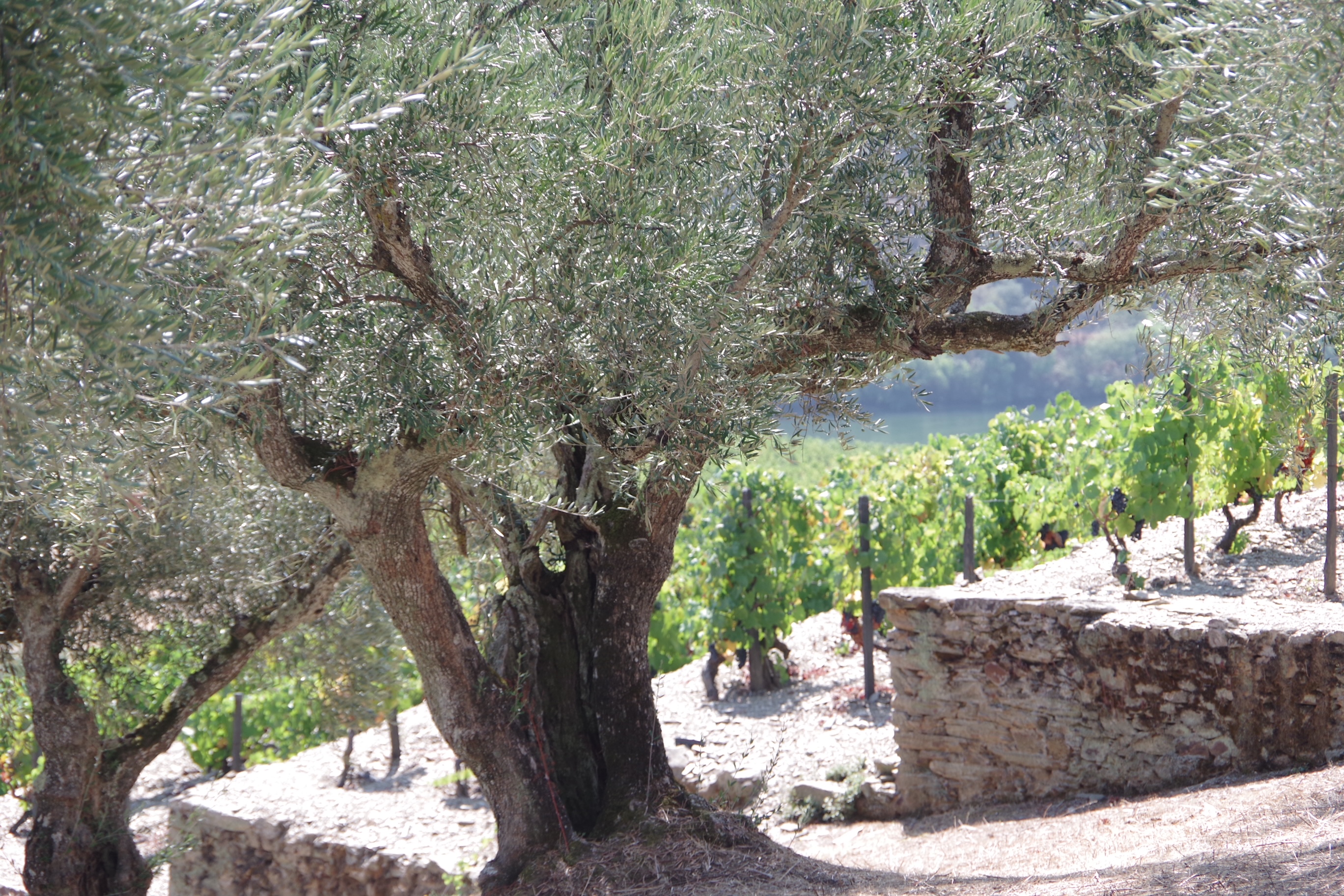
Plant olive trees around the vines. Known in the Douro Valley as an olival de bordadura, this natural border frames the vineyard beautifully and yields exceptional olive oil, a valuable additional source of income.
Olive trees surrounding the vines
On caring for the vineyard
When you acquire a vineyard, do not rush to renew it. Take time to observe, learn, experiment, and reflect. Pay close attention to the neighboring vineyards. Renewing without understanding what truly needs to change is a serious mistake. A new vineyard should be guided by experience and judgment, never by whim.
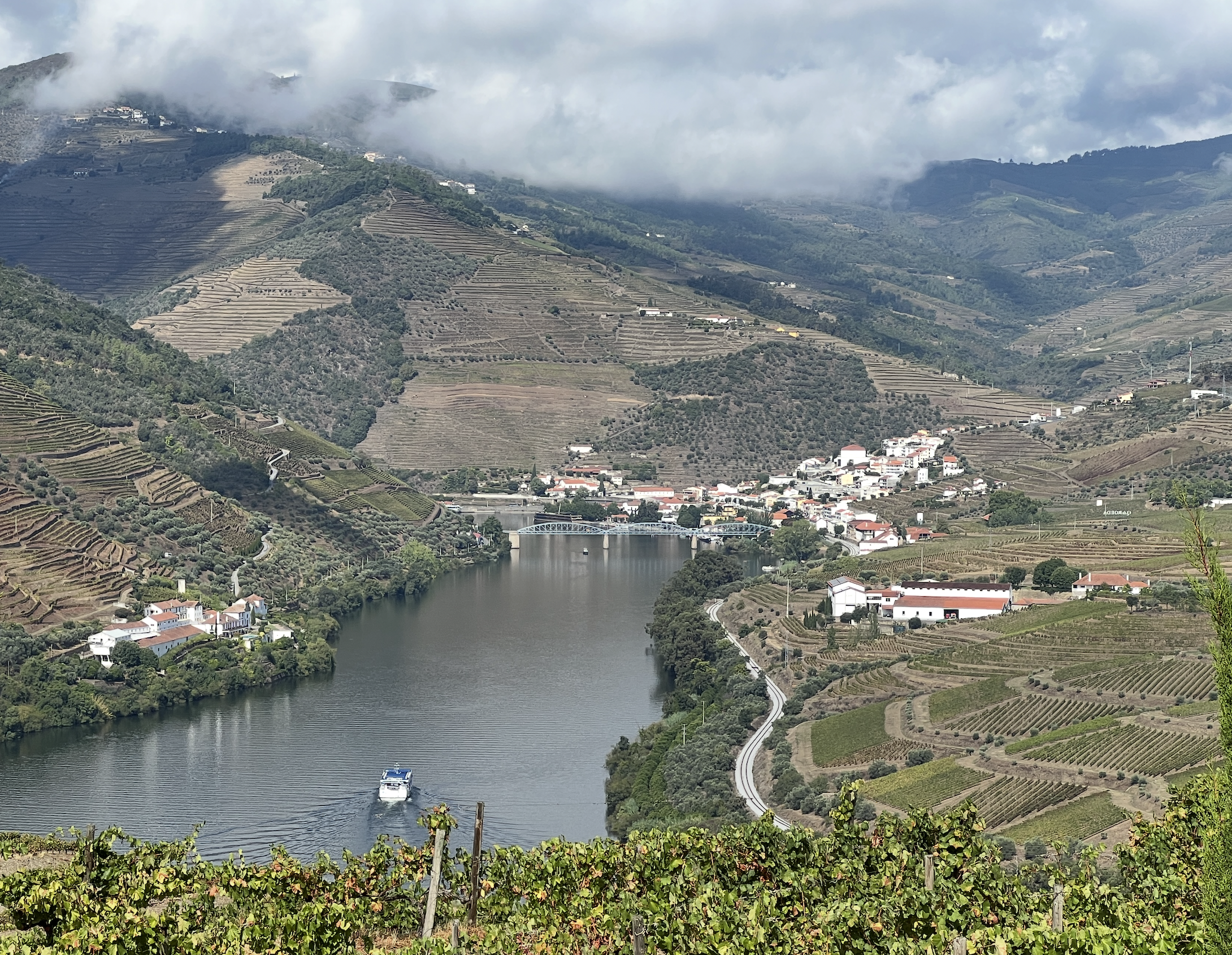
On the Douro terraces
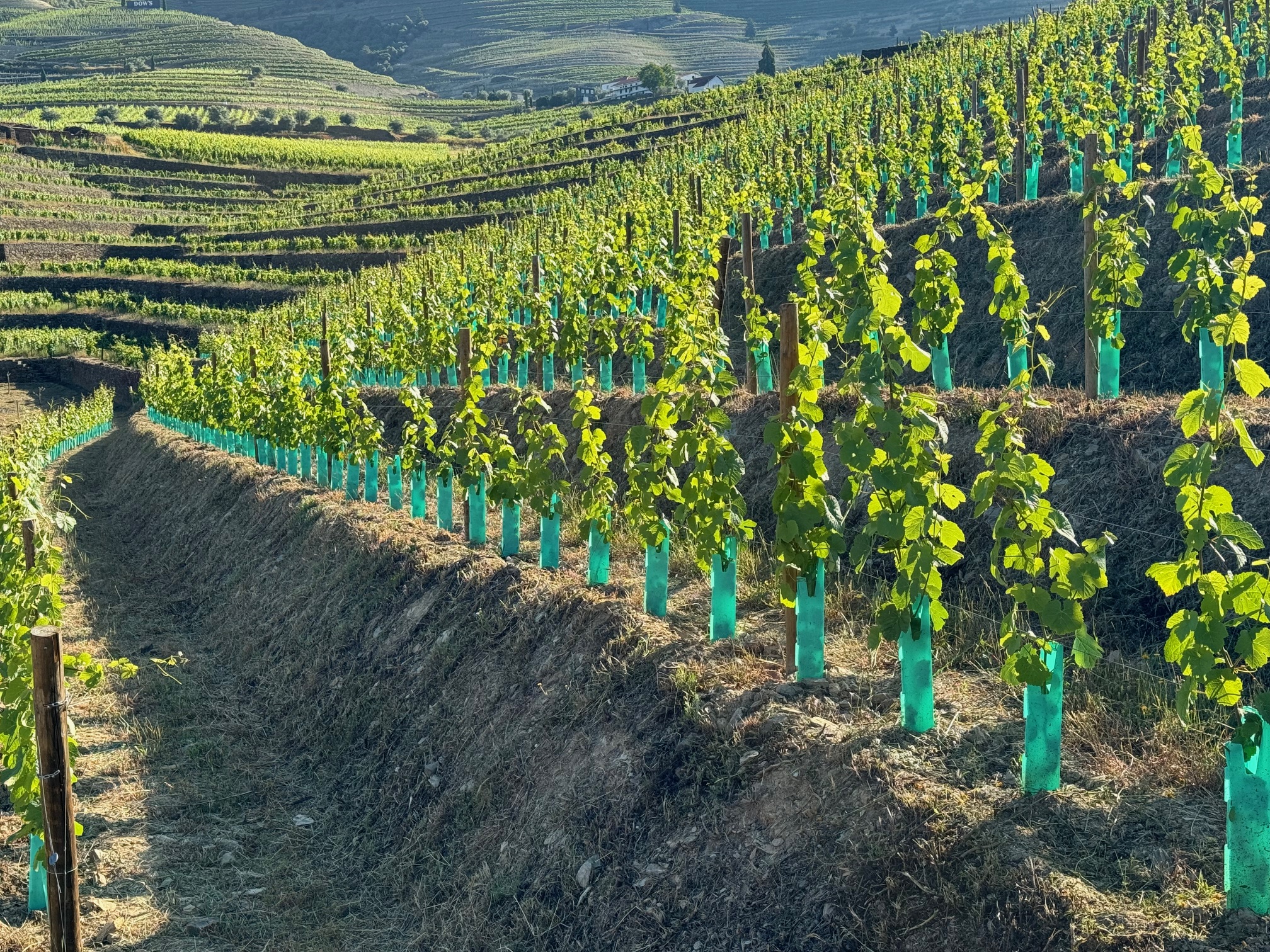
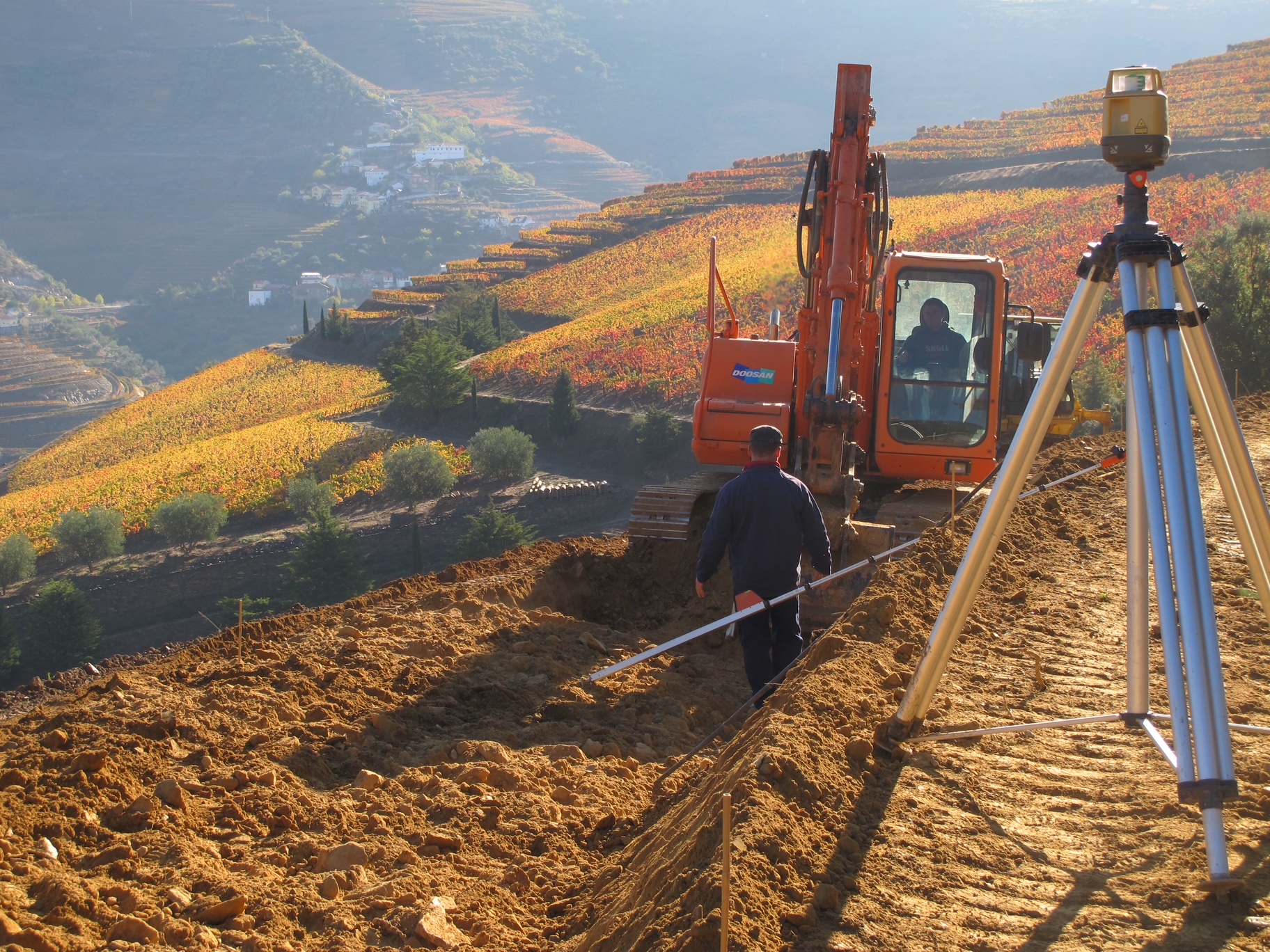
Rain causes erosion in hillside vineyards. Careful land design is therefore essential. Vines were once arranged in terraces supported by dry-stone walls. They are now preferably planted on successive narrow stepped platforms, separated by earthen embankments and laid out with laser guidance to ensure, on each level, a longitudinal gradient of about 3 percent, ideal for draining torrential rainfall.
Building terraces
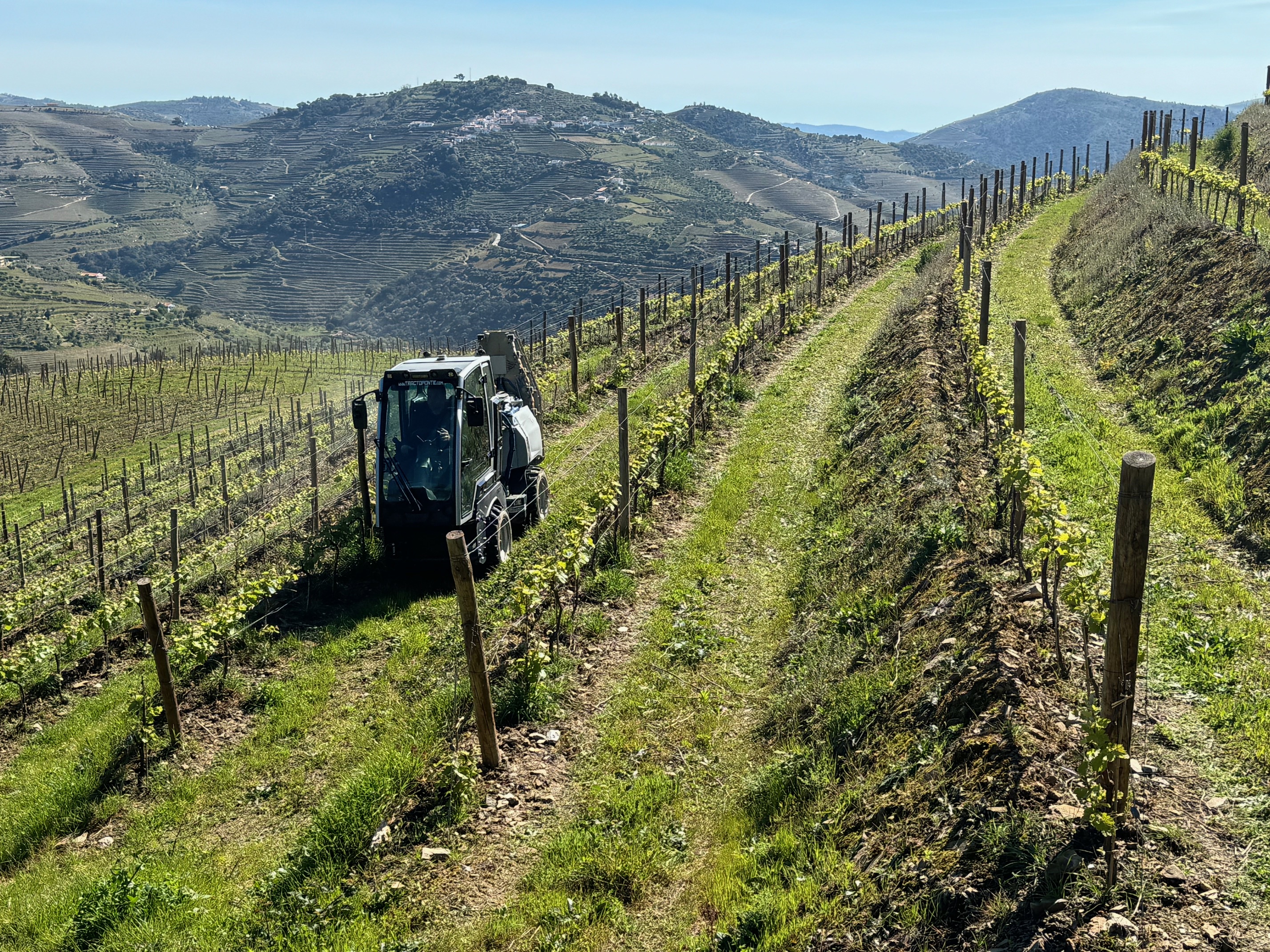
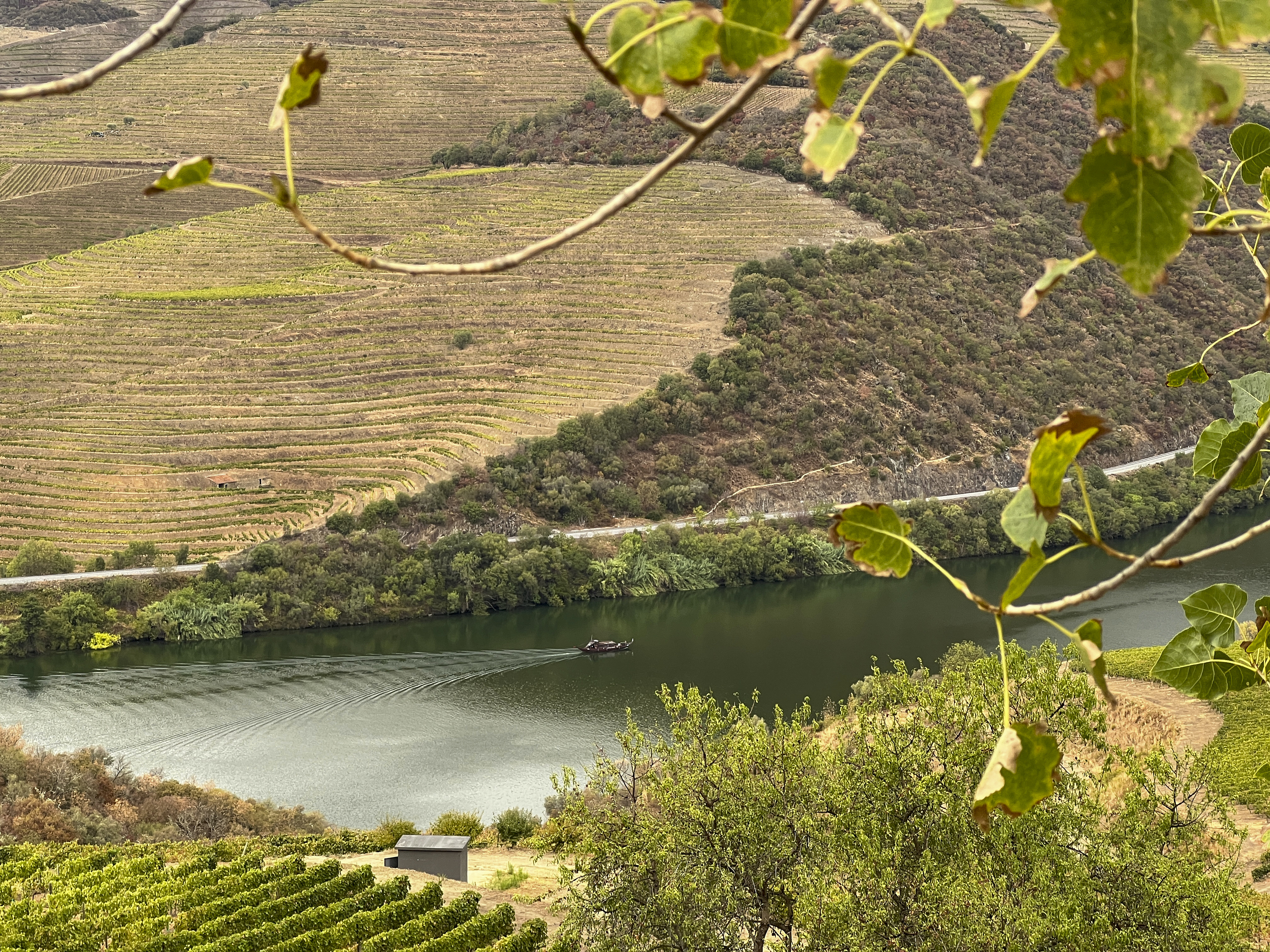
Each terrace is designed to support only a single row of vines (bardo), laid out at a fixed distance from the embankment shoulder to ensure circulation and access for machinery along the slope. At the same time, the terrace width should be reduced as much as possible, increasing vine density without compromising mechanization. This approach uses the land more efficiently and simplifies vineyard work, easing physical labor, which is a priority in mountain viticulture.
Narrow terraces
On grape varieties
You must study the Douro grape varieties. The choice of what to plant should be shaped by the diversity of soils and microclimates, not guided solely by enological objectives. Planting vines in a new vineyard is like sewing a patchwork quilt, whose meaning and beauty emerge only in the whole. A field blend of judiciously chosen varieties creates the complexity needed for great wines and the resilience to deliver consistency from one vintage to the next.
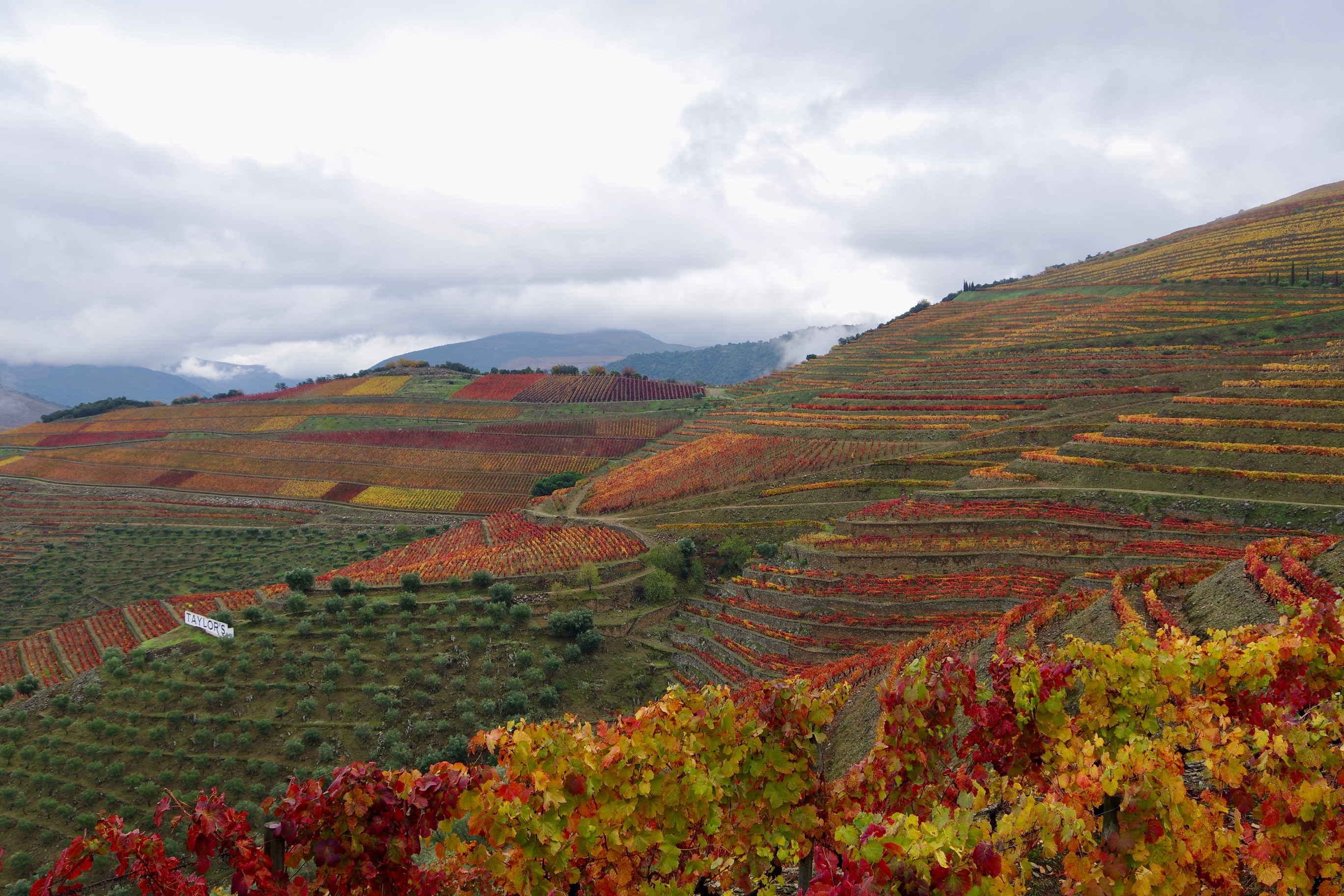
Fall in Quinta de Vargellas
Let me mention a few of my favorite red varieties. Touriga Francesa is, without question, the conductor of the Douro’s varietal orchestra. It is the most resistant to downy and powdery mildew, a quality that helps explain its prominence in the Douro.
Tinta Cão, which “ripens well, neither shrivels nor rots,” as Francisco Rebelo da Fonseca wrote in the eighteenth century, can be precious in arid years because it survives the heat.
I have a special fondness for Tinta Francisca and Viosinho. They make slender vines, luminous spring hedges, and perfectly ripened grapes, blue-black in the Francisca, golden-yellow in the Viosinho.
Two varieties that can help the Douro face a warming climate are Malvasia Preta and Tinta Aguiar. We need to better understand their properties in the vineyard and cellar.
The Douro is also rich in local white grape varieties. A magic quartet—Malvasia Fina, Viosinho, Rabigato, and Gouveio—forms the backbone of the finest white Ports. On their own or together, they produce outstanding table wines. Beyond these, many other grapes wait to be planted.
On the importance of the blend
The vastness of the region and the diversity of its valleys and hills yield a wide range of grapes. Through blending, producers can create wines with a balance and depth rarely achievable from a single site.
Growers must decide whether a vineyard’s grapes are destined for Port or for table wine (DOC Douro), two different expressions of the same landscape, with any surplus going to simpler, unclassified wines. In any given year, the fruit suits only one style, a vocation that may shift with the weather. As ripening unfolds, the vineyard’s calling becomes clear and is confirmed at harvest. The aim is always to guide each parcel toward its finest possible expression.
On rootstocks
To guard against phylloxera, European vines are grafted onto American rootstocks. The rootstock type is often shared by all vines in a vineyard. One of the earliest and most enduring choices was Rupestris du Lot. To forget it would be to lose history, diversity, and perhaps future resilience.
Today, drought resistance is paramount, so Richter-110 and 1103-Paulsen are common rootstock choices. Both coexist across the valley, but Richter-110 predominates in the Douro Superior and in the Cima Corgo, especially below the mid-slope. 1103-Paulsen tends to perform better in deeper soils with greater spring moisture and is therefore more prevalent in the Baixo Corgo and on the higher slopes of the Cima Corgo.
On planting the vines
I advocate mass selection, propagating vines from many outstanding plants in traditional vineyards, over clonal selection, which reproduces a single “mother vine.” I believe it is the duty of all Douro winegrowers to preserve and multiply our viticultural genetic heritage, especially minor varieties now on the brink of extinction.
On pruning the vines
Cane pruning, known as Guyot, is often the better choice in drier climates or in shallow soils without irrigation. Under such conditions, the individualized, vine-by-vine approach characteristic of this system is justified, and it offers the added advantage of allowing the vines to be continuously renewed.
Yet there are sites and grape varieties that lend themselves better to spur-pruned cordon training, known as Royat: a simple form of pruning, though one that demands no less care and precision in its execution. In the right place, for example, Touriga Nacional benefits greatly from this method, given its somewhat awkward natural growth pattern.
On the harvest
In the Douro, when planted where they belong, vines do not suffer from thirst, only from heat. But before that heat turns harsh, the grapes ripen to perfection for Port. They should never be overripe. Port tolerates only the faintest hint of raisining, and only in limited proportions, in varieties such as Tinta Barroca, Malvasia Fina, and a few others.
In 1992, I learned from Alistair Robertson and Bruce Guimaraens the importance of waiting for the right moment to harvest. Day after day passed without the grapes reaching full maturation. While others chose to pick, Alistair and Bruce held back, convinced that a touch of rain would refine the grapes and bring them to full maturity.
The rain arrived late, at the end of September. It was only 13.5 mm, but Bruce Guimaraens, meticulous about water to the point of counting the drops of morning dew, guaranteed it was enough. His judgement was vindicated: the 1992 Taylor’s Vintage Port would go on to receive a perfect score from Robert Parker.
Harvesting grapes
On Port
Port wine is made without artifice, by people who use simple equipment and have a deep respect for tradition.
Producing a great Port requires a wide variety of grapes, careful choice of harvest dates, and the ability to select grapes by hand in the vineyard.
The proportions of different grapes are adjusted from year to year. Co-fermenting them in the same lagar enhances complexity and balance.
Some final words
It is a privilege to work in the vineyards of the Douro Valley. No other major wine region combines such diversity of longitude, altitude, sun exposure, grape varieties, and soil depth with the production of a fortified wine as delicious, long-lived, and unique as Port.
If you work with patience, with respect for the place, and with attention to what only time can teach, the vineyard will reward you. Not always quickly, but usually honestly.
In this fifth masterclass with viticulturist António Magalhães, we follow the seasons in the Douro Valley. The lecture brings to mind a famous passage from the Book of Ecclesiastes: “To everything there is a season, and a time to every purpose under heaven.”
Each season brings its own tasks, anxieties, and rewards. Despite the vastness of the landscape, the work of tending vines remains a human craft, learned through experience and carried out with dirt under the nails and an eye on the sky.
António grew up with the notion that the agricultural year ran from November 1 to October 31. At Taylor Fladgate, where he worked for over three decades, the year was divided into quarters: dormancy from November to February, growth from March to June, and ripening from July to October.
This calendar aligns with the concept of growing degree days. Developed in the 1930s by Albert Winkler at the University of California, Davis, it links vine growth to cumulative temperatures above 10 °C over the growing season, conventionally defined as April 1 to October 31.
But António has been pondering what to do about October. Over the past few decades, most Douro grapes have been harvested by the end of September, with only a few straggling vineyards picked in the first days of October. This shift reflects climatic change and the Douro’s growing emphasis on table wines, known as DOC Douro. In the past, when all grapes were destined for Port, harvests came later to allow grapes to reach the deeper ripeness Port requires. Viticultural choices over recent decades have also contributed to earlier harvests, as growers planted fewer varieties, favored early-ripening grapes and rootstocks, and increased sun exposure.
António is therefore exploring a different viticultural calendar: dormancy from early October through the end of February, growth from early March through the end of June, and ripening from early July through the end of September. Uneven in length, these seasons are more closely attuned to the rhythms of nature as they now unfold.
The Dormancy Season
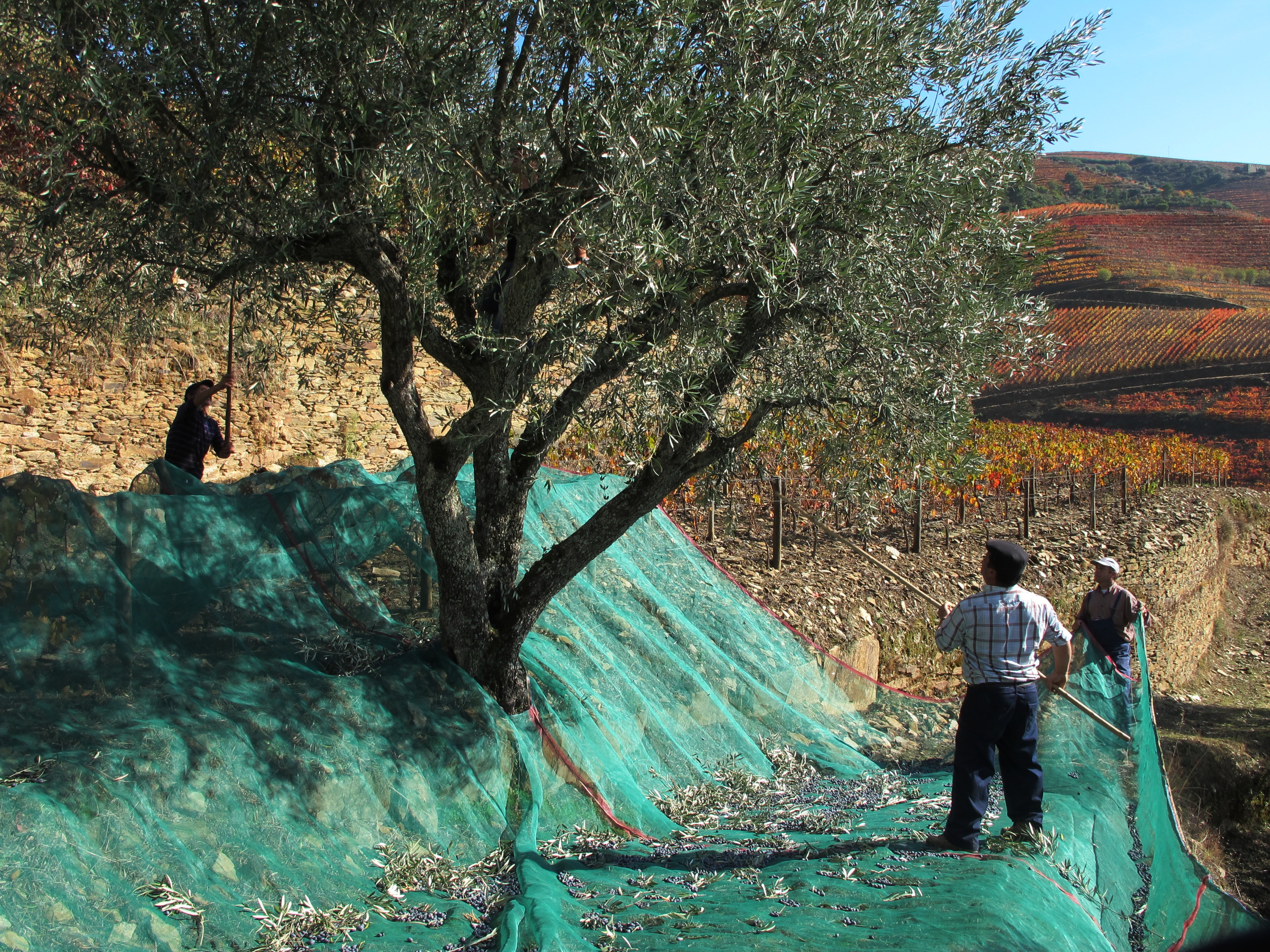
As soon as the grapes are harvested in September and early October, attention turns to the olive trees planted around the vineyards.
Picking olives
There is a natural complementarity between vines and olive trees. They draw water and nutrients from different soil depths, and their peak water needs occur at different times: vines in spring and early summer, olive trees in late summer and early autumn. Their distinct canopy structures mean they do not meaningfully compete for sunlight, and because their harvests follow one another, they do not compete for labor either.
Olive trees surounding the vineyard
In October, spontaneous vegetation awakens, washing the landscape in green. António likens the soil to a sideboard of drawers filled with seeds, opened selectively by the year’s weather. Fast-growing grasses help control erosion, while broad-leafed dicotyledons improve soil structure and biodiversity. Together, they form spontaneous mosaics in the fields, perhaps a model worth echoing in the vineyard, through field blends that create a mosaic of vines.
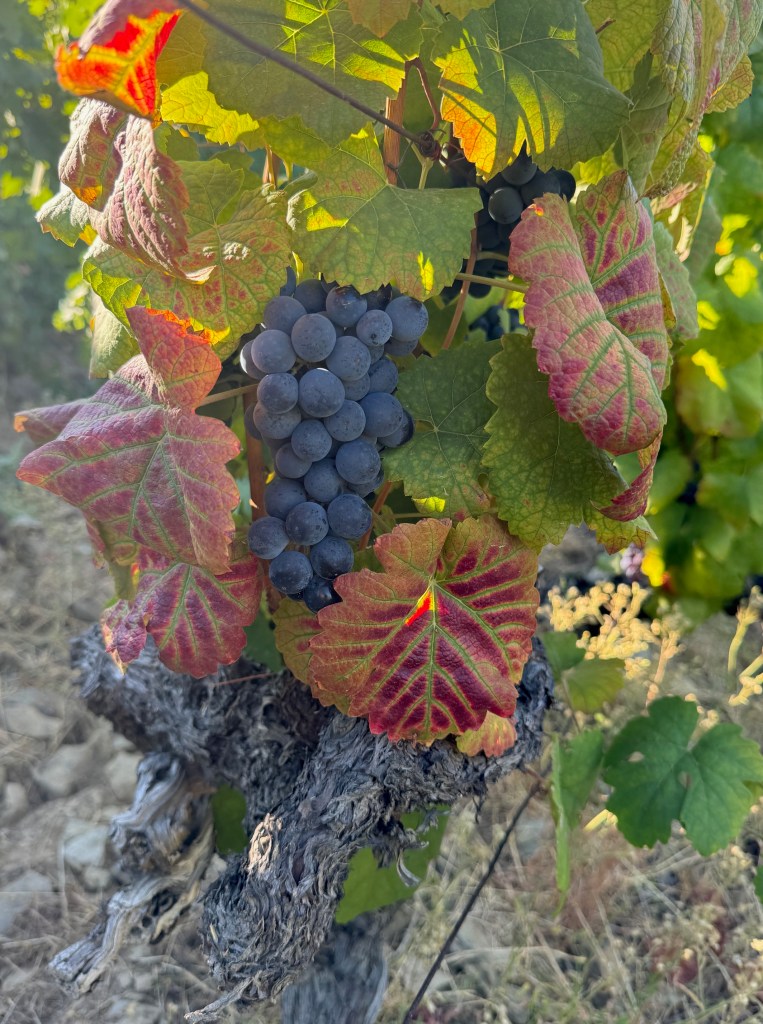
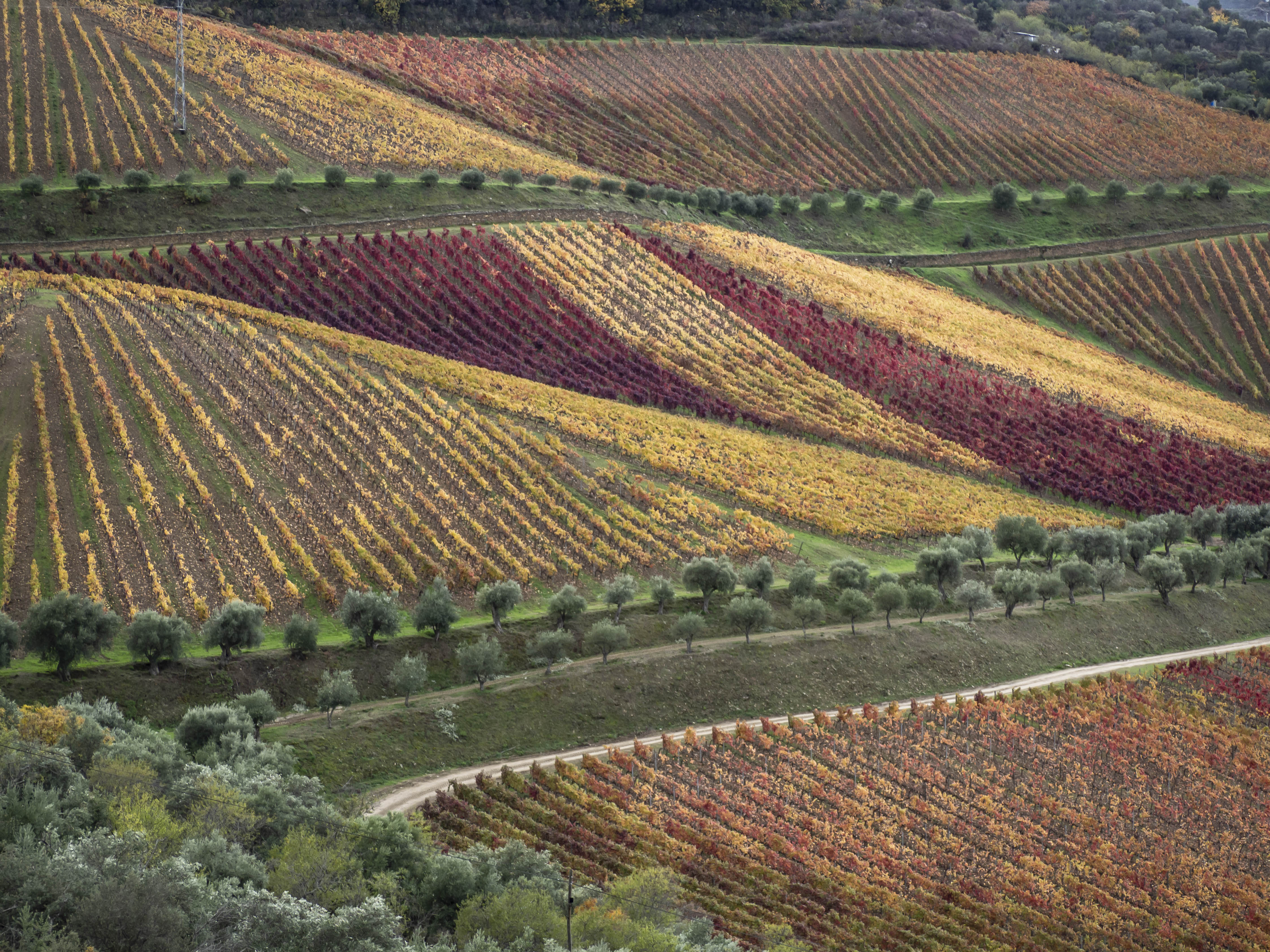
The vineyards are particularly spectacular in November. The leaves turn red and yellow, their rich palette reflecting the diversity of grape varieties.
Fall in Vale de Mendiz
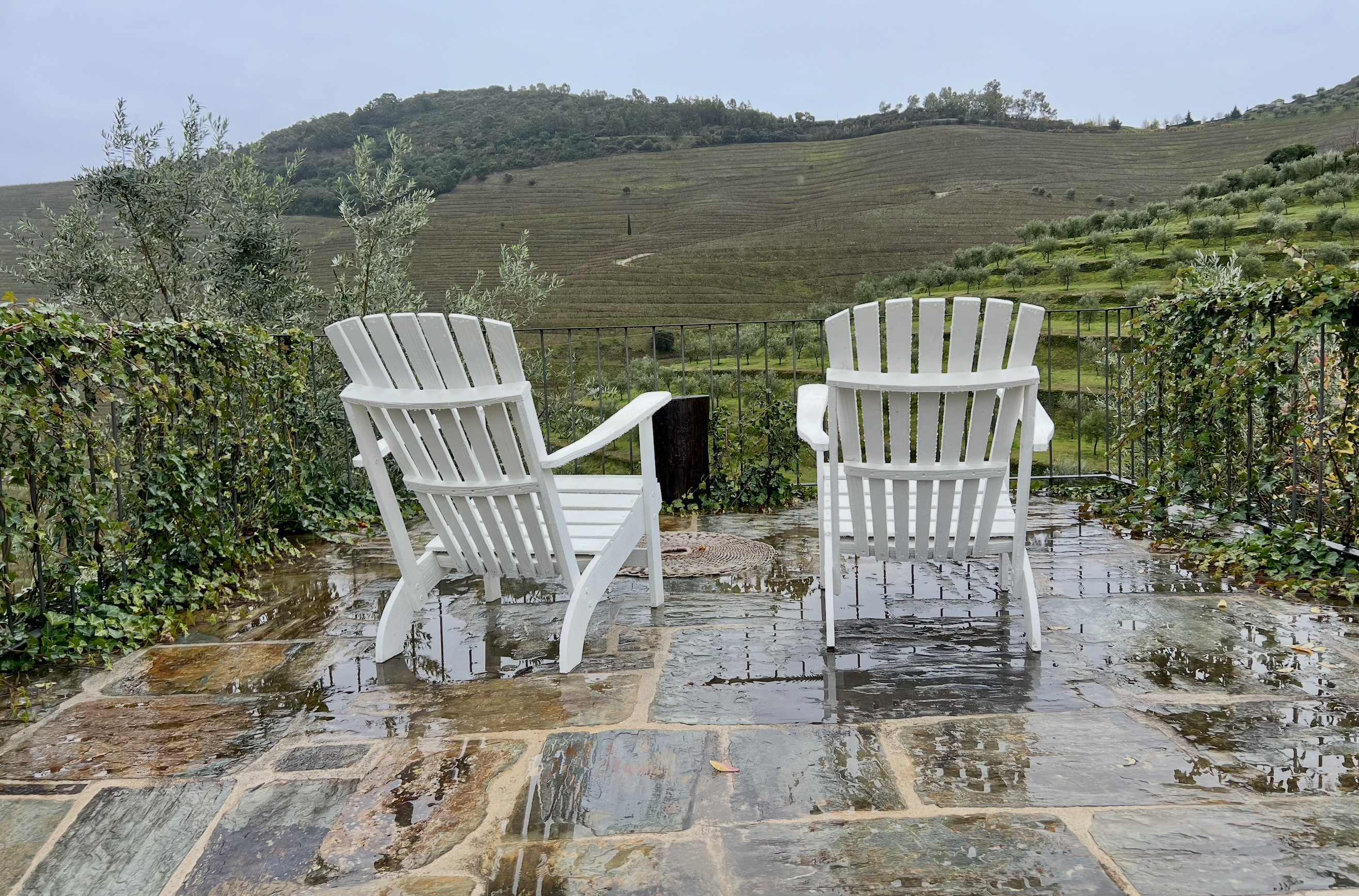
During this period, farmers pray for rain to fill what António calls the “water piggy bank.” Because most vines, especially in the Baixo and Cima Corgo, are not irrigated, rainfall during dormancy is crucial: about 400 to 500 millimeters of water must be stored over these five months. Once reserves are replenished, cold temperatures are welcome: they keep the vines fully dormant, prevent premature budbreak, slow metabolic activity, reduce disease pressure, and ensure a synchronized, healthy awakening in spring.
A rainy day at Quinta de Ventozelo
Cold weather is also valuable in the cellar. Winemakers say that the cold “closes the color of the wine.” Traditionally, Port spent its first winter in the Douro Valley before being shipped to Gaia. In the past, the river’s powerful winter flow made navigation too dangerous; even after the Douro was tamed, producers continued the practice, having found it beneficial.
The dormancy season is a time for reflection in the vineyard and the cellar—on the year just past and the one to come. In the Douro, people say that after the harvest, “the wine must be allowed to speak.” Judgment is never rushed; wines are tasted and assessed only in January and February of the following year. At that point, samples of the most recent harvest are sent to the lodges in Gaia, where they are tasted alongside wines from the harvest two years earlier. This tasting is the beginning of a momentous decision that winemakers will make in March or April: whether the wine, now in its second year, is declared Vintage.
The most important task of the dormancy season is pruning. In the Douro Valley, vines behave very differently from one another, so each must be pruned individually. For this reason, the simple, efficient cordon system is avoided in favor of spur and cane pruning, also known as Guyot pruning, a method used in the Douro Valley long before Jules Guyot popularized it in the nineteenth century. This pruning method promotes vine rejuvenation, a vital practice in the Douro Valley.
Other winter tasks include maintaining the vineyards. Vines trained on vertical trellis systems require regular upkeep, and terrace walls must be repaired. In midwinter, dead vines are replaced, and new vineyards are planted.
The Growing Season
Vines grow from March to June. The first signs of phenological awakening are the flowering of Crepis spp, an herb with yellow blossoms that open only during the day, and a phenomenon known as “crying”: sap seeps from pruning cuts.
Crepis spp
Budbreak (abrolhamento) soon follows, as the dormant buds left after winter pruning open to produce tiny shoots and leaves. In Pinhão, at the heart of the Douro Valley, budbreak typically occurs around March 14 or 15.
Budbreak
During the growing season, about 200 millimeters of rain are needed to support shoot development, leaf expansion, and canopy formation. As temperatures rise, the vines enter flowering, a brief and delicate phase when tiny, almost invisible blossoms appear on the clusters. Cold, rain, or wind can disrupt pollination, reduce fertility, and lead to irregular crops. For all our technological advances, flowering cannot be hurried or protected; it remains entirely at the mercy of the elements.
Vine growth, Tinta Francisca
When flowering succeeds, fruit set follows—the moment when blossoms become tiny green grapes. This stage is fragile: poor weather can cause grape shatter, as flowers fall without forming berries, and a single gust of wind or cold front can reduce an entire hillside’s yield.
Flowering vines
Vine growth must be monitored and guided along vegetation wires so that shoots form vertical hedges. Another key task is desladroamento, known in the Douro as despampa: the removal of shoots not selected during pruning, which would otherwise drain the vine’s energy and divert vigor from productive growth.
During the growing season, weeds must be removed in a narrow, 30-centimeter strip along the vine line, where they compete directly with the vine roots—preferably mechanically, and only as a last resort with herbicides.
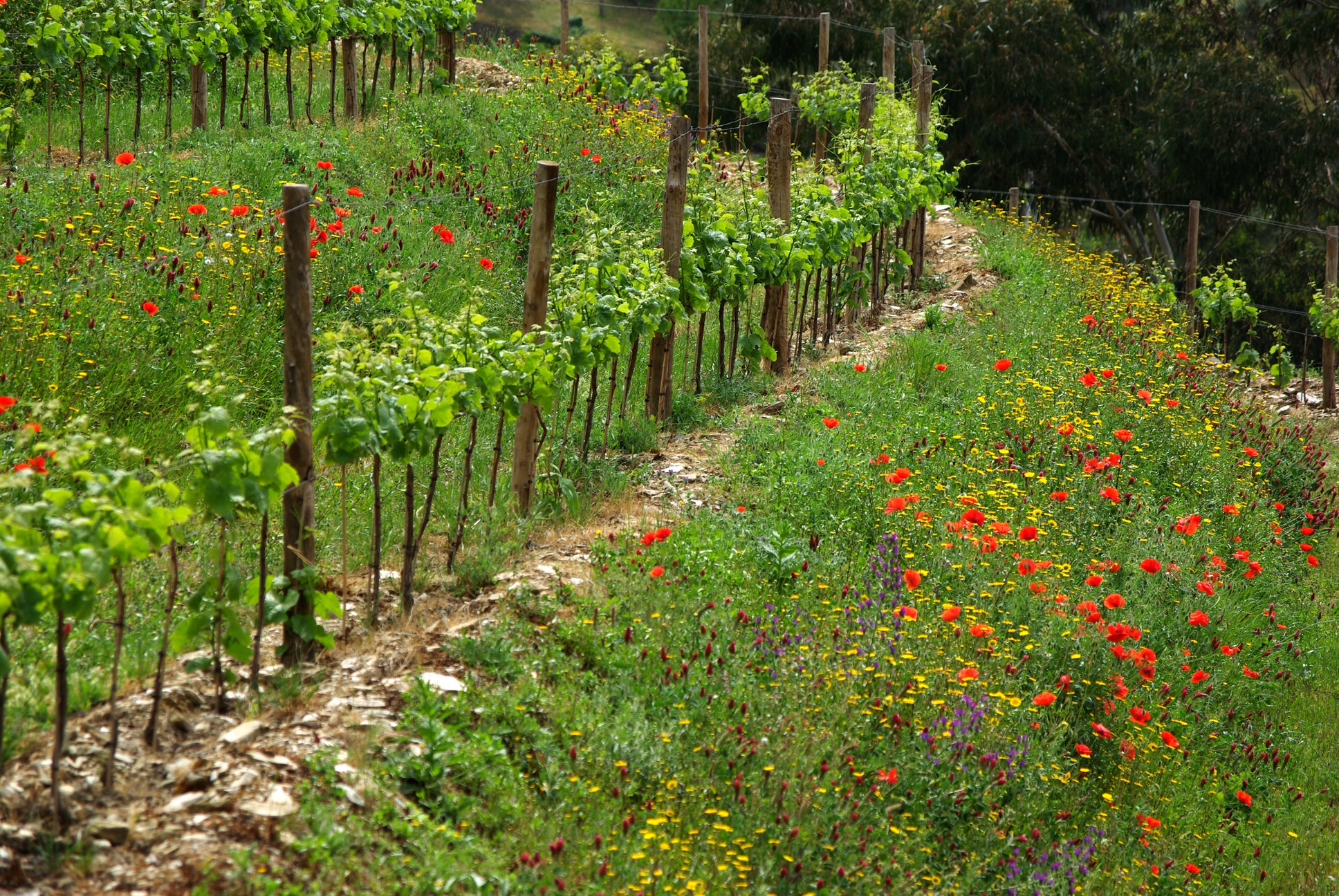
Beyond this strip, weeds play an essential role. Ideally, these herbs are local and in balance, though that balance can be disrupted by herbicide use. Leguminous plants such as fava beans and red clover fix nitrogen in the soil, while other species prevent erosion, support microbial life, and attract beneficial insects—bees for pollination, and predators such as ladybugs and ground beetles that help control aphids, mites, and leafhoppers.
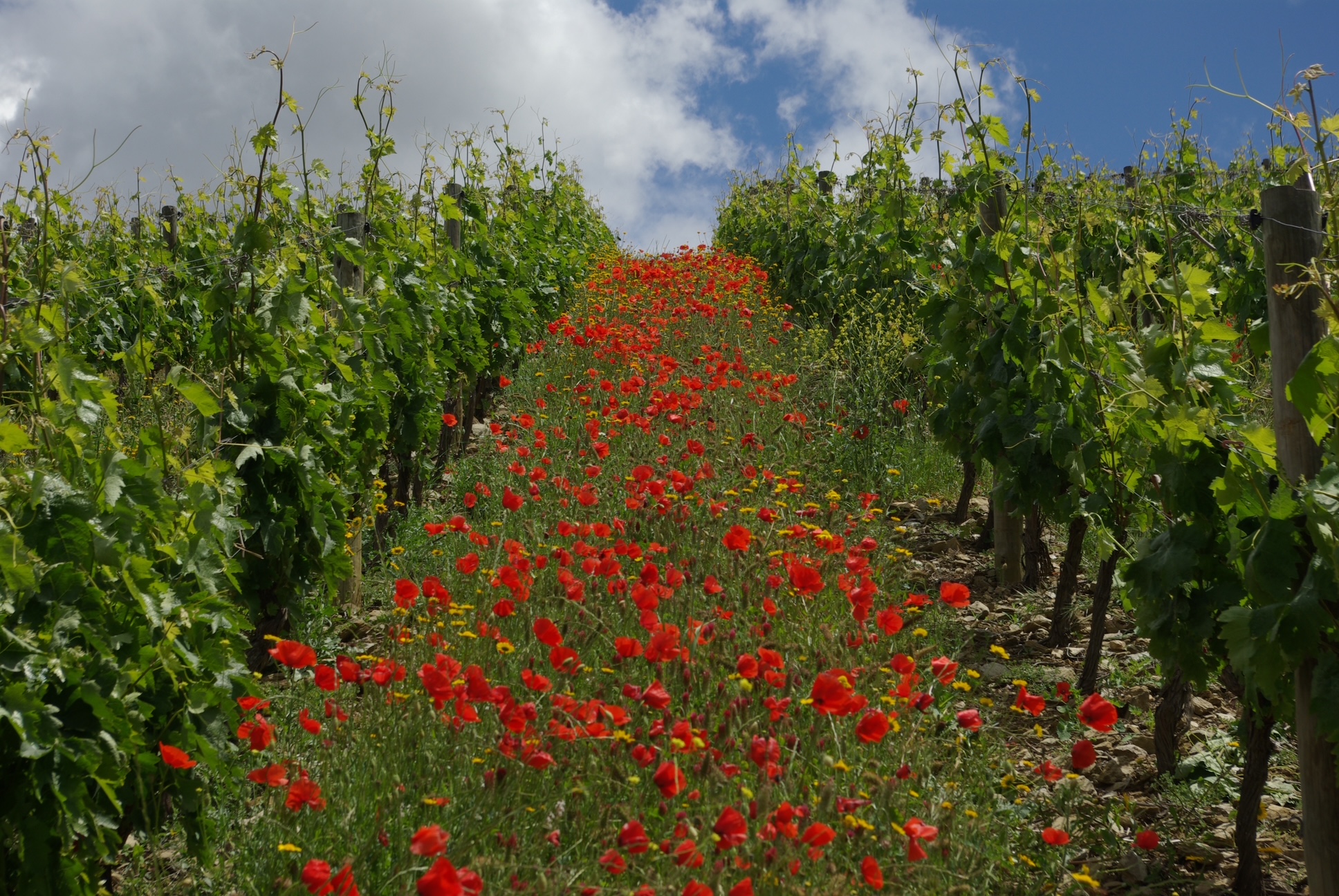
Poppies among Tinta Roriz vines in Quinta de Vargellas
As the season advances, vines must also be protected from disease and pests. Powdery mildew (oidium) is a constant threat and is traditionally controlled with sulfur, a natural treatment used since the nineteenth century and one to which no resistance has developed. Downy mildew poses a growing threat: warmer temperatures have shortened its incubation period, increasing the number of infection cycles and narrowing the window for intervention. Copper is an effective fungicide against downy mildew; when mixed with lime and water as calda bordalesa, it also enhances the vine’s tolerance to drought.
Farmers must also contend with pests such as the cigarrinha-verde (green leafhopper, Empoasca vitis) and the traça-da-uva (grape moth, Lobesia botrana), whose presence varies from year to year. As we move from the Baixo Corgo toward the Douro Superior, grape moths become less common, while the green leafhopper becomes more widespread.
The Ripening Season
The ripening season runs from July to September. Through the long, dry Douro summer, berries develop under harsh conditions: heat waves can halt growth or cause dehydration, and skin-scorching sunlight is so common around St. John’s Day in late June that farmers call it “queima de São João” (St. John’s scorch). The steep schist terraces, magnificent as they are, offer little protection, leaving canopy management—carefully arranged leaves for shade—as the grower’s primary defense.
Veraison begins in July. Farmers say that “the painter has arrived” because grapes change color: reds turn from green to deep violet, whites become translucent and golden. But the stakes are high: if veraison is uneven, some berries ripen too early and others too late, complicating the harvest and compromising balance in the final wine.
Veraison (the painter arrives)
After veraison, the clock starts ticking. With each passing day, grapes lose acidity and gain sugar, and the winemaker’s most consequential decision—when to harvest—comes into focus. The balance between freshness and sweetness must match the style of wine: DOC Douro table wines call for higher acidity, while Port is made by blending grapes naturally rich in acidity, harvested at full ripeness. One reason wine quality has improved over time is better harvest timing; in the past, grapes were often picked on predetermined dates, or when farmers’ children were available to help.
Theory suggests that the Douro’s many varieties ripen at different times; experience teaches otherwise. Despite their differences, they tend to converge on a single moment, as though the valley itself were whispering that the time has come.
Veraison is followed by three blessed weeks: the last week of July and the first two of August. Winemakers take a brief holiday to rest before the most demanding moment of the year: the harvest. Yet even away, the vines never leave their minds. Should the break be cut short? Is it time to return?
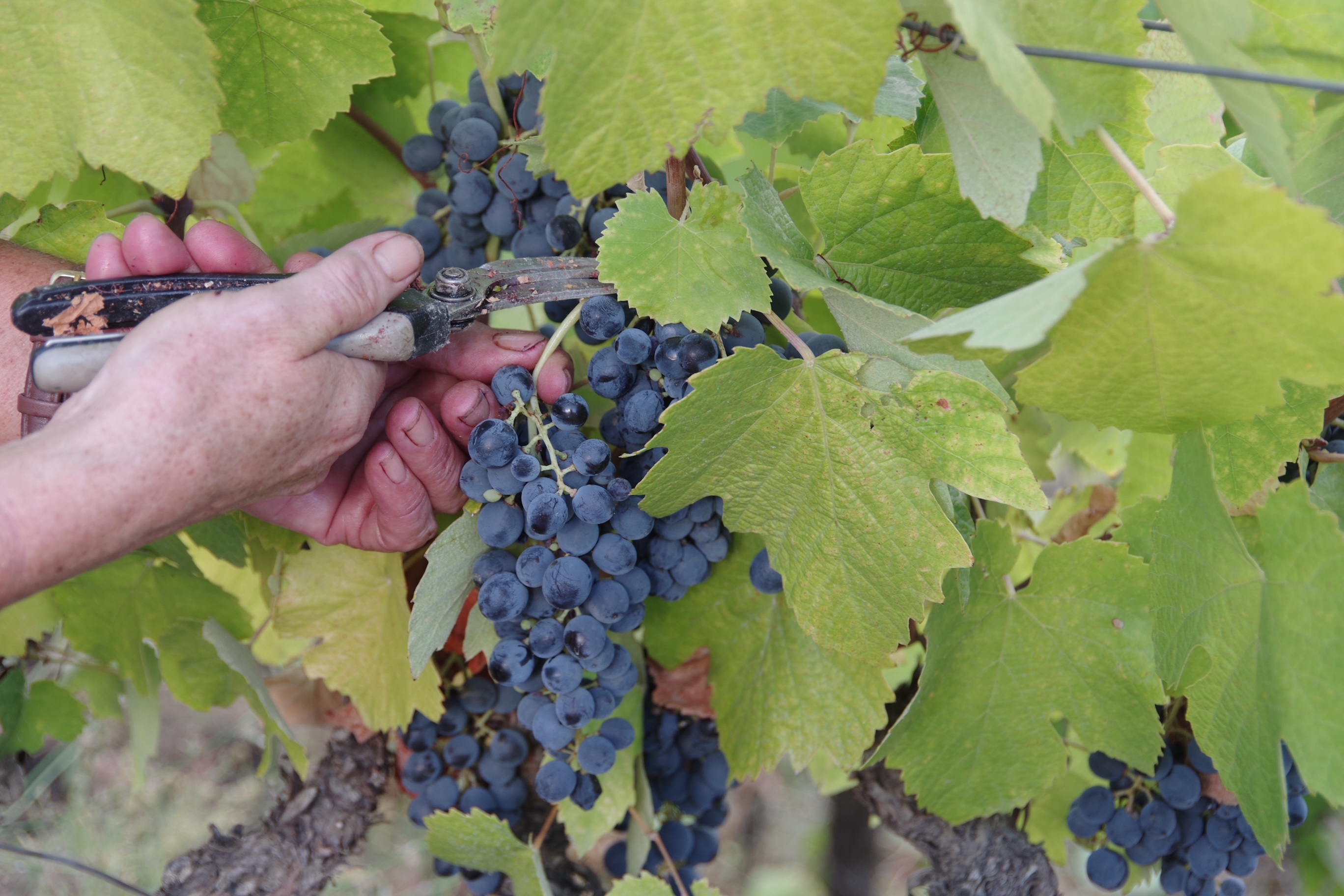
As this pause ends, growers return to their vigil among the vines. Some estates rely on laboratory measurements of sugar, acidity, and pH, but many Douro viticulturists, including those who taught António, trust another guide: intuition honed by daily practice. They walk the vineyards early in the morning, before the heat builds, gently crush a berry between thumb and forefinger, taste, and study the weather forecast. This quiet ritual tells them, often with surprising certainty, when the grapes are ready.
Mid-August is the most beautiful moment of the year. By then, the weeds have turned brown, forming a protective cover over the soil, while the vines take on a bright green hue that will gradually begin to fade.
Vineyard in August
All the work has been done, the harvest crews have not yet arrived, and the vineyards belong solely to the viticulturists. As harvest approaches, some varieties—such as Touriga Nacional and Tinta Roriz—grow dry and ungainly, while others, like Tinto Cão, retain their elegance. In a field blend, some vines wither, and others flourish, yet the ensemble always holds together.
Harvest in the Douro is both exhilarating and nerve-racking. Pick too early and the wine lacks depth; pick too late and it loses structure.
The ideal rainfall for September is modest—around 20 millimeters. A sudden downpour can swell berries, dilute flavors, or invite rot, but a light drizzle of 6 to 10 millimeters just before the harvest can refine the grapes. “How often we long for a gentle rain to settle the dust on the roads and wash the grapes before harvest,” says António.
That longing echoes throughout Douro history. Writing in 1788, John Croft observed that a little rain at harvest “fills the grapes, washes away the dust, and gives them greater freshness.” In 1912, Frank Yeatman of Taylor’s recalled how September thunderstorms at Vargellas saved grapes that summer heat had shriveled, before they gained sufficient sweetness. André Simon, in Port, tells a similar story about the legendary harvest of 1868: after an oppressively hot summer, J. R. Wright of Croft judged the grapes beyond hope, decided not to declare a Vintage year, and left for Porto. A timely, gentle rain proved him wrong, transforming the crop into one of the greatest Vintage Ports ever shipped—declared by every house except Croft.
Older growers say the greatest secret of the harvest lies not in what you pick, but in what you leave behind: quality depends on what you reject. Sorting, whether in the vineyard or at the winery, is an act of discipline. Imperfect clusters are left on the vine; sunburned berries are discarded. Only the healthiest fruit reaches the granite lagares. This simple yet demanding philosophy is one reason the Douro continues to produce some of the world’s most distinctive wines.
The third lecture on the Douro Valley, led by the great viticulturist António Magalhães, focused on grape varietals. He began by reminding us that no grape can be understood in isolation and that, in the hierarchy of terroir elements, climate takes gold, soil silver, and grape varieties only bronze.
Why, then, are wine lovers so obsessed with varietals? The Californian winegrower Robert Mondavi helped transform grapes into celebrities—Cabernet Sauvignon and Chardonnay became the first wine influencers. He taught consumers to treat varietals as if they had fixed personalities—yet the same grape can dazzle in one vineyard and disappoint in another.
The Douro’s Grape Diversity
Italy is famous for its grape diversity, but its varieties are scattered across many regions. The Douro concentrates an extraordinary diversity into a single valley: there are currently 110 grape varieties authorized for Port and Denominação de Origem Controlada (DOC) wines, a rich palette essential for adapting vines to the valley’s wide range of climates and soils.
This grape diversity arose from two pivotal episodes. The 1756 demarcation of the Douro region by the Marquis of Pombal unified the valley’s scattered vineyard “islands,” promoting the circulation of cuttings from the best vines and attracting varieties from elsewhere in Portugal and abroad, now that only the Douro could legally produce Port wine.
A century later, the phylloxera crisis triggered a second wave of diversity. Growers turned to Mourisco Tinto, a grape praised by the Baron of Forrester as “the original port-wine grape, of a Burgundy character, producing a wine free from acidity and full of fine dry flavour.”
Mourisco Tinto, a variety that is relatively resilient to phylloxera, has functionally female flowers that must be fertilized by neighboring varieties. This cross-pollination produced important new grape varieties, such as Tinta da Barca.
Despite its storied past, a 2017 government decree quietly removed Mourisco Tinto from the list of grapes permitted in Douro denomination wines. António mourns the loss of dignity inflicted on a variety that is the mother of so many Douro grapes.
What were the grapes planted in pre-phylloxera vineyards?
Key Varieties Before the Onset of Phylloxera in 1862-63
In 1846, the Baron of Forrester captured the essence of pre-phylloxera Douro red grapes in his trademark telegraphic English: Bastardo was “the sweetest,” Sousão “the deepest colored,” Alvarelhão “a claret grape,” and Touriga “the finest” — a four-word taxonomy of the old Douro.
Touriga Nacional—then simply Touriga, for no rival shared its name—was esteemed for its color and quality, even as it tested growers with its demands. After phylloxera, its cross with Mourisco Tinto produced Touriga Francesa, and the original Touriga acquired a new name, Touriga Nacional.
Tinta Francisca was a pillar of the old wines. For António, this grape is the epitome of elegance—upright in the vineyard, and capable of wines of striking finesse when carefully farmed. Its yields are modest, as if the varietal had taken a vow of Franciscan poverty.
Bastardo appears in nearly every pre-phylloxera inventory. Its early ripening made it irresistible to birds, and its weak performance in hot, dry years tarnished its reputation; after phylloxera, it was largely abandoned.
Francisco Rebello da Fonseca praised Tinto Cão in his renowned Agricultural Memoirs (1790). Exceptionally late-ripening, it “ripens well without drying or rotting” and produces strong, generous wines with remarkable acidity.
Vigorous and resilient, it falters in very cool years but excels in hot, dry ones. Its leaves dry and fall off early, exposing clusters that shrug off the same sun that crucifies other grapes. This resilience makes it one of the Douro varieties best suited to a warming climate.
As with the reds, early records identify the key white grapes. Gouveio was considered noble but finicky, thriving only at the right altitude and soil depth. Viosinho was valued yet scarce. Malvasias (Malmseys) were prized for Port, although growers rarely distinguished among their many subtypes. Rabigato was already admired for its complete profile, and Moscatel contributed its alluring aromas. Arinto do Douro, today known as Dorinto, also appears in early inventories.
Beyond these core grapes lay a multitude of other white varieties—once common, now rare or nearly extinct.
Replanting the Douro: The Grapes of the Post-Phylloxera Era
In the 1940s, Álvaro Moreira da Fonseca, the President of the Board of Casa do Douro (the vine-growers’ association), classified eighty-eight grape varieties—fifty-one red and thirty-seven white—into five categories ranging from very good to bad.
In winemaking, as in chamber music, the quartet is a natural ensemble. The four grapes that have long formed the backbone of Ports and DOC Douro reds—Touriga Nacional, Touriga Francesa (also known as Touriga Franca), Tinta Roriz, and Tinta Barroca—play together with the balance and tension of a seasoned string quartet. Each contributes a distinct voice; together, they create harmony.
Touriga Nacional
Touriga Nacional has been the Douro’s first violin for more than two centuries. Nineteenth-century grapevine botanists praise its thick-skinned berries, velvety wines, and remarkable balance, placing it among Portugal’s noblest grapes and worthy of comparison with the world’s best varieties. Yet after phylloxera, Touriga Nacional fell out of favor: it was laborious to train, produced too many small clusters, and exhausted growers’ patience. Its less demanding descendants—Touriga Francesa, Tinta Barroca, and Tinta da Barca—took center stage. Only in the 1970s and 1980s, when Port shippers became large-scale viticulturists, did Touriga Nacional regain its pre-phylloxera prestige, becoming a cornerstone of both Port and Douro DOC wines.
Touriga Francesa, today the Douro’s most widely planted grape, is the quartet’s second violin. A cross of Mourisco Tinto and Touriga Nacional, its name likely an homage to the French hybridization school that may have helped create it.
In the vineyard, it performs with admirable consistency: productive, reliable, and notably resistant to powdery mildew, downy mildew, and heat. It thrives across a wider range of soils than Touriga Nacional and performs just as gracefully in the cellar, yielding deeply colored, aromatic wines with soft tannins and long life. Its only caprice is timing: the harvest window is narrow, and the vines offer few clues when the fruit reaches its peak.
But no variety is perfect. In 1989, António discovered that Touriga Francesa is unusually hospitable toLobesia botrana (grape moth), especially when planted outside of a field blend.
Tinta Roriz, the Douro’s second most planted red variety, is the viola of the region. Its personality is complex—vigorous yet disease-prone, early-ripening, and very sensitive to its site. In the right place, it delivers depth, firm tannins, and remarkable aging potential. It is indispensable in Port and ubiquitous in old field blends. But when planted in unsuitable locations or grafted onto overly vigorous rootstocks, it yields disappointing results. For this reason, it does not always receive the appreciation it deserves from Douro winemakers.
Tinta Barroca, another cross of Mourisco Tinto and Touriga Nacional, may be identical to the pre-phylloxera Boca de Mina praised by Forrester as “the most delicious.” In musical terms, it is the cello—naturally sweet with a supple texture. Early-ripening with high color and low tannins, it excels on cooler or north-facing slopes where its sugars stay in balance. Its vigor and sprawling shoots complicate canopy management, and Downy mildew can trouble it, though oidium rarely does.
But in the Douro, a quartet rarely suffices. Most winemakers rely on six or more varietals. Supporting grapes like Tinta Amarela, Tinto Cão, Tinta Francisca, and Tinta da Barca—along with others like Rufete, Malvasia Preta, Sousão, and Cornifesto—add color, acidity, perfume, structure, and nuance. Together they create the fuller orchestra needed to reveal the Douro’s symphonic splendor.
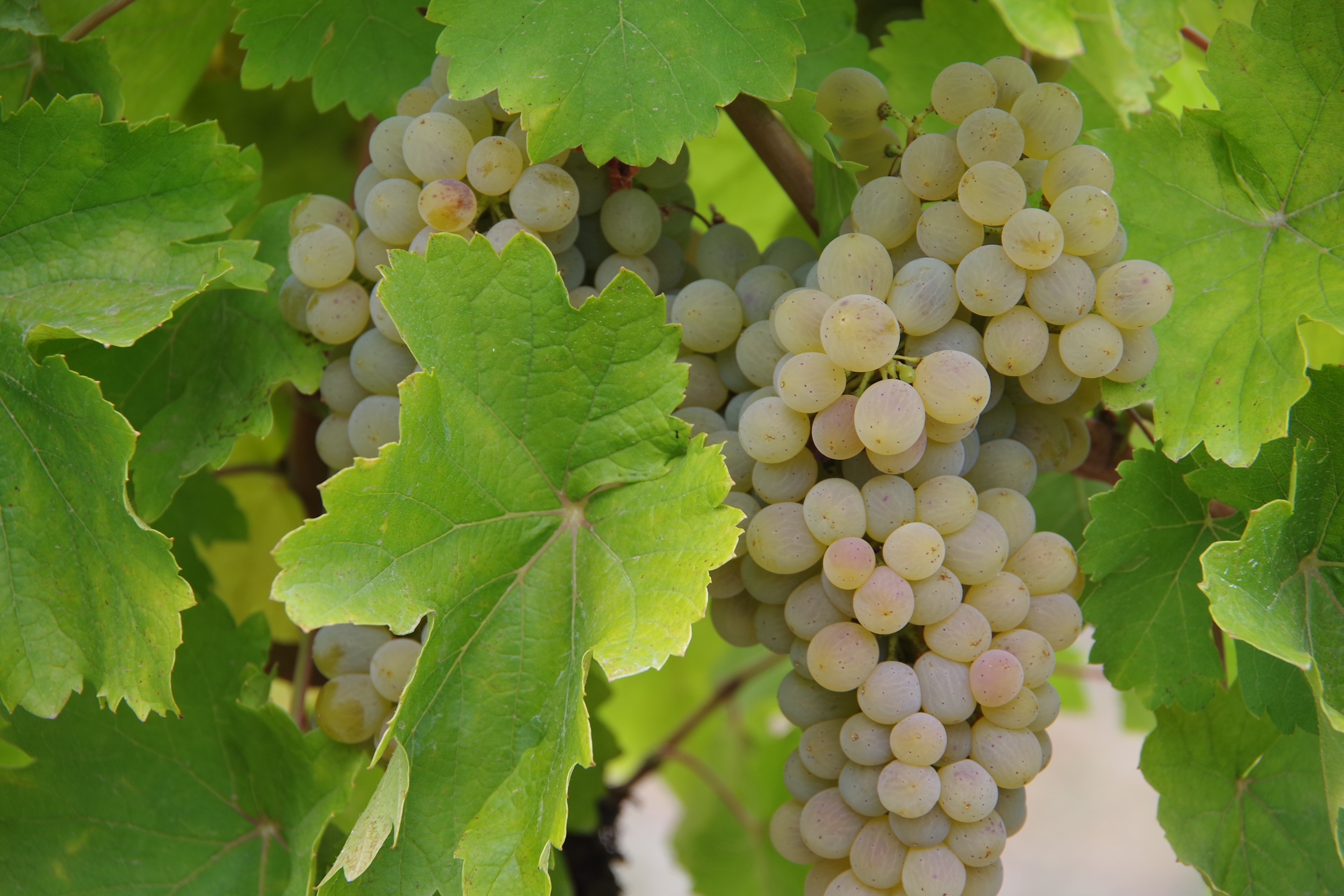
As with the red varieties, each white grape carries a distinct personality shaped by altitude, exposure, and soil. Viosinho is a Douro ex-libris—elegant, early-ripening, with golden berries that glow on sun-exposed parcels. It brings citrus-floral lift and finesse to both dry whites and the finest white Ports, though it requires vigilance against powdery mildew.
Viozinho
Traditionally more tied to Port production than to dry Douro whites, Malvasia Fina ripens early and easily reaches raisin stage, making altitude and cooler sites its natural allies. In shallow soils it struggles, and in deep soils it becomes overly vigorous, shading bunches and encouraging powdery mildew. When well grown, it contributes fragrance, texture, and a touch of richness to blends.
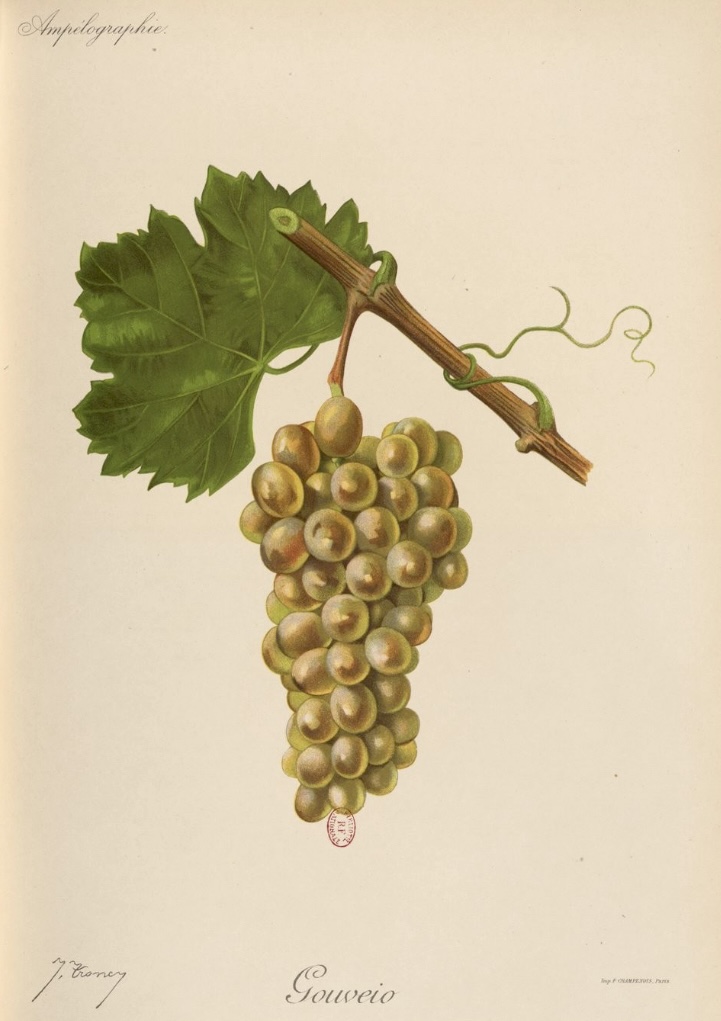
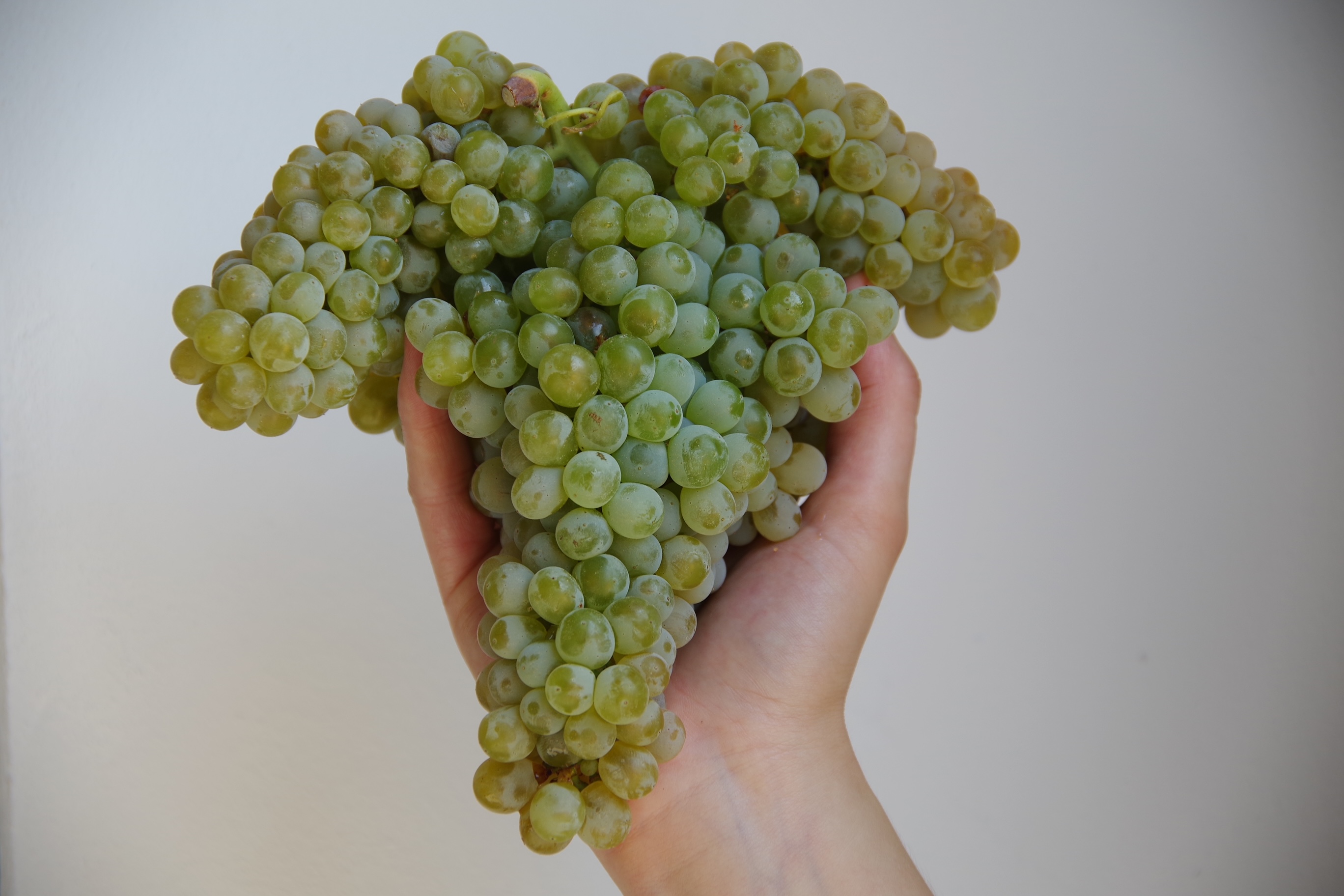
Gouveio is an ancient Douro variety discussed in Rui Fernandes’ 1531 survey of the Lamego region. It is low-yielding and delicate; its thin skins make it vulnerable to sunburn and powdery mildew, so it requires sheltered sites. It produces firm, well-structured wines with good alcohol and remains essential to both Port and high-quality Douro table whites.
Rabigato has long been recognized as an elite white grape, praised for its noble character and distinctive, highly valued flavor. It ripens late, and although its thick skins once suggested resistance to rot, plantings in monovarietal parcels have shown that it is, in fact, highly susceptible to downy mildew. Despite this fragility, its rise in the Douro has been meteoric, excelling both as a single-varietal and as a vital contributor to blends.
Another white grape moving beyond old field blends into solo bottlings, Códega do Larinho stands out for the complexity of its fruity aroma. In blends, it adds character and perfume, though it sometimes relies on companions to supply the acidity it can lack. Its charm lies in its exuberance and adaptability.
Arinto
Arinto’s star keeps rising thanks to its late ripening, naturally high acidity, and impressive heat resistance. In the Douro, it is traditionally used in blends—completing the classic trio of Malvasia Fina, Viosinho, and Gouveio. It provides freshness, tension, and backbone in a region where heat is always a challenge. Dourinto, the indigenous Arinto, has fallen out of favor compared to the Arinto from Bucellas, near Lisbon, but it still lingers in many vineyards, waiting to be rediscovered.
Moscatel Galego Branco found its spiritual home in Favaios and Alijó, where it gives life to the Douro’s fortified Moscatel wines, making the Douro the only wine region to craft two fortified wines—Port and Moscatel. Throughout the valley, winemakers draw on Moscatel Galego Branco’s unmistakable floral aromatics to enrich a wide range of blends. It remains one of the Douro’s most expressive and recognizable white varieties.
For white grapes, the core ensemble is led by Viosinho, Gouveio, and Rabigato. Malvasia Fina completes the quartet for Port production, while Códega de Larinho takes the fourth chair for DOC Douro wines. Yet, as with the reds, most producers favor a fuller quintet—drawing on all these varieties, or a sextet that adds Arinto to achieve greater balance, nuance, and harmony.
Massal versus Clonal Selection
Knowing the varieties is only the beginning; equally important is how vines are propagated. The choice between massal and clonal selection shapes diversity, disease resistance, and wine style.
António argues that massal selection should take precedence over clonal selection. Clonal selection multiplies a single vine, ensuring uniformity but narrowing genetic diversity and increasing vulnerability to disease.
Massal selection is like saving seeds from your best heirloom tomatoes. It preserves natural diversity within a variety—differences in ripening, acidity, and disease tolerance—and honors the personality of a site. António notes that identical DNA does not guarantee identical behavior in the vineyard or in the cellar. Tinta Roriz may share its genetic code with Aragonês and Tempranillo, but centuries in Douro soils have shaped it into something distinct. The same is true of Souzão and Vinhão.
António admires Italy’s guardians of grape varieties—people who preserve living collections of rare grapes. The Douro, with its extraordinary diversity, needs similar guardians.
Soloists
Once vines are in the ground, winemakers must decide how to use their fruit. And much as in an orchestra where only a few instruments can captivate an audience when playing unaccompanied, only a handful of Douro grapes can enthrall wine lovers as soloists.
Touriga Nacional is the clearest example, capable of depth, elegance, and longevity, although it is often too exuberant for Port unless blended. Tinto Cão is another–superb when planted in hot, western-facing slopes. Among the whites, Rabigato and Gouveio are steadily earning soloist status.
Most varieties, however, play supporting roles: Barroca brings sweetness and color, Sousão deepens the hue, Rufete contributes delicacy, and Malvasia Preta or Cornifesto add nuance and acidity.
There are, of course, exceptions. In Ravel’s Boléro, the bassoon unexpectedly rises to lead the melody. Similarly, in the Douro, a modest grape can sometimes make a vineyard sing. In the original vines at Quinta da Réduída, in Folgosa do Douro (Cima Corgo), Malvasia Preta—considered merely “good” by Álvaro Moreira da Fonseca–comprises forty percent of the field blend and yields a superb wine.
Tinta Barca and Tinto Cão
The Douro’s Four Blends
Single-varietal wines are an intriguing new trend, but the Douro’s character is best expressed in the way winemakers bring grapes together to create blends of remarkable harmony and depth. They blend varieties in the vineyard, combine them in the granite lagares during fermentation, and later assemble wines from different plots—and, in the case of Tawny Ports, even from different vintages.
The Magic of Field Blends
António says a winery needs a core palette of about a dozen varietals, though having twenty or thirty across white and red grapes is even better. The Douro’s Mediterranean climate, with its year-to-year weather fluctuations, gives each vintage its own triumphs and trials: some grapes flourish while others struggle. Planting many varieties together helps obtain reliable results even when varieties ripen at the wrong time, and when the weather affects the various stages of the vine’s life cycle, from budbreak to harvest.
Old field blends mix red and white grapes, major and obscure varieties—a randomness that demands care at harvest time but preserves priceless genetic diversity.
After 1970, field blends were modernized. Today’s approach preserves diversity across varieties, while massal selection safeguards diversity within each variety. Viticulturists fine-tune the choice of grapes to the vineyard’s location, soil structure—especially soil depth—and to microclimates shaped by topography, altitude, and solar exposure. Each vineyard thus becomes an irreproducible mosaic of grape varieties.
During harvest, the blend can be refined by adjusting how much of each variety is picked, by advancing or delaying the picking of certain grapes, and by bringing fruit from early- or late-ripening parcels together with grapes from other vineyards to create a more harmonious whole.
When designing a field blend, viticulturists also value the vineyard’s beauty. In choosing which varieties to plant, they imagine not only the wine they will yield but also how the leaves will glow green in spring and burnish into a tapestry of yellow and red hues, allowing the Douro to reinvent its beauty in every season.
Co-Fermentation in the Lagar
In 1790, Francisco Rebello da Fonseca discussed the essential principles of field blending and co-fermentation. He observed that wines best suited to aging and long sea voyages required an austere, astringent profile with a firm vinous bite—a character achieved by combining less-sweet, slightly acidic grapes with sweeter ones.
Rebello da Fonseca criticized the growing trend of fermenting each variety separately rather than co-fermenting grapes that complement each other. Indeed, in the lagares–the granite tanks used for grape fermentation–co-fermentation often yields results unattainable through separate vinifications. Tinta Barroca, for example, gains structure when fermented alongside a tannic partner such as Touriga Francesa. Such fermentations create interactions—between tannins, pigments, and aromatics—that cannot be replicated by blending finished wines.
Blending Across the Hillsides
Enologists blend grapes that originate from different plots. Grapes from higher plots bring acidity and freshness; those from lower sites contribute alcohol, tannins, and color. Together they form balanced, expressive wines.
To produce ruby ports in general, and vintage ports in particular, master blenders combine wines from different plots and, sometimes, from different estates.
This practice is not unique to Port. Some table wines also draw on fruit from multiple estates. The famous Barca Velha, the table wine first produced by Fernando Nicolau de Almeida in 1952, was a blend of grapes from Quinta do Vale Meão in the hot Douro Superior and from higher-altitude vineyards in Meda.
Blending Through Time: Tawny and Crusted Ports
In Tawny Ports, different vintages are blended in the same bottle, each carrying the imprint of its own harvest and years in wood. Older wines offer depth and wisdom, and younger ones brightness and energy, resulting in a symphony of flavors and aromas.
When Port was shipped in barrels, British merchants would blend wines from more than one Vintage, age them in large wooden vats, and bottle them unfiltered. These “Crusted Ports” took their name from the natural crust or sediment that formed in the bottle. Today, only a few houses, such as Fonseca, preserve this traditional style.
Coda
With each passing year, the art of blending preserves the Douro’s identity—a landscape defined by diversity and adaptation, and by the harmony created by climate, soil, and vineyards that produce extraordinary wines.
When wine lovers ask which places they must visit in Portugal, we always recommend Bairrada—a name worth remembering, for it belongs to one of the country’s most captivating wine regions.
Famous Grapes
Bairrada’s soils are a mixture of clay and limestone with streaks of sand. The region is the birthplace of two exceptional grapes: the red Baga and the white Bical. Baga thrives in clay-limestone, while Bical flourishes in both clay-limestone and sandy soils.
The Sparkling Capital of Portugal
Bairrada is Portugal’s sparkling-wine capital. The clay-limestone soils echo the chalk of Champagne, storing moisture during dry spells and reflecting sunlight, allowing grapes to ripen slowly while retaining vibrant acidity and minerality. Cool Atlantic breezes and morning fog temper the summer heat and lengthen the maturation process, giving the fruit extra complexity. The region has been crafting traditional-method sparkling wines since 1890, and they’re now an integral part of daily life. Many meals start and finish with a glass of bubbles, transforming even simple dinners into a celebration.
Where to Stay
We like to make the Vista Alegre Hotel in Ílhavo our base. Built on the marshes of the ria, where saltwater and freshwater meet, the hotel surrounds the 19th-century manor house of the family who discovered the secret of porcelain in 1824.
The hotel’s shops overflow with graceful Vista Alegre porcelain and exuberant mid-20th-century designs by Rafael Bordallo Pinheiro. Feeling inspired? Join a porcelain-painting class and bring home your own creation.
Wine tasting
Luís Pato
Our first stop is usually the winery of the legendary Luís Pato. In the 1990s, when foreign consultants urged Portuguese farmers to replace native grapes with French varietals, he stood firm in Baga’s defense. Time has vindicated him: today his Baga wines rank among Portugal’s most prized, and his unwavering commitment has earned him the nickname “Mr. Baga.”
Luís’ energy and creativity know no bounds. His Vinha Pã Baga blanc-de-noir sparkling wine, uses hyperoxidation rather than sulfur dioxide during must clarification. The result is a wine with fine, persistent bubbles, featuring aromas of wild berries and toasted brioche, and an elegant finish.
Every year, Luís bottles 300 precious bottles of Espumante Pé Franco. It is a sparkling wine made with grapes from century-old vines rooted in sandy soils that shielded them from the phylloxera plague that swept Europe in the 19th century. These ungrafted plants produce a tenth of the yield of a modern vineyard. But the wine is extraordinary—bursting with intensity and lingering beautifully on the palate.
Luis and his daughter, Maria João, are great hosts; gather a group of friends, and they can arrange a feast with leitão (roast piglet), perfectly paired with a dazzling tasting of their wines.
Filipa Pato & William Wouters
Luís’s other daughter, Filipa Pato, and her husband, master sommelier William Wouters, farm biodynamically with stunning results. Often dressed in their playful “Baga terroirista” t-shirts, they are passionate advocates for Bairrada’s land. Their small winery isn’t set up for visits (even members of Coldplay once struggled to arrange a tasting), but their wines are easy to find in local restaurants and well worth seeking out. Highlights include Nossa Solera, a sparkling wine made from a blend of barrel-aged base vintages going back to 2001, and Nossa Missão, an exquisitely complex Baga from a small vineyard planted in 1864, produced with gentle extraction, resulting in an elegant wine that preserves the grape’s aromatic depth.
Mário Sérgio
Another icon is Mário Sérgio, who proudly calls himself a vigneron—a winemaker who only makes wines with the grapes he cultivates. Every Saturday, he and his son Frederico welcome visitors to his cellars, pouring sparkling and still wines made with joyous finesse. His celebrated Pai Abel honors his father; both the red and the white are wonderful to drink young yet reward patience, gaining even greater depth and nuance with age.
Caves São João
At Caves São João, the genial Célia Alves leads tastings in cellars that date back to 1920, where venerable still and sparkling wines astonish with their refined character and vigor.
Many of these producers, along with others, come together each year for Baga Friends, a joyful celebration of the grape and a perfect opportunity to meet them all in one place.
Where to Eat
For a regal lunch, head to the Bussaco Palace. Built in the waning days of Portugal’s monarchy, the building, surrounded by a lush forest, was once a royal hunting retreat. The British mystery writer Agatha Christie enjoyed vacationing here. Chef Nelson Marques brings the grand dining room to life with elegant dishes crafted from the finest local ingredients, creating a memorable dining experience.
The palace is renowned for producing wines with exceptional aging potential. Its legendary cellar holds vintages dating back to the early 1900s. Winemaker António Rocha continues this tradition. He recently unveiled the palace’s first sparkling wine—a sumptuous cuvée whose brioche-scented bouquet captivates the nose while the palate delights in luxurious creaminess and vibrant freshness.
No visit to Bairrada is complete without tasting leitão assado (roasted piglet). Mugasa is a perfect place to try this delicacy and a favorite lunch spot for local winemakers.
Beyond the Vineyards
Stroll along Costa Nova, famous for its candy-striped fishermen’s houses and sweeping views of the ria. Walk the wooden promenade by the beach and savor a caldeirada (fish stew) at Clube da Vela, where the river views are as memorable as the meal.
Another local delicacy, prized since Roman times, is eel. Try the fried eels or eel stew at Marinhas in Aveiro. And don’t leave without sampling the region’s signature sweets: ovos moles, a silky egg confection, and crisp wafer-like hóstias.
The Future of Bairrada
While Champagne grapples with warming temperatures—so much so that some producers are buying vineyards in England—Bairrada is protected by the cool breeze of the Atlantic Ocean. It is a region with passionate wine makers, a unique terroir, and a brilliant future.
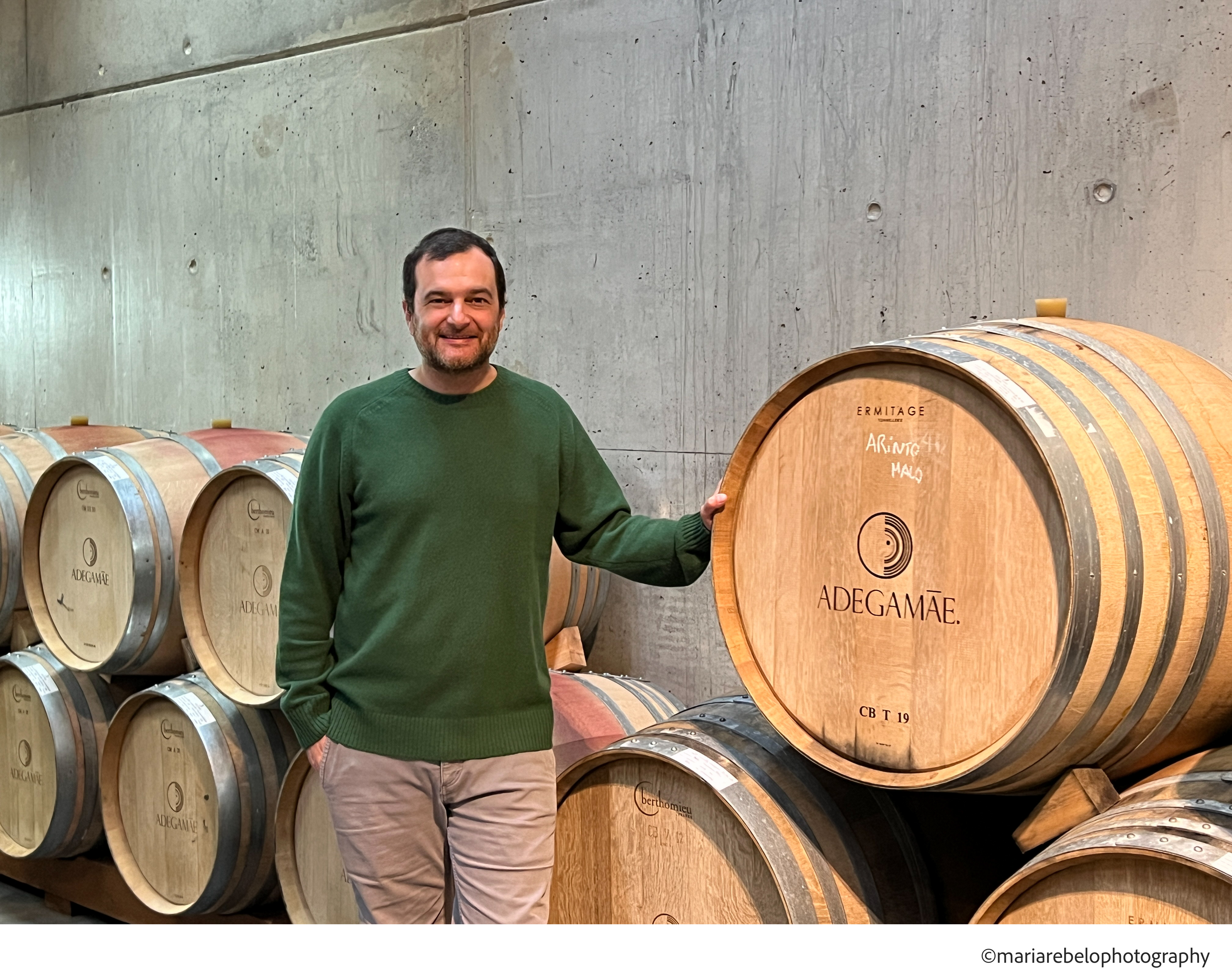
In 2023, Grandes Escolhas, a leading wine magazine, named Diogo Lopes “Enologist of the Year.” The seeds of this recognition were planted in his childhood. While most of his friends spent their summers by the sea, Diogo stayed on his grandfather’s farm in the mountains of Covilhã. A passionate vintner, his grandfather produced 2,000 liters of wine each year—enough to enjoy with family and share with friends. The experience of harvesting grapes left a lasting impression on young Diogo.
Though he studied at the Military Academy with the intention of becoming a naval officer, the pull of the land proved stronger than the lure of the sea. He transferred to the School of Agriculture, where two encounters shaped his future: one with the legendary enology professor Virgílio Loureiro, and the other with celebrated winemaker Anselmo Mendes. In 2001, Mendes invited Diogo to join one of his harvests. Their collaboration has endured ever since. “Anselmo is my enological father,” Diogo says.
The best place to experience Diogo’s wines is Sal na Adega, a restaurant that treats codfish with the reverence it deserves. It is located next to Adega Mãe, the winery where Diogo crafts his wines.
The clay- and limestone-rich soils of Torres Vedras are ideal for sparkling wines. A striking example is Adega Mãe’s Pinot Noir espumante, which is aged for 45 months. It has a beguiling copper hue and an invigorating freshness. We could not imagine a more brilliant companion until Diogo opened an arresting Brut Nature made from Arinto and Chardonnay. In France, Chardonnay is traditionally paired with Pinot Noir, but here, it has found a dazzling new partner in Portugal’s Arinto. The chemistry between these two grapes is extraordinary. Crisp codfish cakes arrived, perfectly complementing the elegance of both sparkling wines.
Next, Diogo poured a glass of Vital, made from grapes grown in the Montejunto mountains, just eight kilometers from the sea. The terroir, rich in limestone, lends the wine subtle iodine notes and remarkable complexity. It was a perfect match for codfish Brás style, a comforting blend of shredded cod, fried potatoes, and eggs, prepared tableside.
The culinary climax came with the restaurant’s signature dish: codfish cachaço (collar). Diogo paired it with the 2017 Terroir Branco, a masterful blend of Arinto and Viosinho, a Douro varietal that has flourished in this coastal terroir. Made without haste, like in the old days, it is a wine Diogo’s grandfather would surely have cherished.
The meal concluded with a remarkable surprise: a late-harvest made from Sémillon and Petit Manseng. It was dessert in a glass, with notes of orange and fig that enchanted the palate.
If you’re looking for a memorable gastronomic journey, make your way to Sal na Adega. There, you’ll find not only superb codfish dishes but also the exceptional wines of a star winemaker whose journey from childhood harvests to national acclaim is worth celebrating.
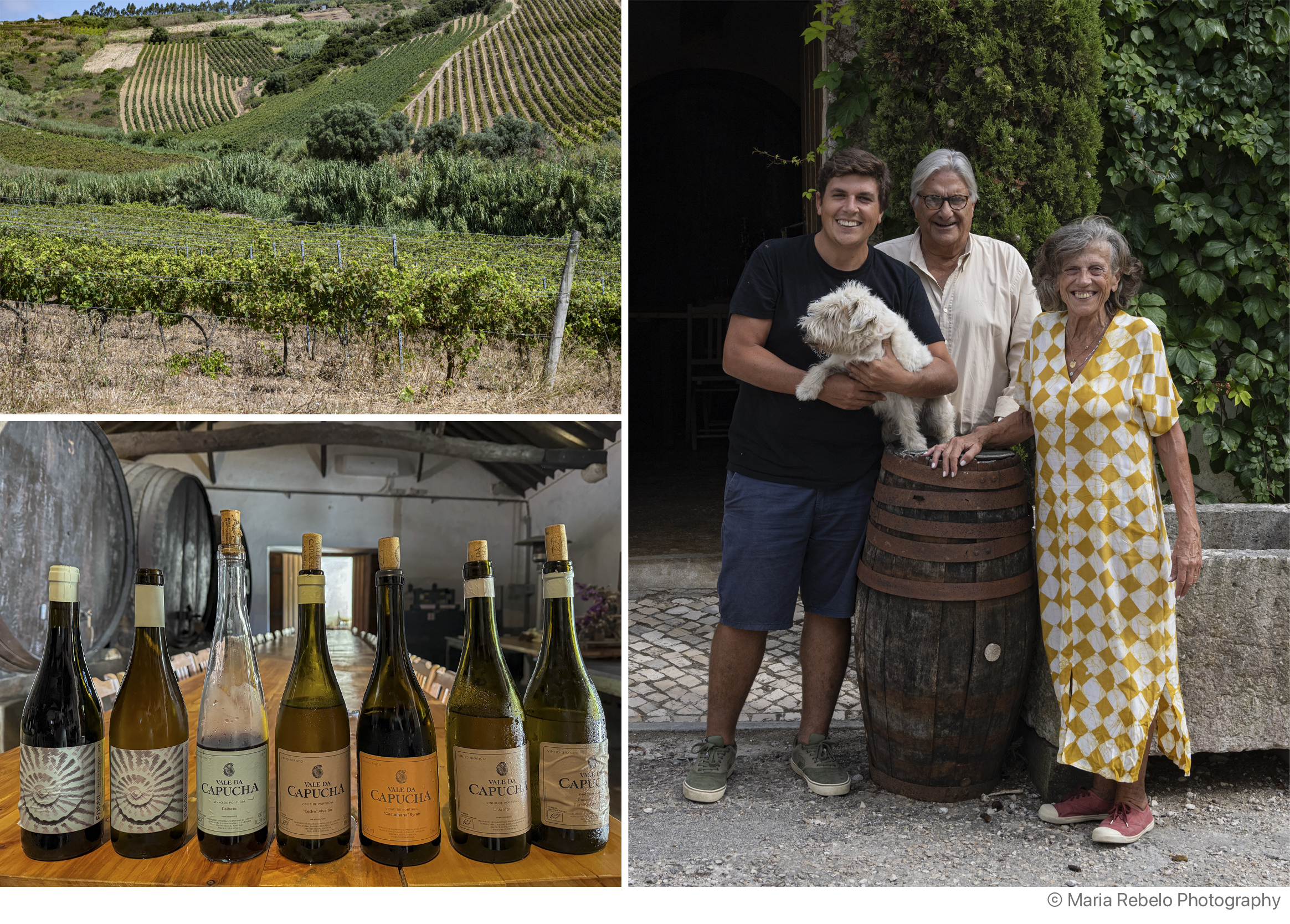
As we arrived at Vale da Capucha, a wine estate in Torres Vedras near Lisbon, a small, cute dog ran up to greet us. “His name is Arinto,” Manuel Marques said as he walked towards us, “all of our dogs are named after grape varieties.”
For the Marques family, producing great wine was never a choice–it was their destiny. Manuel’s great-grandfather was a winemaker, and his grandfather acquired Vale da Capucha to expand the family’s wine production. The estate was famous because it belonged to António Batalha Reis, the first director of the Torres Vedras School of Viticulture. This school taught local farmers how to graft vines onto American rootstock, protecting them from phylloxera, the disease that devastated European vineyards in the late 19th century.
Manuel’s grandfather raised his family on this farm. When he passed away, Teresa, Manuel’s mother, inherited the house and some of the land. She and Afonso, her husband, had busy lives in Lisbon, so they were unsure what to do with the property. But in 2005, the couple came for a weekend and fell in love with country life. They never returned to Lisbon, embracing their new chapter in rural Portugal.
Pedro, Manuel’s brother, had studied enology and saw immense potential in the farm’s terroir for producing high-quality white wines with significant aging potential. The estate’s proximity to the ocean fosters a cool climate, which preserves the acidity in the grapes. At the same time, the limestone-rich soil, packed with 400-million-year-old fossils, lends minerality and complexity to the wines. Manuel joined the venture as the commercial director, and a new era for Vale da Capucha began.
In 2006, the family replanted the vineyards with carefully selected white grape varieties: Fernão Pires, widely grown in the Lisbon region, and Arinto from nearby Bucelas. They also introduced Antão Vaz from Alentejo, as well as Gouveio and Viosinho from the Douro Valley. At Vale da Capucha, these grape varieties developed a distinctive profile, gaining salinity and freshness.
The family made their first wine in 2009 and released it in 2011. Another significant milestone came in 2012, when they embraced biological agriculture to fully express the land’s natural character. Today, Vale da Capucha produces around 60,000 bottles annually. They rely exclusively on wild yeast for fermentation, handpick all their grapes, and practice minimal enological intervention, allowing the wine to reveal the essence of the terroir and tell the story of each vintage.
As we walked through the farm, we saw many animals. The farm raises Alcobaça-spotted pigs, turkeys, and Bresse chickens—Paul Bocuse’s favorite breed–to supply the kitchen with wonderful organic meats.
Manuel invited us to the wine cellar to taste some wines surrounded by old barrels that testify to the estate’s rich history. We started with a 2018 blend of Arinto and Fernão Pires, which impressed us with its stunning color, freshness, and vibrant character. Then, we sampled the 2019 Arinto made from a blend of three different parcels. It has elegant citrus notes, intense minerality, and salinity. These are wines that will age gracefully, becoming more complex and refined with time.
Next, we tasted an interesting Alvarão, a playful twist on Alvarinho, a grape from the Vinho Verde region. A 2019 Fossil “palhete” followed. This wine, made with 80 percent white grapes (Arinto) and 20 percent red grapes (mostly Castelão), is what people used to drink in this region one century ago. Despite its red hue, the wine drank like a white, bursting with freshness. To finish, we sampled a 2014 Syrah—light, earthy, and with only 13 degrees of alcohol–a singular expression of this variety.
The influence of the Atlantic Ocean, with its waves crashing just eight kilometers from the vineyards, gives these wines a distinct character. No wonder they captured the attention of sommeliers and wine enthusiasts searching for something exceptional.
Lunch with Manuel, Afonso, and Teresa in the dining room of the manor house was a gastronomic feast. We were treated to delicious vegetables served with local cheese and country bread, followed by a magnificent roasted lamb and rice made from the animal’s giblets. The 2019 Arinto was the perfect lunch companion, its bright acidity enhancing the flavors of the food.
It was an unforgettable visit to Vale da Capucha, a place where winemaking traditions, organic farming, and a refined understanding of winemaking come together to produce outstanding wines.
Once a month, Vale da Capucha hosts a lunch featuring cozido, a traditional Portuguese stew, paired with their wines. It’s a word-of-mouth event eagerly awaited by those in the know. Occasionally, they announce it on their Instagram page. If you see the posting, don’t miss the opportunity to meet this remarkable family and taste wines that are bringing international acclaim to the Torres Vedras region.









 Salt of Portugal