
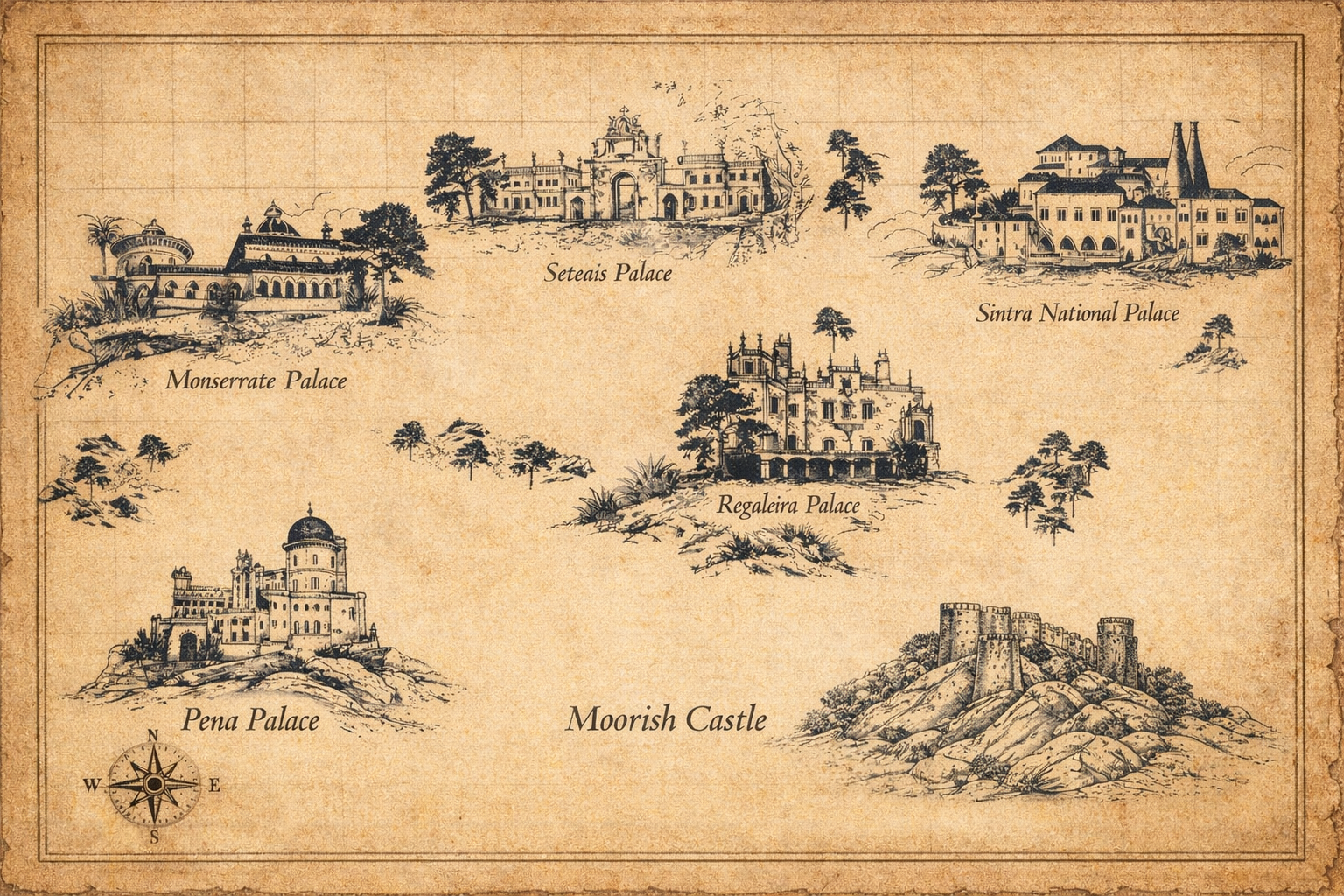
If you only have one day to venture outside Lisbon, spend it in Sintra. The town lies just 28 km away and is easily reached by car or by train from Rossio Station.
We love Sintra most on foggy days, when humid Atlantic air climbs the slopes of the Serra de Sintra, cooling as it rises until its vapor condenses into mist. You can walk along the ramparts of the Moorish castle as if you had slipped back to the eighth century, with no trace of the modern world on the horizon.
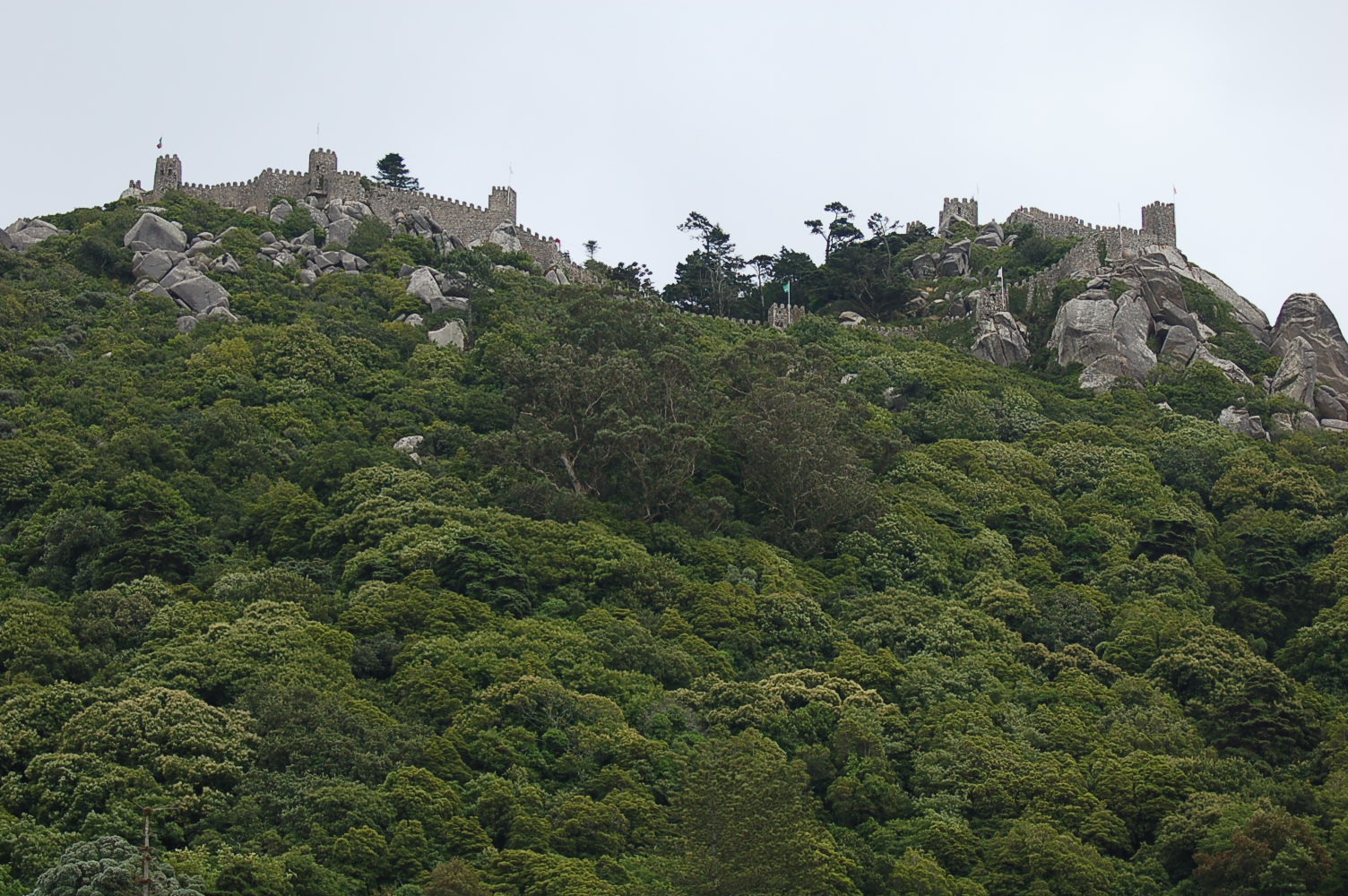
Climb the short kilometer that separates the castle from the Pena Palace, and you travel through eleven centuries, arriving in a setting worthy of a nineteenth-century fairy tale.
First day
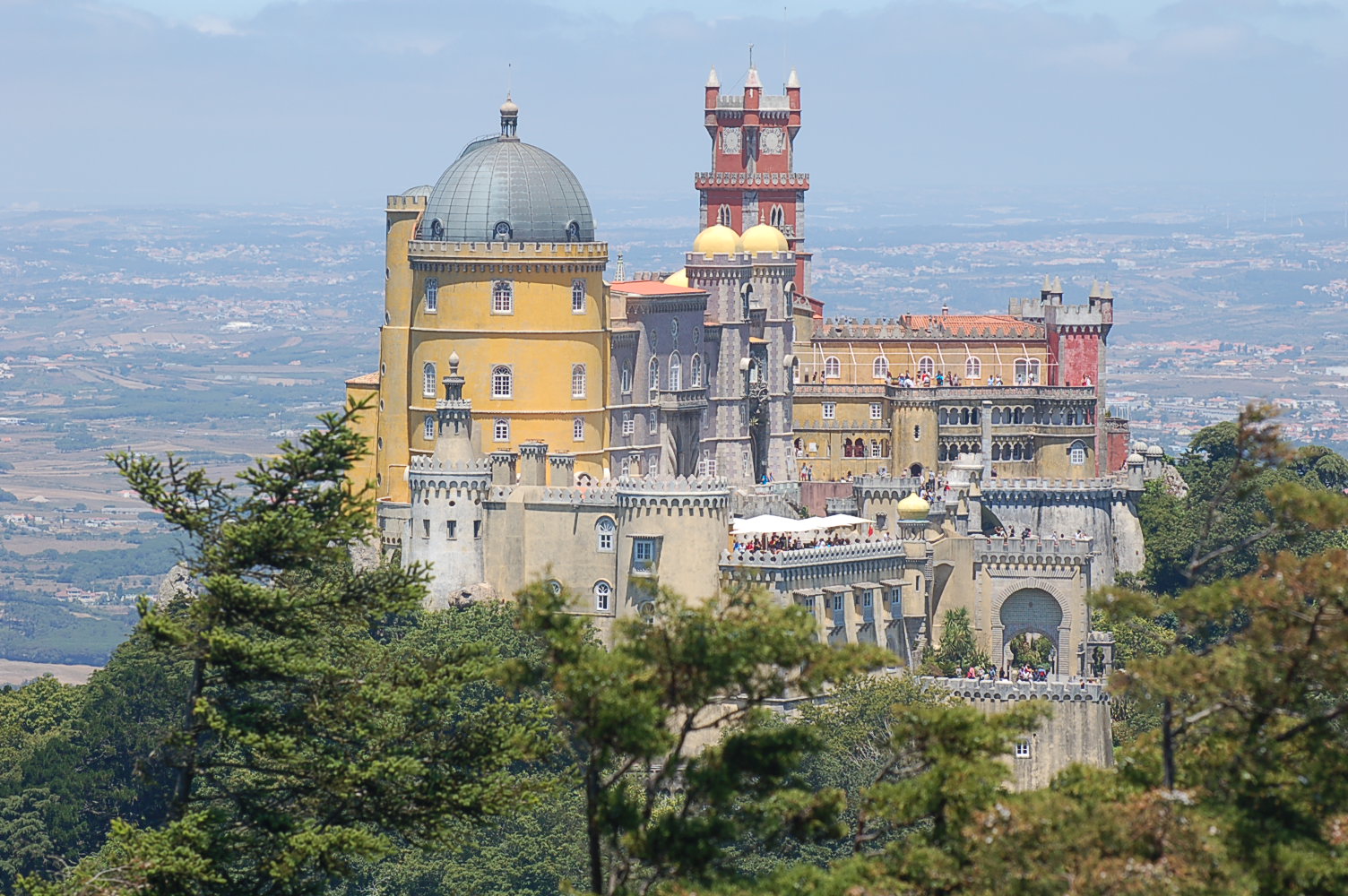
Arrive at Palácio da Pena as early as possible to avoid the crowds. Built in the 1840s by King Ferdinand II on the ruins of a fifteenth-century convent, the palace crowns the Serra de Sintra with Romantic splendor. On clear days, the view stretches all the way to the Bay of Cascais. Tradition holds that from these heights, King Manuel I glimpsed the arrival of Vasco da Gama’s battered fleet returning from its first voyage to India.
The palace is a colorful blend of Moorish, Manueline, and Gothic styles. One of its many curiosities is a sculpture of the Monstrengo, the mythical sea creature said to guard the Cape of Good Hope at the southern tip of Africa from Portuguese sailors.
When Ferdinand II acquired the estate in 1838, the mountain was largely bare. He planted thousands of trees—sequoias from North America, Japanese cedars, camellias from China—creating a forest of luxuriant diversity. In the Valley of the Ferns, enormous tree ferns imported from Australia flourish in Sintra’s cool, misty climate.
If time allows, visit the Countess of Edla’s Chalet. After Queen Maria II’s death in 1853, Ferdinand fell in love with the opera singer Elise Hensler, whom he married in 1869. He built her a romantic Alpine-style chalet, now beautifully restored, an intimate testament to their unlikely love story.
Monserrate
From Pena, descend through the forest toward the western slopes of the Serra, to the Monserrate Palace. The name comes from a small sixteenth-century hermitage dedicated to Our Lady of Monserrate. In the late eighteenth century, the estate was leased first to the English merchant Gerard Devisme and later to William Beckford, a writer and heir to a vast Caribbean sugar fortune. After Beckford returned to England, the property gradually fell into disrepair. By the time Lord Byron visited in 1808, it had become a romantic ruin.
The estate was later purchased by the English collector Sir Francis Cook, who in 1856 hired architect James Knowles to create an elaborate palace combining Gothic, Moorish, Mughal, and Indian styles. The palace rises amid botanical gardens filled with plants gathered from around the world.
Seteais
After wandering through Monserrate’s lush gardens, it may be time for a refreshment: perhaps a chilled white Port at the nearby Seteais Palace. The origin of its name, meaning “seven signs,” has been lost to time.
The palace was built in the 1780s by the Dutch consul Daniel Gildemeester, who made his fortune as part of a merchant group with exclusive rights to import and sell tobacco. After returning to Holland, he sold the estate to the Viscount of Marialva, who expanded the palace, adding a triumphal arch in 1802 to mark a royal visit by the future King João VI of Portugal. Since 1954, the palace has operated as a luxury hotel, preserving the quiet elegance of Sintra’s aristocratic history.
Praia da Adraga and Azenhas do Mar
From Seteais, head west toward the Atlantic. In summer, finish your day with dinner by the sea at the beachside restaurant on Praia da Adraga. It’s a simple place serving grilled fish, but the catch is exceptionally fresh. Start with percebes or clams, and pair your meal with wine from the nearby Colares region.
If time allows, stop before dinner at Azenhas do Mar, a small village perched on cliffs overlooking the Atlantic. Here stands one of Portugal’s most famous beach houses, easily recognized by its white roofs. It was designed by Raúl Lino, the architect who codified Portuguese vernacular architecture and created archetypes that remain influential today.
Spending two or three more days in Sintra
After a day exploring Sintra’s Romantic palaces and Atlantic views, the following days reveal an older and more intimate side of the region.
The Sintra National Palace
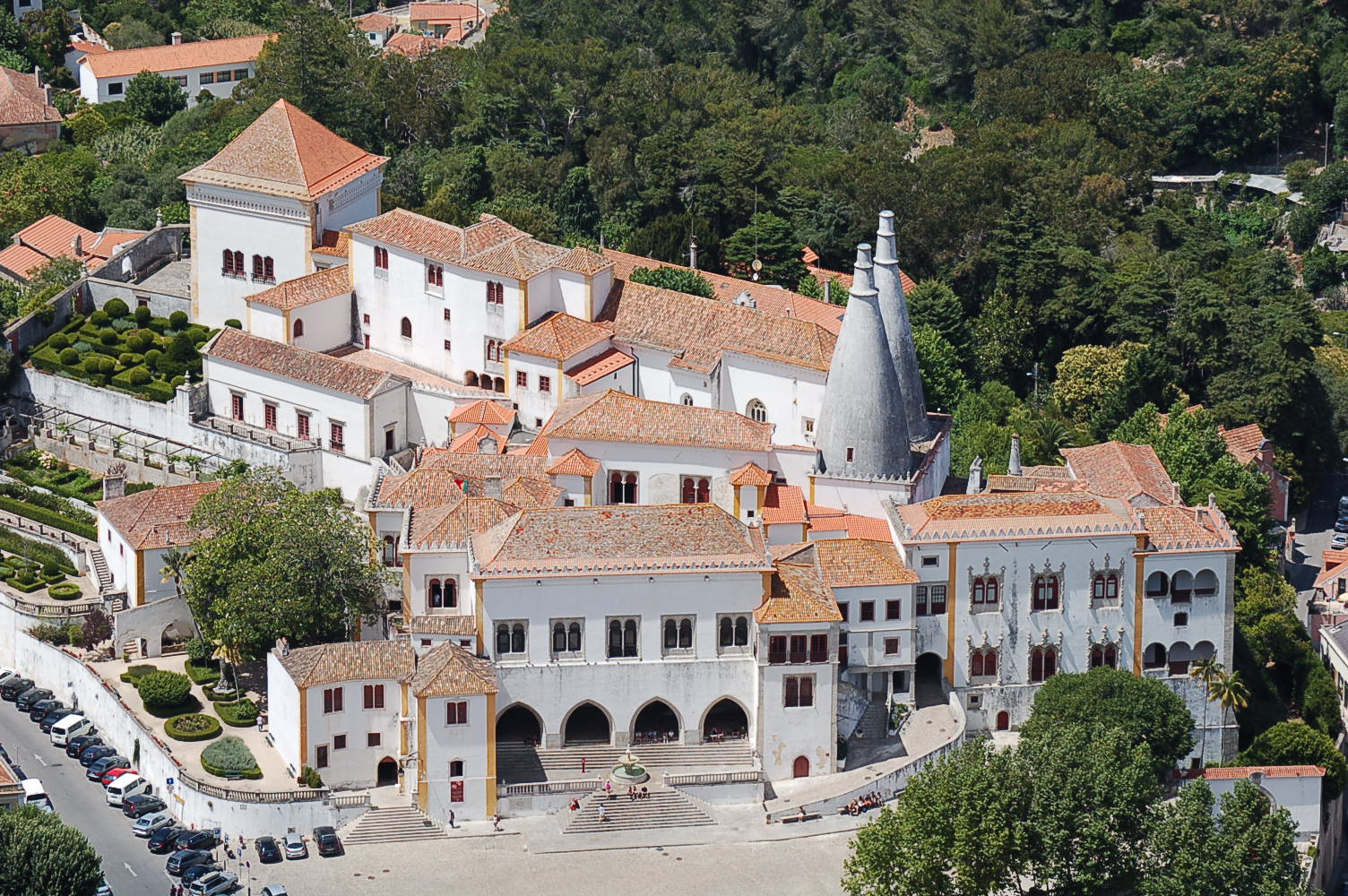
The Sintra National Palace, originally a Moorish palace, was gradually transformed after the conquest of Sintra in 1147. It later became a favored summer retreat for Portuguese royalty seeking relief from Lisbon’s heat. Its distinctive twin chimneys hint at the grand banquets once held here.
The building was extensively remodeled at the end of the fifteenth century by King Manuel I. Yet traces of its Moorish heritage remain in the geometric decoration, inner courtyards, and windows adorned with floral motifs. The nineteenth-century art historian Joaquim de Vasconcelos described the palace as “a veritable museum of the rarest and oldest azulejos in high relief that we possess.”
Among the many rooms, two are particularly memorable. The first is the Sala das Pegas, or Magpie Room, a playful reminder of King John I’s indiscretions. Queen Philippa of Lancaster caught the king kissing one of her ladies-in-waiting. He protested that it was done por bem—his intentions were good—but the episode became the talk of the court. To silence the gossip, the king ordered the ceiling painted with 136 magpies, one for every lady of the court, each bearing the words por bem in its beak.
The second is the Sala de Armas. King Manuel I commissioned a display of the coats of arms of noble families who had distinguished themselves in battle. Their heraldic insignia honored past achievements and reminded their sons and grandsons of their duty to defend the kingdom.
The palace also witnessed darker chapters of Portuguese history. Here, the young King Sebastião, only sixteen, held his final council before leading the Portuguese nobility on the ill-fated campaign to Morocco. He died in 1578 at the Battle of Alcácer Quibir, a disaster that ushered in sixty years of Spanish rule.
A century later, another monarch met a quieter fate within these walls. Afonso VI, crippled by a paralytic seizure, was overthrown in a coup led by his brother, the future Peter II. His wife, the beautiful Marie Françoise of Savoy, had their unconsummated marriage annulled and married Peter. Afonso spent the last nine years of his life confined in the palace, where he died in 1683.
Writing in 1903, the Count of Sabugosa saw the palace as a reflection of Portugal itself, where Celtic, Gothic, Arab, and other traditions blended into a spirit of “imagination, poetry, enthusiasm, and dreamy melancholy.”
Quinta da Regaleira
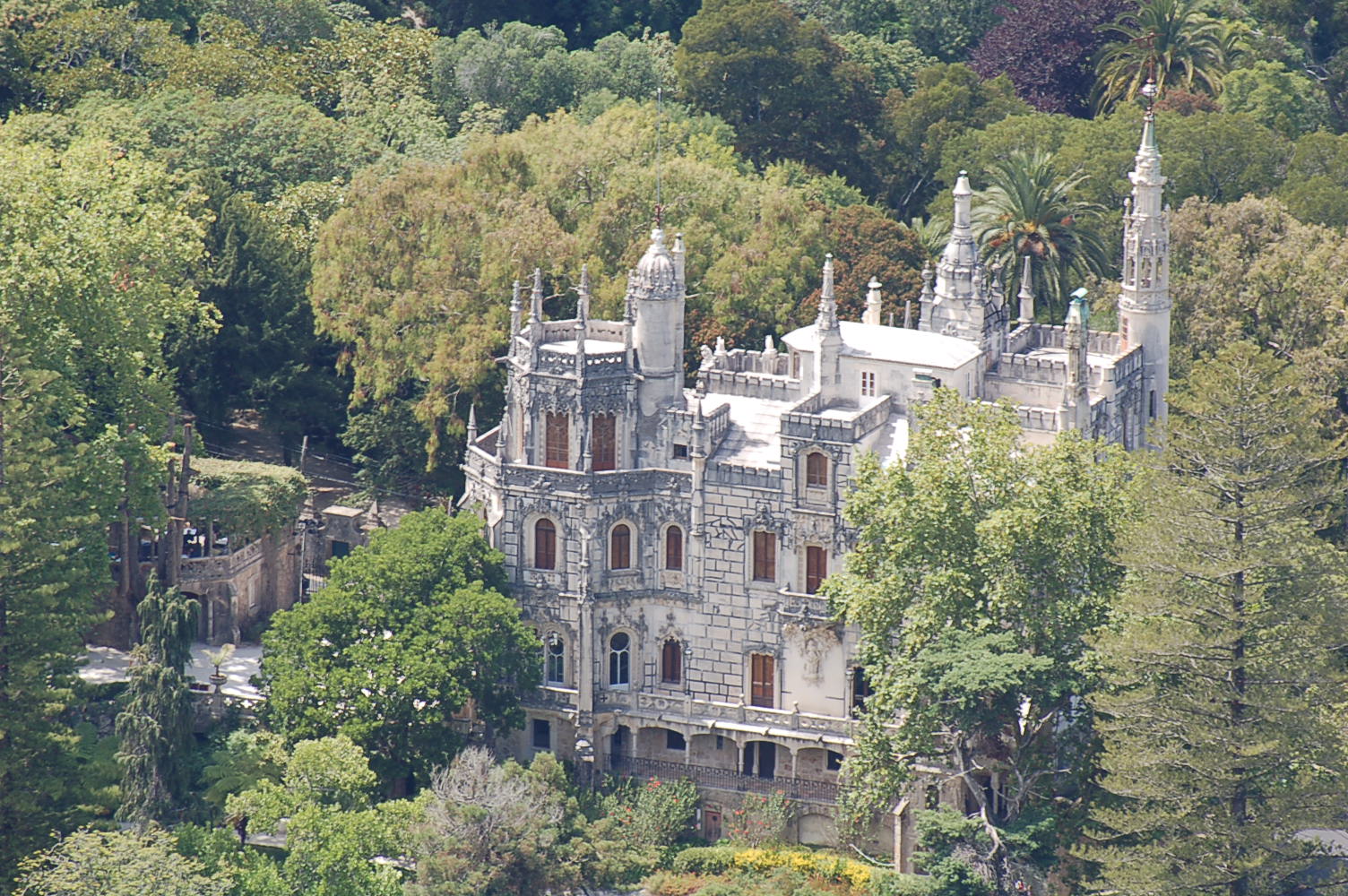
Our next stop is Quinta da Regaleira. Its palace was built between 1904 and 1910 by António Monteiro, a Portuguese businessman born in Brazil and nicknamed as Monteiro dos Milhões, “Monteiro the Millionaire.” Fascinated by alchemy, Freemasonry, the Knights Templar, Rosicrucianism, and symbolism, Monteiro designed the estate to reflect these esoteric interests.
The gardens unfold as a symbolic journey through caves, towers, lakes, hidden tunnels, and secret doors. The Initiation Well is an inverted tower with a spiral staircase descending deep into the earth. Its nine landings are often interpreted as alluding to the nine circles of Hell, the nine levels of Purgatory, and the nine heavens described in Dante’s Divine Comedy.
Capuchos Convent
It is now time to move from extravagance to austerity. The Convento dos Capuchos, founded in 1560, belonged to the Capuchin branch of the Franciscans, one of the most austere religious orders in early modern Europe. The monks lived within a small stone complex, sleeping on bare boards in tiny cells lined with cork for insulation. It is said that King Dom Sebastião, deeply religious, occasionally left the opulent court to seek spiritual counsel and reflection at this spartan convent.
Not all convents practiced such austerity. Many became famous for their sweets. According to local tradition, Friar João da Anunciação created a recipe for queijadas at the Penha Longa convent in the thirteenth century. These small tartlets have a crisp shell made from flour, lard, water, and salt. The filling combines requeijão (a ricotta-style cheese) and egg yolks with two ingredients that became plentiful in the fifteenth century: sugar and cinnamon.
Sintra residents take their queijadas seriously. An association certifies producers who follow the traditional recipe. You can taste them at Casa do Preto, Pastelaria Gregório, or Piriquita—each slightly different, yet equally delightful. At Piriquita, you will also find another local specialty: the famous travesseiros, pillow-shaped pastries filled with almond and egg cream.
Colares
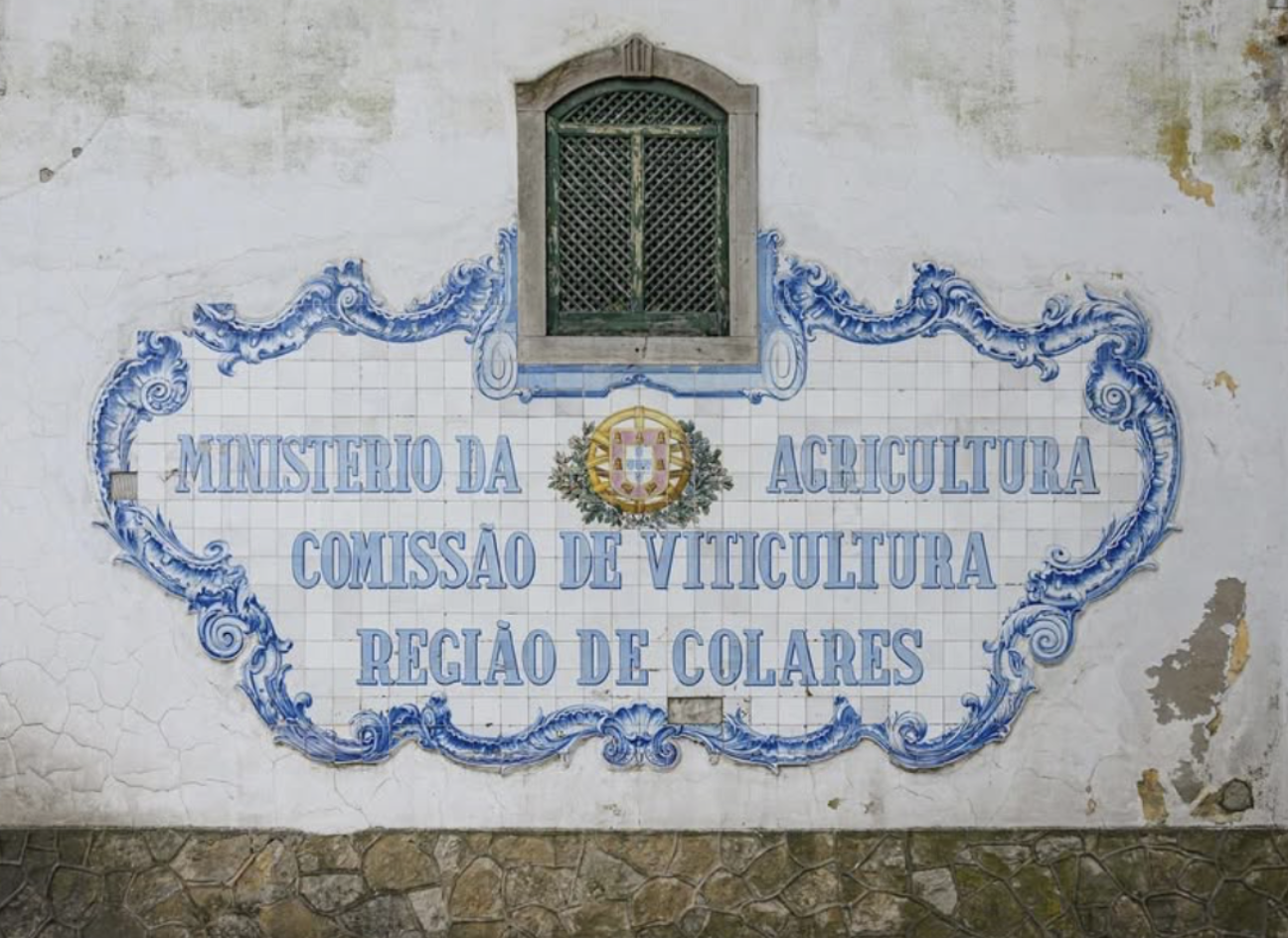
From the forests of Sintra, the land descends toward the Atlantic vineyards of Colares, a small but historically important wine region. In the second half of the nineteenth century, phylloxera devastated European vineyards by attacking vine roots. Most regions survived only by grafting European vines onto resistant American rootstocks. Colares is a rare exception: planted in deep sandy soils where phylloxera cannot reach, its vines remain ungrafted to this day.
Colares wines, made from the white Malvasia and the red Ramisco, are renowned for their exceptional longevity. The Adega Regional de Colares cooperative and Viúva Gomes are both worth visiting for a tasting of their distinctive wines.
The quaintest way to reach Colares is aboard the historic tram that has connected Sintra to the nearby beach of Praia das Maçãs since 1905. The ride is slow and charmingly uncomfortable, but memorable.
Cabo da Roca
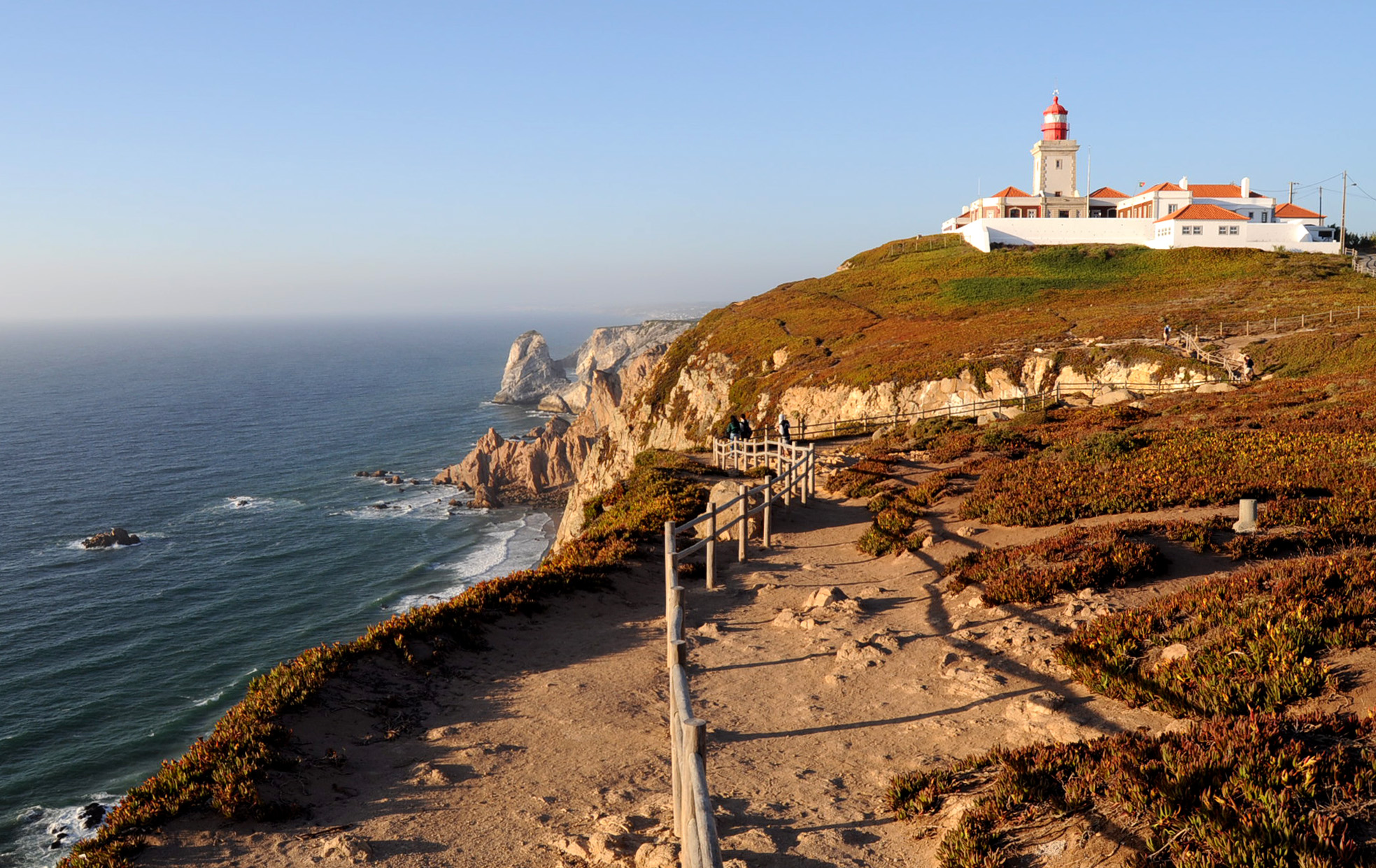
Another remarkable place to visit is Cabo da Roca, long regarded as the edge of the world. In the first century the Greek geographer Strabo described this coast as the western limit of the inhabited world. Centuries later, the poet Luís Vaz de Camões immortalized it as the place “where the land ends and the sea begins.”
Queluz
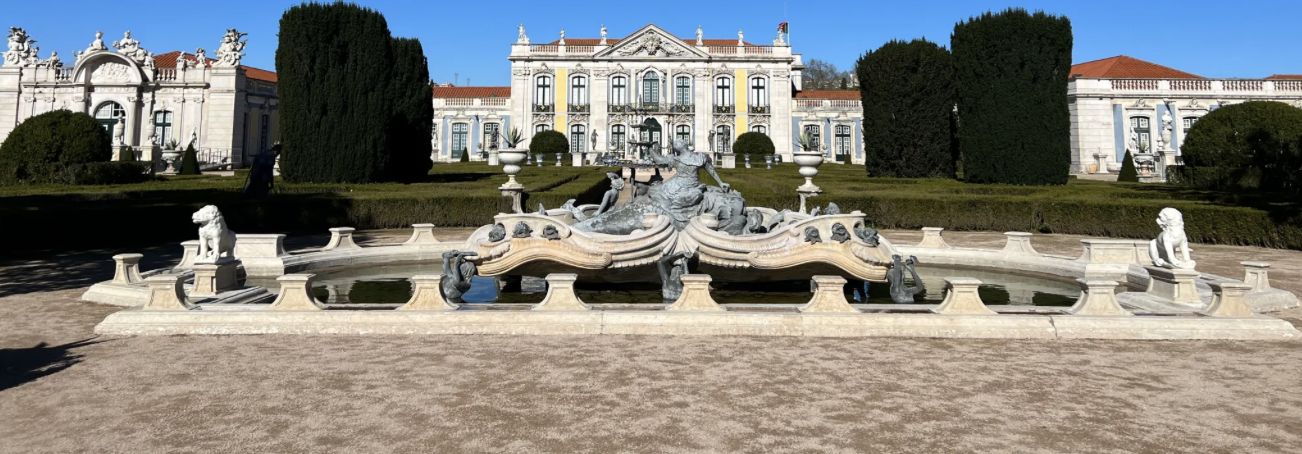
On the way back to Lisbon, consider stopping at Queluz, home to the vibrant Queluz National Palace, an elegant Rococo summer residence built in the mid-eighteenth century for Peter III, husband of Queen Maria I.
Just across from the palace, you can stay at the Pousada Palácio de Queluz, a charming historic hotel.
A Final Thought
You need three or four days to see all that the Sintra region has to offer. If you only have one day, resist the urge to rush from site to site.
Visiting Sintra is stepping back to an era when life unfolded slowly. More than any monument, it is the feeling the place evokes—the sense of living in a different time—that makes Sintra unforgettable.
 Salt of Portugal
Thank you for this comprehensive guide. It’s many years since we visited Sintra, and I feel a return visit is due this Spring. I will take your advice xx