Casario

Porto’s Ribeira district is always bustling with tourists snapping selfies and street performers vying for attention. Yet amid this lively chaos, there is a haven: a restaurant called Casario. This cozy space, with its terrace overlooking the river, is a collaboration between Granvinhos, the port wine company behind Quinta de Ventozelo, and two virtuoso chefs: Miguel Castro e Silva and José Guedes. 

We strolled to Casario under ultramarine blue skies. The dining room, bathed in a warm glow, offered a welcoming ambiance. As soon as we settled at our table, the waiter presented a basket of enticing dark wheat bread. It was accompanied by velvety butter from the Azores and Ventozelo’s piquant olive oil. A refreshing rosé from Ventozelo filled our glasses, setting a playful mood for the meal.

Like Beethoven’s Ninth Symphony, dinner began with unforgettable notes: smoked eel seasoned with mustard and honey, served atop flatbread with a vinaigrette-dressed lettuce, and fried salted skate paired with pickled fennel and a celery and hazelnut purée.

This impressive start was followed by a harmonious sequence of courses. First came a moist and flavorful robalo, cooked at low temperature and served with a surprising yet felicitous combination of yellow peppers, turnip, and bok choy. Next was a whimsical shrimp and squid lollipop and chickpeas with two mushroom varieties: nutty boletos and earthy trompetas. The meal continued with a squid stuffed with spinach and sausage, bursting with flavor. Then came a briny turbot, paired beautifully with asparagus and a cockle called berbigão.

Dinner concluded on a sweet note with cinnamon ice cream, crème brûlée, and toasted pine nuts. A glass of 1994 Dalva port served as the perfect coda to this delicious meal.

It takes a lifetime to master the art of preparing a symphonic culinary experience like this one. Bravo, Miguel and José!

Casario is located at Praça da Ribeira, Viela do Buraco, 19, Porto, tel. 227-662-270. Click here for their website. 

Days like this at Gaveto

Gaveto is a restaurant in Matosinhos where winemakers from the Douro Valley and the Vinho Verde regions often gather. It is easy for regulars to take for granted the meticulous selection of ingredients, the flawless execution of each dish, and the impeccable service. But this restaurant took a lifetime to build. 

Its founder, Manuel Pinheiro, began his culinary journey at age 12, working in Porto at the home of the banker António Borges. At age 18, Manuel got a job in a restaurant owned by the Borges family. He started by hauling coal for the stove and washing countless pots and pans. Over time, he learned to cook, to run the kitchen, and to manage the dining room. Ten years later, Manuel put all this knowledge to use by buying a small restaurant in Porto and turning it into a popular spot.

In 1984, while shopping for fish at the Matosinhos market, Manuel learned that a spacious restaurant called Gaveto was up for sale. Tempted by the opportunity to attract a larger clientele, he purchased the place. The investment was so large that his wife Margarida cried for two weeks, worrying that they might soon be ruined. 

Manuel involved his two sons, João Carlos (in the photo with his father) and José Manuel, in the business. Together, they turned Gaveto into a gastronomic landmark and built one of Portugal’s most impressive wine collections. Whenever they serve a rare wine from their cellar, João posts a photo of the bottle on Instagram captioned with his signature phrase: “There are days like this.” 

The menu includes only traditional Portuguese fare, yet the offerings are so tempting that we always struggle with our choices. During our last visit, we hesitated about whether to get the iconic lobster rice, the legendary lamprey, the exquisite tiger shrimp, the perfectly grilled fresh fish, or the tripe with beans, which former President Mário Soares considered the best in the country. 

When dessert time came, we debated whether to opt for one of the many puddings and tarts, get the traditional pão de ló, or taste the fine cheese that Manuel procures in the Estrela Mountain. These were not easy decisions. And at Gaveto, every day is like this.

Art and nature at Serralves

Hidden behind unassuming walls, the Serralves Foundation can be easily missed. But this beautiful park and contemporary art center in Porto is a must-visit destination.

Its story began in 1925 when Carlos Cabral, the 2nd Duke of Vizela, attended the International Exhibition of Modern Decorative and Industrial Arts in Paris with architect José Marques da Silva. The duke returned to Porto with the dream of building an Art Deco house on his family’s property. To realize this vision, he enlisted Marques da Silva and a cadre of French architects, including Charles Siclis, who worked on the villa, and Jacques Gréber, who designed the gardens. 

Siclis’ watercolor of a pink house on a hill became the blueprint for the elegant villa we know today. It took until 1944 to turn that sketch into reality. The cost was so extravagant that in 1955 Carlos Cabral sold the estate to Delfim Ferreira, a wealthy entrepreneur. To ensure that his dream villa would live on, Cabral imposed the condition that the house would be preserved without alterations.

In 1987, the Portuguese government acquired the estate to convert it into a contemporary art center. For the first time, this home, which was the subject of great fascination in Porto, was opened to the public. As soon as we step into the villa, we feel a desire to wear tuxedos from Saville Row and Chanel gowns so we can do justice to the elegance of the place. The villa’s intricate decor and aesthetic harmony are mesmerizing. 

In 1999, the new Museum of Contemporary Art, designed by renowned architect Álvaro Siza was inaugurated. Since then, it has become a beacon for contemporary art in Porto. With each passing year, the exhibition program expands, and the collection welcomes new works and new artists. 

In 2019, the House of Cinema dedicated to filmmaker Manoel de Oliveira and other auteur directors was inaugurated. More recently, the Álvaro Siza Wing added new exhibition spaces where delicately lit pristine walls patiently wait for the arrival of new canvases. 

Spread across 18 hectares, the Serralves Park is dotted with sculptures amid lush trees. Visitors can stroll on the Liquidambar Promenade, explore the Treetop Walk for stunning park views, or visit the gardens of the villa. 

Serralves is a place where nature relaxes the body and art stimulates the mind.

The Serralves Foundation is located at Rua D. João de Castro, 210, Porto.

Going to Bolhão

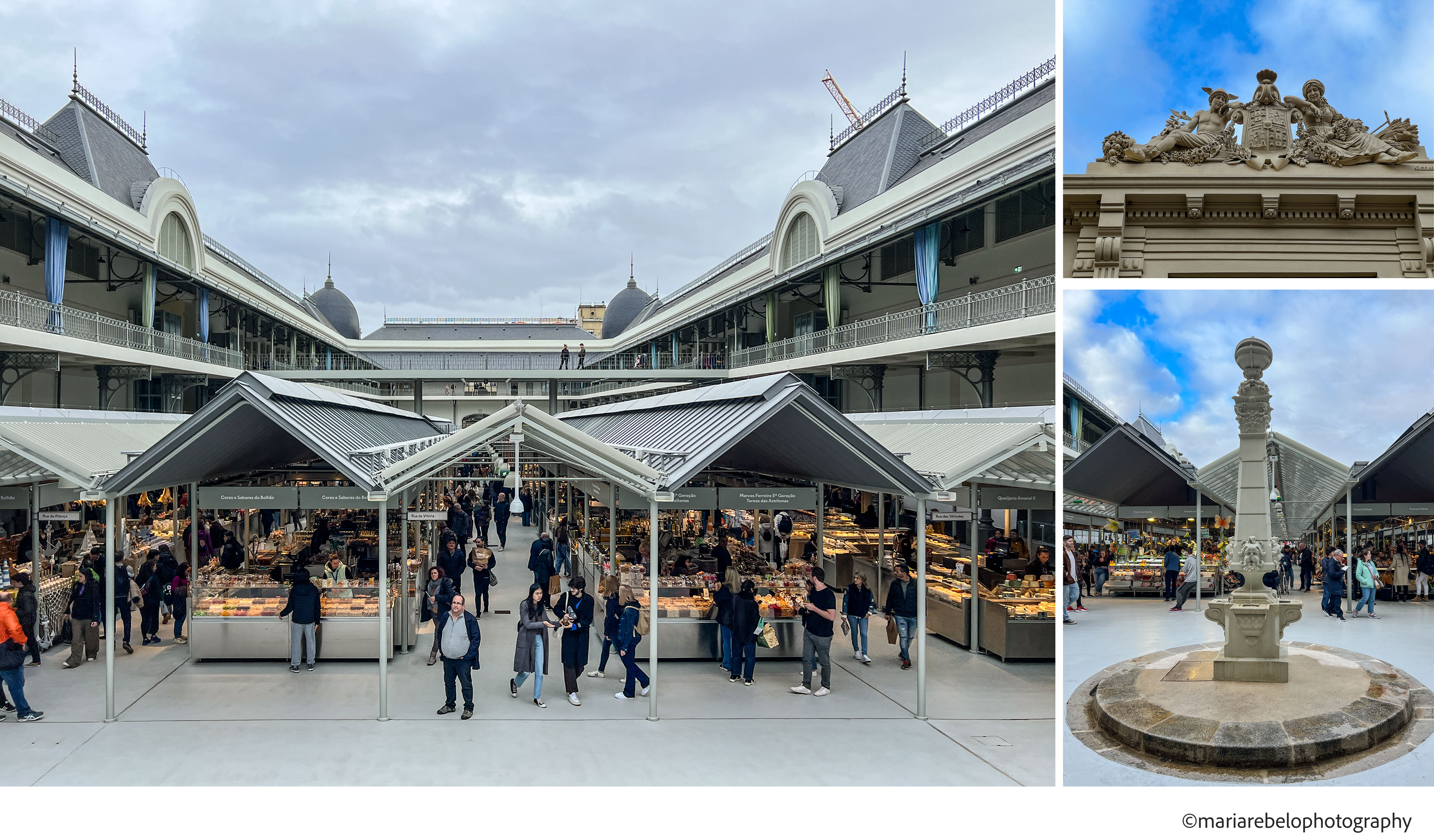
In 1841, several farmer markets in Porto merged with the fruits and vegetable fair and relocated to the Bolhão Plaza in the middle of downtown. Built on marshy terrain, the plaza owes its peculiar name to the large water bubbles formed in a stream that crossed the swamp. 

With the city’s population on the rise, the market outgrew its humble beginnings. In 1911, architect António Correia da Silva was entrusted with constructing a new market. Having studied in Paris, his monumental design drew heavily on the Beaux-Arts style.  Inside, the decor featured simple white tiles accentuated by elegant ironworks, creating a blank canvas where the vibrant produce could shine.

After its inauguration in 1914, the Bolhão market quickly earned its place as a city hallmark. “Going to Bolhão” became a common expression. At Bolhão, the city and the countryside came together to trade fresh vegetables, fruits, flowers, and other delights. Moreover, the market was a place for exchanging ideas and discussing current events. 

In 2022, Bolhão underwent a splendid renovation that preserved its historical charm. It is the perfect place to savor a glass of wine and some petiscos (the Portuguese word for tapas) while chatting with the vendors about what’s happening. You will not know Porto without going to Bolhão. 

Sleeping by the river in Porto

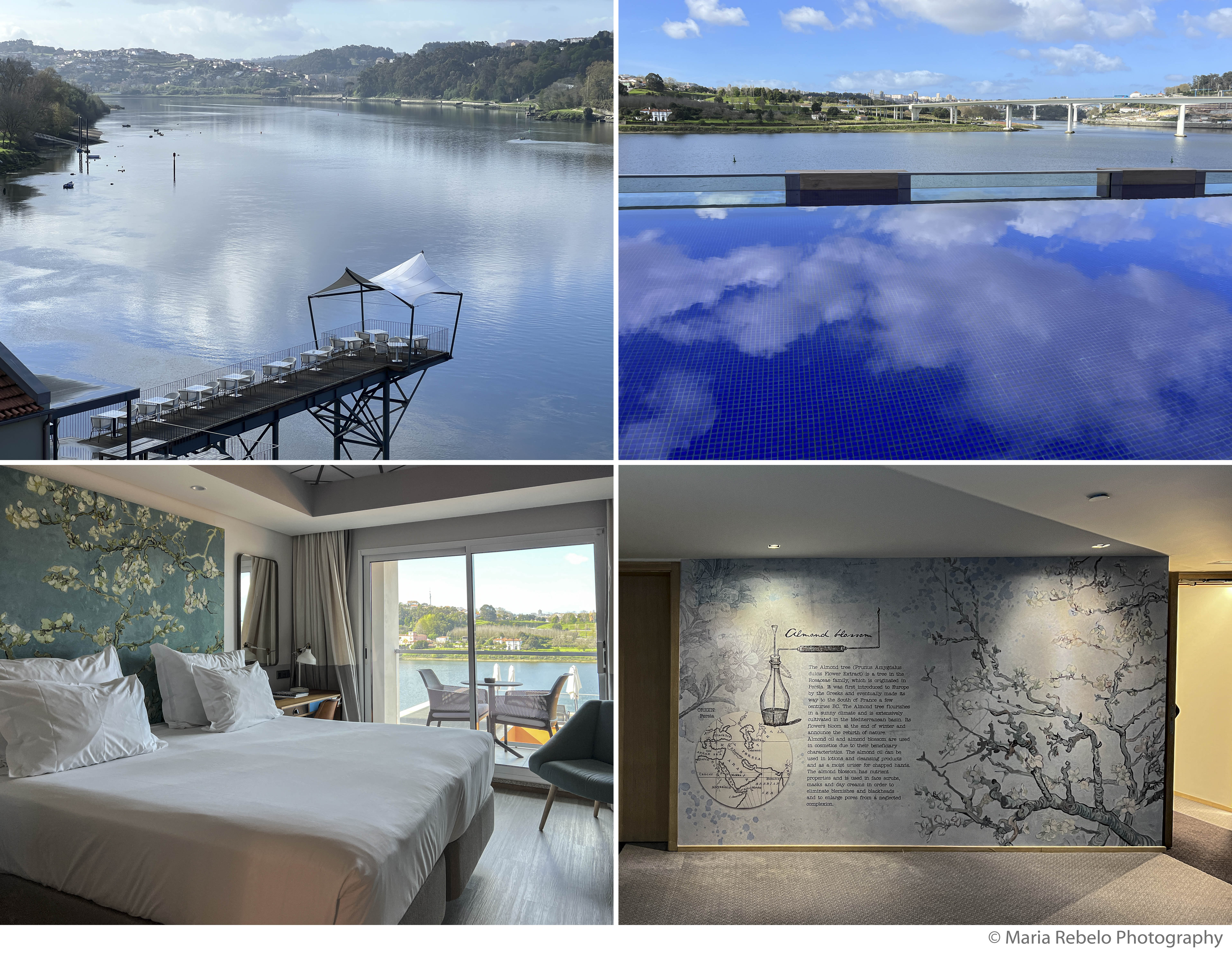
We love falling asleep to the sound of the river flowing by at the Douro Riverside in Porto. Adjacent to its older sibling, the Freixo Palace, the hotel occupies the site where a company called Floral produced soaps, candles, and perfumes between 1888 and 1990. 

Floral’s imposing brick chimneys, built by master Lino Soares Guedes, were meticulously restored. The formulations used to produce the scents prized by the city’s aristocracy adorn the walls. And the flowers are back, lending their aromas and elegance to the interiors. 

But it is the river that plays the lead role. Its views are everywhere, from bedrooms, balconies, public interiors, and terraces. An infinity pool creates the illusion that its waters mix with the river. But the Douro keeps to itself and looks straight ahead as it flows to the sea.

The Pestana Douro Riverside is on Av. Escritor Costa Barreto nº60, Porto. Click here for the hotel website.

DeCastro Gaia

“You have to try my restaurant in Gaia at Espaço Porto Cruz. Stop by the terrace first and then come down to DeCastro Gaia to eat,” advised chef Miguel Castro e Silva.

A few days later, we stepped out of the elevator on the top floor at Espaço Porto Cruz and wow, what a view!  The waters of the Douro river flowed quietly below, saying farewell to the city on their way to the sea. Porto, dressed in bright light, was trying to sway the river to linger a little longer. The river margins were decorated with “rabelo” boats, the traditional vessels that, in times gone by, brought barrels of precious ports to be stored in the Gaia cellars.

It was hard to leave the gorgeous view, but we were curious about the gastronomical experience created by Miguel at DeCastro Gaia. So we went down one floor and sat at a table overlooking Porto.

Before the meal started, our waiter brought us a seductive white Dalva port that put us in a festive mood. Then, a velvety vegetable soup prompted us to say the first of many “oh, so good!” 

The waiter filled our glasses with Contacto Alvarinho, a lively green wine made by Anselmo Mendes. It paired perfectly with our next dish, a lush artichoke and goat cheese salad. More delights followed. The turnovers made from phyllo dough, spinach, and alheira were wonderful. At first bite, they resemble a Greek spanakopita, but then the allure of the alheira surprises the palate.  The codfish fried in batter (“patanisca”) melted in the mouth. Finally, the rooster fish with clams was fresh and oh, so good! 

The menu offers old classics of Portuguese cuisine and new classics created by chef Castro Silva. What the menu does not reveal is the freshness of the ingredients and the precision of the confection. The Portuguese have an expression “tudo no ponto” that describes food that is perfectly cooked, seasoned, and sauced.  That is what DeCastro Gaia offers. What more do we need?

DeCastro Gaia is located in Espaço Porto Cruz at Largo Miguel Bombarda 23, Vila Nova de Gaia. Click here for the restaurant’s website.

The Boa Nova tea house

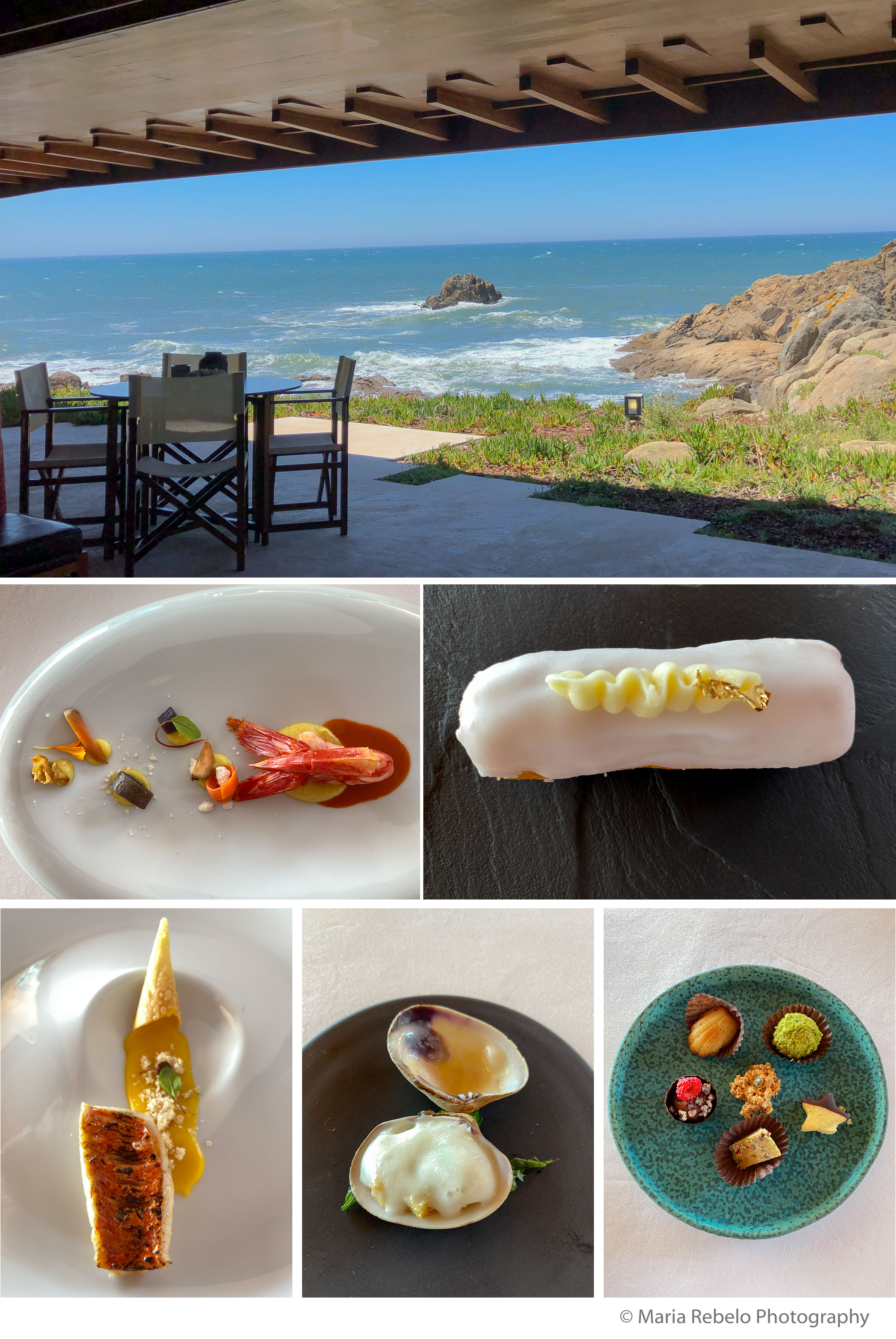
We drove from Porto to Leça da Palmeira on a warm, sunny day to have lunch at the Boa Nova tea house. Our expectations were high. The building, classified as a national monument, was designed by Álvaro Siza Vieira, an architect who won the Pritzker prize. It houses since 2014 a restaurant headed by chef Rui Paula that has earned two Michelin stars.

The house, ensconced inside a cliff, is a gentle mark on the landscape. As we walked up the stairs that lead to the front door, we were greeted by the wind carrying aromas of salt and seaweed to stimulate our appetite. We stopped for a few moments to look at the spectacular seascape. Then, the door opened and we stepped inside. The sea is even more alluring framed by afizélia, an African red wood that covers the interior walls and ceilings. Inaugurated in 1962, the tea house is one of Siza’s early works. The influence of Frank Lloyd Wright is clearly visible. But instead of echoing the flatness of the American prairie, the house reflects the rugged landscape of the Portuguese coast. 

We sat at the table admiring the expansive view. The sommelier came over and we talked leisurely about what to drink with the meal. We settled on a sparkling wine made with Arinto at Quinta da Romeira in Bucelas that kept us pleasant company during our gastronomic journey.

The meal started with a rustic touch: a warm toast buttered with lard that was a staple of the chef’s childhood breakfasts.  It was followed by a splash of sophistication: a translucent taco with avocado and fish eggs. A spoon with clams Bulhão Pato arrived next. We ate it in a single bite. It filled our palate with the taste of many clams. 

Then dessert arrived in the form of an elegant eclair. “Time goes by fast at the Boa Nova tea house,” commented our waitress smiling. “It feels like you just started the meal and you are already having dessert.” It was a false ending. The eclair is a savory treat stuffed with a delicate mussel filling.

A number of delights from the sea arrived in quick succession. A slice of robalo (sea bass) bathing in a green algae sauce, topped with perfectly crisp skin and percebes (gooseneck barnacles). Scallops embraced by tapioca, adorned with two sauces, one made with lemon and the other with chouriço (sausage). A large red shrimp called carabineiro with carrots of different textures and a delicious bisque. Salmonete (mullet) with cassava and cashew nuts, a preparation inspired by Brazilian cuisine. And, finally, cherne (grouper) wrapped in paper and accompanied by sweet potatoes. 

This whirlwind tour of sea treasures was followed by a plate called dejá vue. It is a surprise, so perhaps it is best if we don’t describe it.

The dessert was called “late harvest.” It is fresh and crunchy, a combination of honey, nuts and dried fruit that evokes the flavors of a late harvest wine.

At the touch of a button, our waiter made the windows vanish. Suddenly, the sound of the sea filled the room and a gentle breeze refreshed our senses. 

Our waitress brought us another dessert: olive cake served with olives and olive ice cream decorated with tuilles shaped like olive leaves. Then, a cart carrying small wooden boats offered us a choice of apetizing petit fours. 

Our high expectations were greatly exceeded. We left the tea house in a state of enchantment, delighted by the beauty of the place, the deliciousness of the food, the elegance of the plating, the graciousness of the service, and the magic of it all.

The Boa Nova tea house is located at Avenida da Liberdade nº 1681, Leça da Palmeira, tel. 229 940 066. Click here for the restaurant’s website.

Café Majestic

Magestic Café

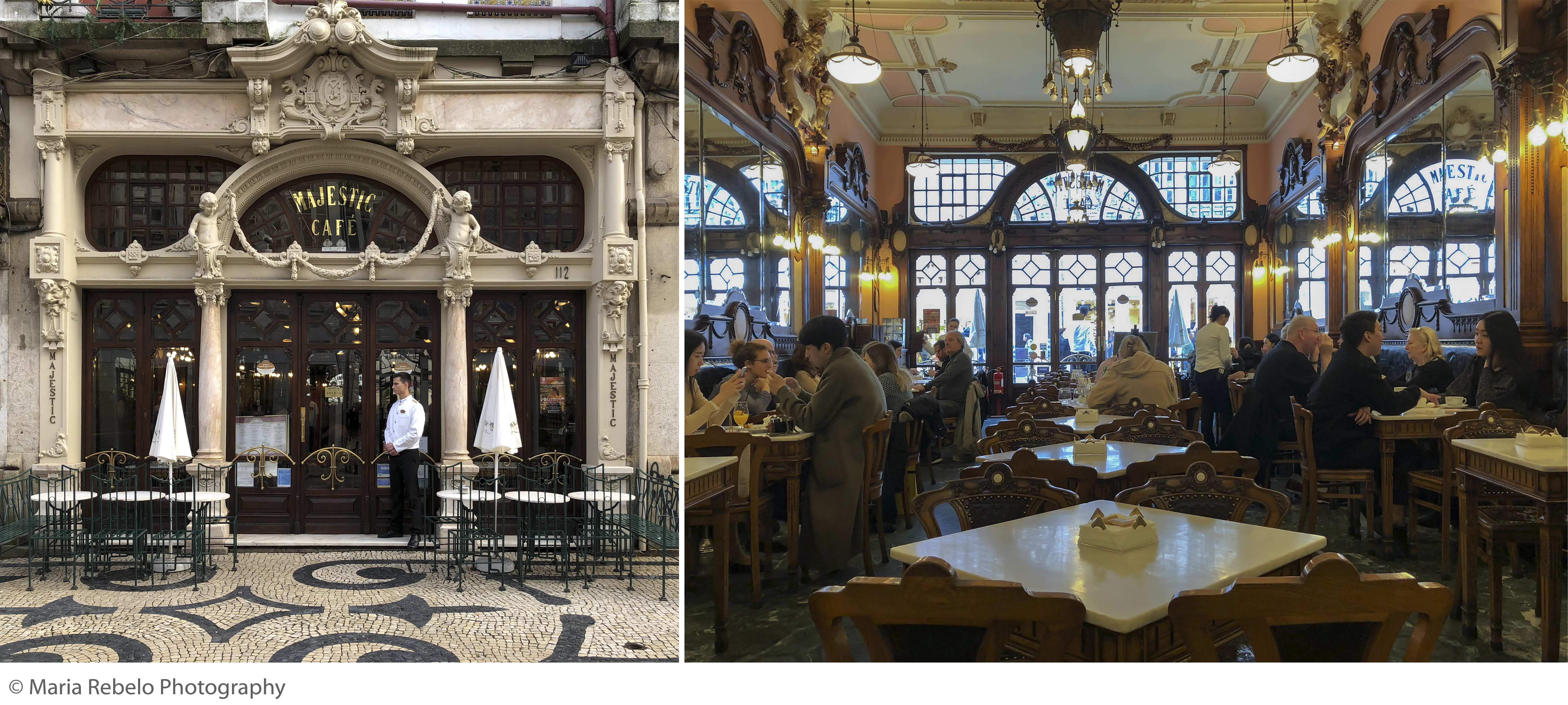
Nothing fuels creativity like coffee. Voltaire made sure his inspiration never faltered by sipping 40 cups of coffee a day. Balzac conceived plots for his novels by staying up all night drinking coffee.

One of our favorite places for a stimulating cup of brew is the Majestic Cafe in Oporto. Inaugurated in 1921, it has elegant proportions and exquisite Art Nouveau interiors. The café charges premium prices so it attracts few locals. Drinking a good espresso will set you back 5 euros. It is a price well worth paying for all the creative ideas that a visit to the glamour of the Belle Époque can spark.

Café Majestic is located at Rua Santa Catarina 112, Porto. Click here for the café’s website.

The train to Pinhão

Trains Composit

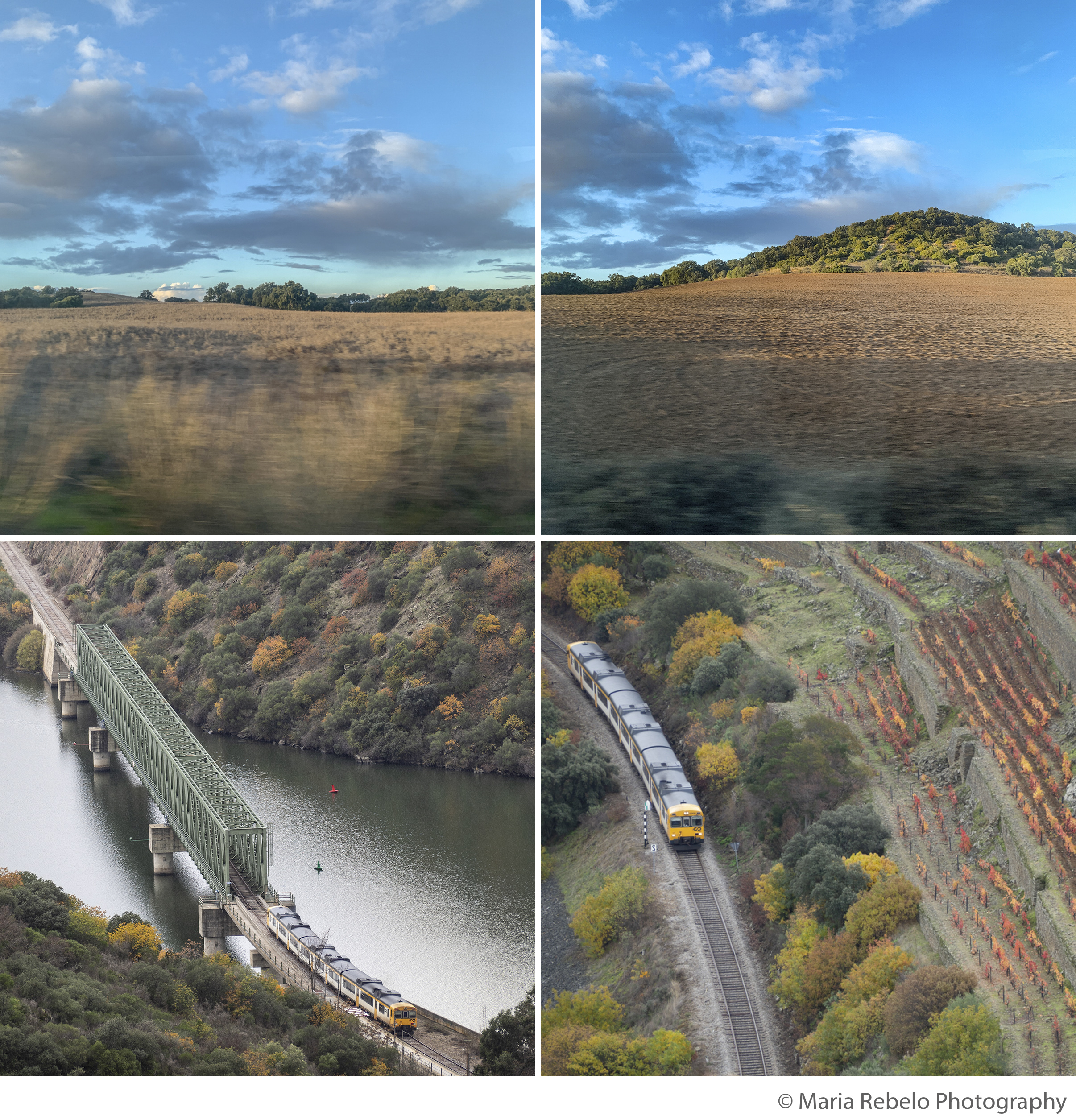
There’s a splendid train that travels from Oporto to Pinhão. Its creaky carriages are quite modest but they have windows that offer sumptuous views of the Douro valley.

The train leaves the station at a lazy pace but then it speeds up, hoping to impress the Douro river with the power of its engines. The river ignores these antics and continues to flow with confidence and poise.

At times, it looks like the train is going to dive into the river, such is the seductive power of the blue-green waters. At other times, the train tries to keep its distance, only to fall again under the spell of the Douro and travel back to its margins. It is as witnesses of the courtship between the steel train and the molten river that we arrive at Pinhão in the heart of the Douro valley.


The magic of a dinner at the Yeatman

Yeatman restaurant

At the end of our dinner at the Yeatman last November, chef Ricardo Costa gave us an envelope sealed with wax stamped with the hotel’s Y symbol. We brought the envelope home where it’s been sitting on our desk. A couple of days ago, we woke up to the sight of grey skies and the sound of howling winds. We reached for the envelope and broke the seal, hoping to summon some of the magic of our Fall evening at the Yeatman. Inside, we found the dinner’s menu.

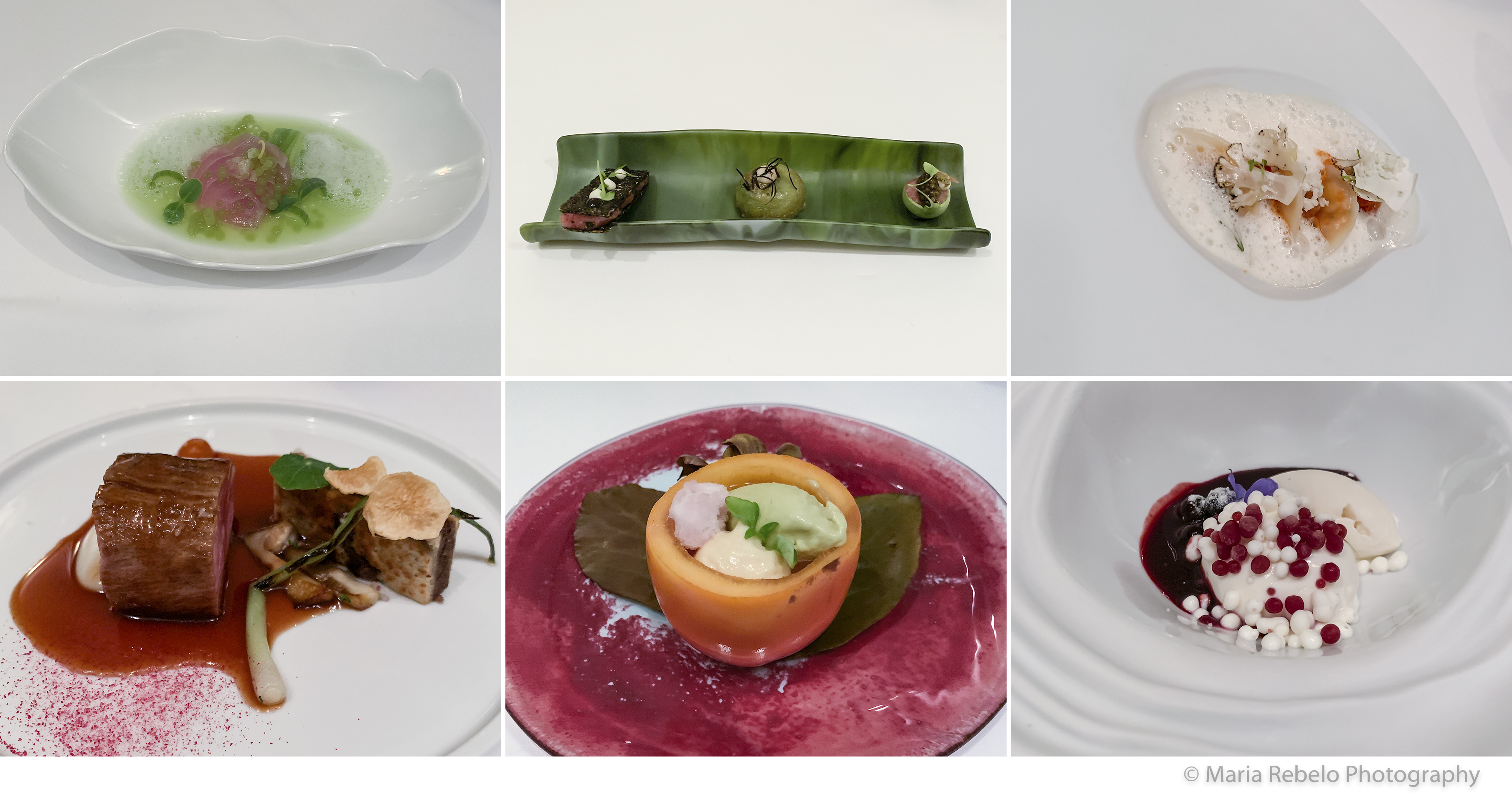
We recalled that our meal started softly, with a cup of tea made from kombu, an Asian algae. Then, there were oysters with foie gras and an apple gel that accentuated their  briny taste. They harmonized with a glass of bright, sparking wine from Murganheira. The meal continued merrily with a miniature piece, three inventive combinations of algae and tuna.

This preamble was followed by a chicken oyster–a small oval cut with intense flavor. It was delightfully roasted, seasoned with dehydrated chili pepper, served with a mushroom broth and topped with a cheese sauce.

Beautiful slices of lírio, a fish from the Azores, arrived on top of a cylinder bathing is sea foam and decorated with pearls.  The pearls, cylinder and foam were all made of cucumber. The delicate flavors paired perfectly with a glass of Quinta de Baixo Vinhas Velhas, a great white wine made by Dirk Niepoort from old vines in Bairrada.

The white wine refreshed our palate so that we could fully appreciate the next course: a succulent lobster with cauliflower puré and a whimsical bloody Mary made from lobster jus. Then, more of our favorite flavors gathered on the plate: xarem, a polenta-like preparation popular in Algarve, topped with a corn cream, a cockle called berbigão, black-pork prosciutto, egg, and a coriander broth.

A refined bouillabaisse arrived at the table, meticulously prepared with imperador fish accompanied by small, flavorful shrimps from the Portuguese coast and dehydrated algae. What would Marcel Pagnol think if he saw Marseille’s rustic bouillabaisse  prepared with the artistry of a Cartier jeweler?

A glass of a great red from the Dão region produced by Quinta do Perdigão heralded the arrival of the luxurious meat dishes. First, succulent veal with spring onions, Jerusalem artichokes. Then, crispy roasted piglet with spices and tropical fruits.

The meal ended with a delightful persimmon filled with pistachio sorbet topped with a cream of vanilla and saffron. But this was a deceptive ending  because soon another pleasing dessert arrived: blueberries with mascarpone ice-cream and kafir limes. And just when we thought it was time to leave, our waiter arrived with a serving cart full of irresistible chocolates, caramels and nuts. It was an epic dinner!

We finished reading the menu and looked up. The wind had waned and the sky was blue.

The Yeatman is located at Rua do Choupelo, (Santa Marinha), in Vila Nova de Gaia. Click here for the hotel’s website.