Mizette’s rugs

Composit Tapetes Mizette

Mizette Nielsen moved from Holland to Portugal and got into the production of textiles.  In 1976, she received a large order and started looking for a factory to execute it.

She traveled to Reguengos de Monsaraz to visit the Fábrica Alentejana de Lanifícios (Wool Factory of Alentejo). Entering the factory was like stepping into the 19th century. Inside, she found the last manual looms of the Iberian peninsula. Old weavers operated these looms with confidence and grace to make wool blankets traditionally used by shepherds to keep warm during Winter.

In the early 20th century, these blankets were often included in the trousseaux of Alentejo brides. But they had since fallen out of fashion.

Realizing that the factory might close soon, Mizette decided to buy it. “I could not stand the idea that the knowledge of these master weavers would be lost forever,” she said with quiet intensity. “I got them to teach the next generation of weavers. And this generation will teach the next, so that this chain that goes back centuries will be unbroken.”

The blankets produced in the factory are too heavy to be used in houses with modern heating and insulation. But they are sturdy, so they became popular as rugs. Mizette started by producing the traditional designs inspired by the colors of the Alentejo landscape. Then, in collaboration with Gil Kalisvaart, she added new designs that combine well with contemporary furniture.

Mizette’s rugs are one of the most beautiful thing you can buy in Portugal. They are works of art that link past, present, and future.

Mizette has a store in Monsaraz at Rua do Celeiro, tel. 266-557-159, email mizettenielsen@yahoo.com. 

Lunch at Herdade do Esporão

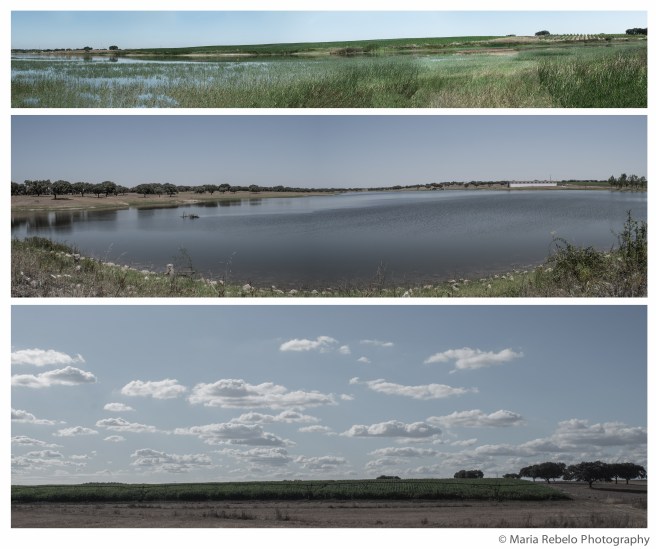
composit Herdade do Esporão

We should have known that it is hard to get to paradise. We drove from Vila Viçosa to Herdade do Esporão guided by a GPS system that chose an old dirt road over the new road from Reguengos. Taking the slow road helped us understand that Esporão is an oasis. A place in the dusty interior of Alentejo where a blue lake nurtures pristine vines that produce some of Portugal’s best wines.

The road to the success of Esporão was also slow. José Roquette bought the estate in 1973 at a time when Alentejo was not a major producer of great wines. Shortly after the 1974 revolution, the estate was nationalized. It was returned to its owner only in 1984. The first wine was bottled in 1985 and released in 1987. The success of this vintage and of those that followed put Alentejo on the world wine map.

Maria Roquette, José’s daughter in law, welcomed us to the dinning room. It is a tranquil space that overlooks the lake and the vines. The walls are decorated with art that Esporão commissioned over the years to use in the labels of its reserve wine.

Maria introduced us to the chef, Pedro Pena Bastos. We did not guess that this unassuming 25-year-old was about to take us on an extraordinary culinary journey.

To prepare our senses, Pedro brought us a heavenly concoction of chick peas, seaweed, codfish eggs, and citrus caviar.  Next, came a marriage of peasant food and contemporary cuisine: pig’s feet with coriander in a red shiso gelatin. We visited the woods to taste wild mushroom beignets and a green garlic custard with truffles. We cruised rivers to enjoy crayfish and sailed seas to eat mackerel and porgy. Back on land, we had lamb from Alentejo with artichokes and apricots.

Finally, we entered the garden of delights: a green-almond ice cream, a lavender and peach tart, a gelatin of late-harvest wine, and marshmallows made of hazelnuts and chocolate.

Our traveling companions were the wonderful wines of Esporão. There were many different personalities and styles. Some, like the experimental white made from the Sardinian varietal Vermentino, were new and festive. Others, like the classic reserve red, were gracious and wise. The meal ended with fireworks provided by a wonderful tawny-style dessert wine.

If you’re visiting Portugal, travel the road to Herdade do Esporão, a place where you can taste the food and wine of paradise.

The Herdade do Esporão is located at Reguengos de Monsara, near Évora, Alentejo. Their telephone and email are 266 509 280
 and reservas@esporao.com , respectively. The Herdade’s GPS coordinates are: latitude: 38.398611 and longitude: -7.546111. Chef Pedro Pena Bastos is the fifth from the left on the photo above.

A cheese revolution

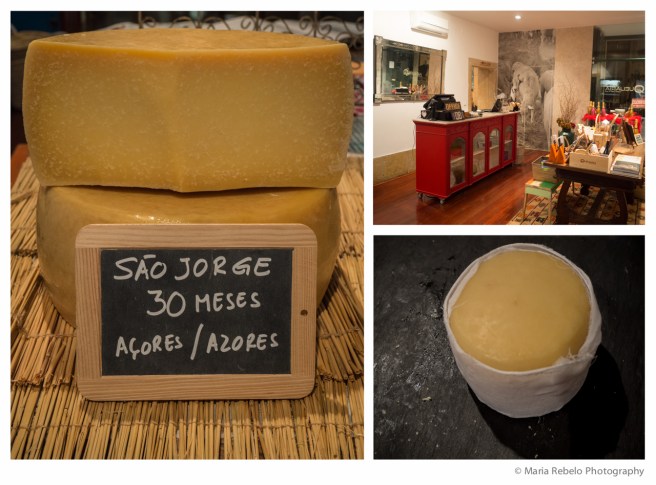
Composit Queijaria 2016

Queijaria, our favorite cheese store in Lisbon, keeps getting better. It is a place where the ordinary is banned to make room for extraordinary artisanal cheeses made in small batches by traditional producers.

On our last visit Pedro Cardoso, one of the owners, invited us to taste two unique cheeses. The first was from São Jorge, an island in the Azores archipelago. It is made with the milk of happy cows that roam free on the island. São Jorge cheese is always delicious but this one was the best we ever had–sharp, peppery and full of flavor. “This cheese is aged for 30 months which makes all the difference. It is very hard to find because the production is tiny and almost all consumed locally,” said Pedro.

The second cheese was from Serra da Estrela. It melted in our mouths leaving an amazing buttery after taste. It is made with milk from “bordalesa” sheep. This breed is being replaced with sheep whose milk is less flavorful but more abundant. “Eating this cheese is an act of defiance. It is saying that we don’t want this wonderful taste to disappear; that quality trumps quantity.”

Pedro speaks with revolutionary zeal. He wants to preserve and enrich Portugal’s wonderful cheese heritage. Will you support his cause?

Queijaria is in the Principe Real neighborhood at Rua do Monte Olivete, 40, tel. 21 346 0474. Click here for their web site.


Liquid inspiration

Ginginha

“Com elas ou sem elas?” with or without, asked the waiter as we got to the front of the line at “A Ginjinha,” a small bar in Lisbon’s Largo of São Domingos. “With” we answered. He nodded with approval, picking up a bottle with a cherry infusion to pour the liquid into a small glass, deftly lifting a wood stopper to let a single cherry go by.

The bar’s specialty is a delicious liqueur called “ginjinha” made of sour cherries. It is produced in the nearby village of Arruda dos Vinhos and bottled under the brand Espinheira. The name is a tribute to Francisco Espinheira, the monk who, according to legend, had the brilliant idea of macerating sour cherries (ginjas) in brandy, sugar, and cinnamon.

A Galician entrepreneur opened the bar in 1840 to serve ginjinha to the public. Five generations later, the bar still belongs to his family.

Fernando Pessoa, the great poet, was a regular customer at A Ginjinha.  What a privilege it is to drink from the same source of inspiration!

A Ginjinha is located on Largo de São Domingos, 8, Lisbon.


A comet called Noélia

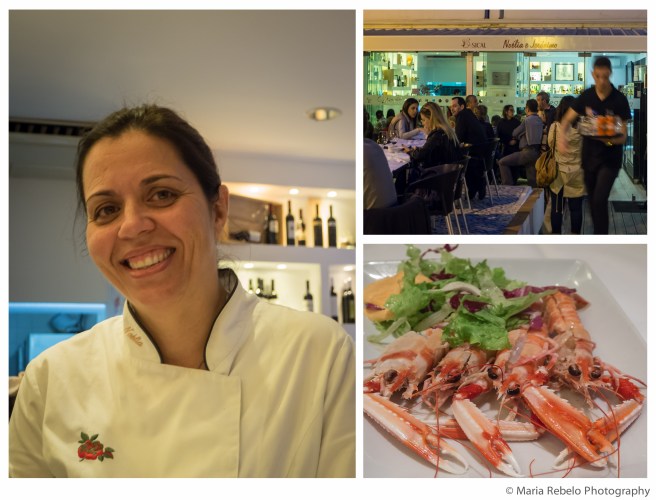
Noélia composit

“One good thing about Winter is that it is easier to dine at Noélia” our Algarve friends told us. “In the Summer it is impossible to get in.” Curious, we made reservations a week in advance.

As soon as we sat down in this seaside restaurant in the village of Cabanas, we knew we were in for something special. There was a festive atmosphere and the aromas of the sea filled the air.

The restaurant is noisy but our waiter was a mind reader who guessed what we wanted without the need for much verbal communication. And so a perfectly chilled bottle of sparkling wine arrived, followed by a plate of steamed langoustines. “They were caught this morning” the waiter told us. “I know you’ll like them.” We were so impressed by the crustaceans’ exquisite taste that we vowed never to eat frozen seafood again.

Our main dish was rice with lemon, corvina, and conquilhas, small cockles that only exist in the Algarve. We appreciated in silence the sublime combination of flavors. A Dom Rodrigo, a sweet combination of fios de ovos (egg threads) and almonds, rounded the meal.

Noélia, the chef, seemed to be everywhere: cooking, talking to regulars, giving instructions to the staff, making final adjustments to the plates before they were brought out. She is a culinary comet that brightens everything she touches.

Suddenly, she arrived at our table and asked: “did you like the food?” “We loved it,” we replied. “But we’re sorry we’re too full to try other dishes.” “Next time order oyster risotto and favas with cuttle fish,” she said. “I get up at 6:00 am to make sure I buy the best oysters in Algarve.” And she was gone as quickly as she had arrived.

Outside, the moon was painting the sea with its silver light. But no one in the restaurant paid any attention. The moon cannot compete with a comet called Noélia.

The Restaurante Noélia & Jerónimo is located in the village of Cabanas near Tavira, Algarve at Rua da Fortaleza, Edifício Cabanas-Mar, Loja 6, tel, 281370649. Reservations are a must.


Perfect moments in Alentejo

Monte Barrão Composit

Many tourists drive from Lisbon to Algarve without stopping in Alentejo. If the beautiful landscapes you see from the highway tempt you to make a detour, you’ll be richly rewarded. Alentejo is a place where days are blessed by warm light and nights bejeweled by precious stars.

The best way to discover Alentejo is to stay at a local farm. Being surrounded by nature helps us put aside schedules and to-do lists to go where our senses take us: follow the scent of lavender, the sight of a stork in flight, the shade of an olive tree, or the chant of a local brook.

If you don’t have friends who own a farm in Alentejo, we can introduce you to Helena and João Borges. They receive guests in their beautiful farm near Alter do Chão through a program called Perfect Moments. You can take horseback ridding lessons, taste wines with their enologist, try the farm’s magical olive oil, eat wonderful meals cooked with local produce, and stroll through pristine fields painted with colors that no artist can rival.

Our friends Helena and João are wonderful hosts who are passionate about the land that has been in their family for centuries. If you visit them, you’ll have a great time and we bet you’ll become their friends.

Click here for the Perfect Moments web site.

The convent of the blue monks

Composit Évora

When we entered the Pousada dos Loios in Évora, we stepped on grounds that have seen war and peace, creation and destruction. The Arabs built a castle on this site that was destroyed by fire during the Portuguese war of 1383-85. In 1485, a local noble built a convent for the order of Loios on top of the castle ruins.

The villagers called the members of this order the blue monks because of the color of their robes. These religious men lived an austere life, working and praying in silence. Their serenity and wisdom led the royal family to choose them as confessors.

The convent was severely damaged by the 1755 earthquake and later rebuilt through the efforts of an enterprising priest. In 1834, Portugal abolished religious orders and the convent was closed down.

In 1963, the ancient building was converted into an historical hotel.  The cells of the monks were turned into comfortable rooms and elegant suites. The courtyard became a spacious breakfast room.

The Pousada is in the center of Évora and yet inside its thick stone walls the clatter of the city vanishes. Staying here for a few days felt like a long vacation. We were content and at ease in the convent of the blue monks.

The Pousada dos Loios in Évora is located on Largo do Conde de Vila Flor, tel. 351 266 730 070. Click here for the pousadas’ website and here for a large collection of photos of the hotel.


Lisbon treasures

Composit Viuva Lamego

We’re often asked whether you can see Lisbon in a day or two. Sure, you can drink an espresso at Brasileira, take a brisk walk through Rossio and Terreiro do Paço, climb to Alfama to tour the castle, and rush right back down to go to Belém. Once there, you can try the famous Pasteis de Belém and go for a quick visit of the Jerónimos monastery and the Belém tower.

You’ll have seen a lot, but you will not know Lisbon. The city doesn’t reveal itself on a one night stand. To understand Lisbon, you must take the time to walk around and discover its many hidden gems.

One of these gems is Viúva Lamego, a store that has sold handmade tiles and ceramics since 1849. The blue-tiled back of the building faces the bustling Avenida Almirante Reis. If you walk around in search of the main entrance, you’ll be rewarded with the sight of one of the most exuberant facades in Lisbon.

There are many other jewels to discover in Lisbon: beautiful gardens, graceful architecture, quaint shops, enticing vistas, and wonderful neighborhood restaurants.

Those who discover some of these treasures get hooked and as soon as they depart, they start planning to come back.

The Viúva Lamego building is located on Largo do Intendente Pina Manique, 25.

Eating by the sea in Azores

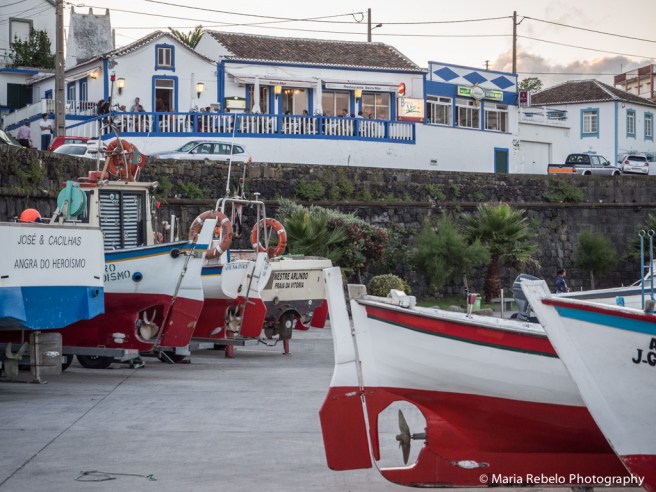
OLYMPUS DIGITAL CAMERA

Beira Mar, a family-owned restaurant in the Azores island of Terceira, has been a favorite dinning destination for four decades. It is always busy so, if you don’t have a reservation, you’ll probably have to wait for a table.

The service is orchestrated by a small troupe of waiters who move with elegance and speak with eloquence about fish and seafood. We could not tell whether they had trained as ballet dancers or as marine biologists.

Our meal started with “cracas,” a local type of seafood that has a delicate crab-like meat and a wonderful salty juice. We then sampled some orange delicacies called “lapas” that were briny and full of flavor.

Next, we had some amazing boca negra (black mouth), a fish that in continental Portugal we call cantaril. We also tried some wonderful species that were new to us: cântaro, bicudas, and lírio. They were all incredibly fresh and arrived at the table grilled to perfection. Terras de Lava, a white wine from the nearby Pico island, was the perfect complement to all this bounty from the sea.

Beira Mar is a simple place; no money was wasted on decoration or fancy silverware. And yet, the restaurant feels luxurious because we can enjoy the sunset over the harbor while feasting on the precious flavors of the sea. It is the kind of luxury we love.

Beira Mar’s address is Canada do Porto, number 46, São Mateus, Terceira, Azores, tel.  295 642 392. Reservations are highly recommended.

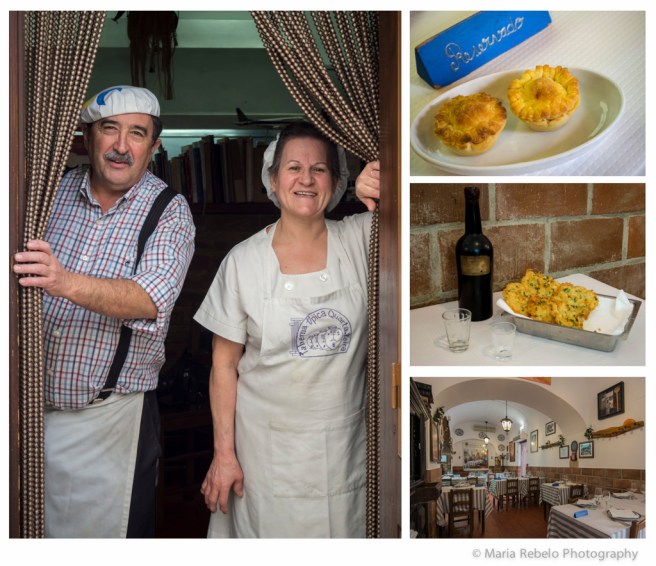
A tavern called Wednesday

Quarta-Feira rest composite

André Freire, the manager of the beautiful Évora pousada, urged us to try a tavern called Quarta Feira (the Portuguese word for Wednesday). “It’s a special place,” André said with a smile. “There’s no menu; you have to trust Zé Dias, the owner, and go with the flow.”

As soon as we entered the restaurant, we became friends with Zé Dias. He moved to Évora from a village in Beira Alta called Quarta Feira, the name he used for the restaurant. Dias worked as a typographer until he opened this tavern 25 years ago with Luisa Batista, a great local cook.

Dias’ enthusiasm for food, wine and life in Alentejo is infectious. Everything he serves comes from people he knows well, from the producers of cheese and sausages to the maker of the clay pots that are integral to Luisa Batista’s cooking. When we asked Dias how he managed to convince Paulo Laureano, a renowned Portuguese enologist, to make the house wine for Quarta Feira, Dias replied “Of course he said yes; we’ve been friends for a long time.”

Our dinner started with slices of local sausages and prosciutto made with black pork from Alentejo. Then a warm sheep cheese seasoned with oreganos arrived, busting with flavor. Next, we had some wonderful mushrooms cooked in mushroom water, seasoned with olive oil, garlic and coriander. “The secret is all in the timing,” Dias tells us and we believe him because at this point we believe everything he says.

The meal’s main event was the house specialty: black iberian pork shoulder marinated in wine cooked slowly in a clay pot. It was so delicious that our taste buds scintillated with delight. The dessert was composed of dried figs, walnuts, cooked quince, and samplings of two conventual desserts.

The meal ended with a glass of licoroso from Herdade do Mouchão. This sweet wine with notes of fruits and spices was a perfectly simple ending to a simply perfect meal.

Zé Dias is a philosopher king who disguises as a tavern owner so that he can share with his guests the joy of living in Alentejo.

Taberna Típica Quarta Feira is on Rua do Inverno 18, Évora, tel. 266 707 530.