The most beautiful esplanade in Lisbon

DSC_9092F

Ribeira das Naus is the place where the caravels were once built and repaired. These ships sailed as far as Goa and Cochim in search of cinnamon and other spices. Lisbon has recently transformed the Ribeira das Naus site into a wonderful promenade that extends from Terreiro do Paço to Cais do Sodré.

The part of the promenade close to Terreiro do Paço, has a beautiful esplanade. Here, you can drink a cup of coffee and eat a “pastel de nata” while enjoying the wonderful river view. Don’t forget to ask for a sprinkle of cinnamon on your pastel, for old time sake.

The best view in Lisbon

Lisboa_505F

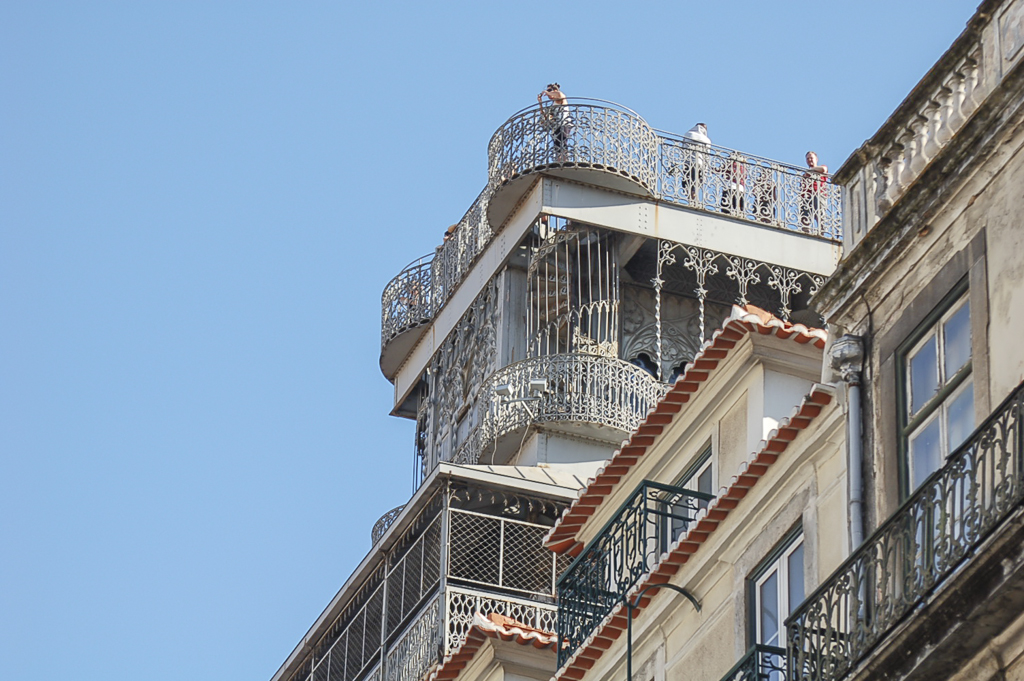
The Portuguese call locations with great views “miradoiros,” which means golden sights. Lisbon is blessed with many miradoiros, but none is as exciting as the top of the Santa Justa elevator. The elevator was built in the beginning of the 20th century by Raoul Mesnier du Ponsard, a Portuguese engineer of French origin. It is the kind of futuristic building that belongs in a Jules Vernes novel.

We remember entering the elevator for the first time and imagining the view during the slow ascent. When we reached the top, we realized how limited our imagination had been. We saw Lisbon in all its glory: the Tagus river, St. Jorge’s castle, Rossio, Terreiro do Paço. It was simply unforgettable!

An ancient esplanade

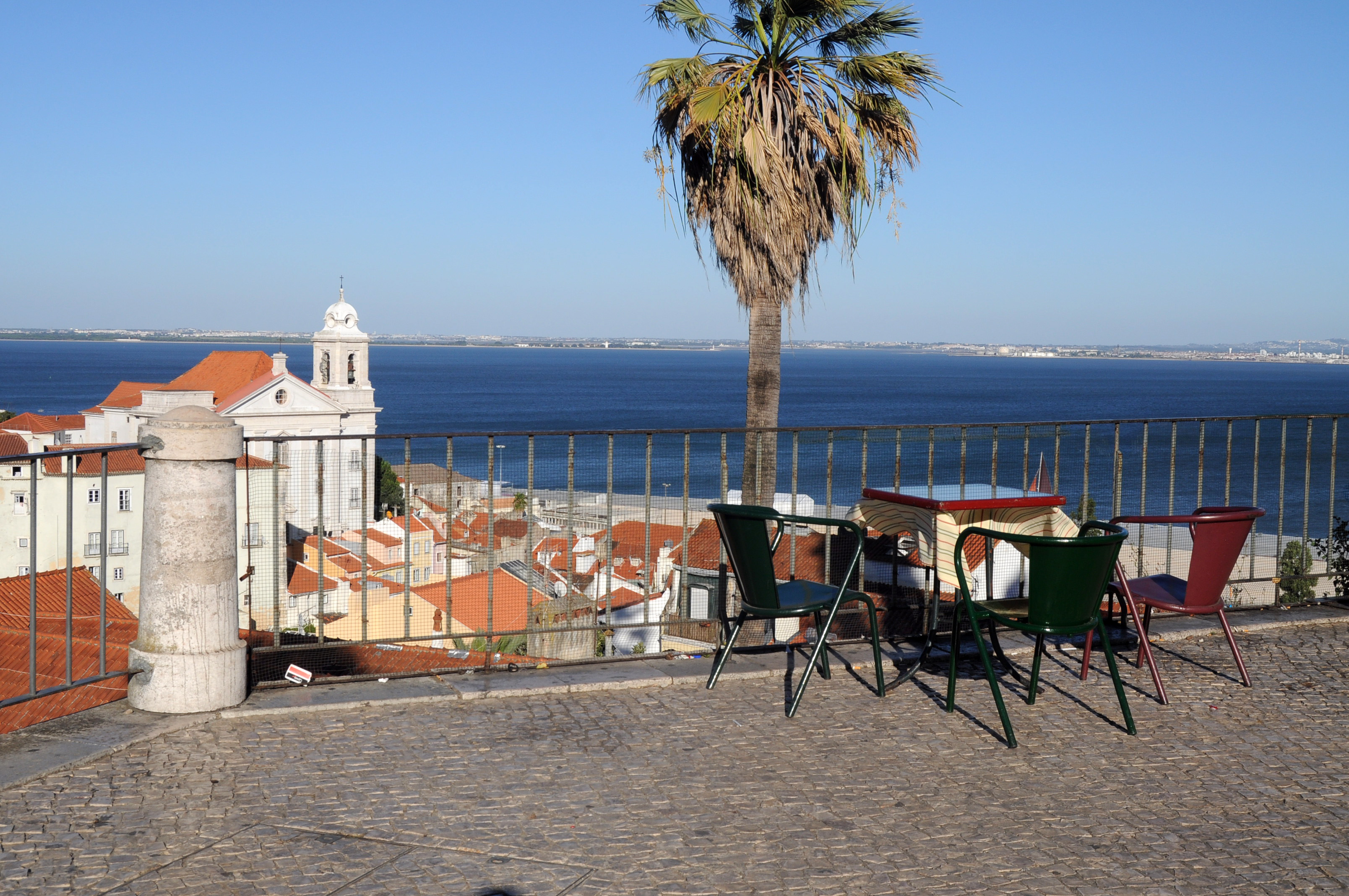
Being a tourist in Alfama, the neighborhood of St. Jorge’s castle in Lisbon, can be exhausting. After a few hours of walking up and down the narrow streets, we deserve to stop for a refreshment. There’s no better place to enjoy a cold, draft beer than the esplanade at Cerca Moura. That’s the name of the defensive wall first built by the Visigoths and then rebuilt by the Moors. Here you have the same same view of the river Tagus that was once enjoyed by Romans, Moors, Suevi, and Visigoths. But, unlike them, you don’t have to be on the lookout for hoards of invaders.

Cerca Moura, Largo das Portas do Sol 4, Lisbon, tel. 21-887-4859.

DOC & DOP

DOP

The rustic food of Portugal is made of elemental aromas and deeply satisfying flavors. It is a cuisine of humble people; fishermen, shepherds, and farmers, who liked food that nourishes the body. In contrast, the French culinary tradition pioneered by Marie-Antoine Carême is all refinement and beauty. It is a cuisine of kings and queens who loved to feast their eyes as much as feed their belly.

Rui Paula, a Portuguese chef, spent two decades marrying these two traditions. At DOP, his restaurant in Oporto, he serves country food cooked with palatial elegance. DOC, his restaurant in Amarante, offers a similar menu. Here, the dining experience is heightened by the serene beauty of the location, on the margins of the Douro river.

If you’re traveling in the north of Portugal, don’t miss the opportunity to try these restaurants. They’ll satisfy your body and soul.

Click here for Rui Paula’s website. DOP is located at Palácio das Artes, Largo de S. Domingos, 18, Porto, tel. 22 20 14 313, email dop@ruipaula.com. DOC is located at Estrada Nacional 222, Folgosa, Armamar, tel. 254 858 123, email doc@ruipaula.com.

Waiting in Cascais

Cascais_75F

Some visitors like to stay in Lisbon to have the excitement of the capital city on their doorstep. Others prefer the seclusion of Sintra with its romantic palaces and lush vegetation.

If you’re visiting the Lisbon region, there is a third option: you can stay in Cascais, a picturesque beach resort, 30 km north of the capital. From Cascais you can take the train to Lisbon, following a scenic route along the Tagus river. You can also rent a car and visit Sintra, Colares, and Cabo da Roca.

The great writer Samuel Beckett vacationed in Cascais in the late 1960s and early 1970s. Beckett stayed at the Cidadela de Cascais, an old fort converted into a hotel favored by Portuguese writers. This hotel has recently been beautifully renovated to add modern comforts to its historical location and expansive ocean views.

Once Beckett got to Cidadela, he simply stayed there, enjoying the moments when the sea paints the sky with white mist. It’s not surprising that the author of a play about waiting in vain knew to stay still when beauty arrives.

The Cidadela de Cascais is located on Avenida Dom Carlos I, Cascais, tel. 214814300. This hotel is part of a network of historical hotels called Pousadas. Click here for our post on the Pousadas and here for the Pousadas web site.

Humble art

LisboaCacilheiro

Art is made of constraints. When architect Frank Gehry received a commission to build whatever he wanted, he turned it down. Sometimes, artists create their own constraints. The French writer George Perec wrote a 300-page novel, “La Disparition,” without using the letter “e.”

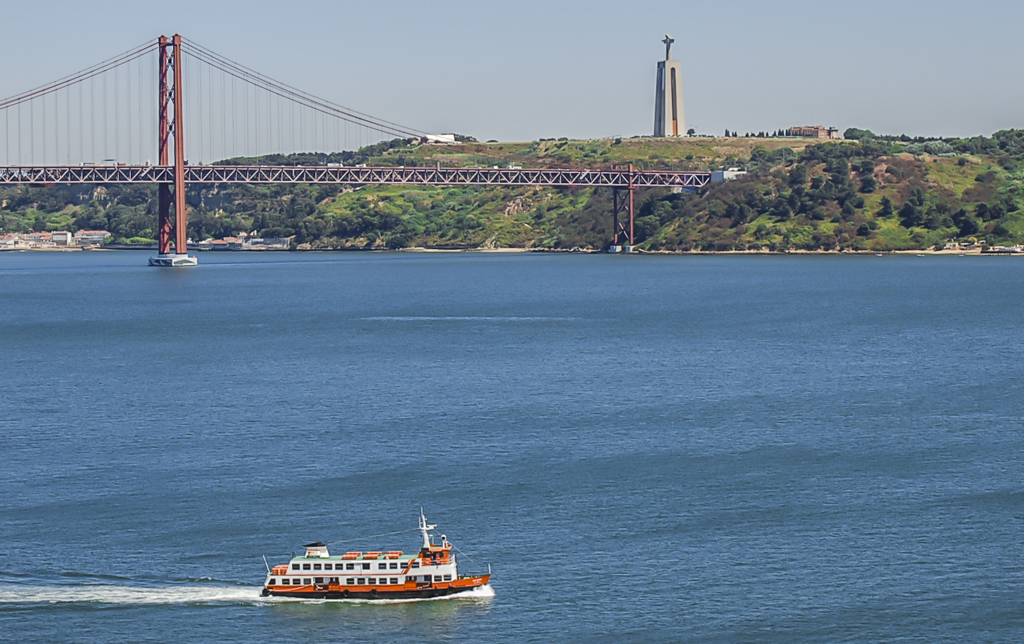
Other times, circumstances dictate the constraints. When artist Joana Vasconcelos was invited to represent Portugal in the Venice Biennale, the problem was that Portugal does not have a permanent pavilion at the fair. The artist’s solution was to use a ferry boat that was about to be dismantled both as a floating pavilion and exhibition piece. So, after spending a lifetime between the margins of the Tagus river, this humble boat has become a work of art!

The ferry boats that cross the river Tagus are called “cacilheiros.” They’re a great, inexpensive way to travel on the Tagus. Click here to see their schedule.

A bohemian hotel

HotelEstrela

If you’re tired of boring, conventional hotels, the Hotel da Estrela might be just the place for you. It is a former school transformed into a bohemian boutique hotel with a great vibe and lots of charm.

The hotel is located in the quiet Campo de Ourique neighborhood. But, when you’re ready for sight seeing, all you have to do is board the famous tram 28 which will take you to Rossio, Chiado, or St. Jorge’s castle.

Choosing where to eat when you come back is easy. Around the corner, you have a great restaurant run by chef Vitor Sobral called Tasca da Esquina, (which makes sense, since “esquina” means corner).

But choosing where to have dessert is a more complex issue. The hotel serves a wonderful “pão de ló,” sugar, eggs and flour transformed into pure bliss. Nearby, you have Pastelaria Aloma, which won the prize for the best “pastel de nata” in Lisbon two years in a row. And then there’s a tiny store that serves the world’s best chocolate cake!

The hotel has a nice garden where you can eat a picnic prepared by the hotel’s restaurant. It’s the perfect place to woo someone you love. If you need inspiration for what to say, just visit the nearby house where the great poet Fernando Pessoa lived. It works every time!

The Hotel da Estrela is located on Rua Saraiva de Carvalho 35,  Lisbon, tel. 211 900 10; click here for the hotel’s web site. Click here and here for more information on Tasca da Esquina and Cervejaria da Esquina, respectively. For information on the life-changing best chocolate cake in the world click here. Pastelaria Aloma is on Rua Francisco Metrass 67, Lisbon, tel. 213 963 797. The Fernando Pessoa house is on Rua Coelho da Rocha, 16, Lisbon. Click here for their web site.

Top 3 Lisbon tourist sites

Lisboa_116F
Jerónimos monastery, Maria Rebelo, digital print image, 2012.

Marie Rattazzi, a grandniece of Napoleon, was a beautiful socialite. She married an Italian prime minister and was friends with Alexander Dumas and Victor Hugo. The books she wrote about her travels give us a unique glimpse into the life of 19th century European nobility.

When Rattazzi’s “Portugal at a Glance” was published in 1880, the Portuguese complained that it was full of errors and misconceptions. But her list of favorite Lisbon sites stands the test of time. Here it is:

1) The Terreiro do Paço, bathed by the waters of the Tagus river. […] Yes, the Tagus is truly beautiful and I admire it with all the sincerity of my soul. […] It is vast, with spacious, luminous horizons and one of the world’s most splendid harbors.

2) The Rossio, a very beautiful plaza, the busiest in Lisbon.

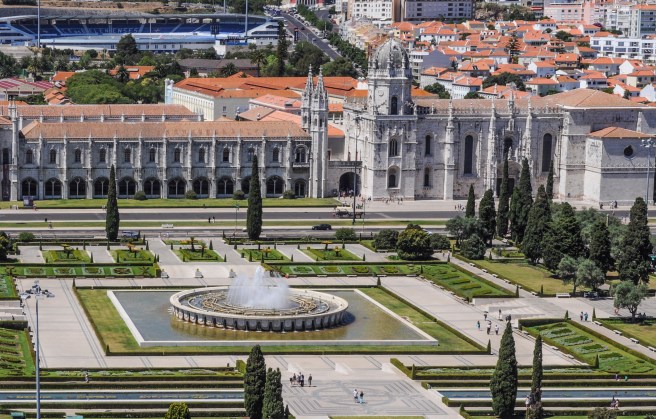
3) The Tower of Belem and the Jerónimos monastery. The Tower of Belém has a square form flanked by turrets, watchtowers, oculi, lancet windows, and sculptured balconies. Its pure Gothic architecture produces an admirable effect. Near the tower rises the ancient Jerónimos monastery. The main entrance and the facade are one of the most beautiful examples of the opulent Gothic style. […] This remarkable monument was built in Restelo, the beach from where Vasco da Gama sailed to India. The convent, contiguous to the church, is immense. […] The Arab-style cloister has sculptured laces so perfect and beautiful that I would gladly spend consecutive days in contemplative admiration. It is wonderful!

If you’re in Lisbon for a short visit, you’ll be well served by these timeless recommendations.

A dream palace

Sintra_PalácioPena
The Pena Palace, Maria Rebelo, digital print image, 2012.

The story of the Pena Palace begins in the 16th century. King Dom Manuel was hiking in Sintra when he sighted Vasco da Gama’s sailboats arriving in Cascais from their voyage to India. To celebrate da Gama’s feat, the king built a monastery on the top of the Sintra mountain. But, over time, the building fell into disrepair and was eventually abandoned.

When Ferdinand Saxe-Coburg-Gotha, the husband of Queen Dona Maria II, visited Sintra, he saw the derelict monastery surrounded by a barren landscape. Ferdinand imagined a beautiful palace and an enchanted forest. He bought the property in 1838 and restored the old monastery to use as a Summer residence. Later, he built an adjacent palace with larger rooms to accommodate state functions. The monastery is pink and the new palace yellow, so they are easy to tell apart.

Around the palace, Ferdinand created artificial lakes and an irrigation system. He studied the soil and supervised the plantation of trees brought from all over the world.

In 1853, Dona Maria died and Pedro, the couple’s elder son, inherited the Portuguese throne. Ferdinand was offered the throne of Spain, but he loved living in Pena so much that he refused the offer. The Pena Palace is the dream of a German prince who fell in love with Portugal.

Portuguese zen

Bola de Berlim

A “bola de Berlim” (Berlim ball) is deliciously simple: fried dough filled with pastry cream and coated with sugar. How can we enjoy this treat in an era of constant calorie counting?

Here’s the strategy. Do you know those times when we’re annoyed by the small predicaments of life? We’re waiting in an endless line, lock our keys inside the car, step on a puddle of oil, or lose our umbrella as it starts to rain. Instead of getting frustrated, we smile and think: we earned a bola de Berlim!

We rush to a pastry store and ask without a trace of guilt: “uma bola de Berlim, por favor.” We then enjoy the bola for what it really is: a necessary moment of zen.

This Bola de Berlim is from Tartine, a wonderful new bakery in Chiado where you can enjoy breakfast, brunch and other light meals. Tartine is located on Rua Serpa Pinto, 15, Lisbon, tel. 213429108. Click here for their website.