A codfish restaurant

If you’re yearning for codfish, we know a restaurant that will satisfy your lust. Called Sal na Adega, it is part of Adega Mãe, a winery in Torres Vedras that belongs to Ribeiralves, a company famous for its salted cod. 

Sal na Adega has a spacious dining room that overlooks serene vineyards. A large round window gives us a glimpse of the kitchen’s hustle and bustle. 

You can accompany the meal with any wine from the winery’s shop by paying a modest cork fee. The menu lists many meat and fresh fish preparations, but the star offering is salted cod. Codfish usually pairs with red wine, but if you’re feeling adventurous, we suggest a white wine made from Vital. There are only a few wineries making wine with this grape varietal. The results are exciting, and the wine is a great companion for the fish.

Our meal started with codfish cakes, a litmus test passed with flying colors–the cakes were crispy, rich, and flavorful. Then we tried a trio of cod preparations. First, a codfish loin topped with crunchy prosciutto and onion in a vinegar sauce called escabeche. Second, grilled codfish neck, the most succulent part of the fish because of its abundance of collagen. It is an epic preparation, up there in the pantheon of best codfish we have ever tried. Third, a delicious codfish in coriander rice.

The dessert menu includes many temptations and one irresistible choice: the famous bean pastries from Serra da Vila in Torres Vedras. 

The meal ends with a pleasant surprise: a 10 percent discount on the wines purchased at the wine shop. We went to Sal na Adega for the codfish, and came back with some great wine.

Sal na Adega is located at Estrada Municipal 554, Torres Vedras, tel. 261-950-105.

Howard’s Folly

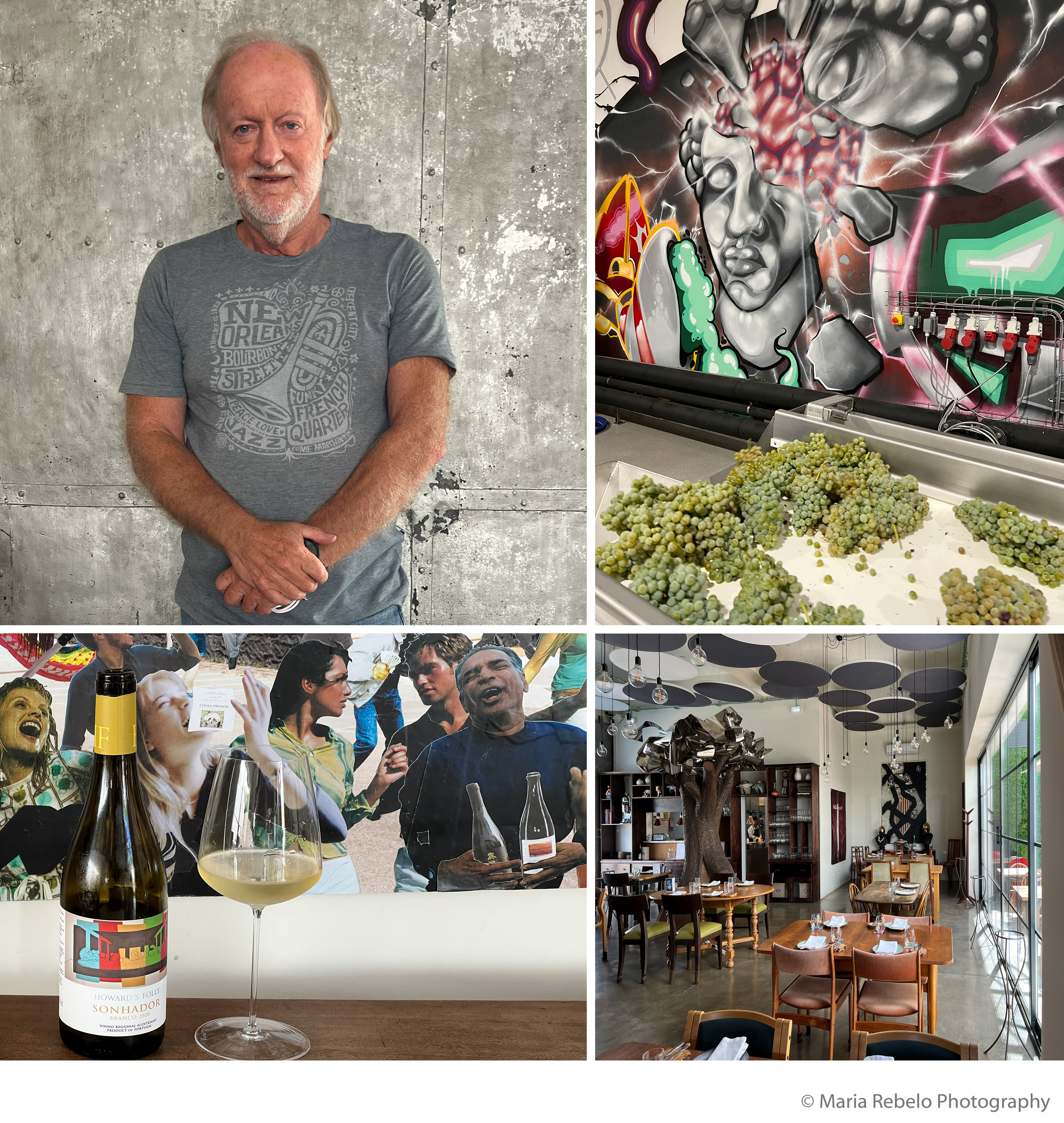
It is great fun to visit Howard’s Folly in Estremoz. The restaurant, winery, and art gallery are a joint venture between Howard Bilton, a British financier, and David Baverstock, a legendary winemaker. 

After studying enology in his home country, Australia, David worked in France and Germany. Before returning home, he vacationed in Portugal and met his future wife, Maria Antonieta. He returned to Australia to work in the Barossa Valley, where Maria joined him. But Maria was homesick, and in 1982 the couple came back to Portugal. David worked in the Douro valley until 1992, when he became chief winemaker at Herdade do Esporão in Alentejo. He felt at home in the endless plains that reminded him of Australia. His thirty harvests at Esporão helped establish Alentejo as an important wine region.  

Howard’s Folly is an exuberant place. It occupies a large building that was once a “grémio da lavoura,” an agriculture association. There is art everywhere. Sewing machines turned into miniature tractors bought in the local market, pig sculptures, and much more.

David shows us the winery with its colorful walls painted by a graffiti artist. Freshly picked grapes are arriving to be sorted, crushed, and cooled with dry ice. 

We head to the restaurant. The food, prepared by chef Hugo Bernardo, is Portuguese with a whimsical British twist. The butter has a strong umami taste because it is mixed with Marmite, a salty yeast extract popular in Britain. 

David opens a delightful white wine called Sonhador (dreamer), made from old vines planted in the hills of São Mamede in Portalegre. It is an excellent companion for the codfish and chips that soon arrived at the table. Then we try the Winemaker’s Choice, a velvety red that pairs beautifully with a delicious shitake mushroom salad.

Lunch ends with a glass of 1991 Carcavelos. The wine, produced at Quinta dos Pesos by the Manuel Bulhosa family, was stored in barrels and almost forgotten. David and Howard convinced the family to sell them some barrels so that David could make a blend. The result is spectacular.  

David retired from Esporão and was planning to take it easy. But Ravasqueira convinced him to join them as chief winemaker. And that is lucky for us. We’ll be able to enjoy many more of David’s harvests to come!

Howard’s Folly is located at Rua General Norton de Matos in Estremoz, tel. 268 332 151.

How do we tell the king?

We used to buy jams endorsed by the British monarchs, figuring that centuries of sampling jams at tea time gave them the practice required to select the cream of the jam crop.

We quite liked the British jams until one fateful lunch at Toca da Raposa in Ervedosa do Douro. A sampling of jams arrived without fanfare at dessert time. When we tried them, we experienced a whole new level of deliciousness!  

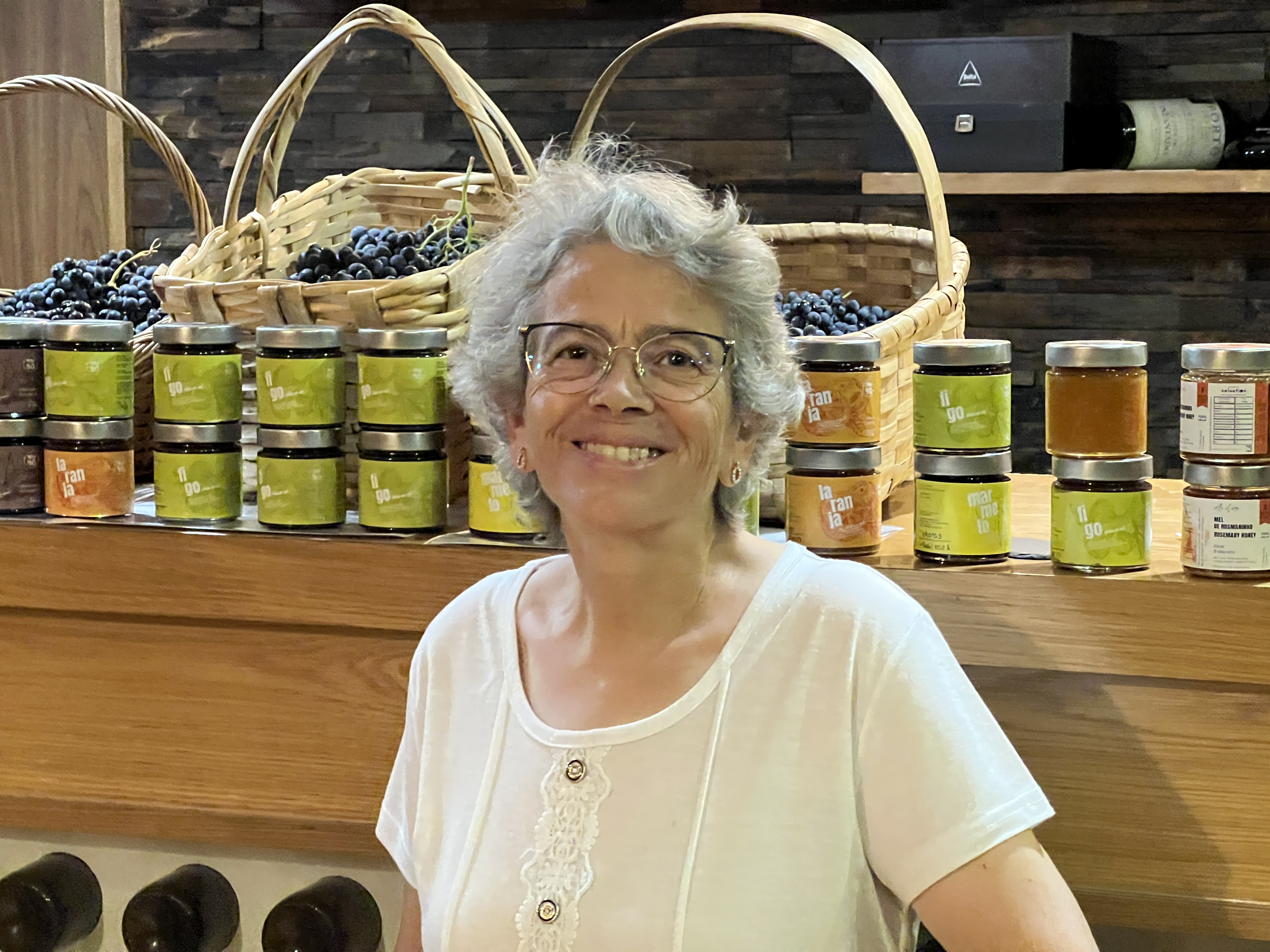
What makes these jams so sublime? Their fruit comes from the Douro valley, a place where the scorching summer heat and a wealth of soil micronutrients create unique conditions that intensify aromas and flavors. And each batch is handcrafted by Dona Graça, a legendary cook, and her talented daughter, Rosário. The two leave nothing to chance, shunning the use of preservatives and making adjustments small and large to ensure that the results are perfect. 

There is an orange jam chockfull of strips of orange rind that delight the palate and an orange and hot pepper jam with the ideal combination of sugar and spice. There are jars of jam brimming with perfectly ripe whole figs; a surprisingly delicious zucchini jam; amazing jams made with must from grapes used to produce port wine; jams made from a rare peach variety that grows amidst the vines, and much more.

The jams favored by his royal majesty pale by comparison with the wondrous jams from Toca da Raposa! The question is: how do we tell the king?

Toca da Raposa is located at Rua da Praça in Ervedosa do Douro, tel. 254 423 466.

Dinning with Marlene

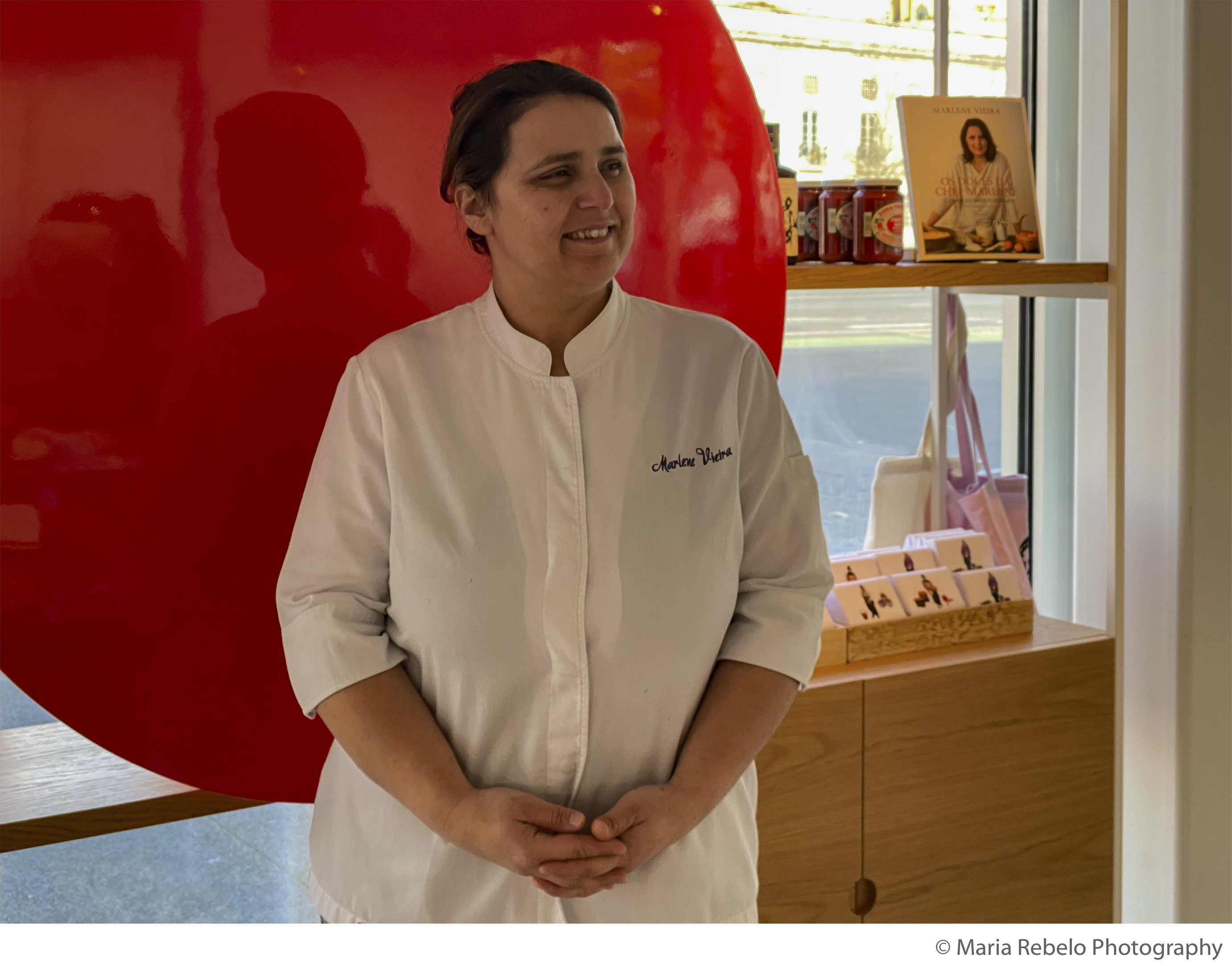
When we dined at Marlene Vieira’s new restaurant, appropriately called Marlene, the place was packed. But, like a star performer, Marlene made us feel like she was cooking just for us, often coming to our table to chat about the food she served. 

The meal started with a variation on one of her classic themes, the “filhós de berbigão” that she serves at Zun Zum, her more casual restaurant. This time, the filhós, a star-shaped shell made from fried dough, was gloriously stuffed with foie gras, reineta apple, and a Madeira-wine gel. 

Next, came a trompe l’oeil preparation. It looked like cheese topped with prosciutto. But the cheese turned out to be an egg cooked at low temperature that, mixed with the prosciutto, created a festival of umami sensations.

We were taken to the sea by a delicate combination of violet shrimp from the Algarve accompanied by a gazpacho made with the shrimp’s head, topped with a percebes tartlet. 

Then, we returned to land with two crusty loaves of bread, one made with wheat and rye and the other with white corn. They came with fragrant olive oil made in Trás-os-Montes at Quinta de São Miguel do Seixo. 

The next menu entry was a delicate part of the codfish called cocochas seasoned with parsley and pine nuts. We reached the mid-point of our culinary journey with tasty white truffles and morel mushrooms stuffed with requeijão

They were followed by a ravishing sole dressed in an asparagus sauce, butter, and caviar. We reached the climax with a savory pudding made with an eel broth seasoned with saffron and topped with the eel’s skin. It is sublime!

Dessert was a delightful pine nut mousse with apple granita and pineapple from the Azores. The petit fours were lovely: merengue with a strawberry cream, tangerine leaves, and macaroons stuffed with almonds and eggs.

We’re lucky to have a chef like Marlene Vieira, who studied the past to invent the future of our culinary tradition!

Marlene is located at Av. Infante D. Henrique, Doca do Jardim do Tabaco, Lisboa, tel. 351 912 626 761, email marlene@marlene.pt.

Lunch at a royal courtyard

We drove to Alter do Chão in Alentejo to have lunch at Páteo Real, a restaurant headed by a young chef called Filipe Ramalho. Páteo Real means royal courtyard, a reference to the castle of Alter do Chão, which stands proudly in the restaurant’s backyard. 

After working in fine dining for seven years, Filipe wanted to put the new techniques he mastered at the service of the traditional cuisine of Alentejo. When he learned that Páteo Real was for sale, he drove there on a Friday and closed the deal by Monday. 

But this new beginning was tough. The locals suspected the restaurant would charge high prices for small portions of pretty food. Visitors were few and far between. One year later, it is difficult to get a reservation–the restaurant is full of visitors and locals. And for a good reason: its food is a delicious evolution of the traditional cooking of Alentejo. 

We sat in the courtyard under large white umbrellas that protected us from the exuberant Alentejo sun. A waiter filled our glasses with “O Nosso,” a pleasant white wine from Serra Papa Leite. The meal started with Filipe’s signature dish: a tart cooked with farinheira sausage made with chestnut flour, topped with pears cooked in wine, quince marmalade, and chard. This unusual combination is so harmonious that it will likely become a classic.

A plate of sliced sausages followed the iconic tart. Alentejo’s sausages are generally excellent, but these are exceptional. They come from Salsicharia Canaense, an artisanal producer with whom Filipe collaborates. Their products also starred on the following two plates: cabeça de xara (a pork preparation) served with pickled purple onions and coriander pesto and delicately smoked bacon served with roasted red peppers, olive oil, coriander, paprika, and large capers.

Next, we tried some delightful duck croquettes served with puffed rice and coriander mayonnaise. The savory part of the meal ended with duck livers seared in brandy and combined with thinly-sliced fried potatoes. It is an explosion of flavor. “When we recommend duck livers and the clients hesitate, we offer a money-back guarantee,” said Filipe smiling. “People are always surprised at how good it is.”

The dessert was a delicious tart made from almonds and pumpkin jam. We loved the arch and rhythm of the meal. It kept our palates interested and left us deeply satisfied. It is a royal honor to dine in Filipe Ramalho’s courtyard!

Páteo Real is located at Av. Dr. João Pestana 37, Alter do Chão, tel. 960 155 363.

Marlene Vieira’s Codfish Recipe

The Portuguese culinary tradition does not come from palace kitchens. It comes from the cooking of humble people who, in every season, took the best ingredients that nature offered and prepared them using recipes perfected over centuries. The food presentation is often rustic, but the taste is delicious because everything is harmonious and natural.

Many chefs are reinventing the cuisine of Portugal. But the truth is that there’s no need for reinvention. What we need is an evolution, the creation of new recipes that, like clams Bulhão Pato and Caldo Verde, bring joy to the dining tables of Portugal. Easy to say, but who can do it? 

We know one chef who can: Marlene Vieira. Her Zun Zum and Time Out restaurants are indispensable stops in any culinary tour of Lisbon. Her food is creative, not because she wants to surprise or shock. Marlene’s originality stems from her ability to intuit new, delicious ways of preparing Portugal’s great food products. 

Marlene started cooking at age 12. Her father, who owned a butcher shop, took her on a delivery to an Oporto restaurant that served French-inspired food. The chef invited Marlene to sample what they were preparing, and she was hooked. She loved the taste, the refinement, and elegance. Marlene spent holidays and school vacations helping out at the restaurant. She relishes the organized chaos of a professional kitchen, and cooking proved to be an ideal outlet for her bountiful energy. 

At age 16, Marlene went to culinary school. She graduated as the best student and stayed as a teaching assistant, while working as a pastry chef at a boutique hotel. Up to this point, all her cooking had revolved around French techniques. 

At age 20, a friend invited her to work at a Portuguese restaurant in New York. For the first time, Marlene had to cook traditional Portuguese food. She remembered fondly the food that her mother and grandmother prepared, but she did not know how to cook it. More than three thousand miles away from home, this young chef started to study the cuisine of Portugal. And for the first time, she realized that she had a role to play: embrace Portuguese cuisine and make it her own.

Marlene returned to Portugal inspired to learn more about traditional cooking. She continued to work in fine dining, but her cooking became more and more Portuguese. A breakthrough moment came when Time Out magazine chose her dish featuring a large shrimp called “carabineiro” served with an almond brulée as the year’s best recipe. This dish has the hallmark of Marlene’s cooking: it draws on combinations of ingredients and techniques that are hard to envision but feel utterly natural once you try them. 

We asked Marlene whether she could share a recipe with our readers. She generously gave us a codfish recipe. 

Portugal has many codfish recipes, but only a few have stood the test of time, like those of Brás, Zé do Pipo, and Gomes de Sá. Perhaps one day, this recipe will be known as Codfish Marlene. Enjoy!

Codfish Confit with Sweet Potatoes Gnocchi, Low-temperature Egg, and Pea Emulsion

Ingredients for four people

600 grams of codfish filets

2 garlic cloves

1 laurel leaf

400 grams of sweet potatoes

5 eggs

100 grams of flour

70 grams of onion

70 grams of leaks

300 grams of peas

Microgreens for garnish

3 deciliters of olive oil

200 milliliters of whole milk

Sea salt

Preparation

Pre-heat the oven at 150 ºC.

Clean the codfish fillets, removing the bones. Divide into 12 portions. Smash the garlic, leaving the skin. Place the garlic, the codfish, the laurel leaf, and 2 dl of olive oil on a tray. Set aside.

Place 4 eggs in a pot with water. Heat the pot until the temperature reaches 63.5 ºC. Use a thermometer to control the temperature and keep it steady for 45 minutes. Once the time is up, place the eggs in an ice bowl to lower the temperature.

Cook the sweet potatoes with the skin on. Let them cool, peel them, and make a purée. Mix in a bowl the flour, the purée, and one egg. Blend until the mixture is homogeneous. Make small cylinders and cut them into gnocchi. Bring water and salt to a boil. Once it is boiling, add the gnocchi, cooking for 3 minutes. Remove them with a slotted spoon and drain the remaining water by placing the gnocchi on paper towels.    

Slice the onions and leek. Put olive oil, the onion, and leek in a pot and let the vegetables sweat for 10 minutes in low heat. Add the peas, season with salt, cover with milk and cook for another 15 minutes. Blend the mixture with a hand blender and strain.

Place the codfish in the oven for 10 minutes. Heat a frying pan with a bit of olive oil. Once the oil is warm, add the gnocchi and let them cook—season with salt and pepper. 

Heat up the eggs in tepid water for 10 minutes. Remove the eggshell.

Warm the pea emulsion and blend with a hand blender until it makes foam. 

Serve on a deep plate, placing the gnocchi at the bottom, then the codfish and the egg. Finalize using the pea emulsion and some microgreens. 

Click here for Marlene Vieira’s website.

The thrill of Loco

Dining at Loco is like attending a jazz concert–there’s a feeling of excitement in the air. The restaurant lighting is soft, but the tables are lit like a stage, ready for chef Alexandre Silva’s performance. 

We sat down and studied the interesting wine list curated by Mário Marques, an old acquaintance from Ceia and Cura.

The performance started with a series of delicious food riffs presented on a wide variety of backgrounds: stones, coal, shells, and much more. The tempo was fast, like John Coltrane playing Giant Steps. We recognized culinary motifs inspired by the classics of Portuguese cuisine. For example, there were disks of crispy chicken skin that tasted like the traditional roasted chicken with piri-piri sauce. 

Then, the rhythm slowed down to a ballad tempo, like Thelonious Monk playing ‘Round about Midnight. A basket of artisan bread came with rich butters and a bowl with sauce from the traditional clams Bulhão Pato. There was also delicately cooked, perfectly seasoned black pork, pumpkin dumplings, and pristine fish dressed with colorful sauces. 

The desserts were playful, pomegranate granita and supple ice cream topped with hibiscus crystals. Finally, there were some encores–miniature sweets that please the eye and charm the palate. It is a thrill to dine at Loco!

Loco is located at Rua dos Navegantes nº53-B, Lisbon, tel. 21 395 1861. Click here for the restaurant’s website.

Zun Zum

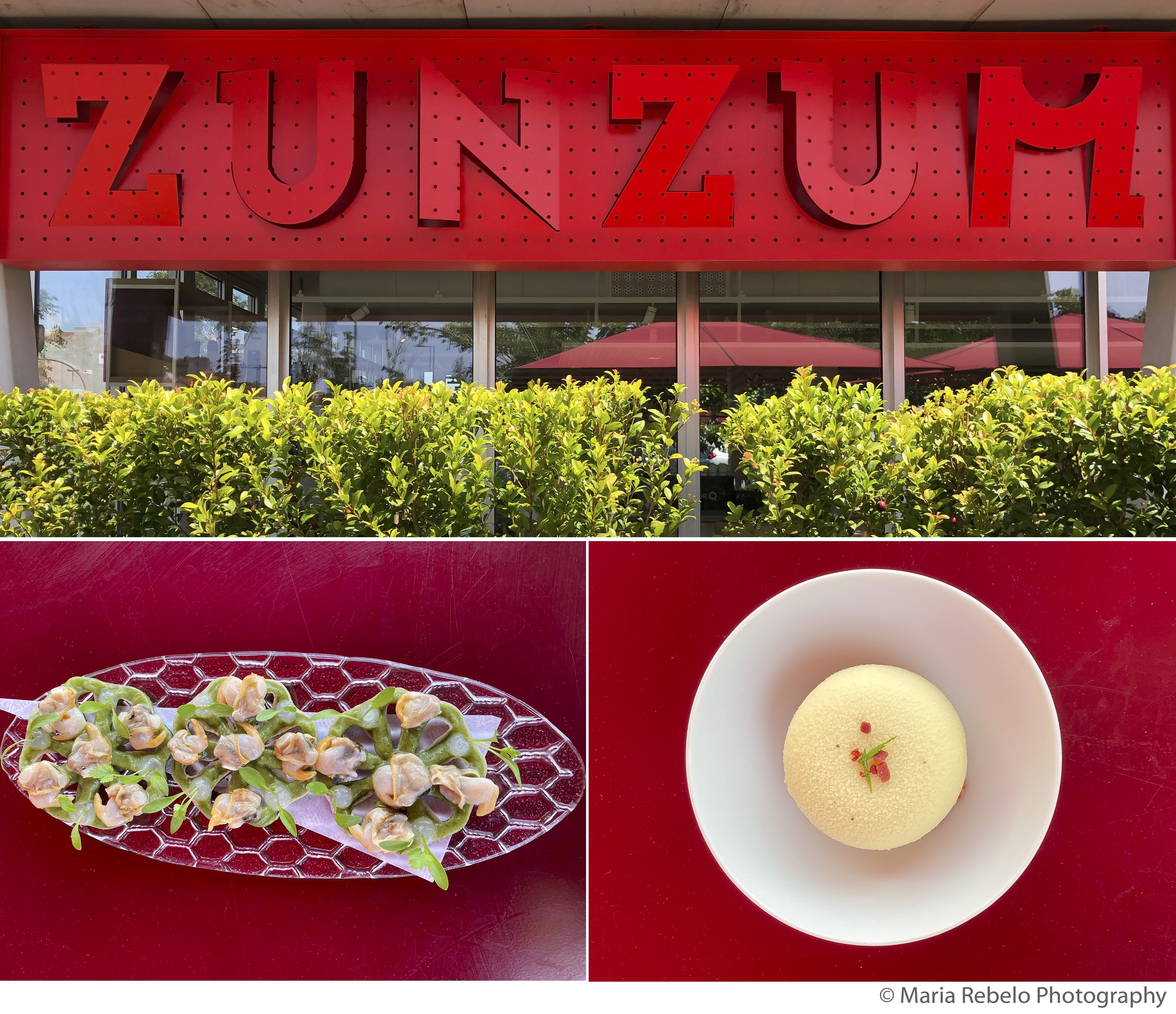
It is so much fun to eat at ZunZum! The restaurant, headed by chef Marlene Vieira, has a great location, with the Tagus river on one side and the Pantheon on the other. The food is as wonderful as the location.

We sat for lunch in the esplanade under a large red umbrella on one of those perfect sunny days that Lisbon residents take for granted. The simpatico waiter suggested a rosé made from bastardo at Quinta de Arcossó in Tràs os Montes. It has nice acidity and flavors of cherry and tropical fruit. “Do you want to choose from the menu or be surprised by the chef?” the waiter asked. Surprised, we chose without hesitation.

The “couvert,” a set of delightful little bites that start the meal included codfish tempura (“pataniscas de bacalhau”) and a sourdough brioche. 

The first appetizer was a luscious ceviche made with unusual ingredients: popcorn, red onion, and passion fruit. It was followed by tasty mini pizzas topped with trout eggs, a spider crab called sapateira, and avocado. The pizzas were coated with a traditional spider-crab filling.

Then came “filhoses de berbigão.” They are a feast, the cockles large and juicy floating on a star-shaped bed made from fried dough filled with a cream of cockle broth, coriander, and lemon. 

The fish entrée was a bowl of creamy, savory rice made with clams, cockles, razor clams, and mussels. The rice, a carolino variety from Bom Sucesso, has large grains that soak the appetizing sauce made by the seafood. 

The meat entrée was a slice of delicious black pork accompanied by fried corn and pickles made from cauliflower and celery.

Our first dessert was a yogurt parfait on a bed of strawberry jam. The fatness of the yogurt and the sweetness of the jam are a perfect yin and yang. The second dessert was “toucinho do céu” (bacon from heaven) a pudding made with egg yolks and bacon. It is so tasty that it could, indeed, be served in heaven.

We left ZunZum deeply satisfied and certain that if Robinson Crusoe could eat Marlene Vieira’s food on his desert island, he would never want to leave.

ZunZum is located ar Av. Infante D. Henrique, Doca Jardim do Tabaco in Lisbon, email hello@zunzum.pt, tel. 915 507 870. Click here for the restaurant’s website.

DeCastro Gaia

“You have to try my restaurant in Gaia at Espaço Porto Cruz. Stop by the terrace first and then come down to DeCastro Gaia to eat,” advised chef Miguel Castro e Silva.

A few days later, we stepped out of the elevator on the top floor at Espaço Porto Cruz and wow, what a view!  The waters of the Douro river flowed quietly below, saying farewell to the city on their way to the sea. Porto, dressed in bright light, was trying to sway the river to linger a little longer. The river margins were decorated with “rabelo” boats, the traditional vessels that, in times gone by, brought barrels of precious ports to be stored in the Gaia cellars.

It was hard to leave the gorgeous view, but we were curious about the gastronomical experience created by Miguel at DeCastro Gaia. So we went down one floor and sat at a table overlooking Porto.

Before the meal started, our waiter brought us a seductive white Dalva port that put us in a festive mood. Then, a velvety vegetable soup prompted us to say the first of many “oh, so good!” 

The waiter filled our glasses with Contacto Alvarinho, a lively green wine made by Anselmo Mendes. It paired perfectly with our next dish, a lush artichoke and goat cheese salad. More delights followed. The turnovers made from phyllo dough, spinach, and alheira were wonderful. At first bite, they resemble a Greek spanakopita, but then the allure of the alheira surprises the palate.  The codfish fried in batter (“patanisca”) melted in the mouth. Finally, the rooster fish with clams was fresh and oh, so good! 

The menu offers old classics of Portuguese cuisine and new classics created by chef Castro Silva. What the menu does not reveal is the freshness of the ingredients and the precision of the confection. The Portuguese have an expression “tudo no ponto” that describes food that is perfectly cooked, seasoned, and sauced.  That is what DeCastro Gaia offers. What more do we need?

DeCastro Gaia is located in Espaço Porto Cruz at Largo Miguel Bombarda 23, Vila Nova de Gaia. Click here for the restaurant’s website.

Eating eels in the middle of Ribatejo

“I am taking you to a restaurant that used to be a shack. The place was recently renovated, but I hope Virgulina’s cooking hasn’t changed,” said Manuel Malfeito, a professor of enology who can always find extraordinary places in the middle of nowhere. This time we were lost in Ribatejo, an agricultural region that has resisted the winds of change, preserving its character and traditions.

After many twists and turns, we saw a sign that reads “Constantino das Enguias.” Enguias means eels and Constantino is the name of Virgulina’s husband. In 1975, the couple set up a hut with a dust floor, a roof made out of eucalyptus branches and some wooden tables and benches. Virgulina served food prepared with vegetables from her garden and eels from a local river, the Ribeira de Muge. The delicious results attracted a loyal clientele that kept the restaurant full throughout the years. Last year, José Valério, Virgulina’s son, convinced her to renovate and expand the restaurant. 

We ordered eels cooked in two ways, fried and stewed (ensopado de enguias). The fried eels are crunchy, with an umami taste that delights the palate. The stewed eels are succulent, cooked in as appetizing broth made with country bread, mint, onions, green pepper, garlic, bay leaves, white wine, and peeled tomatoes. Virgulina’s food is as great as always!

Manuel chose a bottle of white Casa do Cadaval Reserva 2018 made with Arinto and Viognier. It is an elegant, balanced wine that managed to keep pace with the exuberant taste of the eels. The wine is produced nearby by Teresa Schönborn, a German countess. Why does a German countess produce wine in the middle of Ribatejo?  That, as Scheherazade would say, is a story for another day.

Constantino das Enguias is located at Rua Direita, 265, Foros de Benfica do Ribatejo, tel. 243 589 156.