Legendary moments at Quinta da Boavista

Quinta da Boa Vista Composit

Some quintas in the Douro valley experienced one legendary moment. But Quinta da Boavista experienced two. The first came in May 1809 when Joseph James Forrester rented the quinta to work on his masterpiece, a detailed map of the Douro river. This map quickly became an indispensable reference for port-wine makers. It also made Forrester one of the most important figures in the port-wine trade. Forrester fought for the production of high-quality wines that reflected the unique terroir of the Douro valley. As a recognition for his service, king Dom Pedro V made him a Baron.

The second moment happened thanks to Marcelo Lima and Tony Smith, a duo of entrepreneurs who bought the quinta in 2013. They realized that the grapes from Boavista, grown in some of the Douro’s tallest terraces, are like precious stones. So they went in search of a master jeweler who could polish them. They knew that the ideal person would be Jean-Claude Berrouet, the enologist responsible for 44 vintages of Château Pétrus. But he had retired in 2007, took very few consulting jobs and had never worked in Portugal.

In July 2013, Marcelo and Tony brought Jean-Claude to Boavista. The enologist stood on the varanda of the house of the Baron of Forrester for a long time contemplating an iconic vineyard named Oratório (oratory) after its shape. When he finally broke the silence, he said “Ça c’est fort!” Marcelo and Tony smiled–they had found his jeweler. Since then, Jean-Claude has worked with Rui Cunha, the quinta’s resident enologist, to perfect the way in which wines from different parcels are blended. He also brought his profound knowledge of the Bordeaux oak barrel producers to choose the ideal barrels for aging the grapes from each vineyard.

When the first vintage of Oratório came out, Marcelo, Tony, and Jean-Claude sat on the terrace overlooking the vineyard. Jean-Claude took time to evaluate the color of the wine, appreciate its delicate aromas and to take a few sips. When he finally broke the silence, he said “C’est un grand vin!”

Click here for the website of Quinta da Boavista.

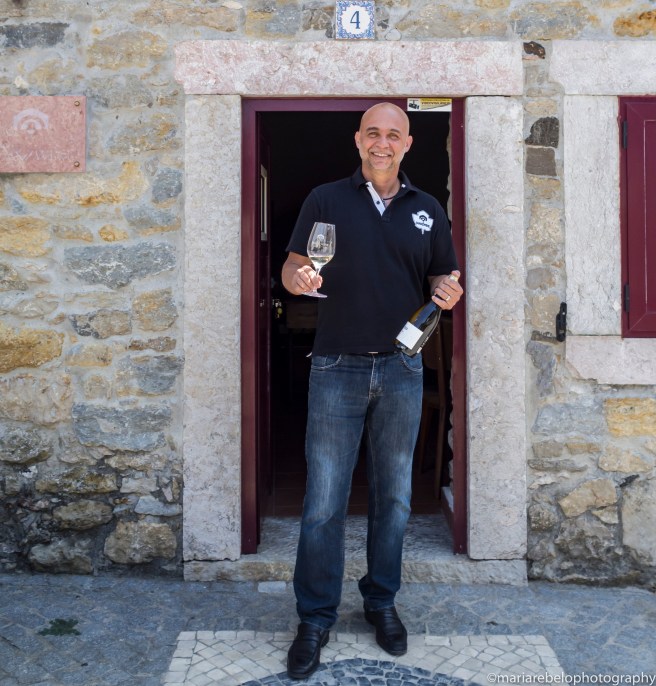
Mário Sérgio, a Portuguese vigneron

OLYMPUS DIGITAL CAMERA

The people of Epernay, a town at the heart of the Champagne region, know more about sparkling wine than almost anyone in the world. So it is remarkable that Mario Sérgio, a producer from Bairrada, found a market for his sparkling wines in Epernay.

This success has been more than a century in the making–Mário is a 4th generation wine maker. His 81-old father still labors 10 hours a day tending to the vineyards.

Mário’s family used to sell their grapes to the famed Caves São João. In 1989, at age of 23, Mário decided to reserve the grapes to make his own wines under the label Quinta das Bágeiras. From the beginning, he paid no attention to what is most fashionable or profitable. Instead, he focused on making great wines in Bairrada.

One of the first hints that Mário was on the path to greatness came in 2001 when, in a blind tasting organized in France, the judges selected two wines: a very expensive Château Haut-Brion and a modestly-priced Quinta das Bágeiras garrafeira.

Mário shuns everything that is artificial. He uses no yeasts, no filtering, no stabilization techniques. Reds are made with old wine presses using the notoriously difficult baga varietal. Sparkling wines are all Natural Brut, an exacting style that requires that there be no residual sugar in the wine.

Just like the French vignerons, Mário buys no grapes. All his wines are produced from grapes hand picked in his properties.  He knows every parcel and plants vines only in soils that can produce excellent results. “I am often offered grapes from properties adjacent to mine. But many times, the soil and sun exposure are completely different from those of the parcels I own.”

Mário is particularly proud of the vineyard that produces the grapes for Pai Abel, a wine named after his father. He makes 2,000 bottles a year. Using a practice that is rare in Portugal, he sells 80 percent “en primeur” to lucky subscribers who buy the wine at a discount two years before it is ready for delivery.

A profound believer in the aging potential of Bairrada whites, he stored his 1994 white wine for 12 years before releasing it for sale. When he brought home a bottle to share with his wife, she told him: “There’s no market for aged white wine, you’ll never sell a single bottle.” When by the end of the meal the bottle was empty, she conceded that “maybe you’ll sell some of this wine.” Mário sent a couple of bottles to his friend Dirk Niepoort. In return, he received the biggest compliment a wine maker can give to another: Dirk asked to buy all the stock of Quinta das Bágeiras 1994 white!

Every Saturday, Mário Sérgio opens the door of his winery to visitors. If you’re a wine lover, it is hard to find a more enjoyable way to spend a Saturday than to pay a visit to Quinta das Bageiras.

Quinta das Bágeiras is located at Rua Principal nº598, Fogueira in Sangalhos (N 40º 29.109′ ; W 8º 29.969′), tel. 234 742 102, email mariosergio@quintadasbageiras.pt. Click here for their website.


Red gold from the Douro valley

Abílio Tavares da Silva

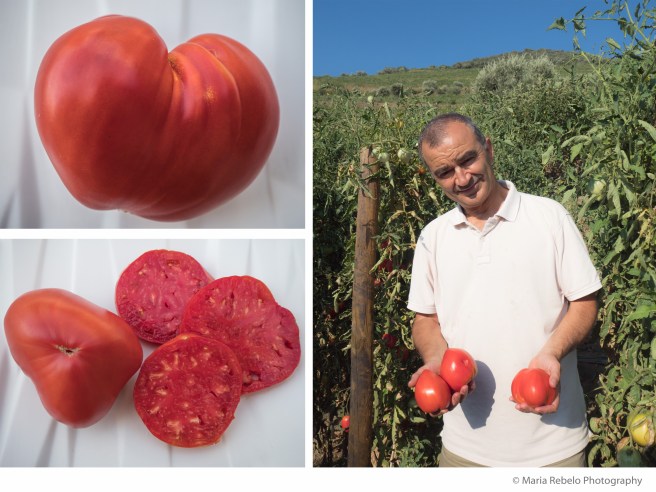
“God gave Douro precious wines so that people would come and find all the other treasures,” says Abílio Tavares da Silva. He is a successful software engineer who fell under the spell of the Douro valley. After going back to school to study enology at the famed UTAD in Vila Real, he uprooted his family from Lisbon to the Douro. Abílio bought Foz Torto, an estate with perfect sun exposure, and began producing wonderful wines. It was only then that he found the other treasures.

One day, someone brought local heirloom tomatoes to a gathering of wine producers. “I had never tasted tomatoes like those, so I decided to plant some tomatoes at Foz Torto. In July and August, the Douro is very hot and this heat produces extraordinary results. The plants struggle, their roots are forced to go deep in search of the last few drops of water. That is why the tomatoes are not watery; they are firm and full of flavor.”

As soon as we sat down for lunch, a beautiful plate of heirloom tomatoes arrived. Abílio had picked them in the morning to make sure they were perfectly ripe. They had a luscious red color, an intense flavor, and the perfect balance of sweetness and acidity. These heirloom tomatoes are as good as fine wine.

Abílio smiled, pleased with our reaction. “It is not just the heat that produces these results,” he explained. “The soil in the Douro valley comes from sedimentary rock that was at the bottom of the ocean millions of years ago. When the rock disaggregated, it became home to a lush microbiological ecosystem that made the soil rich in micronutrients. These micronutrients make all the difference in the production of fruits and vegetables.”

After lunch, we drove to Foz Torto. In the vineyard, Abílio explained how the design of the beautiful Douro terraces evolved in response to the shortage of labor and the need to avoid soil drainage. He then showed us his fruit trees and vegetable garden. The figs, peaches and strawberries were dripping with sweetness. They are more satisfying than the most sumptuous desserts.

“In the old days, the Douro farms were self sufficient, they had wonderful orchards and great vegetable gardens. When the train came to the Douro, the farms started buying fruit and vegetables from the rest of the country and focused on the production of port wine. The tradition of growing fruits and vegetables was lost. But there’s a group of wine producers that is bringing back those old crops.”

Together with Celeste Pereira from the event company alldouro.com  and journalist Edgardo Pacheco, Abílio organizes an annual competition for the best heirloom tomato in the Douro valley. The tomatoes are tasted blind by a panel of chefs, enologist and food writers. Wine makers from many quintas participate in the event.

This year, the competition takes place at Quinta do Vallado on August 24. On August 25 there’s an agricultural market where people can taste heirloom tomatos, olive oil, fleur de sel, Douro wines, and traditional local food. If you’re on the Douro valley, do not miss the opportunity to participate in these unique gastronomical events. And if you go, please cheer for Abílio Tavares da Silva, we hope that his extraordinary heirloom tomatoes win the first prize!

To participate in the heirloom tomato competition events please email   greengrape@greengrape.pt.The events are free.

A widow from Colares and her extraordinary wines

Viuva Gomes Composit

About 25 years ago, we hosted a friend who’s a great wine connoisseur for a couple of weeks in Lisbon. He tried Portuguese wines from different regions and always had something nice to say. But we noticed that his enthusiasm for these wines paled in comparison to his passion for the French wines that filled his cellar.

Towards the end of his stay, we had dinner at a small restaurant that had a rare wine on its list. “This wine is amazing!” exclaimed our friend after taking a sip. “How many more bottles do you have?,” he asked the waiter. “Two,” the waiter replied. “That is perfect. I am spending two more nights in Lisbon. Can we make dinner reservations for both nights and also reserve the two bottles?”

The wine that so impressed our oenophile friend was a 1969 Viúva Gomes. Its origin goes back to 1808, the year when José Gomes da Silva built a cellar in the village of Almoçageme to produce wines in Colares, near Sintra.

The tiny Colares region is home to two unique grape varietals: the white Malvasia and the red Ramisco. These grapes survived the onset of phylloxera in the 19th century because they are planted on clay soils covered with sand that protected the roots from the deadly bug.

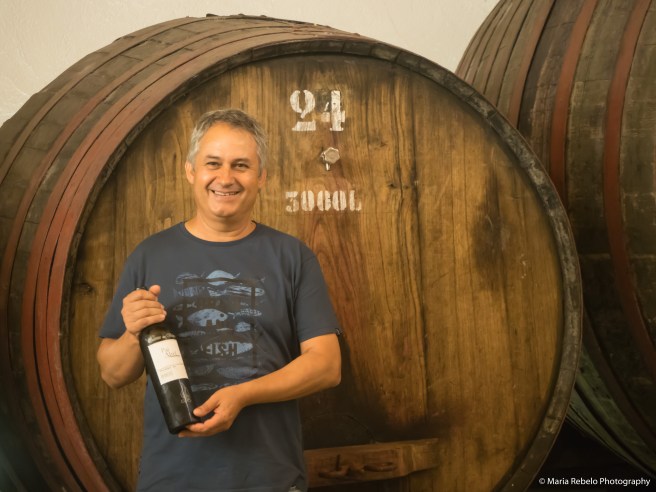
After Gomes da Silva died, his widow and sons continued to produce wine which they sold under the label Viúva Gomes (viúva is the Portuguese word for widow). Their company was sold in 1920 and resold in 1931. By 1988, it was once again up for sale. It was then that José Baeta seized the opportunity to buy the vineyards, the cellar and a treasure trove of vintages going back to beginning of the 20th century.

We knocked on the door of the 1808 cellar and soon José Baeta came to greet us. Visiting this building full of old bottles and ancient wine barrels made from precious woods is a voyage into the 19th century.

José spoke with great passion about the unique character of the Viúva Gomes wines. We sampled a wonderful 2016 white Malvasia that is exuberant, with hints of salt from the Atlantic Ocean. We then tried a red Ramisco from 2009. It is an alluring, intense wine with notes of dried cherries. While most wines pale in the presence of food with bold flavors, the Viúva Gomes Ramisco holds its own and helps the meal sparkle.

Only 2,000 bottles of white and 4,000 bottles of red are produced every year. “I always run out of wine to sell before the year ends,” says José Baeta. With the help of his son Diogo, José is trying to expand his production, finding the right soils to plant more vines.

Drinking a bottle of Viúva Gomes is an extraordinary experience. These are nectars  made from the rarest vines, caressed by the Atlantic winds and guarded by millions of grains of sands.

The cellar of Viúva Gomes is located at Largo Comendador Gomes da Silva, 2 Almoçageme, Colares, tel. 219 290 903 and 967 248 345, email  info@adegaviuvagomes.com . Click here for the Viúva Gomes website.


Quinta do Crasto

Composit Quinta do Crasto

In ancient times, the Romans built on the Douro valley a “castrum,” which means fort in Latin. The fort was surrounded by steep hills descending towards the Douro river with perfect exposure to the sun. Even though it was hard work to plant vines in this treacherous terrain, the Romans embraced the challenge. They knew that the vines would please Bacchus, the god of wine, and that he would reward them with great vintages.

There is no record of the quality of the wines made by the Romans on these hills. But we know that by 1615 the estate, called Quinta do Crasto in honor of the old Roman fort, was producing superior wines.

The Quinta is situated on the right bank of the Douro river between Régua and Pinhão. The views are spectacular and so are the table and port wines which regularly receive high accolades from wine critics. We think Bacchus would be pleased.

Click here for the Quinta do Crasto website.


Aladdin’s cave in Bairrada

Composite Caves S. João

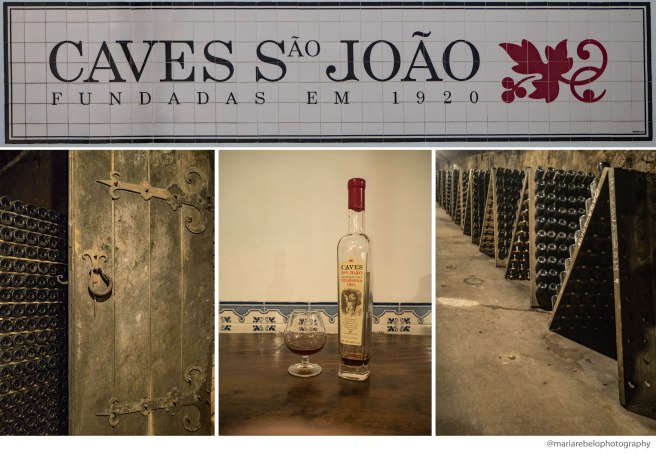
Three brothers, José, Manuel and Albano Costa, built in 1920 wine cellars called Caves São João. They used the cellars to store the wine from Bairrada that they sold to taverns throughout Portugal.

In the 1930s, the Costa brothers ventured into wine production. They dreamed about producing wines that future generations could drink with pride. With the help of French enologist Gaston Mainousson, they learned the secrets of champagne production and started making sparkling wine in Bairrada.

In the 1950s they started producing two iconic wines: Frei João in Bairrada and Porta dos Cavaleiros in the Dão region. Made with great care, these wines were stored so that time could tame their tannins and leave only the smooth taste of the fruit.

As their wines gathered fame, the three brothers increased production and expanded storage capacity. Today the cellar holds 2.5 million bottles that preserve the rhythms of the seasons and the fruits of the toil of generations of farmers. These irreplaceable time capsules are guarded by the great-great grandchildren of the original owners.

We tried two white wines produced at Quinta do Poço dos Lobos. The first, a reserve wine from 2013 had a pale, yellow color, and a smooth taste that left our palate refreshed with notes of citrus. The second was a Poço dos Lobos colheita from 1995. What a difference three decades make! The older wine had an intense yellow color. The citrus notes were now singing with a choir of harmonious flavors orchestrated by time.

We sampled two vintages of Frei João. A red from 1980 that was rich and smooth and a white from 1986 that was still full of youth and vigor.

Our tasting ended with a brandy from 1966 that was suave and sophisticated. It is a nectar that has seen it all from the breakup of the Beatles to the fall of the Berlin wall.

Caves São João look like Aladdin’s cave, full of treasures stored away from the sun and immersed in sultry air. If a genie offers you three wishes during your visit to the cellars don’t hesitate: ask for a white Poço dos Lobos, a red Frei João or Porta dos Cavaleiros, and a bottle of 1966 brandy.

Caves São João are located at São João de Azenha in Anadia, tel. 234743118, email geral@cavessaojoao.com. Click here for their web site.


Quinta Dona Maria

Quinta D. Maria Winery

Estremoz is a town in Alentejo famous for its white marble. The same geological conditions that fashioned its pristine stones created limestone soils perfect for wine production. So it’s no wonder that there are so many wineries around Estremoz.

The prettiest of them all is Quinta Dona Maria. The estate, which dates back to 1718, was purchased by King João V and offered to Dona Maria, a courtesan with whom he fell in love. In the 19th century, the estate was bought by the Reynolds, a family of British merchants who came to Portugal to produce cork and wine. The current owner, Julio Bastos, inherited the estate from an aunt who married into the Reynolds family.

Bastos got his passion for wine from his father. Every year, father and son came to the harvest so that young Julio could be initiated into the mysteries of wine making. Bastos is particularly fond of Alicante Bouschet, a varietal brought to Alentejo by his family in the 19th century.

Eager to produce extraordinary wines, Bastos entered into a partnership with Lafite Rothschild. But when the Rothschild team started uprooting his old family vines to plant French varietals, Basto decided to go his own way.

He nurtured the old vines and used 17th century marble tanks to tread the grapes. The result are wines with a unique personality: rich and earthy with elegant aromas and a smooth finish.

Production volumes are low, so these wines are hard to find. If you’re traveling in Alentejo, stop by Quinta Dona Maria and take home these exquisite wines made in soils nourished by the love of the land and blessed by the richness of marble.

Click here for the website of Quinta Dona Maria.

Celebrating the passage of time at Ramos Pinto

Composit Ramos Pinto

Port wine used to be sold in austere black bottles with somber labels. Adriano Ramos Pinto, a maverick entrepreneur who entered the port wine trade in 1880, changed all that. He wrapped port wine with sensuous images, elegant packaging, and clever marketing.

One of Ramos Pinto’s publicity coups took place in 1922. Two pilots, Gago Coutinho and Sacadura Cabral, planned to make the first aerial crossing of the South Atlantic, flying from Lisbon to Rio de Janeiro. Ramos Pinto convinced them to take a bottle of his port wine on board to celebrate their landing in Rio de Janeiro. On the first two attempts, the airplane sunk near the coast of Brazil. But both the pilots and the bottle were saved. The third attempt was successful and the bottle was finally opened to great acclaim. This and other exploits made Adriano Ramos Pinto so famous in Brazil that a glass of port was often called an Adriano.

Tasting port wines at the cellars of Ramos Pinto in Vila Nova de Gaia is a sumptuous experience. You can try splendid tawnies, made by man with the help of God, and divine vintages, made by God with the help of man.

Tawnies are aged in 600-liter wood barrels where they acquire a golden color and the taste of dry fruits, almonds and nuts. As time goes by, some of the wine evaporates and the barrels have to be topped off. This evaporation has a whimsical name: the “angel’s share.”

A bottle of tawny is a blend of wine from different harvests. A 30-year-old tawny is made with wines that average 30 years of age, so it often contains wine that is 60, 70, even 100 years old. The passage of time is a key factor in the production of great ports. There are 4 million liters of port stored in Ramos Pinto’s cellars.  Master blenders use these nectars produced by older generations and save some barrels from the current harvests to be blended by future generations.

Vintage ports are produced from a single harvest in exceptional years. They stage for only two years in wood barrels called balseiros. These barrels are very old and very large, holding 60,000 liters of wine. They are used to smooth the tannins without imparting the taste of wood to the wine. Vintage port is bottled and stored in the dark to preserve its rich red color and the taste of fresh fruit.

Ramos Pinto also produces alluring white ports. We tried a 7-year white blend that has enticing notes of honey and citrus. There are also wonderful late bottled vintage (LVB) ports. Produced more often than the rare vintages, LVBs are aged in balseiros for 4 years and then bottled without being filtered, so they can continue to improve in the bottle.

In 1990, Ramos Pinto was acquired by Roederer, the producer of the famed Cristal champagne. But the company is managed by a Portuguese enologist, João Nicolau de Almeida, son of the legendary Fernando Nicolau de Almeida, creator of the iconic Barca Velha. In addition to wonderful ports, João Nicolau d’Almeida makes two impressive table wines: Duas Quintas and Bons Ares.

It is traditional to buy a bottle of port from the year in which one’s child is born for them to make a toast when they come of age. Buying this birthday bottle for your children is a great excuse to visit the Ramos Pinto cellars and a beautiful way to celebrate the passage of time.

Click here for the Ramos Pinto web site. The cellars are located at Av. Ramos Pinto 400, Vila Nova de Gaia near Oporto.

Covela’s prima donna grapes

Composit Quinta da Covela

In his novel “A Cidade e as Serras” (The city and the mountains) the great 19th-century writer Eça de Queiroz describes the life of Jacinto, a wealthy Portuguese who enjoys a glamorous life in Paris. Jacinto frequents the theater and the opera, attends scientific and artistic gatherings, reads the newest books and dresses according to the latest fashion. After an earthquake damages his ancestral mansion in the Douro valley, he decides to go home to oversee its reconstruction.  Jacinto falls in love with the simple pleasures of life in the Douro and lives there happily ever after.

Sometimes life imitates art. Tony Smith was a successful journalist who lived a glamorous life in Rio de Janeiro and New York. He used to spend vacations in the Algarve where he liked to drink a wine called Covela. By happenstance, Tony learned that the estate that produces Covela was up for sale. On a whim, he made a purchase offer. Month of negotiations ensued. After he thought all was lost, he managed to buy the property together with his business partner, Marcelo Lima. Tony imagined that producing wine would be a part time occupation. But just like Jacinto, he fell in love with the Douro valley and never left.

We sat at a stone table in the end of a brilliant afternoon admiring the granite terraces where the vines are planted. The quinta, which remounts to the 16th century, has ideal conditions to produce a young white wine known as “vinho verde” (green wine). It is primarily planted with Avesso, a prized local white varietal that has the temperament of a prima donna. Too much heat or too much rain make the grapes unhappy.

Covela produces some of the happiest Avesso in the world. Its remarkable acidity and minerality make every glass of wine an aria of aromas and flavors.

Our palates were still savoring the fantastic white wine made at Covela solely with Avesso when Tony brought out an enticing rosé produced with Touriga Nacional. The grape juice was left in contact with the red skins for a short period of time, just enough to produce a gorgeous rose color. It is a perfect Summer wine, full of joy and freshness.

Finally, Tony brought us two blends of the excitable Avesso with the even-tempered Chardonnay, the “Escolha” and the “Reserva.” The Escolha has everything: an alluring perfume, a perfect body, an irresistible elegance. The Reserva is full of confidence and aristocratic charm. It is the ideal wine to enjoy in the Winter by the fireplace with a slice of cheese from Serra da Estrela.

We thanked Tony for sharing his treasures with us. “You have to return next year,” he said. “Marcelo and I just bought Quinta da Boavista.” We were speechless. This is the legendary property that belonged to the Baron of Forester, author of the famous map of the Douro river published in 1848. “Come visit me at Boavista,” Tony said with a genial smile. We surely will!

Quinta de Covela is located at S. Tomé de Covela, Baião. Click here for the Covela website. 

Mesa de Lemos

Composit Quinta de Lemos

The most elegant place to dine in the Beira region is called Mesa de Lemos. Located near the village of Canas de Senhorim, the building is ensconced in the ancient granite boulders and looks like an integral part of the landscape. It was built three years ago by Celso de Lemos to showcase the wonderful wines he produces in the winery that also bears his name.

The restaurant tables overlook the surrounding vineyards, making us feel as if we are dining in the middle of the vines. There’s a fixed menu with optional, but indispensable, wine pairings. The delicious food is created by chef Diogo Rocha who was born in Canas de Senhorim. He draws inspirations from local traditional recipes to produce food that is elegant and satisfying.

Our meal started with a joyous sparkling wine called Geraldine in honor of Celso’s daughter. It has very fine bubbles and an elegant brioche aroma that combines perfectly with Diogo Rocha’s appetizers, a set of preparations reminiscent of a picnic in the countryside.

Next came Dona Santana, a complex red made from the four emblematic varietals cultivated in the Dão region: Touriga Nacional, Tinta Roriz, Jaen, and Afrocheiro. It paired perfectly with the braised bízaro pork. The last entrée was codfish adorned with an ethereal parsley foam and paired with an elegant red wine made from a single varietal, Afrocheiro.

The dessert feast started with an interesting experimental fortified wine produced by the quinta. It continued with a cherry pudding and a salty ice cream made from requeijão, a pastry filled with a sweet bean paste and a chestnut-shaped concoction made from egg yolks.

The wines of Quinta de Lemos are diamonds that sparkle anywhere. But at Mesa de Lemos they have their perfect setting.

Click here for the Mesa de Lemos web site. The restaurant is located at Quinta de Lemos, Passos de Silgueiros, near Viseu, tel 961 158 503.