Wild fish with large fillets, firm flesh, and few pin bones are increasingly rare. Tuna, turbot, salmon, grouper, and seabass have become the aristocracy of the sea, commanding pride of place and soaring prices on fine-dining menus worldwide. One redeeming consequence of this scarcity is the reappraisal of fish once dismissed as having little commercial value.
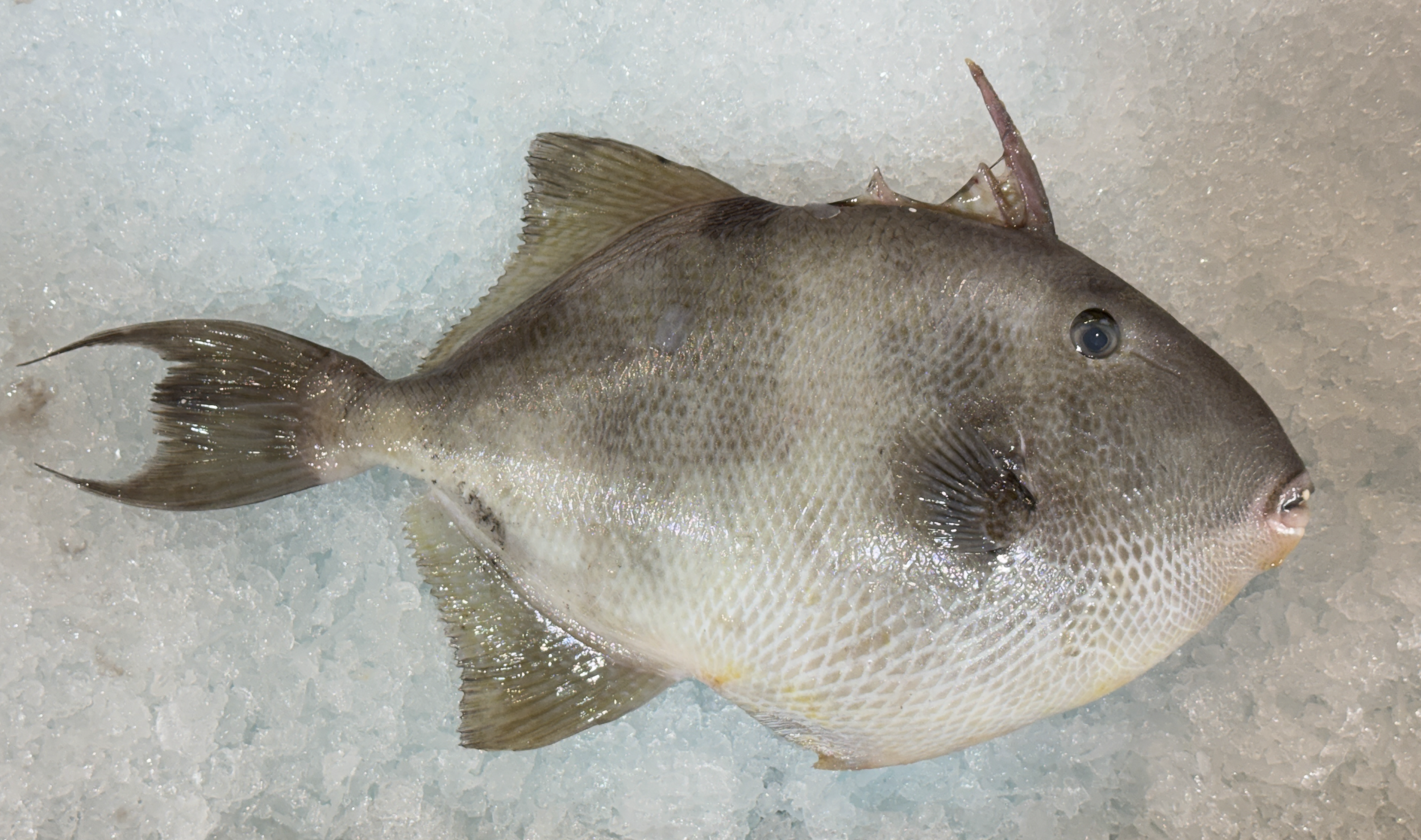
One such species is the triggerfish. It is known in Portugal as peixe-porco (pig fish), an unfortunate name derived from the grunting sound it makes when lifted from the water. Triggerfish has a thuggish reputation: it survives surprisingly long out of water and can bite hard with teeth built to crush shells. At sea, it is fiercely territorial and will even attack sharks that venture too close to its nest.
On the plate, it comes second only to John Dory (peixe-galo). Feeding on sea urchins, crustaceans, clams, mussels, and small fish, it develops clean, firm, white flesh. It is protected by a tough, leathery skin and a locking dorsal spine, held in place by a smaller second spine and released by pressing it–the mechanism that gives the fish its English name.
In Portugal, fishermen often grill it whole over charcoal until the skin chars and peels away, revealing succulent flesh. It is also excellent fried, baked, or stewed, provided the skin is removed before cooking.
If you see peixe-porco on a menu, don’t hesitate to order it!
António Magalhães closed his lecture on the Douro’s grape varieties with a provocative question: “But who can hope to understand so many grapes without tasting Port?”
Port wine is the ultimate expression of the vineyards of the Douro Valley. As scholar Alfredo Guerra Tenreiro famously observed, “There is a uniqueness in the Douro climate that one can recognize and feel in the uniqueness of Port wine.”
Here are António’s recommendations for enjoying Port wine at its best.
Five Golden Rules
1) Choose the proper glass A classic white wine glass made of thin glass is ideal for Port. It lifts the aromas, focuses the flavors, and makes every sip a celebration.
2) Serve Port properly chilled The ideal serving temperatures for each style of Port are: • White Ports: 6–10 °C (43–50 °F) • Tawnies: 10–12 °C (50–54 °F) • Rubies: 12–16 °C (54–61 °F)
Once opened, White Ports and Tawnies should be stored in the refrigerator door. Ruby Ports, especially Vintage Ports, are best enjoyed soon after the cork is pulled.
The British have a tradition of passing the Vintage Port bottle or decanter from right to left, keeping it in motion. If someone forgets, the other guests often ask, “Do you know the Bishop of Norwich?”—a nod to Henry Bathurst, the early-19th-century bishop known for dozing off at dinner and neglecting to pass the Port.
3) Keep a 20-Year-Old Tawny in the refrigerator Tawnies are generally crafted from wines of various harvests, aged patiently in oak casks until the perfect moment for blending and bottling. A 20-year-old Tawny brings together wines with a weighted average age of twenty years, creating an alchemy of time and winemaking artistry. António’s longtime favorite is the magnificent Taylor’s 20-Year-Old Tawny Port.
4) Always decant Vintage and Crusted Ports Vintage Ports are bottled without filtration, which allows them to continue evolving in the bottle. Over time, sediment naturally accumulates. Decanting separates the clear wine from this sediment—harmless, yet coarse and unwelcome in the glass. It also allows the wine to breathe, letting oxygen gently soften its structure and release its full array of aromas.
When Port was shipped in barrels, British merchants crafted Crusted Ports by blending more than one Vintage, aging the wines in large wooden vats, and bottling them unfiltered for cellaring. After Portugal banned bulk exports of Vintage Port in 1974 (extended to all Ports in 1997), this style became rare. Today, only a few houses, like Fonseca, continue the tradition. Like Vintage Ports, Crusted Ports develop a natural “crust” as they mature and should always be decanted before serving.
5) Port is to be shared Port invites conversation and brings out sincerity. Violette Toussaint, the unforgettable protagonist of Valérie Perrin’s Fresh Water for Flowers, put it best: “My port wine has the same effect on everyone. It acts like a truth serum.”
How to Decant a Vintage or Crusted Port at Home
The day before serving, select the bottle you wish to open and stand it upright so the sediment can settle at the bottom. Leave it somewhere convenient—on a sideboard or on the kitchen counter.
Use a suitable corkscrew; a two-pronged cork puller is ideal for opening older bottles, whose corks are often fragile. Once opened, pour the wine slowly into a decanter or glass jug.
Strain the wine through a small flannel filter to ensure perfect clarity. Take a moment to taste the wine and enjoy that first impression.
Rinse the bottle and let it drain completely. Return the decanted wine to the original bottle. Keep the bottle in a cool place and check the temperature before bringing it to the table. If needed, a brief rest, fifteen minutes or so, in the refrigerator door will bring it to the ideal 16–18 ºC, with the higher end recommended for older Ports.
Magical Pairings
White Port
White Port is typically enjoyed as an aperitif and is made in a range of styles, from extra-dry to sweet. Even the sweeter versions remain balanced and never feel cloying on the palate.
There are two production approaches: oxidative and non-oxidative. In the non-oxidative style, winemakers shield the wine from oxygen to preserve its vibrancy. These Ports are bright and citrusy, ideal for the popular Port Tonic cocktail.
In contrast, the oxidative school relies on controlled exposure to air. Depending on the winemaker’s approach, this exposure may begin during fermentation and continue throughout aging in wooden vessels ranging from small casks to larger vats such as toneis and balseiros. Over time, this gentle oxidation deepens the wine’s character, imparting a golden hue and nuanced layers of nuts, caramel, butterscotch, and dried fruits.
António favors the oxidative style. His preferred White Ports, both made from blends that include Malvasia Fina, are the Fonseca Guimaraes Siroco—crisp and extra-dry—and the Ramos Pinto Finest White Reserve, which offers a discreet, delicate sweetness.
White Port pairs beautifully with toasted almonds, especially those from the Douro Superior, and with codfish cakes. It also harmonizes with soft-ripened cheeses, lending a bright acidity that lifts their richness.
Tawny Port
Tawnies pair blissfully with sweet desserts. In the Douro Valley, they are often served with crème brûlée—torched before serving—or almond tart. Egg pudding and Tawny Port are made for each other; tradition even calls for two glasses of Port instead of one: the first to honor the pudding, and the second to toast the cook who prepared it.
Another indulgence that pairs perfectly with Tawny Port is Toucinho do Céu (bacon from heaven), a convent sweet made with almonds, egg yolks, sugar, and a touch of lard that lends a soft, velvety texture. Murça, near Vila Real, is renowned for the version created at the Santa Maria Monastery and now made by Casa das Queijadas e Toucinho do Céu. The town is also celebrated for the vineyards that surround it, which produce some of the Douro’s finest white grapes—coveted by both Port and DOC Douro winemakers.
Tawnies also shine alongside nuts, dried fruit, or simply on their own, paired only with the quiet luxury of time and good conversation.
Ruby Port
Ruby Ports are excellent companions for cured cheeses. Portugal offers a rich array of these cheeses from regions such as the Estrela Mountain near Seia, Serpa in Alentejo, Azeitão near Lisbon, and São Jorge in the Azores.
English Port merchants traditionally pair Ruby Ports, particularly Vintage Ports, with Stilton cheese. Vintage Port is made only in exceptional years, aged in wood for one or two winters, and then bottled to mature slowly and majestically.
For an unforgettable experience, seek out the Vintage Vargellas Vinhas Velhas 2004, crafted in a superb year from a field blend of vines planted soon after phylloxera. António believes old vineyards like the one that produces this wine hold the key to understanding the future of viticulture in the Douro Valley.
Late Bottled Vintage (LBV)
António enjoys pairing LBVs (rubies aged four to six years in oak and then bottled), with chocolate mousse. His favorite mousse replaces butter with extra-virgin olive oil from the Douro Valley. He generously shares his recipe below.
Mousse de Perdição (Sinful Chocolate Mousse)
Ingredients • 150 g dark chocolate (70% cocoa) • 100 ml extra-virgin olive oil (preferably from the olive groves that frame Douro vineyards) • 5 tablespoons sugar • 4 eggs, with yolks and whites separated
Instructions
1. Melt the chocolate Break the chocolate into small pieces and melt gently in a bain-marie or in short microwave intervals. Allow it to cool slightly.
2. Add the olive oil Whisk in the olive oil until the mixture is smooth and glossy.
3. Prepare the yolks Beat the egg yolks with the sugar until pale and creamy. Fold into the chocolate mixture.
4. Whip the egg whites Beat the whites until firm peaks form, then gently fold them into the chocolate base, preserving as much lightness as possible.
5. Chill Spoon into serving cups or a single bowl. Refrigerate for at least 3 hours, ideally overnight.
Portugal is a land of culinary miracles, where humble ingredients are transformed into transcendental food. Before the dissolution of the religious orders in 1834, many of these wonders came from convent kitchens. But miracles also come from the hands of lay cooks.
One such culinary prodigy is the Pastel de Feijão, a pastry made with white beans in the town of Torres Vedras, just 30 minutes north of Lisbon. The city is celebrated both for its heroic stand against the French during the Napoleonic wars and for its bean pastries.
The first written mention of these pastries is in the catalogue of the Portuguese Ethnography Exhibition published in 1896. Local tradition credits Joaquina Rodrigues, a home cook, with creating the recipe at the end of the 19th century. By the early 20th century, growing demand led to the opening of the first pastry workshops in Torres Vedras.
Each pastel cradles within its paper-thin, crispy shell a golden cream of almond, flour, sugar, egg yolks, and white beans. Today, the most acclaimed are the Pastéis de Feijão from Serra da Vila. First sold in a modest hillside café in the 1990s, the pastries gained such renown that production had to expand to meet the ever-growing stream of admirers.
If you have a sweet tooth and find yourself traveling north of Lisbon, be sure to stop in Serra da Vila. It is your chance to savor a miraculous creation.
The Serra da Vila pastry store is located at Rua Miguel Jerónimo Nº19A, Serra da Vila, tel. 261 321 552.
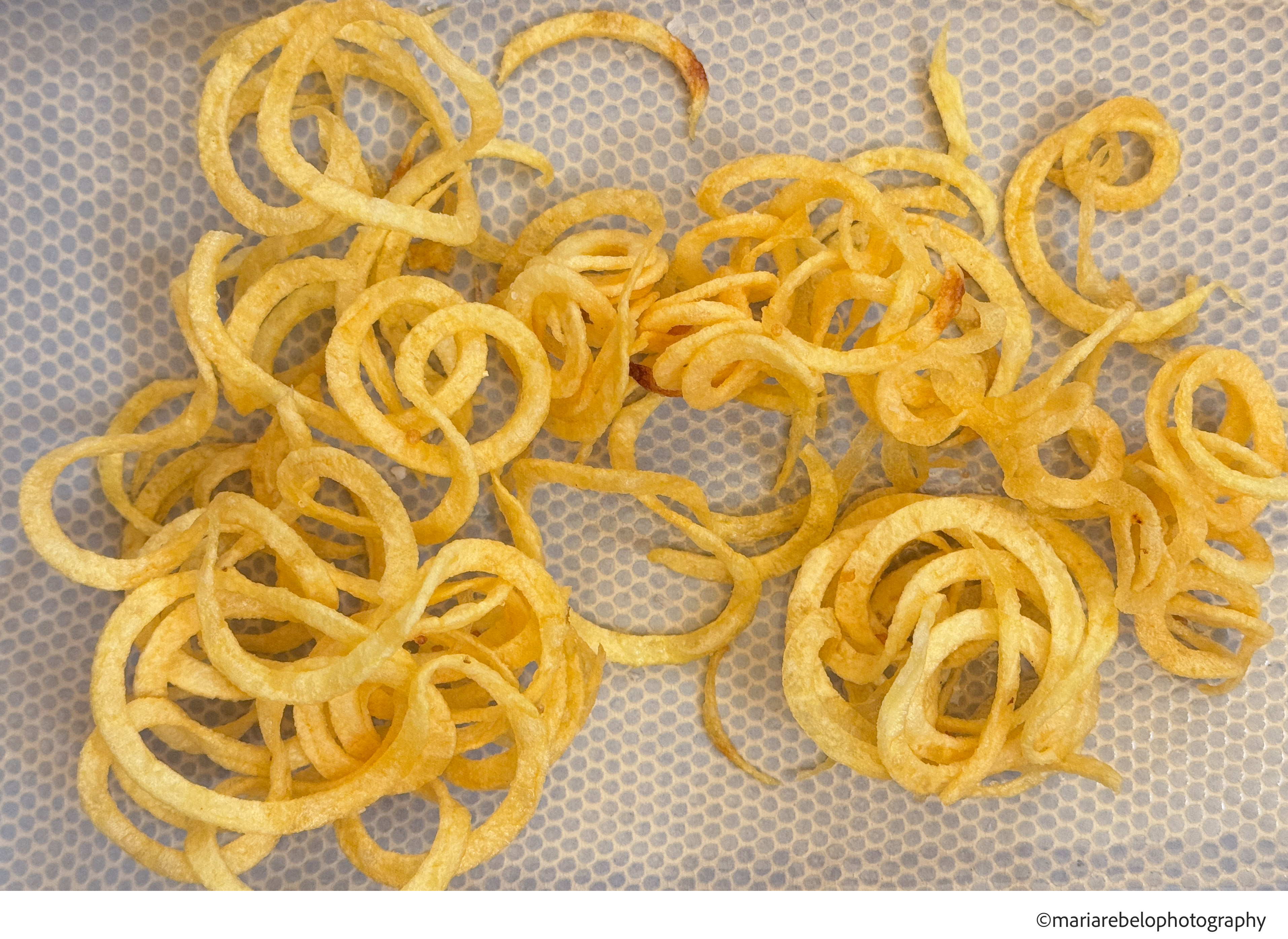
One of our fondest childhood memories is of long, lazy days by the sea, lulled by the sound of the waves and the soft caress of the breeze. It was a state of bliss, marred only by the idleness of our taste buds. Thankfully, a roaming army of beach vendors came to the rescue, offering amusement in the form of golden potato chips—crisply fried in olive oil and seasoned with sea salt.
These memories came rushing back when our friend Raul Reis called to say he was bringing over a sack of potatoes. Raul grows Portugal’s finest potatoes in the quiet village of Sobral on the west coast. This time, he arrived with a bag of bricatas, cultivated in soil enriched with algae from the nearby beach of Porto Dinheiro.
Porto Dinheiro is best known for its vacada, a rustic summertime tradition that draws crowds to watch cows and bulls frolic on the beach. Before the event, the beach must be cleared of the algae that regularly washes ashore. Left in piles, the algae would rot and release a pungent smell. Raul had a better idea—he proposed to the mayor that he take the algae back to his farm as fertilizer. Everybody gained: Raul found a natural way to enrich his soil, and the town rid itself of a nuisance.
Five trucks, each carrying 20 tons, made the journey from Porto Dinheiro to Sobral. Raul allowed the algae to ferment for three weeks, turning the piles weekly to aerate them. He then spread the seaweed across his fields, tilling it into the soil before the summer winds could carry it away.
Using algae to nourish the land is an ancient Portuguese practice, nearly forgotten in the era of synthetic fertilizers. In Aveiro, whole fleets of moliceiros—graceful, flat-bottomed boats—once glided through the marshes gathering seaweed for the fields.
We sliced the bricata potatoes into delicate spirals, fried them until perfectly crisp, and sprinkled them with sea salt. They were, without question, the best potato chips we’ve ever had. You can try them too at Canalha, João Rodrigues’ wonderful restaurant in Lisbon, or at Alta, where the food is as delightful as the sea views. A plate of these golden chips is a summer vacation for the palate.
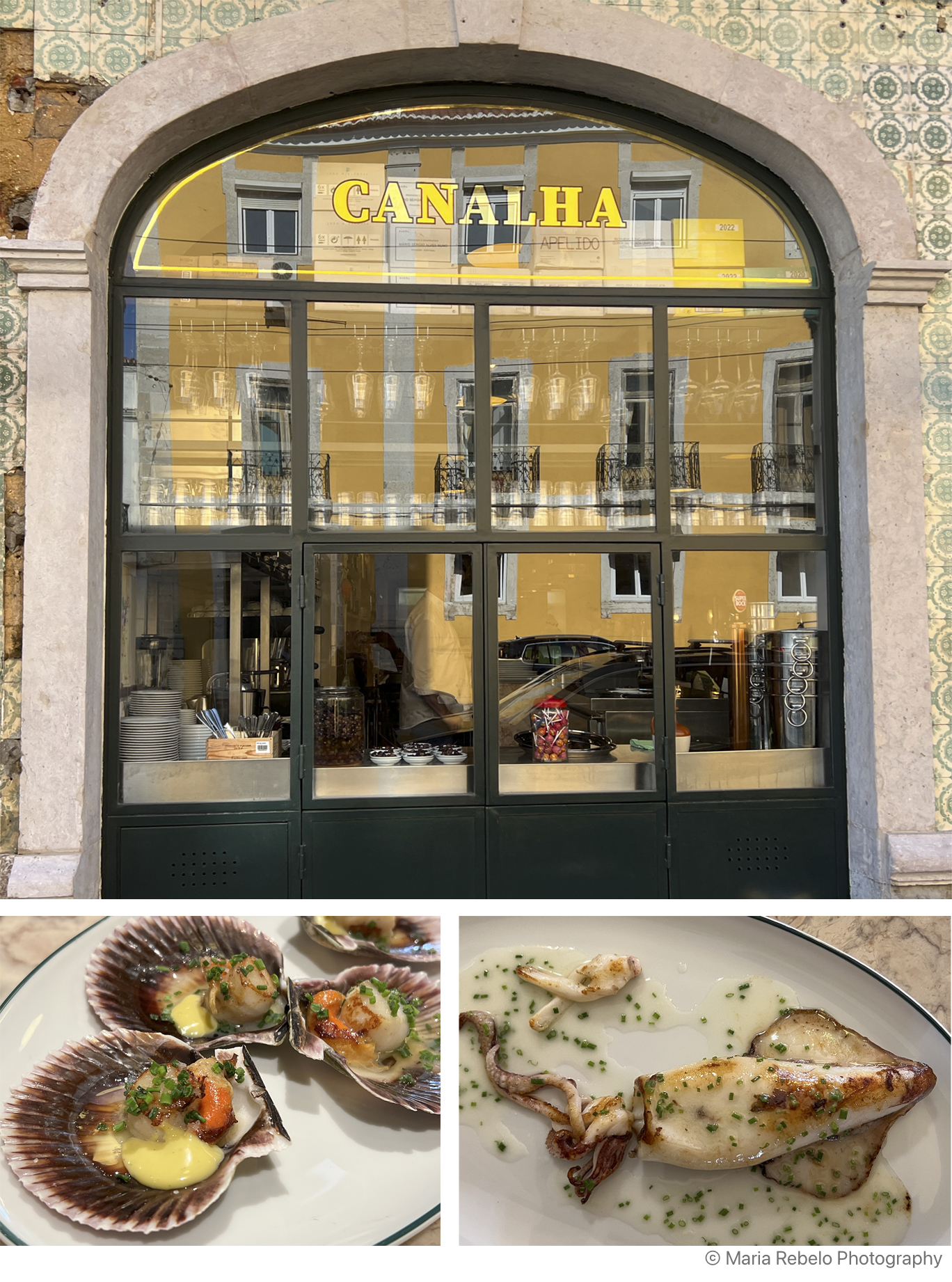
One of Lisbon’s most coveted new restaurants bears a mischievous name: Canalha—the Portuguese word for “scoundrel.” Behind this playful moniker stands one of Portugal’s most acclaimed chefs, João Rodrigues. After earning accolades in haute cuisine, João chose a different path: to open a neighborhood restaurant grounded in the rich culinary traditions of Portugal. The result is a place that is unpretentious and quietly exceptional. Each day features a new “prato do dia”—a beautifully prepared dish offered at a modest price. But for those inclined to indulge, the menu also offers exuberant pleasures: opulent seafood, exceptional cuts of meat, superb artisanal charcuterie, and exquisite wines.
The décor reflects the restaurant’s philosophy of understated elegance. Tabletops are crafted from lioz, the rose-toned limestone that graces Lisbon’s historic buildings. The floors are paved with traditional black-and-white mosaic. Ceiling fans stir the air with their wooden blades, creating a gentle breeze.
Our meal began with crusty bread and pungent olive oil, followed by pastéis de massa tenra—golden, crisp savory pastries filled with seasoned meat and served with a bold sriracha mayonnaise. Then came zamburinhas, small scallops bursting with briny sweetness, and an exquisitely tender squid, lightly charred to smoky perfection. The final dish—grilled octopus with sweet potatoes—was a flawless composition of textures and flavors.
Canalha is not a stage for culinary theatrics. There are no illusions, no deconstructed dishes; there is no drama on the plate. This is cooking rooted in reverence for the land, the seasons, and the ingredients. After stepping away from haute cuisine, João journeyed across Portugal in search of forgotten recipes, unique flavors, and small producers who work with passion and dedication. Their names are celebrated on the menu. One dish is dedicated to our friend Raul Reis, who grows the finest potatoes in Portugal.
João is soft-spoken but intense. At Canalha, he channels this intensity to produce something rare: food steeped in the flavors and traditions of Portugal, cooked with skill, honesty, and soul.
Canalha is located at Rua da Junqueira 207, in Lisboa, tel. 962 152 742. Click here for their website. Reservations are a must.
Since the dawn of civilization, Babylonians, Egyptians, and Greeks have studied the skies to chart the stars. But these luminous bodies shined whether or not they were included in celestial atlases.
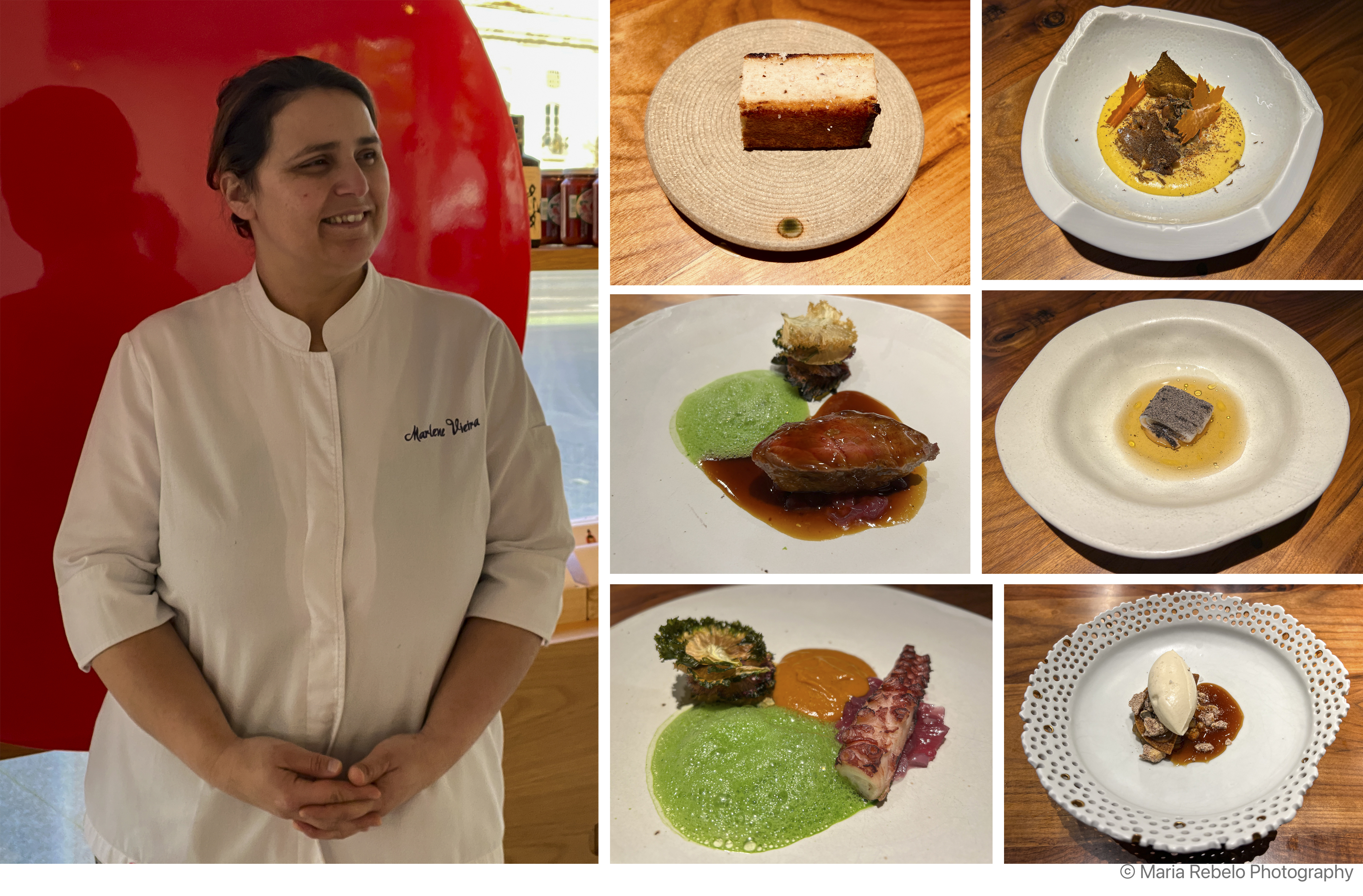
Last Tuesday, Marlene received a Michelin star—a richly deserved honor that celebrates her extraordinary talent and dedication. But long before this important accolade, her light had already illuminated the world of gastronomy. What fuels her radiance is the belief that cooking is an act of love. Each time we dine at her Zun Zum restaurant, we feel not just deeply satisfied but cared for.
Now, at the restaurant that bears her name, Marlene is elevating Portuguese cuisine to new heights. The space exudes serenity, with the kitchen at its heart—an altar where ingredients are transformed into a transcendent gastronomical experience. The menu evolves constantly, and once a recipe leaves, it does not return, making each meal a singular experience.
Guiding this culinary journey alongside Marlene is Chef Mário Cruz. He searches land and sea for exquisite treasures—sea urchins, Algarve red shrimp, wild mushrooms, cuttlefish, mullet, octopus, and partridge.
The food is visually stunning, but, more importantly, it is delicious and it has soul. The irresistible cornbread, kneaded from white corn, wheat, and rye, follows Marlene’s grandmother’s recipe. The Azorean bluefin tuna, cured as if it were prosciutto, accompanied by gazpacho served in a bowl lined with sumac, transported us to the Algarve, to a sunlit table by the sea.
The partridge is cooked according to a famous recipe. During the Napoleonic invasions, General Junot’s troops looted the library of the Alcântara Monastery. Among the stolen manuscripts was a recipe for partridge stuffed with foie gras and truffles. Junot sent it to his wife, who introduced it to France as “Partridge, Alcântara style.” The renowned chef Auguste Escoffier declared it one of the finest spoils of the Napoleonic wars. Marlene’s reimagined version of this historic dish is so extraordinary that it might provoke another French invasion.
Marlene Vieira is a star–not because she has been recognized among the constellations of fine dining, but because she has always shined. If you find yourself in Lisbon, take the time to sit at her table to savor the brilliance of her cuisine.
Marlene is located at Av. Infante D. Henrique, Doca do Jardim do Tabaco, Lisboa, tel. 351 912 626 761, email marlene@marlene.pt.
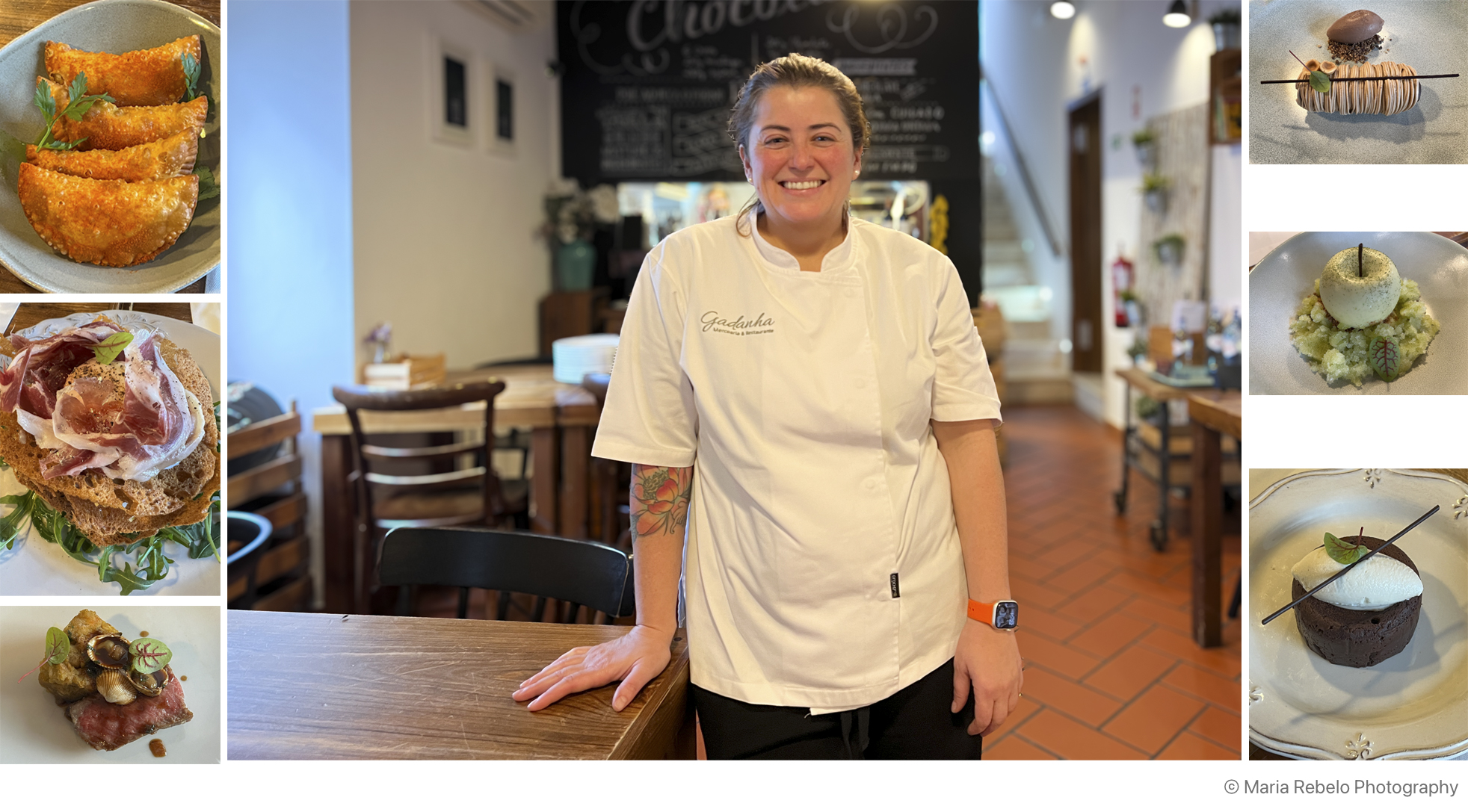
When we asked our son, a chef by trade, what he wanted for his birthday, he answered without hesitation: lunch at Mercearia Gadanha in Estremoz. And so, on the day when we celebrated the arrival of the treasured gift that is our son, we got on the road to Estremoz.
Chef Michelle Marques welcomed us into her restaurant with her radiant smile. She filled our glasses with Mainova, a white wine made with a harmonious trinity of Portuguese varietals (Arinto, Antão Vaz, and Verdelho). It has a wonderful acidity and a citrus aroma that kept us great company through the meal.
Our lunch began with Gadanha’s classic lamb croquettes served with garlic confit mayonnaise. Each bite reminded us why this dish had long been a favorite.
Next came the quail, stewed to perfection and served with a rich demi-glace, an intense apple sauce, and some of the most flavorful potato chips we’ve ever had—thin, crispy, and seasoned with just a whisper of oregano.
Then came wild mushrooms with a soft-cooked egg, and a crumble of alheira sausage, each mouthful an explosion of umami.
The next course was a set of stunning cação pastries. Never was this fish so prized in Alentejo so wonderfully cooked. The pastry was crunchy, allowing the delicate flavors of the fish to shine.
Another favorite followed: the exquisite codfish mille-feuille, a combination of crispy Alentejo toasts, chickpea foam, codfish confit, and black-pork prosciutto. This dish alone is worth the journey to Gadanha.
The next course, black pork and cockles (berbigão) is a delicious reimagination of a traditional Alentejo recipe: pork and clams. The savory part of the meal ended with duck rice brimming with flavor.
We indulged in three desserts: a reconstructed apple with pennyroyal (poejo) and sheep milk ice cream, a medley of chocolate and hazelnut textures, and a chocolate and coffee delight with vanilla ice cream.
Michelle was born in Brazil, but she has lived in Portugal for so long that she lost her Brazilian accent. In its place she gained a culinary voice so original that it is worth traveling the distance to celebrate life’s best moments at her restaurant.
Gadanha is located at Largo Dragões de Olivença, 84 A in Estremoz, tel. 268 333 262. Click here for their website.
There’s something about dining on the beach that makes the food taste even better. Perhaps it’s the salty breeze that stirs the appetite or the beauty of the ocean that awakens the senses.
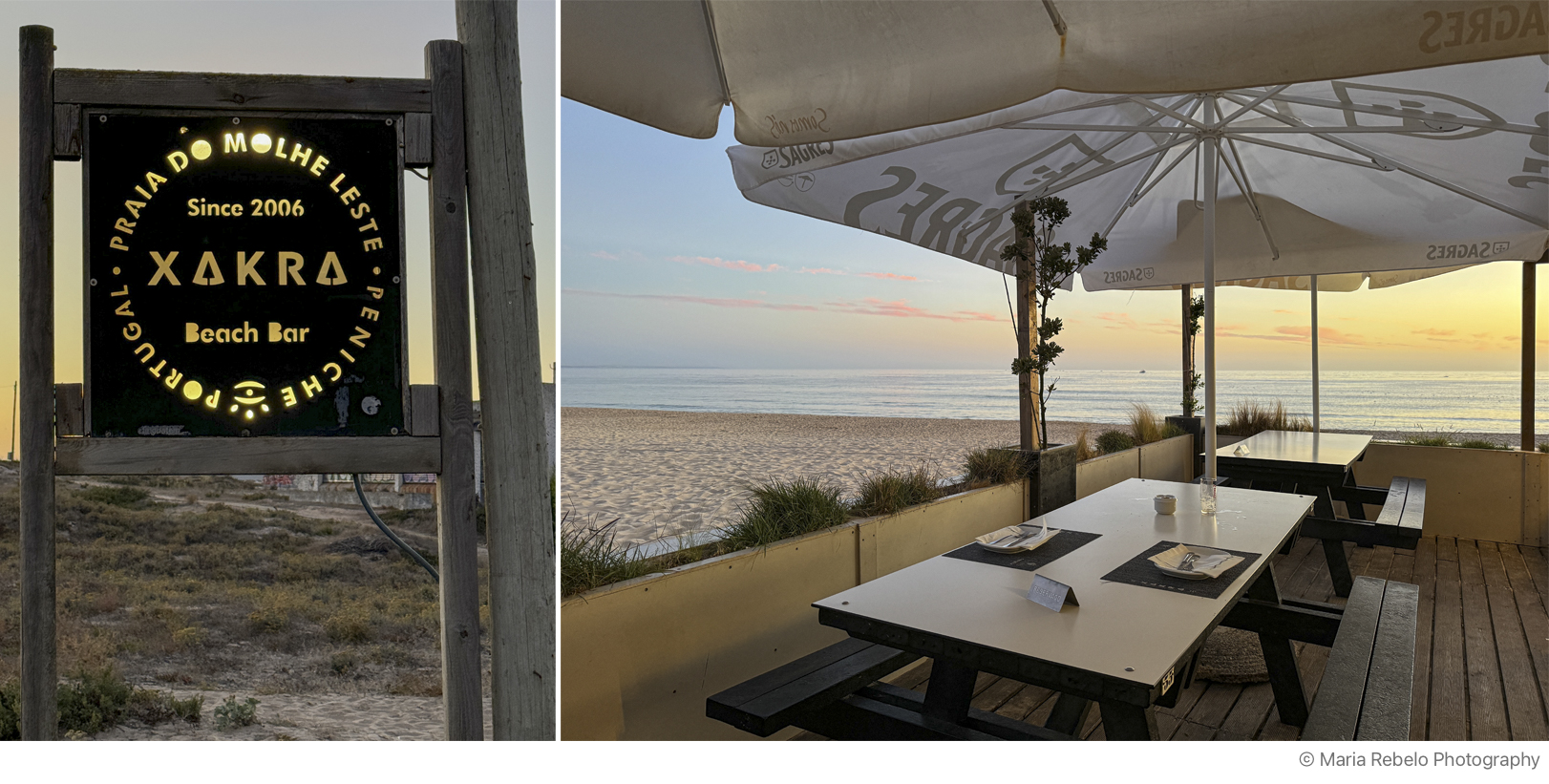
It used to be easy to find simple beachside restaurants that served freshly caught fish. But, as the price of wild fish went up, these places have become increasingly rare. That is why we were so delighted when some friends took us to Xakra at Molhe Leste, a beach in Peniche favored by surfers because of the consistency of its waves.
Xakra’s decor is plain, but the view is luxurious. We ordered two starters, a soup, and a main course. The first starter was berbigão, a flavorful cockle prepared with olive oil, coriander and garlic. The second was a wonderful skate salad simply dressed with olive oil, vinegar, and onion.
The fish soup had delicately cooked fillets immersed in a creamy vegetable broth. The vegetables of the land harmonize surprisingly well with the fruits of the sea.
Finally, the pièce de résistance was freshly caught turbot perfectly grilled and served with small potatoes, cabbage, and a sprinkle of cornbread crumbs.
Xakra has been delighting guests since 2006. We’re sorry it took so long to discover it, but now we know!
Xakra is situated at Praia do Molho Leste in Peniche. For reservations, please call 965 172 166.
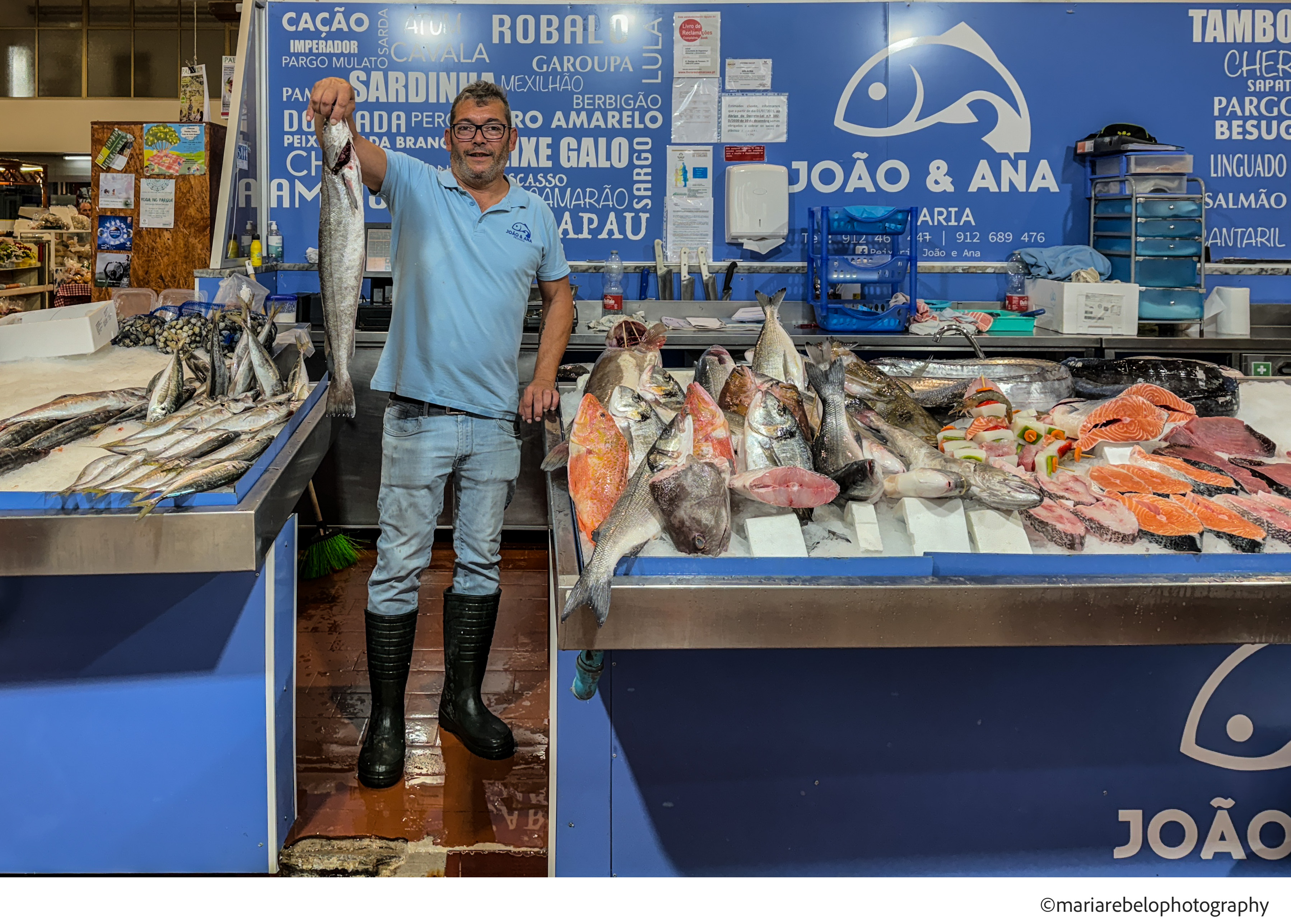
João Branco owns a fish stall in the Lourinhã market where he sells the freshest fish and finest seafood. He knows a lot about the fruits of the sea because his family has been in the fish business for nearly a century–both his mother and grandmother were fishmongers.
João shared a story about a couple who had friends coming over for a “caldeirada,” a traditional fish stew, but had never prepared it before and found the task daunting. João reassured them, saying, “No worries. Bring me a large pot, and I’ll prepare everything. All you need to do is put it on the stove until it’s cooked.” The next day, the customers called to tell João that their guests thought it was the best caldeirada they’d ever had. Whenever their friends return for the famous caldeirada, João prepares the pot, ensuring success every time. João generously shared his recipe with us so you, too, can impress your friends.
João Branco’s Fisherman Stew
João only uses fish without scales because finding scales in the stew can detract from the culinary experience. He also advises against using sardines because their strong taste can overpower the other fish. João does not use laurel because it can also overshadow the delicate flavors of the fish.
He arranges the vegetable layers at the bottom of the pot and places the fish on top. This technique allows the fish to cook in steam, ensuring it is ready at the same time.
Ingredients:
Olive oil (100 ml)
2 sliced onions
4 minced garlic cloves
One sliced red pepper
One sliced green pepper
2 ripe sliced tomatoes
500 grams of sliced potatoes
A teaspoon of smoked paprika
Cayenne pepper
White wine (100 ml)
Beer (100 ml)
Parsley
Coriander
Salt
Navalheiras (small crabs, cut in half, optional)
Shrimp (optional)
Squid or cuttlefish (optional)
One kilogram of assorted fish including tamboril (monkfish), safio (conger eel), raia (skate), and cação (dogfish).
Instructions:
Choose a pot large enough to accommodate two or three layers of potatoes and the fish.
Wash all the ingredients.
Cover the bottom of the pot with olive oil.
Add a layer of sliced onions, garlic, tomatoes, and red and green peppers.
Add a layer of sliced potatoes.
Repeat the layers of onions, garlic, peppers, tomatoes, and potatoes.
Place the fish on top of these layers, ensuring it cooks in the steam from the layers below.
Drizzle the white wine and beer on top of everything.
Season with salt, smoked paprika, and cayenne pepper.
Optionally, you can add navalheiras (small crabs) cut in half for extra flavor. You can also add some sliced cuttlefish or squid and top the fish with shrimp. The shrimp cooks faster than the fish. Once it is cooked, remove the shrimp, peel it, and serve it with the stew.
Cover the pot and cook over medium heat. You don’t need to add any water because the vegetables naturally release plenty of it.
Season with parsley and coriander before serving.
If preparing this delicious stew feels like too much work, bring a large pot to the Lourinhã market and ask João if he’ll prepare it for you.
Victorian novels describe picnics where friends have a grand time, enjoying delicious food in idyllic settings. But real-life picnics seldom measure up to these literary accounts. Sometimes, the sun is too harsh, and the shade is scarce. Other times, it is cold, the wind blows disagreeably, or the rain intrudes. Wine and beer are lukewarm by the time they are served. Sitting is uncomfortable, and troupes of insects join the party.
When our friend Abílio Tavares da Silva invited us for a picnic, we braced ourselves for the usual woes. But, as soon as we arrived at his Douro Valley estate, it was clear that this would be no ordinary affair.
It was a midsummer day with clear skies and a gentle breeze. Spacious wooden tables with comfortable benches awaited the lucky guests under the shade of two majestic linden trees. The view, with the Douro River stretching out in all its splendor, was worthy of being painted by Turner.
The picnic basket, prepared by the talented Rosário Buia at Toca da Raposa, was brimming with delicacies. There were farinheira tarts, shrimp rissoles, oranges seasoned with olive oil and minced garlic, chickpea salad, carrot and zucchini rice, olives, freshly baked bread, and a tortilla prepared with eggs so delicious that they were surely laid by the happiest of chicken.
The food was served in colorful pottery designed by the 19th-century master ceramist Rafael Bordallo Pinheiro. Abílio’s alluring Foz Torto white wine, made from precious old vines in Porrais, was poured into crystal glasses at the ideal temperature.
The conversation flowed as freely as the food and the wine. The meal ended late in the afternoon with slices of Toca da Raposa’s famous drunken cake (bolo borrachão) accompanied by glasses of chilled 20-year-old Fonseca tawny port. Not even Jane Austen could imagine such a perfect picnic.




 Salt of Portugal