In praise of the triggerfish

Wild fish with large fillets, firm flesh, and few pin bones are increasingly rare. Tuna, turbot, salmon, grouper, and seabass have become the aristocracy of the sea, commanding pride of place and soaring prices on fine-dining menus worldwide. One redeeming consequence of this scarcity is the reappraisal of fish once dismissed as having little commercial value.

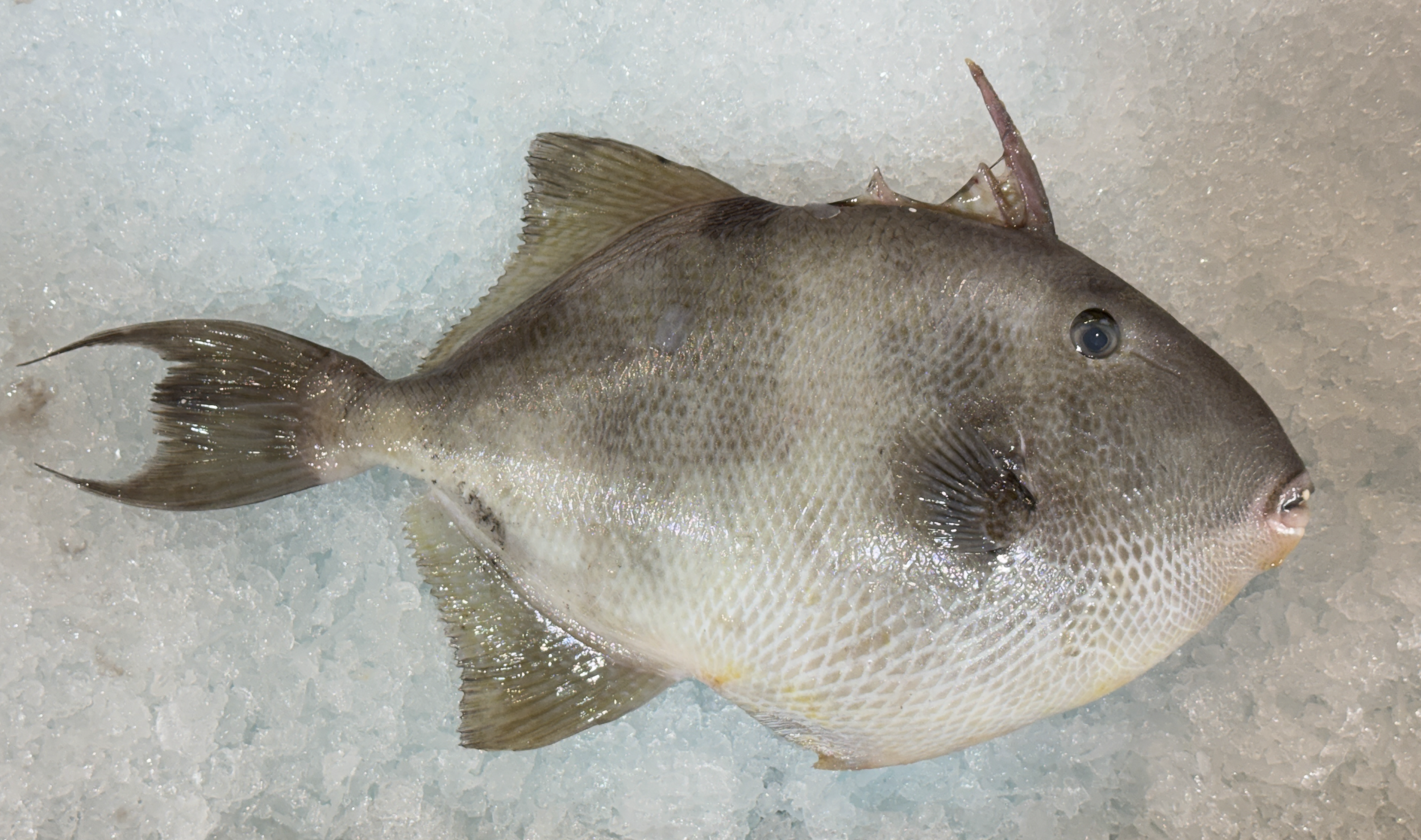
One such species is the triggerfish. It is known in Portugal as peixe-porco (pig fish), an unfortunate name derived from the grunting sound it makes when lifted from the water. Triggerfish has a thuggish reputation: it survives surprisingly long out of water and can bite hard with teeth built to crush shells. At sea, it is fiercely territorial and will even attack sharks that venture too close to its nest.

On the plate, it comes second only to John Dory (peixe-galo). Feeding on sea urchins, crustaceans, clams, mussels, and small fish, it develops clean, firm, white flesh. It is protected by a tough, leathery skin and a locking dorsal spine, held in place by a smaller second spine and released by pressing it–the mechanism that gives the fish its English name.

In Portugal, fishermen often grill it whole over charcoal until the skin chars and peels away, revealing succulent flesh. It is also excellent fried, baked, or stewed, provided the skin is removed before cooking.

If you see peixe-porco on a menu, don’t hesitate to order it!

Maria Doroteia’s famous Douro biscuits

Jorge Seródio Borges and Sandra Tavares da Silva, the husband-and-wife team behind Wine & Soul, craft some of the Douro Valley’s most iconic wines—among them the extraordinary Guru, Pintas, and Manoella Vinhas Velhas. Jorge’s roots in the valley run deep: his family has been making wine there for five generations.

His mother, Maria Doroteia, devoted her life to teaching the children of the Douro Valley how to read and write. She also has a deep love for animals; at 87 years of age, she still tends to ten hens, who reward her with fresh eggs.

Maria Doroteia is renowned for her cooking. When Jorge and his sister were little, she would bake biscuits and hide them away in tins. As soon as the children caught the first whiff of the delicious aromas, they would set off on a treasure hunt until they found the precious trove of cookies, savoring them with delight.

We recently had the joy of having lunch with Maria Doroteia. With her characteristic generosity, she shared one of her cherished recipes, which we are happy to pass on to you, dear reader.

Douro Biscuits

Ingredients

  • 230 g self-raising flour
  • 200 g sugar
  • 1 egg
  • 80 g butter
  • 90 g cocoa

Instructions

  1. Mix the sugar, egg, and butter.
  2. Add the flour and cocoa, mixing well.
  3. Let the dough rest for 90 minutes to 2 hours.
  4. Roll out on a marble surface until paper-thin.
  5. Cut with a cookie cutter and bake at a low temperature until crisp.
  6. Store in a tin and hide it well! 

The bean pastries of Torres Vedras

Portugal is a land of culinary miracles, where humble ingredients are transformed into transcendental food. Before the dissolution of the religious orders in 1834, many of these wonders came from convent kitchens. But miracles also come from the hands of lay cooks.

One such culinary prodigy is the Pastel de Feijão, a pastry made with white beans in the town of Torres Vedras, just 30 minutes north of Lisbon. The city is celebrated both for its heroic stand against the French during the Napoleonic wars and for its bean pastries.

The first written mention of these pastries is in the catalogue of the Portuguese Ethnography Exhibition published in 1896. Local tradition credits Joaquina Rodrigues, a home cook, with creating the recipe at the end of the 19th century. By the early 20th century, growing demand led to the opening of the first pastry workshops in Torres Vedras. 

Each pastel cradles within its paper-thin, crispy shell a golden cream of almond, flour, sugar, egg yolks, and white beans. Today, the most acclaimed are the Pastéis de Feijão from Serra da Vila. First sold in a modest hillside café in the 1990s, the pastries gained such renown that production had to expand to meet the ever-growing stream of admirers.

If you have a sweet tooth and find yourself traveling north of Lisbon, be sure to stop in Serra da Vila. It is your chance to savor a miraculous creation.

The Serra da Vila pastry store is located at Rua Miguel Jerónimo Nº19A, Serra da Vila, tel. 261 321 552.

The taste of summer

One of our fondest childhood memories is of long, lazy days by the sea, lulled by the sound of the waves and the soft caress of the breeze. It was a state of bliss, marred only by the idleness of our taste buds. Thankfully, a roaming army of beach vendors came to the rescue, offering amusement in the form of golden potato chips—crisply fried in olive oil and seasoned with sea salt.

These memories came rushing back when our friend Raul Reis called to say he was bringing over a sack of potatoes. Raul grows Portugal’s finest potatoes in the quiet village of Sobral on the west coast. This time, he arrived with a bag of bricatas, cultivated in soil enriched with algae from the nearby beach of Porto Dinheiro.

Porto Dinheiro is best known for its vacada, a rustic summertime tradition that draws crowds to watch cows and bulls frolic on the beach. Before the event, the beach must be cleared of the algae that regularly washes ashore. Left in piles, the algae would rot and release a pungent smell. Raul had a better idea—he proposed to the mayor that he take the algae back to his farm as fertilizer. Everybody gained: Raul found a natural way to enrich his soil, and the town rid itself of a nuisance.

Five trucks, each carrying 20 tons, made the journey from Porto Dinheiro to Sobral. Raul allowed the algae to ferment for three weeks, turning the piles weekly to aerate them. He then spread the seaweed across his fields, tilling it into the soil before the summer winds could carry it away.

Using algae to nourish the land is an ancient Portuguese practice, nearly forgotten in the era of synthetic fertilizers. In Aveiro, whole fleets of moliceiros—graceful, flat-bottomed boats—once glided through the marshes gathering seaweed for the fields.

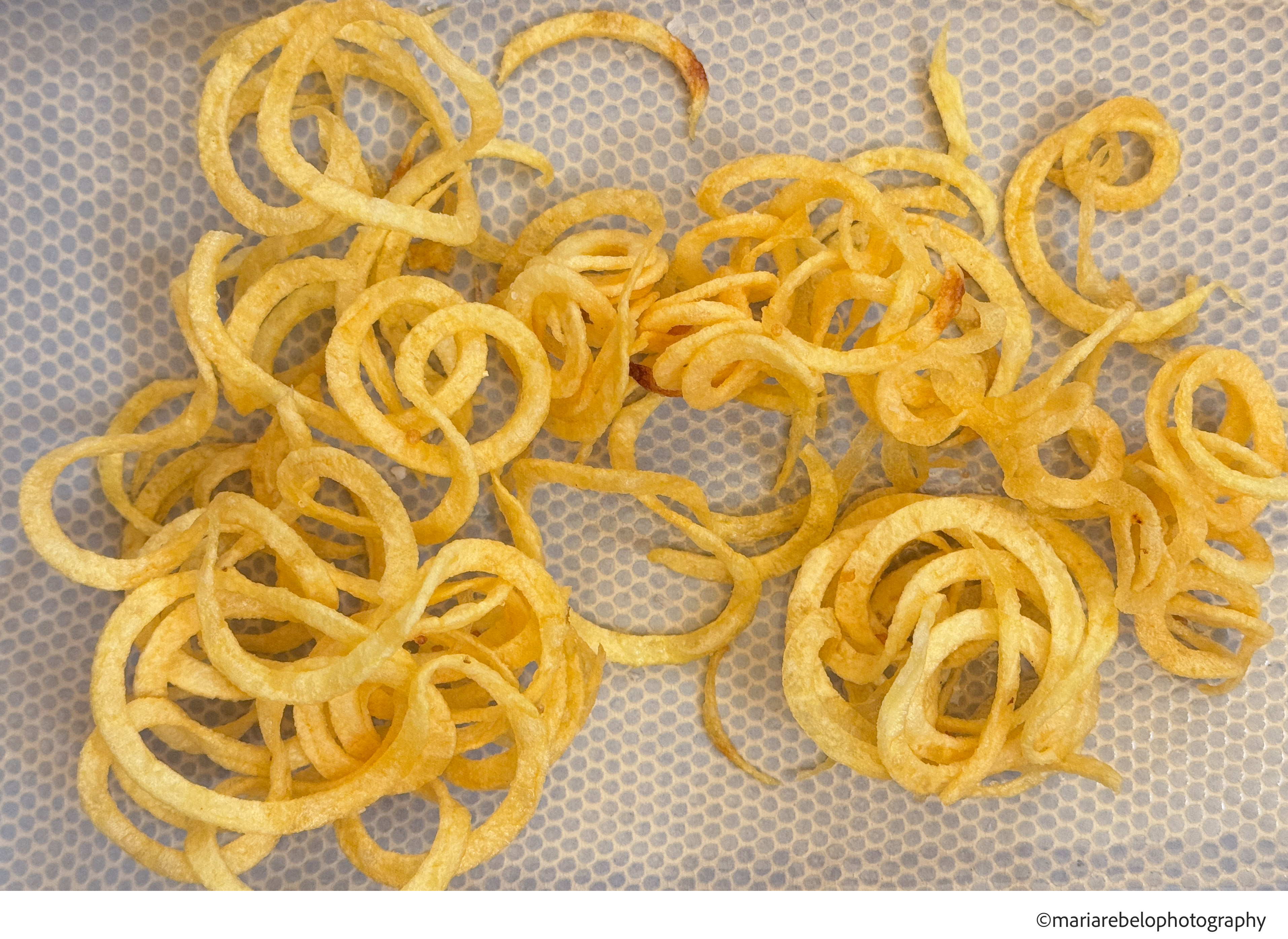
We sliced the bricata potatoes into delicate spirals, fried them until perfectly crisp, and sprinkled them with sea salt. They were, without question, the best potato chips we’ve ever had. You can try them too at Canalha, João Rodrigues’ wonderful restaurant in Lisbon, or at Alta, where the food is as delightful as the sea views. A plate of these golden chips is a summer vacation for the palate.

Dining at Ceia with Alex Atala

Dining at Ceia is always a singular experience, but even more so when shared with the legendary Brazilian chef Alex Atala, seated humbly among the guests as if he were a mere mortal.

Lisbon’s most elegant table was adorned with the bark of a cork tree, harvested on the thirtieth anniversary of its growth. Draped in moss, mushrooms, and delicate flowers, it set the stage for a menu designed by chef Renato Bonfim and inspired by Hieronymus Bosch’s Garden of Earthly Delights.

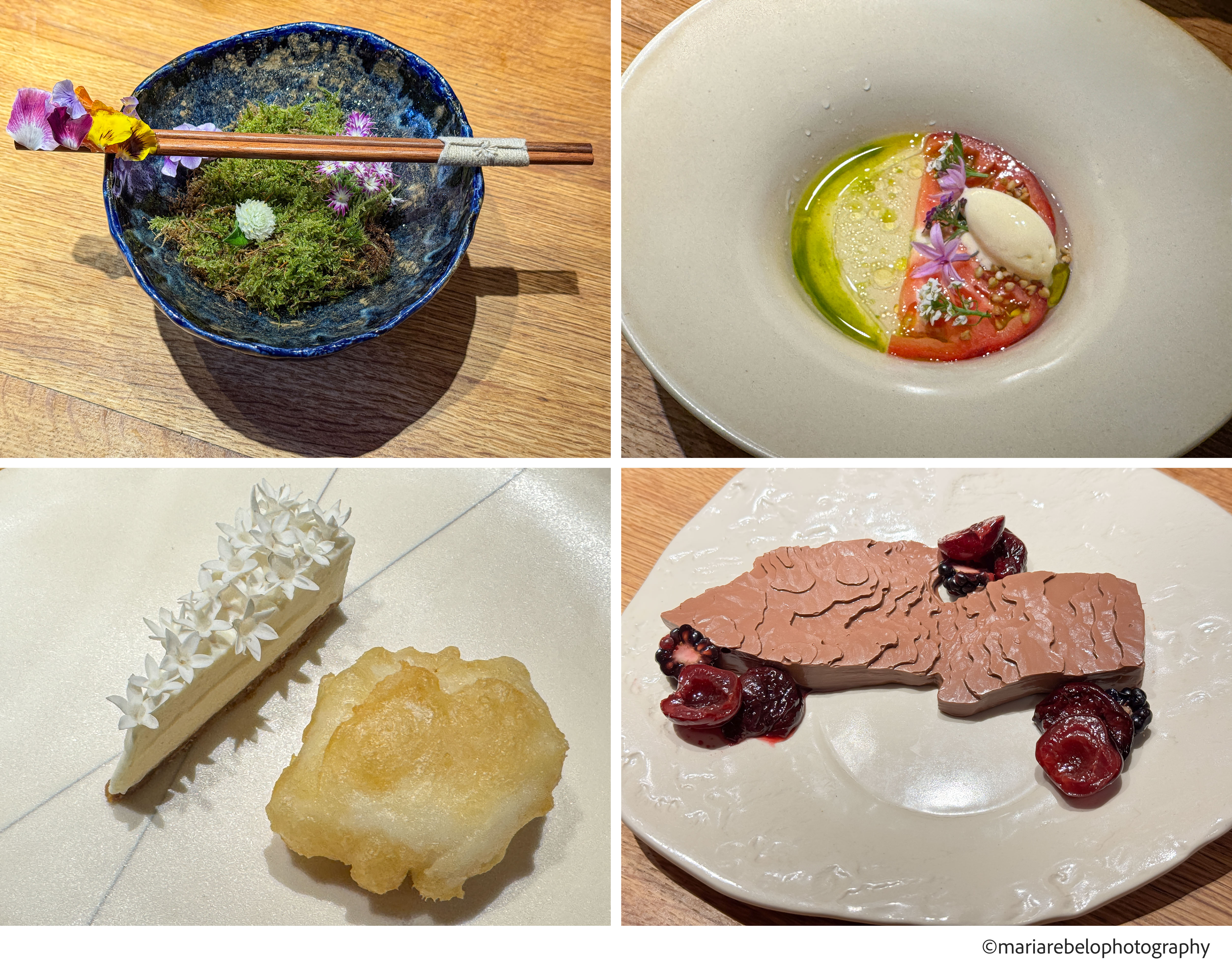
The meal began with a whisper—an ethereal broth of ginger and algae, offering no hint of the wonders to come. A bowl soon appeared, strewn with moss and topped with chopsticks decorated with flowers. Nestled beneath the blossoms was a sublime tartare of carabineiros, the crimson prawns of the Algarve. “I was trained as a Bocusian,” Atala said, referring to Paul Bocuse, the patriarch of nouvelle cuisine. “I expect the food to be on the plate, but here, the food is beyond the plate.” A joyful Blanc de Noirs from Bairrada, fittingly named Dinamite, kept us good company.

Then came Water: a delicious composition of tomato, coriander oil, and a sorbet of toasted bread and garlic. Kristin Liebold, the gracious maître d’, poured glasses of Tepache she had crafted herself—a lightly fermented pineapple elixir that brightened the palate.

Another delight soon followed: slices of savory garlic cheesecake, adorned with white blossoms, served with perfectly fried hake from the Azores. The fish was prepared in a traditional style:  marinated in milk, lemon, salt, and pepper, then delicately fried in tempura batter. 

Atala reflected on how his time in Italy had taught him the importance of simplicity and repetition in dishes like fried fish. “Every Sunday, the mother cooks for the family,” he said, “but when the nonna (grandmother) prepares the same dish, it becomes a feast. The ingredients don’t change—but the nonna brings a deeper understanding, born of repetition and a lifetime of attention to detail.”

An exquisite wine, whimsically called Viagem ao Princípio do Mundo (journey to the beginning of the world), filled our glasses. It is made with Alvarinho grapes grown in Melgaço and aged in sherry casks.

We were then invited into the garden, where, under flickering candlelight, oysters from Setúbal arrived dressed in spinach and algae, gently cooked in a Bulhão Pato style. Atala spoke about the importance of authenticity and of how this dish marries local ingredients and time-honored techniques with a sense of modernity.

Back in the dining room, the next course arrived: cordyceps mushrooms cleverly disguised as pasta. They were glazed in aged balsamic and served with a warm, buttery brioche, the perfect partner to their umami taste. A luminous white wine from António Madeira in the Dão lent the moment a festive air.

The final savory dish was a richly flavored wild boar terrine, served with oven-cooked rice and bread made from roasted quiabos (okra).

Dessert began with a leche de tigre jelly, adorned with nasturtiums and elderflower. Then came a mousse sculpted in the shape of Silent Living’s Herdade no Tempo, the estate that supplied much of the pristine produce featured throughout the meal. The mousse was encircled by an orchestra of cherries: fresh, roasted, and infused with lemon. 

A 2000 vintage Port crowned an unforgettable meal that Renato Bonfim and his youthful brigade cooked for Alex Atala, a philosopher-chef who sees food in its fullness: as ingredient and craft, as joy and communion.

Ceia is located at Campo de Santa Clara, 128. Lisbon. Click here for the restaurant’s website.

Savoring pasteis de nata at Hotel do Bairro Alto

In Lisbon, pastéis de nata inspire near-religious devotion. And with good reason–these delicate tarts, made of flaky layers of puff pastry and filled with a luscious cream of eggs and milk, offer a glimpse of heaven on earth.

Some Lisboetas are devoted to a neighborhood pastry shop that proudly displays the words Fabrico Próprio on its façade, signaling that its pastries are made in-house. But the city’s most revered pastry sanctuary is the Antiga Confeitaria de Belém, which has been drawing pilgrims since it first opened its doors in 1834.

Manteigaria is a more recent cult whose crisp, lemon-kissed tarts have earned a loyal following. Its original Chiado location has become a popular pastry shrine.

There is also Pastelaria Aloma, a bakery in Campo d’Ourique, which rose to fame after winning national competitions in 2012 and 2013.

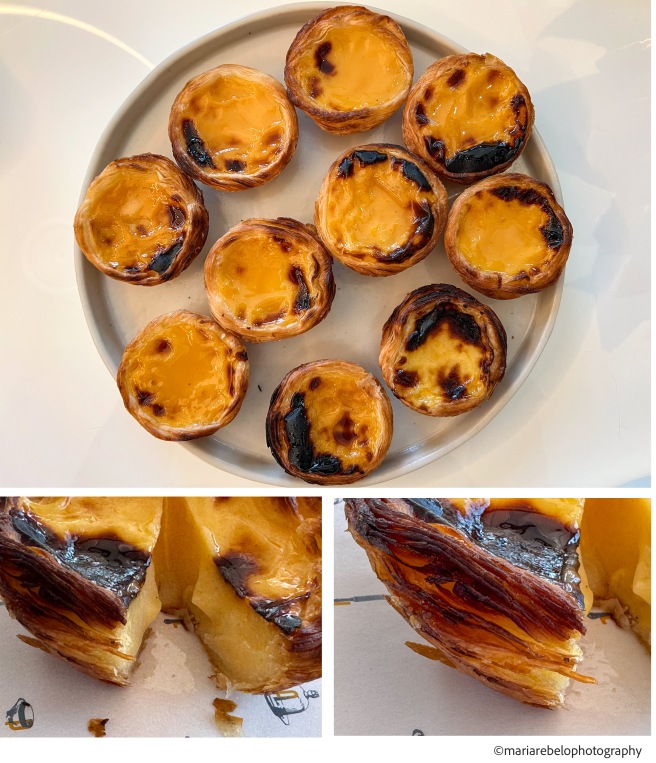
Just when we thought we had tasted all the city’s holy pastries, we stumbled upon a new revelation, hidden in plain sight at the recently renovated Hotel do Bairro Alto. Its pastéis are extraordinary. The custard, radiant yellow and delicately scented, has just the right touch of sweetness. The crust is golden, crisp, and exquisitely flaky with seven layers that echo Lisbon’s seven hills.

When we asked the servers about the recipe’s ingredients, they nodded politely and walked away. But on the final morning, a waitress slipped us a handwritten note with the ingredients. The secret? The filling is made not with cream, but with milk and cornstarch, lending it an ethereal lightness. The crust’s sublime texture is achieved through a blend of butter and pork lard.

So here is an insider’s tip: if you find yourself near Chiado, step into the Hotel do Bairro Alto and take the elevator to the fifth floor. Settle into the serene terrace overlooking the Tagus River and order some pasteis de nata. As you sit there, savoring these sweet devotions, you’re likely to find yourself at peace.

Hotel do Bairro Alto, Praça Luís de Camões 2, Lisbon, tel. 213 408 288, email: reservations@bairroaltohotel.com. Click here for the hotel’s website.

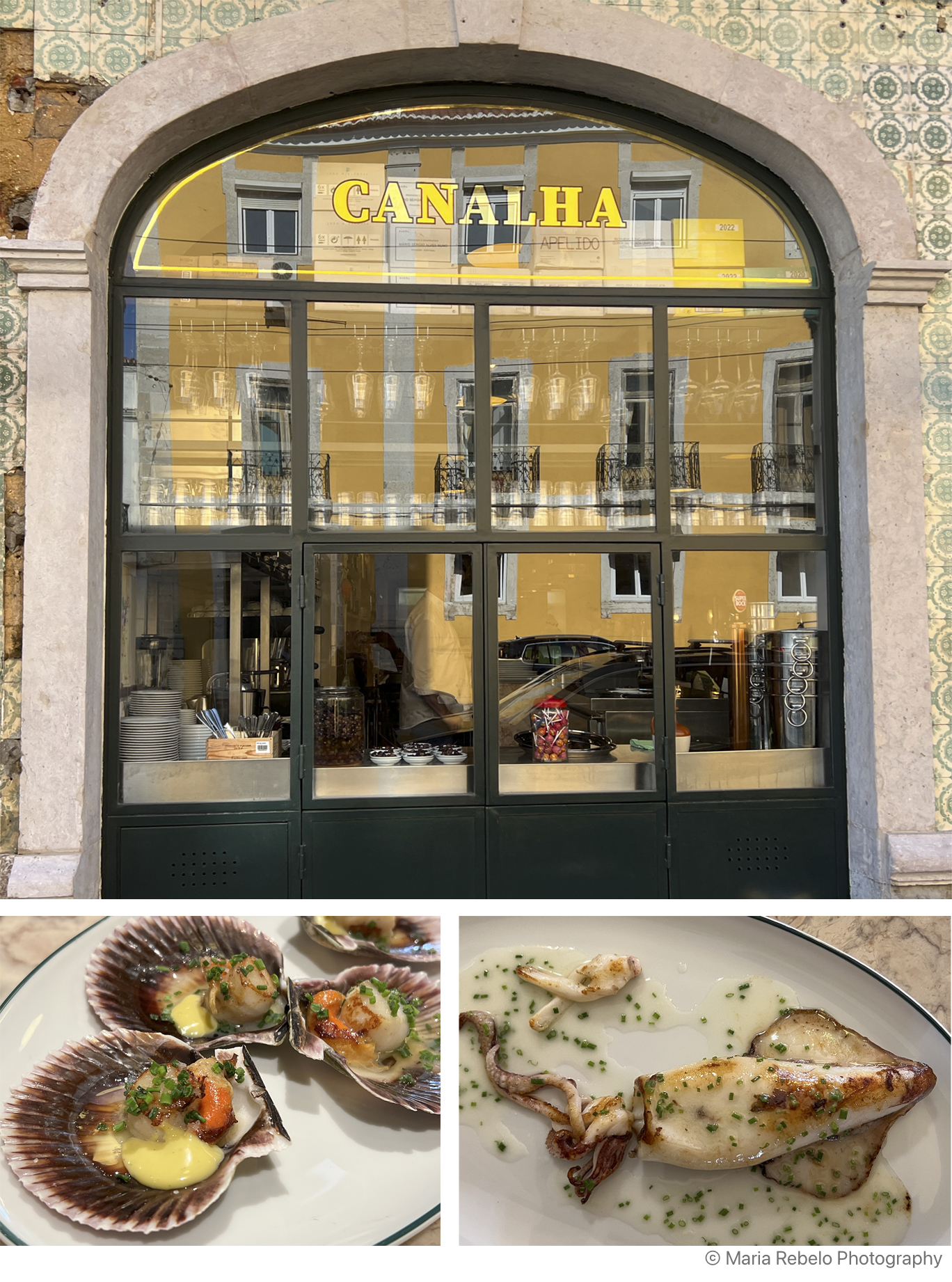
Canalha

One of Lisbon’s most coveted new restaurants bears a mischievous name: Canalha—the Portuguese word for “scoundrel.” Behind this playful moniker stands one of Portugal’s most acclaimed chefs, João Rodrigues. After earning accolades in haute cuisine, João chose a different path: to open a neighborhood restaurant grounded in the rich culinary traditions of Portugal. The result is a place that is unpretentious and quietly exceptional. Each day features a new “prato do dia”—a beautifully prepared dish offered at a modest price. But for those inclined to indulge, the menu also offers exuberant pleasures: opulent seafood, exceptional cuts of meat, superb artisanal charcuterie, and exquisite wines.

The décor reflects the restaurant’s philosophy of understated elegance. Tabletops are crafted from lioz, the rose-toned limestone that graces Lisbon’s historic buildings. The floors are paved with traditional black-and-white mosaic. Ceiling fans stir the air with their wooden blades, creating a gentle breeze.

Our meal began with crusty bread and pungent olive oil, followed by pastéis de massa tenra—golden, crisp savory pastries filled with seasoned meat and served with a bold sriracha mayonnaise. Then came zamburinhas, small scallops bursting with briny sweetness, and an exquisitely tender squid, lightly charred to smoky perfection. The final dish—grilled octopus with sweet potatoes—was a flawless composition of textures and flavors.

Canalha is not a stage for culinary theatrics. There are no illusions, no deconstructed dishes; there is no drama on the plate. This is cooking rooted in reverence for the land, the seasons, and the ingredients. After stepping away from haute cuisine, João journeyed across Portugal in search of forgotten recipes, unique flavors, and small producers who work with passion and dedication. Their names are celebrated on the menu. One dish is dedicated to our friend Raul Reis, who grows the finest potatoes in Portugal.

João is soft-spoken but intense. At Canalha, he channels this intensity to produce something rare: food steeped in the flavors and traditions of Portugal, cooked with skill, honesty, and soul.

Canalha is located at Rua da Junqueira 207, in Lisboa, tel. 962 152 742. Click here for their website. Reservations are a must.

Miss Can

When we were young, we spent our summer vacations camping by the sea. We packed cans of berbigão- small, flavorful cockles- and used them to make rice dishes that tasted divine after a swim in the ocean.

Over the years, canned berbigão nearly vanished from store shelves. Fortunately, Miss Can has brought it back, along with various other delicacies. In addition to classics like sardines and tuna, their selection includes razor clams, squid, mussels, octopus, and more.

The brand’s origins date back to 1911, when Alberto Soares Ribeiro established two canning plants—one in Setúbal, near Lisbon, and another in Olhão, Algarve. Like many others, these plants closed their doors during the years of economic turmoil that followed the 1974 revolution. Almost a century later, Alberto’s great-grandson, Tiago Soares Ribeiro, brought the family’s canning legacy back to life. Together with his relatives, Tiago launched Miss Can, a brand dedicated to high-quality, artisanal canned fish.

The rebirth began in 2013 when Tiago started producing small batches of canned fish and selling them from a yellow Piaggio motorcycle in Lisbon’s St. Jorge Castle neighborhood. In 2015, Miss Can received two prestigious awards, enabling Tiago to open a charming eatery near St. Jorge’s Castle, where visitors can experience the exceptional quality of his products.

All the fish, except cod, are sourced from the Portuguese coast. The canning process follows the same traditional method used a century ago. The fish are gently steamed to preserve their texture and natural flavor.

With Miss Can, we can effortlessly create a delicious salad, a rich pasta, or a comforting rice dish that brings back the taste of our carefree vacations by the sea.

You can sample Miss Can’s products at Largo do Contador Mor, 17 Castelo in Lisbon. Miss Can is available in the U.S. at World Market stores. Click here for Miss Can’s website.

Chef Marlene Vieira is a star

Since the dawn of civilization, Babylonians, Egyptians, and Greeks have studied the skies to chart the stars. But these luminous bodies shined whether or not they were included in celestial atlases.

Last Tuesday, Marlene received a Michelin star—a richly deserved honor that celebrates her extraordinary talent and dedication. But long before this important accolade, her light had already illuminated the world of gastronomy. What fuels her radiance is the belief that cooking is an act of love. Each time we dine at her Zun Zum restaurant, we feel not just deeply satisfied but cared for.

Now, at the restaurant that bears her name, Marlene is elevating Portuguese cuisine to new heights. The space exudes serenity, with the kitchen at its heart—an altar where ingredients are transformed into a transcendent gastronomical experience. The menu evolves constantly, and once a recipe leaves, it does not return, making each meal a singular experience.

Guiding this culinary journey alongside Marlene is Chef Mário Cruz. He searches land and sea for exquisite treasures—sea urchins, Algarve red shrimp, wild mushrooms, cuttlefish, mullet, octopus, and partridge. 

The food is visually stunning, but, more importantly, it is delicious and it has soul. The irresistible cornbread, kneaded from white corn, wheat, and rye, follows Marlene’s grandmother’s recipe. The Azorean bluefin tuna, cured as if it were prosciutto, accompanied by gazpacho served in a bowl lined with sumac, transported us to the Algarve, to a sunlit table by the sea.

The partridge is cooked according to a famous recipe. During the Napoleonic invasions, General Junot’s troops looted the library of the Alcântara Monastery. Among the stolen manuscripts was a recipe for partridge stuffed with foie gras and truffles. Junot sent it to his wife, who introduced it to France as “Partridge, Alcântara style.” The renowned chef Auguste Escoffier declared it one of the finest spoils of the Napoleonic wars. Marlene’s reimagined version of this historic dish is so extraordinary that it might provoke another French invasion.

Marlene Vieira is a star–not because she has been recognized among the constellations of fine dining, but because she has always shined.  If you find yourself in Lisbon, take the time to sit at her table to savor the brilliance of her cuisine.

Marlene is located at Av. Infante D. Henrique, Doca do Jardim do Tabaco, Lisboa, tel. 351 912 626 761, email marlene@marlene.pt.

Fuso, a landmark restaurant

Located in Arruda dos Vinhos, 20 miles north of Lisbon, Fuso is a restaurant from another era. It opened its doors, in the space once used as a winery and a tavern, on March 9, 1973.

The concept for the restaurant was created by Fernando Guerra Cardoso, a successful car salesman who enjoyed socializing over food. He persuaded his friend, Armindo Mera Dominguez, to open a restaurant serving oversized portions that encouraged people to bring their friends. Today, the restaurant is run by the great-grandchildren of both founders.

Diogo Coucello, Fernando’s great-grandson, leads a team of 30 waiters and kitchen staff, ensuring seamless service for up to 300 guests. Reservations are essential—Fuso is always full. 

Since 1973, the menu has remained unchanged, focusing on two signature dishes: charcoal-grilled codfish and bone-in rib steak. Your meal can begin with delectable appetizers such as prosciutto, savory sausages, or grilled shrimp and end with various desserts, ranging from roasted apples to egg puddings and chocolate cake. But the main attractions are grilled codfish and steak.

You can find these dishes in many other restaurants, but Fuso’s renditions are exceptional. The codfish, imported from Norway, is meticulously selected for its succulence and rich flavor. The rib steak, consistently tender and tasty, has been sourced from the same butcher since the restaurant’s inception.

Fuso’s rustic décor has remained untouched since its opening. The restaurant’s name refers to the fuso, or spindle—a large wooden screw—attached to the wine press that still occupies the center of the dining room. The entrance is dominated by towering wine barrels made from exotic wood and a grand charcoal grill glowing with embers.

In a world where everything feels fleeting, it’s a privilege to eat at a restaurant that has been a gathering place for friends who love food for over half a century.

Fuso is located at Rua Cândido dos Reis, 94, Arruda dos Vinhos, tel. 263 975 121, 263 978 547.