A tavern called Wednesday

Quarta-Feira rest composite

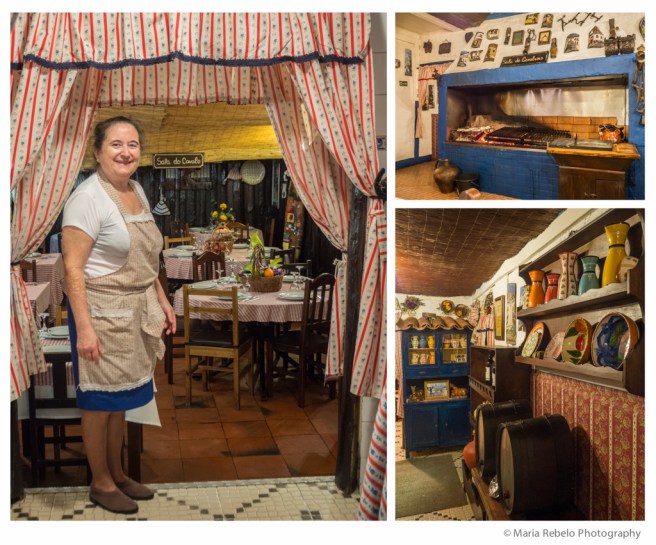
André Freire, the manager of the beautiful Évora pousada, urged us to try a tavern called Quarta Feira (the Portuguese word for Wednesday). “It’s a special place,” André said with a smile. “There’s no menu; you have to trust Zé Dias, the owner, and go with the flow.”

As soon as we entered the restaurant, we became friends with Zé Dias. He moved to Évora from a village in Beira Alta called Quarta Feira, the name he used for the restaurant. Dias worked as a typographer until he opened this tavern 25 years ago with Luisa Batista, a great local cook.

Dias’ enthusiasm for food, wine and life in Alentejo is infectious. Everything he serves comes from people he knows well, from the producers of cheese and sausages to the maker of the clay pots that are integral to Luisa Batista’s cooking. When we asked Dias how he managed to convince Paulo Laureano, a renowned Portuguese enologist, to make the house wine for Quarta Feira, Dias replied “Of course he said yes; we’ve been friends for a long time.”

Our dinner started with slices of local sausages and prosciutto made with black pork from Alentejo. Then a warm sheep cheese seasoned with oreganos arrived, busting with flavor. Next, we had some wonderful mushrooms cooked in mushroom water, seasoned with olive oil, garlic and coriander. “The secret is all in the timing,” Dias tells us and we believe him because at this point we believe everything he says.

The meal’s main event was the house specialty: black iberian pork shoulder marinated in wine cooked slowly in a clay pot. It was so delicious that our taste buds scintillated with delight. The dessert was composed of dried figs, walnuts, cooked quince, and samplings of two conventual desserts.

The meal ended with a glass of licoroso from Herdade do Mouchão. This sweet wine with notes of fruits and spices was a perfectly simple ending to a simply perfect meal.

Zé Dias is a philosopher king who disguises as a tavern owner so that he can share with his guests the joy of living in Alentejo.

Taberna Típica Quarta Feira is on Rua do Inverno 18, Évora, tel. 266 707 530.

Ebora cerealis

OLYMPUS DIGITAL CAMERA

If you’re traveling in Alentejo, follow the advice of ancient travelers and spend some time in Évora. The city is included in the Antonine itinerary and is mentioned in Pliny the Elder’s Natural History as Ebora Cerealis in reference to the surrounding fields of cereals.

Évora was occupied by Celts, Gauls, Phoenicians, and Persians. But it was Quintus Sertorius, the general who conquered the city in 80 B.C., that gave Évora its architectural jewel: a Roman temple with elegant corinthian columns. Known as the temple of Diana, it is more likely to have been dedicated to Jupiter.

There’s much to see in Evora: a beautiful basilica, elegant university buildings, and peaceful convents. And the food and wine are great everywhere.  You can choose a restaurant blindfolded and have a wonderful meal. If Pliny was writing today, he might call the city Ebora Delicia.

The glorious food of a rural past

Composit - solar dos amigosWhen you dine at Solar dos Amigos, you take a trip back to a time when people grew their own food, so cooking was informed by a deep knowledge of ingredients.
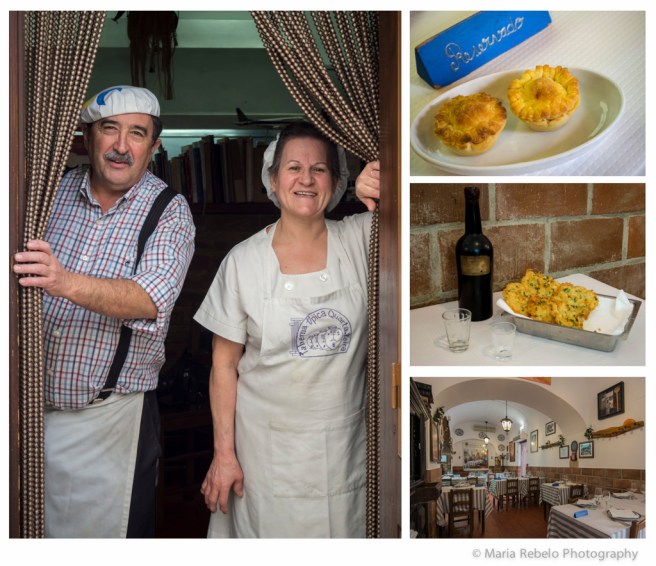
We realized that our meal was going to be extraordinary when Luisa Nunes, the restaurant owner, brought a small plate of pataniscas (fried codfish) that were wonderfully light and full of flavor. We liked them so much that we tried two other codfish preparations. The first was Tiborna, roasted codfish combined with potatoes, olive oil, and garlic. It is a traditional recipe, but this version shined because of the pristine ingredients and immaculate execution. The second was codfish campino style, a delicious, airy combination with cabbage and white beans baked inside a country bread.

Our first meat dish, fried lamb chops, reminded us of how extraordinary the taste of lamb can be. The grand finale was Cascos à Ribatejo—veal grilled in the huge fireplace of the main dining room. The veal was succulent, tender, and deeply satisfying.

Throughout the meal, different types of bread and vegetable sides were brought to our table: an unforgettable warm corn bread (broa) seasoned with garlic and olive oil, a hearty bean rice, and much more. The food was blissfuly married with the house wine, a bold red produced by Luisa’s octogenarian father.

Luisa is a master of the art of hospitality. Even though the restaurant has four spacious dining rooms, she seems to be everywhere, chatting with regulars, welcoming new clients, making sure the food and service are perfect. Luisa loves the restaurant so much that she never vacations and feels bored on Wednesdays, the day Solar dos Amigos closes. It is her passion that makes dining at Solar dos Amigos such an exceptional experience.

The greatest food in Portugal was not inspired by the kitchens of palaces and noble houses. It comes from a rural tradition that is perfectly reflected in the food of Solar dos Amigos.

Solar dos Amigos is located on a small village called Guisado, 100 km north of Lisbon. The restaurant’s address is Rua Principal, 49, Guisado, Caldas da Rainha. Even though the restaurant is large, it is a good idea to make reservations. Their telephone number is 262-877-135. Click here for their website.


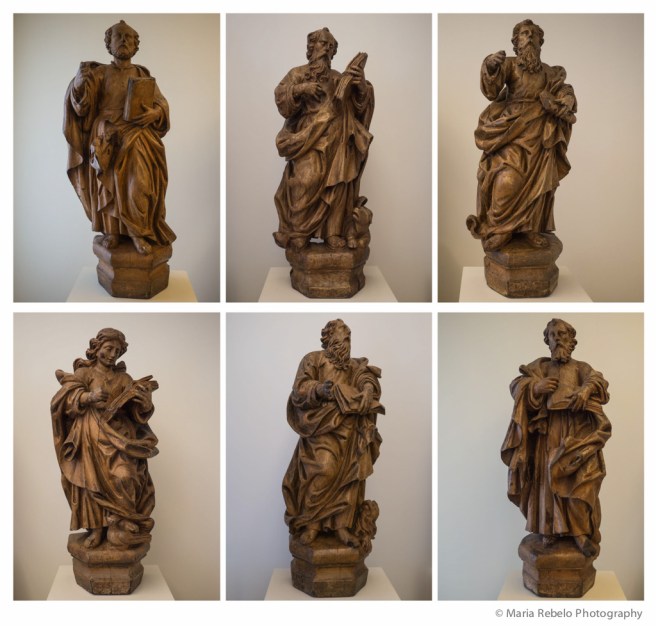
Wood saints

Christmas Card 2015

The Grão Vasco museum in Viseu houses an exquisite collection of wood statues from the 18th century. The names of the sculptors who created these pieces have long been lost. What remains is the mastery with which they used their mallets and chisels to breathe life into wood.

The Grão Vasco museum is located at Adro Sé in Viseu, tel 232 422 049.

The Lisbon Pousada

PousadaLisboaLisbon has a wonderful new historical hotel: the Lisbon Pousada, located in the old royal-palace courtyard known as Terreiro do Paço.

Until the middle of the 18th century, ministers, nobles and other power brokers constantly stamped the soil of this courtyard with their footprints. But, after the 1755 earthquake destroyed the royal palace, the king moved to Ajuda and the courtyard lost its illustrious traffic.

In the 20th century, Terreiro do Paço regained its status as the walkway of power. The new hotel occupies the Ministry of Internal Affairs building. It was here that Salazar, the man who ruled Portugal from 1926 to 1970, had his office.

The pousada is decorated with numerous historical artifacts, including models for many of the statues that adorn the city. The rooms are elegant and comfortable with windows that frame beautiful views of downtown Lisbon: stucco buildings, ancient tiles, pink roofs, the walls of St. Jorge’s castle, and the northern margin of the Tagus river. Salazar’s old office is now a spacious bedroom suite.

It is said that in stressful times, Salazar avoided the main entrance of the building, using instead a discreet back door. This back door is now closed. Surrounded by elegance and comfort, pampered by the hotel’s well-trained staff, stress is the last thing on the mind of the guests of the Lisbon Pousada.

The Lisbon Pousada is located at 31, Praça do Comércio, tel. 351 21 040 7640. Click here for the pousadas’ website and here for a large collection of photos of the hotel.

The Estrela Basilica

OLYMPUS DIGITAL CAMERA

One of the buildings often found next to a Roman forum is the basilica. It served as a place where people could meet. Basilicas had no statues of Roman gods and had beautiful light that came in through windows near the roof, so they were a favorite gathering place for early Christians.

The plan of the basilica was later adopted for the construction of important churches. Lisbon has an elegant basilica at Estrela, built in 1790 by Queen  Maria I.

Few people seem to know that one can climb the stairs to the roof of the Estrela basilica and enjoy in peaceful silence breathtaking views of the city. It is a perfect place to meet Lisbon.

The Alcobaça game

Alcobaça Composite

It can be hard to visit monuments with little kids, so it is always a good idea to engage them in a game. If you visit Alcobaça, a beautiful abbey in the middle of Portugal, you can ask your kids to go on a treasure hunt. They can look for stones with carved initials and photograph them. This game can turn an otherwise boring visit into a memorable one.

Masons often carved their personal marks on stones placed in the parts of the cathedral where they worked. They did it to show pride in their work but also to claim the work as theirs so they could get paid.

Centuries later, these signatures remind us of the humble people whose hard work created a legacy of enduring beauty.

Memorable pastries from Vila Real

Crista de GaloMore than a century ago, a baker from Vila Real was given four secret recipes from the local Santa Clara convent. The pastries she made with these recipes were so extraordinary that she decided to turn her bakery into a pastry store.

Today, her great grandchildren continue to use the same prized recipes at Casa Lapão, a pastry store in Vila Real. Their most popular pastry is called “Crista de Galo,” which means rooster comb.  We recommend that you try them with your eyes closed so you can better appreciate the heavenly combination of the flaky dough with the egg and almond filling.

If you’re near Vila Real, a stop at Casa Lapão can turn an ordinary day into a memorable one.

Casa Lapão is located at Rua da Misericórdia 53/55, Vila Real, tel 259 324 146, email casalapao@gmail.com. Click here for their website. 

Beach moments

OLYMPUS DIGITAL CAMERA

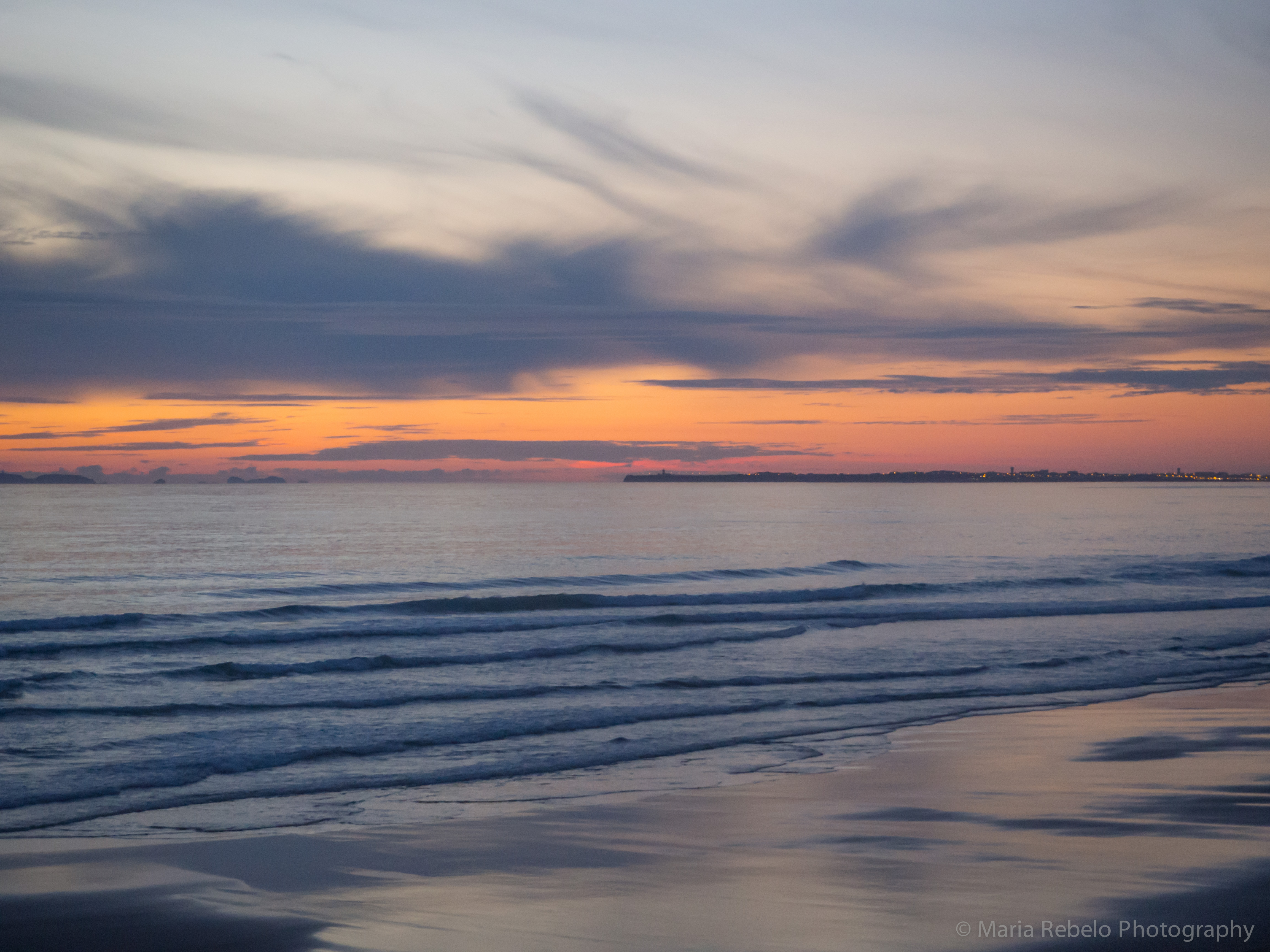
Life is like a train trip. We eagerly anticipate getting to the next station but, once we’re there, we can’t wait to move on.

Much of life is a blur, like the views from a moving train. We remember the arrivals and departures of those we love. And we remember some of the train stops, when the pace of life slows down.

For us, many of these leisure moments are spent on a Portuguese beach. We recall the beauty of the seaside, the wonderful weather, the delicious food and, most of all, those who shared these happy moments with us.