
This twelfth lecture in our series with viticulturist António Magalhães is a tribute to Álvaro Moreira da Fonseca, the agronomist who helped shape the destiny of the Douro by devising the method used to allocate the benefício—the authorization to produce Port wine.
The consequences of his method were profound. By tying the benefício to the vineyard rather than to an individual or company, Moreira da Fonseca helped preserve a place for the Douro’s small growers. Their labor, knowledge, and stewardship remain essential to the character of the region.
Moreira da Fonseca was born in Porto on August 25, 1902, into a family with deep roots in the Douro. He studied agronomy in Lisbon, where he met his future wife, Constança Maria. They married there in 1926 and later returned north with their growing family.
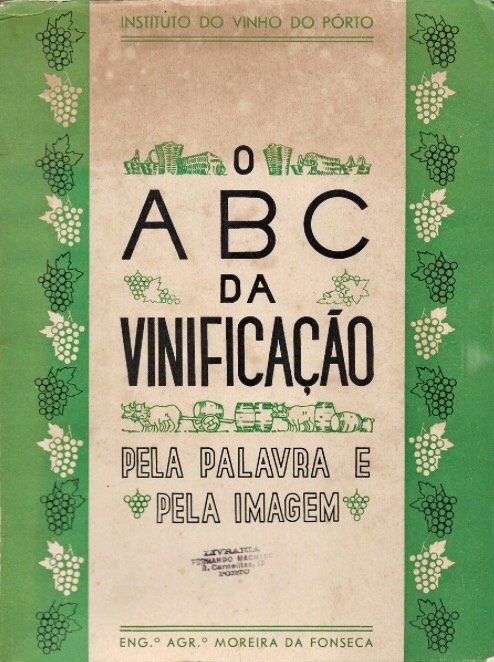
His first serious academic work was not about wine but about the pollination and varieties of fig trees. He later taught in Lamego and at the agricultural school in Alcobaça, where his gifts as a teacher soon became apparent. His first publication, The ABC of Winemaking, foreshadowed the subjects that would occupy him for the rest of his life: viticulture and winemaking.
Moreira da Fonseca spent most of his career at the Port Wine Institute, the regulator of the Port trade. He worked there from 1935 until his retirement in 1970, apart from 1946 to 1949, when he served first as vice-president and then as president of Casa do Douro, the compulsory association representing the region’s growers. At Casa do Douro, he devised the point system used to allocate the benefício and sought to correct an imbalance at the Institute, where the wine trade held three votes and growers only two.
Moreira da Fonseca believed that the Douro could not be governed wisely without first understanding its history. He approached historical research with the same rigor he applied to agronomy, carefully transcribing primary sources and combining archival work at the Torre do Tombo with an intimate knowledge of the region’s historic estates.
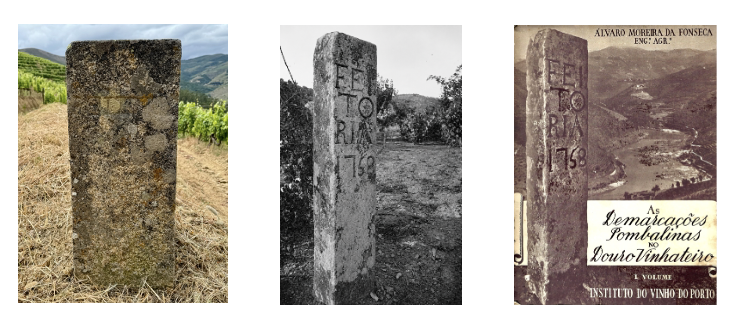
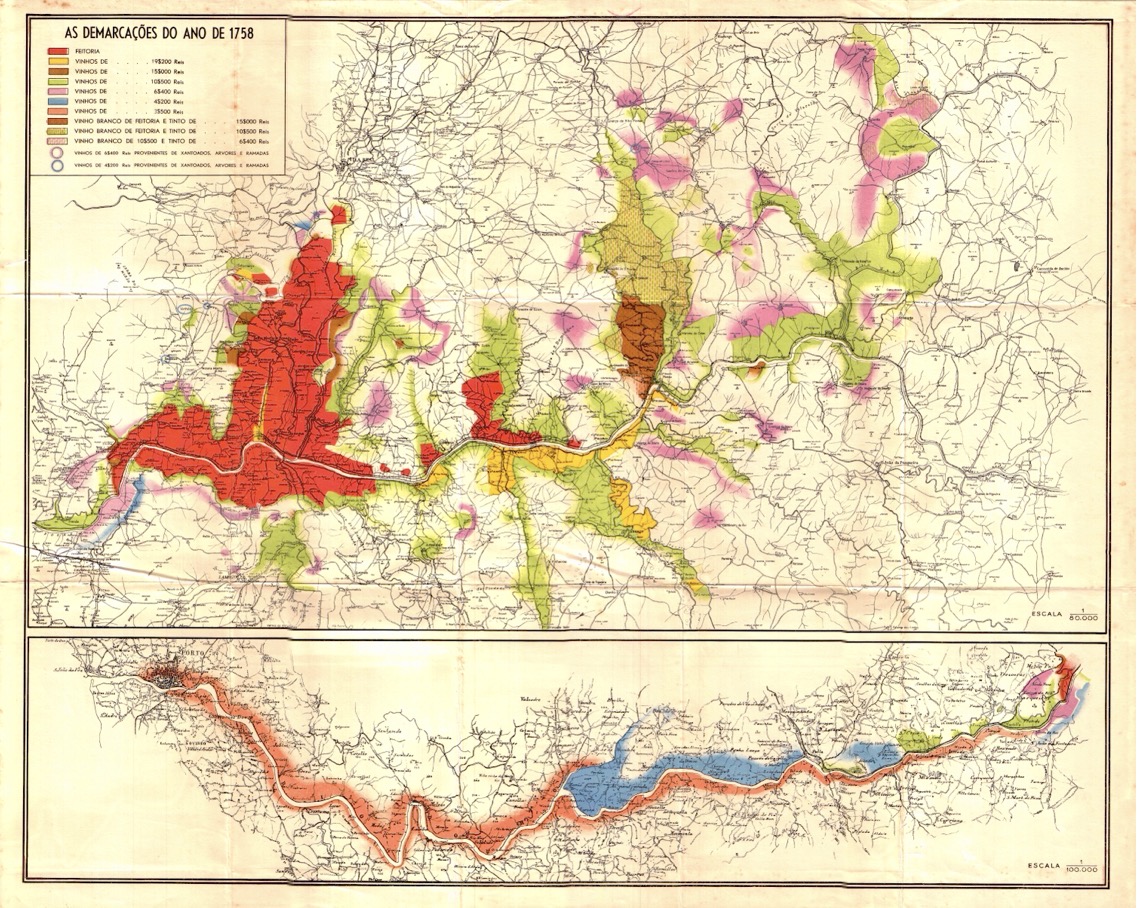
One episode reveals his remarkable curiosity and persistence. After encountering granite pillars erected under the Marquis of Pombal, prime minister to King José I, to mark the boundaries of the wine region, he became determined to reconstruct the Douro’s earliest demarcations. When searches at the Torre do Tombo archives failed to uncover the original maps, he travelled through the region in 1944 and 1945, matching eighteenth-century descriptions to the contours of the land. By 1949, he had identified 103 surviving Pombaline markers and reconstructed the demarcations of 1757, 1758, and 1761.
His interests ranged from preserving the Douro’s past to embracing the latest scientific advances. Long before the creation of the Douro Museum in Peso da Régua, he helped assemble a collection of tools and objects. In 1959, he secured funding for a cathode-ray polarograph, which enabled the Port Wine Institute’s laboratory to detect minute quantities of substances in Port, including trace metals such as lead.
António Magalhães recently discovered an unexpected way to compare Moreira da Fonseca’s ideas with his actual practice: the viticultural registers of Quinta das Lages, his family estate.
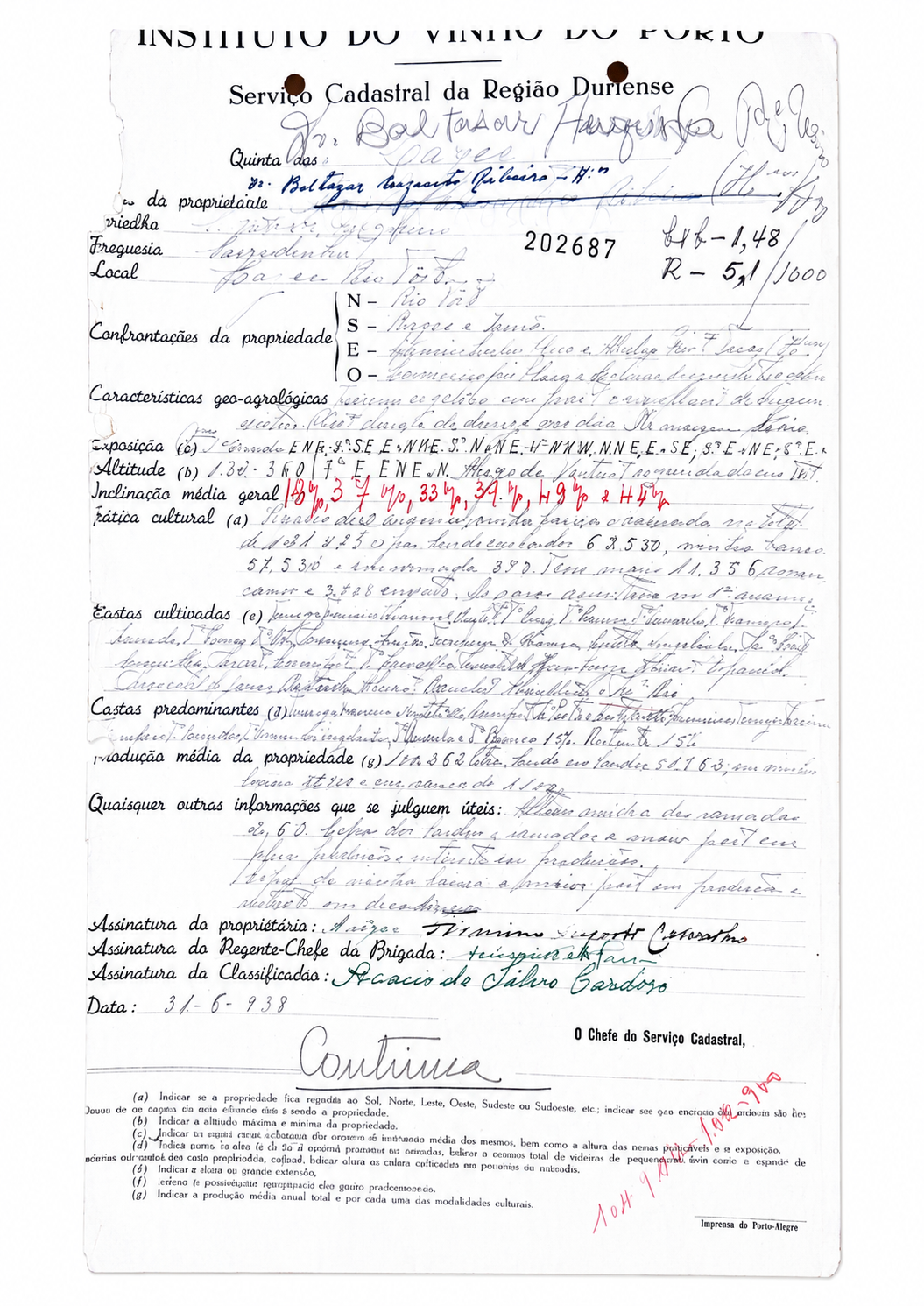
By the time António visited the estate, its older vineyards had been replaced with newer plantings. Working with Moreira da Fonseca’s daughter, Maria José, now eighty-eight, he reconstructed their history from successive vineyard registers preserved in the archives of Casa do Douro.
Quinta das Lages had belonged to Moreira da Fonseca’s maternal grandfather, Baltazar Augusto Ribeiro. The estate later passed to his mother, Lúcia Ribeiro, and her sisters, Beatriz and Ambrosina. Following his mother’s death in 1961, Moreira da Fonseca assumed responsibility for the estate and managed it until his own death in 1980.
The registers reveal a striking detail: his scoring system penalized his family’s estate. Moreira da Fonseca favored wider planting distances, believing they encouraged root development, improved sunlight exposure, and strengthened resistance to drought. Yet in 1944, Quinta das Lages averaged just 1.2 square meters per vine, placing it squarely in the category his method marked down—a strong indication that the system was not designed to favor his own family.
Over time, the vineyard moved closer to his ideal. The average area per vine rose to 1.5 square meters in 1957 and 1.96 in 1975 as successive sections were replanted. The shift probably reflected both his influence and the mechanization of viticulture, which required wider rows for tractors.
Vine spacing is the one point on which António Magalhães disagrees with Moreira da Fonseca. Under Moreira da Fonseca’s scoring system, vineyards with more than 1.74 square meters per vine received the highest score, with no upper limit beyond which wider spacing was penalized. Studying the same vineyards decades later, António argues that there is no universally optimal spacing. He generally favors greater planting density, but believes that the appropriate spacing must be adapted to each vineyard’s soil, climate, and the configuration of the terrain, especially its slope.
António has an advantage over Moreira da Fonseca: he can draw on decades of accumulated evidence. Many vines planted during the Douro’s long recovery from phylloxera—some now nearly a century old—were still young when Moreira da Fonseca developed his ideas. He could not yet know what their maturity would reveal about their ability to withstand the region’s long, hot, dry summers. Moreira da Fonseca’s preference for lower planting density was therefore understandable given the evidence available to him.
The registers also open a window onto a Douro that has largely disappeared. Today, four grape varieties form the backbone of most vineyards: Touriga Nacional, Touriga Francesa, Tinta Roriz, and Tinta Barroca. In 1938 Quinta das Lages was planted with a very different mix. Touriga Francesa and Rufete—the latter widely grown around the village of Sarzedinho, where Quinta das Lages is located—together accounted for 30 percent of the vineyard. Cornifesto, Malvasia Preta, and Castelã—the latter now in danger of disappearing from the Douro—made up another 20 percent.
Touriga Nacional was not among the leading varieties. Dominant in the Douro before phylloxera and described by Baron Forrester as “the finest,” it declined after the crisis. Its place was increasingly taken by Touriga Francesa, a cross between Touriga Nacional and Mourisco Tinto, a variety noted for its resistance to phylloxera.
The 1938 viticultural register of Quinta das Lages contains the earliest reference to Touriga Francesa that António has found. It raises an intriguing question: when and how did the name first appear? António suspects that the answer lies somewhere in the archives of Casa do Douro, together with many other secrets waiting to be uncovered.
These archives are more than a collection of administrative records: they tell the history of the Douro through its estates, families, and vines. Organizing and safeguarding them would be a fitting tribute to Moreira da Fonseca, whose own work reminds us that the future of the Douro depends in part on preserving its memory.

