
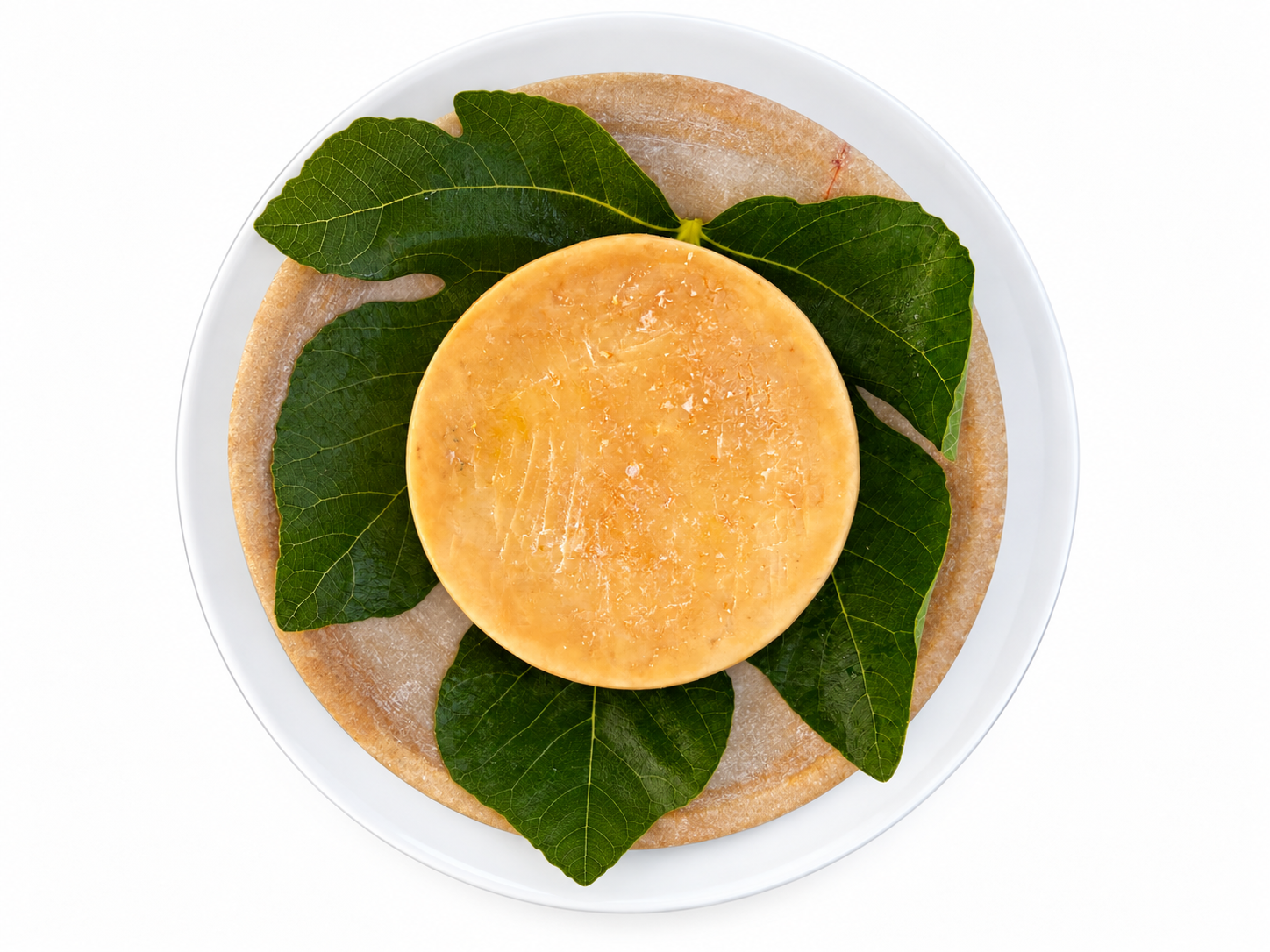
This summer, some dear friends gave us a mysterious goat cheese. It had no label; it offered no clue about its provenance. Heavy and dense, it demanded our sharpest knife. Its flavor was so intense that we soon learned to cut it into the thinnest of slices, so we could appreciate its complexity without overwhelming our palates. The story behind it proved every bit as extraordinary as the cheese itself.
It was made by Manfred Markl, who left Bavaria in 1984 with his wife and child to settle in Vale do Barco, a small village near Pedrógão Grande. There, they had a second child and built a life around organic, self-sufficient farming. The family produces much of what it consumes and sells cheese and other products to buy what it cannot make. It is a way of life once common across rural Europe, but now largely forgotten.
Manfred rises at dawn to milk his goats and then spends several hours leading them through the surrounding countryside. Along the way, they graze on brambles, olive branches, and wild vegetation, clearing the undergrowth and helping to reduce the risk of forest fires.
Once Manfred has collected one hundred liters of milk, which may take only a day in summer but several days in winter, he makes a new batch of cheese. He works with meticulous care, patiently crafting and aging each cheese before taking it to market in Pedrógão Grande.
When we were children, we were captivated by The Swiss Family Robinson, Johann David Wyss’s novel about a Swiss family shipwrecked on a remote tropical island who, through ingenuity and practical skill, create a comfortable, self-sufficient life.
Imagine our astonishment at discovering a real-life German Family Robinson in rural Portugal–living off the land and making extraordinary cheese.
You can watch a video about Manfred Markl’s project here and buy his cheese at the market in Pedrógão Grande.

