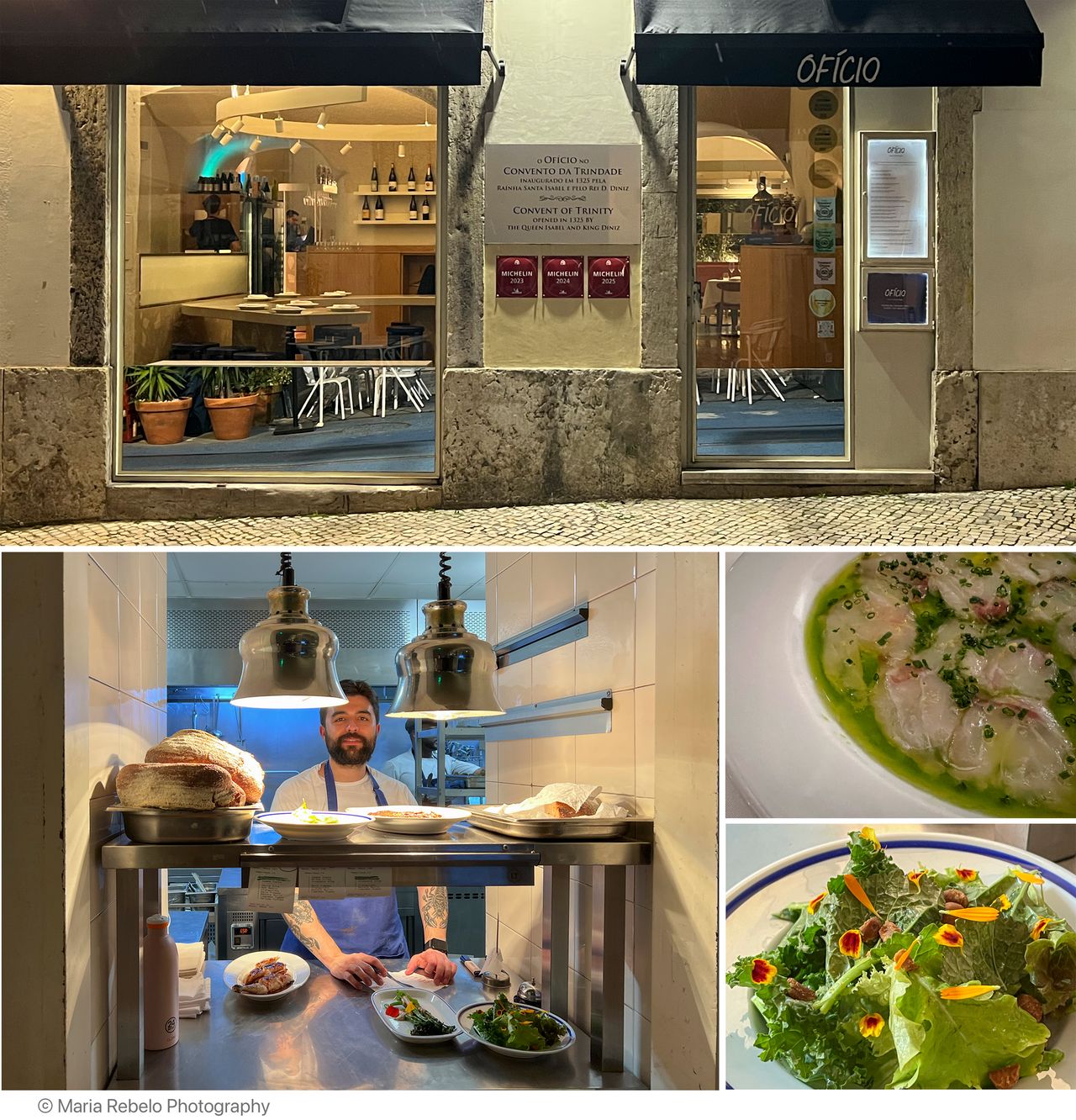
Winter refused to leave, filling Lisbon’s streets with cold wind and a persistent drizzle. Stepping into Ofício, a restaurant near Chiado, felt like a welcome reprieve. Stevie Wonder’s voice filled the dining room, while a soft light washed over the white walls and tables, creating a sense of warmth.
Ofício’s seasonal menu revisits Portuguese classics through a contemporary lens, with a subtle Japanese influence. The restaurant is now led by chef Maurício Varela, a native of Aveiro who trained in fine-dining kitchens across Brazil and Spain. At Ofício, he is not chasing stars, but something more lasting: a place guests return to for comfort food prepared with care and excellent ingredients.
The service was gracious and efficient. We began with two Japanese-inspired appetizers: a delicate horse mackerel tartare on a shiso leaf, and a sea bream tartare, lightly dressed with chive oil and citrus. The meal then turned to Portuguese tradition, with a dish from the Algarve: milhos fritos (fried polenta), served with stewed turnip greens and cheese from São Jorge Island.
For the main course, we sampled two dishes. The first was smoked skate, enriched with lobster butter and a celery ragù. The second was a hearty codfish rice.
Dessert featured a trio of cheeses, the highlight a creamy goat cheese made by João Prata in Maçussa.
We left ready to face winter’s last outburst, already planning to return in spring.
Ofício is located at Rua Nova da Trindade 11, Lisbon, click here for their website.
If you only have one day to venture outside Lisbon, spend it in Sintra. The town lies just 28 km away and is easily reached by car or by train from Rossio Station.
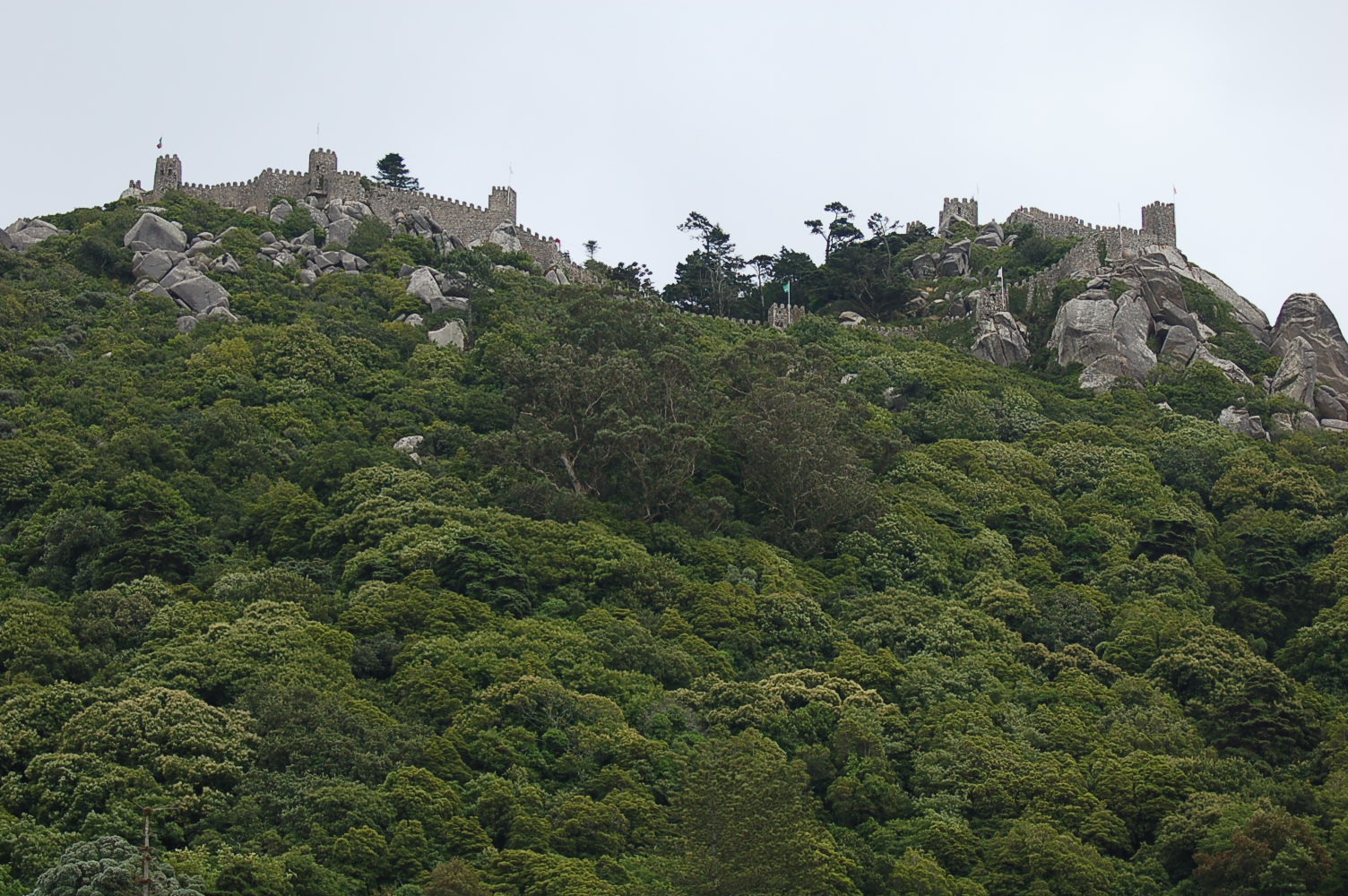
We love Sintra most on foggy days, when humid Atlantic air climbs the slopes of the Serra de Sintra, cooling as it rises until its vapor condenses into mist. You can walk along the ramparts of the Moorish castle as if you had slipped back to the eighth century, with no trace of the modern world on the horizon.
The Moorish castle
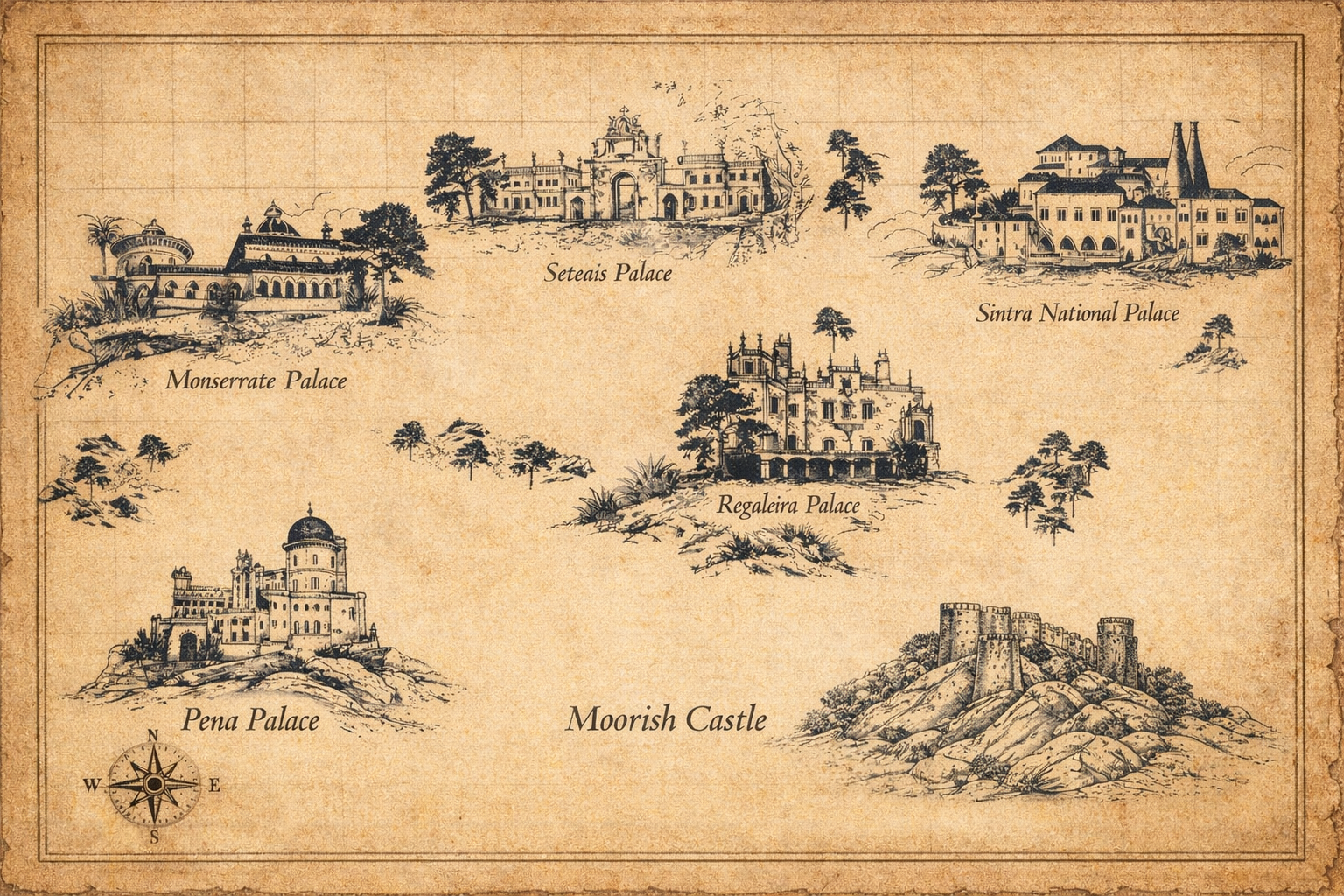
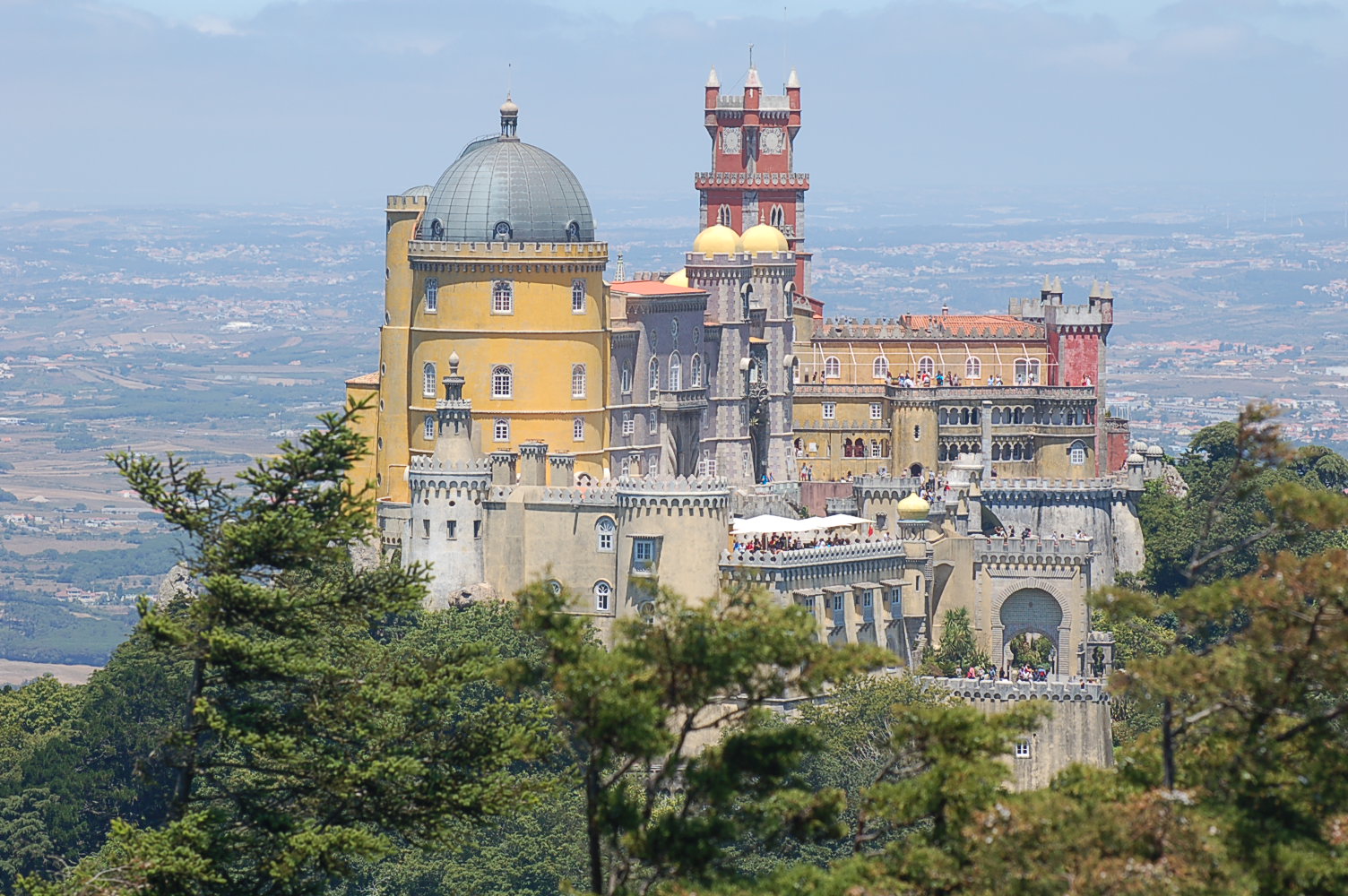
Climb the short kilometer that separates the castle from the Pena Palace, and you travel through eleven centuries, arriving in a setting worthy of a nineteenth-century fairy tale.
The Pena Palace
First day
Arrive at Palácio da Pena as early as possible to avoid the crowds. Built in the 1840s by King Ferdinand II on the ruins of a fifteenth-century convent, the palace crowns the Serra de Sintra with Romantic splendor. On clear days, the view stretches all the way to the Bay of Cascais. Tradition holds that from these heights, King Manuel I glimpsed the arrival of Vasco da Gama’s battered fleet returning from its first voyage to India.
The palace is a colorful blend of Moorish, Manueline, and Gothic styles. One of its many curiosities is a sculpture of the Monstrengo, the mythical sea creature said to guard the Cape of Good Hope at the southern tip of Africa from Portuguese sailors.
When Ferdinand II acquired the estate in 1838, the mountain was largely bare. He planted thousands of trees—sequoias from North America, Japanese cedars, camellias from China—creating a forest of luxuriant diversity. In the Valley of the Ferns, enormous tree ferns imported from Australia flourish in Sintra’s cool, misty climate.
If time allows, visit the Countess of Edla’s Chalet. After Queen Maria II’s death in 1853, Ferdinand fell in love with the opera singer Elise Hensler, whom he married in 1869. He built her a romantic Alpine-style chalet, now beautifully restored, an intimate testament to their unlikely love story.
Monserrate
From Pena, descend through the forest toward the western slopes of the Serra, to the Monserrate Palace. The name comes from a small sixteenth-century hermitage dedicated to Our Lady of Monserrate. In the late eighteenth century, the estate was leased first to the English merchant Gerard Devisme and later to William Beckford, a writer and heir to a vast Caribbean sugar fortune. After Beckford returned to England, the property gradually fell into disrepair. By the time Lord Byron visited in 1808, it had become a romantic ruin.
The estate was later purchased by the English collector Sir Francis Cook, who in 1856 hired architect James Knowles to create an elaborate palace combining Gothic, Moorish, Mughal, and Indian styles. The palace rises amid botanical gardens filled with plants gathered from around the world.
Seteais
After wandering through Monserrate’s lush gardens, it may be time for a refreshment: perhaps a chilled white Port at the nearby Seteais Palace. The origin of its name, meaning “seven signs,” has been lost to time.
The palace was built in the 1780s by the Dutch consul Daniel Gildemeester, who made his fortune as part of a merchant group with exclusive rights to import and sell tobacco. After returning to Holland, he sold the estate to the Viscount of Marialva, who expanded the palace, adding a triumphal arch in 1802 to mark a royal visit by the future King João VI of Portugal. Since 1954, the palace has operated as a luxury hotel, preserving the quiet elegance of Sintra’s aristocratic history.
Praia da Adraga and Azenhas do Mar
From Seteais, head west toward the Atlantic. In summer, finish your day with dinner by the sea at the beachside restaurant on Praia da Adraga. It’s a simple place serving grilled fish, but the catch is exceptionally fresh. Start with percebes or clams, and pair your meal with wine from the nearby Colares region.
If time allows, stop before dinner at Azenhas do Mar, a small village perched on cliffs overlooking the Atlantic. Here stands one of Portugal’s most famous beach houses, easily recognized by its white roofs. It was designed by Raúl Lino, the architect who codified Portuguese vernacular architecture and created archetypes that remain influential today.
Spending two or three more days in Sintra
After a day exploring Sintra’s Romantic palaces and Atlantic views, the following days reveal an older and more intimate side of the region.
Sintra National Palace
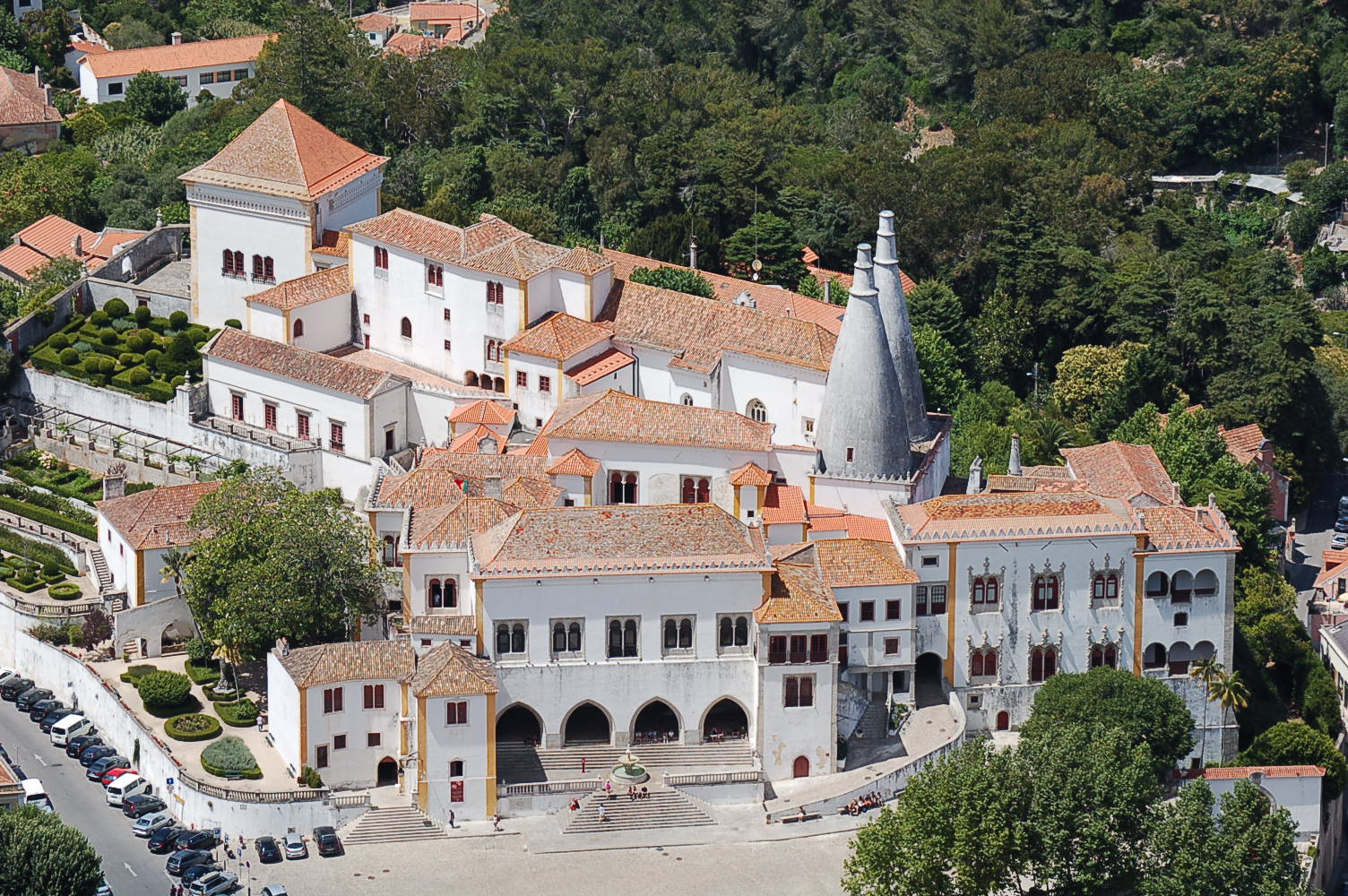
The Sintra National Palace
The Sintra National Palace, originally a Moorish palace, was gradually transformed after the conquest of Sintra in 1147. It later became a favored summer retreat for Portuguese royalty seeking relief from Lisbon’s heat. Its distinctive twin chimneys hint at the grand banquets once held here.
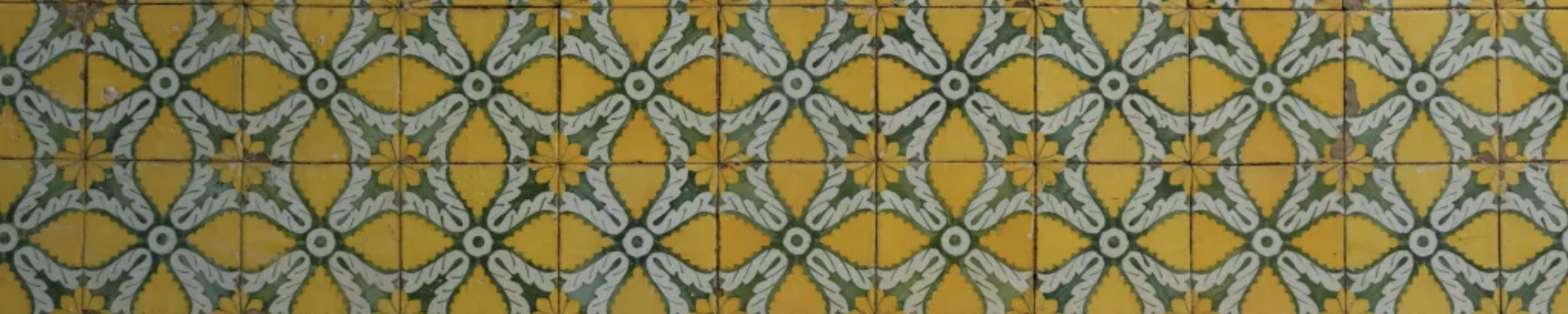
The building was extensively remodeled at the end of the fifteenth century by King Manuel I. Yet traces of its Moorish heritage remain in the geometric decoration, inner courtyards, and windows adorned with floral motifs. The nineteenth-century art historian Joaquim de Vasconcelos described the palace as “a veritable museum of the rarest and oldest azulejos in high relief that we possess.”
Among the many rooms, two are particularly memorable. The first is the Sala das Pegas, or Magpie Room, a playful reminder of King John I’s indiscretions. Queen Philippa of Lancaster caught the king kissing one of her ladies-in-waiting. He protested that it was done por bem—his intentions were good—but the episode became the talk of the court. To silence the gossip, the king ordered the ceiling painted with 136 magpies, one for every lady of the court, each bearing the words por bem in its beak.
The second is the Sala de Armas. King Manuel I commissioned a display of the coats of arms of noble families who had distinguished themselves in battle. Their heraldic insignia honored past achievements and reminded their sons and grandsons of their duty to defend the kingdom.
The palace also witnessed darker chapters of Portuguese history. Here, the young King Sebastião, only sixteen, held his final council before leading the Portuguese nobility on the ill-fated campaign to Morocco. He died in 1578 at the Battle of Alcácer Quibir, a disaster that ushered in sixty years of Spanish rule.
A century later, another monarch met a quieter fate within these walls. Afonso VI, crippled by a paralytic seizure, was overthrown in a coup led by his brother, the future Peter II. His wife, the beautiful Marie Françoise of Savoy, had their unconsummated marriage annulled and married Peter. Afonso spent the last nine years of his life confined in the palace, where he died in 1683.
Writing in 1903, the Count of Sabugosa saw the palace as a reflection of Portugal itself, where Celtic, Gothic, Arab, and other traditions blended into a spirit of “imagination, poetry, enthusiasm, and dreamy melancholy.”
Quinta da Regaleira
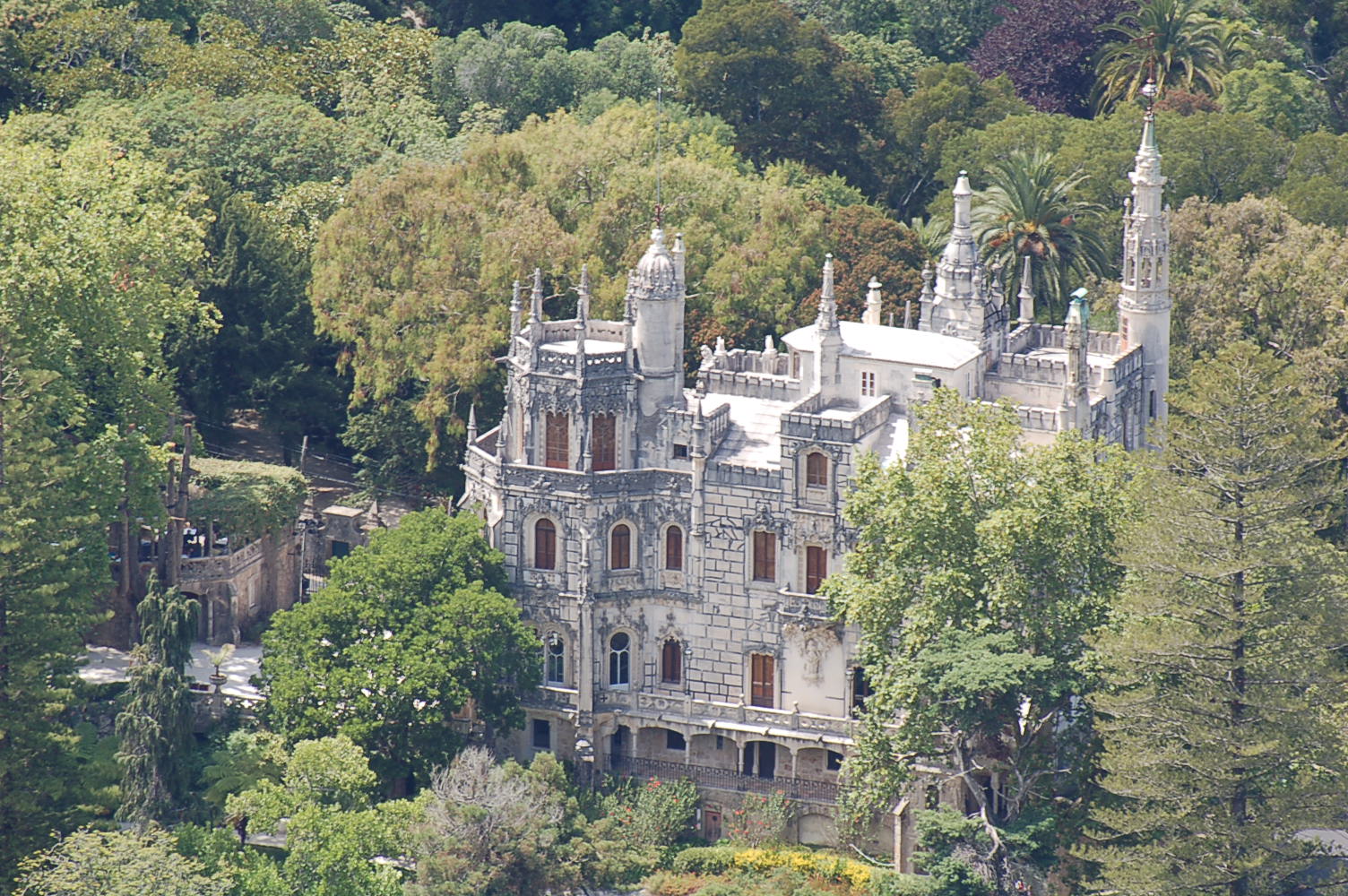
Quinta da Regaleira
Our next stop is Quinta da Regaleira. Its palace was built between 1904 and 1910 by António Monteiro, a Portuguese businessman born in Brazil and nicknamed as Monteiro dos Milhões, “Monteiro the Millionaire.” Fascinated by alchemy, Freemasonry, the Knights Templar, Rosicrucianism, and symbolism, Monteiro designed the estate to reflect these esoteric interests.
The gardens unfold as a symbolic journey through caves, towers, lakes, hidden tunnels, and secret doors. The Initiation Well is an inverted tower with a spiral staircase descending deep into the earth. Its nine landings are often interpreted as alluding to the nine circles of Hell, the nine levels of Purgatory, and the nine heavens described in Dante’s Divine Comedy.
Capuchos Convent
It is now time to move from extravagance to austerity. The Convento dos Capuchos, founded in 1560, belonged to the Capuchin branch of the Franciscans, one of the most austere religious orders in early modern Europe. The monks lived within a small stone complex, sleeping on bare boards in tiny cells lined with cork for insulation. It is said that King Dom Sebastião, deeply religious, occasionally left the opulent court to seek spiritual counsel and reflection at this spartan convent.
Not all convents practiced such austerity. Many became famous for their sweets. According to local tradition, Friar João da Anunciação created a recipe for queijadas at the Penha Longa convent in the thirteenth century. These small tartlets have a crisp shell made from flour, lard, water, and salt. The filling combines requeijão (a ricotta-style cheese) and egg yolks with two ingredients that became plentiful in the fifteenth century: sugar and cinnamon.
Sintra residents take their queijadas seriously. An association certifies producers who follow the traditional recipe. You can taste them at Casa do Preto, Pastelaria Gregório, or Piriquita—each slightly different, yet equally delightful. At Piriquita, you will also find another local specialty: the famous travesseiros, pillow-shaped pastries filled with almond and egg cream.
Colares
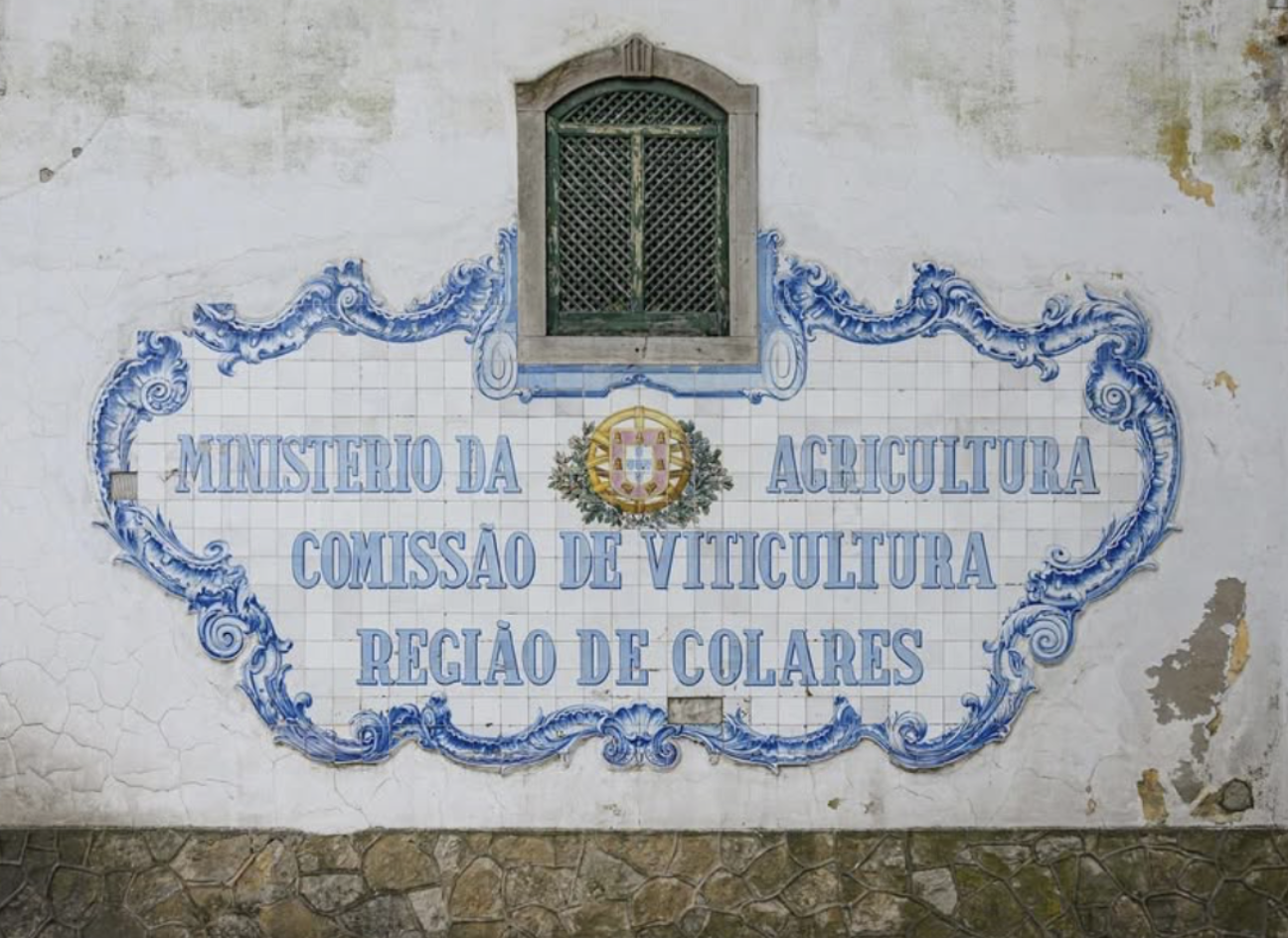
From the forests of Sintra, the land descends toward the Atlantic vineyards of Colares, a small but historically important wine region. In the second half of the nineteenth century, phylloxera devastated European vineyards by attacking vine roots. Most regions survived only by grafting European vines onto resistant American rootstocks. Colares is a rare exception: planted in deep sandy soils where phylloxera cannot reach, its vines remain ungrafted to this day.
Colares wines, made from the white Malvasia and the red Ramisco, are renowned for their exceptional longevity. The Adega Regional de Colares cooperative and Viúva Gomes are both worth visiting for a tasting of their distinctive wines.
The quaintest way to reach Colares is aboard the historic tram that has connected Sintra to the nearby beach of Praia das Maçãs since 1905. The ride is slow and charmingly uncomfortable, but memorable.
Cabo da Roca
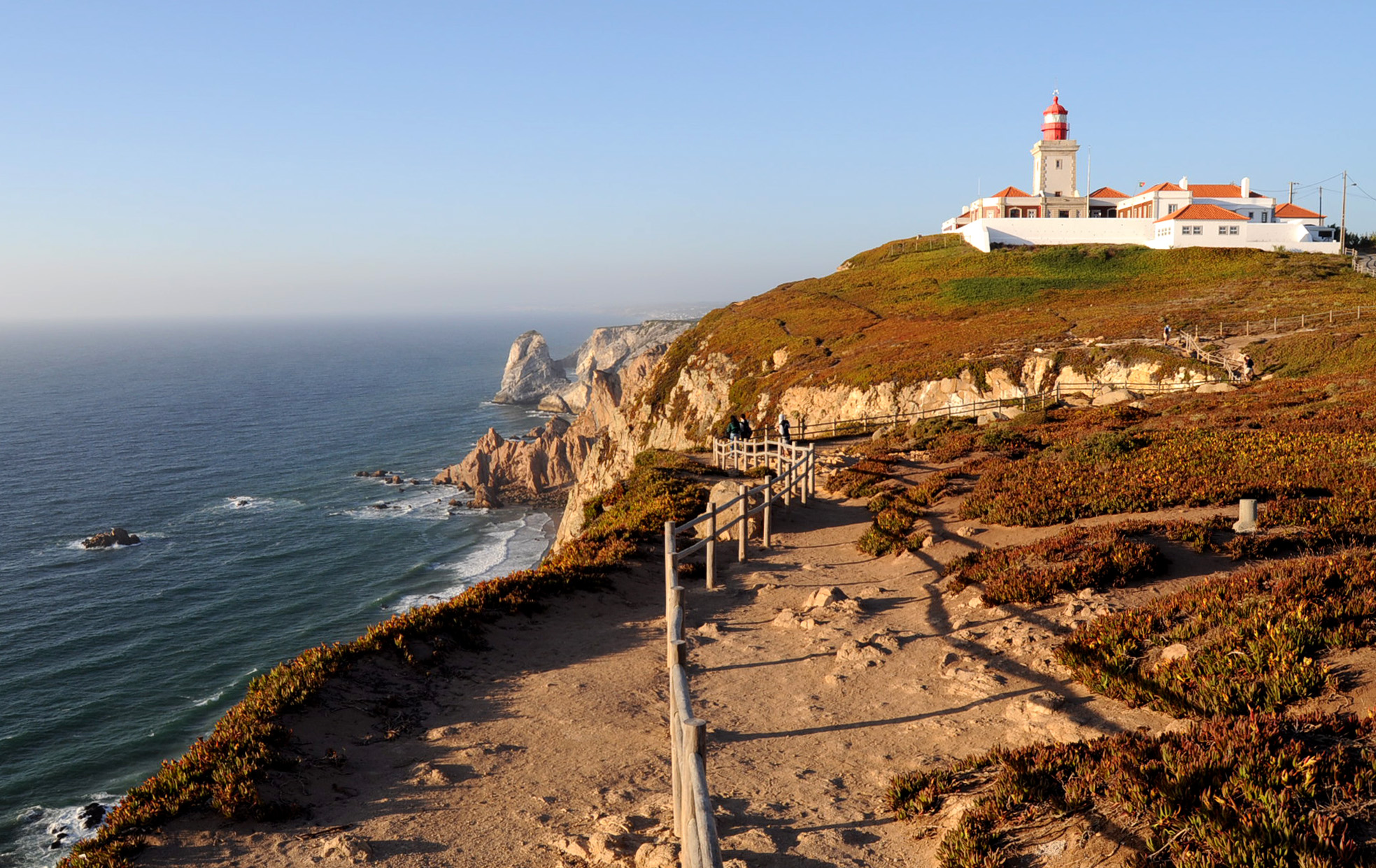
Cabo da Roca
Another remarkable place to visit is Cabo da Roca, long regarded as the edge of the world. In the first century the Greek geographer Strabo described this coast as the western limit of the inhabited world. Centuries later, the poet Luís Vaz de Camões immortalized it as the place “where the land ends and the sea begins.”
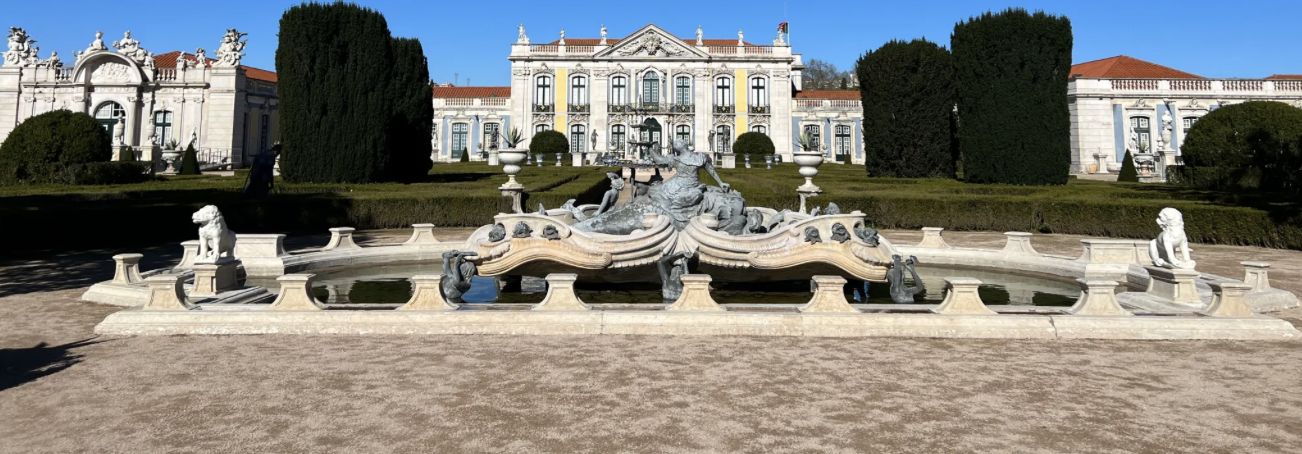
The Queluz Palace
Queluz
On the way back to Lisbon, consider stopping at Queluz, home to the vibrant Queluz National Palace, an elegant Rococo summer residence built in the mid-eighteenth century for Peter III, husband of Queen Maria I.
Just across from the palace, you can stay at the Pousada Palácio de Queluz, a charming historic hotel.
A Final Thought
You need three or four days to see all that the Sintra region has to offer. If you only have one day, resist the urge to rush from site to site.
Visiting Sintra is stepping back to an era when life unfolded slowly. More than any monument, it is the feeling the place evokes—the sense of living in a different time—that makes Sintra unforgettable.
The evolution of Tawny Port from 10 to 80 years (Taylor-Fladgate archives)
A young Port appears impenetrable; its purple hue is so dense that it seems to swallow the light. Yet time works a quiet alchemy, transforming that darkness into amber, copper, and finally gold. Few wines undergo such a dramatic transformation. In this ninth lecture with Douro viticulturist António Magalhães, we turn to the mystery of Port’s color.
To understand why color exerts such power over our perception of wine, we must consider how human vision evolved. Our ancestors lived in trees, where survival depended on gauging distances and spotting ripe fruit at a glance. Vision became our dominant sense, forming impressions almost instantly, while taste and smell unfold more slowly. That may be why color matters so profoundly in wine: the moment we see it, the mind begins to anticipate flavor, aroma, and structure. As the neuroscientist Gordon Shepherd observed, we drink with our eyes.
In Port, a deep red hue has long been a mark of quality, eagerly pursued by producers. In his 1788 treatise, John Croft recounts what might be called Port’s original sin: the discovery of an artifice to darken its color. On his way to the Douro, Peter Bearsley, an English factor living in Viana in the mid-eighteenth century, pressed elderberry juice at a roadside inn and mixed it with ordinary wine, finding that it “heightened and improved its colour.”
The elder tree (Sambucus nigra) bears intensely pigmented berries long valued for their coloring power and reputed medicinal virtues. Local tradition held that each tree sheltered the spirit of a healer unjustly burned as a witch. In spring, its delicate white blossoms resemble lace woven by fairy hands into a bridal bouquet.
Elderberry flowers
Before the Marquis of Pombal demarcated the Douro in 1756, adding elderberry juice was a common practice. Its use sparked a bitter dispute in 1754 between the English Factory and its agents in the Douro. The latter argued that merchants’ dissatisfaction stemmed from their unreasonable expectations. They sought wines that were “a potable fire in the spirits, gunpowder in combustion, ink in color, Brazil in sweetness, and India in aroma.” Only artifices, the agents insisted, could produce such a wine.
The demarcation created the world’s first system to safeguard the wine’s origin and quality. A 1757 edict prohibited the use of elderberry to “taint, arrange, or improve” wine and ordered the uprooting of all bushes within five leagues of the Douro River. A further decree in 1771 extended the ban to neighboring provinces. Pombal enforced the rules with legendary severity.
Once elderberry was forbidden, growers sought natural ways to achieve the coveted dark color. Most red grapes have pale pulp, but a few varieties, known as teinturier, or “ink-producers,” have red flesh. One such grape, known as Vinhão in Minho and Sousón in Galicia, was brought to the Douro Valley under the name Sousão.
In 1790, Francisco Rebelo de Sousa noted that landowners planted Sousão widely in hopes of achieving a vivid ruby hue, but the results proved highly site-dependent: generous in fertile soils, meager in poor ones, and prone to shriveling before ripening.
Hopes that Sousão would, by itself, produce great Port soon faded. In 1830, John Delaforce judged the grape unsuitable for Port, producing wine “of darker colour but in general bad — green.” The Baron of Forrester described it simply as “the deepest in color.” Growers learned that color intensity did not guarantee quality.
After phylloxera, two other teinturier grapes appeared in small quantities: Alicante Bouschet and Grand Noir de la Calmette, known locally as Grand Noir. Unlike Sousão, whose color lies chiefly in the skin, these varieties contain red pigment in both pulp and skin. Both were the result of 19th-century crossings by Louis Bouschet and his son Henri, designed to combine high yields with intense color. Although deeply pigmented, they never became central to Port production and were not highly regarded by older Douro growers. In recent decades, however, Alicante Bouschet has gained favor among some table wine producers.
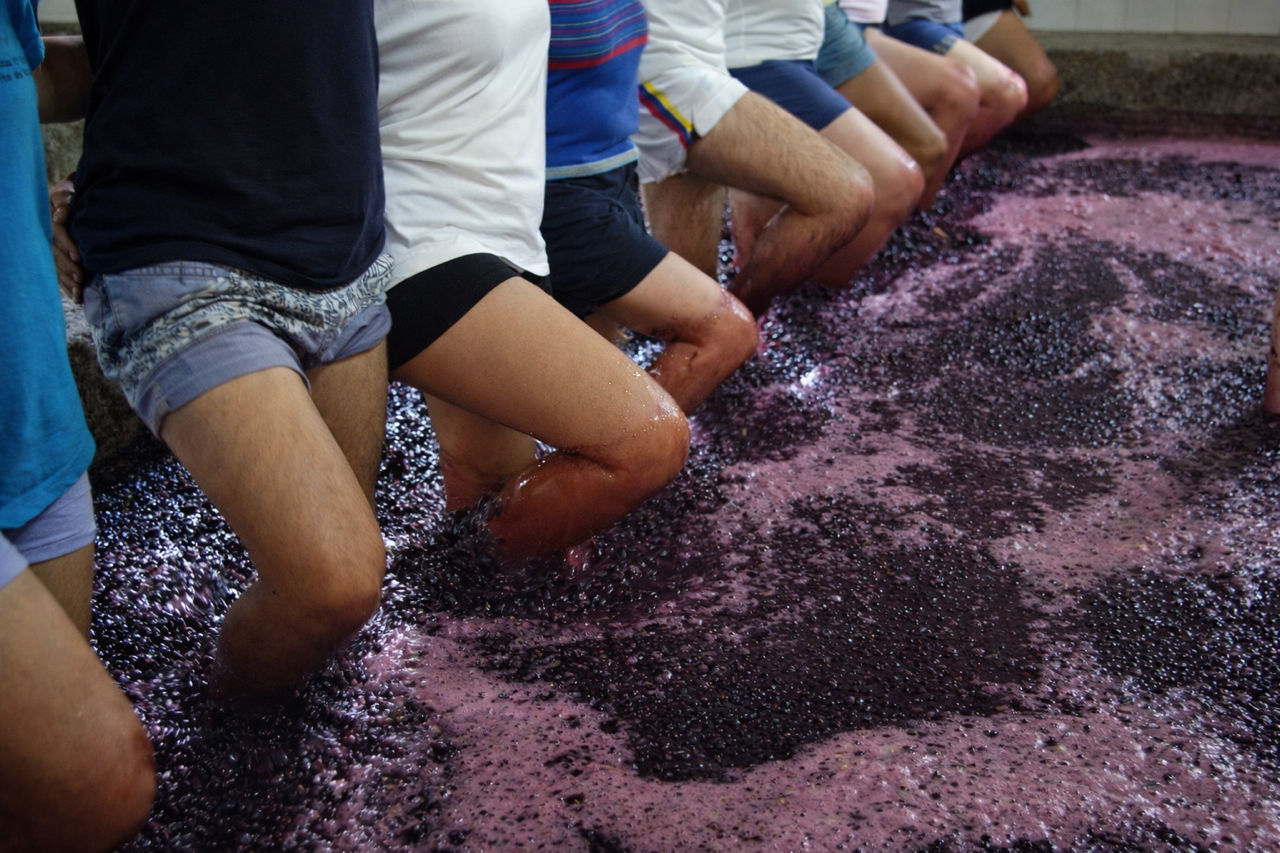
Foot treading
Color is ultimately extracted during vinification. Traditionally, the grapes are trodden by foot in granite lagares, a practice now often reproduced mechanically, gently crushing the berries and releasing the free-run juice while drawing deep color from the skins. Fermentation lasts about 72 hours before fortification, sufficient to extract pigments and tannins. The remaining skins and seeds are then pressed in a basket press, producing a denser wine, rich in color and structure. This press wine is fortified separately and may later be blended into the fortified free-run wine to reinforce the final blend.
A basket press
Where, then, does Port derive its color? From the outset, color was a key criterion in selecting Douro red varieties. Two moments illustrate this importance. After phylloxera, Bastardo, a pale variety, was replaced by Touriga Francesa. Later, when Port merchants became large-scale growers, they restored the pre-phylloxera primacy of Touriga Nacional, another deeply colored grape that the Baron of Forrester regarded as “the finest.”
The color of red Port results from a chain of choices and circumstances. Dry, sun-exposed sites promote full ripening and deep color concentration. Weather, especially September rainfall, can dilute or intensify the color, while careful harvest selection affects color by removing unripe or damaged fruit before it reaches the winery.
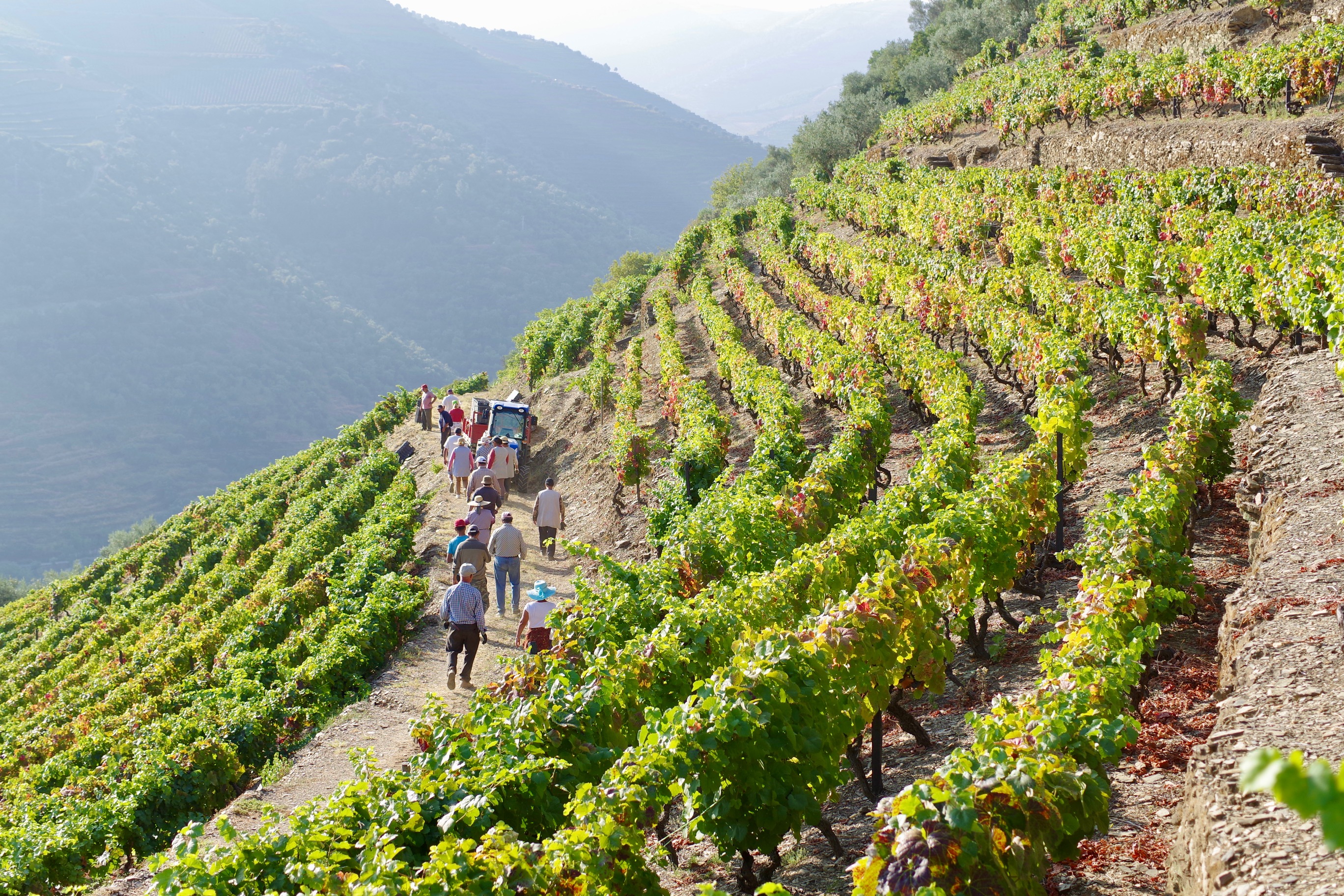
Harvest in the Douro Valley
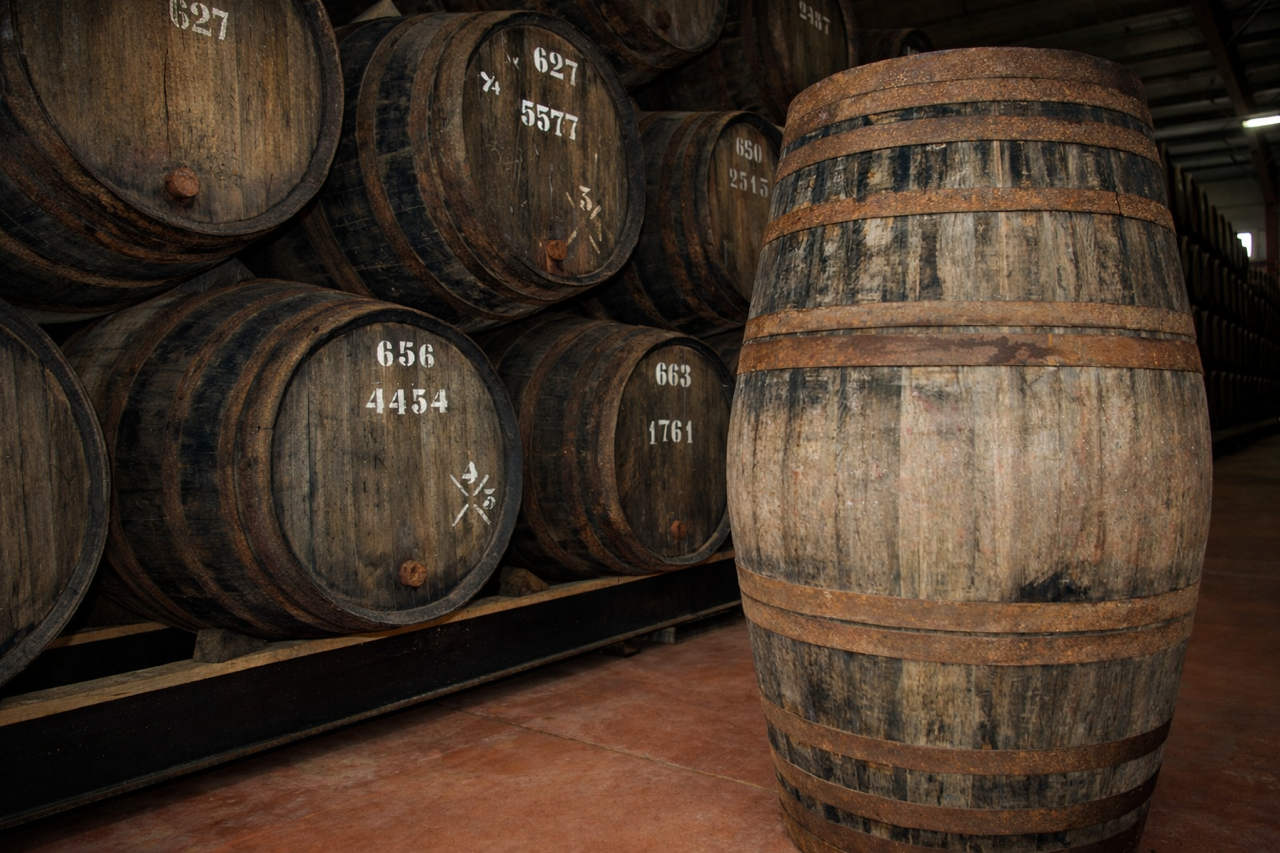
Aging completes the transformation. Small casks expose the wine to oxygen, gradually turning its red hues tawny, amber, and eventually golden, while large vats admit far less air and preserve the wine’s youthful depth. Over time, this slow oxidation reshapes not only the color but the wine’s entire character.
Casks for aging Tawny Port
In 1950, the Port Wine Institute proposed a scale for red Ports that traces how the wine’s color evolves under the combined influence of time and blending. The scale moves from the opaque purple of very young wines (retinto), through a clearer red (tinto), to ruby (tinto aloirado), then to tawny tones (alourado) as oxidation begins, and finally to pale light tawny (alourado claro) after prolonged aging in wood. Here, “tawny” refers to color rather than to the Tawny style of Port.
A freshly bottled Vintage appears deeply purple, but over time it may acquire tawny hues reminiscent of wood-aged wines. Tawny Ports undergo an even more dramatic chromatic journey, from reddish amber at ten years to luminous copper or gold after many decades. White Ports follow their own path, gradually deepening from pale to straw to golden tones as they age.
Nothing reveals Port’s color better than a thin crystal glass, slightly tilted so light passes through the wine. The same Port that once seemed to swallow the light can, with time, glow softly by candlelight at a wedding banquet, perhaps with elderflowers adorning the table.
The Romans called it Felicitas Julia, a city so blessed it deserved Julius Caesar’s protection. Those blessings endure: a mild climate, a deep river that flows serenely to the sea, a natural harbor that shelters ships from Atlantic storms, and hills that reach for the sky.
In 1620, Friar Nicolau de Oliveira wrote that Lisbon, like Rome, has seven hills. In truth, there are only three major elevations: the castle hill, Graça, and Bairro Alto. But in spirit, he was right: the streets rise and fall so much that, in the early 20th century, trams and elevators were built to help residents get around.
First Day
Begin your visit at St. George’s Castle. In the twelfth century, most of Lisbon lay within its walls. Below lies Alfama, whose Arabic name survived the city’s conquest by Portugal’s first king, Dom Afonso Henriques, in 1147. According to legend, a knight called Martim Moniz sacrificed his life, wedging his body in the castle gate so his fellow soldiers could break through. A square at the foot of the hill bears his name.
By the eighteenth century, Alfama was a poor neighborhood. The wealthy had relocated to Baixa, Bairro Alto, and Chiado. The 1755 earthquake devastated much of Lisbon but spared Alfama, a survival some interpreted as divine justice.
It is easy to get lost in Alfama’s winding streets lined with cobblestones, tile facades, and marble thresholds. A simple rule will help you find your way: uphill leads to the castle, downhill to the city center.
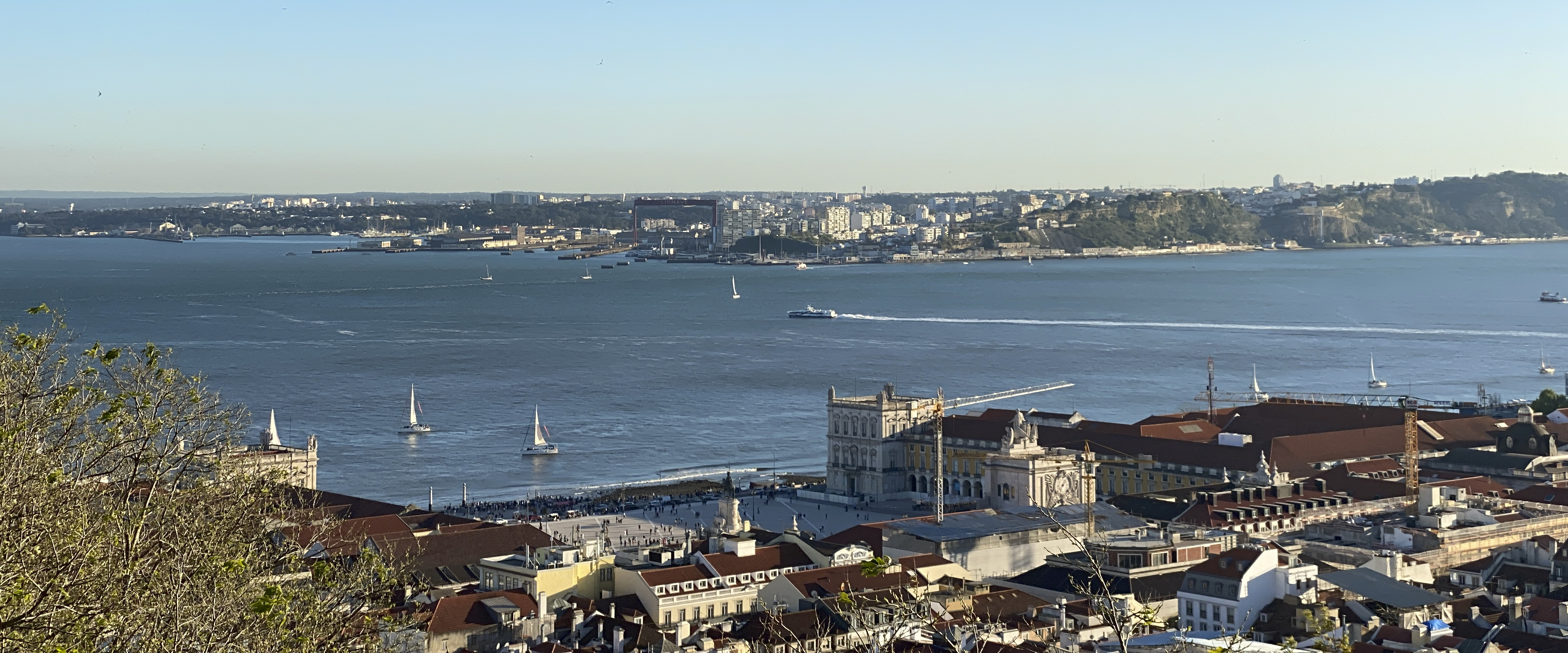
From the castle walls, the Tagus River dominates the horizon. Below lies Terreiro do Paço, the courtyard of the royal palace destroyed by the earthquake. Squint and you might imagine Baroque carriages arriving with courtiers seeking the king’s favor.
For a leisurely lunch, walk toward the Pantheon, a monumental church whose construction spanned more than three centuries. Nearby, Solo, inside the Santa Clara 1738 hotel, offers refined Portuguese cuisine made with the finest ingredients and served in an elegant setting.
After lunch, continue to Terreiro do Paço. At the river’s edge stands Cais das Colunas, the dock marked by two marble pillars where visitors once arrived by ship. Before air travel, this was Lisbon’s grand entrance. In the center of the square, the equestrian statue of King Dom José I greets you.
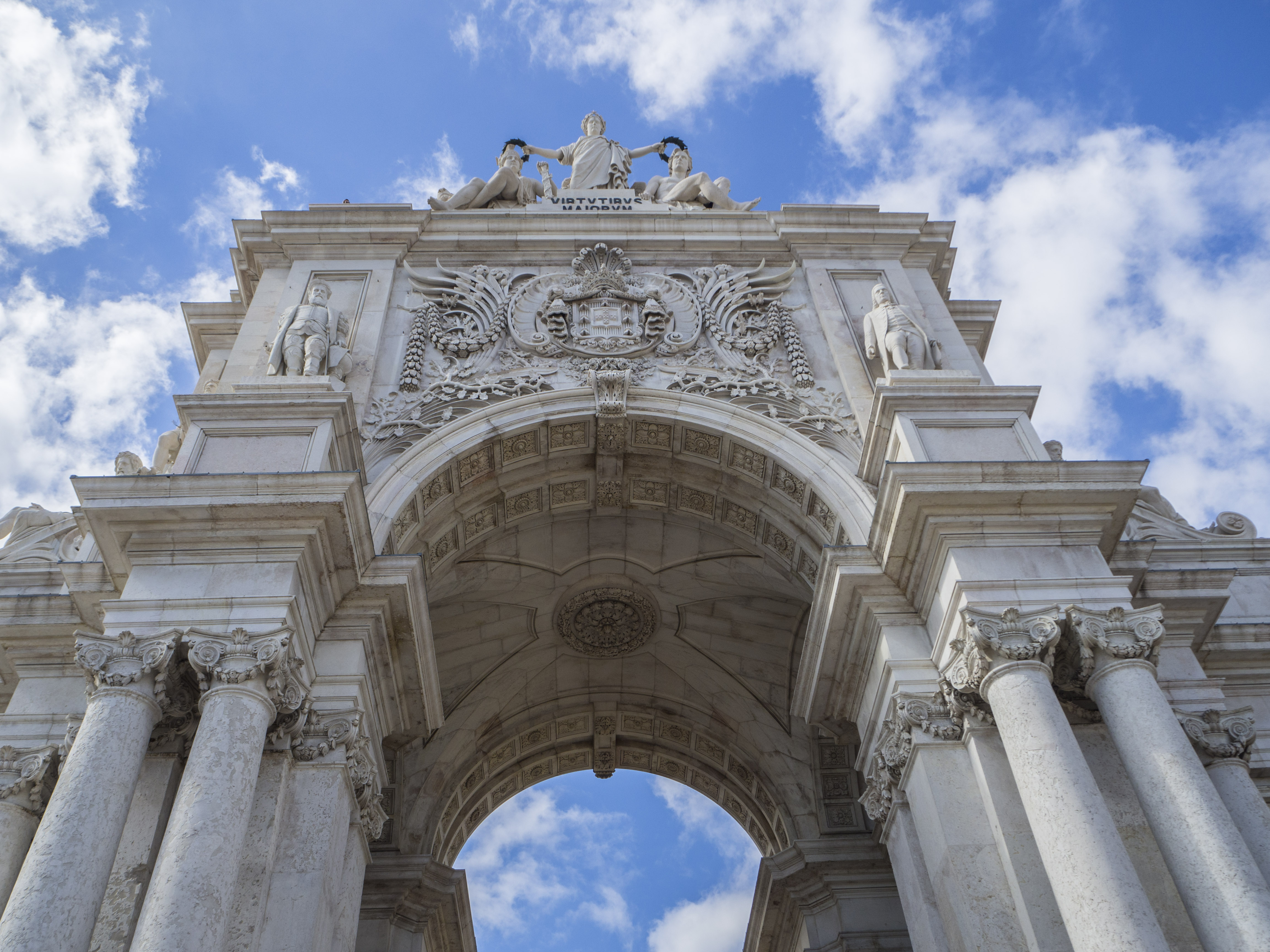
Walk toward the triumphal arch at the entrance of Augusta Street, named for one of the king’s daughters. You can take an elevator to the top for superb views. To the west stretches the Tagus River; to the east lies the orderly grid of the Baixa district, built after the earthquake under the direction of the king’s prime minister, the Marquis of Pombal.
The streets were organized by trade. In Rua do Ouro and Rua da Prata (Gold and Silver Streets), jewelers worked the precious metals arriving from Brazil. Merchants on Rua dos Fanqueiros sold woolen cloth, while Rua dos Correeiros specialized in leather equipment for horses and carriages.
From there, walk to Rossio. On the way, stop at Largo de São Domingos to savor a glass of ginjinha, the sweet cherry liqueur beloved by poet Fernando Pessoa.
Next, climb to Chiado for a pastel de nata at Manteigaria, where the crust is perfectly crisp and the custard delicately perfumed with lemon. Eat only one. Then cross to the Hotel do Bairro Alto terrace for a second. Try not to let the sweeping view cloud your judgment: which pastry wins your favor? The terrace is a wonderful place to rest before dinner. We include a list of restaurant suggestions below.
After dark, nothing expresses Lisbon’s soul like fado. Dressed in black, singers are accompanied by classical and Portuguese guitars, the latter a 12-string instrument with a distinctive mournful sound. Out of respect for the music, the audience is asked to remain silent. The singers’ voices hover between notes, producing pitches that a piano cannot play. They slow or quicken the tempo, confident that the musicians will follow. We are especially fond of the young fadista Beatriz Felício. If she is performing, don’t miss her.
Second day
Start the day at the Time Out market. Many come for a quick meal, but you’re here to visit the adjacent farmers’ market. Browse the seasonal fruits and vegetables on display, then stop by the fish stall, which showcases some of the world’s freshest fish.
If you need refreshment, Bar da Odete offers a wonderful range of wines by the glass, curated by enologist Frederico Vilar Gomes. You can buy some of these wines at Garrafeira Nacional, a shop inside the market.
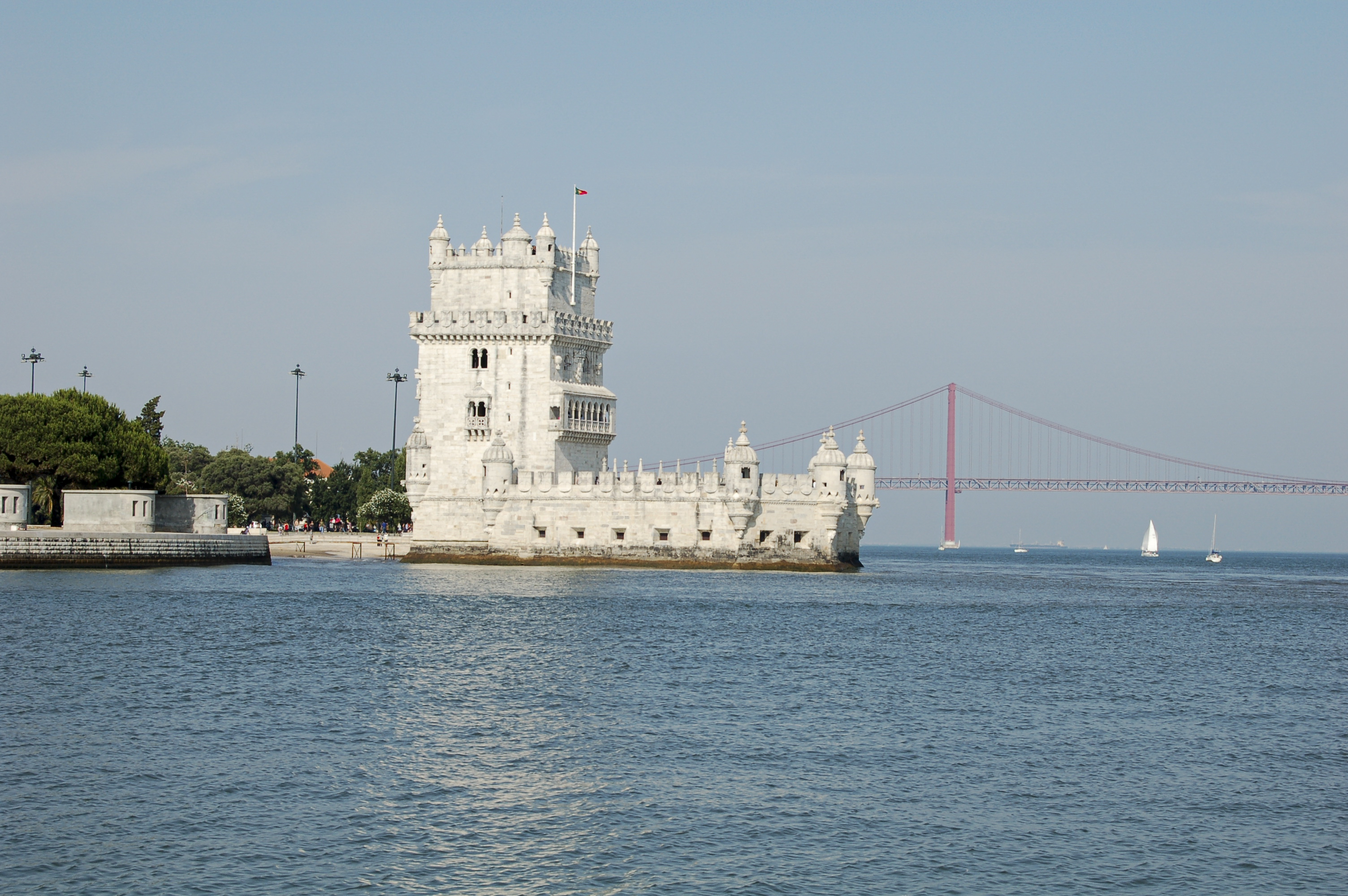
Continue toward Belém to visit the Belém Tower, an ornate fortress built to defend Lisbon from pirates, yet making the city even more alluring. Before the 1755 earthquake, the tower stood in the middle of the river rather than near the shore.
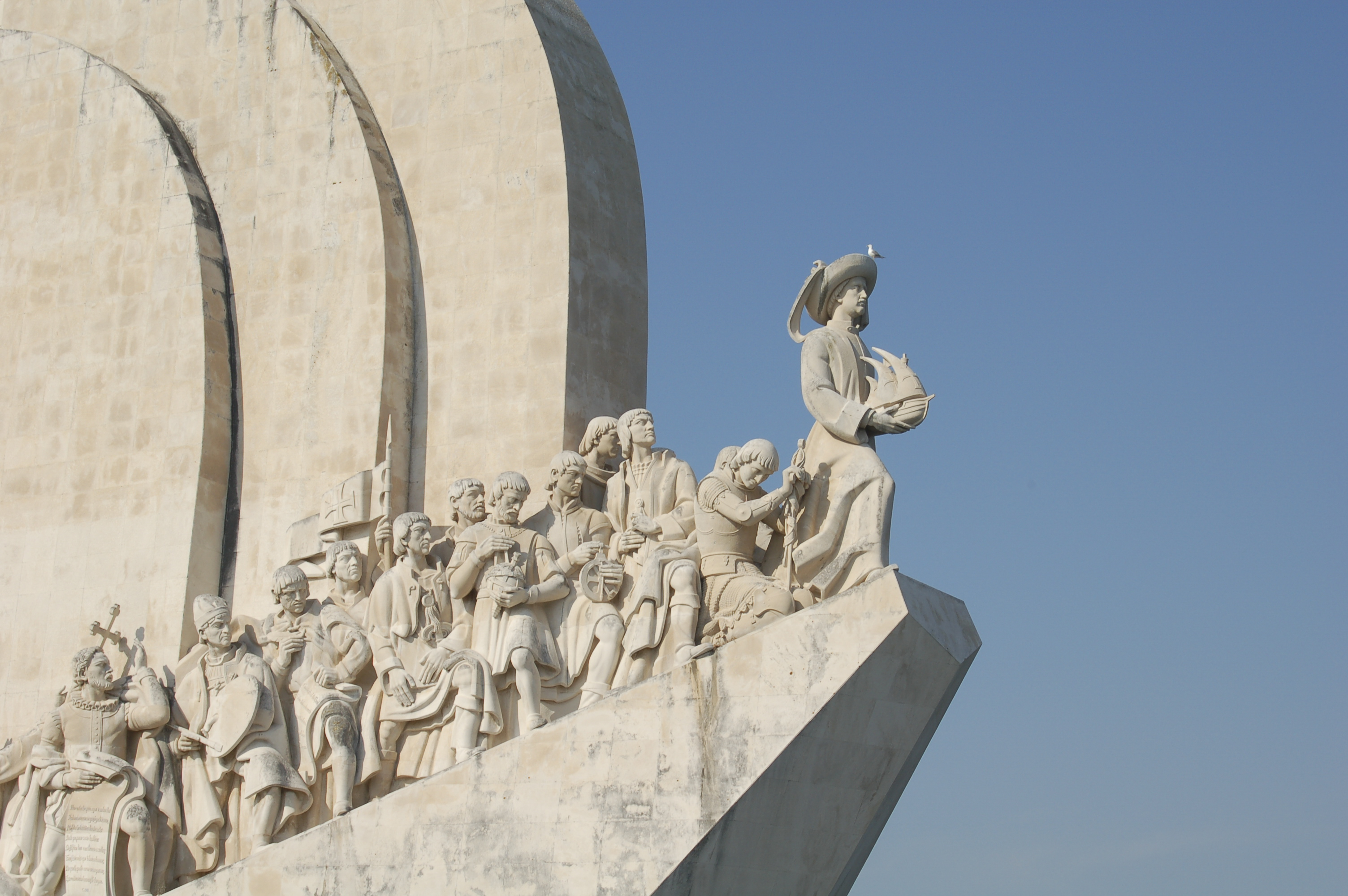
To the south stands the Monument to the Discoveries, a procession of stone figures led by Prince Henry the Navigator. Beginning in the 1420s, Portuguese sailors departed from Restelo into the unknown in ships called caravels, which, for the first time, could tack to sail against the wind.
In his epic poem Os Lusíadas, Luís Vaz de Camões imagines an old man on the shore warning that the quest for glory would bring suffering rather than triumph. In material terms, the discoveries were an extraordinary success. Vasco da Gama reached India, opening a sea route for the spice trade. Cabral reached Brazil, and ships soon returned to Lisbon laden first with brazilwood and, later, with gold. Yet these riches came at a terrible human cost. Many sailors perished in shipwrecks or from diseases, especially scurvy, caused by months at sea without fresh provisions, living on little more than hard biscuit.
Just to the east rises the magnificent Jerónimos Monastery, built with the wealth of the maritime empire. Its Manueline architecture blends late Gothic style with nautical motifs. Inside are the tombs of kings and queens, as well as Vasco da Gama and Luís Vaz de Camões.
To the north is the Cultural Center of Belém, a modern art complex built from stone from the same quarry as the monastery. Its concerts and exhibitions are worth checking out.
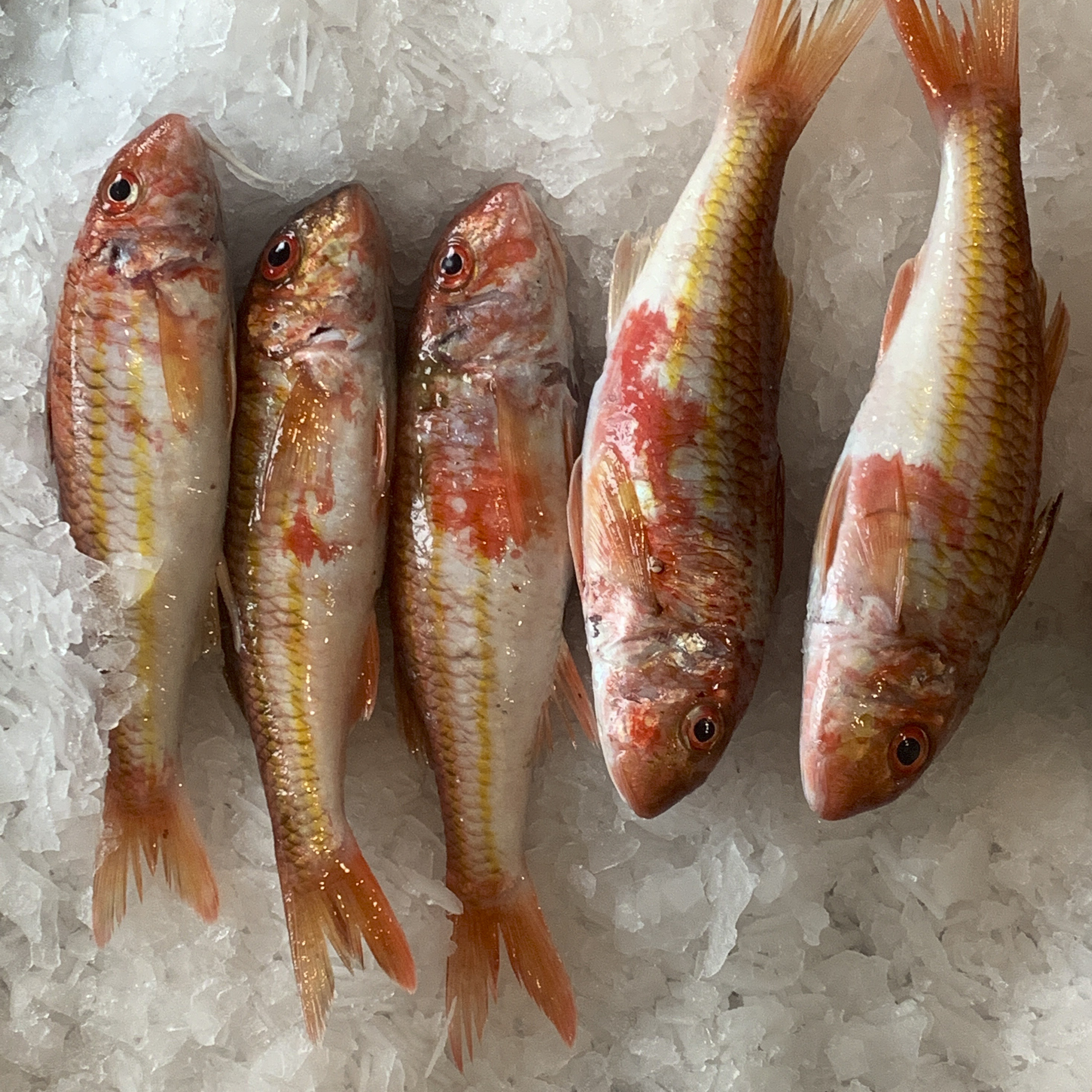
If you crave grilled fish, the modest O Último Porto, open only for lunch and patronized mostly by locals, serves fresh fish grilled to perfection. Robalo is always a great choice, and the mullets are divine.
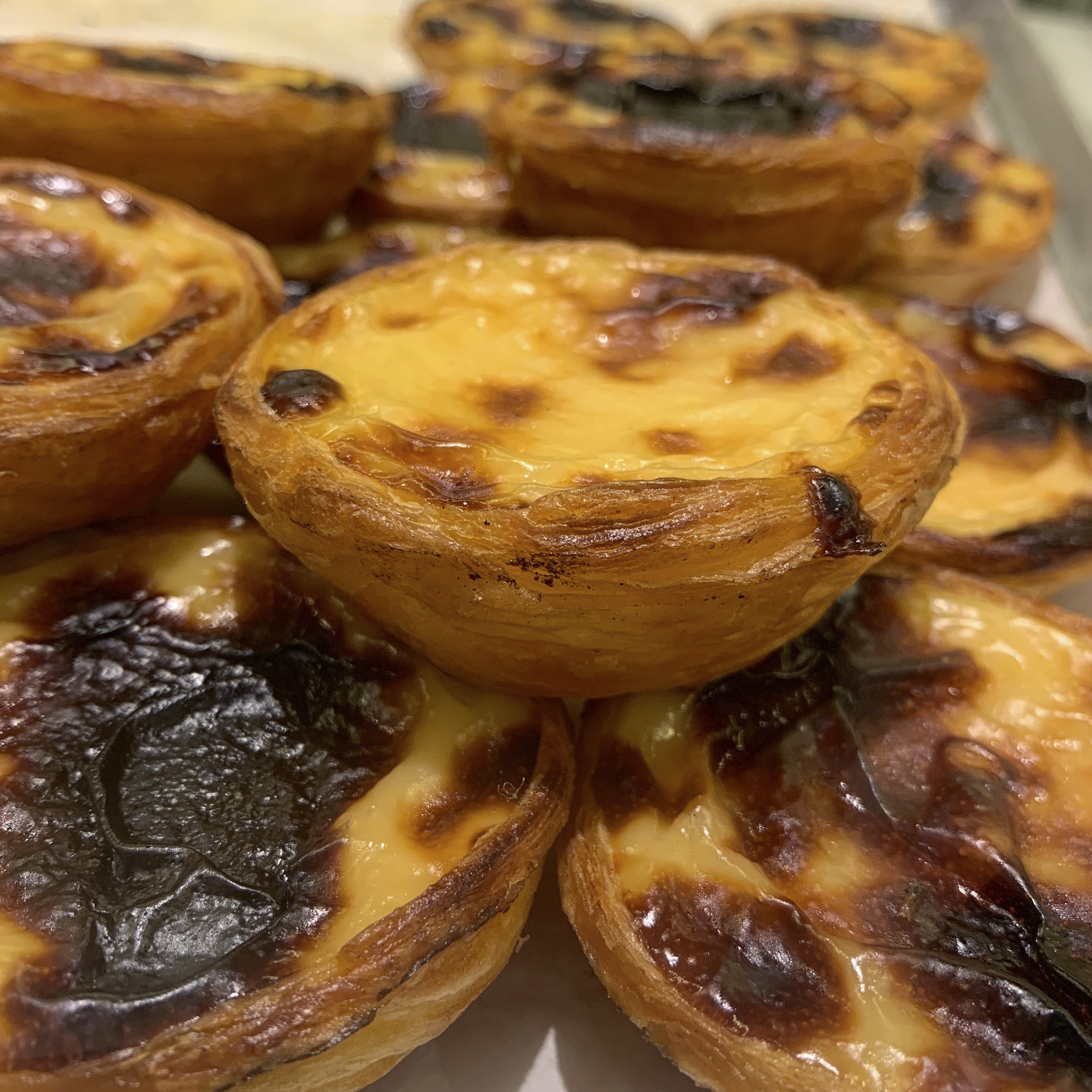
Skip dessert. You must return to Belém for the city’s most famous custard, the Pastel de Belém. The bakery has produced them since 1837, using a secret recipe shared by monks after the dissolution of the religious orders in 1834. Enjoy one warm pastry dusted with cinnamon, a fragrant echo of the spice trade that enriched Portugal. Now that you have tasted the city’s most celebrated pasteis de nata, which is your favorite?
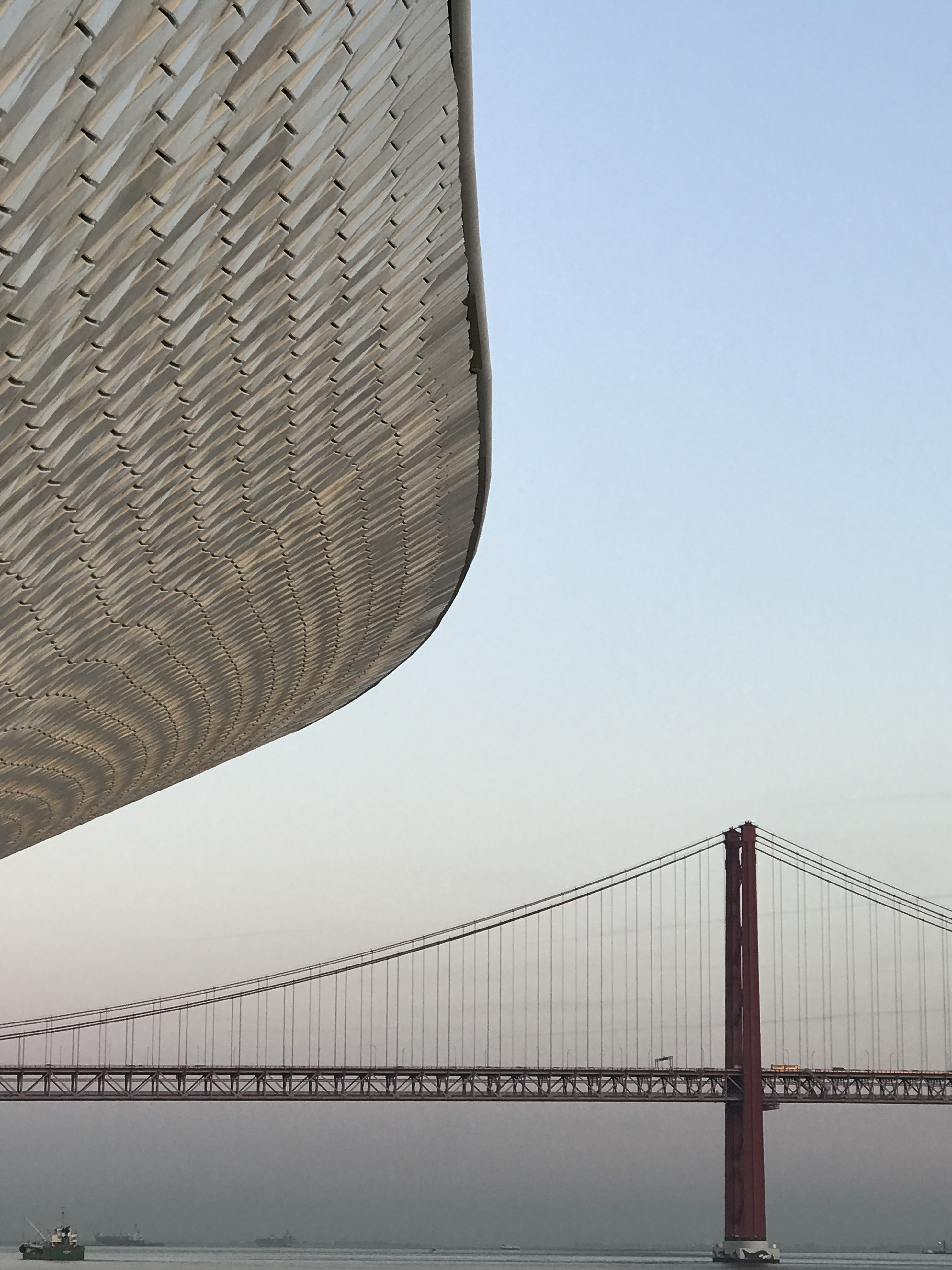
End the day at MAAT, the Museum of Art, Architecture and Technology. It offers interesting exhibitions and a roof that is one of the finest places to watch the sunset in Lisbon. As the sun sinks into the Atlantic, Lisbon’s hills glow amber, the color of the gold that once made it rich.
Here are some practical suggestions
Where to stay
Our favorite place to stay in Lisbon is Santa Clara 1728, a small hotel that exudes tranquility and elegance. It is part of Silent Living, a unique collection of hotels designed to help guests reconnect with place and nature.
The Pestana Palace, built around an early-20th-century palace, is another favorite. Set away from the center and surrounded by gardens, it offers a peaceful respite from the city’s bustle.
The Ritz Four Seasons is a mid-century modern landmark that provides classic old-world luxury.
Hotel do Bairro Alto, in the heart of Chiado, combines a central location with excellent service.
Where to eat
Not long ago, one could walk into almost any restaurant and enjoy an honest, modestly priced meal of local food and wine. Today, many restaurants cater primarily to tourists. To taste authentic cuisine, you need guidance, but rest assured, we’re here to provide it.
Lisbon’s fine-dining scene is vibrant. Belcanto, led by José Avillez, has elevated Portuguese cuisine while staying true to its roots. His recent book on Portuguese cuisine makes a wonderful gift for a gourmet friend. Marlene, by chef Marlene Vieira, reinterprets tradition with imagination and finesse. Loco, led by chef Alexandre Silva, offers exuberantly creative dishes made with local ingredients.
Beyond the Michelin constellation, many excellent restaurants await discovery. We mentioned two of our favorites in the main text. Solo offers a lunch menu where each dish is crafted from pristine organic ingredients sourced from Casa no Tempo. Último Porto is a rustic restaurant known for perfectly grilled fish.
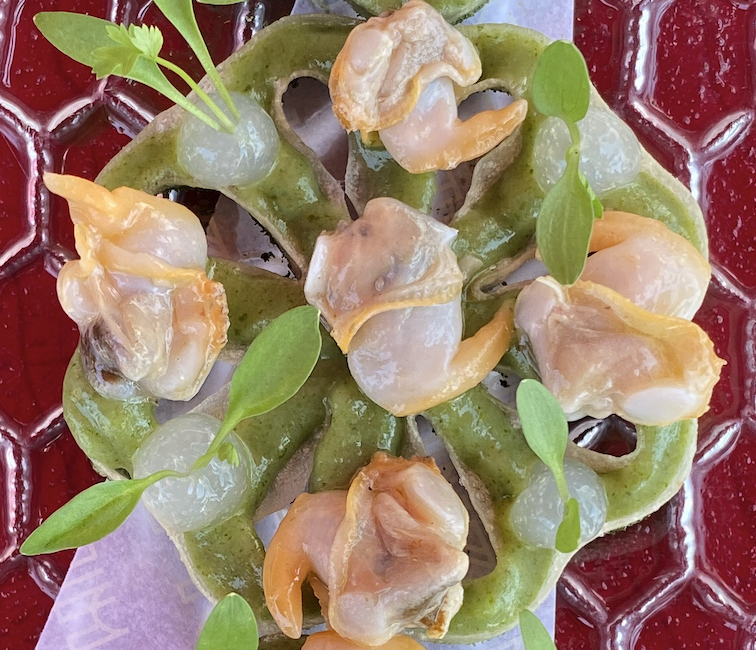
Zun Zum, Marlene Vieira’s bistro, showcases superb Portuguese ingredients prepared with inventiveness. Try their signature dish: “filhoses de berbigão,” large cockles served on star-shaped fried dough filled with a cream made from cockle broth, coriander, and lemon.
For seafood, Cervejaria Ramiro remains our top choice. It is noisy and crowded, but it is worth it. Reservations are not accepted, so arrive early. Do not miss the clams à Bulhão Pato, a classic of Portuguese cuisine.
Tasca da Esquina, by Vítor Sobral, consistently serves excellent interpretations of traditional dishes.
Canalha offers impeccable seasonal ingredients, prepared with precision. This acclaimed bistro is led by chef João Rodrigues, who left his Michelin stars behind to cook simple, deeply satisfying food.
Casa Tradição offers inventive takes on classic recipes by Samuel Mota, a chef who trained at Belcanto.
Our favorite vegetarian restaurant is Touta, led by Lebanese chef Cynthia Bitar.
For wine lovers, we recommend a visit to Quinta de Chocapalha, a superb producer near Lisbon.
Museums
The Calouste Gulbenkian Museum has one of the world’s finest private art collections, reflecting the founder’s motto: “only the best.” A visit is a journey spanning 5,000 years of human creativity. Among the collection’s highlights is Almada Negreiros’ portrait of the poet Fernando Pessoa.
Two major museums are currently closed for renovations. The Museu Nacional de Arte Antiga preserves Portugal’s most important collection of paintings, sculptures, and decorative arts. Housed in a former convent, Museu Nacional do Azulejo offers a collection of five centuries of Portuguese tile art, including a breathtaking panoramic panel of the city before the 1755 earthquake.
Shopping
We love Vista Alegre, a company that has produced beautiful porcelain since 1824. Its stores are spread throughout the city, with the most iconic located in Chiado. Nearby is Cutipol, a producer of elegant cutlery.
A Vida Portuguesa offers a carefully curated selection of artisanal products made with exceptional craftsmanship.
Reverso is a jewelry gallery featuring whimsical, elegant modern pieces.
Activities for kids
A visit to Lisbon’s outstanding Oceanarium is a perfect activity not only for kids but for anyone interested in the mysteries of the ocean and the protection of marine ecosystems.
Cruising the Tagus River aboard Santa Fé, a beautifully restored vintage boat, is one of the best ways to see the city.
Jezzus is a great place for pizza, a meal that kids are likely to enjoy.
Day trips
There are several historical towns on the outskirts of Lisbon that are well worth visiting. Sintra, once the summer residence of the Portuguese kings, is a fairy-tale village crowned by a Moorish castle and dotted with several enchanting palaces. Queluz offers a graceful palace with elegant gardens inspired by Versailles.
Mafra stands on a grander scale. This vast convent, built with the wealth of Portugal’s maritime empire, houses one of the world’s most beautiful libraries. The convent’s construction inspired José Saramago’s celebrated novel Baltasar and Blimunda, published in 1982—a book that will enrich any visit to Mafra.
And then there is Óbidos, a perfectly preserved medieval town, offered by King Dom Dinis to his bride, Isabel of Aragon.
Ângelo Ataíde, a judge passionate about wine, decided to plant a vineyard on the Alentejo estate his wife, Rosário, had inherited. Local farmers advised him against it. The site, in a valley near the Montargil dam, has a humid microclimate where downy and powdery mildew thrive. Undeterred, the judge planted the first vines in 2000.
Rosário’s father used to call her raposinha (little fox). When foxes began strolling through the young vines at dusk, Ângelo and Rosário renamed the farm Monte da Raposinha.
Today, the estate is in the hands of the next generation: Rosário’s son, João, oversees the business, while his wife, Paula, leads viticulture and enology.
João followed the family tradition and studied law, but he never took to office life. He preferred the freedom of the open fields.
Paula’s father, a doctor fascinated by wine, invited her as a child to smell different wines and describe their aromas. She grew up loving animals and plants, and later studied agronomy in Lisbon, specializing in viticulture. As a student, she often passed Monte da Raposinha on her way to her grandmother’s house, sometimes stopping to buy a few bottles whose distinctive character intrigued her.
She met João through mutual friends. They fell in love and married at Monte da Raposinha, which became their life’s project. João and Paula do nearly everything themselves: pruning and harvesting, fermenting and aging, bottling and labeling.
Paula explains how the morning dew brings freshness to this otherwise hot region, cooling the grapes and slowing maturation. To preserve the fruit’s character, she relies entirely on the wild yeasts that live on the grape skins, rather than adding commercial strains. The result is less predictable, but truer to the vineyards.
They practice regenerative, organic farming, no small challenge in such a humid climate. The vines are protected with the traditional Bordeaux mixture, a solution of copper sulfate, lime, and water. They also spray infusions of acacia, nettle, and willow. In difficult years, João and Paula accept losses; in 2025, they lost 80 percent of their production.
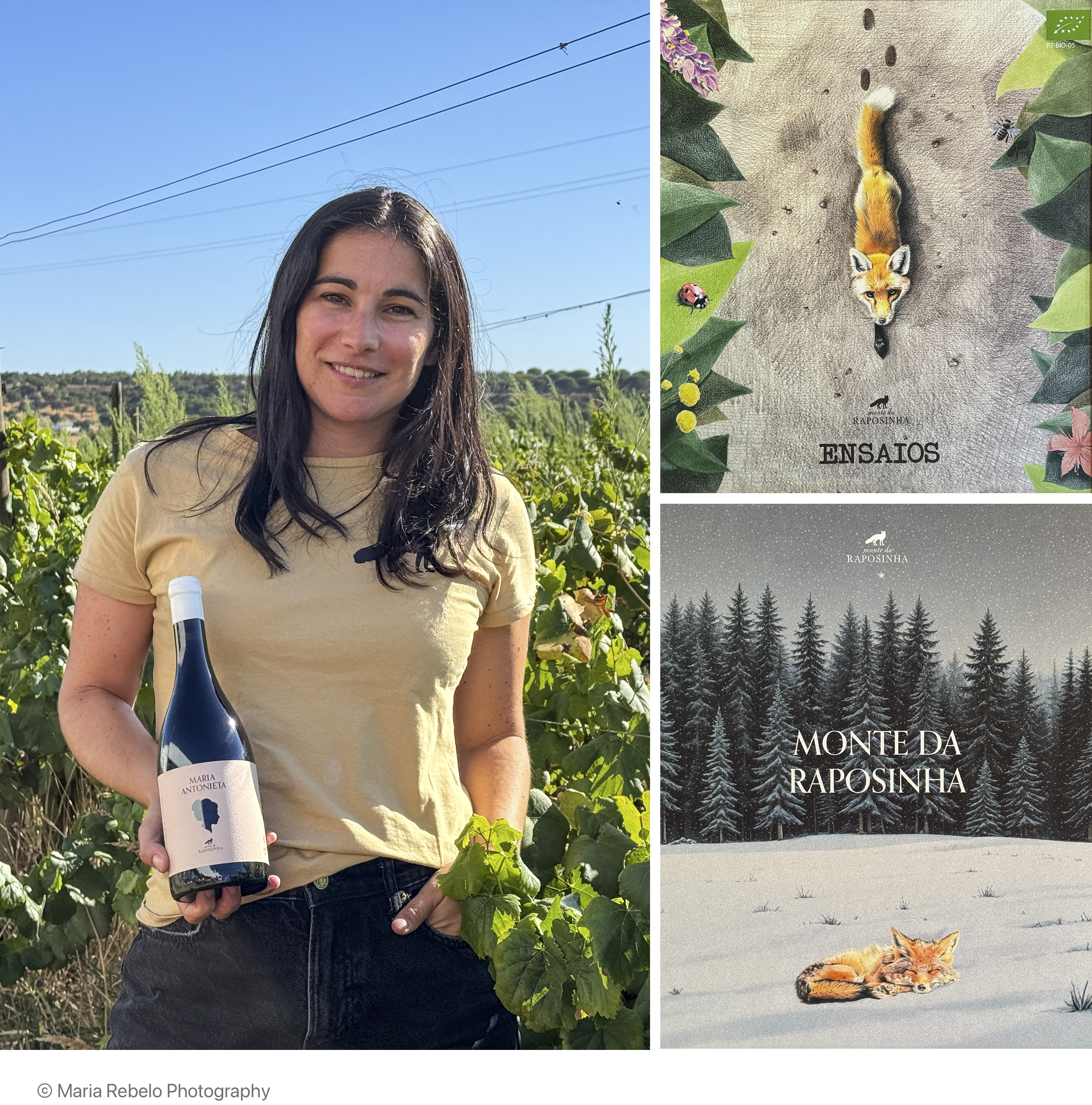
And what do they get in return? “A land that is alive,” Paula says. She speaks passionately about the worms in the soil, the legumes that fix nitrogen, the birds and bees that share the vineyard. Her affection for these creatures runs so deep that she asked designer Francisco Eduardo to include them on the wine labels.
The estate has a guest house with expansive views over the fields and an inviting swimming pool. Staying there is the best way to understand their work: mornings in the vines, afternoons in the cellar, evenings around the table, enjoying the wines born from their soil.
For João and Paula, the health of the land, the authenticity of place, and the singular voice of their wines come first.
Their rosé, made from Touriga Nacional, is bright and expressive, all freshness and immediacy. The white reserve draws its body from Viosinho, ripened under the generous Alentejo sun, while Arinto and Esgana Cão lend tension and acidity. The blend carries delicate aromatics and a long, persistent finish that both cleanses and lingers. The extraordinary Maria Antonieta, named in homage to João’s great-grandmother, is made from Touriga Nacional grown on a small plot with soil made from river stones.
Monte da Raposinha proves that great wines can come from improbable places, but only for those with the courage and endurance to care for them.
Monte da Raposinha is located at Estrada do Couço, S/N. 7425-144 Montargil. Click here for their website.
At the beginning of the last century, the German poet Rainer Maria Rilke wrote a series of letters to a young man who aspired to become a poet, urging patience, humility, and trust in the slow ripening of ideas.
In that spirit, we invited viticulturist António Magalhães to write a letter to a young Douro farmer. This eighth masterclass takes that form.
Peso da Régua, February 7, 2026
My dear colleague,
You asked me for advice on how to begin a life in the vineyards of the Douro Valley. I will try to answer simply, because in viticulture simplicity is often the most difficult achievement.
On tradition
First, understand that making great wine in a mountain region is never the work of a single lifetime. It is a relay race: you receive the vineyard, care for it as best you can, and pass it on to the next generation. You did not choose your starting point, and you will not see the finish line. This realization should make you both humble and demanding of yourself. Viticulture is the art of continuity: your vineyard must be able to thrive far into the future.
Learn from those who pruned your vines before you. In our profession, novelty is often overvalued. The vine breeder François Morisson-Couderc, successor to the great Georges Couderc, whose rootstocks helped rescue Europe’s vineyards after phylloxera, once said that a good idea in viticulture is one that remains a good idea twenty years later.
During the phylloxera crisis, Douro growers learned which sites to abandon and which never to plant at all. They set aside ill-adapted varieties such as Bastardo and Donzelinho Tinto, and created new ones, most notably Touriga Francesa, by crossing rustic, phylloxera-resistant Mourisco Tinto with Touriga Nacional, which the Baron Forrester called “the finest.” They also knew how to shape the post-phylloxera terraces, so that vineyards could once again thrive.
On respect
Unless your vineyard has a human scale that allows you to tend to it by yourself, you will have workers in your employ. Agricultural work is hard, and those who do it deserve our deep respect. Never ask anyone to perform a task without first explaining its purpose and why it matters.
Respect is owed not only to people, but also to the land.
Hand-built vineyard hedges
On caring for the soil
Care for the soil by embracing organic viticulture. It is prudent to first gain experience on a small parcel. That is how, more than three decades ago, David Guimaraens, the head winemaker of Taylor Fladgate, and I took our first steps into organic viticulture, guided by David’s father, Bruce Guimaraens.
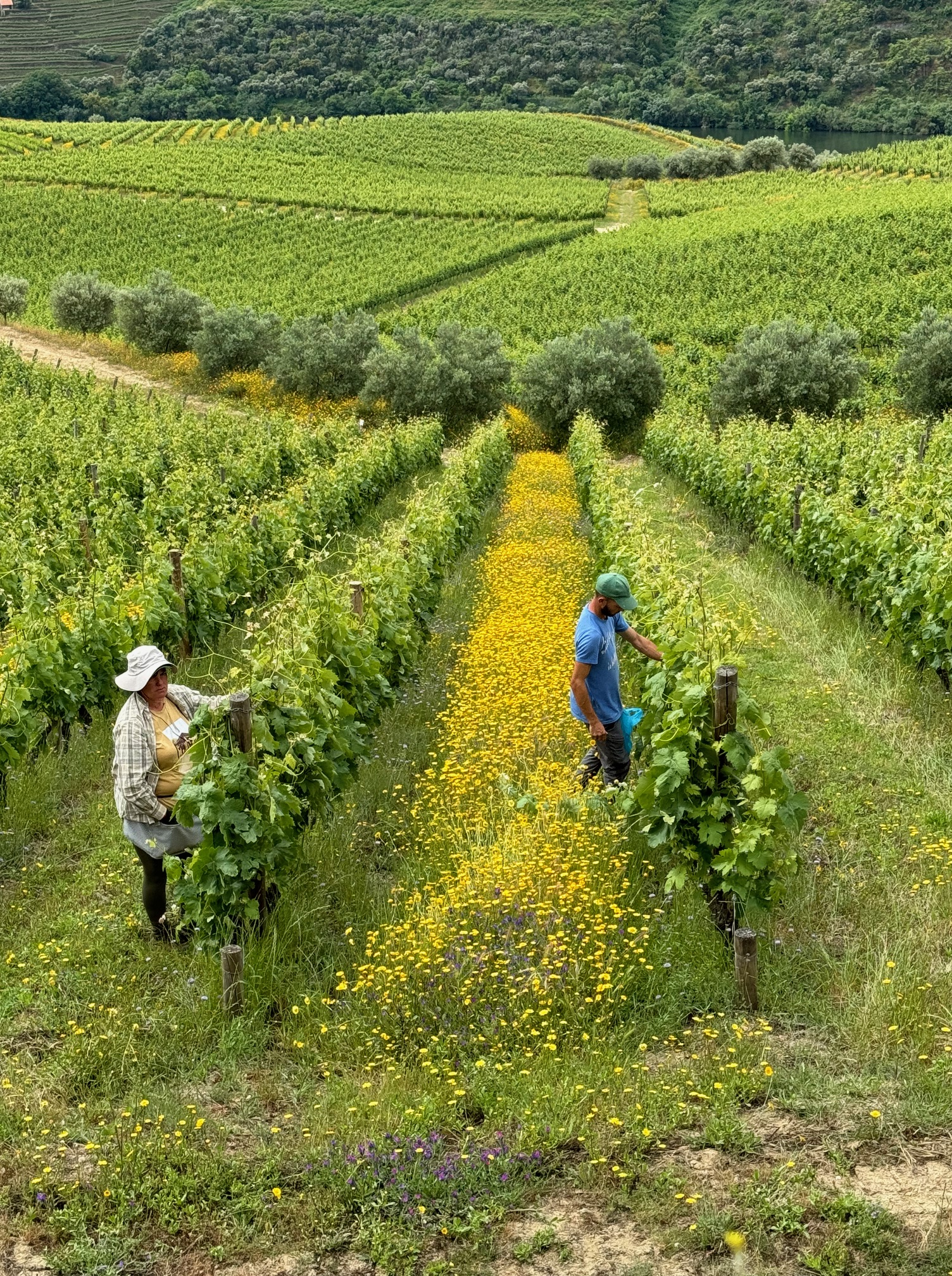
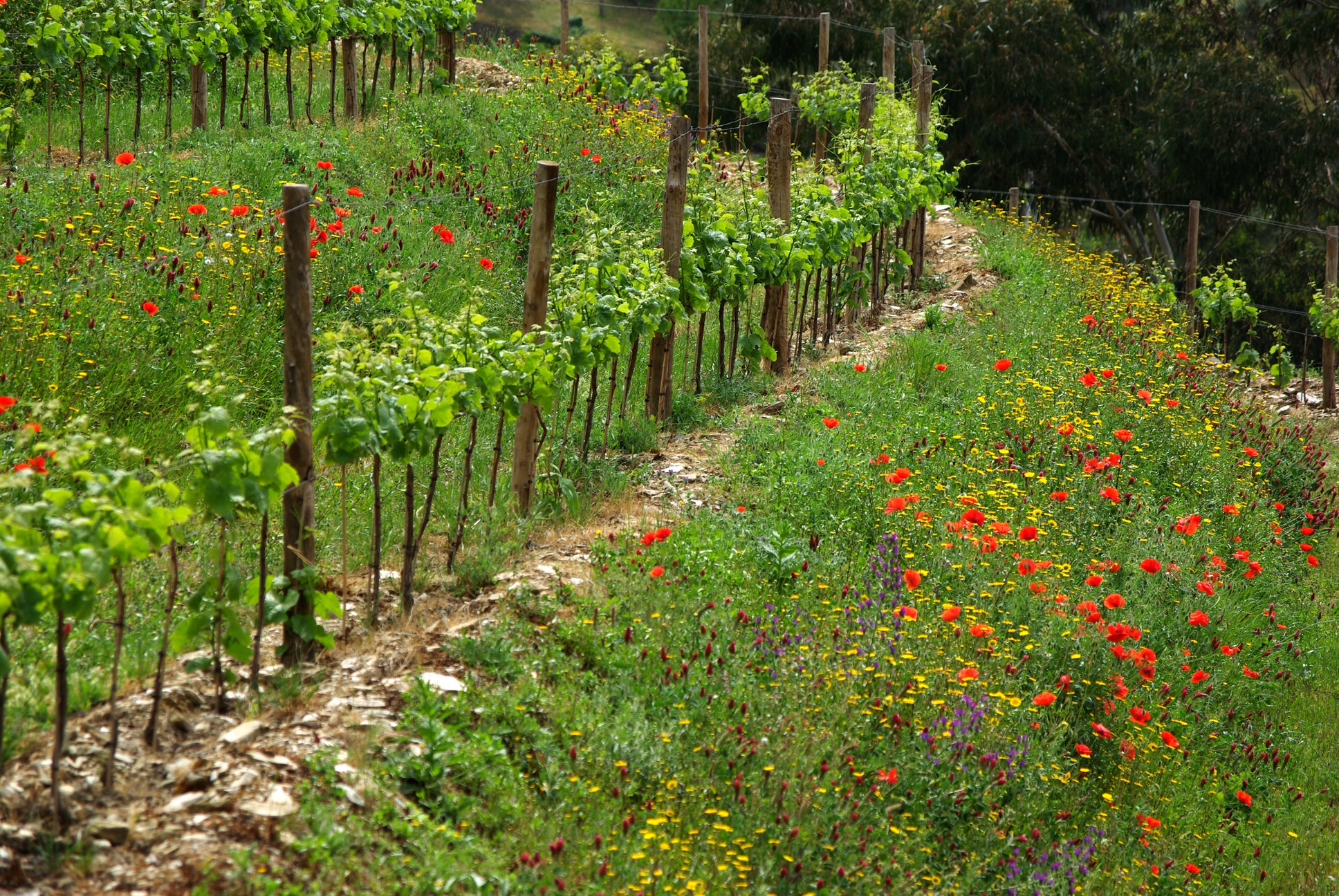
Learn to live more harmoniously with spontaneous vegetation, to accept its life cycle, and to intervene only as much as necessary to prevent these plants from harming the vines or carpeting the vineyard and raising the risk of fire.
Copper and sulphur are effective, irreplaceable, and complementary fungicides in maintaining vineyard health. Their effectiveness is greatly enhanced by choosing the right moment to intervene.
Taste Terra Prima, the ruby Port produced by Fonseca Guimaraens with grapes from an organic vineyard and fortified with organic brandy. I hope it inspires you to create an organic dry white Port. There is none on the market, a significant gap worth filling.
Spontaneous vegetation
On the ideal vineyard
Only after learning to respect tradition, people, and the soil can you begin to ask the most difficult question of all: where should a vineyard be planted?
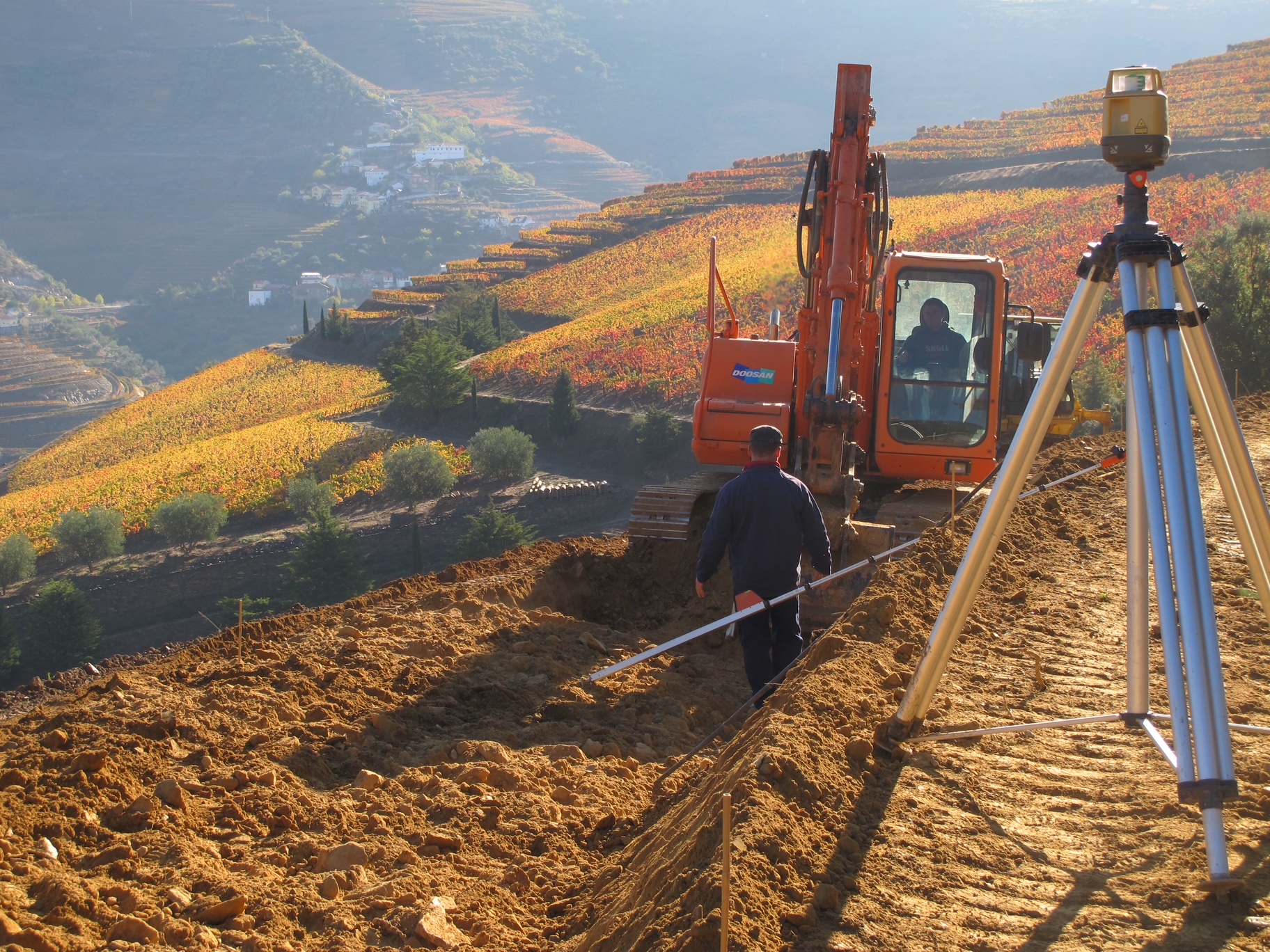
I am firmly convinced that, during the post-phylloxera period through 1965, growers planted the finest vineyards, deliberately choosing sites where vines could naturally thrive. After 1965, and even more after 1980, bulldozers enabled large-scale expansion, and earthen terraces replaced traditional dry-stone walls. Often, these new sites have soils that are either deep or stony and shallow, with poor exposure and a fragile natural water balance. They lack intrinsic viticultural character. Why plant vines in inferior terrain to make room for tractors? A vineyard that does not thrive naturally rarely rewards you with great wine.
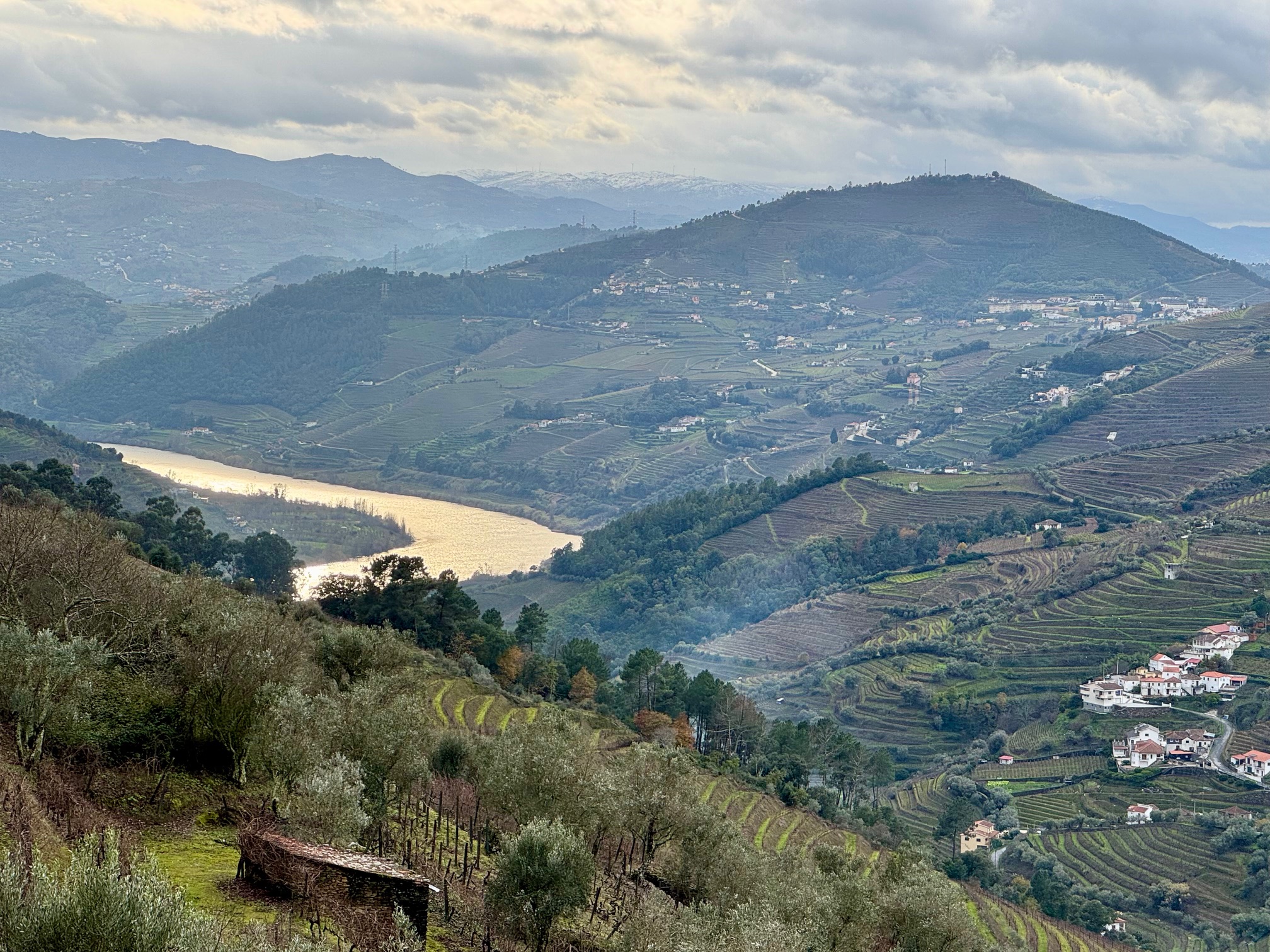
Listen to what the landscape is telling you. The old walls indicate where vines once survived without irrigation. The abandoned terraces often mark the limits beyond which quality becomes uncertain. The best lessons are written in stone, not on maps.
As we travel east from Baixo Corgo to Douro Superior, vineyard density decreases. This fall reflects dwindling rainfall and rising heat. Why defy the logic suggested by the climate by planting vineyards where irrigation becomes necessary?
Planting a new vineyard
On the importance of olive trees
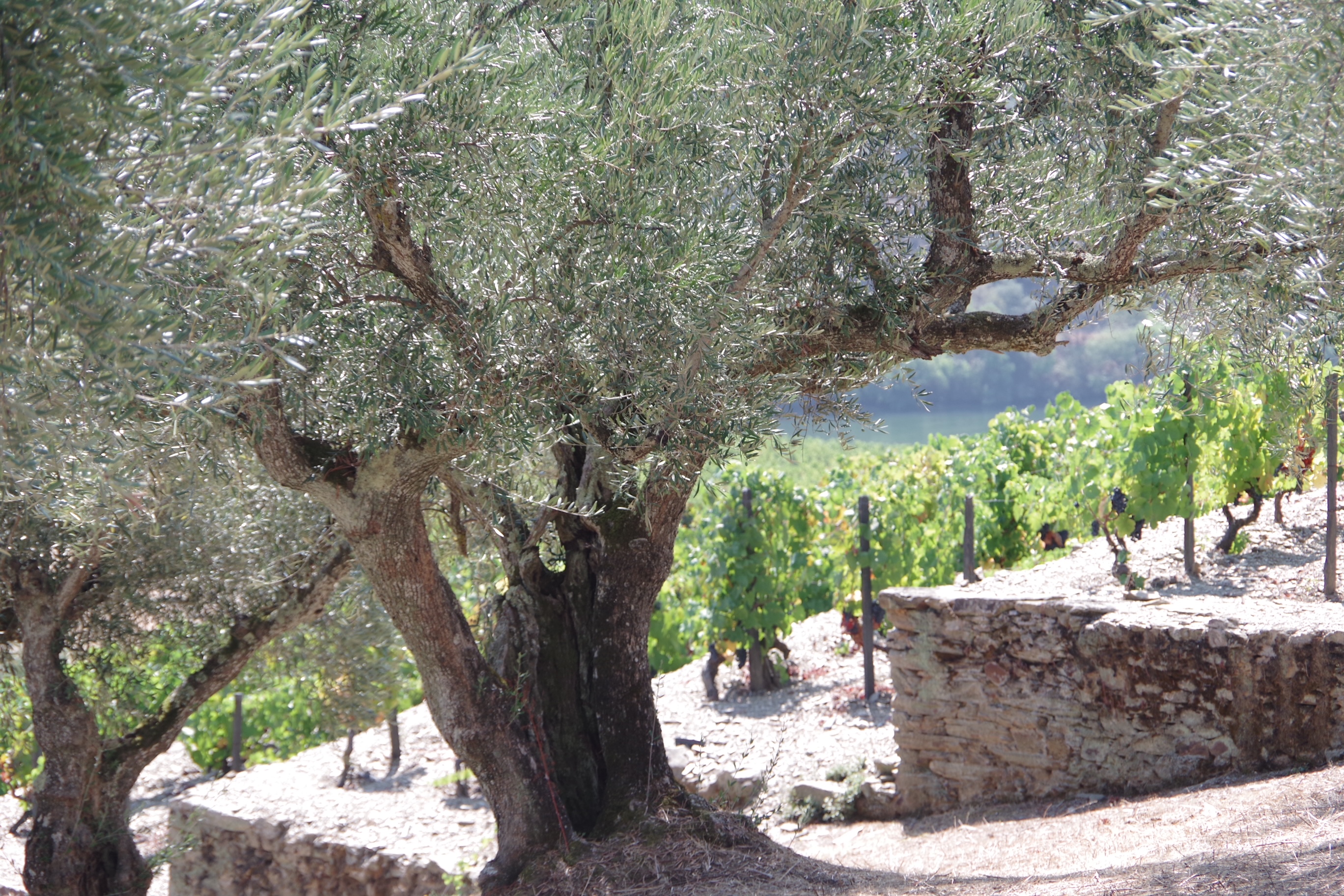
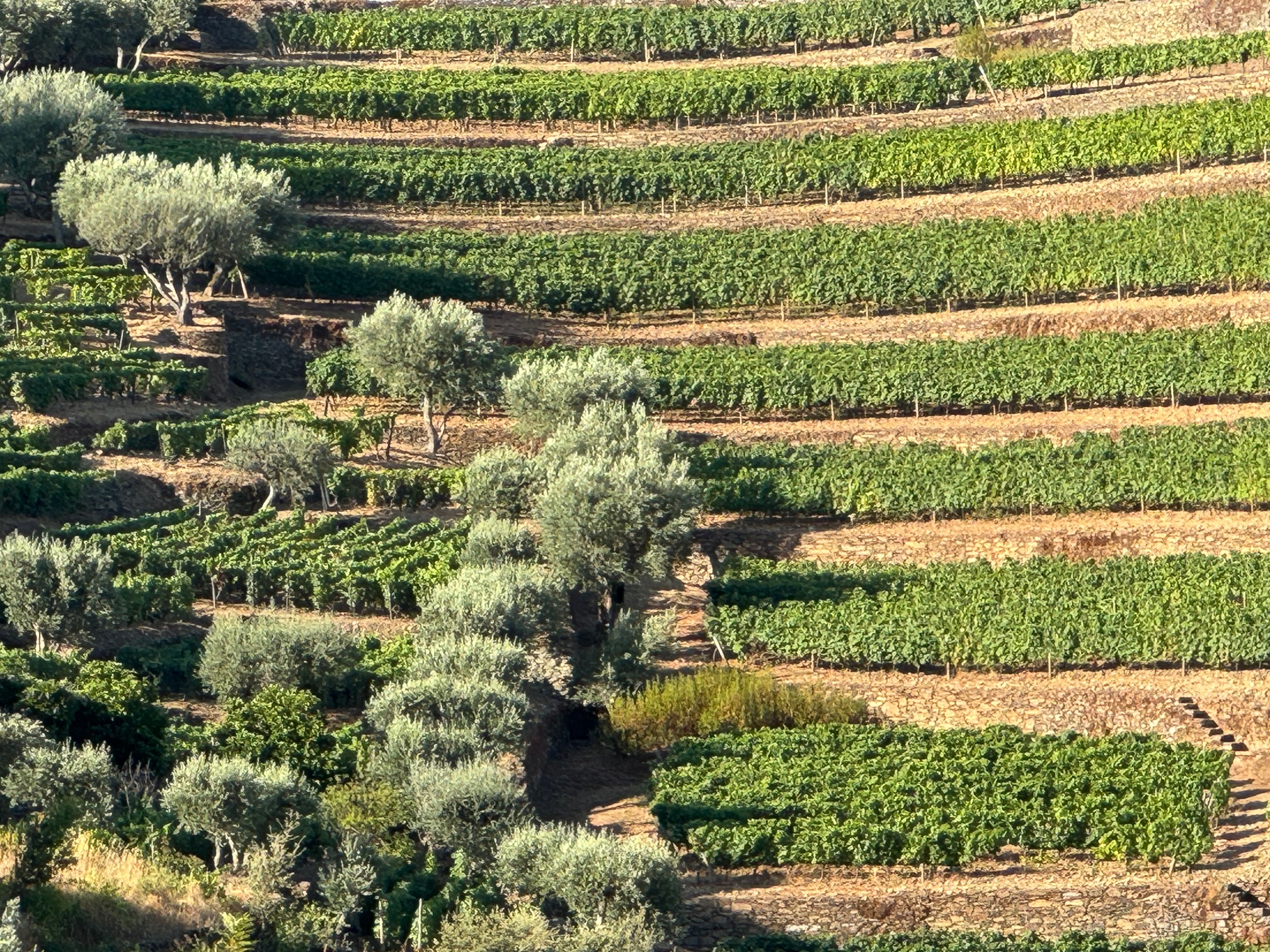
Plant olive trees around the vines. Known in the Douro Valley as an olival de bordadura, this natural border frames the vineyard beautifully and yields exceptional olive oil, a valuable additional source of income.
Olive trees surrounding the vines
On caring for the vineyard
When you acquire a vineyard, do not rush to renew it. Take time to observe, learn, experiment, and reflect. Pay close attention to the neighboring vineyards. Renewing without understanding what truly needs to change is a serious mistake. A new vineyard should be guided by experience and judgment, never by whim.
On the Douro terraces
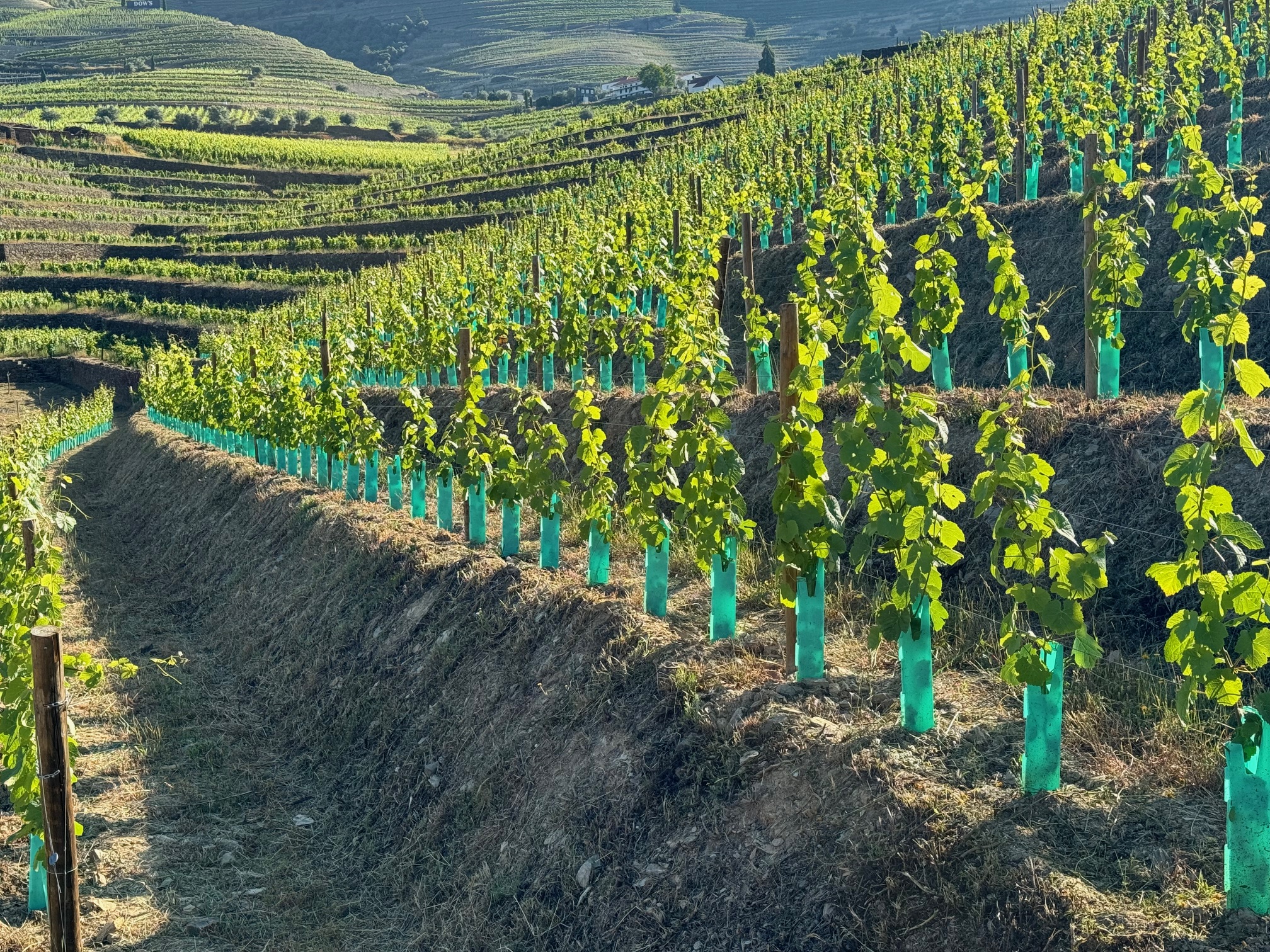
Rain causes erosion in hillside vineyards. Careful land design is therefore essential. Vines were once arranged in terraces supported by dry-stone walls. They are now preferably planted on successive narrow stepped platforms, separated by earthen embankments and laid out with laser guidance to ensure, on each level, a longitudinal gradient of about 3 percent, ideal for draining torrential rainfall.
Building terraces
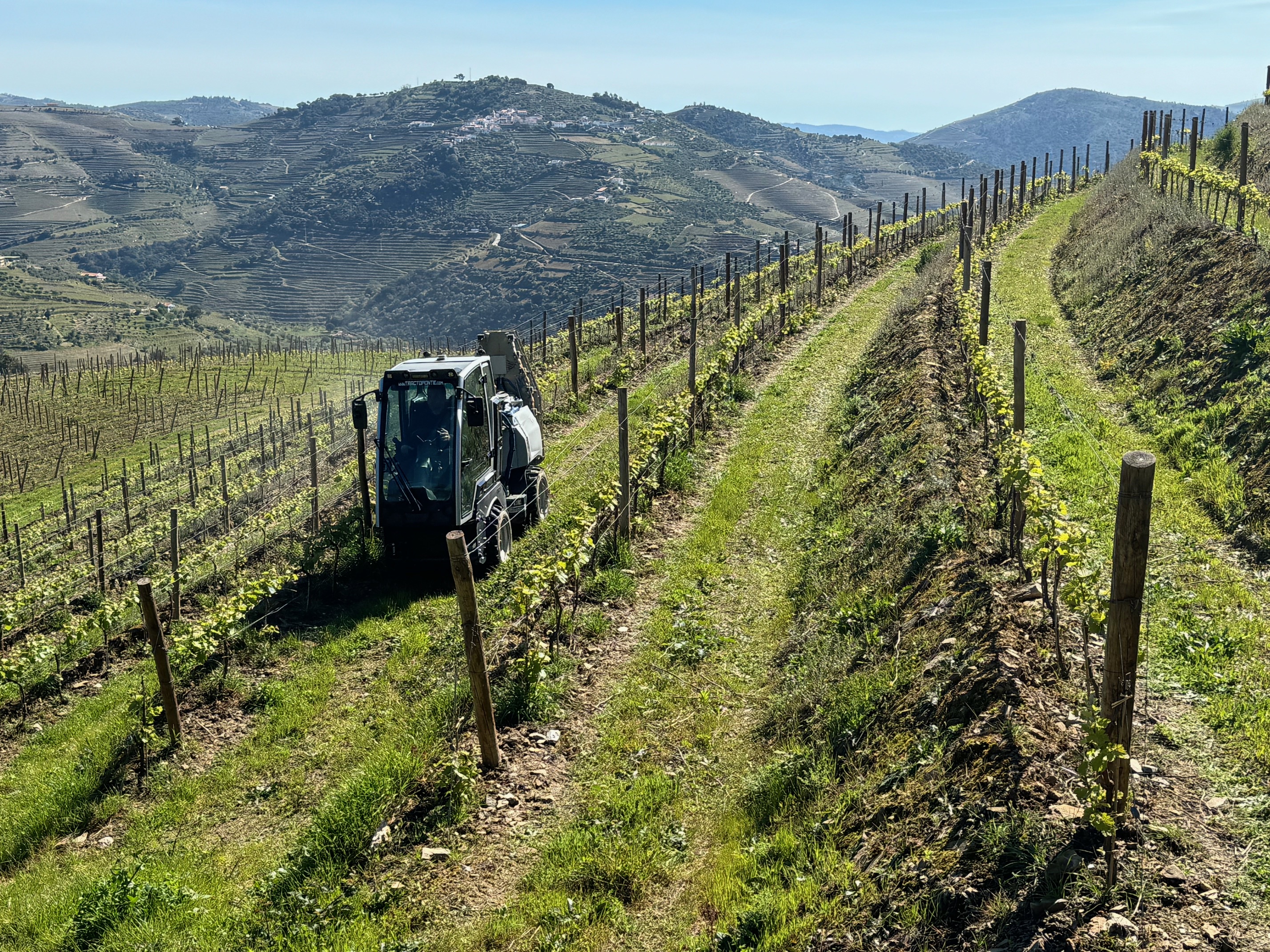
Each terrace is designed to support only a single row of vines (bardo), laid out at a fixed distance from the embankment shoulder to ensure circulation and access for machinery along the slope. At the same time, the terrace width should be reduced as much as possible, increasing vine density without compromising mechanization. This approach uses the land more efficiently and simplifies vineyard work, easing physical labor, which is a priority in mountain viticulture.
Narrow terraces
On grape varieties
You must study the Douro grape varieties. The choice of what to plant should be shaped by the diversity of soils and microclimates, not guided solely by enological objectives. Planting vines in a new vineyard is like sewing a patchwork quilt, whose meaning and beauty emerge only in the whole. A field blend of judiciously chosen varieties creates the complexity needed for great wines and the resilience to deliver consistency from one vintage to the next.
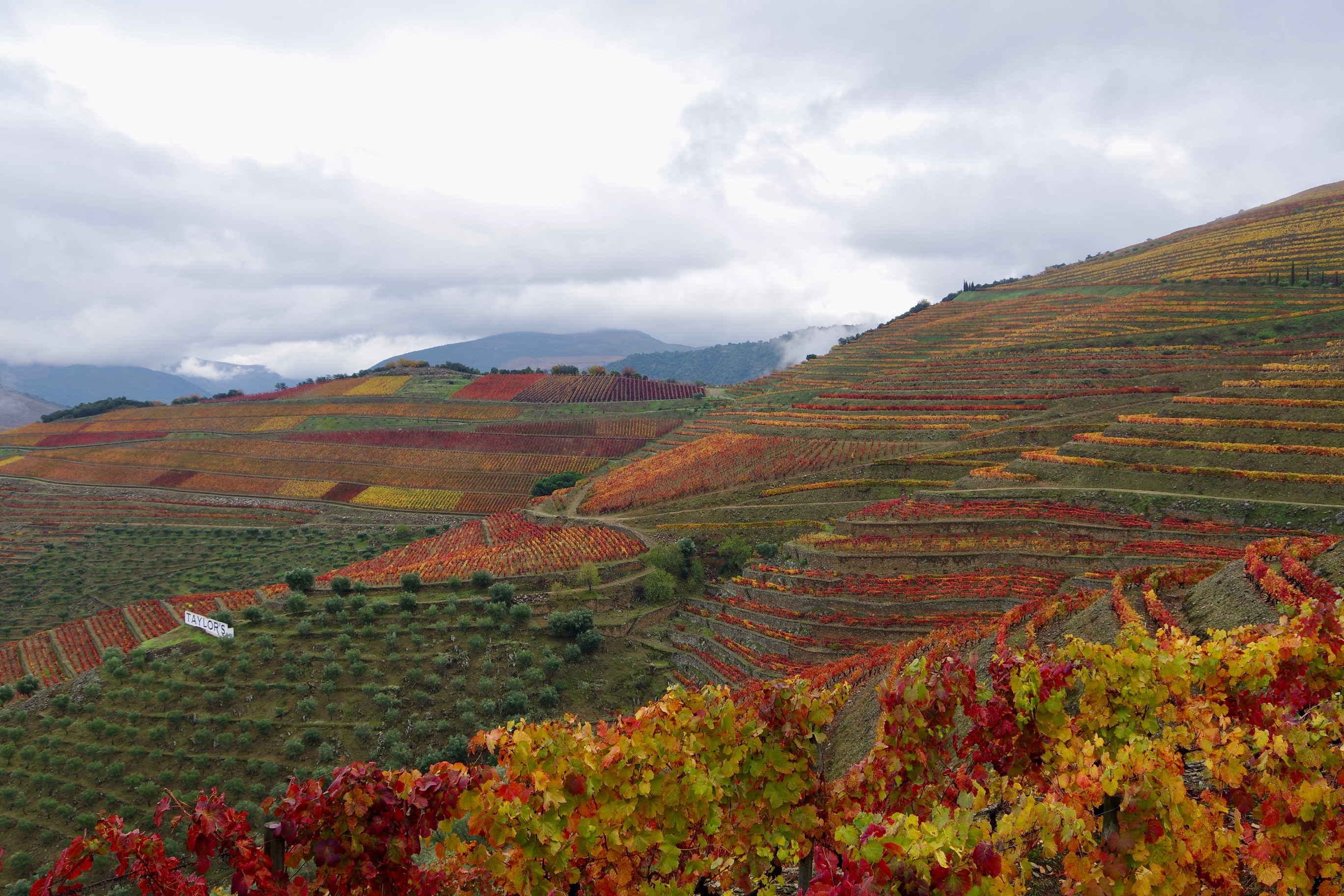
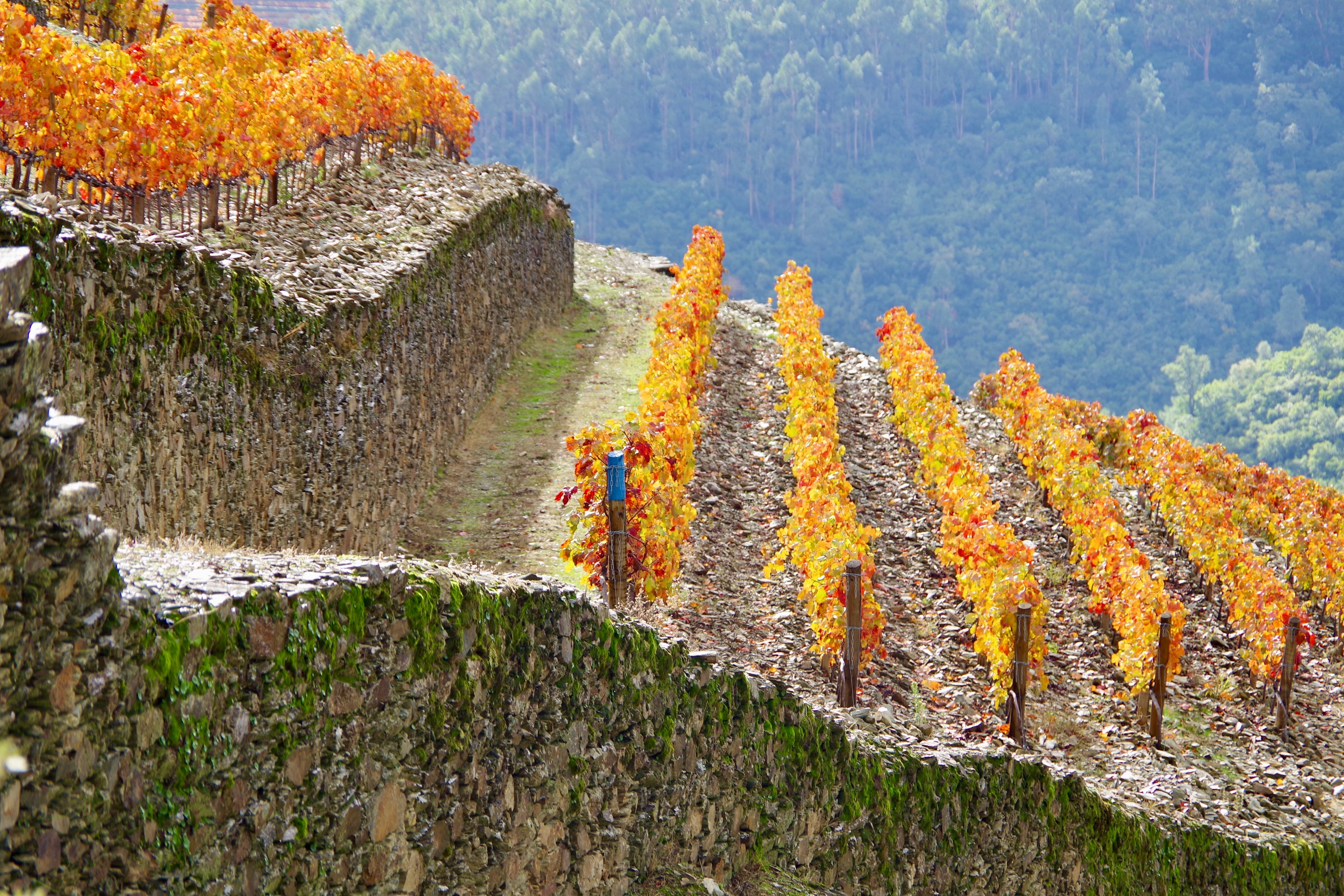
Fall in Quinta de Vargellas
Let me mention a few of my favorite red varieties. Touriga Francesa is, without question, the conductor of the Douro’s varietal orchestra. It is the most resistant to downy and powdery mildew, a quality that helps explain its prominence in the Douro.
Tinta Cão, which “ripens well, neither shrivels nor rots,” as Francisco Rebelo da Fonseca wrote in the eighteenth century, can be precious in arid years because it survives the heat.
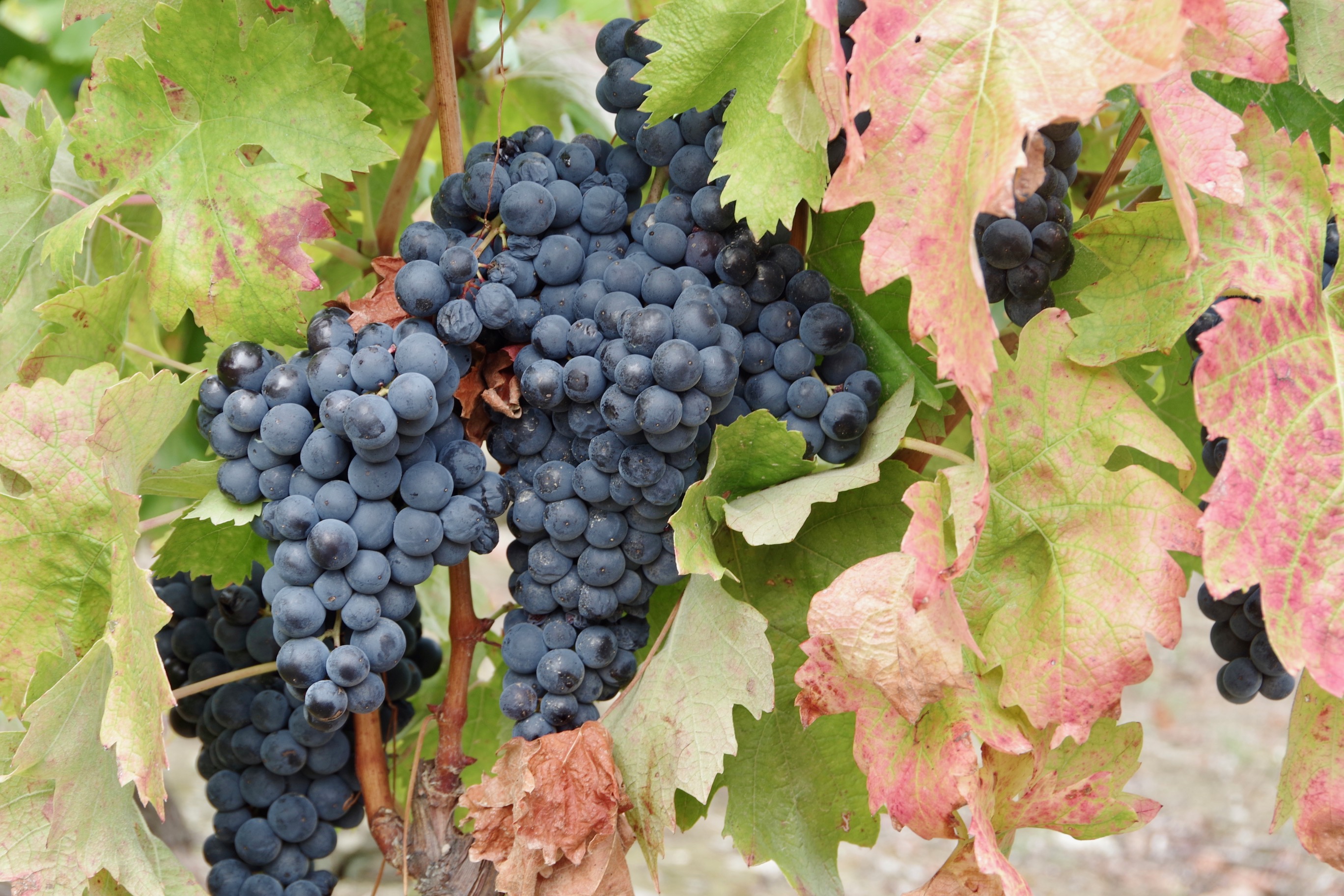
I have a special fondness for Tinta Francisca and Viosinho. They make slender vines, luminous spring hedges, and perfectly ripened grapes, blue-black in the Francisca, golden-yellow in the Viosinho.
Two varieties that can help the Douro face a warming climate are Malvasia Preta and Tinta Aguiar. We need to better understand their properties in the vineyard and cellar.
The Douro is also rich in local white grape varieties. A magic quartet—Malvasia Fina, Viosinho, Rabigato, and Gouveio—forms the backbone of the finest white Ports. On their own or together, they produce outstanding table wines. Beyond these, many other grapes wait to be planted.
On the importance of the blend
The vastness of the region and the diversity of its valleys and hills yield a wide range of grapes. Through blending, producers can create wines with a balance and depth rarely achievable from a single site.
Growers must decide whether a vineyard’s grapes are destined for Port or for table wine (DOC Douro), two different expressions of the same landscape, with any surplus going to simpler, unclassified wines. In any given year, the fruit suits only one style, a vocation that may shift with the weather. As ripening unfolds, the vineyard’s calling becomes clear and is confirmed at harvest. The aim is always to guide each parcel toward its finest possible expression.
On rootstocks
To guard against phylloxera, European vines are grafted onto American rootstocks. The rootstock type is often shared by all vines in a vineyard. One of the earliest and most enduring choices was Rupestris du Lot. To forget it would be to lose history, diversity, and perhaps future resilience.
Today, drought resistance is paramount, so Richter-110 and 1103-Paulsen are common rootstock choices. Both coexist across the valley, but Richter-110 predominates in the Douro Superior and in the Cima Corgo, especially below the mid-slope. 1103-Paulsen tends to perform better in deeper soils with greater spring moisture and is therefore more prevalent in the Baixo Corgo and on the higher slopes of the Cima Corgo.
On planting the vines
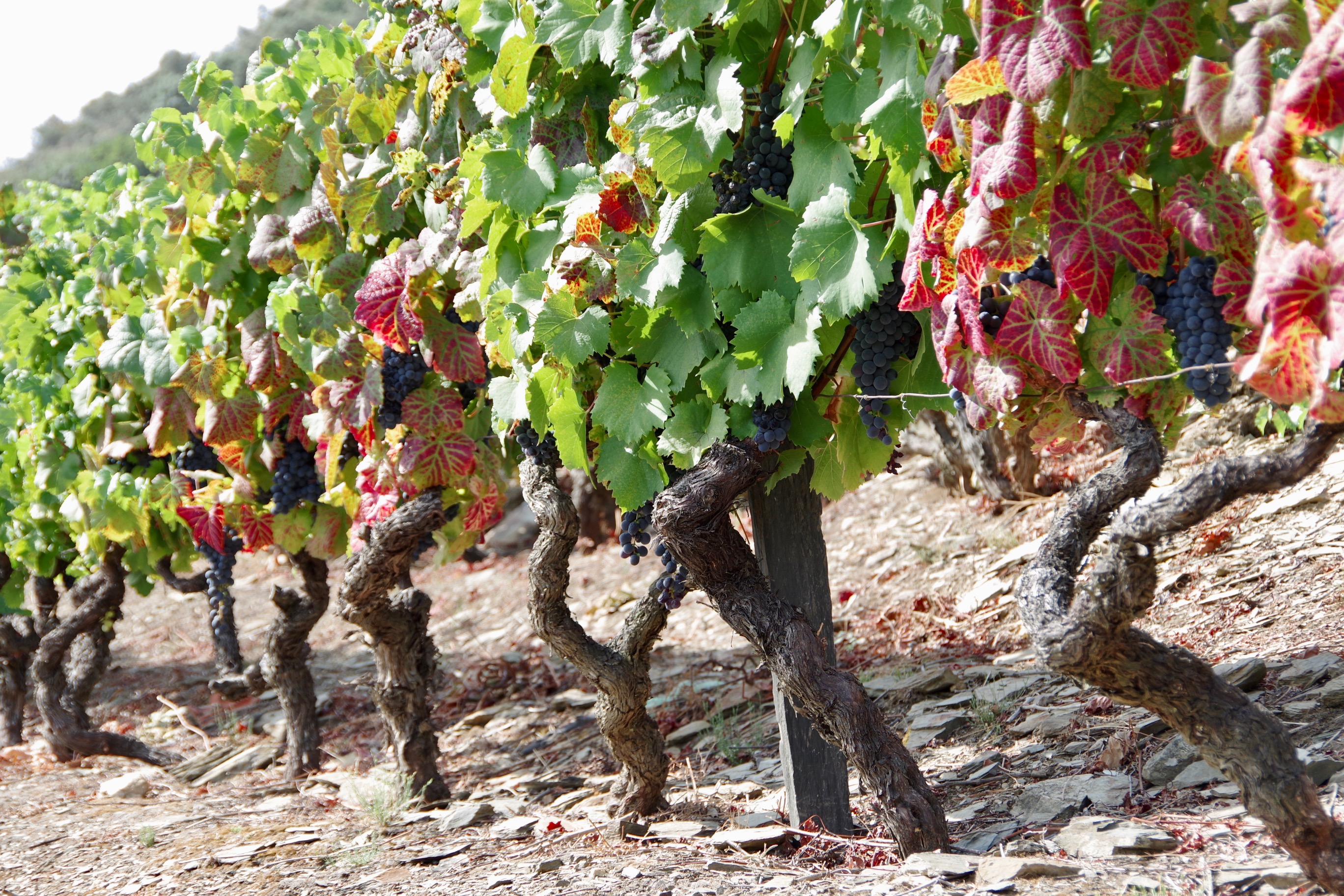
I advocate mass selection, propagating vines from many outstanding plants in traditional vineyards, over clonal selection, which reproduces a single “mother vine.” I believe it is the duty of all Douro winegrowers to preserve and multiply our viticultural genetic heritage, especially minor varieties now on the brink of extinction.
On pruning the vines
Cane pruning, known as Guyot, is often the better choice in drier climates or in shallow soils without irrigation. Under such conditions, the individualized, vine-by-vine approach characteristic of this system is justified, and it offers the added advantage of allowing the vines to be continuously renewed.
Yet there are sites and grape varieties that lend themselves better to spur-pruned cordon training, known as Royat: a simple form of pruning, though one that demands no less care and precision in its execution. In the right place, for example, Touriga Nacional benefits greatly from this method, given its somewhat awkward natural growth pattern.
On the harvest
In the Douro, when planted where they belong, vines do not suffer from thirst, only from heat. But before that heat turns harsh, the grapes ripen to perfection for Port. They should never be overripe. Port tolerates only the faintest hint of raisining, and only in limited proportions, in varieties such as Tinta Barroca, Malvasia Fina, and a few others.
In 1992, I learned from Alistair Robertson and Bruce Guimaraens the importance of waiting for the right moment to harvest. Day after day passed without the grapes reaching full maturation. While others chose to pick, Alistair and Bruce held back, convinced that a touch of rain would refine the grapes and bring them to full maturity.
The rain arrived late, at the end of September. It was only 13.5 mm, but Bruce Guimaraens, meticulous about water to the point of counting the drops of morning dew, guaranteed it was enough. His judgement was vindicated: the 1992 Taylor’s Vintage Port would go on to receive a perfect score from Robert Parker.
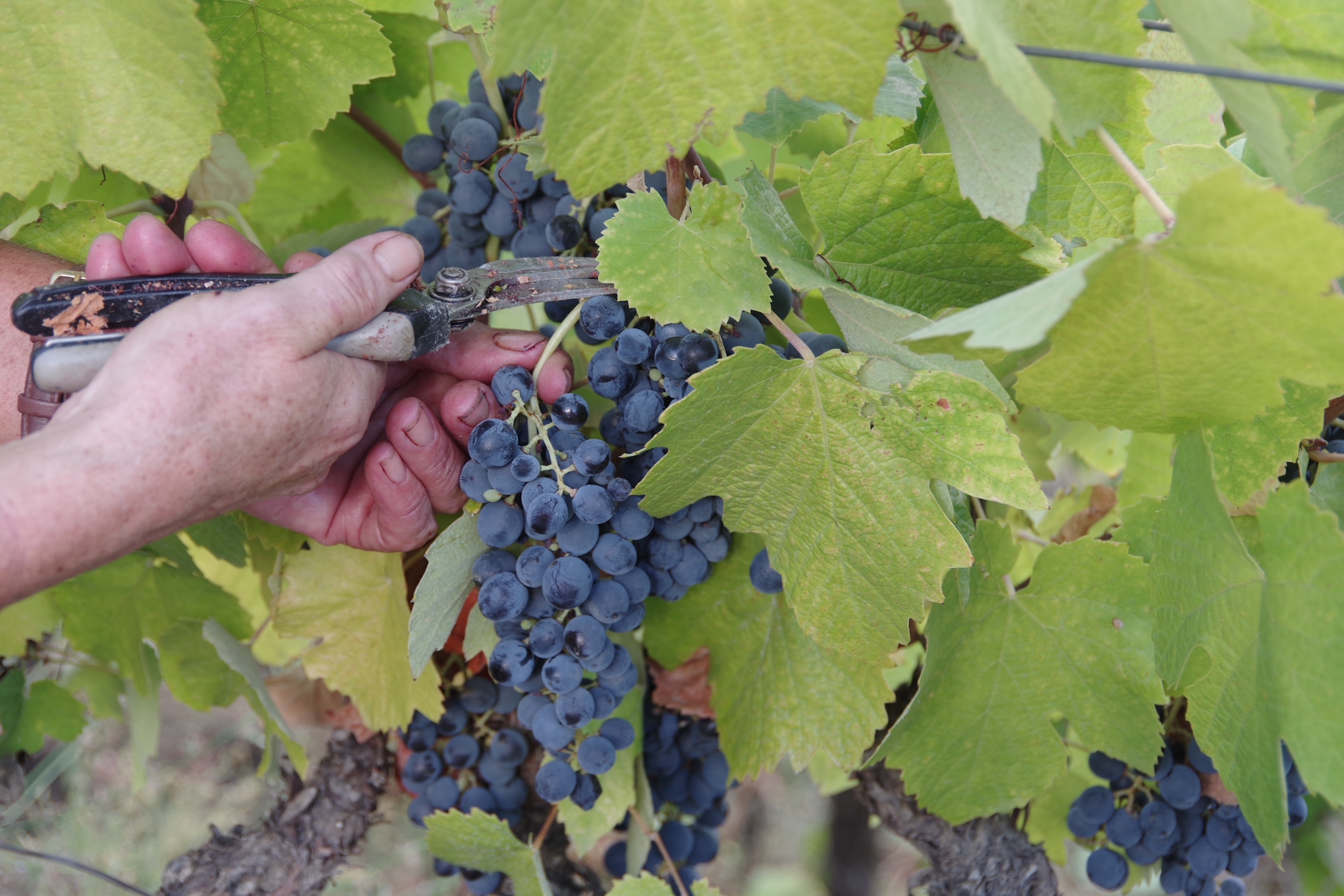
Harvesting grapes
On Port
Port wine is made without artifice, by people who use simple equipment and have a deep respect for tradition.
Producing a great Port requires a wide variety of grapes, careful choice of harvest dates, and the ability to select grapes by hand in the vineyard.
The proportions of different grapes are adjusted from year to year. Co-fermenting them in the same lagar enhances complexity and balance.
Some final words
It is a privilege to work in the vineyards of the Douro Valley. No other major wine region combines such diversity of longitude, altitude, sun exposure, grape varieties, and soil depth with the production of a fortified wine as delicious, long-lived, and unique as Port.
If you work with patience, with respect for the place, and with attention to what only time can teach, the vineyard will reward you. Not always quickly, but usually honestly.
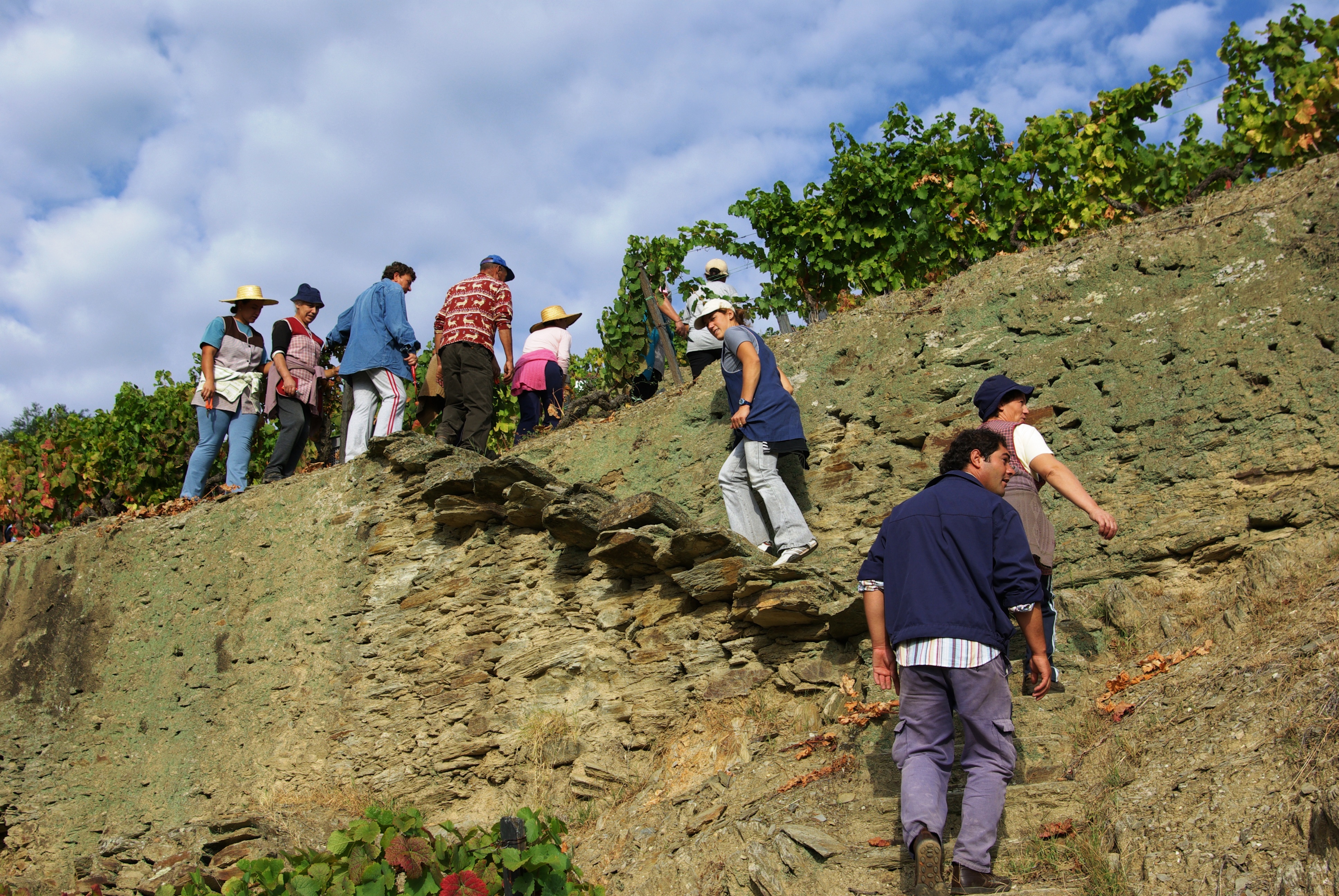
Workers climbing a escada salta cão (dog jumper ladder).
In this seventh lecture with viticulturist António Magalhães, we explore the hard work behind every bottle of Douro wine. The region’s steep, mountainous slopes make mechanization difficult, so much of the labor is still done by hand. Yet it is precisely this human touch that produces great wines: knowing how to prune and tend each vine, which grapes to harvest, and which to leave behind.
When António was a boy, he loved to play with the children of the agricultural workers and was often invited to share their simple meals. Because their homes had no electricity, supper was served late in the afternoon to take advantage of the last light of day.
The food was cooked in earthenware and cast-iron pots over the same hearth that warmed the house during the cold Douro winters. The walls were stained with soot from countless fires. At the table, the adults spoke freely in front of António, assuming that, as a child, he would not understand their conversations. But he listened intently.
He heard how hard their lives were. He heard their worries: how to stretch meager wages, how the women, already burdened with cooking, cleaning, and feeding the animals, took poorly paid part-time jobs to earn a little extra money. He heard their modest dreams: that all their children would finish primary school, that the most gifted might apprentice as carpenters, plumbers, or cabinetmakers, and escape the harsh life of the vineyards.
At the end of supper, António returned to his family home, the smell of smoke clinging to his clothes. He liked it, but his parents made him bathe and then sit down to a second dinner in the dining room, lit by the luxurious glow of incandescent bulbs. Here again, he listened to the conversations of the grown-ups. These reflected fewer worries and higher aspirations: the children were expected to attend university and pursue prestigious careers, becoming lawyers, doctors, or engineers.
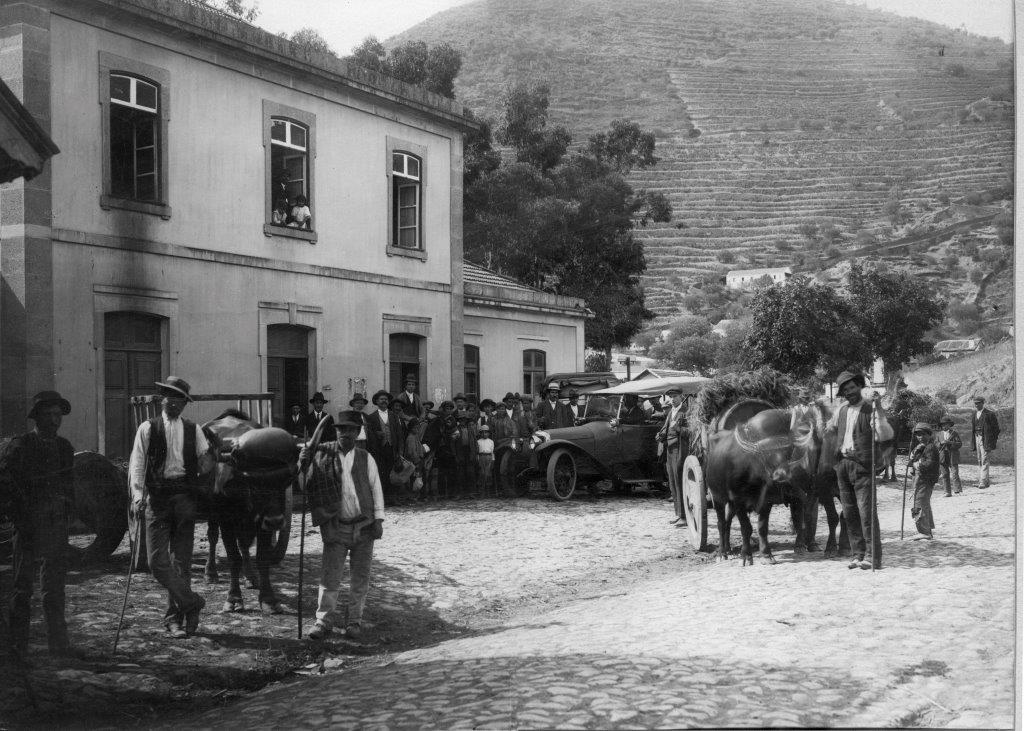
Workers gathered at the Pinhão train station, early 20th century.
The parents of António’s childhood friends worked year-round on the large Douro estates. It was mostly at harvest time that the farms hired temporary workers, called rogas. They were gathered by a rogador and brought to Régua or Pinhão by train or bus. From there, they walked the long, narrow roads that led to the farms.
Most came from the high plateaus of Trás-os-Montes, where corn had been grown since the sixteenth century. For extra sustenance, they carried cornbread, along with a knife to cut it and a fork for their meals. At night, they slept in buildings called cardanhos, which were divided in half by a wooden wall. The men slept on one side and the women on the other. There was a large common blanket for each group.
The rogas worked twelve hours a day for two weeks to earn some extra money that would last them the rest of the year and perhaps allow them to buy a small plot of land. Those who could carried the heavy baskets of grapes, for this work paid three times as much as harvesting. All this toil is memorably described in Miguel Torga’s 1945 novel Grape Harvest.
Over the years, António came to understand the rhythm of vineyard life. Work starts at sunrise. In winter, it begins at first light to make the most of the day. In summer, the sun rises much earlier, and work also begins earlier, to escape the afternoon heat.
Vineyard labor is physically demanding. Workers leave for the fields fasting and pause around 9 a.m. for a light snack, usually a sandwich, to avoid feeling lightheaded. Lunch is the first hot meal of the day, often a vegetable broth eaten from a bowl: first, the vegetables are eaten with a fork, then the broth is drunk. In summer, there is no afternoon work, and heavy midday meals are avoided because of the heat.
The Douro was a poor region, so the food was simple and nothing was wasted. Rye and corn bread were always present, but wheat bread was rare. Pasta, potatoes, and beans were staples.
During the week, people relied on sausages such as chouriço and alheira, and on two essential fish: cod, prepared in countless ways, and sardines, eaten fresh or preserved in salt, a tradition that has largely vanished. Vegetables were seasonal: cabbages in winter, plump Douro tomatoes in summer, cut in half and seasoned with salt and raw onion. Workers helped themselves to the fruit of the trees, discarding the seeds at random and inadvertently planting new trees in the most unexpected places.
As a small bonus, the workers received either a light, low-alcohol wine or água-pé, the latter made by adding water to the pressed grape pomace and letting it ferment again. Some was drunk at lunch, and it usually accompanied dinner.
Sunday was a day of rest. The man shaved, a small indulgence at a time when blades were expensive. Lunch included meat (often tripe, chicken, or mutton) and their best wine, for there was no farm work in the afternoon.
Every family aspired to raise a pig for the annual slaughter, to make sausages and salted meats that could be consumed throughout the year. Those without the means or a pigsty raised one jointly with the estate owners they worked for, trading labor for shelter and the purchase of the animal. One advantage of the pig was that it did not compete with humans for food: it lived on fallen fruit and broth made from kitchen scraps, wilted vegetables.
This way of life began to unravel in the 1990s, as workers aged and their children turned away from agriculture. Large farms began to rely year-round mostly on contractors who supply temporary labor. These workers, however, have neither the experience nor the commitment of the full-time hands.
António stresses the importance of the people who work year-round on the farms of the Douro Valley. Working other people’s land is exhausting and offers little recognition. At the same time, many workers own a small vineyard. Tending that land is a source of pride and quiet joy. It is the same work, but it carries a different meaning.
These vineyards have a human scale, with one, or at most two hectares that can be cared for by a farmer and their family. These small farms, ubiquitous throughout the valley, are key to preserving and improving the spectacular landscape, maintaining the fruit trees planted among the vines and the olive trees that surround them. The farmers who tend these vines are also guardians of a precious genetic legacy, preserving the different grape varieties that evolved through careful human selection over the years.
The way these vineyards are cared for reveals a profound respect for nature and the social fabric of the Douro. There is a transmission of skills from generation to generation, enriched by the wisdom and experience accumulated over time. This inheritance is valuable not just to them but also for the work they do on the large farms.
António thinks that the Douro needs to create conditions so that a new generation can choose to work in agriculture, supplying skilled labor to the large farms and tending their own human-scale vineyards. That means using technology to make the work easier: drones can be used to treat vines, and new machines can be designed and adapted to the Douro’s vineyards, as they have been in Champagne and the Mosel.
The recognition of the olive oil produced by the olival de bordadura, the trees surrounding the vines, as a product with protected designation of origin is another way to increase the income and status of Douro growers. The success of enotourism is an essential pillar of the region’s future.
Olival de Bordadura, olive trees bordering the vines.
But, above all, it is key to increase the value of the grapes. The region was designed to produce its prized wine, Port. Later came another fortified wine, the Moscatel de Favaios, and, in recent decades, the DOC Douro table wines. António supports the creation of another category, the analogue of vin de pays in France: a simple wine for local consumption. He proposes calling it Vinho de Ramo, an old name for tavern wine, after the branch (ramo) once placed by the door to signal that wine was for sale.
The view from António’s Vinha da Porta in Cidadelhe.
At the end of last year, António, who comes from a family of vineyard owners but inherited no land, bought Vinha da Porta, a human-scale vineyard in the small village of Cidadelhe, near Régua, in Baixo Corgo with sweeping views of the Marão mountains. He now rises with the sun to work in his vineyard. Will he produce Port wine, DOC Douro, or a simple Vinho de Ramo? Whatever it is, we cannot wait to taste it.
In our sixth lecture with viticulturist António Magalhães, we turn to a group of unloved grape varieties that are often dismissed, yet fully capable of producing great wines when planted and farmed wisely
Tinta Roriz
For over thirty years, António met each August with David Guimaraens, head winemaker at Taylor Fladgate. Together, they assessed the evolution of the two grapes most critical to the Vintage Ports of Fonseca Guimarens: Touriga Francesa and Tinta Roriz. António grew to admire Tinta Roriz’s distinctive qualities and came to reject its poor reputation. Tinta Roriz may well be the Douro’s most misunderstood grape.
Tempranillo arrived in the Douro from Spain and was initially called Aragonez, the name it still bears in other Portuguese regions. By the late nineteenth century, it became known as Tinta Roriz, reflecting the distinct identity it had acquired in the Douro.
Tinta Roriz
It plays a crucial agronomic role: its disease sensitivity makes it a sentinel vine, offering early warning of downy and powdery mildew, the green leafhopper, and maromba (a boron deficiency common in the Douro).
Tinta Roriz is one of the grapes farmers call paga dívidas (“debt payer”) because it can produce large, heavy bunches, particularly in years of abundant rain. Many enologists, however, associate the grape with large, watery berries that yield thin, forgettable wines. And yet Tinta Roriz plays a starring role in some of the Douro’s greatest wines. Why? There are three reasons.
First, lineage. The finest examples of Tinta Roriz come from old vines, whose cuttings far outperform modern clones.
Second, site. Tinta Roriz must be planted in poor soils and in sites with good sun exposure and sufficient airflow to protect it against mildew and oidium.
Third, rootstock choice. The adoption of highly productive rootstocks, like the 99 Richter, rather than those better suited to the Douro terroir, notably the Rupestris du Lot, boosted yields at the expense of quality.
So why has Tinta Roriz so often disappointed? Many of today’s vineyards date from the late 1980s and early 1990s, when mechanization reshaped the Douro. Wide terraces were carved into the hillsides, and vines were planted at low density to accommodate tractors. To offset that lower density, growers favored productive varieties like Tinta Roriz. They chose high-yielding clones, fertile soils, and vigorous rootstocks. In some cases, they also replaced dry farming with irrigation, sacrificing deep root systems and the hydric stress that concentrates flavor. It is hardly surprising that the grape’s reputation suffered.
And yet, in the right hands, Tinta Roriz shines. The iconic Pintas, produced by Sandra Tavares da Silva and Jorge Serôdio Borges and made from more than forty grape varieties, contains 10–15 percent Tinta Roriz.
Tinta Barroca
This grape plays a secondary but essential role in Port blends. It is present in virtually all vineyards planted before the mid-1980s. Later plantings, no longer based on traditional field blends, sometimes exclude it—to their loss.
Because it is usually part of a blend, Tinta Barroca dwells in relative obscurity. Yet it has always had its champions. José António Rosas, the renowned winemaker of Ramos Pinto, was a great admirer.
Tinta Barroca between two vines of Touriga Francesa
Bruce Guimaraens, the larger-than-life British winemaker of Fonseca Guimaraens, also held it in special esteem. Struggling with the two Rs, he called it “Baroca.” His son David shares his father’s appreciation for the grape but pronounces “Barroca” like a proper Portuguese.
It is an early-ripening variety, and the first impression when tasting the berries is its candy-like sweetness. Like Malvasia Fina, the berries are particularly delicious when they are about to turn into raisins. At that moment, they reach the upper limit of ripeness acceptable for Port.
Like Touriga Francesa, Tinta Barroca is an offspring of Mourisco Tinto and Touriga Nacional. António suspects that it may be the modern name for the pre-phylloxera variety Boca de Mina (“mouth of the mine”), a name that hints at its need for freshness. The Baron of Forrester considered Boca de Mina “the most delicious,” and João Cunha Seixas, a prominent viticulturist, praised it in his “Guide for the Douro Farmer,” published in 1895.
Tinta Barroca is highly sensitive to heat. This attribute was largely forgotten in the vineyards planted in the late 1980s and 1990s, when it was often placed in sites with excessive sun exposure. As a result, the rachis cooks and the berries shrivel and mummify. You can almost hear the vines pleading, “Take me out of here.”
Tinta Barroca in the Fall
Barroca is often accused of being ill-suited to a warmer climate. Yet in the right site, the vine can thrive and produce beautiful wines. One striking example is at Quinta do Cruzeiro in Vale de Mendiz, where Tinta Barroca dominates a vineyard called Patamares do Norte (northern terraces), a name that signals the vineyard’s favorable north-facing exposure, which suits the grape so well.
Tinta Barroca and Tinto Cão are complementary varieties. Every year, António and David Guimaraens faced the difficult yet enticing challenge of finding their ideal proportions for Port.
Tinto Cão
Tinto Cão is often dismissed for lacking deep color, opulence, and high alcohol. Yet there is a long tradition of appreciation for this variety. In his Agricultural Memoirs of 1790, Francisco Rebello da Fonseca praised it, noting that “amadura bem, não seca nem apodrece”—it ripens well, without shriveling or rotting. He also mentions wine made from Tinto Cão by Manuel Vaz de Carvalho that was “considered superior to all his others and to those of the surrounding area.”
This grape has long been a quiet ally in difficult years. For António and David Guimaraens, Tinto Cão is a joker in the deck, saving great Ports in dry vintages such as 2009, 2011, and 2017.
Tinto Cão
It produces small berries with thick skins, yielding wines with natural acidity, elegant tannins, and remarkable aging potential. It may disappoint in cool years, but it shines in warm ones.
Tinto Cão thrives in vines with a south-westerly exposure, at altitudes below 300-350 metres. Above all, it demands deep soils to allow the grapes to ripen under a scorching sun.
If Francisco Rebello da Fonseca were alive today, he would relish seeing Tinto Cão escape the confines of Port wine. An increasing number of Douro estates, including La Rosa and Noval, are making delightful table wines exclusively from Tinto Cão. Luisa Borges, the winemaker and owner of the Vieira de Sousa estate, is especially fond of wines made from this variety.
In Vintage Ports from Taylor Fladgate and Fonseca Guimaraens, Tinto Cão remains a secondary but essential variety.
António keeps a mental list of grapes best equipped to help the Douro thrive in a warmer climate. At the top of that list is Tinto Cão.
Tinta Amarela
Tinta Amarela is a striking vine year-round and among the last to shed its leaves in autumn. Yet it is finicky: its dense bunches are vulnerable to heat and rain, which can trigger sour rot, as damaged berries are colonized by yeasts and acetic bacteria, leading to vinegar-like spoilage.
Site selection is everything. An east-facing exposure is generally ideal. Below the mid-slope line, row orientation becomes decisive, as it governs how much sun the clusters receive: rows facing east protect grapes from harsh heat, while those facing west leave them overexposed.
Tinta Amareladuring véraison
The vine can survive hot summers in the arid Douro Superior, but the grapes vanish. Farmers say, “the vines drank the grapes.”
Tinta Amarela appears in modest quantities in many old vineyards, particularly in Baixo Corgo, and is therefore most often found in blends. Single-varietal wines are rare.
It plays a major role in Quinta do Crasto’s celebrated Maria Teresa. Drawn from a field blend of centenarian vines planted around 1906 on low-altitude, east-facing terraces along the Douro River, the wine owes its distinctive character to afternoon shade that tempers the heat.
Tinta da Barca
Tinta da Barca is, like Touriga Francesa, a cross between Mourisco Tinto and Touriga Nacional. Yet while Touriga Francesa is widely planted and well known, Tinta da Barca remains largely obscure.
David Guimaraens is a devoted advocate of the grape, which plays a quiet but crucial role in the great Vintage Ports of Quinta de Vargellas. The fruit comes from the Pulverinho vineyard, planted in 1927 with both Touriga Francesa and Tinta da Barca.
António believes the best introduction to Tinta da Barca is a wonderful monovarietal table wine made by Ramos Pinto in 2016, a challenging year marked by heat and an unusual outbreak of downy mildew, which nonetheless yielded both classic Vintage Ports and outstanding table wines. It has been one of his favorites ever since.
Malvasia Fina
António knows, like the palm of his hand, remarkable Malvasia Fina vineyards across all three Douro subregions: Baixo Corgo, Cima Corgo, and Douro Superior. When planting this grape, one factor matters above all others: altitude. For Port wines, the ideal locations lie above 350–400 meters; for table wines, between 500 and 600 meters.
Malvasia Fina plays an indispensable role in several outstanding white Ports, including Fonseca Guimaraens’ Siroco and Taylor Fladgate’s Chip Dry, as well as in Adriano Ramos Pinto Finest White Reserve, a delightful sweet white Port.
In terms of table wines, António likes the white Reserva from Quinta do Cume in Provesende—a wonderful blend led by Malvasia Fina, with Rabigato, Viosinho, and Gouveio in supporting roles.
For those eager to discover how expressive the grape can be, António recommends tasting the Quinta do Bucheiro Malvasia Fina Reserva made by Dias Teixeira, an octogenarian and former enologist at Borges Port Wine, who knows Malvasia Fina’s secrets and charms.
Malvasia Fina
After our lecture, António had lunch at a seafood restaurant and let the sommelier select the wine. The choice was excellent: a Viosinho from D. Graça. When António asked which Malvasia Fina wines the sommelier would recommend, the reply was blunt: “I don’t like that grape variety.” Malvasia remains, clearly, misunderstood.
Each grape in its place
António teaches a lesson that should not be forgotten: grape varieties cannot simply be uprooted from one place and expected to thrive elsewhere. Each has a place where it speaks clearly. Many of the Douro’s unloved grapes were simply misplaced. Put them back where they belong, farm them with respect, and they repay the favor with wines of character, balance, and beauty.
If you’re a foodie, few pleasures in Portugal rival a visit to a farmers’ market. On the Saturday before Christmas, we stopped by the market in Régua, and it was a delight.
The town’s full name is Peso da Régua. Peso, meaning “weight,” likely refers to the role the town assumed after the Marquis of Pombal demarcated the Douro region in 1756: a logistical hub where wine and other goods were weighed before beginning their journey downriver. Régua, meaning “ruler,” describes the way the town stretches along the banks of the Douro, long and narrow, following the river’s course.
Régua welcomes visitors through an elegant iron bridge, inaugurated in 1872, but much of the surrounding architecture fails to do justice to the valley’s natural beauty. Still, there is an undeniable authenticity to the place and to its people.
We went to the Régua market in search of a local delicacy called falachas, a sweet biscuit made from chestnut flour. We were told, regretfully, that these small culinary miracles appear at the market only on Wednesdays. But there were other blessings. Stalls overflowed with apples—including the celebrated Bravo de Esmolfe and a lesser-known variety called Porta da Loja. There were cabbages of many shapes and forms, piles of chestnuts, dried figs, and walnuts. At the center of the market, a large stall tempted passersby with sausages and cured hams (presuntos). Near the entrance, a baker displayed baskets filled to the brim with bread: loaves made from white or yellow corn, golden olive-oil breads, and bola de carne, bread generously stuffed with meat or sausage.
What makes the market special, though, are the vendors themselves, warm, genuine, and quietly persuasive. “Try our delicious figs,” says one. “We dust them lightly with white flour so they stay soft and don’t stick together.” “Taste these walnuts,” urges another vendor. “They’re from a nearby farm. A woman’s been looking after the trees her whole life. She only gets about six hundred kilos, but they’re really great. We’re lucky to have them.”
In this holiday season, it is a rare gift to taste the fruits produced by people who devote their lives to caring for the land. We are fortunate to have them!
António Magalhães closed his lecture on the Douro’s grape varieties with a provocative question: “But who can hope to understand so many grapes without tasting Port?”
Port wine is the ultimate expression of the vineyards of the Douro Valley. As scholar Alfredo Guerra Tenreiro famously observed, “There is a uniqueness in the Douro climate that one can recognize and feel in the uniqueness of Port wine.”
Here are António’s recommendations for enjoying Port wine at its best.
Five Golden Rules
1) Choose the proper glass A classic white wine glass made of thin glass is ideal for Port. It lifts the aromas, focuses the flavors, and makes every sip a celebration.
2) Serve Port properly chilled The ideal serving temperatures for each style of Port are: • White Ports: 6–10 °C (43–50 °F) • Tawnies: 10–12 °C (50–54 °F) • Rubies: 12–16 °C (54–61 °F)
Once opened, White Ports and Tawnies should be stored in the refrigerator door. Ruby Ports, especially Vintage Ports, are best enjoyed soon after the cork is pulled.
The British have a tradition of passing the Vintage Port bottle or decanter from right to left, keeping it in motion. If someone forgets, the other guests often ask, “Do you know the Bishop of Norwich?”—a nod to Henry Bathurst, the early-19th-century bishop known for dozing off at dinner and neglecting to pass the Port.
3) Keep a 20-Year-Old Tawny in the refrigerator Tawnies are generally crafted from wines of various harvests, aged patiently in oak casks until the perfect moment for blending and bottling. A 20-year-old Tawny brings together wines with a weighted average age of twenty years, creating an alchemy of time and winemaking artistry. António’s longtime favorite is the magnificent Taylor’s 20-Year-Old Tawny Port.
4) Always decant Vintage and Crusted Ports Vintage Ports are bottled without filtration, which allows them to continue evolving in the bottle. Over time, sediment naturally accumulates. Decanting separates the clear wine from this sediment—harmless, yet coarse and unwelcome in the glass. It also allows the wine to breathe, letting oxygen gently soften its structure and release its full array of aromas.
When Port was shipped in barrels, British merchants crafted Crusted Ports by blending more than one Vintage, aging the wines in large wooden vats, and bottling them unfiltered for cellaring. After Portugal banned bulk exports of Vintage Port in 1974 (extended to all Ports in 1997), this style became rare. Today, only a few houses, like Fonseca, continue the tradition. Like Vintage Ports, Crusted Ports develop a natural “crust” as they mature and should always be decanted before serving.
5) Port is to be shared Port invites conversation and brings out sincerity. Violette Toussaint, the unforgettable protagonist of Valérie Perrin’s Fresh Water for Flowers, put it best: “My port wine has the same effect on everyone. It acts like a truth serum.”
How to Decant a Vintage or Crusted Port at Home
The day before serving, select the bottle you wish to open and stand it upright so the sediment can settle at the bottom. Leave it somewhere convenient—on a sideboard or on the kitchen counter.
Use a suitable corkscrew; a two-pronged cork puller is ideal for opening older bottles, whose corks are often fragile. Once opened, pour the wine slowly into a decanter or glass jug.
Strain the wine through a small flannel filter to ensure perfect clarity. Take a moment to taste the wine and enjoy that first impression.
Rinse the bottle and let it drain completely. Return the decanted wine to the original bottle. Keep the bottle in a cool place and check the temperature before bringing it to the table. If needed, a brief rest, fifteen minutes or so, in the refrigerator door will bring it to the ideal 16–18 ºC, with the higher end recommended for older Ports.
Magical Pairings
White Port
White Port is typically enjoyed as an aperitif and is made in a range of styles, from extra-dry to sweet. Even the sweeter versions remain balanced and never feel cloying on the palate.
There are two production approaches: oxidative and non-oxidative. In the non-oxidative style, winemakers shield the wine from oxygen to preserve its vibrancy. These Ports are bright and citrusy, ideal for the popular Port Tonic cocktail.
In contrast, the oxidative school relies on controlled exposure to air. Depending on the winemaker’s approach, this exposure may begin during fermentation and continue throughout aging in wooden vessels ranging from small casks to larger vats such as toneis and balseiros. Over time, this gentle oxidation deepens the wine’s character, imparting a golden hue and nuanced layers of nuts, caramel, butterscotch, and dried fruits.
António favors the oxidative style. His preferred White Ports, both made from blends that include Malvasia Fina, are the Fonseca Guimaraes Siroco—crisp and extra-dry—and the Ramos Pinto Finest White Reserve, which offers a discreet, delicate sweetness.
White Port pairs beautifully with toasted almonds, especially those from the Douro Superior, and with codfish cakes. It also harmonizes with soft-ripened cheeses, lending a bright acidity that lifts their richness.
Tawny Port
Tawnies pair blissfully with sweet desserts. In the Douro Valley, they are often served with crème brûlée—torched before serving—or almond tart. Egg pudding and Tawny Port are made for each other; tradition even calls for two glasses of Port instead of one: the first to honor the pudding, and the second to toast the cook who prepared it.
Another indulgence that pairs perfectly with Tawny Port is Toucinho do Céu (bacon from heaven), a convent sweet made with almonds, egg yolks, sugar, and a touch of lard that lends a soft, velvety texture. Murça, near Vila Real, is renowned for the version created at the Santa Maria Monastery and now made by Casa das Queijadas e Toucinho do Céu. The town is also celebrated for the vineyards that surround it, which produce some of the Douro’s finest white grapes—coveted by both Port and DOC Douro winemakers.
Tawnies also shine alongside nuts, dried fruit, or simply on their own, paired only with the quiet luxury of time and good conversation.
Ruby Port
Ruby Ports are excellent companions for cured cheeses. Portugal offers a rich array of these cheeses from regions such as the Estrela Mountain near Seia, Serpa in Alentejo, Azeitão near Lisbon, and São Jorge in the Azores.
English Port merchants traditionally pair Ruby Ports, particularly Vintage Ports, with Stilton cheese. Vintage Port is made only in exceptional years, aged in wood for one or two winters, and then bottled to mature slowly and majestically.
For an unforgettable experience, seek out the Vintage Vargellas Vinhas Velhas 2004, crafted in a superb year from a field blend of vines planted soon after phylloxera. António believes old vineyards like the one that produces this wine hold the key to understanding the future of viticulture in the Douro Valley.
Late Bottled Vintage (LBV)
António enjoys pairing LBVs (rubies aged four to six years in oak and then bottled), with chocolate mousse. His favorite mousse replaces butter with extra-virgin olive oil from the Douro Valley. He generously shares his recipe below.
Mousse de Perdição (Sinful Chocolate Mousse)
Ingredients • 150 g dark chocolate (70% cocoa) • 100 ml extra-virgin olive oil (preferably from the olive groves that frame Douro vineyards) • 5 tablespoons sugar • 4 eggs, with yolks and whites separated
Instructions
1. Melt the chocolate Break the chocolate into small pieces and melt gently in a bain-marie or in short microwave intervals. Allow it to cool slightly.
2. Add the olive oil Whisk in the olive oil until the mixture is smooth and glossy.
3. Prepare the yolks Beat the egg yolks with the sugar until pale and creamy. Fold into the chocolate mixture.
4. Whip the egg whites Beat the whites until firm peaks form, then gently fold them into the chocolate base, preserving as much lightness as possible.
5. Chill Spoon into serving cups or a single bowl. Refrigerate for at least 3 hours, ideally overnight.






 Salt of Portugal