The bells of Mafra

RBD_Mafra_dezembro
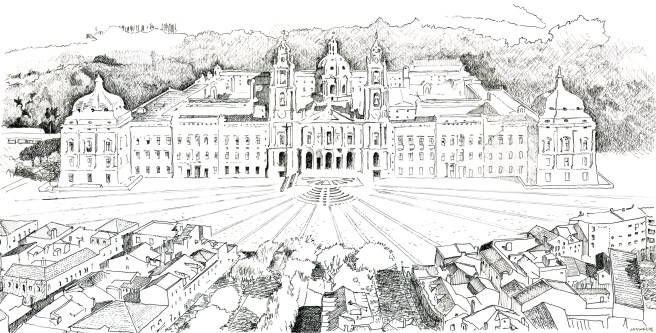
The Mafra Convent, Rui Barreiros Duarte, ink on paper, December 2016.

In 1711, king Dom João V vowed that if he was blessed with a son, he would construct a convent in Mafra. When a son was born in 1714, Dom João V spared no expense to fulfil his promise. By one count, the building has 880 rooms and 4,500 doors and windows. The convent includes a magnificent palace for the royal family and a basilica made of the purest marble, with intricate altars lavishly decorated with gold leaf.

To top it all, the king commissioned a 200-ton carillon. According to legend, when the craftsmen quoted the price of the carillon, they remarked that the cost seemed too dear for a small country like Portugal. Offended, the king replied: “I didn’t realize the bells were so cheap! I would like two sets.”   And so, two sets were made. Nicholas Levach made 57 bells for the North tower in Liége.  Willem Witlockx made 49 bells for the South tower in Antwerp.

The convent has many other bells: liturgical bells used in religious ceremonies, lecture bells that signaled the beginning and end of study periods, agony bells that rang when a monk was dying, refectory bells that reminded monks of their meal times, and the codfish bell that sounded in days when people should abstain from eating meat.

The carillon and some of the other bells were used to mark the passage of time with minuets and other compositions. In a world where musical sounds were rare, the bells of Mafra filled the village with harmony and grace.

Finding happiness in Sintra

Market products

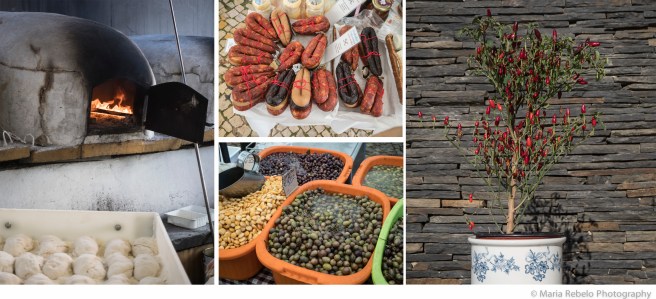
There’s a farmer’s market in São Pedro de Sintra since the 12th century. Nowadays it runs every second and fourth Sundays of each month. It is a great place to buy local fruits and vegetables, artisanal sausages, olives and cheese. Wood-fired ovens bake chouriço bread, filing the air with appetizing aromas.

We saw a farmer selling a small capsicum frutescens tree loaded with little red peppers.  Five centuries ago, Portuguese navigators brought this plant from South America to Africa, where the Bantu people called its fiery pepper “piri piri.” From Africa, the Portuguese took the plant to India where it changed the course of Indian cuisine.

How could we resist bringing home this symbol of the first age of globalization? “Trim the tree in March and you’ll have piri piri peppers between August to January,” advised the genial farmer. We got into the car feeling ecstatic at this unexpected find. Who knew that happiness is a piri piri tree?

The São Pedro market is located on Largo D. Fernando II, São Pedro de Sintra.

Sweet gratitude

Casa do Gato Preto

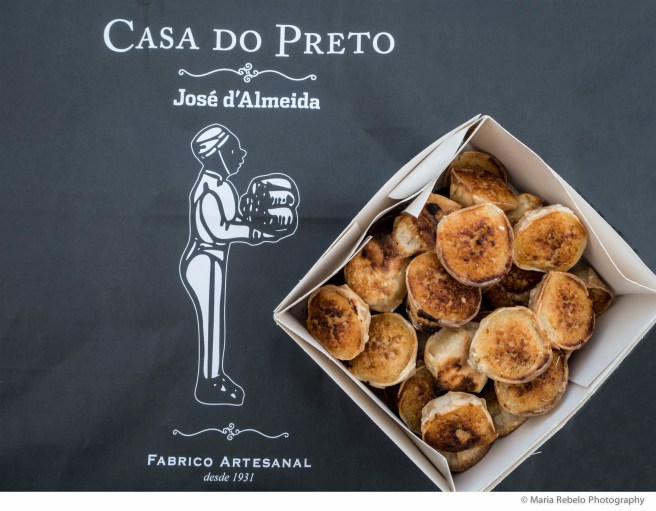
The recipe for Sintra’s queijadas was created in the 13th century by friar João da Anunciação at the Penha Longa convent. We know that the voluptuously thin crust is made with flour, lard, water, and salt. And that the indulgent filling has requeijão (a ricotta-style cheese), egg yolks, and two ingredients added in the 15th century: sugar and cinnamon. Each pastry store in Sintra has its own secret version of the recipe.

What are the best queijadas in Sintra? We’ve been pondering on this question for years, but the answer still eludes us. When we try the queijadas at Piriquita, we think nothing can be better. But then we taste the queijadas from Pastelaria Gregório and we fall in love with the crispness of the shell and the sweetness of the filling. Lately, we went to Casa do Preto and were astonished by the harmonious marriage of filling and shell.

One thing we know: these queijadas lift our minds above everyday concerns and fill our souls with sweet satisfaction. Thank you friar João!

Casa do Preto is located at Estr. Chão de Meninos 40, in Sintra, tel. 21 923 0436.


Óbidos becomes a literary village

Óbidos Bookstores-Edit

It’s not like Óbidos needs any more attractions. This beautiful medieval town is a must-see destination in Portugal. Inside its castle walls live the echoes of an age of chivalry that is long gone.

Now that books are disappearing, their cellular fibers replaced by electric impulses, Óbidos has created unique bookstores in ancient spaces.

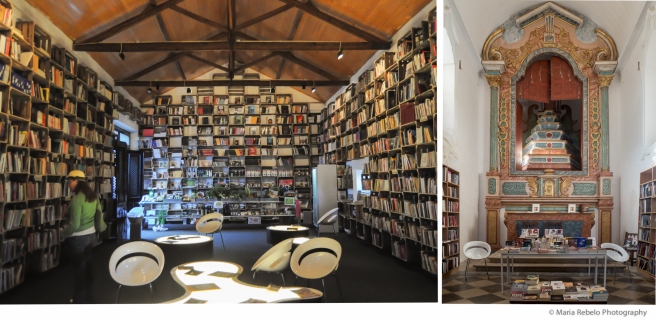
One of our favorites is Livraria do Mercado (the market bookstore). It occupies the wine cellar of an old manor house and doubles as an organic market. Here, the fruits of the land share the space with the fruits of the imagination, everything stored inside one thousand rustic wooden boxes.

Another favorite is Livraria Santiago which occupies a 12th century church. It is a peaceful place where books wait in silence for the readers who seek their blessings.

These bookstores transformed Óbidos into a literary village, a place where the thick castle walls protect the precious art of reading.

Click here to see the list of Óbidos bookstores.


Perfection at Adraga

Composit Adraga.JPG

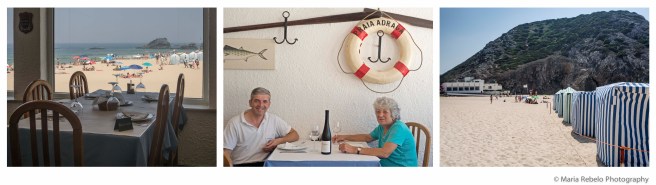
When we were very young, our parents used to take us to an idyllic beach with crystal blue waters and natural rock archways sculpted by the sea. In the end of the afternoon, we often had dinner in a small restaurant right on the beach.  It was simple fare: “percebes” (gooseneck barnacles), grilled fish, and salad. But the flavor and aromas were amazing and so was the spectacle of the sun setting on the ocean. We forgot the name of the beach and that is just as well, for places change and fail to live up to our memories of them.

During a visit to Sintra this summer, we decided to have lunch in the nearby Adraga beach. As soon as we arrived, we realized that this was the beach from our childhood!  There were little kids playing in the same rock archways we once loved and bathing in the same blue waters we so much enjoyed.

We sat at the beachside restaurant and ordered “percebes,” grilled fish, and salad. We kept our expectations low. Surely, the food has changed. Then the seafood and fish arrived, fresh, full of flavor, meticulously prepared. It was as if we were going back in time, to a simplicity and authenticity that are so rare today.

We complimented Jorge Pimenta and his mother Suzette, the restaurant owners, on the quality of their food. They responded with modesty: “Everything we do is simple but we try to do it well.  The percebes were caught this morning right on the beach. The fish is very fresh. All we do is respect the ingredients that the sea brings to us.”

The reasonably-priced wine list has many great choices. But in a restaurant where everything is local, it makes sense to drink the magical wine produced nearby in Casal de Santa Maria by a Russian Baron who is 103 years old.

The same family has owned the Restaurante da Adraga for four generations. In the beginning of the 20th century, queen Dona Amélia used to come here to eat fish while the king hunted in the Sintra mountain. One century later, the Adraga restaurant continues to delight anyone who loves great food, whether or not they have royal blood.

Restaurante da Adraga is located at Praia da Adraga, 143, Sintra, tel. 219280028. Reservations are a must. Ask for a table near the windows facing the beach for a spectacular view.

Sweet temptations in Sintra

OLYMPUS DIGITAL CAMERA
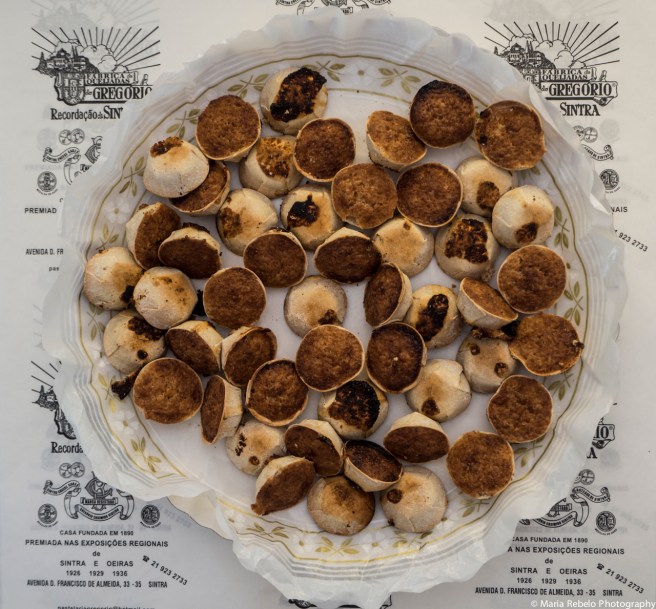
Sintra queijadas from Pastelaria Gregório

The road to Sintra is paved with sweet temptations. We stopped for a coffee at Pastelaria Gregório and couldn’t resist eating one of their travesseiros (pillows). They were still warm, the layers of dough fusing with the rich almond cream. Our palates were so delighted that we asked for a queijada, another classic Sintra pastry. A plate with several miniature queijadas arrived and, although we tried, it was impossible to eat only one.

Gregório Ribeiro started producing and selling these wonderful queijadas in 1890. The business continues to be in the family. Gregório’s great-grandchildren work at the pastry store, making sure that the quality is exceptional, baking the pastries in small batches so that everything is fresh out of the oven.

There was a constant flow of regular customers who came in for their favorite sweet treats: almond tarts, bolos de amor (love cakes), broas de mel (honey cakes), and much more. We asked Teresa Matos, the owner of Pastelaria Gregório, whether they’re always this busy.

“Christmas is our toughest season,” she answered. “Customers love our traditional Bolo Rei (king’s cake) so there’s always a long line outside the store. We know it’s frustrating to wait for so long to buy our cake. But we don’t want to bake the cakes in advance because they lose their freshness.”

“Is the cake really worth the wait?” we asked. “You need to decide for yourself,” said Teresa with a mischievous smile. In December we’ll be waiting in line to find out.

Pastelaria Gregório is located at Av. D. Francisco de Almeida 33/35 in Sintra, tel. 219-232-733.


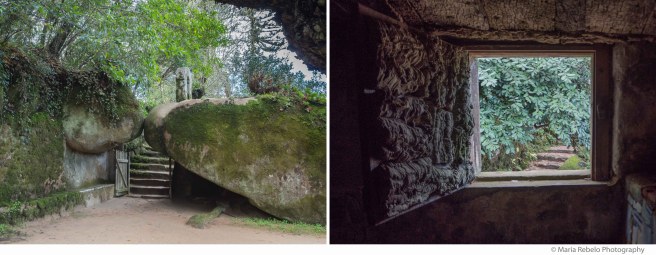
Monserrate: a must-see palace in Sintra

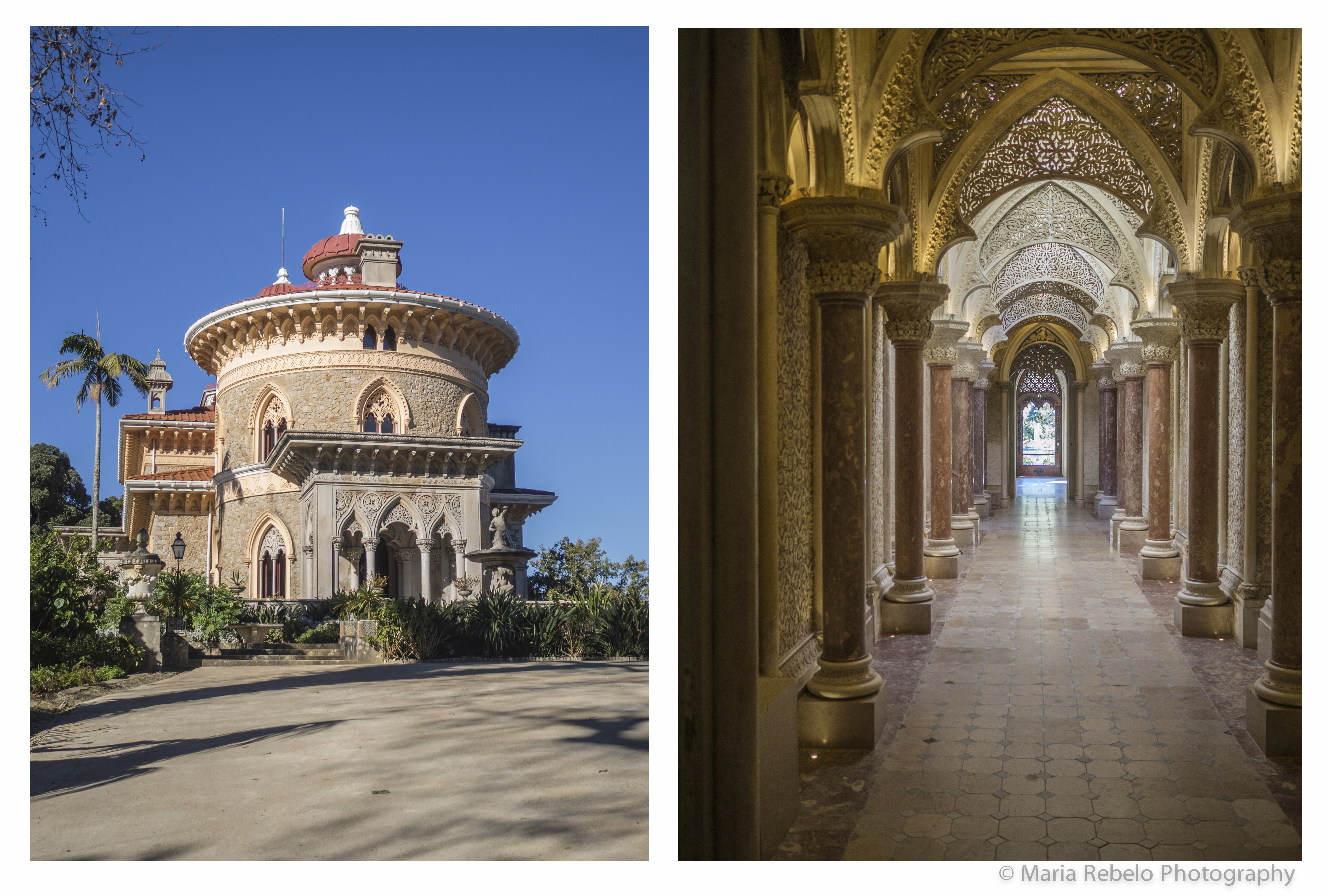
Monserrate - ©mariarebelophotography.comSintra has many romantic palaces but each has something unique to offer. One of our favorites is Monserrate, a palace surrounded by luscious gardens built in 1856 by Francis Cook, a famous British art collector.

When the Portuguese government bought the estate in 1949, the palace was in disrepair. The costly restoration work started in 1999 and only finished recently. It was worth the wait. We now have the privilege of seeing how the palace looked when the Danish writer Hans Christian Andersen visited it in 1866. Here’s what he wrote:

“Large white bell-flowers hang from one tree; pearl-shaped, rose-colored berries from another, juicy fruits and sun-filled colored flowers grew here. Down over the smooth velvet lawn rippled the clear spring water. Above this fresh green, the castle rose in Moorish style, a fit subject for the Arabian Nights or a romantic fairy picture. The sun sank into the sea, which became rose-colored; the brightness of the sea and sky was reflected magically upon the marble white walls and decorations, filling with light the large mirror-clear window panes. The air was so warm, so still, so penetrated with the perfume of flowers, that one felt carried away from reality.”

The Óbidos Pousada


Obidos Composit The first king of Portugal, Dom Afonso Henriques, laid siege to the Óbidos castle for two months, but the moorish population resisted his attack. One moonless night, a beautiful lady came down from the castle to speak to the king. She told him that, even though she lived in the castle, she was not moorish. And that she had a recurrent dream she had to fulfill. The king was to attack the castle’s main door. At the same time, he would send a small group of soldiers to the back. There, the lady would leave an open door to let them in. Their surprise attach would secure the victory of the Portuguese troops.

The king of Portugal feared falling into a trap. But something about the lady’s demeanor convinced him to adopt her plan. The next day, the castle back door was indeed open and the Portuguese conquered Óbidos. The king looked everywhere for the beautiful lady, but she had vanished.

The castle of Óbidos was converted into a beautiful historical hotel. After entering though the front door, the one the king attacked, you find a romantic place with wonderful views of the countryside. One of the best views is just outside a door painted red. It is the door the lady left open.

In the dining room two beautiful windows, the sun and moon windows, give us a choice between seeing the sunset and the moonrise. This choice between astral spectacles is one of the many enchanting details that makes a stay at the pousada so memorable.

The pousada is the perfect place to stay at Óbidos. After all, who wouldn’t want to be treated like royalty in a medieval town?

Click here for the Pousadas’ website and here for more photos of the Óbidos Pousada.

The Seteais palace

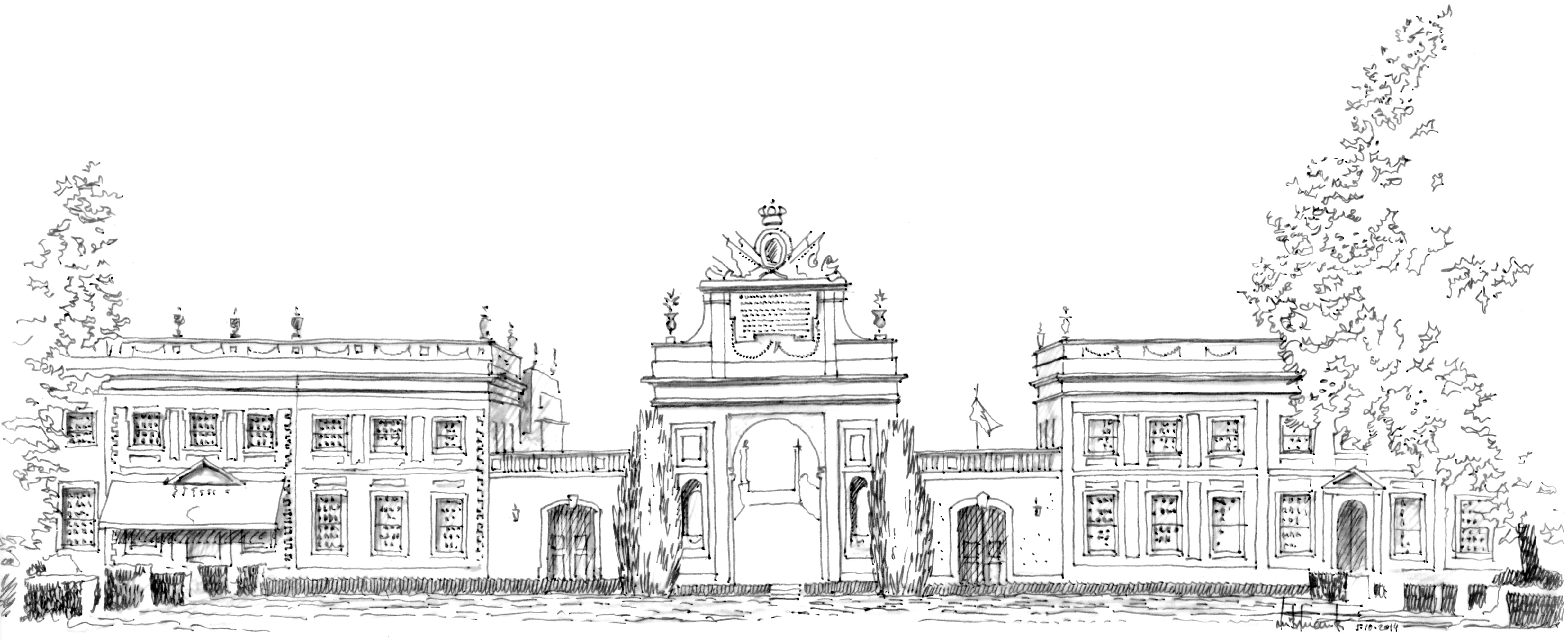
The Seteais Palace, Rui Barreiros Duarte, ink on paper, 2014.

Seteais means seven sighs, a name inspired, according to legend, by the romance between a Portuguese noble and a Moorish princess.

The Seteais palace was built in Sintra in 1787 by the Dutch consul and later sold to the wealthy Marquis of Marialva.

In 1954, the palace was converted into a luxury hotel. Booking a room at Seteais guarantees you’ll have a memorable experience. If you don’t stay at the hotel, you can still experience its unique atmosphere by visiting the elegant bar for a glass of white port before dinner.

In 1802, the Marquis of Marialva invited the Prince Regent, John IV and his wife for a visit. To celebrate the occasion, the Marquis built an archway decorated with busts of the royals. A Latin inscription praises the prince for his wisdom and prudence. No one could guess that five years later the Portuguese royal family would flee to Brazil to escape Napoleon’s troops.

The echoes of these twists and turns of Portuguese history have long faded. What remains, is one of the most romantic places in the world.

 Click here to see the Seteais Palace website.

Wild life in Mafra

TapadaMafra2

When the Portuguese kings and queens stayed at the Mafra Palace, they enjoyed hunting at a local game reserve called Tapada de Mafra. The Tapada is now a national park that offers many fun activities for kids. There are train rides, donkey rides, archery lessons, and falconry demonstrations. You can see deer, wild boar, foxes, and other animals in their natural habitat.

Our favorite activity at Tapada is taking horse-ridding lessons. A 30-minute lesson costs only 5 euros. But riding an elegant horse in the beautiful Tapada grounds, always makes us feel like royalty.

Click here for the Tapada’s web site. Mafra is an easy 40 km drive from Lisbon on the A8 highway. Horse-ridding lessons are offered between 9:30 am and 12:00 pm. It is a good idea to call in advance to make reservations (Tel. 261 81 4240 or reservas@tapadademafra.pt).