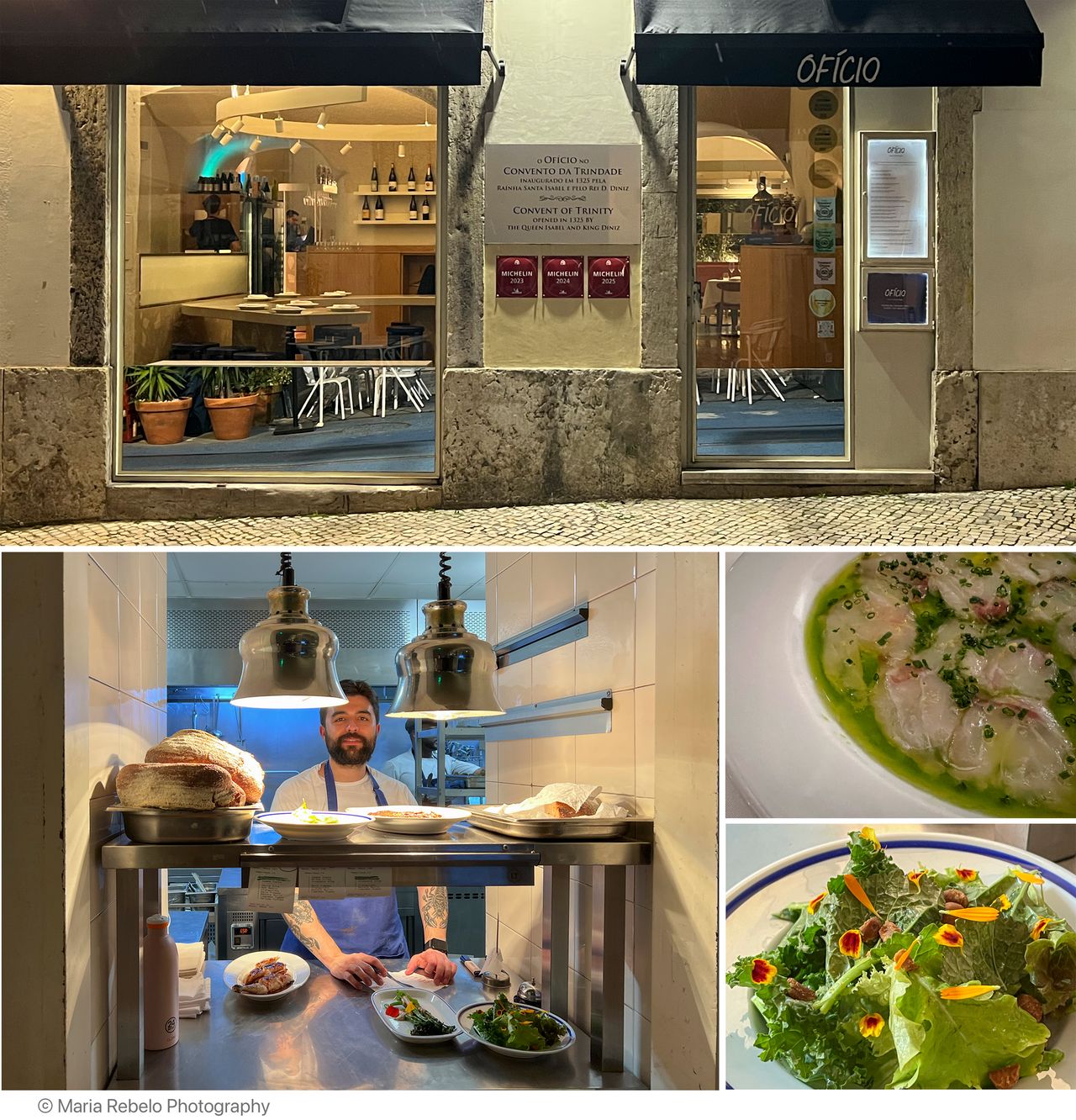
Winter refused to leave, filling Lisbon’s streets with cold wind and a persistent drizzle. Stepping into Ofício, a restaurant near Chiado, felt like a welcome reprieve. Stevie Wonder’s voice filled the dining room, while a soft light washed over the white walls and tables, creating a sense of warmth.
Ofício’s seasonal menu revisits Portuguese classics through a contemporary lens, with a subtle Japanese influence. The restaurant is now led by chef Maurício Varela, a native of Aveiro who trained in fine-dining kitchens across Brazil and Spain. At Ofício, he is not chasing stars, but something more lasting: a place guests return to for comfort food prepared with care and excellent ingredients.
The service was gracious and efficient. We began with two Japanese-inspired appetizers: a delicate horse mackerel tartare on a shiso leaf, and a sea bream tartare, lightly dressed with chive oil and citrus. The meal then turned to Portuguese tradition, with a dish from the Algarve: milhos fritos (fried polenta), served with stewed turnip greens and cheese from São Jorge Island.
For the main course, we sampled two dishes. The first was smoked skate, enriched with lobster butter and a celery ragù. The second was a hearty codfish rice.
Dessert featured a trio of cheeses, the highlight a creamy goat cheese made by João Prata in Maçussa.
We left ready to face winter’s last outburst, already planning to return in spring.
Ofício is located at Rua Nova da Trindade 11, Lisbon, click here for their website.
The Romans called it Felicitas Julia, a city so blessed it deserved Julius Caesar’s protection. Those blessings endure: a mild climate, a deep river that flows serenely to the sea, a natural harbor that shelters ships from Atlantic storms, and hills that reach for the sky.
In 1620, Friar Nicolau de Oliveira wrote that Lisbon, like Rome, has seven hills. In truth, there are only three major elevations: the castle hill, Graça, and Bairro Alto. But in spirit, he was right: the streets rise and fall so much that, in the early 20th century, trams and elevators were built to help residents get around.
First Day
Begin your visit at St. George’s Castle. In the twelfth century, most of Lisbon lay within its walls. Below lies Alfama, whose Arabic name survived the city’s conquest by Portugal’s first king, Dom Afonso Henriques, in 1147. According to legend, a knight called Martim Moniz sacrificed his life, wedging his body in the castle gate so his fellow soldiers could break through. A square at the foot of the hill bears his name.
By the eighteenth century, Alfama was a poor neighborhood. The wealthy had relocated to Baixa, Bairro Alto, and Chiado. The 1755 earthquake devastated much of Lisbon but spared Alfama, a survival some interpreted as divine justice.
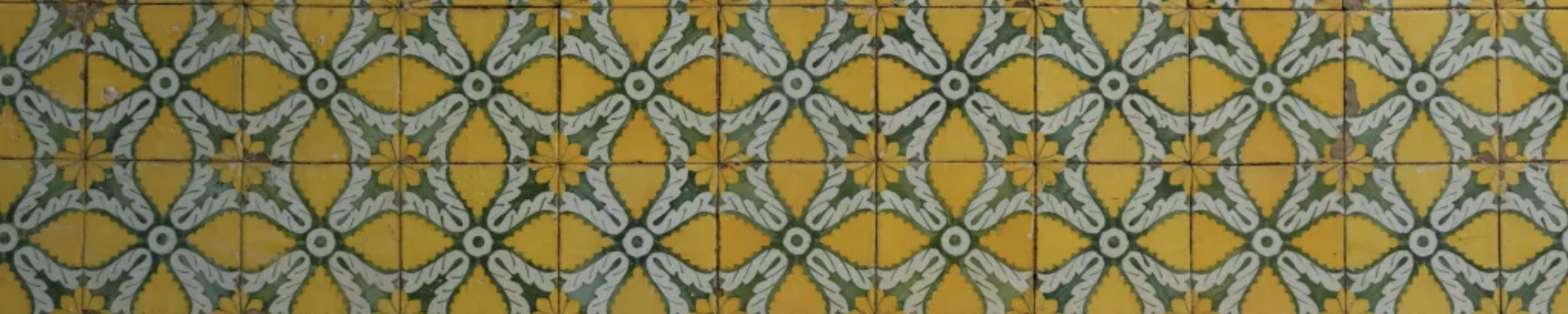
It is easy to get lost in Alfama’s winding streets lined with cobblestones, tile facades, and marble thresholds. A simple rule will help you find your way: uphill leads to the castle, downhill to the city center.
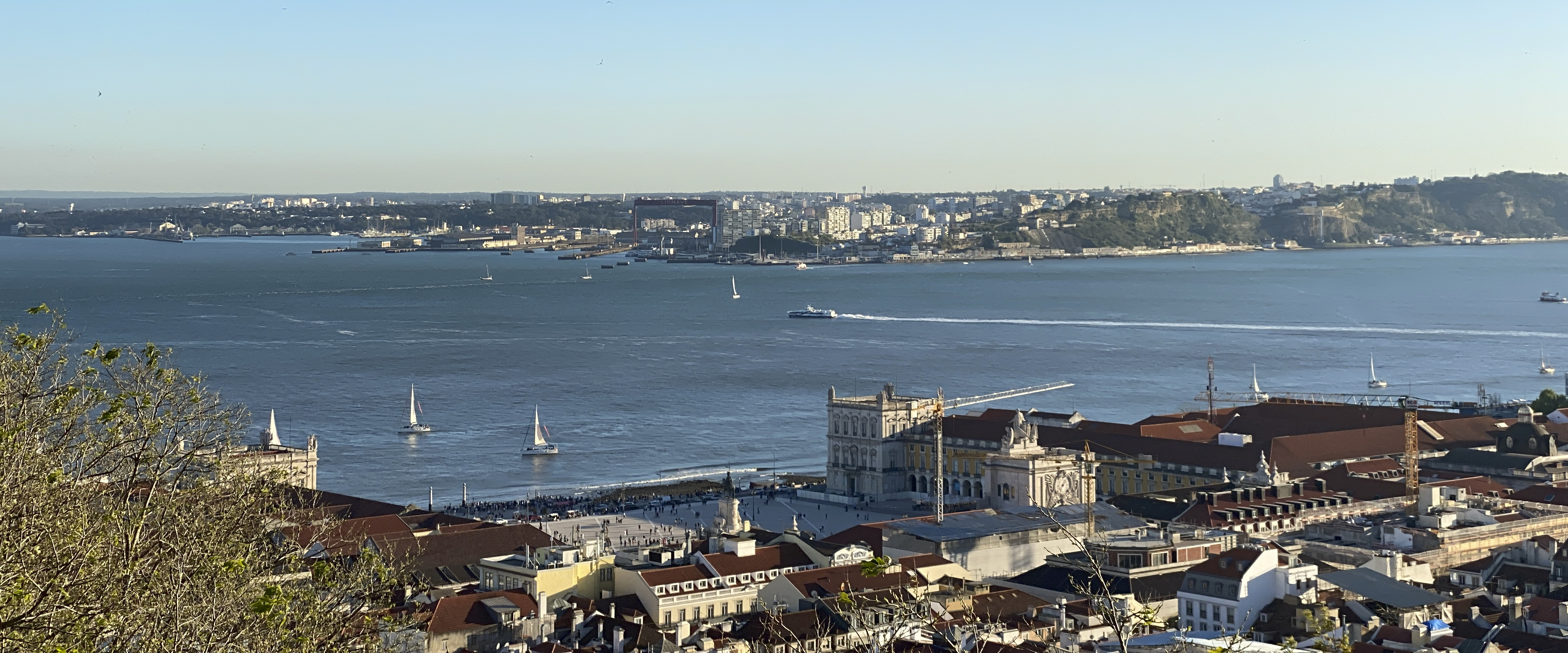
From the castle walls, the Tagus River dominates the horizon. Below lies Terreiro do Paço, the courtyard of the royal palace destroyed by the earthquake. Squint and you might imagine Baroque carriages arriving with courtiers seeking the king’s favor.
For a leisurely lunch, walk toward the Pantheon, a monumental church whose construction spanned more than three centuries. Nearby, Solo, inside the Santa Clara 1738 hotel, offers refined Portuguese cuisine made with the finest ingredients and served in an elegant setting.
After lunch, continue to Terreiro do Paço. At the river’s edge stands Cais das Colunas, the dock marked by two marble pillars where visitors once arrived by ship. Before air travel, this was Lisbon’s grand entrance. In the center of the square, the equestrian statue of King Dom José I greets you.
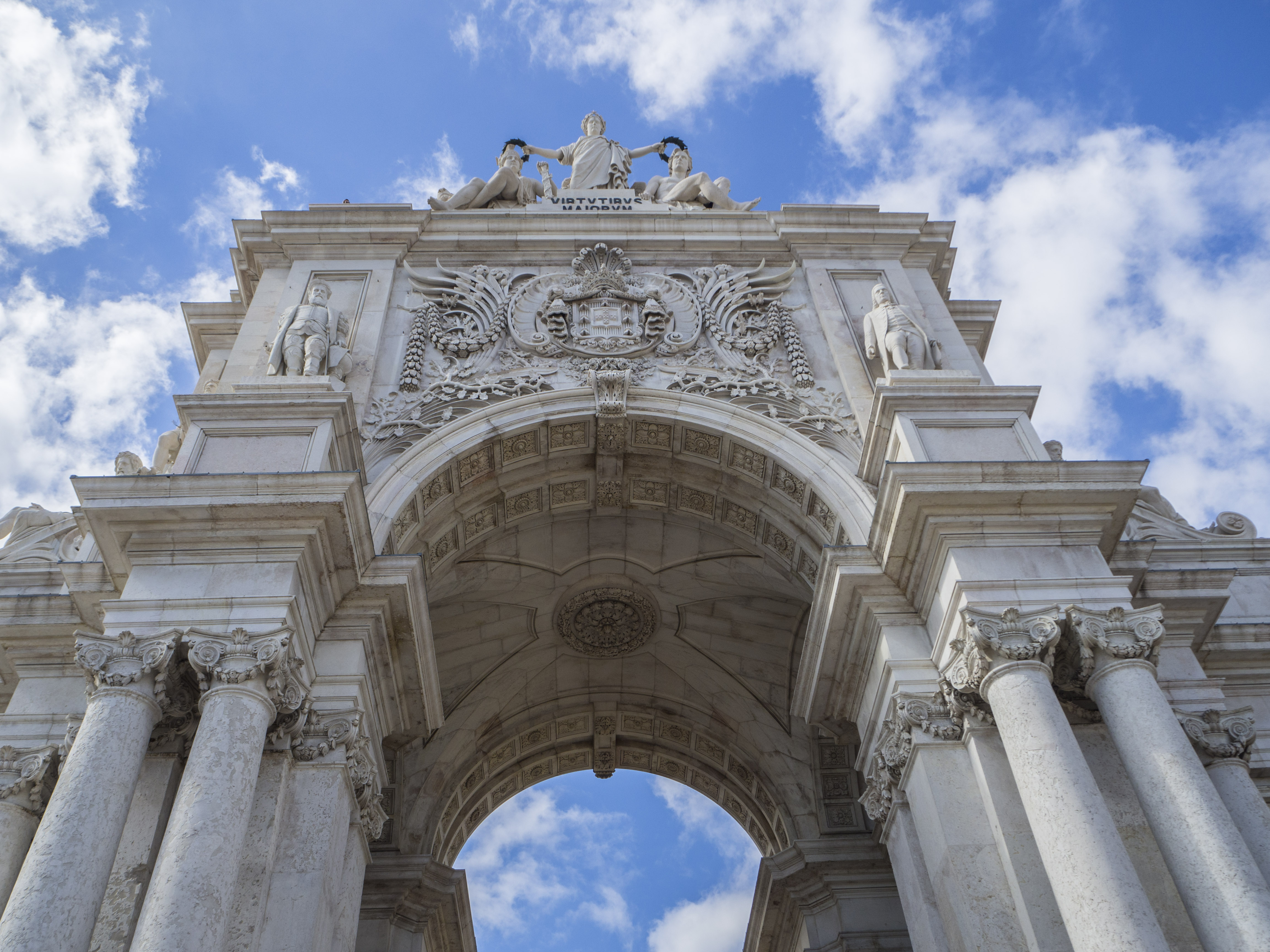
Walk toward the triumphal arch at the entrance of Augusta Street, named for one of the king’s daughters. You can take an elevator to the top for superb views. To the west stretches the Tagus River; to the east lies the orderly grid of the Baixa district, built after the earthquake under the direction of the king’s prime minister, the Marquis of Pombal.
The streets were organized by trade. In Rua do Ouro and Rua da Prata (Gold and Silver Streets), jewelers worked the precious metals arriving from Brazil. Merchants on Rua dos Fanqueiros sold woolen cloth, while Rua dos Correeiros specialized in leather equipment for horses and carriages.
From there, walk to Rossio. On the way, stop at Largo de São Domingos to savor a glass of ginjinha, the sweet cherry liqueur beloved by poet Fernando Pessoa.
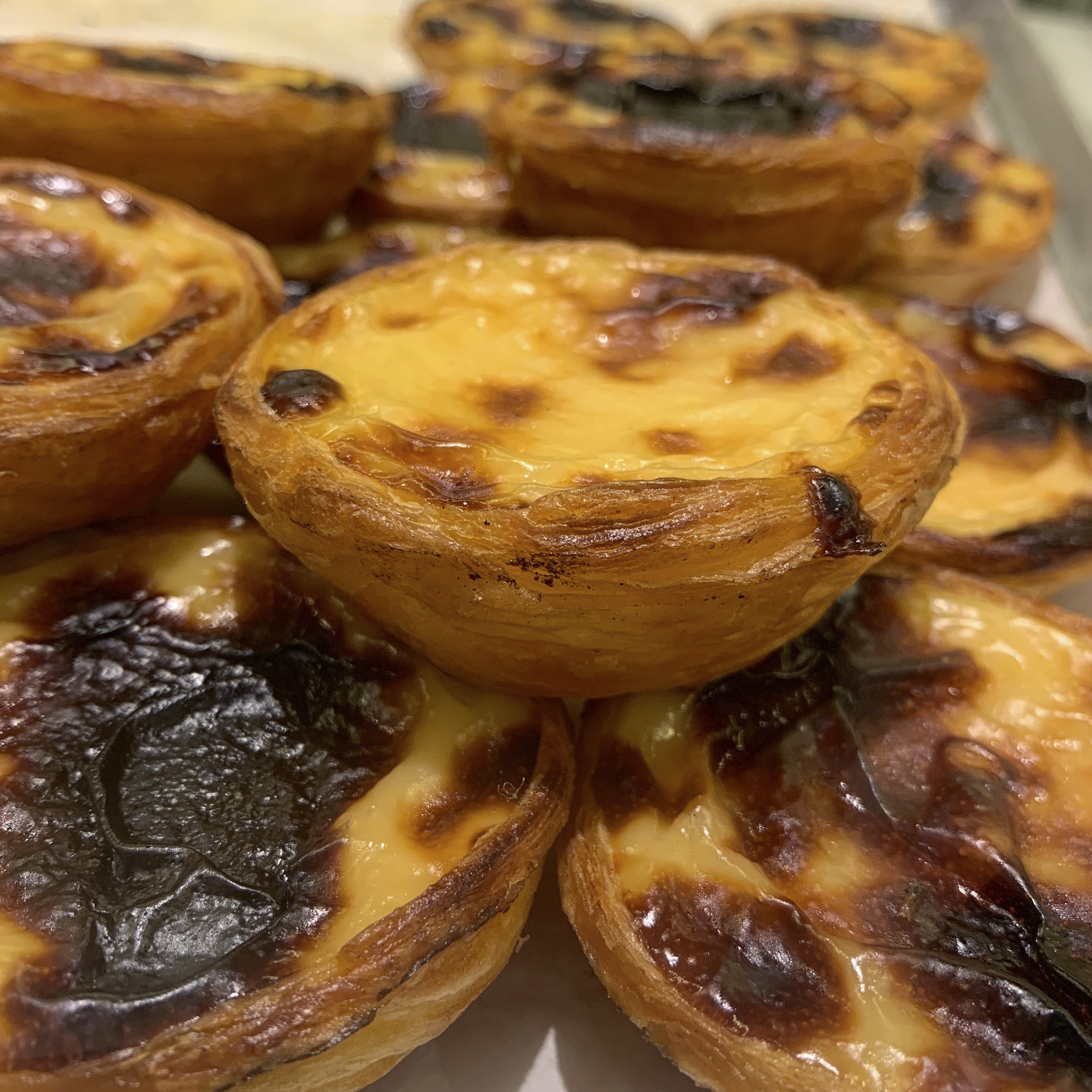
Next, climb to Chiado for a pastel de nata at Manteigaria, where the crust is perfectly crisp and the custard delicately perfumed with lemon. Eat only one. Then cross to the Hotel do Bairro Alto terrace for a second. Try not to let the sweeping view cloud your judgment: which pastry wins your favor? The terrace is a wonderful place to rest before dinner. We include a list of restaurant suggestions below.
After dark, nothing expresses Lisbon’s soul like fado. Dressed in black, singers are accompanied by classical and Portuguese guitars, the latter a 12-string instrument with a distinctive mournful sound. Out of respect for the music, the audience is asked to remain silent. The singers’ voices hover between notes, producing pitches that a piano cannot play. They slow or quicken the tempo, confident that the musicians will follow. We are especially fond of the young fadista Beatriz Felício. If she is performing, don’t miss her.
Second day
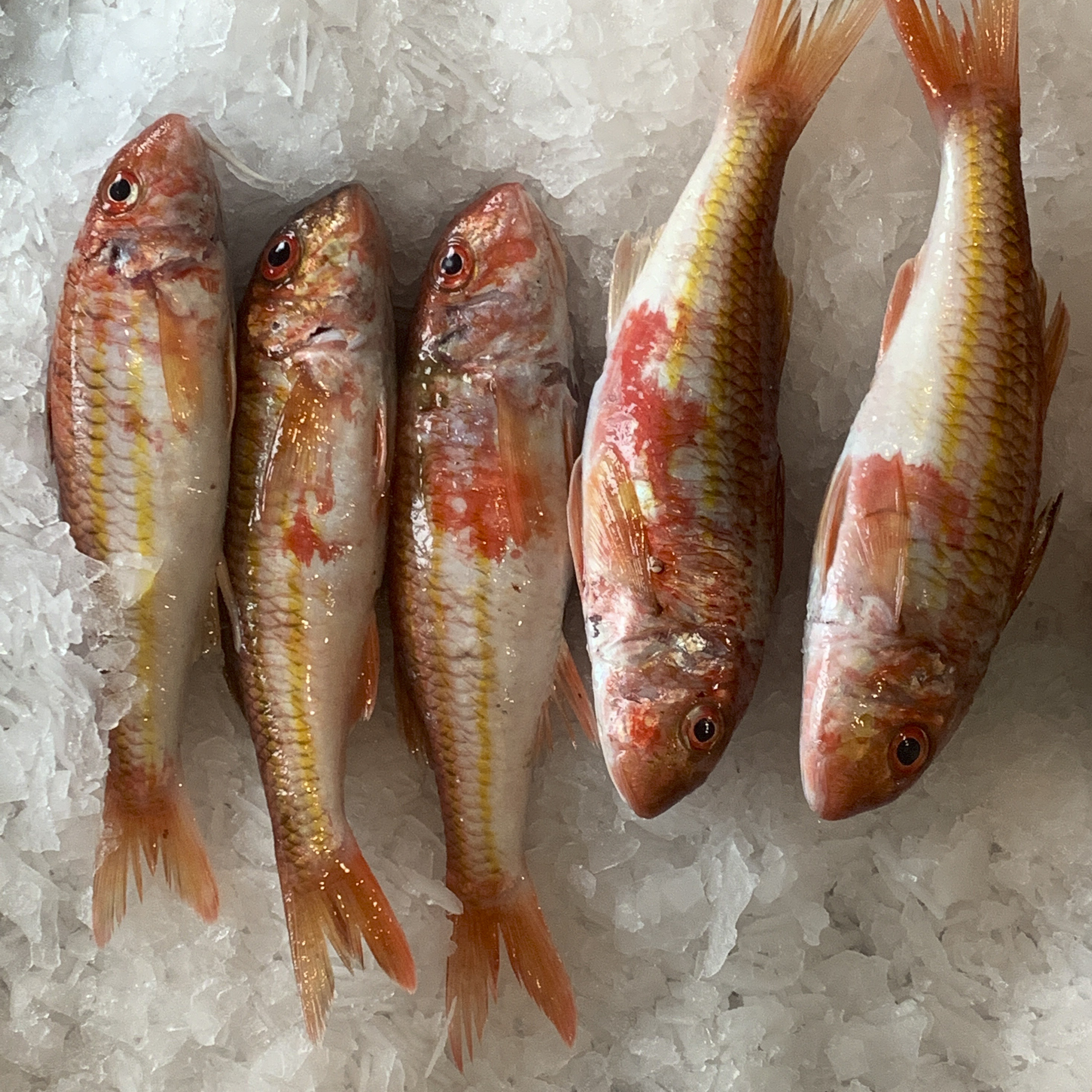
Start the day at the Time Out market. Many come for a quick meal, but you’re here to visit the adjacent farmers’ market. Browse the seasonal fruits and vegetables on display, then stop by the fish stall, which showcases some of the world’s freshest fish.
If you need refreshment, Bar da Odete offers a wonderful range of wines by the glass, curated by enologist Frederico Vilar Gomes. You can buy some of these wines at Garrafeira Nacional, a shop inside the market.
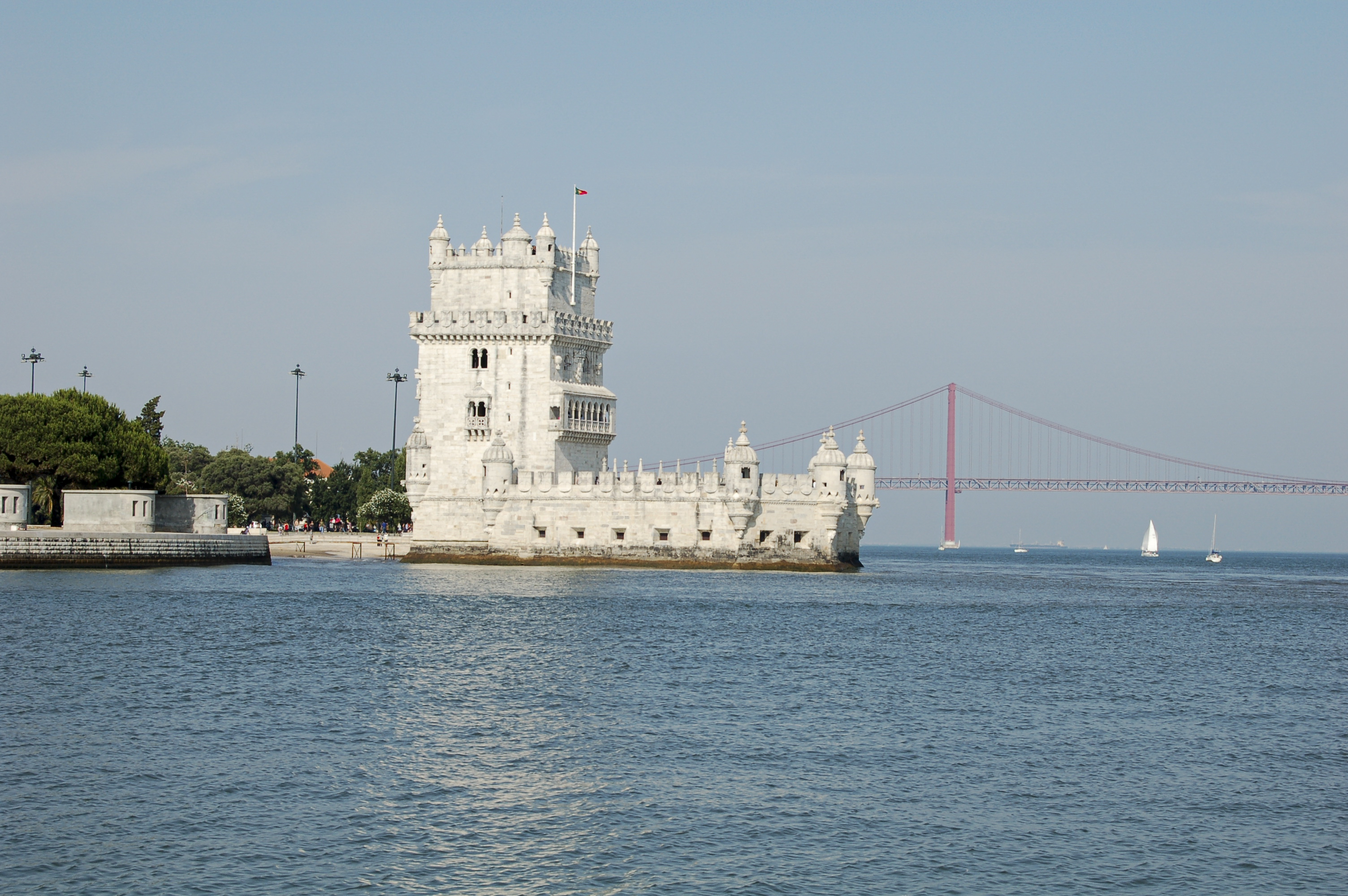
Continue toward Belém to visit the Belém Tower, an ornate fortress built to defend Lisbon from pirates, yet making the city even more alluring. Before the 1755 earthquake, the tower stood in the middle of the river rather than near the shore.
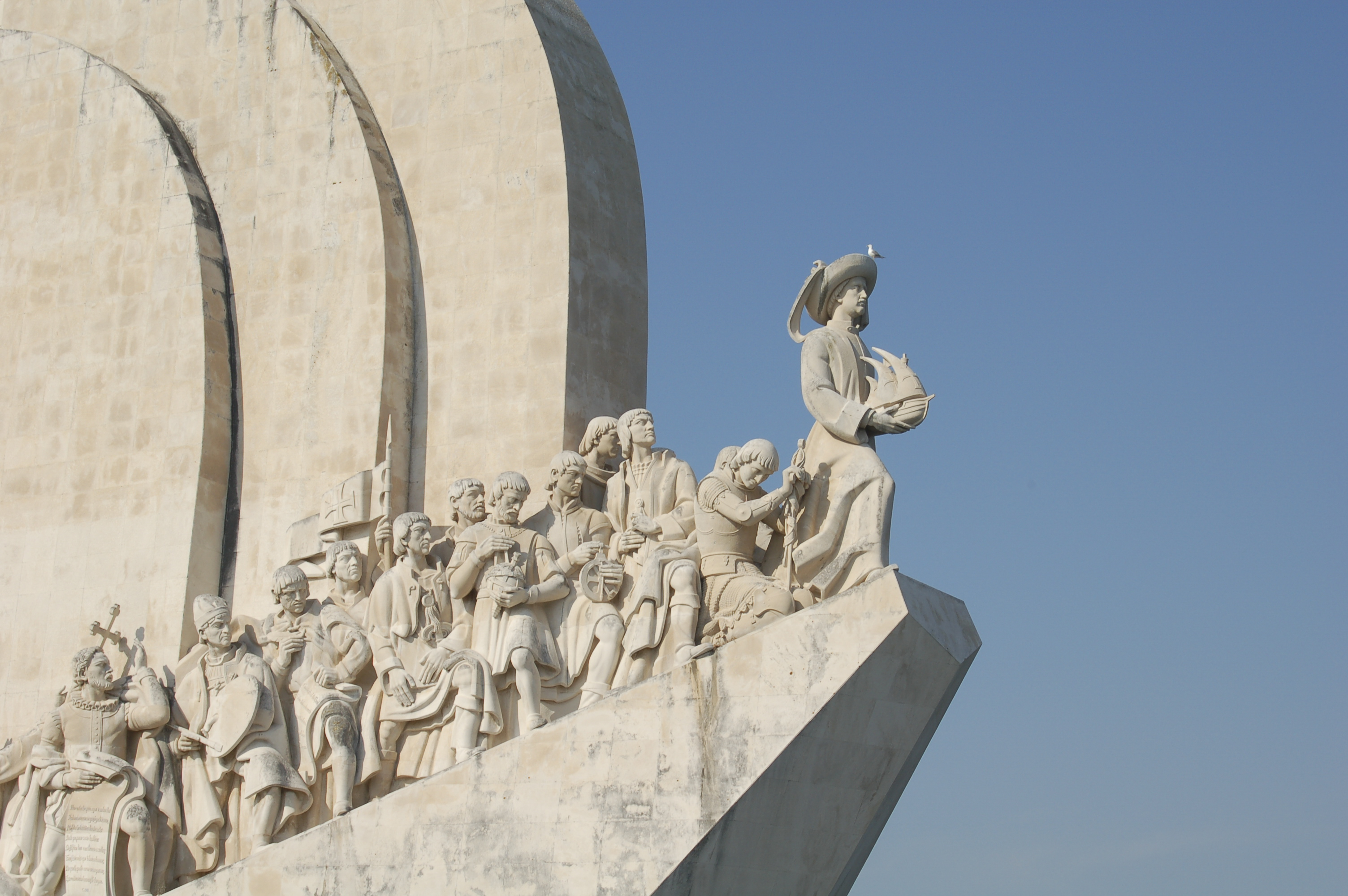
To the south stands the Monument to the Discoveries, a procession of stone figures led by Prince Henry the Navigator. Beginning in the 1420s, Portuguese sailors departed from Restelo into the unknown in ships called caravels, which, for the first time, could tack to sail against the wind.
In his epic poem Os Lusíadas, Luís Vaz de Camões imagines an old man on the shore warning that the quest for glory would bring suffering rather than triumph. In material terms, the discoveries were an extraordinary success. Vasco da Gama reached India, opening a sea route for the spice trade. Cabral reached Brazil, and ships soon returned to Lisbon laden first with brazilwood and, later, with gold. Yet these riches came at a terrible human cost. Many sailors perished in shipwrecks or from diseases, especially scurvy, caused by months at sea without fresh provisions, living on little more than hard biscuit.
Just to the east rises the magnificent Jerónimos Monastery, built with the wealth of the maritime empire. Its Manueline architecture blends late Gothic style with nautical motifs. Inside are the tombs of kings and queens, as well as Vasco da Gama and Luís Vaz de Camões.
To the north is the Cultural Center of Belém, a modern art complex built from stone from the same quarry as the monastery. Its concerts and exhibitions are worth checking out.
If you crave grilled fish, the modest O Último Porto, open only for lunch and patronized mostly by locals, serves fresh fish grilled to perfection. Robalo is always a great choice, and the mullets are divine.
Skip dessert. You must return to Belém for the city’s most famous custard, the Pastel de Belém. The bakery has produced them since 1837, using a secret recipe shared by monks after the dissolution of the religious orders in 1834. Enjoy one warm pastry dusted with cinnamon, a fragrant echo of the spice trade that enriched Portugal. Now that you have tasted the city’s most celebrated pasteis de nata, which is your favorite?
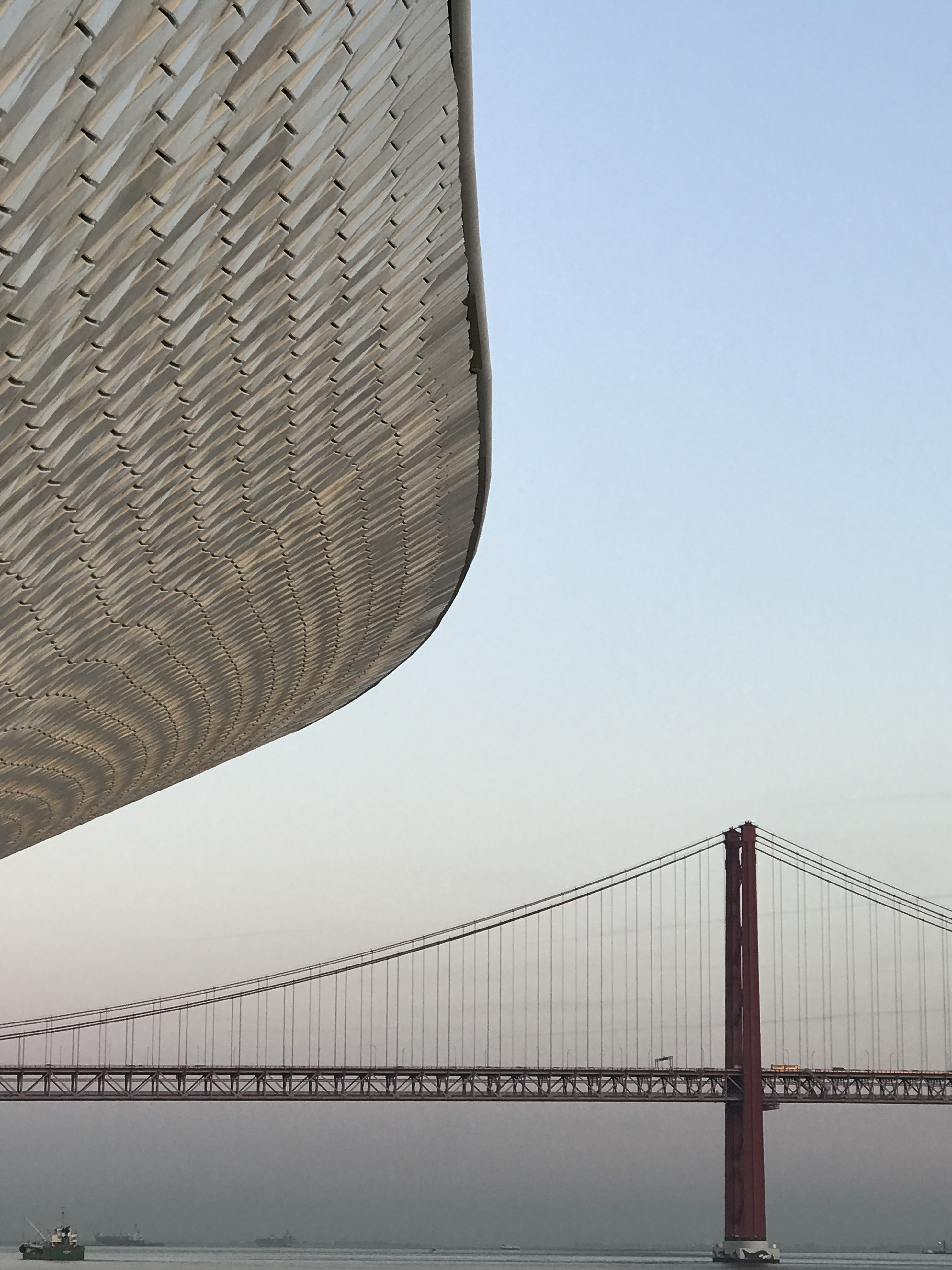
End the day at MAAT, the Museum of Art, Architecture and Technology. It offers interesting exhibitions and a roof that is one of the finest places to watch the sunset in Lisbon. As the sun sinks into the Atlantic, Lisbon’s hills glow amber, the color of the gold that once made it rich.
Here are some practical suggestions
Where to stay
Our favorite place to stay in Lisbon is Santa Clara 1728, a small hotel that exudes tranquility and elegance. It is part of Silent Living, a unique collection of hotels designed to help guests reconnect with place and nature.
The Pestana Palace, built around an early-20th-century palace, is another favorite. Set away from the center and surrounded by gardens, it offers a peaceful respite from the city’s bustle.
The Ritz Four Seasons is a mid-century modern landmark that provides classic old-world luxury.
Hotel do Bairro Alto, in the heart of Chiado, combines a central location with excellent service.
Where to eat
Not long ago, one could walk into almost any restaurant and enjoy an honest, modestly priced meal of local food and wine. Today, many restaurants cater primarily to tourists. To taste authentic cuisine, you need guidance, but rest assured, we’re here to provide it.
Lisbon’s fine-dining scene is vibrant. Belcanto, led by José Avillez, has elevated Portuguese cuisine while staying true to its roots. His recent book on Portuguese cuisine makes a wonderful gift for a gourmet friend. Marlene, by chef Marlene Vieira, reinterprets tradition with imagination and finesse. Loco, led by chef Alexandre Silva, offers exuberantly creative dishes made with local ingredients.
Beyond the Michelin constellation, many excellent restaurants await discovery. We mentioned two of our favorites in the main text. Solo offers a lunch menu where each dish is crafted from pristine organic ingredients sourced from Casa no Tempo. Último Porto is a rustic restaurant known for perfectly grilled fish.
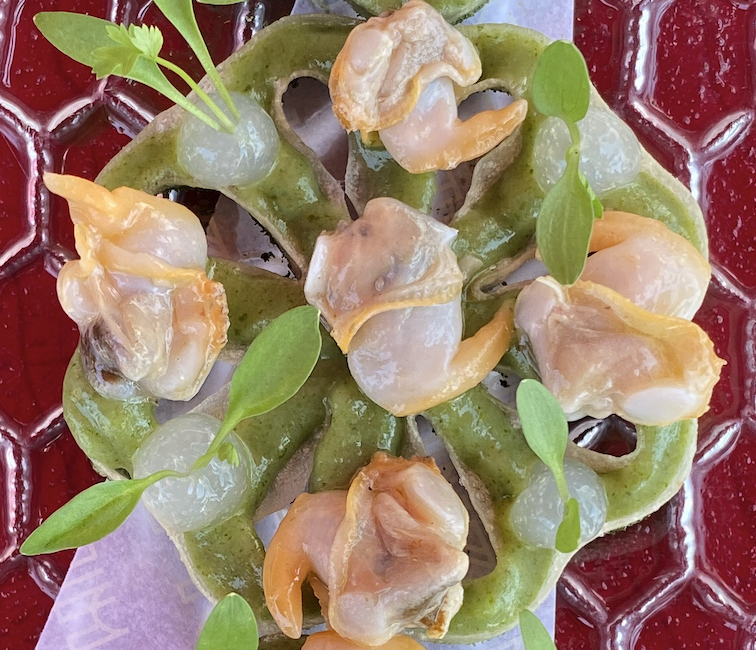
Zun Zum, Marlene Vieira’s bistro, showcases superb Portuguese ingredients prepared with inventiveness. Try their signature dish: “filhoses de berbigão,” large cockles served on star-shaped fried dough filled with a cream made from cockle broth, coriander, and lemon.
For seafood, Cervejaria Ramiro remains our top choice. It is noisy and crowded, but it is worth it. Reservations are not accepted, so arrive early. Do not miss the clams à Bulhão Pato, a classic of Portuguese cuisine.
Tasca da Esquina, by Vítor Sobral, consistently serves excellent interpretations of traditional dishes.
Canalha offers impeccable seasonal ingredients, prepared with precision. This acclaimed bistro is led by chef João Rodrigues, who left his Michelin stars behind to cook simple, deeply satisfying food.
Casa Tradição offers inventive takes on classic recipes by Samuel Mota, a chef who trained at Belcanto.
Our favorite vegetarian restaurant is Touta, led by Lebanese chef Cynthia Bitar.
For wine lovers, we recommend a visit to Quinta de Chocapalha, a superb producer near Lisbon.
Museums
The Calouste Gulbenkian Museum has one of the world’s finest private art collections, reflecting the founder’s motto: “only the best.” A visit is a journey spanning 5,000 years of human creativity. Among the collection’s highlights is Almada Negreiros’ portrait of the poet Fernando Pessoa.
Two major museums are currently closed for renovations. The Museu Nacional de Arte Antiga preserves Portugal’s most important collection of paintings, sculptures, and decorative arts. Housed in a former convent, Museu Nacional do Azulejo offers a collection of five centuries of Portuguese tile art, including a breathtaking panoramic panel of the city before the 1755 earthquake.
Shopping
We love Vista Alegre, a company that has produced beautiful porcelain since 1824. Its stores are spread throughout the city, with the most iconic located in Chiado. Nearby is Cutipol, a producer of elegant cutlery.
A Vida Portuguesa offers a carefully curated selection of artisanal products made with exceptional craftsmanship.
Reverso is a jewelry gallery featuring whimsical, elegant modern pieces.
Activities for kids
A visit to Lisbon’s outstanding Oceanarium is a perfect activity not only for kids but for anyone interested in the mysteries of the ocean and the protection of marine ecosystems.
Cruising the Tagus River aboard Santa Fé, a beautifully restored vintage boat, is one of the best ways to see the city.
Jezzus is a great place for pizza, a meal that kids are likely to enjoy.
Day trips
There are several historical towns on the outskirts of Lisbon that are well worth visiting. Sintra, once the summer residence of the Portuguese kings, is a fairy-tale village crowned by a Moorish castle and dotted with several enchanting palaces. Queluz offers a graceful palace with elegant gardens inspired by Versailles.
Mafra stands on a grander scale. This vast convent, built with the wealth of Portugal’s maritime empire, houses one of the world’s most beautiful libraries. The convent’s construction inspired José Saramago’s celebrated novel Baltasar and Blimunda, published in 1982—a book that will enrich any visit to Mafra.
And then there is Óbidos, a perfectly preserved medieval town, offered by King Dom Dinis to his bride, Isabel of Aragon.
Dining at Ceia is always a singular experience, but even more so when shared with the legendary Brazilian chef Alex Atala, seated humbly among the guests as if he were a mere mortal.
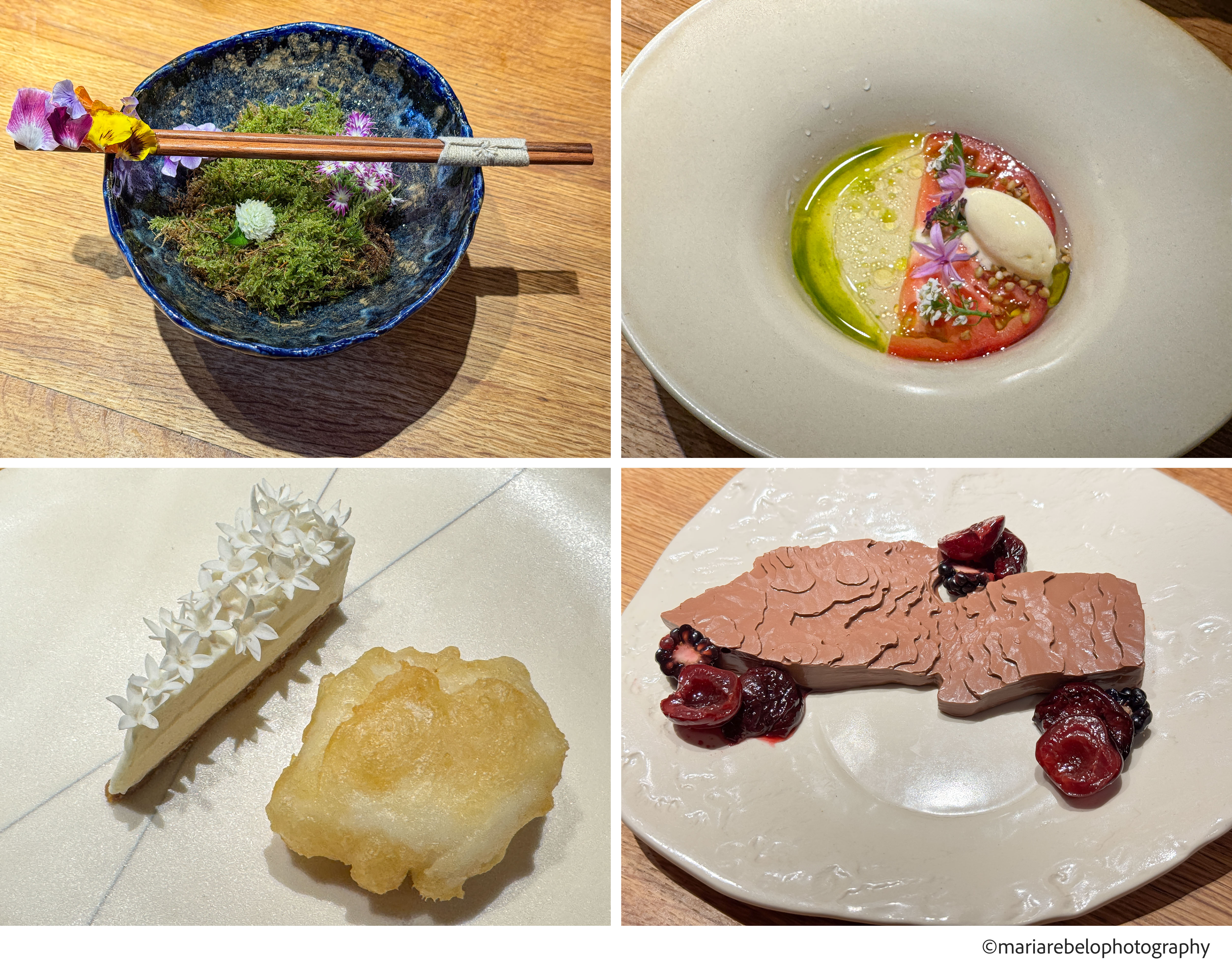
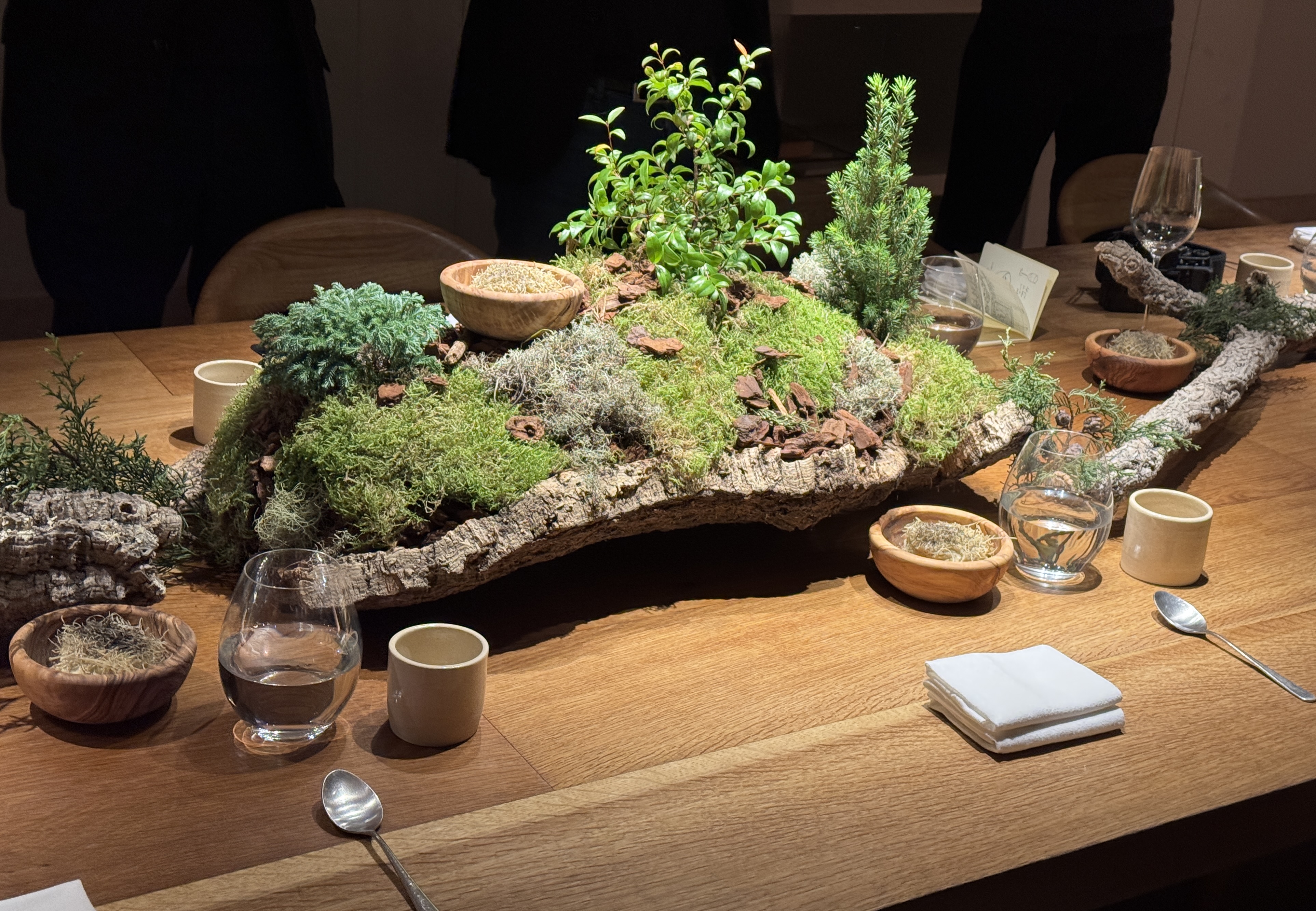
Lisbon’s most elegant table was adorned with the bark of a cork tree, harvested on the thirtieth anniversary of its growth. Draped in moss, mushrooms, and delicate flowers, it set the stage for a menu designed by chef Renato Bonfim and inspired by Hieronymus Bosch’s Garden of Earthly Delights.
The meal began with a whisper—an ethereal broth of ginger and algae, offering no hint of the wonders to come. A bowl soon appeared, strewn with moss and topped with chopsticks decorated with flowers. Nestled beneath the blossoms was a sublime tartare of carabineiros, the crimson prawns of the Algarve. “I was trained as a Bocusian,” Atala said, referring to Paul Bocuse, the patriarch of nouvelle cuisine. “I expect the food to be on the plate, but here, the food is beyond the plate.” A joyful Blanc de Noirs from Bairrada, fittingly named Dinamite, kept us good company.
Then came Water: a delicious composition of tomato, coriander oil, and a sorbet of toasted bread and garlic. Kristin Liebold, the gracious maître d’, poured glasses of Tepache she had crafted herself—a lightly fermented pineapple elixir that brightened the palate.
Another delight soon followed: slices of savory garlic cheesecake, adorned with white blossoms, served with perfectly fried hake from the Azores. The fish was prepared in a traditional style: marinated in milk, lemon, salt, and pepper, then delicately fried in tempura batter.
Atala reflected on how his time in Italy had taught him the importance of simplicity and repetition in dishes like fried fish. “Every Sunday, the mother cooks for the family,” he said, “but when the nonna (grandmother) prepares the same dish, it becomes a feast. The ingredients don’t change—but the nonna brings a deeper understanding, born of repetition and a lifetime of attention to detail.”
An exquisite wine, whimsically called Viagem ao Princípio do Mundo (journey to the beginning of the world), filled our glasses. It is made with Alvarinho grapes grown in Melgaço and aged in sherry casks.
We were then invited into the garden, where, under flickering candlelight, oysters from Setúbal arrived dressed in spinach and algae, gently cooked in a Bulhão Pato style. Atala spoke about the importance of authenticity and of how this dish marries local ingredients and time-honored techniques with a sense of modernity.
Back in the dining room, the next course arrived: cordyceps mushrooms cleverly disguised as pasta. They were glazed in aged balsamic and served with a warm, buttery brioche, the perfect partner to their umami taste. A luminous white wine from António Madeira in the Dão lent the moment a festive air.
The final savory dish was a richly flavored wild boar terrine, served with oven-cooked rice and bread made from roasted quiabos (okra).
Dessert began with a leche de tigre jelly, adorned with nasturtiums and elderflower. Then came a mousse sculpted in the shape of Silent Living’s Herdade no Tempo, the estate that supplied much of the pristine produce featured throughout the meal. The mousse was encircled by an orchestra of cherries: fresh, roasted, and infused with lemon.
A 2000 vintage Port crowned an unforgettable meal that Renato Bonfim and his youthful brigade cooked for Alex Atala, a philosopher-chef who sees food in its fullness: as ingredient and craft, as joy and communion.
Ceia is located at Campo de Santa Clara, 128. Lisbon. Click here for the restaurant’s website.
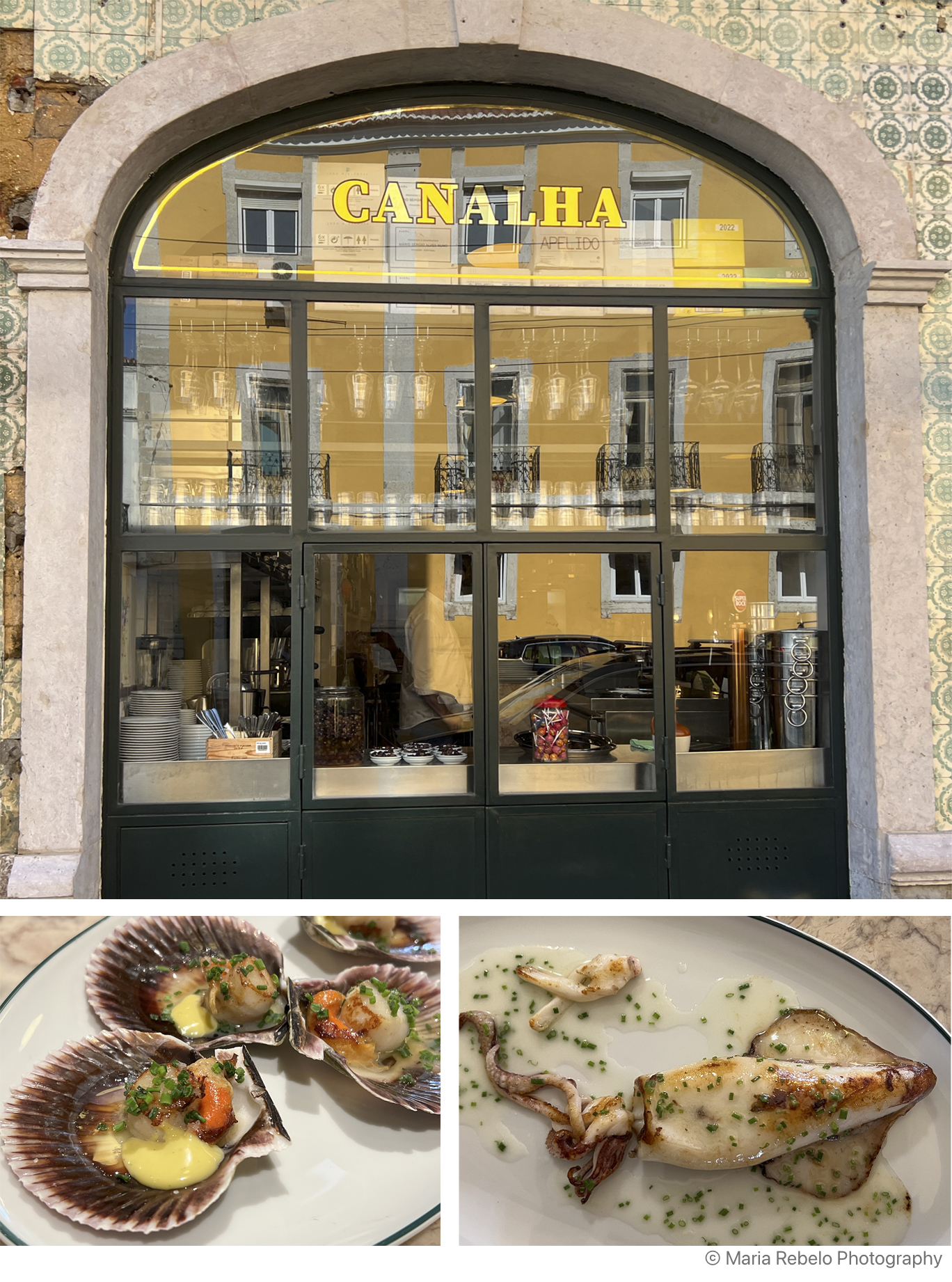
One of Lisbon’s most coveted new restaurants bears a mischievous name: Canalha—the Portuguese word for “scoundrel.” Behind this playful moniker stands one of Portugal’s most acclaimed chefs, João Rodrigues. After earning accolades in haute cuisine, João chose a different path: to open a neighborhood restaurant grounded in the rich culinary traditions of Portugal. The result is a place that is unpretentious and quietly exceptional. Each day features a new “prato do dia”—a beautifully prepared dish offered at a modest price. But for those inclined to indulge, the menu also offers exuberant pleasures: opulent seafood, exceptional cuts of meat, superb artisanal charcuterie, and exquisite wines.
The décor reflects the restaurant’s philosophy of understated elegance. Tabletops are crafted from lioz, the rose-toned limestone that graces Lisbon’s historic buildings. The floors are paved with traditional black-and-white mosaic. Ceiling fans stir the air with their wooden blades, creating a gentle breeze.
Our meal began with crusty bread and pungent olive oil, followed by pastéis de massa tenra—golden, crisp savory pastries filled with seasoned meat and served with a bold sriracha mayonnaise. Then came zamburinhas, small scallops bursting with briny sweetness, and an exquisitely tender squid, lightly charred to smoky perfection. The final dish—grilled octopus with sweet potatoes—was a flawless composition of textures and flavors.
Canalha is not a stage for culinary theatrics. There are no illusions, no deconstructed dishes; there is no drama on the plate. This is cooking rooted in reverence for the land, the seasons, and the ingredients. After stepping away from haute cuisine, João journeyed across Portugal in search of forgotten recipes, unique flavors, and small producers who work with passion and dedication. Their names are celebrated on the menu. One dish is dedicated to our friend Raul Reis, who grows the finest potatoes in Portugal.
João is soft-spoken but intense. At Canalha, he channels this intensity to produce something rare: food steeped in the flavors and traditions of Portugal, cooked with skill, honesty, and soul.
Canalha is located at Rua da Junqueira 207, in Lisboa, tel. 962 152 742. Click here for their website. Reservations are a must.
Since the dawn of civilization, Babylonians, Egyptians, and Greeks have studied the skies to chart the stars. But these luminous bodies shined whether or not they were included in celestial atlases.
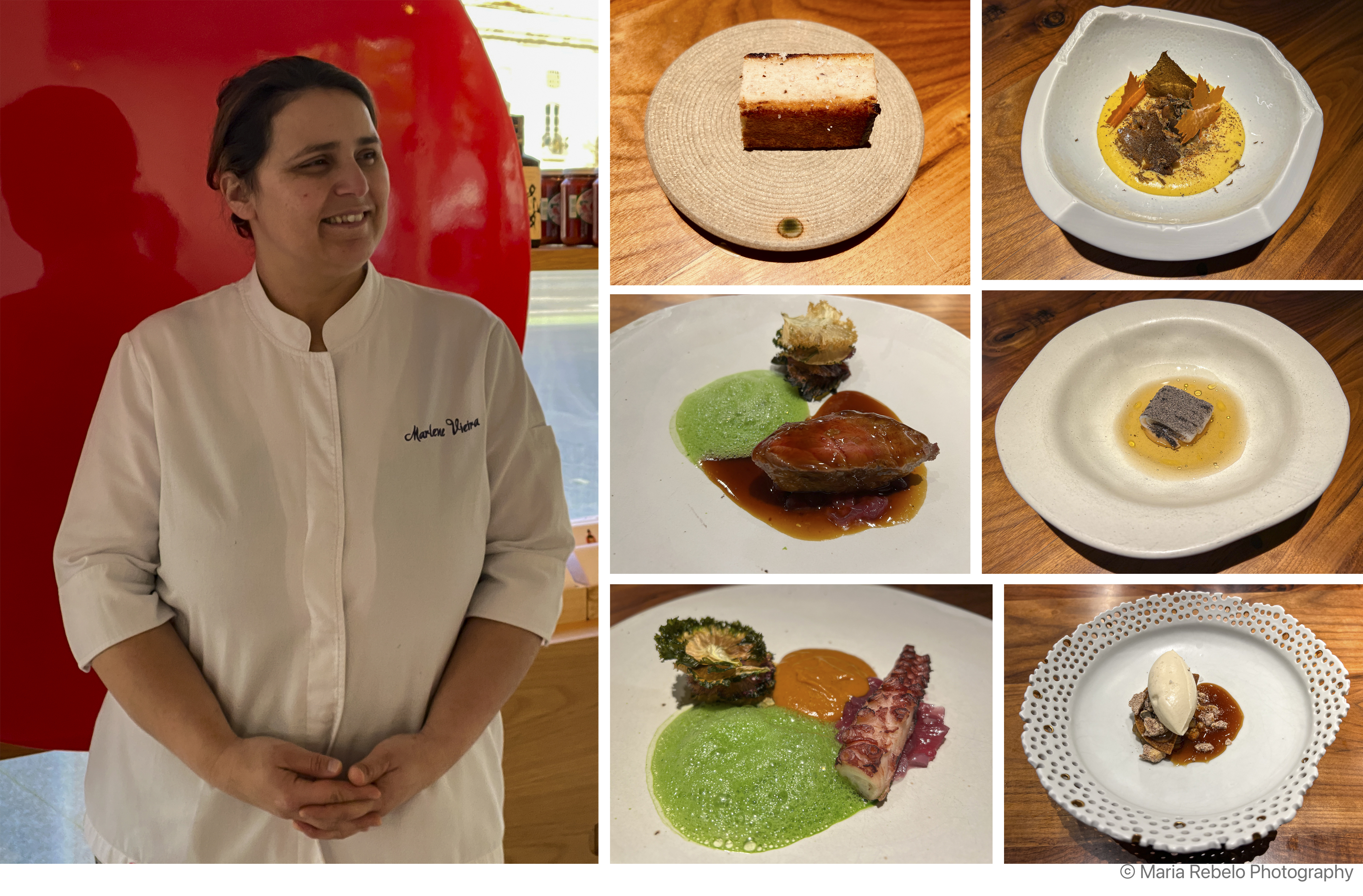
Last Tuesday, Marlene received a Michelin star—a richly deserved honor that celebrates her extraordinary talent and dedication. But long before this important accolade, her light had already illuminated the world of gastronomy. What fuels her radiance is the belief that cooking is an act of love. Each time we dine at her Zun Zum restaurant, we feel not just deeply satisfied but cared for.
Now, at the restaurant that bears her name, Marlene is elevating Portuguese cuisine to new heights. The space exudes serenity, with the kitchen at its heart—an altar where ingredients are transformed into a transcendent gastronomical experience. The menu evolves constantly, and once a recipe leaves, it does not return, making each meal a singular experience.
Guiding this culinary journey alongside Marlene is Chef Mário Cruz. He searches land and sea for exquisite treasures—sea urchins, Algarve red shrimp, wild mushrooms, cuttlefish, mullet, octopus, and partridge.
The food is visually stunning, but, more importantly, it is delicious and it has soul. The irresistible cornbread, kneaded from white corn, wheat, and rye, follows Marlene’s grandmother’s recipe. The Azorean bluefin tuna, cured as if it were prosciutto, accompanied by gazpacho served in a bowl lined with sumac, transported us to the Algarve, to a sunlit table by the sea.
The partridge is cooked according to a famous recipe. During the Napoleonic invasions, General Junot’s troops looted the library of the Alcântara Monastery. Among the stolen manuscripts was a recipe for partridge stuffed with foie gras and truffles. Junot sent it to his wife, who introduced it to France as “Partridge, Alcântara style.” The renowned chef Auguste Escoffier declared it one of the finest spoils of the Napoleonic wars. Marlene’s reimagined version of this historic dish is so extraordinary that it might provoke another French invasion.
Marlene Vieira is a star–not because she has been recognized among the constellations of fine dining, but because she has always shined. If you find yourself in Lisbon, take the time to sit at her table to savor the brilliance of her cuisine.
Marlene is located at Av. Infante D. Henrique, Doca do Jardim do Tabaco, Lisboa, tel. 351 912 626 761, email marlene@marlene.pt.
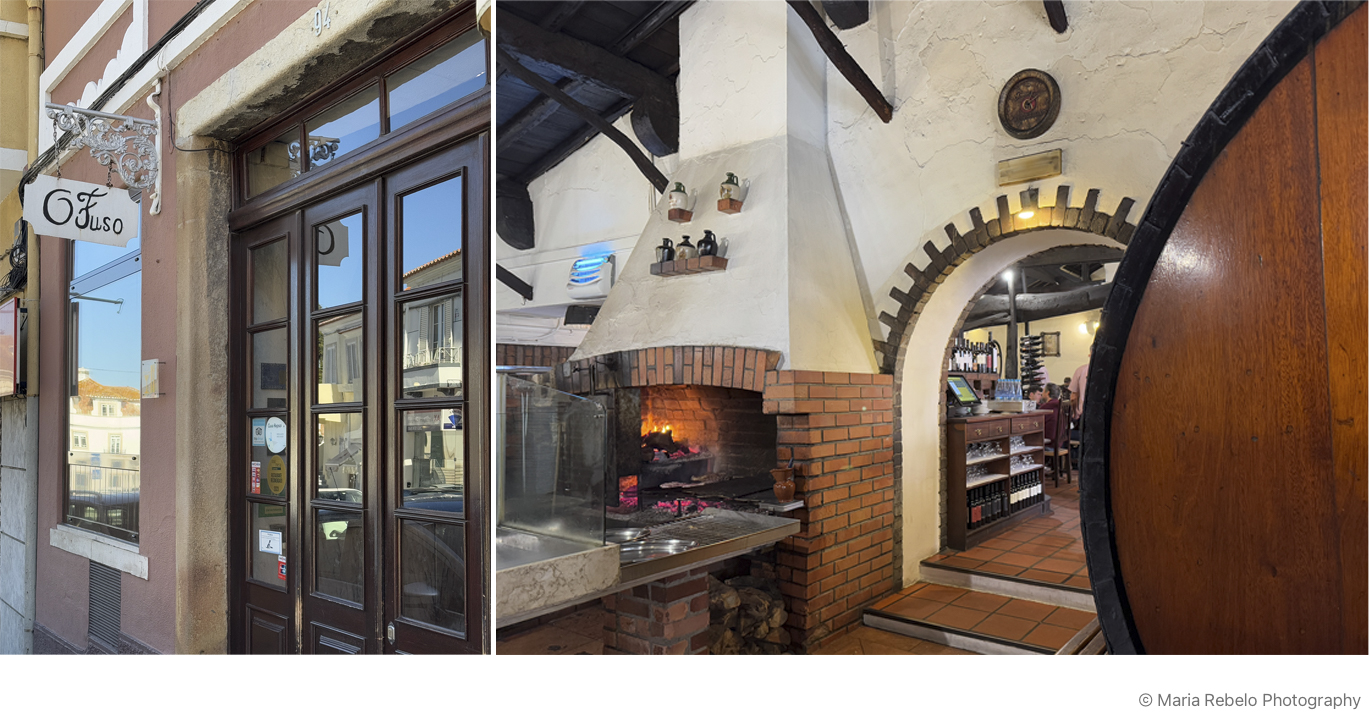
Located in Arruda dos Vinhos, 20 miles north of Lisbon, Fuso is a restaurant from another era. It opened its doors, in the space once used as a winery and a tavern, on March 9, 1973.
The concept for the restaurant was created by Fernando Guerra Cardoso, a successful car salesman who enjoyed socializing over food. He persuaded his friend, Armindo Mera Dominguez, to open a restaurant serving oversized portions that encouraged people to bring their friends. Today, the restaurant is run by the great-grandchildren of both founders.
Diogo Coucello, Fernando’s great-grandson, leads a team of 30 waiters and kitchen staff, ensuring seamless service for up to 300 guests. Reservations are essential—Fuso is always full.
Since 1973, the menu has remained unchanged, focusing on two signature dishes: charcoal-grilled codfish and bone-in rib steak. Your meal can begin with delectable appetizers such as prosciutto, savory sausages, or grilled shrimp and end with various desserts, ranging from roasted apples to egg puddings and chocolate cake. But the main attractions are grilled codfish and steak.
You can find these dishes in many other restaurants, but Fuso’s renditions are exceptional. The codfish, imported from Norway, is meticulously selected for its succulence and rich flavor. The rib steak, consistently tender and tasty, has been sourced from the same butcher since the restaurant’s inception.
Fuso’s rustic décor has remained untouched since its opening. The restaurant’s name refers to the fuso, or spindle—a large wooden screw—attached to the wine press that still occupies the center of the dining room. The entrance is dominated by towering wine barrels made from exotic wood and a grand charcoal grill glowing with embers.
In a world where everything feels fleeting, it’s a privilege to eat at a restaurant that has been a gathering place for friends who love food for over half a century.
Fuso is located at Rua Cândido dos Reis, 94, Arruda dos Vinhos, tel. 263 975 121, 263 978 547.
As John Coltrane’s career evolved, his music underwent a profound transformation. He began as a virtuoso, dazzling audiences with his fluency and flair. But then, he transcended virtuosity, creating music that other players could not imagine because it came from a deeper source of inspiration.
The evolution of Ceia parallels this creative arch. From its inception, this restaurant, nestled within Lisbon’s most elegant hotel, offered unforgettable culinary experiences. But its current menu, orchestrated by a team led by chef Renato Bonfim, transcends technical skill to offer food that is new and exciting.
Titled Change, the menu is a series of culinary moments inspired by our planet and the way we interact with it. Most produce comes from Herdade no Tempo an estate in Alentejo that follows regenerative agriculture practices. Ceia transforms these products into elegies of cooking and celebrations of flavor.
We generally like to describe the tastes, aromas, and sensations that the food evokes, but Ceia’s menu is so unique that revealing too much would detract from its magic. What we can tell you is that the names of the menu entries could be titles of Coltrane tunes: Ocean, Carbon, Air, You Look but Don’t Sea, Solo.
The service at Ceia, as seamless as always, keeps the guests in a state of enchantment. Francisco Guilerme curates a pairing of rare wines that elevate every dish and Kristin Liebold offers an exquisite selection of non-alcoholic drinks.
Ceia is creating new culinary melodies from a deeper source of inspiration to feed our hunger and nourish our souls.
Ceia is located at Campo de Santa Clara, 128. Lisbon. Click here for the restaurant’s website.
To find the finest place for lunch in Lisbon, you must head toward the majestic Pantheon, a baroque limestone masterpiece that took three centuries to build. The adjacent plaza, Campo de Santa Clara, overlooks the “sea of straw,’’ the stretch of the Tagus River that reflects the golden sunlight, resembling a field of wheat.
A short walk leads you to number 128, where the understated entrance of the elegant Santa Clara 1728 hotel awaits. From Tuesdays to Saturdays, the hotel’s dining room, home to the renowned Ceia restaurant, transforms into a lunch haven called Solo.
The meal begins with the comforting aroma of warm, house-made sourdough bread served with creamy butter. It continues with a starter and main course paired with a glass of wine and ends with dessert. The menu is updated every two to three weeks to reflect what is seasonal.
The starters are a testament to culinary finesse, featuring options like delicate Hamachi kissed with ponzu and coriander, requeijão–a soft cheese from the Estrela mountain–adorned with grapes and a touch of balsamic vinegar, or duck escabeche infused with the sweetness of ripe tomatoes.
The main courses are equally enticing, including choices like tender roast beef accompanied by grilled lettuce hearts and anchovy vinaigrette, creamy orzo with pumpkin, spinach, and truffles, or line-caught fish paired with pumpkin, hazelnut, and a rich bouillabaisse.
For the sweet ending, will you choose the tropical freshness of Azorean pineapple with yuzu syrup and finger lime? Or the indulgent richness of chocolate ganache with seasonal fruits?
Sharing the experience with a friend doubles the delight. The chef can split two menus, letting you savor two different starters, main courses, and desserts.
Solo’s exceptional cuisine is rooted in its “soil to table” philosophy. Most ingredients are sourced from Herdade no Tempo, a farm in Alentejo that uses regenerative and holistic practices to nurture the soil and support biodiversity. Chef Renato Bonfim and his team transform these pristine ingredients into dishes that celebrate the gifts of nature and the joy of cooking.
From the artful presentation to the gracious service and intimate ambiance, every detail at Solo turns lunch into an experience that lingers in our memory long after the last bite.
Solo is located at Campo de Santa Clara, 128. Lisbon. Click here for the restaurant’s website.
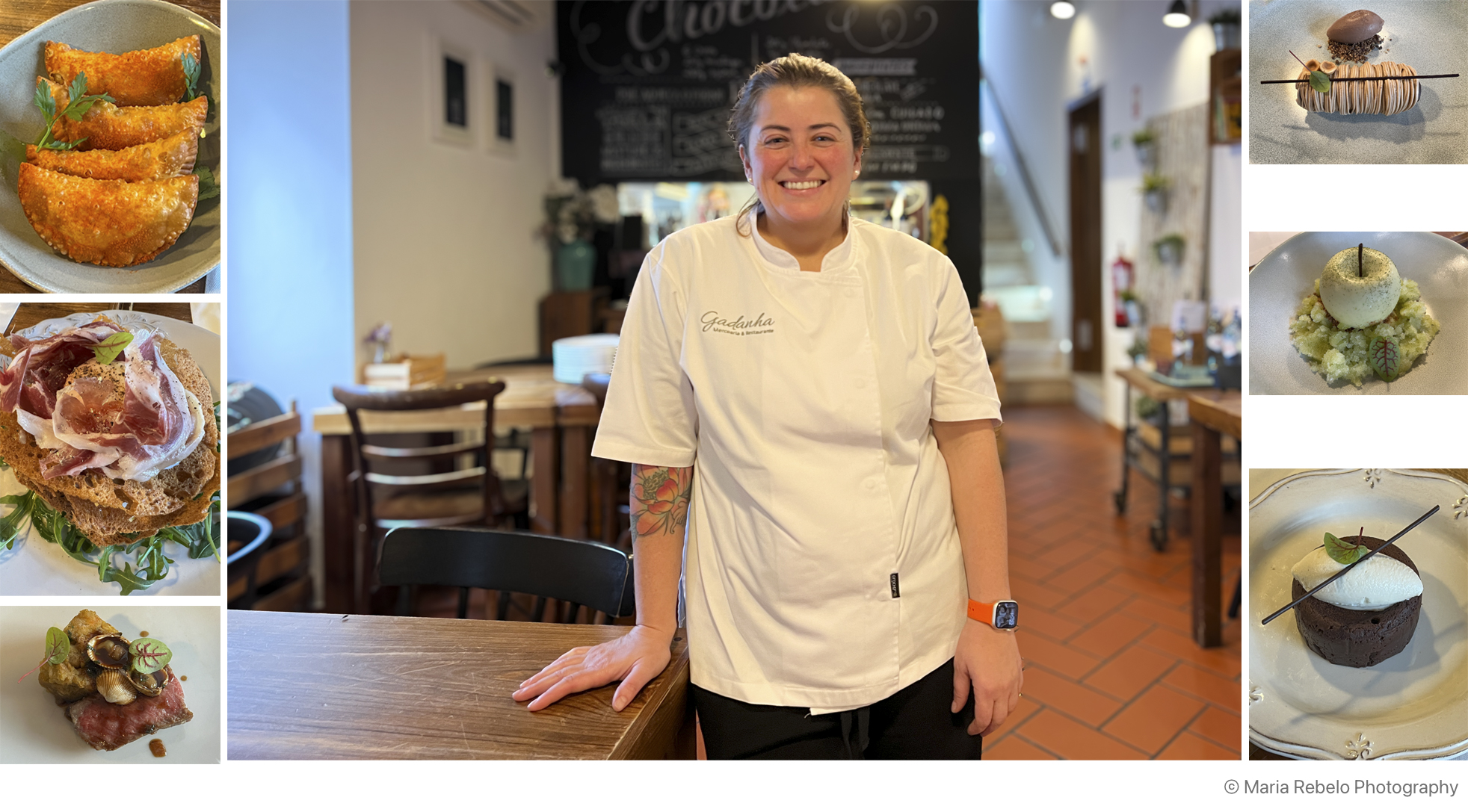
When we asked our son, a chef by trade, what he wanted for his birthday, he answered without hesitation: lunch at Mercearia Gadanha in Estremoz. And so, on the day when we celebrated the arrival of the treasured gift that is our son, we got on the road to Estremoz.
Chef Michelle Marques welcomed us into her restaurant with her radiant smile. She filled our glasses with Mainova, a white wine made with a harmonious trinity of Portuguese varietals (Arinto, Antão Vaz, and Verdelho). It has a wonderful acidity and a citrus aroma that kept us great company through the meal.
Our lunch began with Gadanha’s classic lamb croquettes served with garlic confit mayonnaise. Each bite reminded us why this dish had long been a favorite.
Next came the quail, stewed to perfection and served with a rich demi-glace, an intense apple sauce, and some of the most flavorful potato chips we’ve ever had—thin, crispy, and seasoned with just a whisper of oregano.
Then came wild mushrooms with a soft-cooked egg, and a crumble of alheira sausage, each mouthful an explosion of umami.
The next course was a set of stunning cação pastries. Never was this fish so prized in Alentejo so wonderfully cooked. The pastry was crunchy, allowing the delicate flavors of the fish to shine.
Another favorite followed: the exquisite codfish mille-feuille, a combination of crispy Alentejo toasts, chickpea foam, codfish confit, and black-pork prosciutto. This dish alone is worth the journey to Gadanha.
The next course, black pork and cockles (berbigão) is a delicious reimagination of a traditional Alentejo recipe: pork and clams. The savory part of the meal ended with duck rice brimming with flavor.
We indulged in three desserts: a reconstructed apple with pennyroyal (poejo) and sheep milk ice cream, a medley of chocolate and hazelnut textures, and a chocolate and coffee delight with vanilla ice cream.
Michelle was born in Brazil, but she has lived in Portugal for so long that she lost her Brazilian accent. In its place she gained a culinary voice so original that it is worth traveling the distance to celebrate life’s best moments at her restaurant.
Gadanha is located at Largo Dragões de Olivença, 84 A in Estremoz, tel. 268 333 262. Click here for their website.
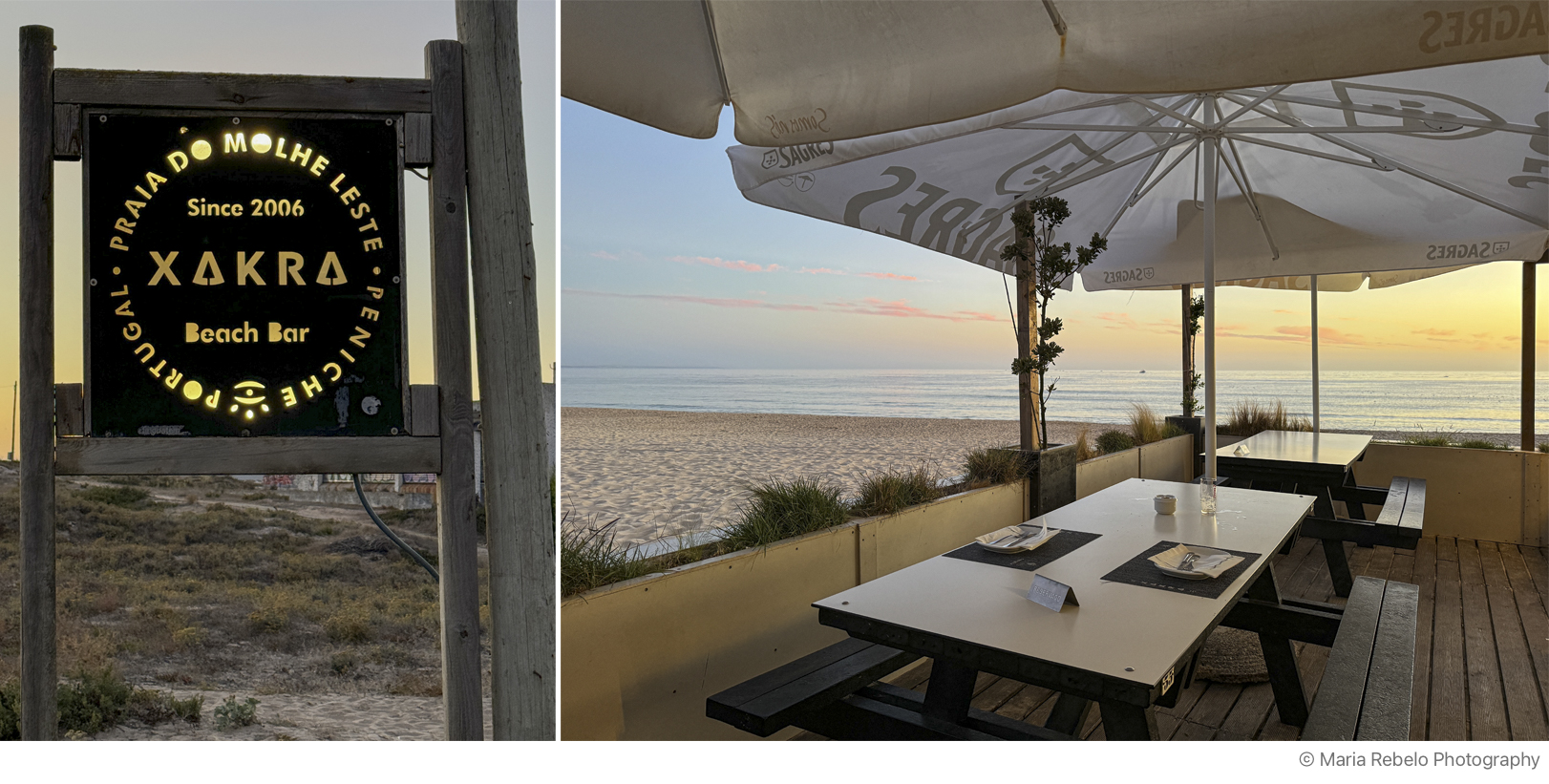
There’s something about dining on the beach that makes the food taste even better. Perhaps it’s the salty breeze that stirs the appetite or the beauty of the ocean that awakens the senses.
It used to be easy to find simple beachside restaurants that served freshly caught fish. But, as the price of wild fish went up, these places have become increasingly rare. That is why we were so delighted when some friends took us to Xakra at Molhe Leste, a beach in Peniche favored by surfers because of the consistency of its waves.
Xakra’s decor is plain, but the view is luxurious. We ordered two starters, a soup, and a main course. The first starter was berbigão, a flavorful cockle prepared with olive oil, coriander and garlic. The second was a wonderful skate salad simply dressed with olive oil, vinegar, and onion.
The fish soup had delicately cooked fillets immersed in a creamy vegetable broth. The vegetables of the land harmonize surprisingly well with the fruits of the sea.
Finally, the pièce de résistance was freshly caught turbot perfectly grilled and served with small potatoes, cabbage, and a sprinkle of cornbread crumbs.
Xakra has been delighting guests since 2006. We’re sorry it took so long to discover it, but now we know!
Xakra is situated at Praia do Molho Leste in Peniche. For reservations, please call 965 172 166.


 Salt of Portugal