Fuso, a landmark restaurant

Located in Arruda dos Vinhos, 20 miles north of Lisbon, Fuso is a restaurant from another era. It opened its doors, in the space once used as a winery and a tavern, on March 9, 1973.

The concept for the restaurant was created by Fernando Guerra Cardoso, a successful car salesman who enjoyed socializing over food. He persuaded his friend, Armindo Mera Dominguez, to open a restaurant serving oversized portions that encouraged people to bring their friends. Today, the restaurant is run by the great-grandchildren of both founders.

Diogo Coucello, Fernando’s great-grandson, leads a team of 30 waiters and kitchen staff, ensuring seamless service for up to 300 guests. Reservations are essential—Fuso is always full. 

Since 1973, the menu has remained unchanged, focusing on two signature dishes: charcoal-grilled codfish and bone-in rib steak. Your meal can begin with delectable appetizers such as prosciutto, savory sausages, or grilled shrimp and end with various desserts, ranging from roasted apples to egg puddings and chocolate cake. But the main attractions are grilled codfish and steak.

You can find these dishes in many other restaurants, but Fuso’s renditions are exceptional. The codfish, imported from Norway, is meticulously selected for its succulence and rich flavor. The rib steak, consistently tender and tasty, has been sourced from the same butcher since the restaurant’s inception.

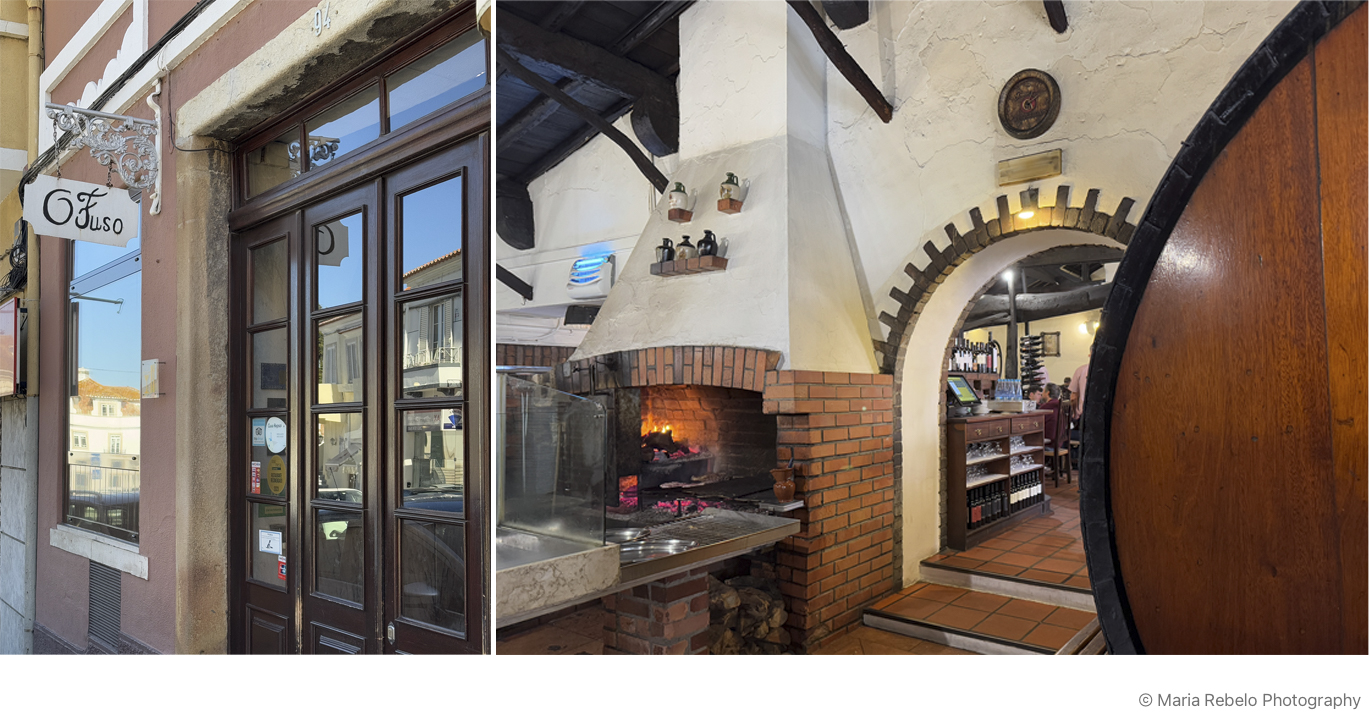
Fuso’s rustic décor has remained untouched since its opening. The restaurant’s name refers to the fuso, or spindle—a large wooden screw—attached to the wine press that still occupies the center of the dining room. The entrance is dominated by towering wine barrels made from exotic wood and a grand charcoal grill glowing with embers.

In a world where everything feels fleeting, it’s a privilege to eat at a restaurant that has been a gathering place for friends who love food for over half a century.

Fuso is located at Rua Cândido dos Reis, 94, Arruda dos Vinhos, tel. 263 975 121, 263 978 547.
Xakra in Peniche

There’s something about dining on the beach that makes the food taste even better. Perhaps it’s the salty breeze that stirs the appetite or the beauty of the ocean that awakens the senses.

It used to be easy to find simple beachside restaurants that served freshly caught fish. But, as the price of wild fish went up, these places have become increasingly rare. That is why we were so delighted when some friends took us to Xakra at Molhe Leste, a beach in Peniche favored by surfers because of the consistency of its waves. 

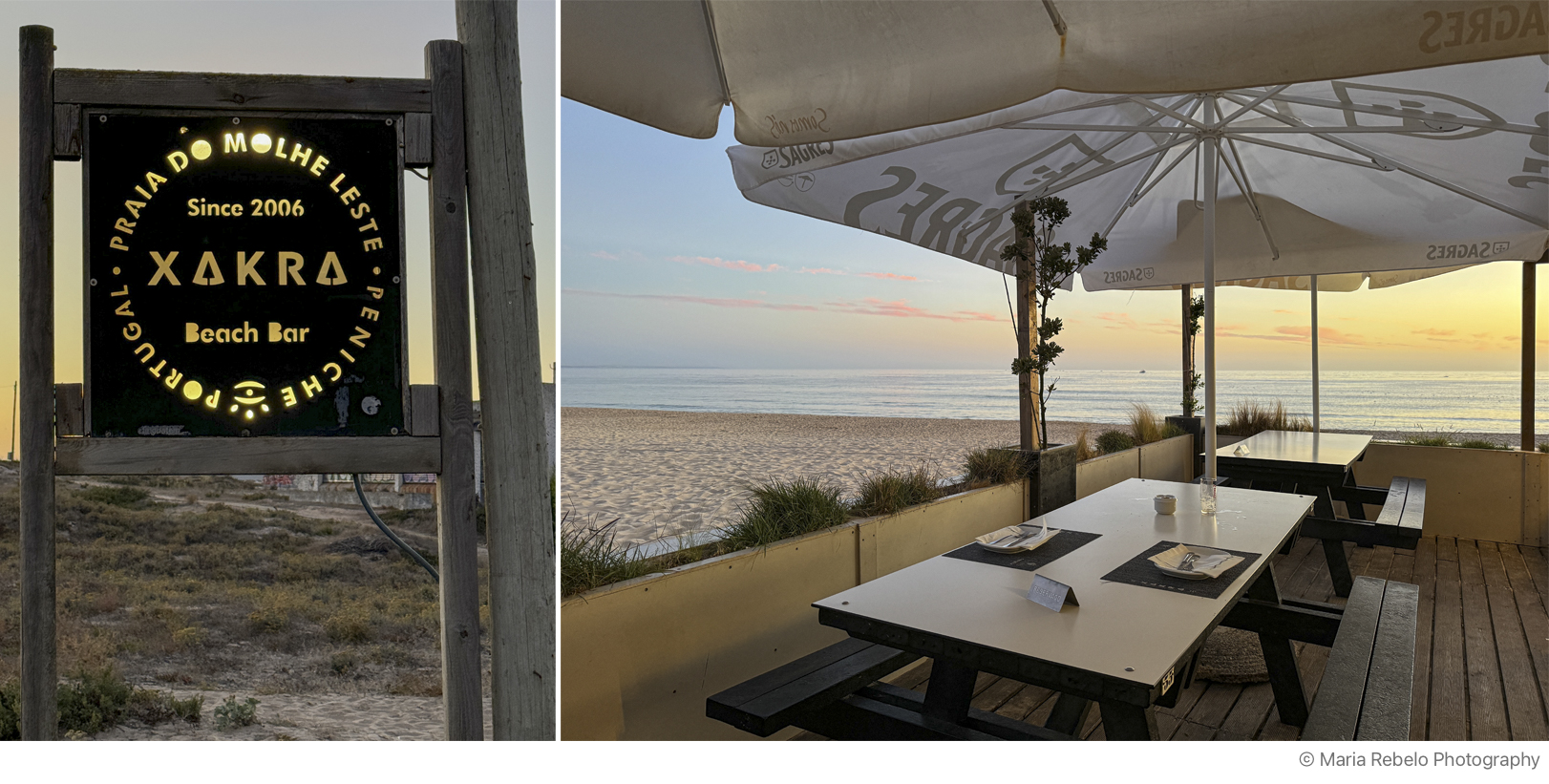
Xakra’s decor is plain, but the view is luxurious. We ordered two starters, a soup, and a main course. The first starter was berbigão, a flavorful cockle prepared with olive oil, coriander and garlic. The second was a wonderful skate salad simply dressed with olive oil, vinegar, and onion. 

The fish soup had delicately cooked fillets immersed in a creamy vegetable broth. The vegetables of the land harmonize surprisingly well with the fruits of the sea. 

Finally, the pièce de résistance was freshly caught turbot perfectly grilled and served with small potatoes, cabbage, and a sprinkle of cornbread crumbs.

Xakra has been delighting guests since 2006. We’re sorry it took so long to discover it, but now we know!


Xakra is situated at Praia do Molho Leste in Peniche. For reservations, please call 965 172 166.

Days like this at Gaveto

Gaveto is a restaurant in Matosinhos where winemakers from the Douro Valley and the Vinho Verde regions often gather. It is easy for regulars to take for granted the meticulous selection of ingredients, the flawless execution of each dish, and the impeccable service. But this restaurant took a lifetime to build. 

Its founder, Manuel Pinheiro, began his culinary journey at age 12, working in Porto at the home of the banker António Borges. At age 18, Manuel got a job in a restaurant owned by the Borges family. He started by hauling coal for the stove and washing countless pots and pans. Over time, he learned to cook, to run the kitchen, and to manage the dining room. Ten years later, Manuel put all this knowledge to use by buying a small restaurant in Porto and turning it into a popular spot.

In 1984, while shopping for fish at the Matosinhos market, Manuel learned that a spacious restaurant called Gaveto was up for sale. Tempted by the opportunity to attract a larger clientele, he purchased the place. The investment was so large that his wife Margarida cried for two weeks, worrying that they might soon be ruined. 

Manuel involved his two sons, João Carlos (in the photo with his father) and José Manuel, in the business. Together, they turned Gaveto into a gastronomic landmark and built one of Portugal’s most impressive wine collections. Whenever they serve a rare wine from their cellar, João posts a photo of the bottle on Instagram captioned with his signature phrase: “There are days like this.” 

The menu includes only traditional Portuguese fare, yet the offerings are so tempting that we always struggle with our choices. During our last visit, we hesitated about whether to get the iconic lobster rice, the legendary lamprey, the exquisite tiger shrimp, the perfectly grilled fresh fish, or the tripe with beans, which former President Mário Soares considered the best in the country. 

When dessert time came, we debated whether to opt for one of the many puddings and tarts, get the traditional pão de ló, or taste the fine cheese that Manuel procures in the Estrela Mountain. These were not easy decisions. And at Gaveto, every day is like this.

Alta, a dream come true

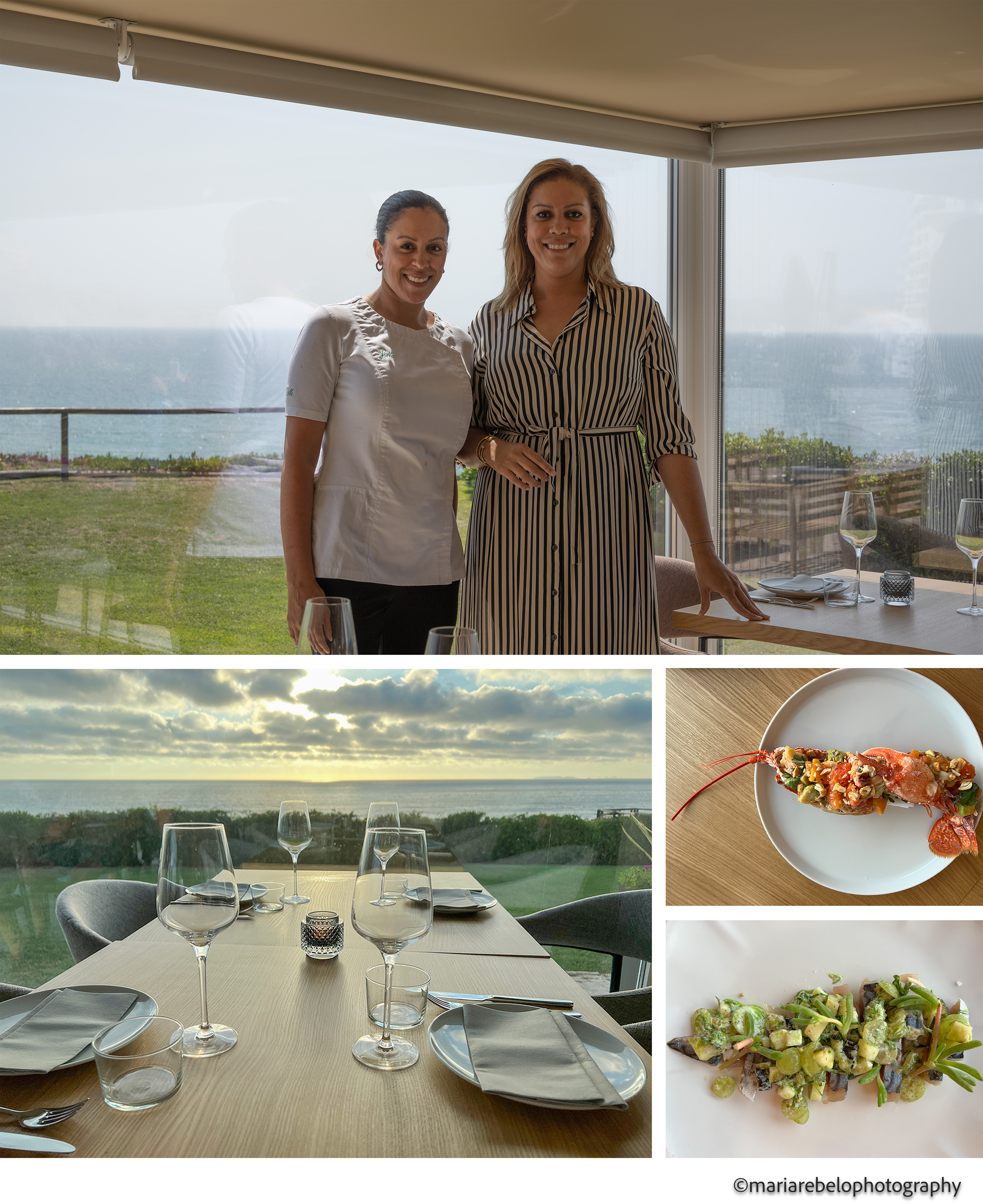
Alta, a new restaurant perched on a cliff overlooking Praia da Areia Branca, offers mesmerizing views of the Berlenga island and the endless sea. But it was hard to pay attention to the view once the tempting appetizers arrived at our table. First, a plump burrata adorned with an enticing tomato jam. Then, marinated mackerel seasoned with salicornia and green grapes—a culinary dance of saltiness, sweetness, and acidity. Next, fabulous codfish cakes–light, crisp, and full of flavor. Finally, a stunning lobster salad beautifully served in its shell. 

In a blatant plea for attention, the sun began to set, painting the sky with brilliant yellow hues. We admired the spectacle, but our focus shifted to the main courses: mouthwatering seafood rice and a succulent roasted pork belly. The menu tempted us with many other delights, such as grilled fish and codfish confit. The meal ended with a taste of sweetness from slices of chocolate and ricotta cakes.

Alta has become popular since opening on June 10, so it’s best to make a reservation. But even waiting for a table is a pleasure–we can sit on the esplanade drinking an aperitif and taking in the magnificent vistas.

Chef Julie Marteleira and her sister Jennifer moved from Toronto to Praia da Areia Branca to create Alta. Even though they were born in Canada, this venture feels like a homecoming. Their parents, Joana and Joaquim, got married in Abelheira, a quaint village you can see from the restaurant.  Julie dreamed of one day working in Portugal. We’re all lucky that her dream has come true. 

Alta is located at Alameda a Ver-o-Mar, no 1, Praia da Areia Branca, Lourinhã, tel. 261 422 310.

Margarida

Life is made of connections and disconnections. Fernando Sousa and Margarida Batista had a restaurant in Viseu, our hometown, for many years. We lived in the same city without ever crossing paths. Nine years ago, the couple moved to Vouzela, a quiet village in the countryside.  We heard about their restaurant from Abílio Tavares da Silva during a visit to the Douro valley. Since then, we have tried a few times to make reservations but received a friendly message telling us the restaurant was fully booked. Finally, we managed to email with enough lead time to secure a table for lunch.

We got off the highway, following the sign that reads Vouzela, and soon we were driving on a narrow, winding road. The sight of granite dominates the landscape. There is granite on every hill, and these stones are used in street pavements, exterior walls, and church façades. 

Fernando greeted us with a promise: “I will take care of you.” He manages the dining room, and Margarida does the cooking. We sat at the table, and soon a pleasant Dão wine made with the classic trio of local red grapes, Alfrocheiro, Touriga Nacional, and Jaen, filled our glasses. 

Then Fernando brought a wood turntable with rice cooked in the oven with mushrooms, sausages, and meats, and golden veal accompanied by vegetables and roasted new potatoes. Both dishes have sumptuous flavors. The veal melts in the mouth, and the rice is deeply satisfying. 

Fernando showed us with pride a photograph of Maria de Lurdes Modesto, the chef who codified traditional Portuguese cooking, taken when she visited them. It is natural that Modesto, who prized flavor above all, liked this restaurant.

Margarida is a simple place. What makes it shine is Fernando’s copious affability and Margarida’s gifted cooking.  What else do we need?

Margarida is located at Rua Mousinho de Albuquerque 33 in Vouzela, tel. 936 935 843, email margarida.vouzela@gmail.com. It is a small restaurant; reservations are a must.

A codfish restaurant

If you’re yearning for codfish, we know a restaurant that will satisfy your lust. Called Sal na Adega, it is part of Adega Mãe, a winery in Torres Vedras that belongs to Ribeiralves, a company famous for its salted cod. 

Sal na Adega has a spacious dining room that overlooks serene vineyards. A large round window gives us a glimpse of the kitchen’s hustle and bustle. 

You can accompany the meal with any wine from the winery’s shop by paying a modest cork fee. The menu lists many meat and fresh fish preparations, but the star offering is salted cod. Codfish usually pairs with red wine, but if you’re feeling adventurous, we suggest a white wine made from Vital. There are only a few wineries making wine with this grape varietal. The results are exciting, and the wine is a great companion for the fish.

Our meal started with codfish cakes, a litmus test passed with flying colors–the cakes were crispy, rich, and flavorful. Then we tried a trio of cod preparations. First, a codfish loin topped with crunchy prosciutto and onion in a vinegar sauce called escabeche. Second, grilled codfish neck, the most succulent part of the fish because of its abundance of collagen. It is an epic preparation, up there in the pantheon of best codfish we have ever tried. Third, a delicious codfish in coriander rice.

The dessert menu includes many temptations and one irresistible choice: the famous bean pastries from Serra da Vila in Torres Vedras. 

The meal ends with a pleasant surprise: a 10 percent discount on the wines purchased at the wine shop. We went to Sal na Adega for the codfish, and came back with some great wine.

Sal na Adega is located at Estrada Municipal 554, Torres Vedras, tel. 261-950-105.

How do we tell the king?

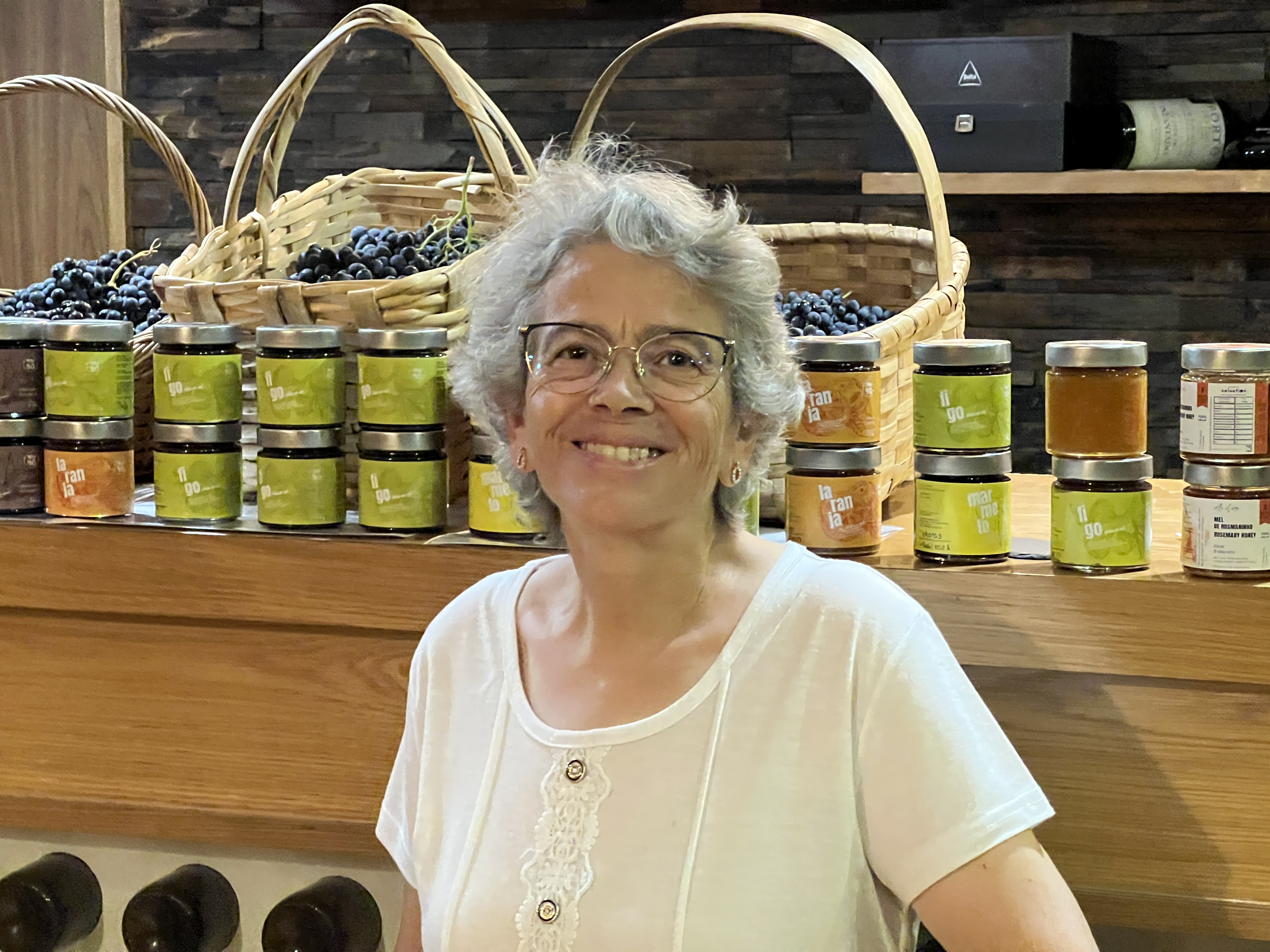
We used to buy jams endorsed by the British monarchs, figuring that centuries of sampling jams at tea time gave them the practice required to select the cream of the jam crop.

We quite liked the British jams until one fateful lunch at Toca da Raposa in Ervedosa do Douro. A sampling of jams arrived without fanfare at dessert time. When we tried them, we experienced a whole new level of deliciousness!  

What makes these jams so sublime? Their fruit comes from the Douro valley, a place where the scorching summer heat and a wealth of soil micronutrients create unique conditions that intensify aromas and flavors. And each batch is handcrafted by Dona Graça, a legendary cook, and her talented daughter, Rosário. The two leave nothing to chance, shunning the use of preservatives and making adjustments small and large to ensure that the results are perfect. 

There is an orange jam chockfull of strips of orange rind that delight the palate and an orange and hot pepper jam with the ideal combination of sugar and spice. There are jars of jam brimming with perfectly ripe whole figs; a surprisingly delicious zucchini jam; amazing jams made with must from grapes used to produce port wine; jams made from a rare peach variety that grows amidst the vines, and much more.

The jams favored by his royal majesty pale by comparison with the wondrous jams from Toca da Raposa! The question is: how do we tell the king?

Toca da Raposa is located at Rua da Praça in Ervedosa do Douro, tel. 254 423 466.

Eating eels in the middle of Ribatejo

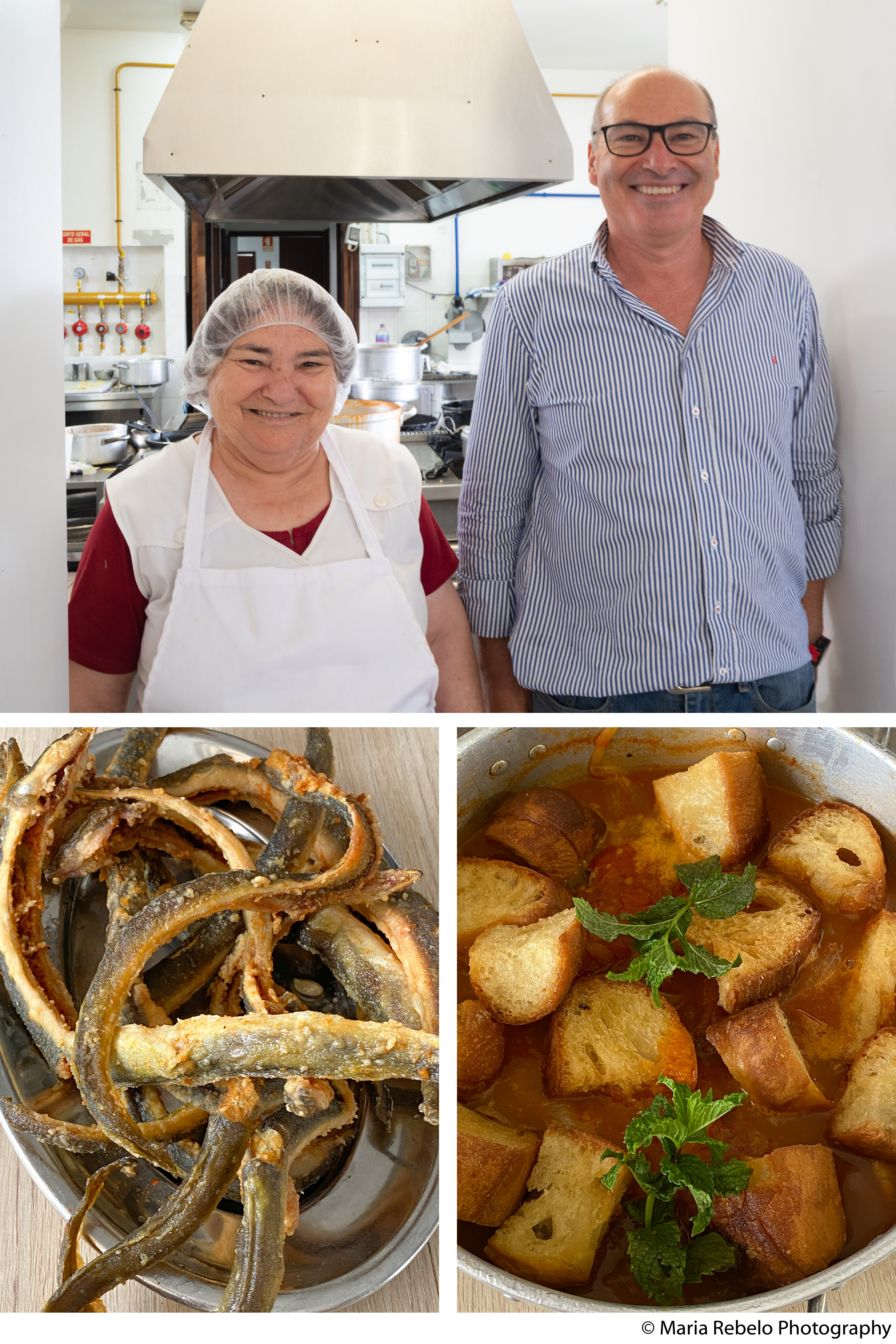
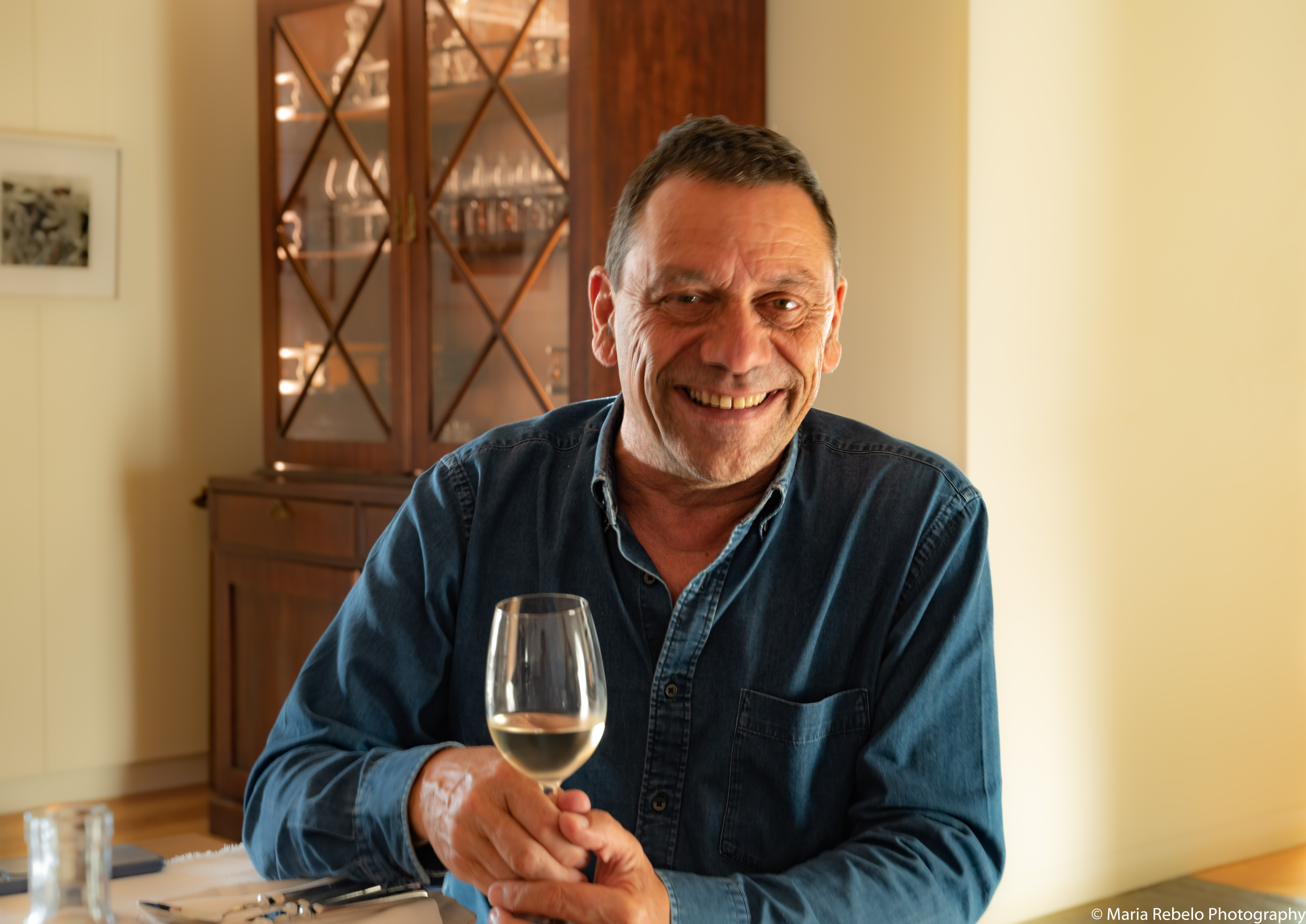
“I am taking you to a restaurant that used to be a shack. The place was recently renovated, but I hope Virgulina’s cooking hasn’t changed,” said Manuel Malfeito, a professor of enology who can always find extraordinary places in the middle of nowhere. This time we were lost in Ribatejo, an agricultural region that has resisted the winds of change, preserving its character and traditions.

After many twists and turns, we saw a sign that reads “Constantino das Enguias.” Enguias means eels and Constantino is the name of Virgulina’s husband. In 1975, the couple set up a hut with a dust floor, a roof made out of eucalyptus branches and some wooden tables and benches. Virgulina served food prepared with vegetables from her garden and eels from a local river, the Ribeira de Muge. The delicious results attracted a loyal clientele that kept the restaurant full throughout the years. Last year, José Valério, Virgulina’s son, convinced her to renovate and expand the restaurant. 

We ordered eels cooked in two ways, fried and stewed (ensopado de enguias). The fried eels are crunchy, with an umami taste that delights the palate. The stewed eels are succulent, cooked in as appetizing broth made with country bread, mint, onions, green pepper, garlic, bay leaves, white wine, and peeled tomatoes. Virgulina’s food is as great as always!

Manuel chose a bottle of white Casa do Cadaval Reserva 2018 made with Arinto and Viognier. It is an elegant, balanced wine that managed to keep pace with the exuberant taste of the eels. The wine is produced nearby by Teresa Schönborn, a German countess. Why does a German countess produce wine in the middle of Ribatejo?  That, as Scheherazade would say, is a story for another day.

Constantino das Enguias is located at Rua Direita, 265, Foros de Benfica do Ribatejo, tel. 243 589 156.

Dining with Miguel Castro e Silva at Quinta de Ventozelo

We have for years admired chef Miguel Castro e Silva from the distance. We dined at his restaurants, read his cookbooks, tried his recipes (his marinated sardine preparation is a staple at our table). So it was a great privilege to have dinner with him at Quinta de Ventozelo

We met at Cantina, the restaurant that occupies the place where the old farm canteen used to be. Miguel arrived with a bottle of wine. “Do you want to try the wines I make at Ventozelo?” he asked as a way of introduction. Soon our glasses were filled with a white Viosinho from 2017 that is fresh and vibrant. It went perfectly with our first course, river fish “escabeche.” 

We told Miguel how much we had enjoyed the food we had for lunch in the picturesque esplanade of Cantina:  wild boar covilhetes (a version of the small pies popular in nearby Vila Real), a warm soup made with beets and apple, grilled octopus, and a peach tart that celebrated the natural sweetness of the peaches. We asked how does he manage to achieve such high standards in all his restaurants. Miguel told us that he inherited both his organization skills and creativity from his German mother. He writes meticulous recipes and coaches his cooks in their preparation until they meet his exacting standards.

Miguel started cooking professionally only at age 31. Born into a family of doctors in Porto, he was expected to study medicine. He studied biology in Germany but lost interest and became a musician. To earn a bit of money on the side, he started cooking. When he returned to Portugal, his friend Dirk Niepoort asked him to prepare food for his wine tastings. Dirk would describe the wines he planned to serve and Miguel had to come up with food that paired well with the wines. It was an experience that allowed him to perfect his cooking skills and learn a lot about wine. 

This enological knowledge is evident in the next wine we tried, a remarkable white that combines Viosinho with a blend of red varietals. It was a perfect complement to our second starter: a sausage called “alheira” topped with a fried quail egg. 

Miguel tells us that he is reviving and refining the cooking traditions of the Douro valley. Every Sunday, the cooks at Cantina prepare a roast in an oven fired with vine wood. The soup is made in old iron-cast pots on a large outdoor fire. All the ingredients come from the farm. The animals are naturally raised and everything from nose to tail is used in the kitchen.

Our main course, a suculent stewed rooster, was a perfect example of the refined, satisfying rustic food that Miguel is devising. It combined well with a delicate red wine aged in oak barrels previously used to make white wines.  

Several fruit-based desserts arrived. Once again, we admired the sparse use of sugar that gives the fruits their chance to shine. As the dinner came to an end, we made a few toasts with some old Dalva tawnies.

But there was one more thing. Miguel ordered a pot of tea. Ventozelo produces a wonderful gin with the aromatics that grow on the farm. Miguel had the idea of making an herbal tea with the same aromatics: lavender, lemon thyme, Portuguese thyme, and globe amaranth. It makes a fragrant infusion that was the perfect ending to a perfect meal. Thanks to chef Miguel Castro e Silva the food at Cantina is as spectacular as the view.

Click here for the web site of Cantina, the restaurant at Quinta de Ventozelo and here for Miguel Castro e Silva’s website.

The shark’s beach

IMG_2617

Roger Sobreiro, an American wine merchant of Portuguese descent, recommended a small restaurant called A Praia do Tubarão (the shark’s beach) that is his safe harbor when he visits Portugal. We drove to the picturesque town of Costa Nova to try it out.

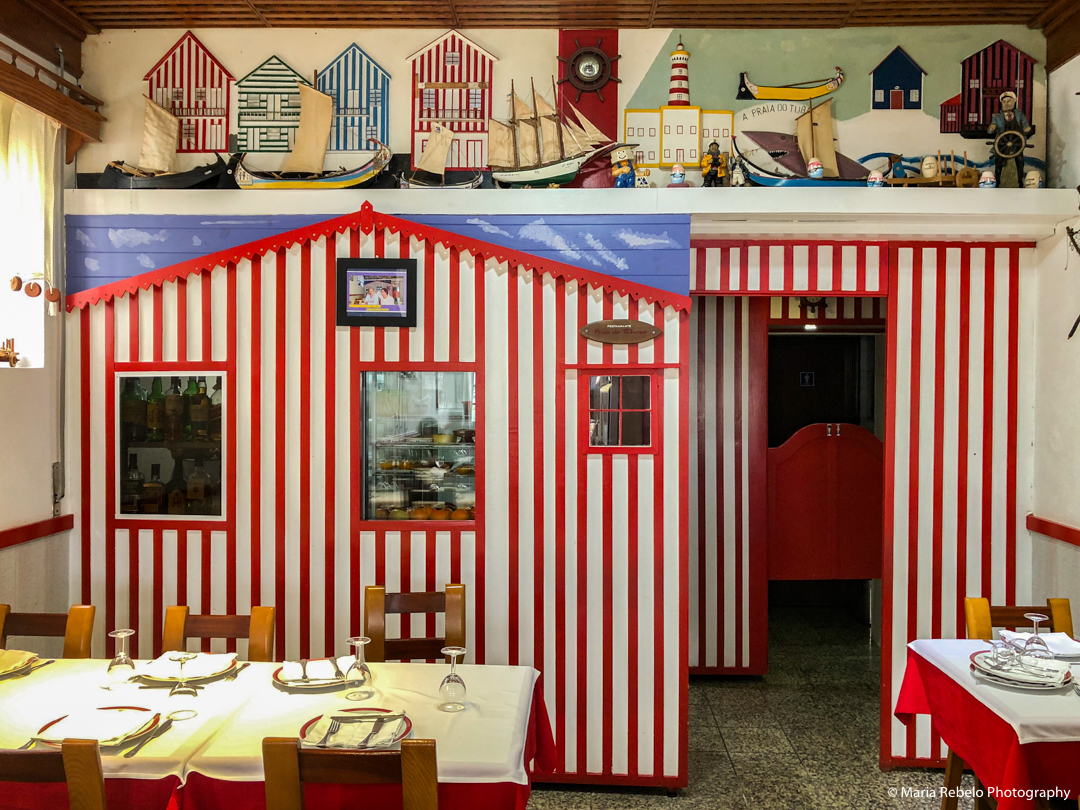
The restaurant’s facade is painted with the traditional red and white stripes used to decorate fishermen houses. The same red and white palette dominates the cosy interior where Adriano Ferreira, the owner, was waiting for us. He has worked in Costa Nova for 50 years, first as a waiter and then, in the last three decades, together with his wife at A Praia do Tubarão.

“I hunt and fish and all hunters and fishermen are liars,” he said as a way of introduction. Despite this forewarning, we asked Adriano to choose our lunch menu.  “Most of our food is served in the pots where it is cooked: caldeiradas (boulliabaisses) , “ensopados,” and seafood rices. We follow two simple rules: everything is fresh and everything is cooked to order,” he explained.

Adriano went into the kitchen and returned with a plate of petinga (small sardines) and tiny fried balls of berbigão rice. Then, he poured two generous glasses of the wonderful Duas Quintas white from Ramos Pinto. The petinga was crisp, hot, luxuriously fresh and perfectly fried. The rice balls were flavorful and deeply satisfying.

We ate an “ensopado,” a plate made with fish, potatoes, onions, garlic, and olive oil. It is seasoned with “sal d’unto,” a salt and lard combination. It comes with a sauce called “alhada,” made from garlic, lemon and piri piri. The flavors blend to create a unique taste and aroma. The quality of the ingredients and the cooking is superb.

Dessert was a small bowl of the traditional “ovos moles,” a convent sweet made with egg yolks and sugar. The meal ended with a vibrant espresso made with Delta’s famous diamond blend.

We said goodbye to Adriano and promised to be back soon to this welcoming place that serves delicious traditional food.

A Praia do Tubarão is located at Rua José Estevão, 136, Costa Nova Prado, Ilhavo, tel. 234 369 602.