The Correio-mor palace

We visited the Correio-mor palace in Loures on a sunny winter morning. The building was the country house of the family that, for two centuries, had a monopoly on mail distribution in the Portuguese empire. When the 1755 earthquake destroyed their Lisbon home, the family relocated to Loures and made this palace their permanent residence.

The ornate gates opened with ease as if they were expecting us. We stepped into a spacious courtyard that overlooks the Baroque building. Our first stop was the kitchen. White and blue tiles reflect the bright light that pours through the windows. The tiles depict the delicacies served at the palace: fish, game, vegetables, and fruits. A lonely marble table sits in the middle of the room, longing for the days when armies of cooks crowded around it to prepare sumptuous banquets. Across from the kitchen, we see vast wine cellars that once stored the fruits of many harvests.

An elegant staircase takes us to the noble floor. The limestone steps show the gentle wear that only shoes made of silk and soft leather can produce. At the top of the stairs, a hallway overlooks the expansive garden. We admire the ancient pine trees that have seen all the parties and heard all the gossip. Impassive, they sway in the wind, revealing nothing.

It is easy to get lost inside the palace. There are many elegant rooms with lavishly decorated ceilings and walls covered with tiles depicting naval scenes, hunting expeditions, and garden parties. 

At the Correio-mor palace we do not feel the stress of the modern world, only the gilded ease of aristocratic life. 

You can rent the Correio-mor palace for movies, weddings, and other special events. Click here for the palace’s website.

Marlene Vieira’s Codfish Recipe

The Portuguese culinary tradition does not come from palace kitchens. It comes from the cooking of humble people who, in every season, took the best ingredients that nature offered and prepared them using recipes perfected over centuries. The food presentation is often rustic, but the taste is delicious because everything is harmonious and natural.

Many chefs are reinventing the cuisine of Portugal. But the truth is that there’s no need for reinvention. What we need is an evolution, the creation of new recipes that, like clams Bulhão Pato and Caldo Verde, bring joy to the dining tables of Portugal. Easy to say, but who can do it? 

We know one chef who can: Marlene Vieira. Her Zun Zum and Time Out restaurants are indispensable stops in any culinary tour of Lisbon. Her food is creative, not because she wants to surprise or shock. Marlene’s originality stems from her ability to intuit new, delicious ways of preparing Portugal’s great food products. 

Marlene started cooking at age 12. Her father, who owned a butcher shop, took her on a delivery to an Oporto restaurant that served French-inspired food. The chef invited Marlene to sample what they were preparing, and she was hooked. She loved the taste, the refinement, and elegance. Marlene spent holidays and school vacations helping out at the restaurant. She relishes the organized chaos of a professional kitchen, and cooking proved to be an ideal outlet for her bountiful energy. 

At age 16, Marlene went to culinary school. She graduated as the best student and stayed as a teaching assistant, while working as a pastry chef at a boutique hotel. Up to this point, all her cooking had revolved around French techniques. 

At age 20, a friend invited her to work at a Portuguese restaurant in New York. For the first time, Marlene had to cook traditional Portuguese food. She remembered fondly the food that her mother and grandmother prepared, but she did not know how to cook it. More than three thousand miles away from home, this young chef started to study the cuisine of Portugal. And for the first time, she realized that she had a role to play: embrace Portuguese cuisine and make it her own.

Marlene returned to Portugal inspired to learn more about traditional cooking. She continued to work in fine dining, but her cooking became more and more Portuguese. A breakthrough moment came when Time Out magazine chose her dish featuring a large shrimp called “carabineiro” served with an almond brulée as the year’s best recipe. This dish has the hallmark of Marlene’s cooking: it draws on combinations of ingredients and techniques that are hard to envision but feel utterly natural once you try them. 

We asked Marlene whether she could share a recipe with our readers. She generously gave us a codfish recipe. 

Portugal has many codfish recipes, but only a few have stood the test of time, like those of Brás, Zé do Pipo, and Gomes de Sá. Perhaps one day, this recipe will be known as Codfish Marlene. Enjoy!

Codfish Confit with Sweet Potatoes Gnocchi, Low-temperature Egg, and Pea Emulsion

Ingredients for four people

600 grams of codfish filets

2 garlic cloves

1 laurel leaf

400 grams of sweet potatoes

5 eggs

100 grams of flour

70 grams of onion

70 grams of leaks

300 grams of peas

Microgreens for garnish

3 deciliters of olive oil

200 milliliters of whole milk

Sea salt

Preparation

Pre-heat the oven at 150 ºC.

Clean the codfish fillets, removing the bones. Divide into 12 portions. Smash the garlic, leaving the skin. Place the garlic, the codfish, the laurel leaf, and 2 dl of olive oil on a tray. Set aside.

Place 4 eggs in a pot with water. Heat the pot until the temperature reaches 63.5 ºC. Use a thermometer to control the temperature and keep it steady for 45 minutes. Once the time is up, place the eggs in an ice bowl to lower the temperature.

Cook the sweet potatoes with the skin on. Let them cool, peel them, and make a purée. Mix in a bowl the flour, the purée, and one egg. Blend until the mixture is homogeneous. Make small cylinders and cut them into gnocchi. Bring water and salt to a boil. Once it is boiling, add the gnocchi, cooking for 3 minutes. Remove them with a slotted spoon and drain the remaining water by placing the gnocchi on paper towels.    

Slice the onions and leek. Put olive oil, the onion, and leek in a pot and let the vegetables sweat for 10 minutes in low heat. Add the peas, season with salt, cover with milk and cook for another 15 minutes. Blend the mixture with a hand blender and strain.

Place the codfish in the oven for 10 minutes. Heat a frying pan with a bit of olive oil. Once the oil is warm, add the gnocchi and let them cook—season with salt and pepper. 

Heat up the eggs in tepid water for 10 minutes. Remove the eggshell.

Warm the pea emulsion and blend with a hand blender until it makes foam. 

Serve on a deep plate, placing the gnocchi at the bottom, then the codfish and the egg. Finalize using the pea emulsion and some microgreens. 

Click here for Marlene Vieira’s website.

The sublime wines of the Madeira island

Novice wine drinkers like slightly sweet wines, while wine connoisseurs favor wines with acidity. Madeira wines have the best of both worlds, a pleasant sweetness and a refined acidity. 

These wines are named after their terroir—a volcanic archipelago of captivating beauty. When Portuguese navigators discovered it in 1419, it had lush woods, so they called it Madeira, the Portuguese word for wood.

Like Ports, Madeiras are fortified wines. The process by which yeast turns fructose into alcohol is interrupted by adding neutral, vinic alcohol. As a result, some fructose remains, giving the wine its sweetness.

Producers begin the aging process by gently heating the wine. Winemakers developed this technique after discovering that wines improved significantly when subject to tropical temperatures during sea voyages. 

Entry-level wines are heated in large tanks for at least three months, a process called “estufagem.” More noble wines are stored in hot, humid attics for at least two years, a process known as “canteiro.” Heat ruins most wines. But not Madeiras—their acidity gives them the fortitude to survive the heat and age beautifully.

There are five main grape varietals used in Madeira production. Sercial makes dry wines, Verdelho medium-dry, Bual semi-sweet, and Malmsey sweet. Tinta Negra is perhaps the most versatile of all the Madeira varietals, capable of producing a range of styles, from nutty dry to luscious rich.

The drier wines are generally served as aperitifs and the sweeter wines as dessert wines. But Madeiras are very versatile. For example, Sercial is an excellent pairing for oysters and sashimi. 

We had the privilege of tasting Madeiras with Chris Blandy, the CEO of Blandy’s, a company that has produced Madeira wine since 1811. We compared wines made from Sercial, Verdelho, Bual, and Malmsey with “raw” versions of these wines. The raw wines have just been fortified but have not been heated or aged. This tasting showed us the enormous impact of heating and aging on wine quality. Water evaporates, concentrating and refining flavors. In some 20-year-old Madeiras, only 8 percent of the original wine remains, but what is left is sublime. 

Chris refilled our tasting glasses. “These wines are moreish,” he says, using a quaint British expression that refers to food or drink that make us ask for more. No wonder that in Shakespeare’s play Henry IV, Sir John Falstaff sells his soul to the devil for a glass of Madeira. We’re so lucky to drink these extraordinary wines without losing our souls!

Click here for the Blandy’s website.

A master bladesmith

Have you ever met a bladesmith? We hadn’t until we visited Paulo Tuna’s atelier in Caldas da Rainha. We knocked on a large blue door and Paulo came out. He looks like a revolutionary–someone who can bend the world to his will.

Paulo trained as an artist at the local art school. For many years, he built large sculptures that questioned our notions of weight, scale, and balance. But he was always interested in knives. His grandfather gave him a pocket knife for his 7th birthday. Later, he took him to a blacksmith so that Paulo could make his first knife. 

Knife drawings inspired by old art books fill the walls of the atelier. “Drawing is easy. Forging is hard,” says Paulo. He switched from sculpture to knife making after a friend placed an order for two knives. Paulo enjoyed the production process and started learning all he could about bladesmithing, even working in cutlery factories for a while. In 2012, he began making knives full time. An order of 50 knives from René Redzepi, Noma’s famous chef, confirmed that he was on the right track.

“Do you want me to make a knife?” Paulo asked. He takes a steel blade and places it inside a red-hot oven, heated to almost 1,000 degrees Celsius. The steel seems to resist at first, but, little by little, it becomes as red as planet Mars. Then the alchemy starts. Paulo brushes the anvil with a steel brush, takes the blade from the oven, and hammers it to thin the metal. Sparks fly. When the steel becomes crimson, he puts it back into the oven until it regains a fiery-red color. Paulo repeats the process, using different hammers to bend the steel to his designs. Then, he places the blade in a bed of ashes to cool it off. The next step is to sand the knife. He leaves some of the hammer marks as a record of the forging process. 

Paulo likes to rescue holly or olive wood pieces destined to the fireplace and turn them into elegant knife handles. He also uses Bakelite from old domino sets. Currently, his favorite handles come from the wood of a 300-year-old tree from the Bussaco forest. 

He urged us to try his knives. They are well balanced, perfectly proportioned, surprisingly light, and frighteningly sharp. Paulo Tuna makes knives that are works of art.

Click here for Paul Tuna’s website.

The thrill of Loco

Dining at Loco is like attending a jazz concert–there’s a feeling of excitement in the air. The restaurant lighting is soft, but the tables are lit like a stage, ready for chef Alexandre Silva’s performance. 

We sat down and studied the interesting wine list curated by Mário Marques, an old acquaintance from Ceia and Cura.

The performance started with a series of delicious food riffs presented on a wide variety of backgrounds: stones, coal, shells, and much more. The tempo was fast, like John Coltrane playing Giant Steps. We recognized culinary motifs inspired by the classics of Portuguese cuisine. For example, there were disks of crispy chicken skin that tasted like the traditional roasted chicken with piri-piri sauce. 

Then, the rhythm slowed down to a ballad tempo, like Thelonious Monk playing ‘Round about Midnight. A basket of artisan bread came with rich butters and a bowl with sauce from the traditional clams Bulhão Pato. There was also delicately cooked, perfectly seasoned black pork, pumpkin dumplings, and pristine fish dressed with colorful sauces. 

The desserts were playful, pomegranate granita and supple ice cream topped with hibiscus crystals. Finally, there were some encores–miniature sweets that please the eye and charm the palate. It is a thrill to dine at Loco!

Loco is located at Rua dos Navegantes nº53-B, Lisbon, tel. 21 395 1861. Click here for the restaurant’s website.

The poetic sea

“Sea, half of my soul is made from sea breeze,” says Sophia de Mello Breyner Andresen in her poem Atlantic. In The Beginning of a Prayer, Filipa Leal writes, “Lord, fill my room with the high seas.”  These poets express with eloquence what all Portuguese feel–that the sea is vital to our life. 

We hope that the New Year is healthy and bright and that you can travel with ease to come experience the poetic radiance of the Portuguese sea.

An Altar wine

Vinha do Altar is a poem without words. Its authors, Jorge Serôdio Borges and Sandra Tavares da Silva, are two enologists known for masterpieces like the unforgettable white Guru and the iconic red Pintas. 

Their new wine is elegant and fresh, delightful to drink now, and sure to improve with age. Its grapes come from vines planted in a north-facing plateau that overlooks the Douro valley. Jorge’s great grand uncle purchased the land in 1939, and it became part of Casa Quintães, an estate where Jorge spent stretches of his youth. The land produced wine until the 1990s, but then the vineyard was abandoned. 

Jorge’s uncle dreamed of replanting the vineyard, but he died, and the land remained fallow. A few years ago, his widow, Márcia, asked Jorge and Sandra whether they could make the dream come true. The couple meticulously prepared the land and planted a new vineyard, called Altar, with a virtuoso trio of white grapes: Arinto, Gouveio, and Viosinho. 

The first harvest was in 2019, and now we can drink this wine that speaks without words about ties of family, memories of youth, and the magic of winemaking. 

Click here to visit Wine & Soul’s website.

A convent in Alentejo

It is hard to believe that there’s a monastery larger than Lisbon’s Rossio plaza in the middle of Alentejo. Driving on the winding roads of the d’Ossa mountain, we almost lost faith. But we were climbing, and that is always a good omen. Convents often occupy mountain tops so that monks can be closer to heaven.

The first glimpse of the building is easy to miss. The sprawling monastery hides behind 600 hectares of olive trees, pines, oaks, ashes, and oleanders. After a few more twists and turns, we arrived at the Convent of São Paulo.

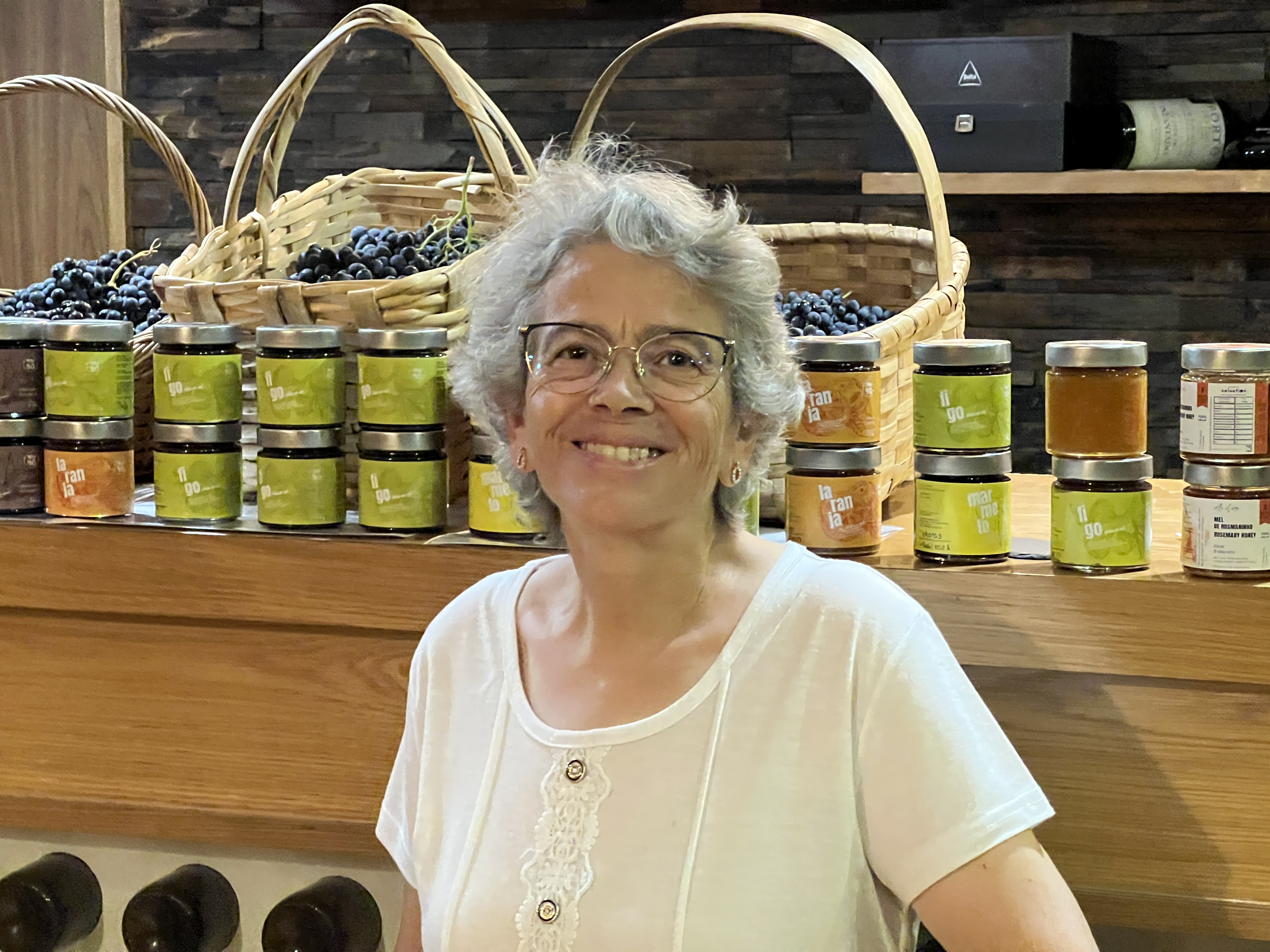
Marília Nanitas came out to greet us. She works for the foundation that manages the hotel. “Can you tell us the story of this place?” we asked with curiosity.  “I can tell you a good lie, which is better than a half-truth,” she replied teasingly. Then, she lent us a book about the history of the convent. 

What we learned from this tome is that it took centuries to build this monastery. The first edifice was a hermitage erected in the year 315. In 446, an earthquake partially destroyed the structure. When in 715 the Arabs invaded the region, the hermits abandoned the sanctuary.

The second king of Portugal, Sancho I, decided in 1182 to rebuild the hermitage as a monastery. In 1372, Dona Brites, the daughter of King Dom Pedro I and Inês de Castro, donated her lands near the convent to the monks. The royal family provided steady support, financing the glorious collection of cobalt blue tiles installed between 1710 and 1725. 

After the state abolished religious orders in 1834, the convent was disputed for 37 years by two municipalities, Estremoz and Redondo. Before leaving the monastery, the monks protected the tiles with plaster walls. It is thanks to their ingenuity that more than 50,000 tiles have survived to this day.

When the government auctioned the convent and the surrounding lands, Henriqueta Leotte Tavares purchased it with her dowery. It was a dream to own a place like this. But also a burden, a responsibility to history. Over the next two centuries, Henriquetta’s family used their income from agriculture to restore the convent. The first generation built a factory that made tiles to repair the roof. The second generation hired carpenters to rebuild the doors and windows. 

Henrique Lotte Tavares, a chemical engineer, belongs to the third generation. He has no descendants, so he decided to turn the convent into a hotel to preserve it for posterity. Between 1989 and 2009, Henrique oversaw countless renovations.  In 1993, he created a foundation to manage the hotel and continue the restoration work.

How was life in the monastery? The Latin word “silentio” inscribed in the tiles reminded the monks of their vow of silence. There are many fountains, perhaps because the sound of flowing water makes silences feel less awkward. The monks could talk only on their way to lunch or dinner. To make the most out of these convivial moments, the friars walked slowly through the corridor that leads to the dining room, which became known as “passos perdidos” (lost steps).

We too walked slowly on the long corridors of the convent to savor the moments spent in this beautiful place so far from the hurries of modern life, so close to the tranquility of heaven.

The Convento de São Paulo is located at Aldeia da Serra d’Ossa in Redondo, Évora. Click here for the hotel’s website.

Zun Zum

It is so much fun to eat at ZunZum! The restaurant, headed by chef Marlene Vieira, has a great location, with the Tagus river on one side and the Pantheon on the other. The food is as wonderful as the location.

We sat for lunch in the esplanade under a large red umbrella on one of those perfect sunny days that Lisbon residents take for granted. The simpatico waiter suggested a rosé made from bastardo at Quinta de Arcossó in Tràs os Montes. It has nice acidity and flavors of cherry and tropical fruit. “Do you want to choose from the menu or be surprised by the chef?” the waiter asked. Surprised, we chose without hesitation.

The “couvert,” a set of delightful little bites that start the meal included codfish tempura (“pataniscas de bacalhau”) and a sourdough brioche. 

The first appetizer was a luscious ceviche made with unusual ingredients: popcorn, red onion, and passion fruit. It was followed by tasty mini pizzas topped with trout eggs, a spider crab called sapateira, and avocado. The pizzas were coated with a traditional spider-crab filling.

Then came “filhoses de berbigão.” They are a feast, the cockles large and juicy floating on a star-shaped bed made from fried dough filled with a cream of cockle broth, coriander, and lemon. 

The fish entrée was a bowl of creamy, savory rice made with clams, cockles, razor clams, and mussels. The rice, a carolino variety from Bom Sucesso, has large grains that soak the appetizing sauce made by the seafood. 

The meat entrée was a slice of delicious black pork accompanied by fried corn and pickles made from cauliflower and celery.

Our first dessert was a yogurt parfait on a bed of strawberry jam. The fatness of the yogurt and the sweetness of the jam are a perfect yin and yang. The second dessert was “toucinho do céu” (bacon from heaven) a pudding made with egg yolks and bacon. It is so tasty that it could, indeed, be served in heaven.

We left ZunZum deeply satisfied and certain that if Robinson Crusoe could eat Marlene Vieira’s food on his desert island, he would never want to leave.

ZunZum is located ar Av. Infante D. Henrique, Doca Jardim do Tabaco in Lisbon, email hello@zunzum.pt, tel. 915 507 870. Click here for the restaurant’s website.

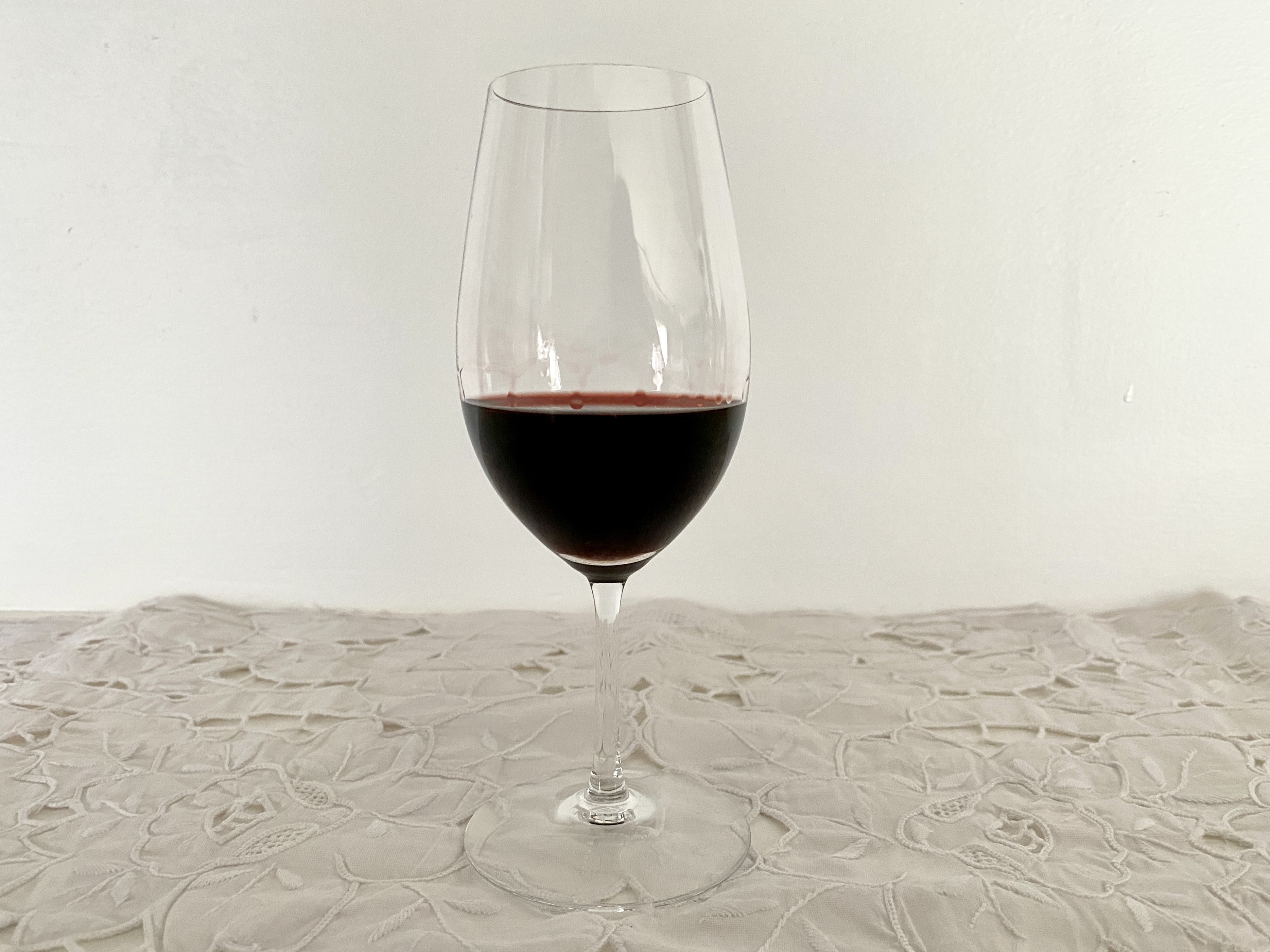
Tasting old white wines with Manuel Malfeito

“White grapes come from a rare mutation of red grapes that probably occurred in Egypt in the 3rd millennium BC. Because of their rarity and the intense aromas of varietals like Muscat and Malvasia, white wines quickly gained the preference of rulers and aristocrats. In ancient times, old white wines were particularly prized. If a white wine survived the passage of time and was still drinkable, it was a great wine,” said Manuel Malfeito, a professor of enology, as a way of introduction. 

Manuel insists on always tasting blind. “Tasting wine is tricky because our brain is an analogy machine, it starts asking: where did I try a wine like this one? And that is when we get in trouble. It is best to taste blind so we have no preconceptions.”

After dispensing these instructions, Manuel retreated to fill our glasses in the kitchen, so we had no chance of getting a glimpse of the bottles that guarded the precious nectars about to be served. He brought the glasses to the table and our sensorial work began. 

The first wine had a pale-yellow color and a seductive citrus flavor. “Is it a high-altitude wine from the Douro region?” one of the friends asked. Manuel revealed nothing. Later, we learned that this wine was relatively young: it was a 2018 Serenada produced by Jacinta Sobral in Alentejo. It has a mature taste because it staged in the bottle for 9 months, 15 meters deep in the ocean near Sines. After the identity of the wine was revealed, we tasted it again and detected salty notes. Our brain is easily influenced by the information we feed it!

The second wine had a bright, luminous yellow color. Its aroma was discreet, almost imperceptible. But its taste was sumptuous, reminding us that wines are made to be drunk, not to be described. Yes, we can talk about the wine’s minerality and flint stone aroma. But words pale in comparison with the liquid radiance of this wine. It turned out to be everybody’s favorite. Later, we learned that this crowd-pleaser was a 2008 Quinta de Chocapalha magnum made by Sandra Tavares da Silva in her family estate near Lisbon. 

The third wine was an elegant mineral wine that has great acidity and persistence in the mouth. This joyous nectar turned out to be the 2015 D. Graça produced by Manuel Malfeito and Virgilio Loureiro in the Douro valley. 

The fourth wine tasted like an old sherry or Madeira; it was dry and evolved. It turned out to be a wine produced by Mário Sérgio at Quinta das Bageiras in 1989!  

The fifth wine was a vivacious old wine with aromas of dried fruit and beeswax. It was dried and had a pleasant acidity. Where was it made? We would never guess. It was a 1996 Tapada dos Coelheiros, a famous estate in Alentejo, a warm region that is not expected to produce this type of wine.

The tasting ended with another outstanding wine: a 1995 Poço dos Lobos made from Arinto, a grape that is famous for producing wines that age well. This wine was no exception. It has a long, seductive finish and a bright freshness with notes of orange peel.

What did we learn from another master class with Manuel Malfeito? That we should taste wines without preconceptions in order to better discover and appreciate their qualities. And that the occasion makes the wine. The best wines are always those we share with friends!