A Wine Lover’s Guide to Bairrada

When wine lovers ask which places they must visit in Portugal, we always recommend Bairrada—a name worth remembering, for it belongs to one of the country’s most captivating wine regions.

Famous Grapes

Bairrada’s soils are a mixture of clay and limestone with streaks of sand. The region is the birthplace of two exceptional grapes: the red Baga and the white Bical. Baga thrives in clay-limestone, while Bical flourishes in both clay-limestone and sandy soils.

The Sparkling Capital of Portugal

Bairrada is Portugal’s sparkling-wine capital. The clay-limestone soils echo the chalk of Champagne, storing moisture during dry spells and reflecting sunlight, allowing grapes to ripen slowly while retaining vibrant acidity and minerality. Cool Atlantic breezes and morning fog temper the summer heat and lengthen the maturation process, giving the fruit extra complexity. The region has been crafting traditional-method sparkling wines since 1890, and they’re now an integral part of daily life. Many meals start and finish with a glass of bubbles, transforming even simple dinners into a celebration.

Where to Stay

We like to make the Vista Alegre Hotel in Ílhavo our base. Built on the marshes of the ria, where saltwater and freshwater meet, the hotel surrounds the 19th-century manor house of the family who discovered the secret of porcelain in 1824. 

The hotel’s shops overflow with graceful Vista Alegre porcelain and exuberant mid-20th-century designs by Rafael Bordallo Pinheiro. Feeling inspired? Join a porcelain-painting class and bring home your own creation.

Wine tasting

Luís Pato 

Our first stop is usually the winery of the legendary Luís Pato. In the 1990s, when foreign consultants urged Portuguese farmers to replace native grapes with French varietals, he stood firm in Baga’s defense. Time has vindicated him: today his Baga wines rank among Portugal’s most prized, and his unwavering commitment has earned him the nickname “Mr. Baga.”

Luís’ energy and creativity know no bounds. His Vinha Pã Baga blanc-de-noir sparkling wine, uses hyperoxidation rather than sulfur dioxide during must clarification. The result is a wine with fine, persistent bubbles, featuring aromas of wild berries and toasted brioche, and an elegant finish. 

Every year, Luís bottles 300 precious bottles of Espumante Pé Franco. It is a sparkling wine made with grapes from century-old vines rooted in sandy soils that shielded them from the phylloxera plague that swept Europe in the 19th century. These ungrafted plants produce a tenth of the yield of a modern vineyard. But the wine is extraordinary—bursting with intensity and lingering beautifully on the palate.

Luis and his daughter, Maria João, are great hosts; gather a group of friends, and they can arrange a feast with leitão (roast piglet), perfectly paired with a dazzling tasting of their wines. 

Filipa Pato & William Wouters

Luís’s other daughter, Filipa Pato, and her husband, master sommelier William Wouters, farm biodynamically with stunning results. Often dressed in their playful “Baga terroirista” t-shirts, they are passionate advocates for Bairrada’s land. Their small winery isn’t set up for visits (even members of Coldplay once struggled to arrange a tasting), but their wines are easy to find in local restaurants and well worth seeking out. Highlights include Nossa Solera, a sparkling wine made from a blend of barrel-aged base vintages going back to 2001, and Nossa Missão, an exquisitely complex Baga from a small vineyard planted in 1864, produced with gentle extraction, resulting in an elegant wine that preserves the grape’s aromatic depth. 

Mário Sérgio

Another icon is Mário Sérgio, who proudly calls himself a vigneron—a winemaker who only makes wines with the grapes he cultivates. Every Saturday, he and his son Frederico welcome visitors to his cellars, pouring sparkling and still wines made with joyous finesse. His celebrated Pai Abel honors his father; both the red and the white are wonderful to drink young yet reward patience, gaining even greater depth and nuance with age.

Caves São João

At Caves São João, the genial Célia Alves leads tastings in cellars that date back to 1920, where venerable still and sparkling wines astonish with their refined character and vigor.

Many of these producers, along with others, come together each year for Baga Friends, a joyful celebration of the grape and a perfect opportunity to meet them all in one place.

Where to Eat

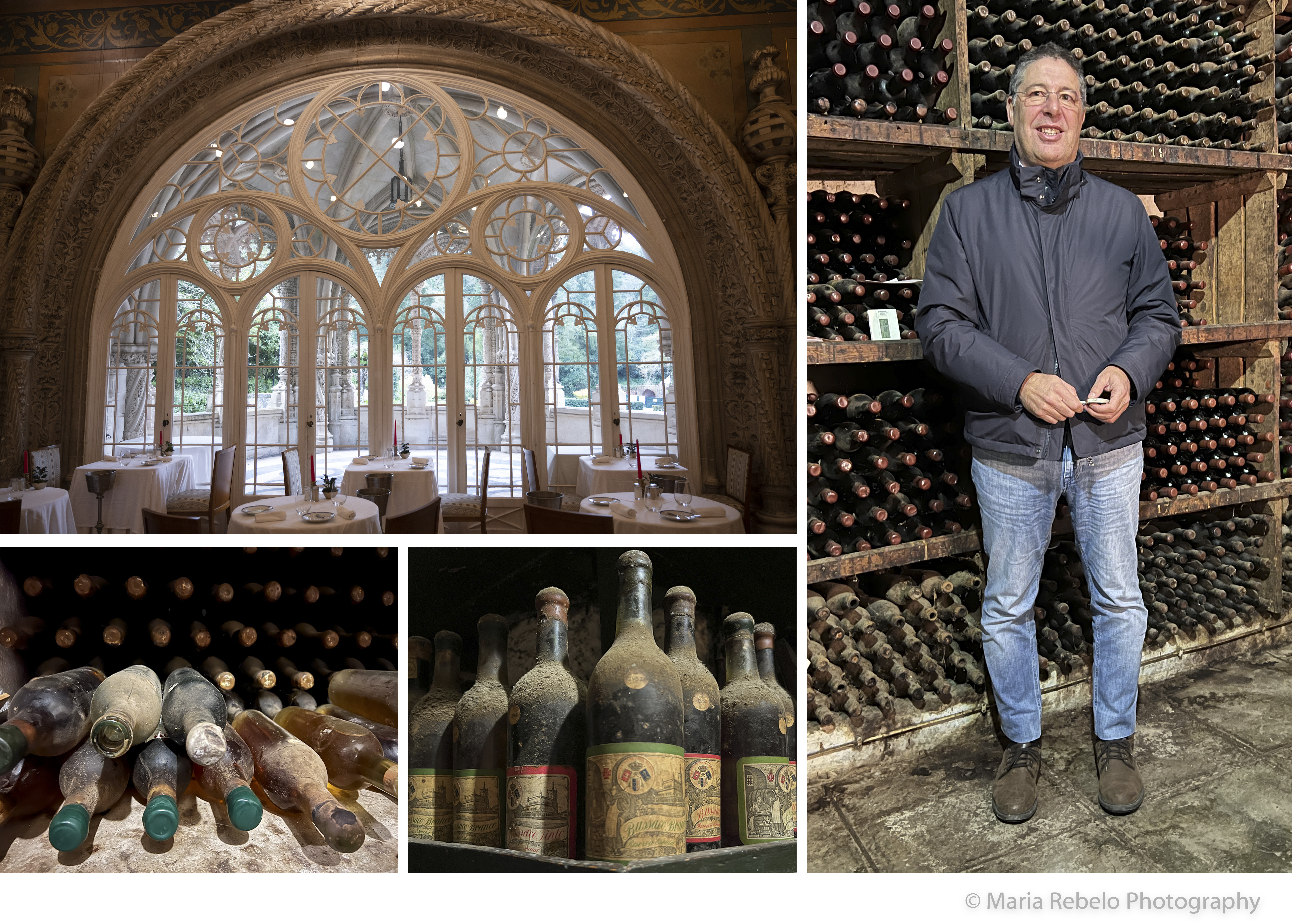
For a regal lunch, head to the Bussaco Palace. Built in the waning days of Portugal’s monarchy, the building, surrounded by a lush forest, was once a royal hunting retreat. The British mystery writer Agatha Christie enjoyed vacationing here. Chef Nelson Marques brings the grand dining room to life with elegant dishes crafted from the finest local ingredients, creating a memorable dining experience.

The palace is renowned for producing wines with exceptional aging potential. Its legendary cellar holds vintages dating back to the early 1900s. Winemaker António Rocha continues this tradition. He recently unveiled the palace’s first sparkling wine—a sumptuous cuvée whose brioche-scented bouquet captivates the nose while the palate delights in luxurious creaminess and vibrant freshness.

No visit to Bairrada is complete without tasting leitão assado (roasted piglet). Mugasa is a perfect place to try this delicacy and a favorite lunch spot for local winemakers.

Beyond the Vineyards

Stroll along Costa Nova, famous for its candy-striped fishermen’s houses and sweeping views of the ria. Walk the wooden promenade by the beach and savor a caldeirada (fish stew) at Clube da Vela, where the river views are as memorable as the meal. 

Another local delicacy, prized since Roman times, is eel. Try the fried eels or eel stew at Marinhas in Aveiro. And don’t leave without sampling the region’s signature sweets: ovos moles, a silky egg confection, and crisp wafer-like hóstias.

The Future of Bairrada

While Champagne grapples with warming temperatures—so much so that some producers are buying vineyards in England—Bairrada is protected by the cool breeze of the Atlantic Ocean. It is a region with passionate wine makers, a unique terroir, and a brilliant future. 

Moscatel de Setúbal, a dessert in a glass

We recently attended a Moscatel wine tasting led by enologist Frederico Vilar Gomes and fell in love with these remarkable dessert wines. Crafted in Setúbal, near Lisbon, by José Maria da Fonseca, they are made from Muscat of Alexandria—one of the oldest grape varietals still in cultivation. Enologists are unsure whether this ancient grape hails from Egypt or Greece. But its versatility is undisputed, producing both elegant table wines and rich dessert wines. 

Muscat vines offer generous yields and a remarkable genetic diversity that protects them against disease. The grapes are intensely aromatic, resistant to heat, and naturally rich in sugar. 

Like Port, Madeira, and Sherry, Moscatel (the Portuguese spelling of Muscatel) is a fortified wine. Brandy is added to halt fermentation before the yeast converts all the grape sugar into alcohol, preserving a lush natural sweetness.

The Moscatel made in Setúbal has been cherished for centuries for its remarkable aging potential. As it matures in oak casks, approximately 2 to 3 percent of the wine evaporates each year—a phenomenon whimsically known as the “angel’s share.” This gradual loss intensifies the wine, concentrating its sugar and acidity and deepening its character. 

José Maria da Fonseca, founded in 1834, is one of Portugal’s most famous wine producers. In 1849, it introduced Periquita, the first branded Portuguese red wine. Just a few years later, in 1855, it earned a gold medal at the Paris World Exposition for its Moscatel de Setúbal. Today, the company has over two million liters of Moscatel patiently waiting in barrels for their moment to shine.

In the 19th century, José Maria da Fonseca shipped barrels of Moscatel by sailboat to Brazil, India, and Africa. Occasionally, unsold barrels made their way back, and, to everyone’s surprise, the wine had improved. The heat and humidity of the sea voyage had accelerated the aging process, delivering in just one year the complexity that would have taken a decade to develop on land. Since 2000, the winery has revived this maritime tradition. Its “torna viagem” (roundtrip) Moscatel now sails aboard the Sagres, a majestic Portuguese Navy training ship, before being bottled as a coveted limited edition.

Unlike table wines, which are bottled in dark glass to protect them from light, Moscatel de Setúbal comes in clear bottles. Light exposure helps foster the oxidation that is key to its unique aging process.

We tasted three Moscatel wines from José Maria da Fonseca’s Alambre brand. The first was the  classic Alambre Moscatel: a liquid dessert with a vibrant orange hue and flavors of orange, honey, and caramel, seasoned with a hint of lemon zest.

Next, we tried a five-year-old Moscatel made from a rare regional mutation of Muscat—the purple muscat—a grape unique to Setúbal. The wine had a deeper hue and a complex profile: tangerine, apricot, lime, melon, honey, and caramel woven with exotic hints of incense, red pepper, and turmeric. 

Our tasting ended with the forty-year-old Alambre. It has a deep color and a taste infused with the distinct aroma of Brazilian oak. The aging process adds complexity to this extraordinary wine, enriching the caramel and honey notes with dried fruits, figs, cloves, and cinnamon flavors.

Whenever we crave an effortless dessert, we reach for a chilled bottle of Moscatel. As the legendary jazz singer Jon Hendricks once put it, “I can’t get well without muscatel.” We couldn’t agree more.

Eduardo Cardeal’s great challenge

Eduardo Cardeal was born in Abaços, a small village in the Douro Valley, where he learned the art of winemaking from his grandfather. As a child, he absorbed the traditions without fully understanding them. His grandfather used to say that the wine wasn’t “cooked” until April. Years later, while studying enology in college, he realized this phrase referred to the malolactic fermentation, the natural process through which lactic acid bacteria transform tart malic acid into softer lactic acid, reducing acidity, enhancing texture, and adding complexity to the wine.

We first met Eduardo in 2019, when he was the head enologist at Herdade da Calada. His life had been marked by tragedy—his wife had passed away, and he found himself raising their three young daughters alone. Seeking a fresh start, he returned to his roots in the Douro Valley and purchased Quinta da Peónia, a historic one-hectare vineyard planted in 1930. It is an estate with a human scale, allowing Eduardo, with the help of his daughters, to handle every step of production—from grafting vines to foot-treading grapes and bottling the wines.

He named this deeply personal project Grande Desafio, meaning “great challenge.” His goal is to create the ultimate handcrafted wines. In 2023, after years of dedication, Eduardo bottled his first vintage—5,000 precious bottles.

Perched on a plateau 550 meters above sea level, Quinta da Peónia is blessed with schist and clay soils. Unlike the famed, fast-draining schist of Foz Côa, Peónia’s porous schist retains water through the winter, naturally sustaining the vines during the dry summer months without irrigation. The altitude brings freshness, while the old vines add remarkable depth and complexity.

Eduardo’s winemaking philosophy focuses on low alcohol and minimal extraction, resulting in light, elegant wines that dance on the palate with remarkable finesse. These wines are rare finds—if you come across a bottle, take it home and treasure it.

Click here for the Grande Desafio website.

Hamilton Reis’ exhilarating wines

Extreme sports, like surfing giant waves, captivate enthusiasts with their exhilarating adrenaline rush. Hamilton Reis’ family wine project, Natus, offers this kind of thrill. The production is organic; the vines are not irrigated; the fermentation relies only on wild yeast and takes place first in the large clay pots that the Romans used and then in old oak barrels. The grapes are picked by hand and trodden by foot. Most modern winemaking techniques are set aside to produce wines with minimal intervention but meticulous attention to detail. Like a master surfer, Hamilton can afford to take these risks because of his extensive experience and depth of knowledge.

Natus means born in Latin. Hamilton chose the name to indicate that he and his family started this project from the ground up. They bought four hectares of land in Vidigueira, Alentejo in 2008. For ten years, Hamilton nurtured the soil so it could recover from decades of chemical abuse with herbicides and pesticides. During that time, he learned about the climate and the varietals planted in the region and talked to the elders about the local wine-making traditions. Those traditions are, for Hamilton, as much part of the terroir as everything else. 

He built a house for his family in the middle of the field so he could take care of the vines as if they were part of his family. The cellar is invisible. It lies underground so that gravity can help unload the grapes. 

An important aspect of the location is the absence of barriers between the land and the sea. The Mendro mountain, situated east of the property, forms a shell that keeps the cool air from the sea. The resulting climate produces elegant wines that are low in alcohol and yet rich in complexity, depth, and freshness. 

These unique wines are difficult to buy because only about 6,000 bottles are produced in each year. Hamilton is determined not to increase production to a level that would compromise his ability to maintain personal control over every aspect of the process. However, to meet the demand for his wines, he has initiated a new venture named Intus, the Latin word for “inside.” This wine is crafted from grapes sourced from a select group of farmers who refrain from irrigating their vines and agree to adopt the rigorous biodynamic methods that Hamilton champions. Like Natus, Intus wines are characterized by their low extraction and alcohol content. However, they undergo fermentation in stainless steel, which preserves the pure essence of the fruit.

The Natus label has a secret. Those who discover it get a glimpse of what Hamilton sees every day: vines that produce wines made without compromises, perfectly in tune with nature.

The Natus vineyards are on Estrada da Cancelinha in Vidigueira, Alentejo. Click here for the Natus website.

M.O.B., stellar wines from the Dão region

In 2010, a leisurely lunch in the picturesque Dão region brought together four wine producers. Three came from the Douro Valley: Jorge Serôdio Borges, Jorge Moreira, and Francisco Olazabal. Their host was Álvaro de Castro, a renowned winemaker from the Dão region, known for the finesse of his wines.

Jorge Serôdio Borges and his wife lead Wine & Soul, a cornerstone of excellence in the Douro Valley. Jorge Moreira has achieved great recognition for his project, Poeira, and for the wines he has made at Quinta de La Rosa. Francisco Olazabal heads the iconic Quinta do Vale Meão. This estate was planted in the late 19thcentury by his great-grandmother, Dona Antónia Ferreira, the person who sowed the seeds of the success that the Douro Valley enjoys today.

The three friends are passionate about the freshness and refinement that can be found in old Dão wines. During lunch, they mused about one day making wine together in the Dão region.

A year later, Álvaro de Castro reached out, encouraging them to make this dream come true: “I need your help to promote the Dão region. There’s an aging producer looking to lease his estate, Quinta do Corujão, in Seia. If you’re serious about launching a project in the Dão region, this is a good opportunity.”

The Douro winemakers visited the 10 hectares of vineyards cultivated on granite terroir at 550 meters of elevation at the base of the Estrela Mountain. They decided to lease the property to make wine together. They called their brand M.O.B., a memorable name composed from the initials of their surnames.

By going to a different region, the three masters of the Douro Valley became students once again. The same varietals behave very differently in Dão and in the Douro Valley. In the Dão region, the climate is cooler, and the soils are granitic. In the Douro region, the summers are hot, and schist is prevalent in the soils.

Douro wines are famous for their intensity. In the Dão, the trio embraced a low extraction approach, aging the wine in old oak barrels that round the tannins without imparting new flavors to the wine. The result is lighter wines that are delicate and transparent, preserving the fruit’s freshness and showing an almost floral character. 

M.O.B. was a success because wine enthusiasts quickly recognized the exceptional quality-to-price ratios of the wines. Five years after their first harvest, the trio purchased Quinta do Corujão and leased five hectares of old vineyards in Gouveia, where white and red grapes are planted together. 

Their outstanding introductory wine is called “Lote 3” because it is a harmonious blend of the three emblematic grape varietals from the Dão region: Touriga Nacional, Afrocheiro, and Jaen. Their stellar premium wines bear the names of Seia and Gouveia before the Roman occupation (“Senna” and “Gauvé”).

A crucial element in the M.O.B. project is the strong camaraderie and mutual respect the winemakers have for each other. Like in Alexandre Dumas’s famous novel, their motto is: “All for one, and one for all.” 

Throughout the harvest season, they take turns visiting the vineyards daily, each making decisions informed by the insights of the vintner who visited the day before and leaving information for the one who follows the next day. This relay race produces wines that win our palate with their charm and elegance.

M.O.B. is a story of three musketeers who journeyed from the Douro Valley to the Dão region, where, thanks to a close-knit friendship, they conquered a new terroir and crafted exceptional wines.

Mouchão’s timeless wines

Turning from the asphalt road onto the rustic path that leads to Mouchão is like entering another century. The route is lined with secular eucalyptuses that perfume the air with their fragrance.  On the left, there are picturesque vineyards. At the road’s end, the winery comes into view. It is where, for more than 140 years, some of the most renowned wines in Alentejo have been produced. 

“The winemaking style remains faithful to tradition,” explains Hamilton Reis, Mouchão’s enologist. “We embrace a philosophy of minimal intervention and meticulous attention to every detail. However, we also harness modern viticultural and oenological knowledge to anticipate and solve problems.” 

What sets Mouchão apart is its unique location. The vineyards are planted on an old riverbed that creates a microclimate, lending freshness to the wines. The underground water sustains the vines during the scorching summers, so they don’t need to be irrigated. To access this subterranean water, the vines develop deep roots that absorb the polyphenols that contribute to the wines’ remarkable richness.

The grapes undergo gentle foot-treading to ensure a delicate extraction and avoid herbaceous notes. The wine ages in large barrels crafted from Brazilian macacaúba, mahogany, Portuguese oak, and chestnut. These old barrels no longer influence the wine’s taste but provide the right amount of micro-oxygenation.

Mouchão is famous as the birthplace of Alicante Bouschet in Portugal. This grape variety, created by French viticulturist Henri Bouschet, failed to thrive in France. At the end of the 19th century, two professors from Montpelier planted some Alicante Bouschet cuttings in Mouchão. Here, basking in the sunny Alentejo climate, the vines flourished, producing wines of intense color and flavor. Alicante Bouschet spread throughout the region and eventually found its way to the Douro Valley.

For six generations, Mouchão has belonged to the Reynolds, a Scottish family. Iain Reynolds Richardson, Mouchão’s current general manager, descends from Thomas Reynolds, who arrived in Portugal in 1824 to trade cork, wool, and other agricultural products. Thomas moved to Alentejo in 1932 and started producing cork in Mouchão. Making wine was a natural extension of his business. In 1890, John Reynolds his grandson, built a family home and some agricultural buildings on the estate. The iconic wine cellar was inaugurated in 1901.

For generations, the Alabaças, a traditional Alentejo family, worked on the estate tending to the vines and making the wines. It was hard manual labor–electricity only arrived in 1991.

In the aftermath of Portugal’s 1974 revolution, the estate was nationalized. The vineyards were abandoned, and the buildings and equipment fell into disrepair. João Alabaça worked tirelessly to minimize the destruction. But, despite his best efforts, by the time the estate was returned to the Reynolds family in 1986, the precious barrels had suffered serious damage. It took a dedicated team of coopers two years to painstakingly restore them. In the meantime, the best grapes were aged in the two barrels that had survived unscathed, labeled 3 and 4. The wine from these barrels, known simply as “Tonel No. 3-4,” achieved mythical status. However, as Hamilton explains, “The real magic lies not in the barrels, but in the quality of the grapes.”

The estates’ flagship wine, simply called Mouchão, was first bottled in 1949. It marries the robust Alicante Bouschet with various varietals, most notably Trincadeira. This wine is a true marvel, with a freshness and elegance unusual in Alentejo. It is a fitting homage to the unwavering dedication of generations of Reynolds and Alabaças.

Myths and secrets at Bussaco

King Charles I enjoyed hunting in the Bussaco forest so much that he decided to turn a local Carmelite monastery built in 1630 into a royal retreat. When construction began in 1888, the king engaged the most important Portuguese artists of the time in the project. 

It is a gorgeous place. Limestone from the nearby village of Ançã, carved with intricate motifs, decorates the outside. Beautiful tile murals and frescos depicting scenes inspired by literary works and historical events adorn the interiors. 

In 1910, Portugal abolished the monarchy and became a republic. The royal palace seemed destined to become a romantic ruin. But Alexandre de Almeida, a local entrepreneur, endeavored to save it. He negotiated a concession with the state to convert the palace into a luxury hotel. Inaugurated in 1917, it became a success with international celebrities like the mystery writer Agatha Christie.

In the 1920s, Alexandre de Almeida started bottling wines to serve in the dining room of the palace.  These wines gathered fame for their unique character and outstanding aging ability. 

Alexandre de Oliveira, the founder’s grandson, currently runs the hotel group that operates the Bussaco Palace. One of his childhood friends, António Rocha, directed the hotel for many years. Fifteen years ago, António told Alexandre that he would like to give up his managerial role to focus on producing Bussaco wines. Knowing António’s passion for these wines, Alexandre accepted his proposal.

We met António in the palace cellar. He’s been spending many hours there, patiently recorking old bottles so the wine can continue to age gracefully. He showed us with pride wines bottled in the 1940s. “They flow from the bottle with remarkable freshness and vigor, ready to be enjoyed,” he told us.

“What makes Bussaco’s wines so special?” we asked António. “Great wine is 60 percent myth and 40 percent secrets,” António answered, smiling. Bussaco is located between Bairrada and Dão, so the wines are made with grapes from both regions. The red is made from Touriga Nacional and Baga, the emblematic grape from Bairrada. The white is made with Bical, Maria Gomes, and Encruzado. Total annual production is small, only 20,000 bottles. But the cellar stores 200,000 precious bottles hoarded over the last century. 

Later, we joined António at a vinic dinner for a small group of wine connoisseurs at the famed Mesa de Lemos. There were many interesting wines to try, and as the wine flowed, so did the conversation. António tuned out the words to focus on the aromas and tastes of the wines. When it was time to sample the Bussaco wines he brought, António tried to be impartial, appreciate qualities, and identify aspects that can be improved. This passion and dedication is the true secret of Bussaco’s wines. 

Click here, for the Bussaco Palace web site.