The sweet alchemy of Tecolameco

Tecolomeco

At the end of a wonderful meal at Flor de Rosa, a great historical hotel in Crato, Alentejo, the maître d’ brought us two slices of a dessert called Tecolameco. In our quest to eat fewer sweets, we decided to have only a small bite to be polite. But once we tasted this marvelous dessert, our will power vanished.

Tecolameco is made of sugar, eggs, almond, pork lard, butter, and cinnamon. There are many other Portuguese desserts made with these ingredients, but none tastes like Tecolameco.

It is said that an old chef found in the Crato castle an ancient book that revealed the meaning of life. All the pages were blank, except for the one with the recipe for Tecolameco.

Click here for the Pousadas’ website and here for more photos of Flor da Rosa.

Perfection in Matosinhos

DCIM103GOPROWhen Oporto residents want to eat fresh fish, they drive to the nearby Matosinhos beach. The town’s main street (Rua Herois de França) and its side alleys are lined up with restaurants.

We usually go to S. Valentim and order rodovalho (turbot). We avoid appetizers so that, when the perfectly-grilled fish arrives at the table, we can give it our undivided apetite.

Each restaurant has a large charcoal grill outside maned by a master griller. This is a person with unbreakable concentration who doesn’t take the eyes off the grill until the fish is perfectly cooked.

Grilling fish is easy, unless you want to do it perfectly, in which case it takes years of experience. It is this perfection that keeps fish lovers coming back to Matosinhos.

S. Valentim is located on Rua Herois de França, 335, Matosinhos, tel. 229379204.


The Óbidos Pousada


Obidos Composit The first king of Portugal, Dom Afonso Henriques, laid siege to the Óbidos castle for two months, but the moorish population resisted his attack. One moonless night, a beautiful lady came down from the castle to speak to the king. She told him that, even though she lived in the castle, she was not moorish. And that she had a recurrent dream she had to fulfill. The king was to attack the castle’s main door. At the same time, he would send a small group of soldiers to the back. There, the lady would leave an open door to let them in. Their surprise attach would secure the victory of the Portuguese troops.

The king of Portugal feared falling into a trap. But something about the lady’s demeanor convinced him to adopt her plan. The next day, the castle back door was indeed open and the Portuguese conquered Óbidos. The king looked everywhere for the beautiful lady, but she had vanished.

The castle of Óbidos was converted into a beautiful historical hotel. After entering though the front door, the one the king attacked, you find a romantic place with wonderful views of the countryside. One of the best views is just outside a door painted red. It is the door the lady left open.

In the dining room two beautiful windows, the sun and moon windows, give us a choice between seeing the sunset and the moonrise. This choice between astral spectacles is one of the many enchanting details that makes a stay at the pousada so memorable.

The pousada is the perfect place to stay at Óbidos. After all, who wouldn’t want to be treated like royalty in a medieval town?

Click here for the Pousadas’ website and here for more photos of the Óbidos Pousada.

The extraordinary salt of Castro Marim

Castro Marin Composit

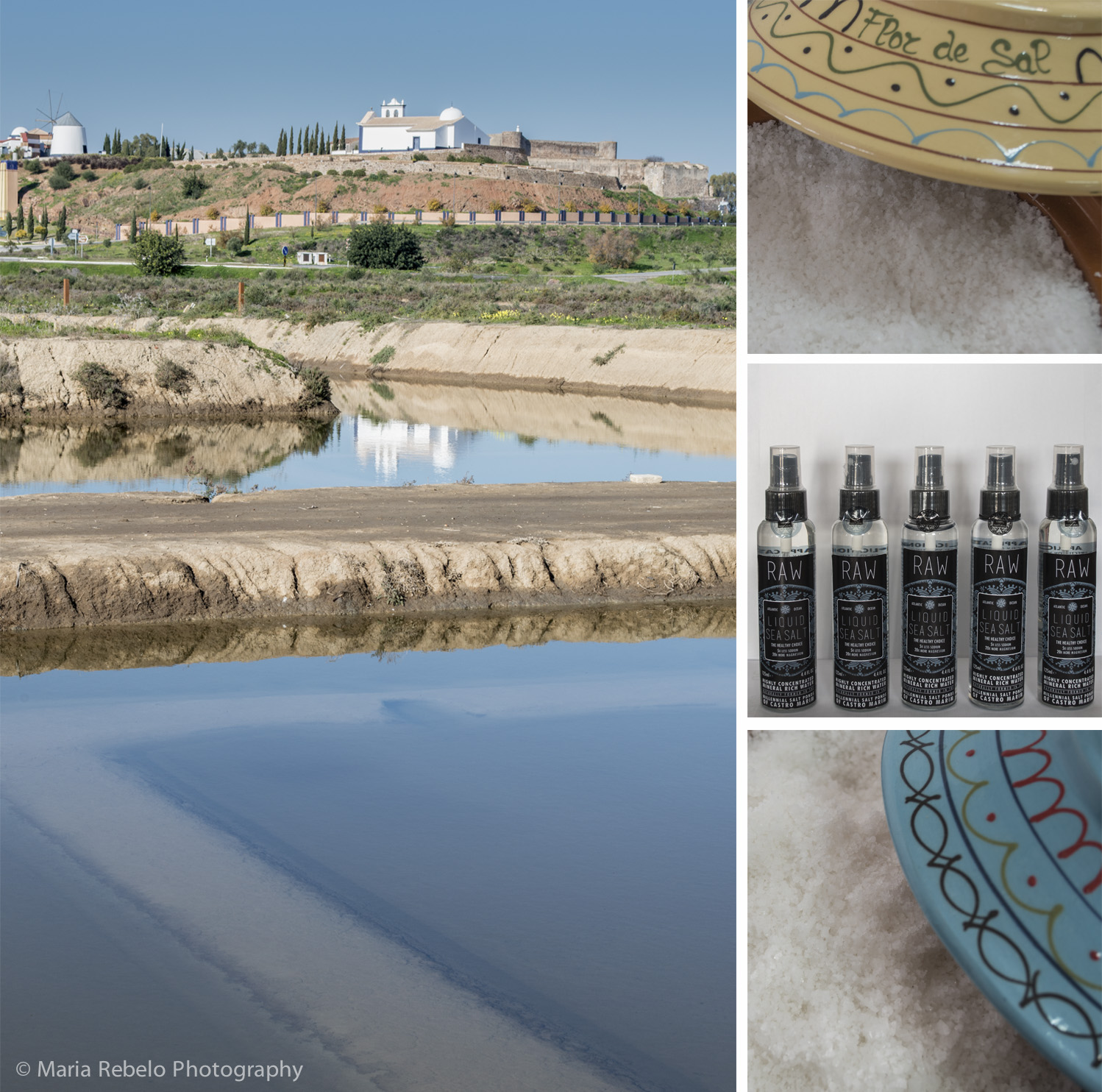
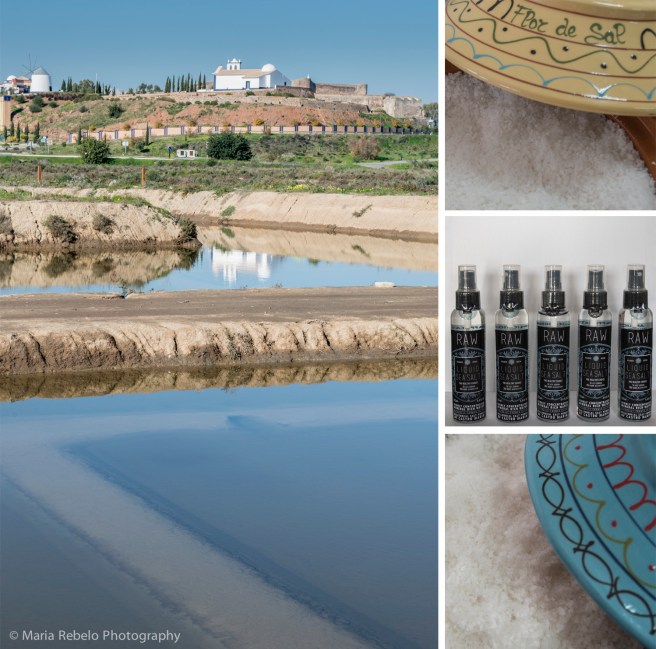
The Romans loved salt. They used it to cook, to preserve food, and as a form of currency (the practice of paying soldiers in salt is the origin of the word salary). So, it is not surprising that the Romans settled in Castro Marim. This small town on the marshes of the Guadiana river produced great salt.

During the 20th century, this production became industrialized. The salt was harvested with heavy machinery that leaves plenty of chemical residues. It was then washed and processed to turn its grey color into white, striping the salt of magnesium, potassium, and other important minerals.

Artisanal producers abandoned their salt ponds and so did the fish and birds that used them as habitats. Centuries of knowledge about producing great salt was on the verge of being lost.

But then, the tide turned. In the late 1990s, a cooperative called Terras de Sal revived the artisanal salt trade. It invited a French certification body to establish the strictest certification norms to ensure the highest standard of quality. It created the conditions to attract a new generation of producers who left their city jobs and came to Castro Marim to produce the best salt in the world.

These producers harvest the salt manually with wooden tools, a slow process that is essential to avoid chemical contamination. They do not wash the salt, to ensure that it retains all its important minerals. Since rain muddies the water, they only harvest when the weather is dry, between May and September.

One of the cooperative’s producers is called Água Mãe. Their salt is amazingly white and flavorful. Their “fleur de sel,” made of fine crystals created by temperature differentials between water and air, is exquisite. Água Mãe also bottles liquid salt, which is low in sodium and high in magnesium. When we spray it on our salads it gives them layers of delicate flavor.

The Romans were prescient in their love of salt. An amazing fact about our bodies is that, because life began in the sea, the composition of our tissue fluid resembles that of natural sea salt.

The ordinary act of seasoning our food becomes extraordinary when we use salt from Castro Marim. It is a privilege to nourish our body with the same pristine salt prized by the Romans 2000 years ago.

You can find the Água Mãe salt store on Travessa dos 3 Marcos, n.º 11, Castro Marim, Algarve, tel. 961380503, email  aguamae@aguamae.pt . Click here for the Terras de Sal web site. To buy the wondrous salt of Castro Marim in the U.S., click here.

A royal inheritance

St. André HorsesThe excitement of driving a Ferrari or a Maserati doesn’t come close to the thrill of riding a Lusitano horse. You can, for modest fees, master the art of riding these elegant animals at the St. André Lusitanos school, on the outskirts of Lisbon.

The school has a long tradition of teaching excellence. When you take one-on-one lessons with the St. André instructors, you become an heir to knowledge that goes back to King Dom Duarte’s famous 1435 equestrian treatise “The art of ridding on every saddle.” If you always yearned for a royal inheritance, this is your chance.

Click here for the St. André Lusitanos website.

The Seteais palace

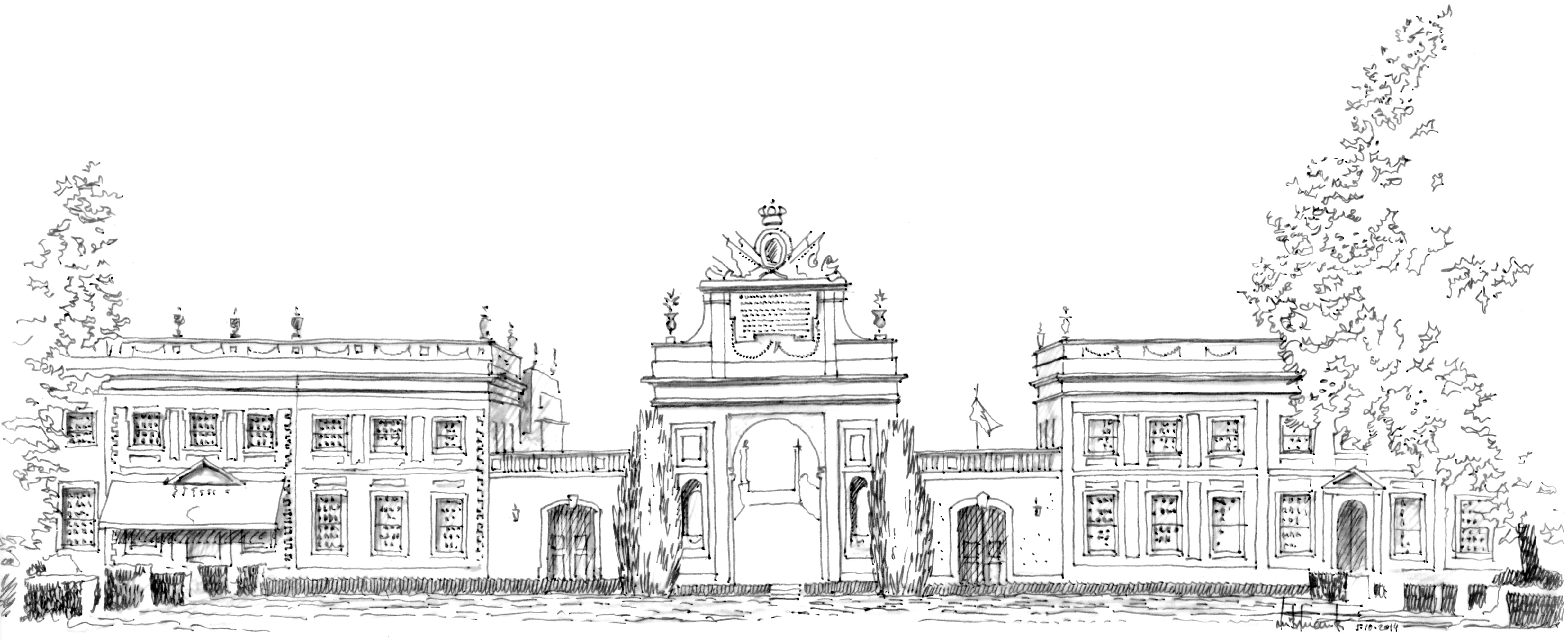
The Seteais Palace, Rui Barreiros Duarte, ink on paper, 2014.

Seteais means seven sighs, a name inspired, according to legend, by the romance between a Portuguese noble and a Moorish princess.

The Seteais palace was built in Sintra in 1787 by the Dutch consul and later sold to the wealthy Marquis of Marialva.

In 1954, the palace was converted into a luxury hotel. Booking a room at Seteais guarantees you’ll have a memorable experience. If you don’t stay at the hotel, you can still experience its unique atmosphere by visiting the elegant bar for a glass of white port before dinner.

In 1802, the Marquis of Marialva invited the Prince Regent, John IV and his wife for a visit. To celebrate the occasion, the Marquis built an archway decorated with busts of the royals. A Latin inscription praises the prince for his wisdom and prudence. No one could guess that five years later the Portuguese royal family would flee to Brazil to escape Napoleon’s troops.

The echoes of these twists and turns of Portuguese history have long faded. What remains, is one of the most romantic places in the world.

 Click here to see the Seteais Palace website.

Becoming famous

OLYMPUS DIGITAL CAMERA

The Portuguese love codfish so much that the easiest way to become famous in Portugal is to create a popular codfish recipe.  Writers might see their books go out of print, painters might see their works gather dust. But no one forgets Brás, Zé do Pipo, and Gomes de Sá because their recipes are part of our daily life.

In a recent visit to Tasca da Esquina, chef Victor Sobral prepared us a surprise menu. One of the items was a very refined version of codfish Brás style, the best we have ever tried. Imagine how Brás would feel, seeing his century-old recipe come alive in the hands of a great contemporary chef!

We wish we could write a longer post but we have to go, we bought some codfish to try a few ideas.

Heavenly delights

OLYMPUS DIGITAL CAMERA

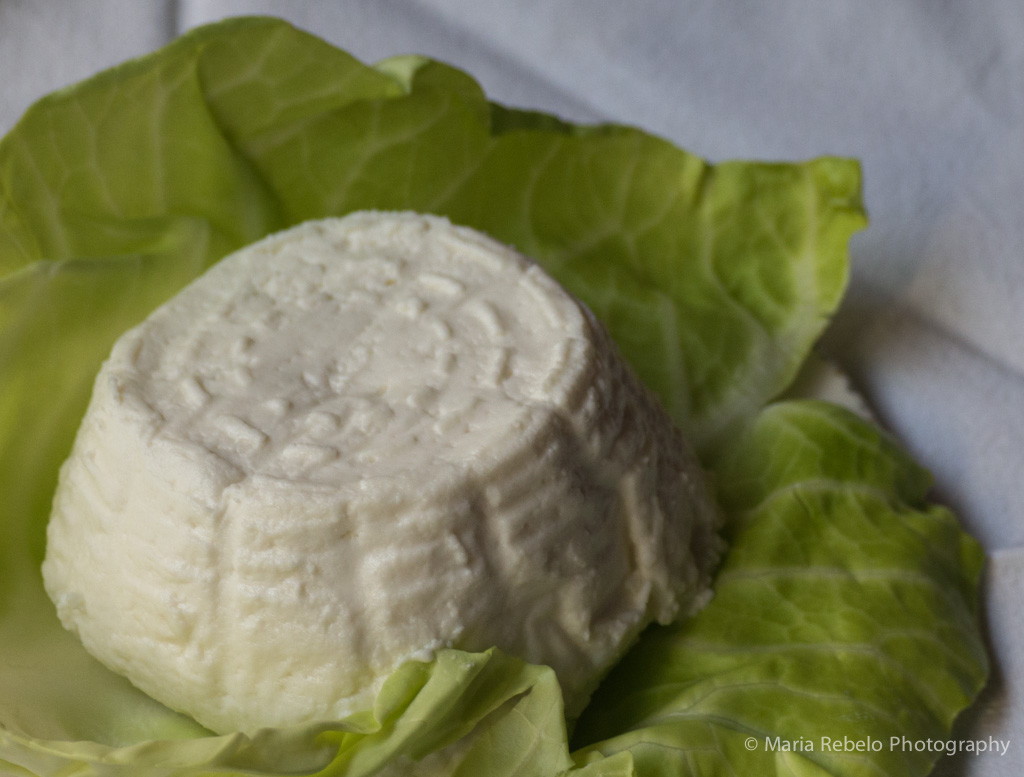
During the cold months of the year, banquets in heaven include slices of a white soft cheese served with pumpkin jam, toasted almonds, and a whiff of cinnamon. It has a silky texture and a smooth, milky taste, just what you’d  expect from heavenly food.

“What do you call this celestial cheese?,” newcomers ask the angels. “Requeijão” they answer. “It is made with sheep and goat milk by shepherds who live nearby, in Portugal’s Estrela mountain. Requeijão is great all year round. But it is exceptional in the Fall and Winter, when we always include it on our menus.”

One of the surprises of heaven is that some of its delights come from earth.

The octopus capital

St. Luzia (Polvo) Composit

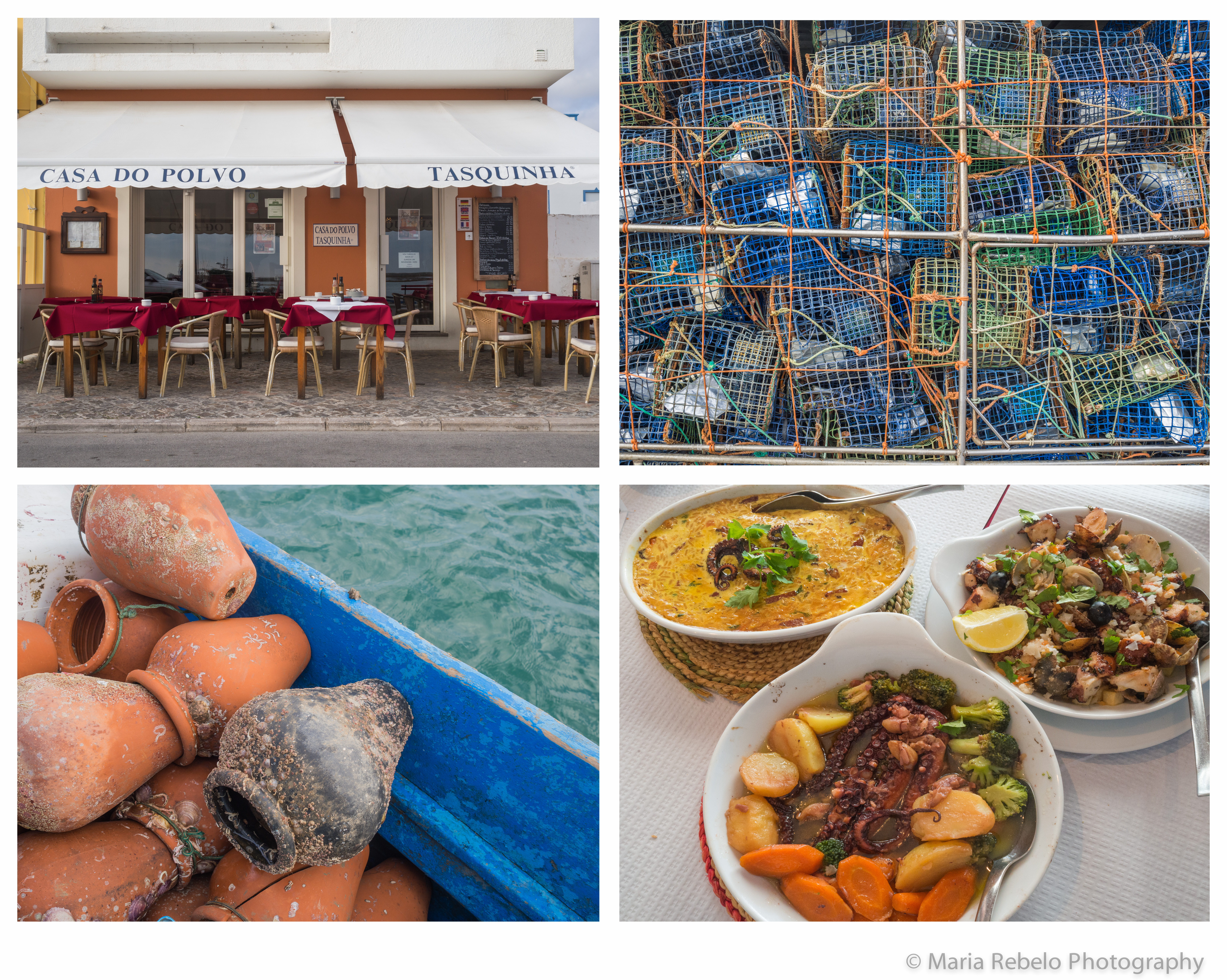
The best octopus in Portugal comes from Santa Luzia, a small village near Tavira in the Algarve. The locals proudly call it octopus capital.

The shores of Santa Luzia are full of small shrimp that attract the octopi. Old-time fishermen lay clay pots called “alcatruz” in the water. The octopi cuddle in these pots to sleep and get caught when the pots are removed from the water.

Younger fishermen don’t like to wait for the mollusks to fall asleep, so they prefer to use a “covo,” a plastic trap with a sardine inside.

Old timers swear that the octopus caught with the alcatruz tastes much better than the one caught with the covo. But young and old agree that Casa do Polvo is a great place to eat octopus. There are many preparations to choose from, including carpaccio, stewed, fried, and roasted. Our favorite is “polvo panado,” octopus combined with egg and bread crumbs and then fried. No matter which preparation you choose, the octopus is tender and delicious.

If you’re traveling in the Algarve, it is a great idea to include Santa Luzia on your itinerary. You’ll have the opportunity to enjoy a wonderful meal and earn the right to brag that you’ve visited the octopus capital.

Casa do Polvo is on Avenida Eng. Duarte Pacheco, N. 8, Santa Luzia, Tavira. Tel. 281-328-527. In the Summer reservations are a must.

Wine lessons

Adega Mãe Composit

If you’d like to learn more about wine, we have the perfect plan. Adega Mãe, a new winery in the Lisbon region, organizes one-day courses on wine appreciation that are seriously fun.

The morning is devoted to the theoretical aspects of wine making and wine tasting. After a coffee break, the practice begins. Guided by an experienced enologist, you taste Portuguese wines made with different varietals and compare them with foreign wines.

Once your palate is trained, lunch is served in the beautiful dining room that overlooks the vineyards. Wines produced with grapes from these vineyards are carefully matched with each different dish.

After lunch, there is opportunity to ask more questions and taste more wine. Don’t leave before trying Adega Mãe’s elegant Alvarinho white wine!

Adega Mãe is located near the town of Torres Vedras. Click here for their website. To ask about their wine appreciation courses email enoturismo@adegamae.pt