
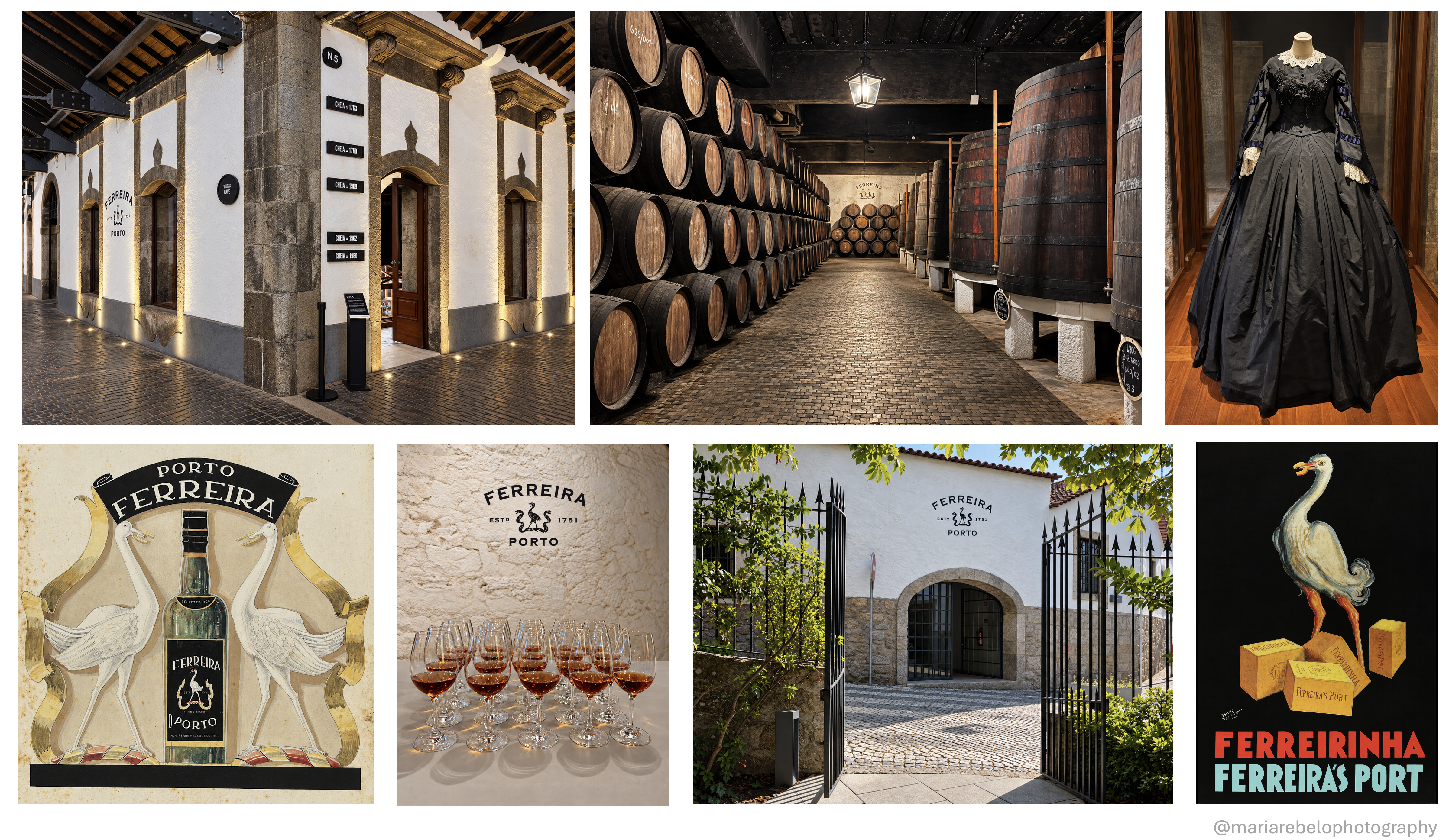
When we step into the Ferreira cellars on a bright summer afternoon, our eyes take time to adjust. The darkness inside inspires an almost instinctive reverence. Only an occasional bulb illuminates our path.
The story of these cellars is intertwined with trade between Portugal and England. The Methuen Treaty, signed in 1703, opened Portuguese markets to English woolen textiles and gave Portuguese wines preferential access to England.
As exports grew, wine merchants built warehouses in Vila Nova de Gaia, on the southern bank of the river, opposite Porto, to age Port wine. Gaia’s north-facing slopes offered shelter from the sun, while its cool, humid climate let Port mature slowly, with less evaporation than in the hot, dry Douro.
Casa Ferreira was founded in 1751 and later transformed by Dona Antónia Adelaide Ferreira, affectionately known as Ferreirinha. She greatly expanded the family’s vineyards and invested heavily to help the Douro recover from the phylloxera plague. As her business prospered, the cellars expanded until the complex became a small neighborhood beneath a single roof, complete with its own streets.
The cellars include a huge warehouse, called Armazém da Cruz, and Casa da Praia, a riverside house Dona Antónia acquired near what was once a popular river beach. Its walls still bear marks recording the heights reached by the great floods that periodically inundated the riverfront before dams helped regulate the Douro’s flow. The highest mark records the great flood of 1739.
Inside the house, we find many mementos of Dona Antónia’s life, from one of her dresses to an anonymous letter that prompted her to seek temporary refuge in England with her daughter. The letter warned that the Duke of Saldanha intended to abduct her twelve-year-old daughter and force her to marry his son, thereby gaining access to the family fortune.
Leaving the house, we follow winding passageways, decorated with reproductions of old Ferreira advertisements, that draw us deeper into the cellars. Barrels and enormous wooden vats called balseiros stand in silent rows, their contents slowly aging. The floors are paved with wooden blocks that allow the heavy barrels to roll more easily while cushioning them against impact. Overhead, an intricate network of timber beams supports the roofs.
An exhibit displays the tools coopers used to make and repair wine barrels. Nearby, old bottling equipment recalls an age when bottles were wrapped in straw to protect them during shipping.
Ferreira’s emblem, an emu with a horseshoe in its beak, is everywhere. The bird symbolizes confidence in the future, while the horseshoe stands for luck and evokes the Ferreira name; the word ferreiro means blacksmith. Together, they capture the spirit of a house that, despite floods, plagues, and political turmoil, never lost faith in the wines of the Douro.
The Ferreira cellars are located at Av. de Ramos Pinto 70, Vila Nova de Gaia. Click here for their website.

