Planning a glorious trip to Porto and the Douro Valley

In Porto, we like to stay far from the commotion of the city center. One of our favorite choices is Freixo, an 18th-century palace converted into a luxury hotel. We’re also fond of the neighboring Pestana Douro Riverside, a perfume factory turned into a modern hotel with generous views of the Douro River.

Exploring Porto’s architectural jewels like the Bolsa Palace, the Lello bookstore, and the Majestic café is always a joy. And we never tire of the spectacular tile panels that decorate the São Bento train station and the Carmo church. If you’re a music lover, check out the schedule of Casa da Música, a concert venue designed by Rem Koolhaas. We like visiting Bolhão, a 19th-century farmers market that has been recently renovated. It is the perfect place to buy a present for a gourmet friend, while enjoying a glass of wine and some appetizers.

We also love visiting the Serralves Foundation, exploring its contemporary art exhibitions, strolling through the elegant Art Deco mansion, and wandering through the magnificent gardens adorned with striking sculptures.

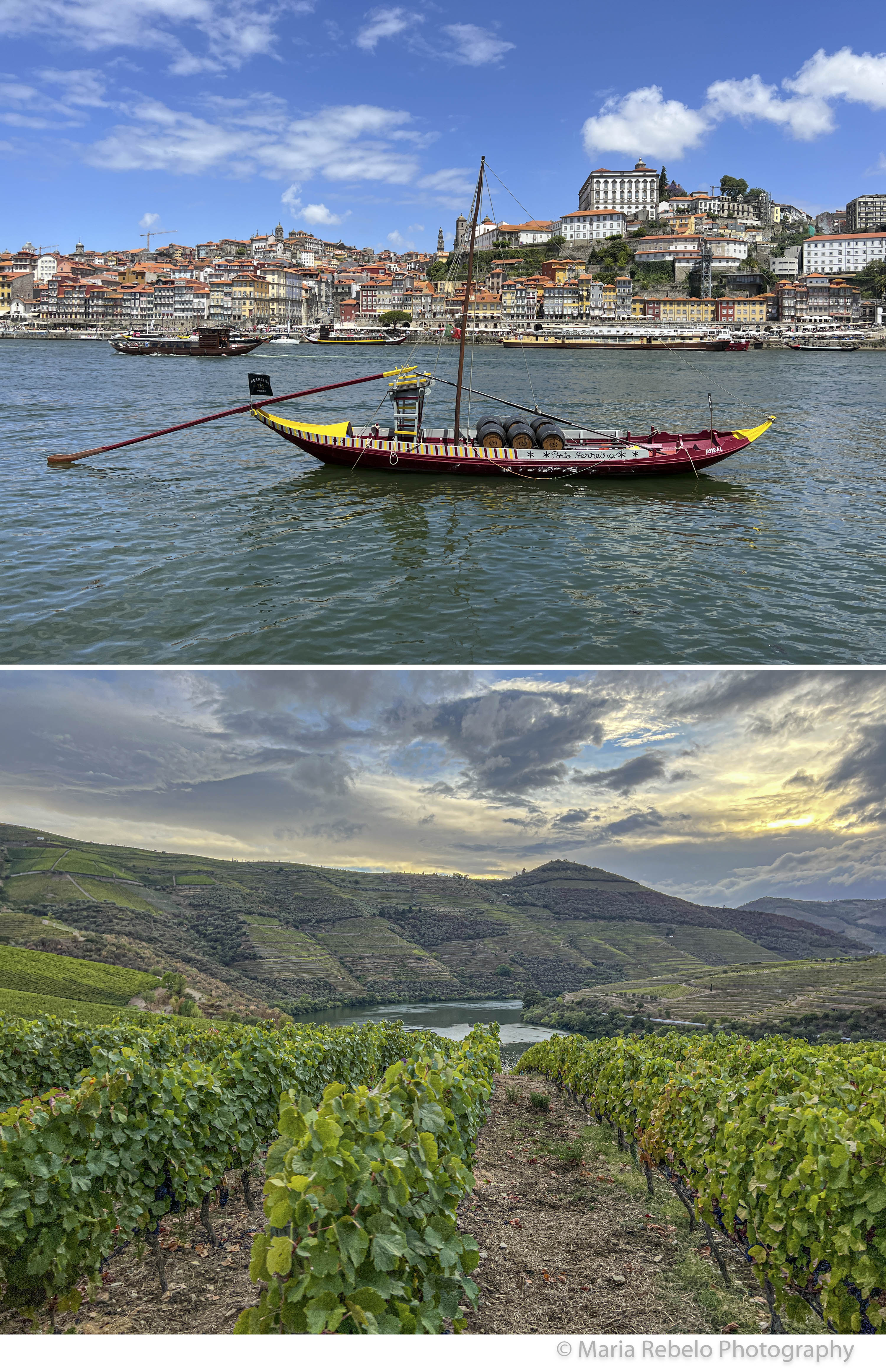
Another favorite activity is to visit Gaia’s port-wine cellars. Port-wine merchants built these cellars to protect their precious wines from the scorching Douro Valley summers and allow them to age gently. Over time, the cellars expanded, often taking over adjacent buildings and even entire streets. The Ferreira cellars include the house that once belonged to the famous Dona Antónia Ferreira. A cellar visit is a unique way of experiencing the magic of port wine. The cellars of Taylor’s, Ferreira, and Ramos Pinto are all great choices.

For lunch, we like going to Matosinhos to feast on grilled fish (rodovalho is our favorite). It is always delightful to eat at Gaveto, a renowned traditional restaurant. For an enchanted evening, treat yourself to a sunset dinner at the luxurious Boa Nova Tea House headed by chef Rui Paula.

To enjoy panoramic city views while sipping an aperitif, head to the rooftop of DeCastro Gaia. Whether it’s a chilled dry white port, a port tonic cocktail, or the exquisite Soberbo vermouth produced by Poças, you’ll find the perfect drink to complement the breathtaking scenery. When you’re ready for a delicious meal, head down one floor to relish the culinary delights prepared by Miguel Castro e Silva at DeCastro Gaia.

There are many fine dining choices in Porto. Eskalduna, helmed by Vasco Coelho Santos, offers a gastronomic journey through Portugal’s finest produce. Pedro Lemos crafts refined versions of traditional Portuguese recipes, while DOP, led by chef Rui Paula, is another avenue to savor his elegant cuisine. At Casario, chefs Miguel Castro e Silva and José Guedes have created a menu full of tempting flavors. Guests can enjoy it in a warm, intimate interior or on a terrace with sweeping views of the Douro River.

There are also traditional eateries like Adega S. Nicolau that have stood the test of time.

After spending one or two days in Porto, it is time to head to the Douro Valley. You can opt to drive or take the train to Pinhão, a town in the heart of the valley, from the São Bento or Campanhã stations. Alternatively, you can travel from Porto to Régua by boat. The eight-hour ride offers an opportunity to admire the magnificent bridges designed by Gustave Eiffel and sail through the impressive locks which regulate the river flow at Crestuma-Lever and Carrapatelo.

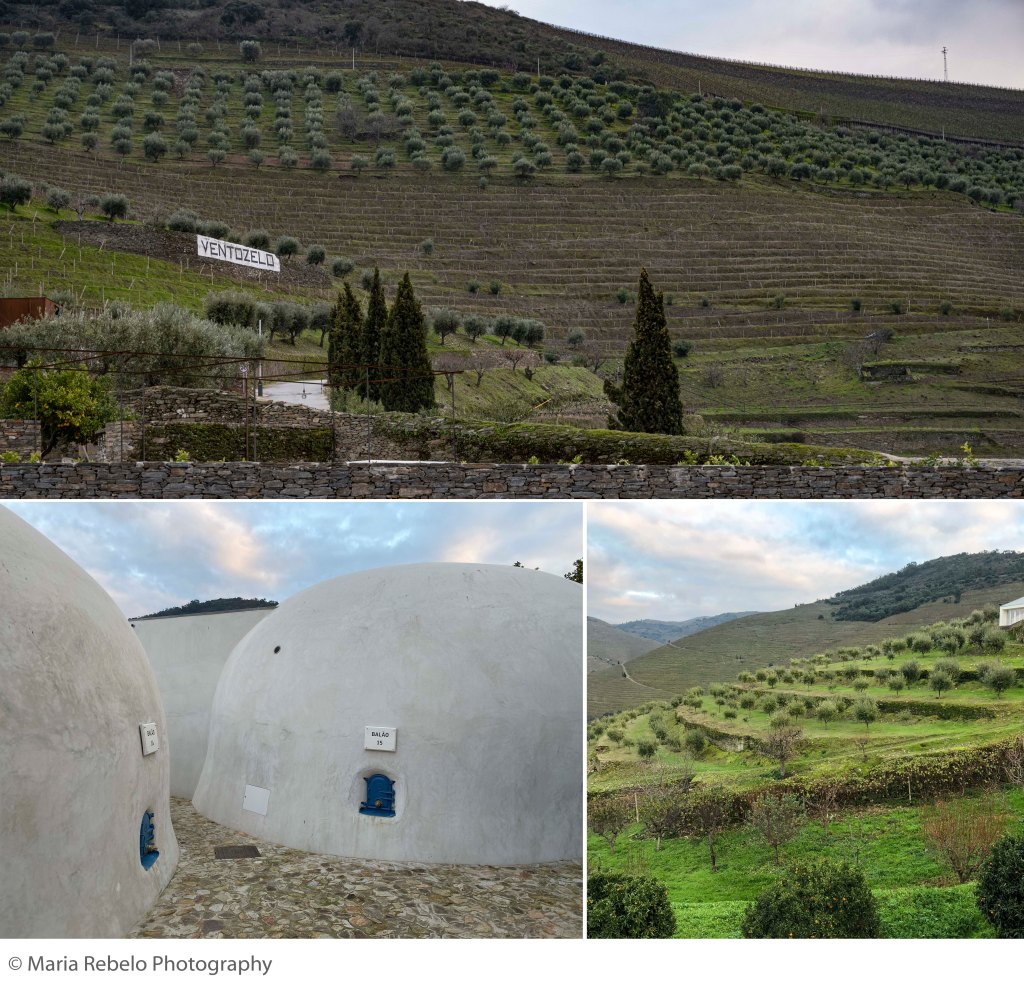
In the Douro Valley, it is a privilege to stay at Ventozelo, a magnificent wine estate transformed into a luxury hotel. The houses once occupied by workers and two port-wine balloons have been beautifully converted into unique bedrooms. Other elegant accommodations include the riverside Vintage House in Pinhão, the luxurious Six Senses Douro Valley, and the meticulously restored Quinta da Corte.

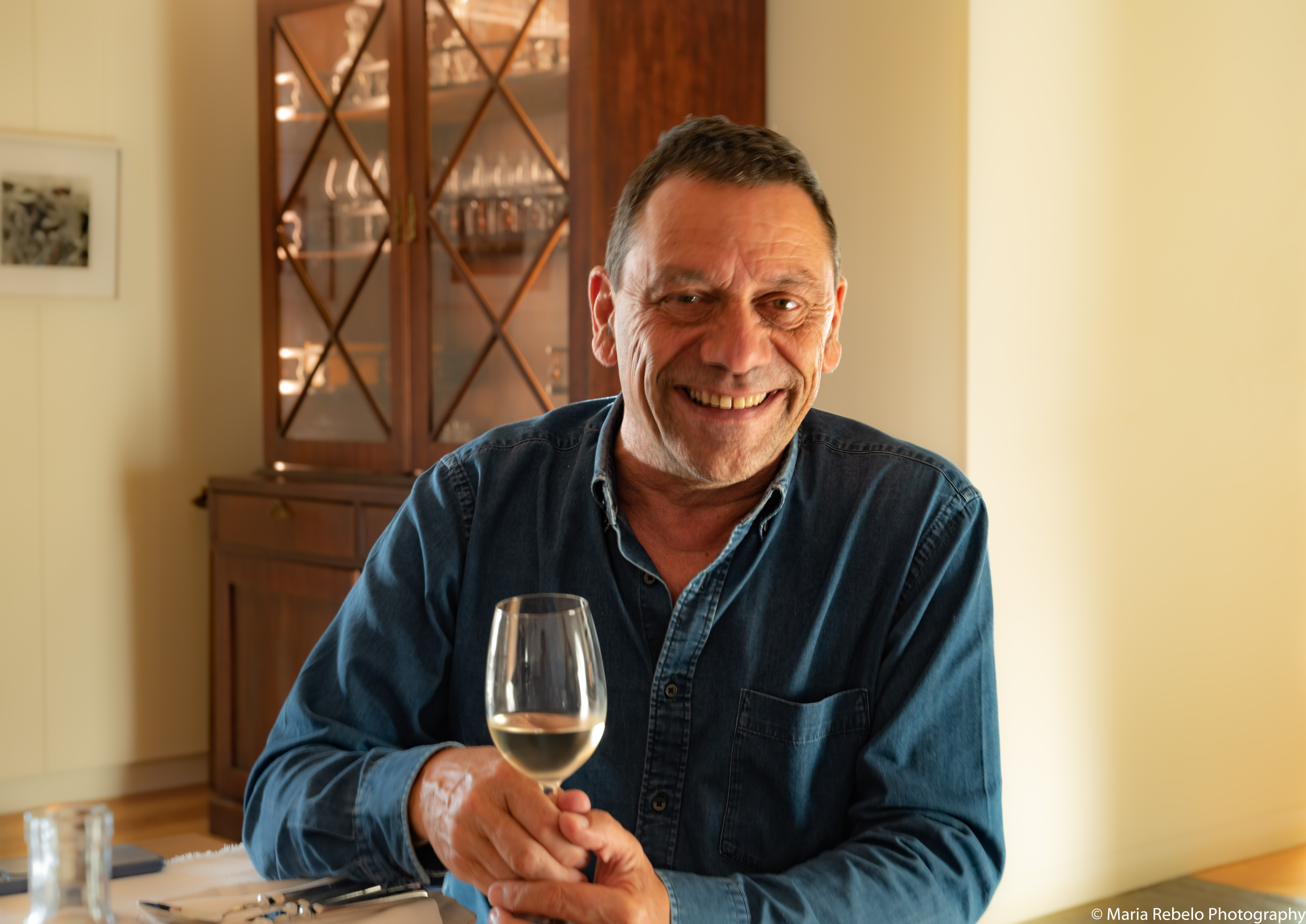
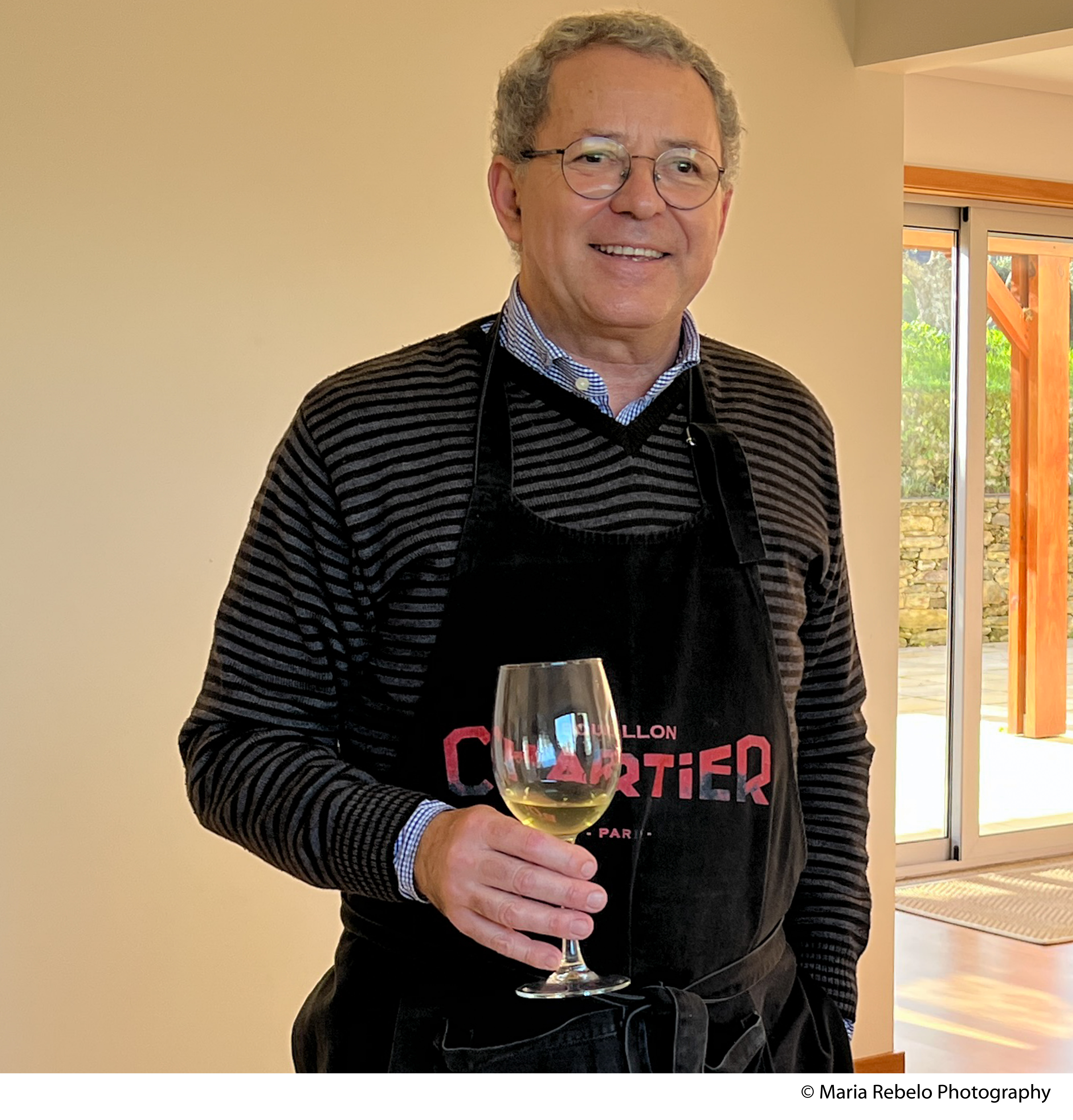
As soon as we drop our bags at the hotel, we head to Foz Torto, a winery near Pinhão owned by our friend Abílio Tavares da Silva. Abílio, a successful engineer who sold his company to become a wine producer, is the ultimate guide to the secrets of the Douro Valley. We also make sure to visit Sandra Tavares da Silva and Jorge Serôdio Borges, the acclaimed Wine & Soul enologists. Their exquisite wines showcase the best the Douro has to offer. It is always a pleasure to visit the vineyard that produces the iconic Pintas or their splendid Quinta da Manoella.

Distances within the Douro Valley are short, but travel times can be long because the narrow roads meander through the landscape. There are two ways to enjoy the breathtaking views without worrying about driving. The first, is to board the historical, coal-powered train from Pinhão to Tua for a journey back in time. The second, is to travel by boat from Pinhão to the mouth of the Tua River. In the past, the aristocratic Douro families traveled by boat to visit each other. There were no restaurants, but every family had a talented cook who used traditional recipes to prepare culinary feasts.

One of these cooks is Dona Graça. Together with her daughter Rosário, she opened the delightful Toca da Raposa restaurant in Ervedosa do Douro. We love her cooking so much that we often have all our meals here. 

There are two restaurants with beautiful views of the river. The esplanade of Foz do Tavora is the perfect spot to enjoy a simple meal. DOC, another Rui Paula venture, is one more opportunity to try his elegant food. If you’re in the mood for a sumptuous breakfast or brunch, you can satiate your desires at the Six Senses Douro Valley

As our stay in the Douro Valley nears its close, it’s always hard to leave. Abílio reminds us that our restlessness reflects our “urbanoid” disposition – we constantly seek new vistas instead of embracing paradise. Why don’t you move to the Douro Valley?, he asks. Perhaps one day, we shall heed his wise advice.

The maker of Barca Velha

Luís Sottomayor, the enologist who makes Barca Velha, an iconic Douro valley wine, is uncomfortable with his fame. He misses spending August in quiet solitude amidst the vines at Quinta da Leda, the large estate that produces most of the grapes used in Barca Velha. Today everybody wants to talk to him, journalists, sommeliers, and wine enthusiasts. They all want to discover the secret of Barca Velha.

Luís says the style was created by the legendary Fernando Nicolau de Almeida when he produced the first Barca Velha in 1952. Nicolau de Almeida traveled the Douro valley in search of grapes that could make an exceptional table wine and found them in a region called Douro Superior. He blended grapes from high altitudes that have acidity and freshness with those from low altitudes that have maturation, body, and color. This marriage of acidity and structure created a sublime wine that can age and improve for decades. 

Barca Velha is made with the best grapes that Sogrape, Portugal’s largest wine company, has in Douro Superior. The parcels are vinified separately and stored in casks. Luís creates a blend from the different barrels. If the resulting wine meets his exacting standards, he bottles it. Then the wait begins. He samples the wine with his team for four, five, six, sometimes seven years before deciding whether to label it Barca Velha or Reserva Especial. Since 1952, there have only been 20 vintages of Barca Velha and 17 of Reserva Especial. 

Luís says that some decisions are challenging but he was lucky to learn with the two masters who made Barca Velha before him, Fernando Nicolau de Almeida and José Maria Soares Franco. Luís was hired by Soares Franco in 1989 and became responsible for Barca Velha in 2007. 

“For how long should we store a Barca Velha?” we ask. Luís smiles and says he doesn’t like waiting too long to pull the cork from the heavy bottles that guard the precious wine. “Open it when you’re with good friends,” he recommends. Luís is a hunter, so he loves to pair Barca Velha with partridge or duck. “But the wine also can be enjoyed without food, especially by the fire on a cold winter night,” he says. 

We asked Luís about another remarkable Sogrape wine called Legado (the Portuguese word for legacy). “Barca Velha has a consistent style and is the expression of a large terroir,” says Luís. “Legado is the opposite. It comes from a small terroir– a vineyard planted in 1910 with eight hectares that produce only six or seven tons of grapes. Each vintage is a different chapter of the life of that vineyard.”

Luís grew up on a farm near Porto. His father, who studied enology in Dijon after the 2nd World War, worked in a port wine company. From an early age, Luís dreamed about being a winemaker. Now he makes wines that people dream about drinking.

The professor’s partridges

The best partridges we ever tasted were cooked by a professor. His name is Emídio Gomes. He is the rector of the UTAD, the university that trained many of the star enologists who work in the Douro valley. 

Emídio learned to cook while studying in France on a meager scholarship. He asked his grandmother to teach him some of her recipes so that he could eat at home. Cooking was so relaxing that he continued to cook regularly after returning to Portugal.

Emídio’s stewed partridges are renowned throughout the Douro valley. The professor generously gave us his grandmother’s recipe and allowed us to share it with our readers. 

The recipe starts with an admonition: “If the partridges are good, make sure you don’t ruin them.” Here’s the rest. 

Remove the feathers and the tripes of the wild partridges and cut them into pieces. Marinate them for twelve hours in a small amount of white wine, laurel, parsley, and a little thyme.

Heat a cast iron pot. Pour a generous amount of olive oil. The quality of the olive oil is paramount. Choose an olive oil with low acidity, ideally from the Douro valley. Slice enough onions to cover the bottom 2 inches of the pot. Slowly sweat the onions. Remove the thyme, laurel, and parsley, and place the partridges in the pot. Add a small amount of water to prevent the stew from drying.

Cover the pot with the lid and slowly stew the partridges for four to five hours. Monitor periodically to ensure the stew does not dry; add small amounts of water as necessary. Season with salt towards the end of the cooking period. After the first four hours, regularly pierce the meat with a fork. The partridge is ready when the meat offers no resistance. Serve with white rice and toasts.

Like a top scientific paper, the recipe requires high-quality content and flawless execution. And in the end, the results look deceptively simple.

The timeless Quinta do Seixo

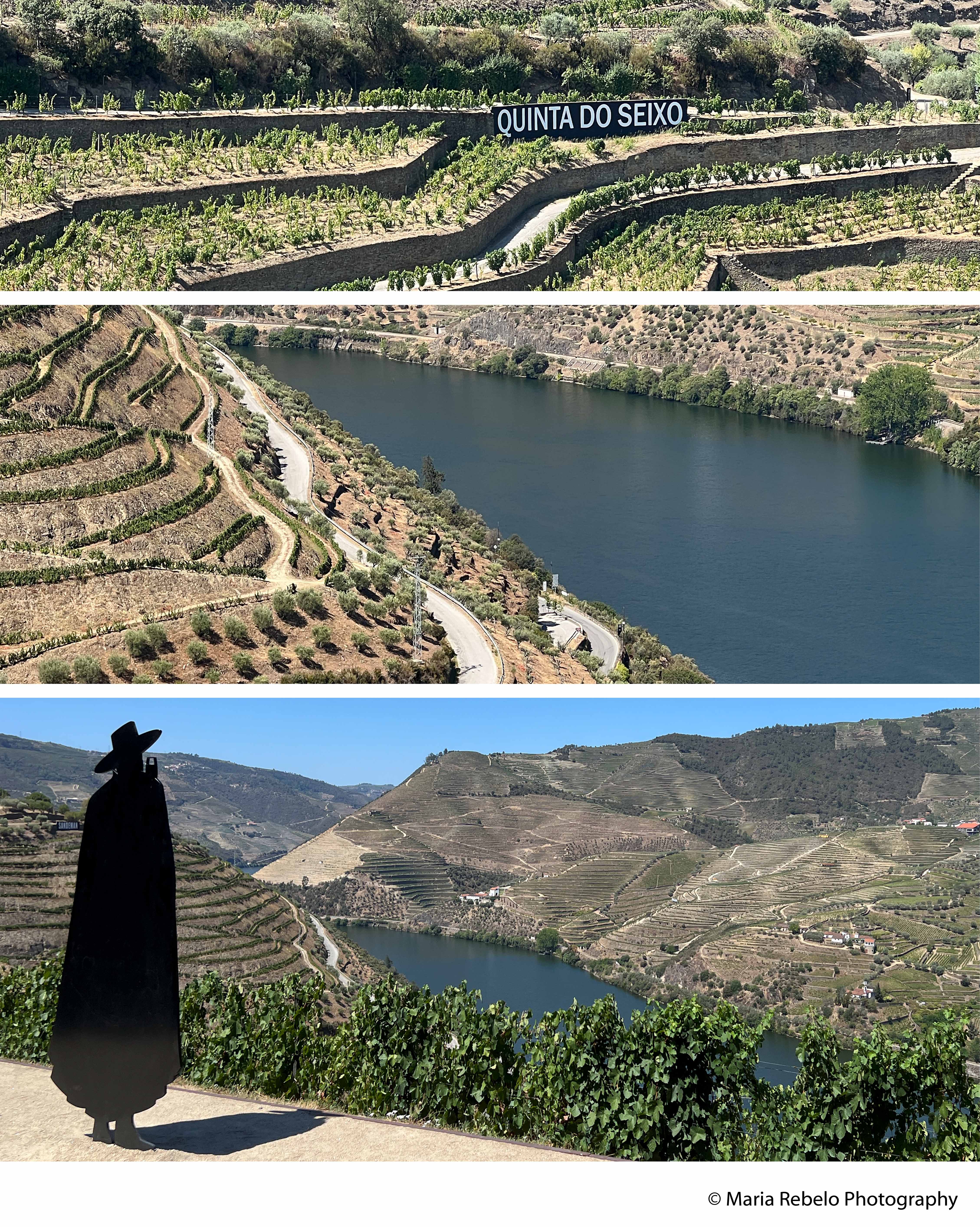
Quinta do Seixo in the Douro valley is a place of timeless beauty. Here’s how Henry Vizetelly described it in his book “Facts about Port and Madeira,” published in 1880:

“It occupies the spurs and slopes of a mountain, one side of which bounds the Douro, and the other the Rio Torto valley. Scattered over the heights above are the white cottages of the village of Valença, the vineyards of which produce a considerable quantity of first-class wine. The buildings of the Quinta do Seixo , which is entered through an imposing gateway, surmounted by the armorial bearings of its owner, are very extensive. The casa is both commodious and well arranged, and has a certain air of pretension about it, while the lagares and the adega are on a scale proportionate to the extent of the surrounding vineyard.”

This description remains remarkably apt. The main house still offers spectacular views of the surrounding vineyards, some of which are centenarian. But Vizetelly would be amazed to see that inside the traditional building, there’s a state-of-the-art winery. 

Our guide explained what makes the Douro different: the stone terraces built to support the vines, the “field blends” made from varietals planted together in the vineyards, the poor soils that force the plants to struggle, making the berries small but full of flavor, and the methods used to produce tawnies, vintages, and late-bottled vintages. 

She also told us about Georges Sandeman, the Scottish merchant who founded Sandeman in 1790. The company quickly became the largest port-wine shipper. Its mysterious logo, created in 1928, was inspired by its two product lines: ports from Portugal and sherries from Spain. It is a silhouette of a man wearing a Spanish hat and dressed in the cloak used by students in Coimbra, Portugal’s oldest university.

At the end of the tour, we tasted four wines—first, a harmonious white Vinha Grande with fine tannins and a pleasing acidity. Then, an exuberant red Callabriga made with grapes from the Callabriga hill, which was originally planted by the Romans. Next, a delicious 2019 Vintage Port from Quinta do Seixo that tastes even better with a view of the vines that produced it. And, finally, a great Sandeman Vau port wine from the 1999 vintage.

A visit to Quinta do Seixo is a delightful introduction to the wonders of the Douro valley.

Click here for Quinta do Seixo’s website.

How do we tell the king?

We used to buy jams endorsed by the British monarchs, figuring that centuries of sampling jams at tea time gave them the practice required to select the cream of the jam crop.

We quite liked the British jams until one fateful lunch at Toca da Raposa in Ervedosa do Douro. A sampling of jams arrived without fanfare at dessert time. When we tried them, we experienced a whole new level of deliciousness!  

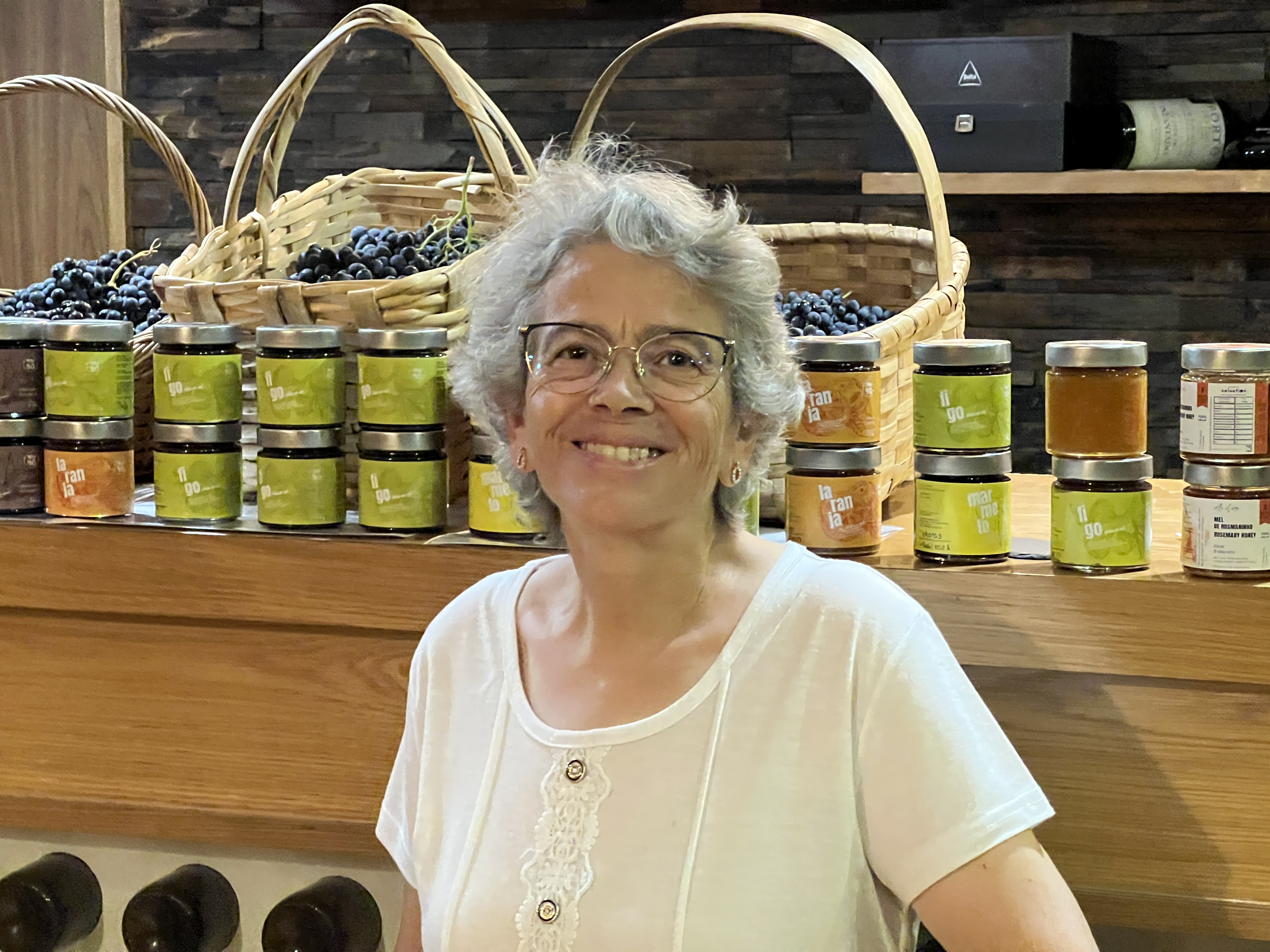
What makes these jams so sublime? Their fruit comes from the Douro valley, a place where the scorching summer heat and a wealth of soil micronutrients create unique conditions that intensify aromas and flavors. And each batch is handcrafted by Dona Graça, a legendary cook, and her talented daughter, Rosário. The two leave nothing to chance, shunning the use of preservatives and making adjustments small and large to ensure that the results are perfect. 

There is an orange jam chockfull of strips of orange rind that delight the palate and an orange and hot pepper jam with the ideal combination of sugar and spice. There are jars of jam brimming with perfectly ripe whole figs; a surprisingly delicious zucchini jam; amazing jams made with must from grapes used to produce port wine; jams made from a rare peach variety that grows amidst the vines, and much more.

The jams favored by his royal majesty pale by comparison with the wondrous jams from Toca da Raposa! The question is: how do we tell the king?

Toca da Raposa is located at Rua da Praça in Ervedosa do Douro, tel. 254 423 466.

An Altar wine

Vinha do Altar is a poem without words. Its authors, Jorge Serôdio Borges and Sandra Tavares da Silva, are two enologists known for masterpieces like the unforgettable white Guru and the iconic red Pintas. 

Their new wine is elegant and fresh, delightful to drink now, and sure to improve with age. Its grapes come from vines planted in a north-facing plateau that overlooks the Douro valley. Jorge’s great grand uncle purchased the land in 1939, and it became part of Casa Quintães, an estate where Jorge spent stretches of his youth. The land produced wine until the 1990s, but then the vineyard was abandoned. 

Jorge’s uncle dreamed of replanting the vineyard, but he died, and the land remained fallow. A few years ago, his widow, Márcia, asked Jorge and Sandra whether they could make the dream come true. The couple meticulously prepared the land and planted a new vineyard, called Altar, with a virtuoso trio of white grapes: Arinto, Gouveio, and Viosinho. 

The first harvest was in 2019, and now we can drink this wine that speaks without words about ties of family, memories of youth, and the magic of winemaking. 

Click here to visit Wine & Soul’s website.

Dining with Miguel Castro e Silva at Quinta de Ventozelo

We have for years admired chef Miguel Castro e Silva from the distance. We dined at his restaurants, read his cookbooks, tried his recipes (his marinated sardine preparation is a staple at our table). So it was a great privilege to have dinner with him at Quinta de Ventozelo

We met at Cantina, the restaurant that occupies the place where the old farm canteen used to be. Miguel arrived with a bottle of wine. “Do you want to try the wines I make at Ventozelo?” he asked as a way of introduction. Soon our glasses were filled with a white Viosinho from 2017 that is fresh and vibrant. It went perfectly with our first course, river fish “escabeche.” 

We told Miguel how much we had enjoyed the food we had for lunch in the picturesque esplanade of Cantina:  wild boar covilhetes (a version of the small pies popular in nearby Vila Real), a warm soup made with beets and apple, grilled octopus, and a peach tart that celebrated the natural sweetness of the peaches. We asked how does he manage to achieve such high standards in all his restaurants. Miguel told us that he inherited both his organization skills and creativity from his German mother. He writes meticulous recipes and coaches his cooks in their preparation until they meet his exacting standards.

Miguel started cooking professionally only at age 31. Born into a family of doctors in Porto, he was expected to study medicine. He studied biology in Germany but lost interest and became a musician. To earn a bit of money on the side, he started cooking. When he returned to Portugal, his friend Dirk Niepoort asked him to prepare food for his wine tastings. Dirk would describe the wines he planned to serve and Miguel had to come up with food that paired well with the wines. It was an experience that allowed him to perfect his cooking skills and learn a lot about wine. 

This enological knowledge is evident in the next wine we tried, a remarkable white that combines Viosinho with a blend of red varietals. It was a perfect complement to our second starter: a sausage called “alheira” topped with a fried quail egg. 

Miguel tells us that he is reviving and refining the cooking traditions of the Douro valley. Every Sunday, the cooks at Cantina prepare a roast in an oven fired with vine wood. The soup is made in old iron-cast pots on a large outdoor fire. All the ingredients come from the farm. The animals are naturally raised and everything from nose to tail is used in the kitchen.

Our main course, a suculent stewed rooster, was a perfect example of the refined, satisfying rustic food that Miguel is devising. It combined well with a delicate red wine aged in oak barrels previously used to make white wines.  

Several fruit-based desserts arrived. Once again, we admired the sparse use of sugar that gives the fruits their chance to shine. As the dinner came to an end, we made a few toasts with some old Dalva tawnies.

But there was one more thing. Miguel ordered a pot of tea. Ventozelo produces a wonderful gin with the aromatics that grow on the farm. Miguel had the idea of making an herbal tea with the same aromatics: lavender, lemon thyme, Portuguese thyme, and globe amaranth. It makes a fragrant infusion that was the perfect ending to a perfect meal. Thanks to chef Miguel Castro e Silva the food at Cantina is as spectacular as the view.

Click here for the web site of Cantina, the restaurant at Quinta de Ventozelo and here for Miguel Castro e Silva’s website.

A rested pudding

One of our favorite destinations in the Douro valley is a charming village called Ervedosa do Douro. Its main attraction is Toca da Raposa, a restaurant that prepares the traditional food served in local aristocratic homes. 

The ingredients are immaculate and the cooking is sublime. The preparations look deceptively simple, but they require knowledge of all the small details that make the difference between good and exceptional.

Dona Graça, a cook who worked for Douro families before opening Toca da Raposa with her children, has a large repertoire of recipes from the time when food was prepared in wood-fired ovens and cast-iron pans. We’ve been trying to convince her to collect these recipes in a cookbook. But codifying all her experience is a huge task and she has no time–the restaurant is always full.

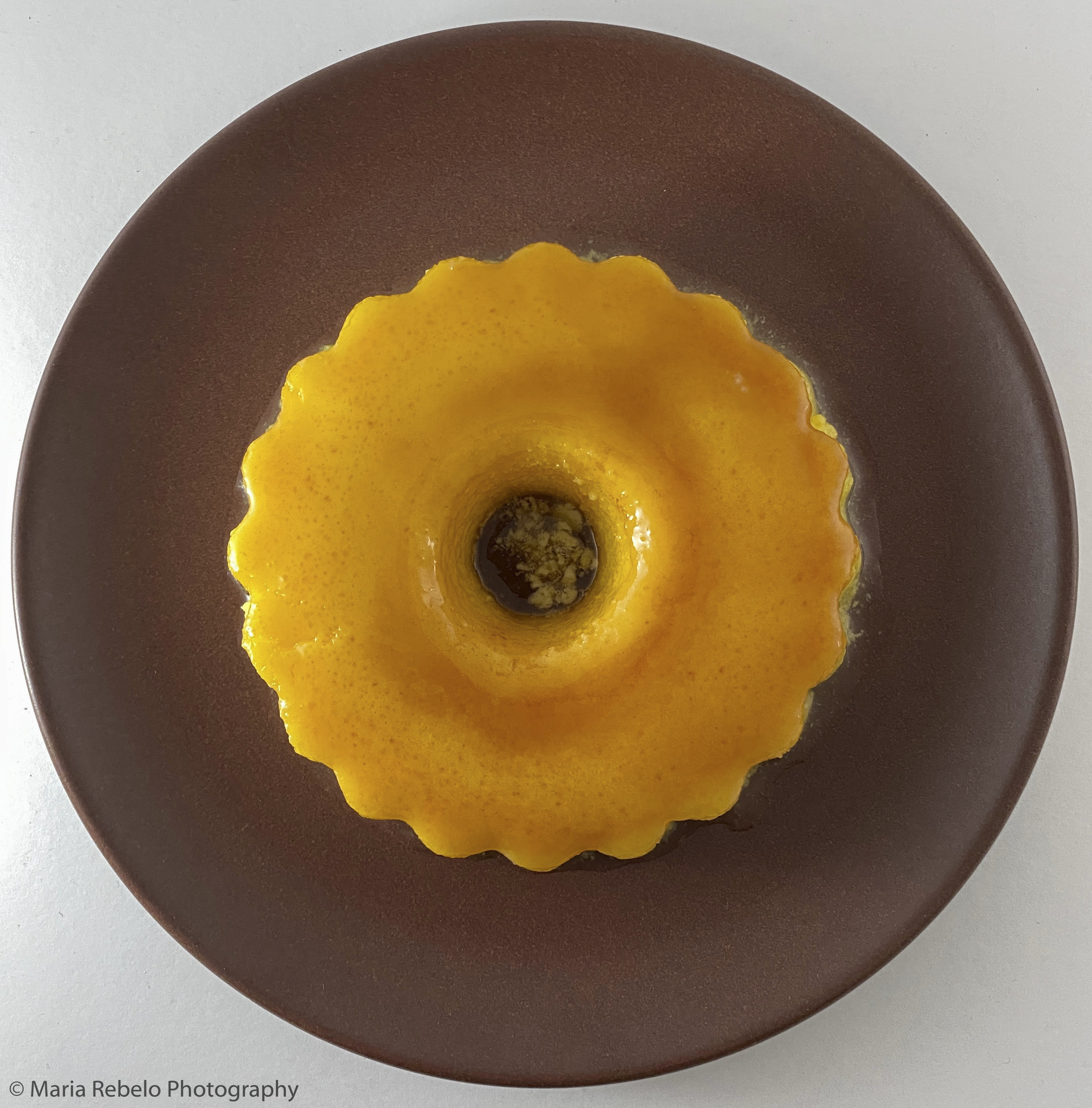
Recently, Dona Graça started writing down some recipes. She shared one of these recipes with us. It is called Pudim de Laranja Descansado (rested orange pudding) because it takes time to prepare. You should try it only when you’re not in a hurry. We hope this recipe is the first of many pages that preserve Dona Graças’s culinary artistry.

Rested Orange Pudding

Pudding ingredients

7 eggs

300 grams of sugar

250 ml of freshly squeezed orange juice

Port-wine caramel

150 grams of sugar

50 ml of port wine

Mix the pudding ingredients at night and let the mixture rest. Cook the pudding in the morning.

To prepare the mixture, combine the eggs and sugar in a mixer. Three seconds after you start the mixer at medium speed, slowly pour the orange juice into the mixture. Once all the juice has been added, keep the mixer on for an extra 30 seconds or so, until you see foam made from small bubbles. Stop the mixer and use a wooden spoon to the pudding ingredients with a movement from top to bottom until you no longer feel any sugar at the bottom of the bowl.

Once the mixture has rested, make the port-wine caramel and use it to coat the pudding mold. Pour the mixture into the mold and place the mold inside a pan filled with two fingers of water surrounding the pan. Cook on the stove on a small burner at medium heat for 40 minutes. Take it out of the mold and let it cool. Enjoy!

Toca da Raposa is located at Rua da Praça in Ervedosa do Douro, tel. 254 423 466.

The Vintage House

We can take the winding road that leads to the elegant bridge designed by Gustav Eiffel. Or ride the old train that stops at the local station, decorated with bright blue tiles. Our preference is to arrive by boat, carried gently by the river. But no matter how we get to Pinhão, a quaint town at the center of the Douro valley, we always feel like staying.

The perfect place to stay is a sprawling yellow edifice on the bank of the river. It was once a warehouse that stored the precious brandies used to produce port wine. In 1997, the building was converted into the Vintage House hotel. 

What makes the Vintage House unique are the generous views of the Douro. We can wake up, open the window and sense the mood of the river. Everyday is different. Sometimes, the Douro dresses in festive blues and greens. Other times, it chooses yellows and browns, to give the small tributary that named the town (the Pinhão river) a chance to shine.

The roads of the Douro valley are narrow, forcing us to drive slowly and admire the glorious landscape. There is so much to see that we crisscross the valley many times. At the end of the day, we are always tired. And we love falling asleep in the Vintage House, knowing that in the morning the river will be there to greet the start of another memorable day in the Douro valley.

The Vintage house is located at Rua António Manuel Saraiva, 5085-034, Pinhão, Douro, Portugal. Click here for the hotel’s website.

Quinta de Ventozelo

There is a new jewel in the Douro valley called Quinta de Ventozelo. The setting is not new, the estate has produced wine since the beginning of the 16th century. But there are 29 new gems–luxurious rooms with magnificent vistas located in various houses throughout the quinta. Some houses have old roofs built with the same schist used to brace the terraces that hold the vines. Others are built out of giant balloons that once stored 80,000 liters of port wine. 

The sprawling estate is the perfect place to create wonderful memories. Of the rolling hills descending towards the river to bade in its green waters. Of the breeze caressing the silvery leaves of the olive trees. Of the restful silence punctuated only by the sounds of nature. Of the joy of sitting outdoors at sunset savoring a glass of wine in the company of friends. 

You can drive to the quinta, but it is much more spectacular to take the boat from Pinhão and arrive at the dock by the river. Arriving is the easy part. Leaving is hard to do. 

Quinta de Ventozelo is located in Ervedosa do Douro, S. João da Pesqueira. Click here for the quinta’s website.