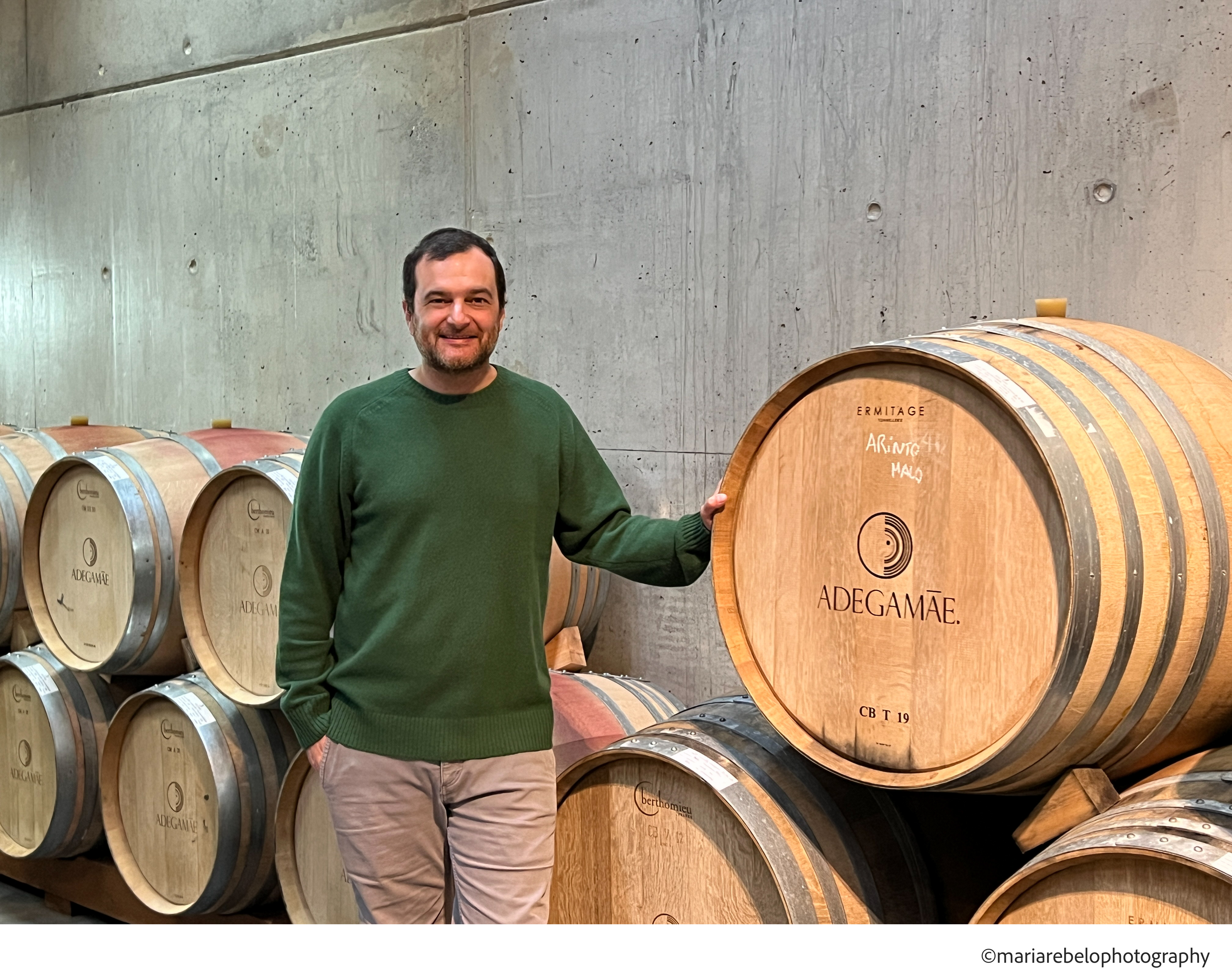
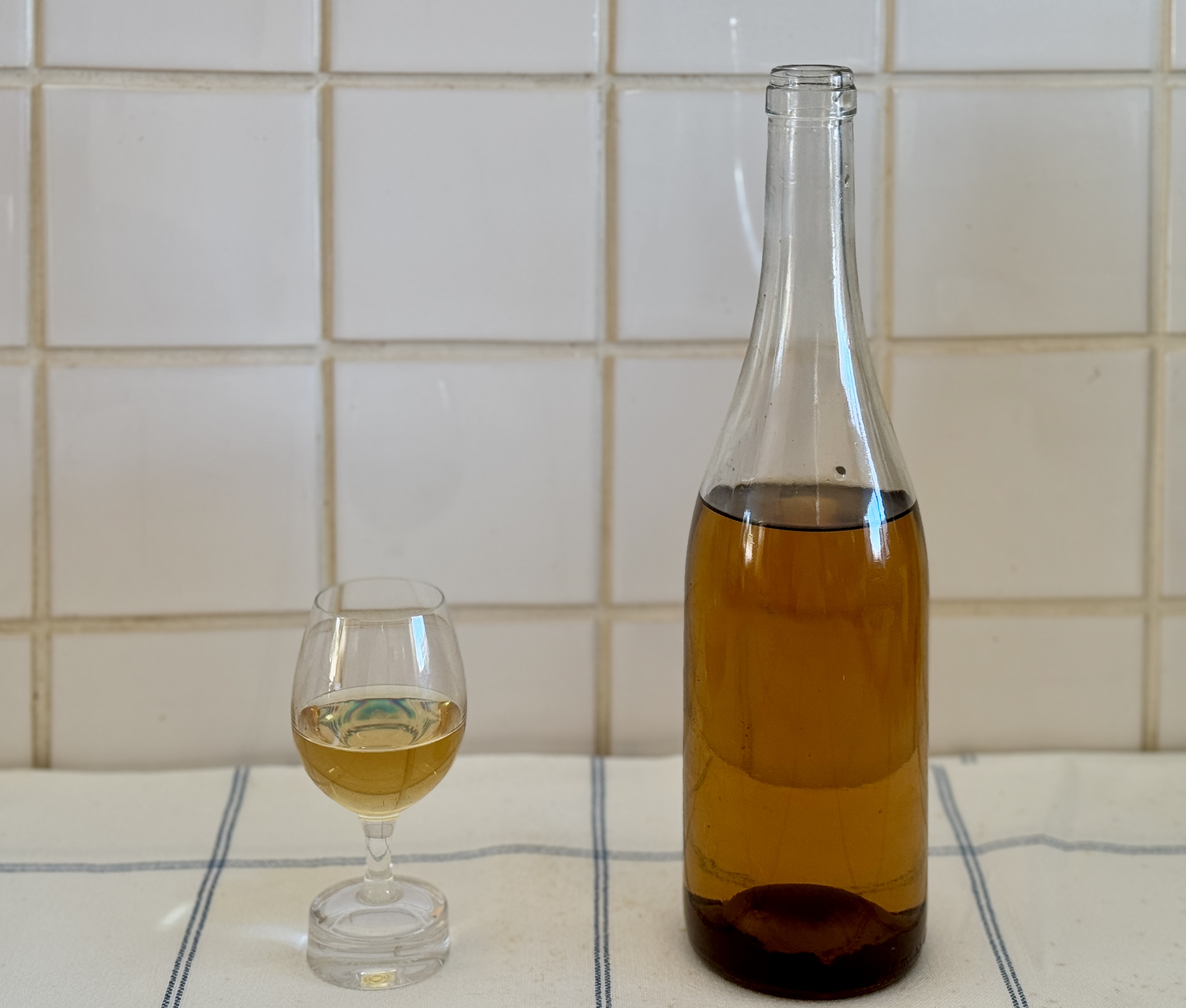
Drinking wines of the past with Virgílio Loureiro

Virgílio Loureiro is a renowned professor of enology and microbiology whose lectures inspired generations of students. A holder of several wine-related patents and the author of numerous scientific publications, he is also a masterful practitioner of the art he teaches. Virgílio champions unique wines crafted in small batches, often made from rare indigenous grape varieties on the brink of extinction. His deep knowledge of the wine’s biochemistry is matched by an equally profound passion for the history of wine. 

Though officially retired, Virgílio remains as active as ever. One of his most fascinating projects is the revival of winemaking traditions in the region once known as Banda d’Além, the “other side” of the Tagus River, just across from Lisbon.

In the 14th century, the region became famous for a sweet wine known as Bastardinho do Lavradio. Initially made as a passito from sun-dried grapes, it retained this style until the 18th century, when it began to be produced as a fortified wine. In both styles, the wine preserves its natural sweetness because the yeast dies before converting all the fructose into alcohol, due to the high sugar concentration in the passito and the addition of alcohol in the fortified version. Crafted from the Bastardo grape variety, Bastardinho do Lavradio was known in England as ‘Bastard wine,’ and admired for its remarkable balance of sweetness and acidity.

Viticulture thrived in Banda d’Além until the 19th century. The vineyards endured the oidium blight of the 1850s thanks to sulfur treatments and were protected from the ravages of phylloxera by their sandy soils. Yet industrialization proved more destructive than any pestilence: factories replaced vineyards, and the winemaking heritage slowly vanished into oblivion.

Virgílio believes that this forgotten region may be the birthplace of Port wine. In the Middle Ages, Franciscan monks produced here passito wines for sacramental use. By the 16th century, similar wines began to appear in the Douro Valley—likely influenced by these monastic practices. These early sweet wines, he suggests, were probably the first expressions of what we now know as Port wine.

In the last few years, Virgilio has been working with Teresa and Adelino Martins, owners of Quinta da Estalagem, one of the region’s last remaining farms. The estate is situated in a place of rare natural beauty and rich historical significance. It is near the Roman port of Aquabona on the Coina River, and not far from the shipyard where Paulo da Gama, brother of the famed navigator Vasco da Gama, built some of the ships used by Portugal during the Age of Discovery. Scattered through the region are vestiges of 15th-century ovens once used to bake hardtack, the hard biscuits consumed by sailors on their long sea voyages.

When we arrived at Quinta da Estalagem, Adelino was busy in the vineyard, harvesting grapes with a team of workers. Bastardo ripens early and must be picked before the birds help themselves to the fruit. Teresa and Virgílio joined us in the farm’s cellar for a wine tasting.

We began with Vinho do Pote, a vibrant white wine made from Fernão Pires, following Roman techniques dating back to the 5th century: the grapes were fermented in clay pots sealed with pitch and beeswax. Served in simple tavern glasses from Alentejo, the wine exudes a rustic elegance, with smoky notes, a textured palate, and bright acidity.

Next came Equabona, named for the ancient river route that once connected the Coina port to Mérida in modern Spain. Made from the same Fernão Pires grapes, this wine is delicately infused with fenugreek—an herb cherished by the Romans for both its flavor and medicinal properties. The result is an aromatic, amber-hued wine with notes of spice and a long, curried finish.

Our third tasting was a white wine gently scented with poejo (pennyroyal), which lends an herbal character reminiscent of a refined vermouth.

Then came a striking contrast: a white wine made using the curtimenta method of fermenting white grapes with their skins. The wine has a textured body and gentle tannins that lend both depth and character. This 17th-century technique is making a comeback — wines produced in this way are now popularly known as “orange wines.”

We then tasted a red made from Castelão, which pays tribute to the honest, everyday wine enjoyed across the region in the 20th century. It is light, fresh, and direct, with the grip of youthful tannin and the aromatic clarity of this hardy grape.

Finally, we tried the precious Bastardinho do Lavradio. Lost since the 1940s, this legendary wine has been resurrected through Virgílio’s tireless research and Adelino and Teresa’s steadfast dedication. It is a rare privilege to savor a stunning wine that history had almost forgotten.

Our visit to Quinta da Estalagem was far more than a wine tasting. It was a journey through centuries of winemaking, guided by one of Portugal’s most extraordinary wine scholars.

Click here for the Banda d’Além website. To schedule a visit, email adega@bandadalem.pt


Diogo Lopes, a star winemaker

In 2023, Grandes Escolhas, a leading wine magazine, named Diogo Lopes “Enologist of the Year.” The seeds of this recognition were planted in his childhood. While most of his friends spent their summers by the sea, Diogo stayed on his grandfather’s farm in the mountains of Covilhã. A passionate vintner, his grandfather produced 2,000 liters of wine each year—enough to enjoy with family and share with friends. The experience of harvesting grapes left a lasting impression on young Diogo.

Though he studied at the Military Academy with the intention of becoming a naval officer, the pull of the land proved stronger than the lure of the sea. He transferred to the School of Agriculture, where two encounters shaped his future: one with the legendary enology professor Virgílio Loureiro, and the other with celebrated winemaker Anselmo Mendes. In 2001, Mendes invited Diogo to join one of his harvests. Their collaboration has endured ever since. “Anselmo is my enological father,” Diogo says. 

The best place to experience Diogo’s wines is Sal na Adega, a restaurant that treats codfish with the reverence it deserves. It is located next to Adega Mãe, the winery where Diogo crafts his wines.

The clay- and limestone-rich soils of Torres Vedras are ideal for sparkling wines. A striking example is Adega Mãe’s Pinot Noir espumante, which is aged for 45 months. It has a beguiling copper hue and an invigorating freshness. We could not imagine a more brilliant companion until Diogo opened an arresting Brut Nature made from Arinto and Chardonnay. In France, Chardonnay is traditionally paired with Pinot Noir, but here, it has found a dazzling new partner in Portugal’s Arinto. The chemistry between these two grapes is extraordinary. Crisp codfish cakes arrived, perfectly complementing the elegance of both sparkling wines.

Next, Diogo poured a glass of Vital, made from grapes grown in the Montejunto mountains, just eight kilometers from the sea. The terroir, rich in limestone, lends the wine subtle iodine notes and remarkable complexity. It was a perfect match for codfish Brás style, a comforting blend of shredded cod, fried potatoes, and eggs, prepared tableside.

The culinary climax came with the restaurant’s signature dish: codfish cachaço (collar). Diogo paired it with the 2017 Terroir Branco, a masterful blend of Arinto and Viosinho, a Douro varietal that has flourished in this coastal terroir.  Made without haste, like in the old days, it is a wine Diogo’s grandfather would surely have cherished.

The meal concluded with a remarkable surprise: a late-harvest made from Sémillon and Petit Manseng. It was dessert in a glass, with notes of orange and fig that enchanted the palate.

If you’re looking for a memorable gastronomic journey, make your way to Sal na Adega. There, you’ll find not only superb codfish dishes but also the exceptional wines of a star winemaker whose journey from childhood harvests to national acclaim is worth celebrating.

Moscatel de Setúbal, a dessert in a glass

We recently attended a Moscatel wine tasting led by enologist Frederico Vilar Gomes and fell in love with these remarkable dessert wines. Crafted in Setúbal, near Lisbon, by José Maria da Fonseca, they are made from Muscat of Alexandria—one of the oldest grape varietals still in cultivation. Enologists are unsure whether this ancient grape hails from Egypt or Greece. But its versatility is undisputed, producing both elegant table wines and rich dessert wines. 

Muscat vines offer generous yields and a remarkable genetic diversity that protects them against disease. The grapes are intensely aromatic, resistant to heat, and naturally rich in sugar. 

Like Port, Madeira, and Sherry, Moscatel (the Portuguese spelling of Muscatel) is a fortified wine. Brandy is added to halt fermentation before the yeast converts all the grape sugar into alcohol, preserving a lush natural sweetness.

The Moscatel made in Setúbal has been cherished for centuries for its remarkable aging potential. As it matures in oak casks, approximately 2 to 3 percent of the wine evaporates each year—a phenomenon whimsically known as the “angel’s share.” This gradual loss intensifies the wine, concentrating its sugar and acidity and deepening its character. 

José Maria da Fonseca, founded in 1834, is one of Portugal’s most famous wine producers. In 1849, it introduced Periquita, the first branded Portuguese red wine. Just a few years later, in 1855, it earned a gold medal at the Paris World Exposition for its Moscatel de Setúbal. Today, the company has over two million liters of Moscatel patiently waiting in barrels for their moment to shine.

In the 19th century, José Maria da Fonseca shipped barrels of Moscatel by sailboat to Brazil, India, and Africa. Occasionally, unsold barrels made their way back, and, to everyone’s surprise, the wine had improved. The heat and humidity of the sea voyage had accelerated the aging process, delivering in just one year the complexity that would have taken a decade to develop on land. Since 2000, the winery has revived this maritime tradition. Its “torna viagem” (roundtrip) Moscatel now sails aboard the Sagres, a majestic Portuguese Navy training ship, before being bottled as a coveted limited edition.

Unlike table wines, which are bottled in dark glass to protect them from light, Moscatel de Setúbal comes in clear bottles. Light exposure helps foster the oxidation that is key to its unique aging process.

We tasted three Moscatel wines from José Maria da Fonseca’s Alambre brand. The first was the  classic Alambre Moscatel: a liquid dessert with a vibrant orange hue and flavors of orange, honey, and caramel, seasoned with a hint of lemon zest.

Next, we tried a five-year-old Moscatel made from a rare regional mutation of Muscat—the purple muscat—a grape unique to Setúbal. The wine had a deeper hue and a complex profile: tangerine, apricot, lime, melon, honey, and caramel woven with exotic hints of incense, red pepper, and turmeric. 

Our tasting ended with the forty-year-old Alambre. It has a deep color and a taste infused with the distinct aroma of Brazilian oak. The aging process adds complexity to this extraordinary wine, enriching the caramel and honey notes with dried fruits, figs, cloves, and cinnamon flavors.

Whenever we crave an effortless dessert, we reach for a chilled bottle of Moscatel. As the legendary jazz singer Jon Hendricks once put it, “I can’t get well without muscatel.” We couldn’t agree more.

Eduardo Cardeal’s great challenge

Eduardo Cardeal was born in Abaços, a small village in the Douro Valley, where he learned the art of winemaking from his grandfather. As a child, he absorbed the traditions without fully understanding them. His grandfather used to say that the wine wasn’t “cooked” until April. Years later, while studying enology in college, he realized this phrase referred to the malolactic fermentation, the natural process through which lactic acid bacteria transform tart malic acid into softer lactic acid, reducing acidity, enhancing texture, and adding complexity to the wine.

We first met Eduardo in 2019, when he was the head enologist at Herdade da Calada. His life had been marked by tragedy—his wife had passed away, and he found himself raising their three young daughters alone. Seeking a fresh start, he returned to his roots in the Douro Valley and purchased Quinta da Peónia, a historic one-hectare vineyard planted in 1930. It is an estate with a human scale, allowing Eduardo, with the help of his daughters, to handle every step of production—from grafting vines to foot-treading grapes and bottling the wines.

He named this deeply personal project Grande Desafio, meaning “great challenge.” His goal is to create the ultimate handcrafted wines. In 2023, after years of dedication, Eduardo bottled his first vintage—5,000 precious bottles.

Perched on a plateau 550 meters above sea level, Quinta da Peónia is blessed with schist and clay soils. Unlike the famed, fast-draining schist of Foz Côa, Peónia’s porous schist retains water through the winter, naturally sustaining the vines during the dry summer months without irrigation. The altitude brings freshness, while the old vines add remarkable depth and complexity.

Eduardo’s winemaking philosophy focuses on low alcohol and minimal extraction, resulting in light, elegant wines that dance on the palate with remarkable finesse. These wines are rare finds—if you come across a bottle, take it home and treasure it.

Click here for the Grande Desafio website.

Quinta de São Sebastião

Francisco Melícias, the general manager of Quinta de São Sebastião, invited us to visit the estate. So, we traveled along narrow roads that wind through villages where houses are nestled among vineyards until we arrived at Arruda dos Vinhos.  This historic town, established in 1160 by Portugal’s first king, owes its name, “wine route,” to its role as a transit point for wines transported by horse-drawn carts to Lisbon.

Arruda’s soils, predominantly limestone and clay with patches of sand, create ideal conditions for viticulture. Limestone promotes deep root growth and imparts minerality and acidity to the wines, while clay retains water, adding richness and structure. The region’s rolling hills and refreshing Atlantic breezes lend complexity to its wines.

The town is steeped in history and faith. São Sebastião, its patron saint, is credited with three miracles. First, in the 14th century, Arruda was spared from the bubonic plague that devastated much of Portugal. Second, in 1755, the town escaped the earthquake, tsunami, and fires that reduced nearby Lisbon to ruins, prompting King José I and his family to seek refuge in Arruda. Third, in the late 18th century, the region’s sand patches protected its vineyards from the phylloxera pest that devastated European vineyards.

Our journey continued up a steep hill to Quinta de São Sebastião, an estate established in 1755. We visited the chapel, once part of a monastery founded by monks who sought peaceful retreat. Francisco tells us that during the Napoleonic invasions, the estate played a role in the Lines of Torres Vedras, a network of fortifications built in 1809–1810 to defend Lisbon against Napoleon’s troops. Today, the remnants of these fortifications are a reminder of the estate’s historical importance.

In the 1980s, António Parente, an industrialist, bought Quinta de São Sebastião and invested in its future. The vineyards, planted on steep hills with different exposures, offer diverse terroirs that allow winemaker Filipe Sevinate Pinto to create distinctive blends. These wines combine traditional local varietals like Touriga Nacional with carefully selected French grapes.

We sampled some remarkable wines in the estate’s tasting room, which overlooks a picturesque riding arena where horses are trained. The 2022 Reserva Branco, a blend of Arinto, Cercial, and Sauvignon Blanc, has a pleasurable intensity and minerality. The Sauvignon Blanc provides a seasoning touch that allows the blend to shine. A surprising single-varietal made from Cercial, a grape known as Esgana-Cão in the Douro Valley, impressed us with its elegance and freshness. The Provence-style rosé, Dona Aninhas, pays tribute to António Parente’s mother with its delightful balance and vibrant acidity.

We also tried three reds. The first, a Reserva, is a blend of Touriga Nacional, Merlot, and Sousão. The aromatic Touriga complements the delicate Merlot, while the lively Sousão provides a touch of exuberance. The second, a blend of Alicante Bouschet and Syrah is intense, offering a beautiful harmony of flavors. Finally, the Grande Reserva—a daring mix of Merlot and Sousão— captivated us with its depth, complexity, and character. This wine is an ode to joy!

Quinta de São Sebastião is building on its rich heritage to create wines that are distinctive and deeply enjoyable.

Quinta de São Sebastião is situated in Arruda dos Vinhos. Click here for their website.

Jeropiga

Foreign residents often wonder how they’ll know they’ve been embraced as locals.  A simple test involving jeropiga (pronounced zheh-roh-pee-guh), a traditional Portuguese beverage, provides the answer.

Jeropiga is made by combining grape must (freshly pressed, unfermented grape juice) with aguardente, Portuguese brandy. The brandy kills the wild yeast that lives on the skin of the grapes, preventing it from converting the grapes’ fructose into alcohol. The result is a fortified drink with an alcohol content between 16 and 20 percent that preserves the grapes’ natural sweetness. It is the perfect pairing for roasted chestnuts.

You cannot generally buy jeropiga. Farmers make it in small batches for personal consumption and to share with friends. Receiving a bottle is a clear sign that someone regards you as a local.

People rarely tell you where they got their jeropiga, but we’re happy to reveal that ours comes from our friend Raul Reis. Not content with growing the finest potatoes in Portugal, he also makes wonderful jeropiga in Sobral, a village near Lourinhã. This region is known for the excellence of its brandies, so it is no wonder Raul’s jeropiga is so great. 

Finding perfection at Ervamoira

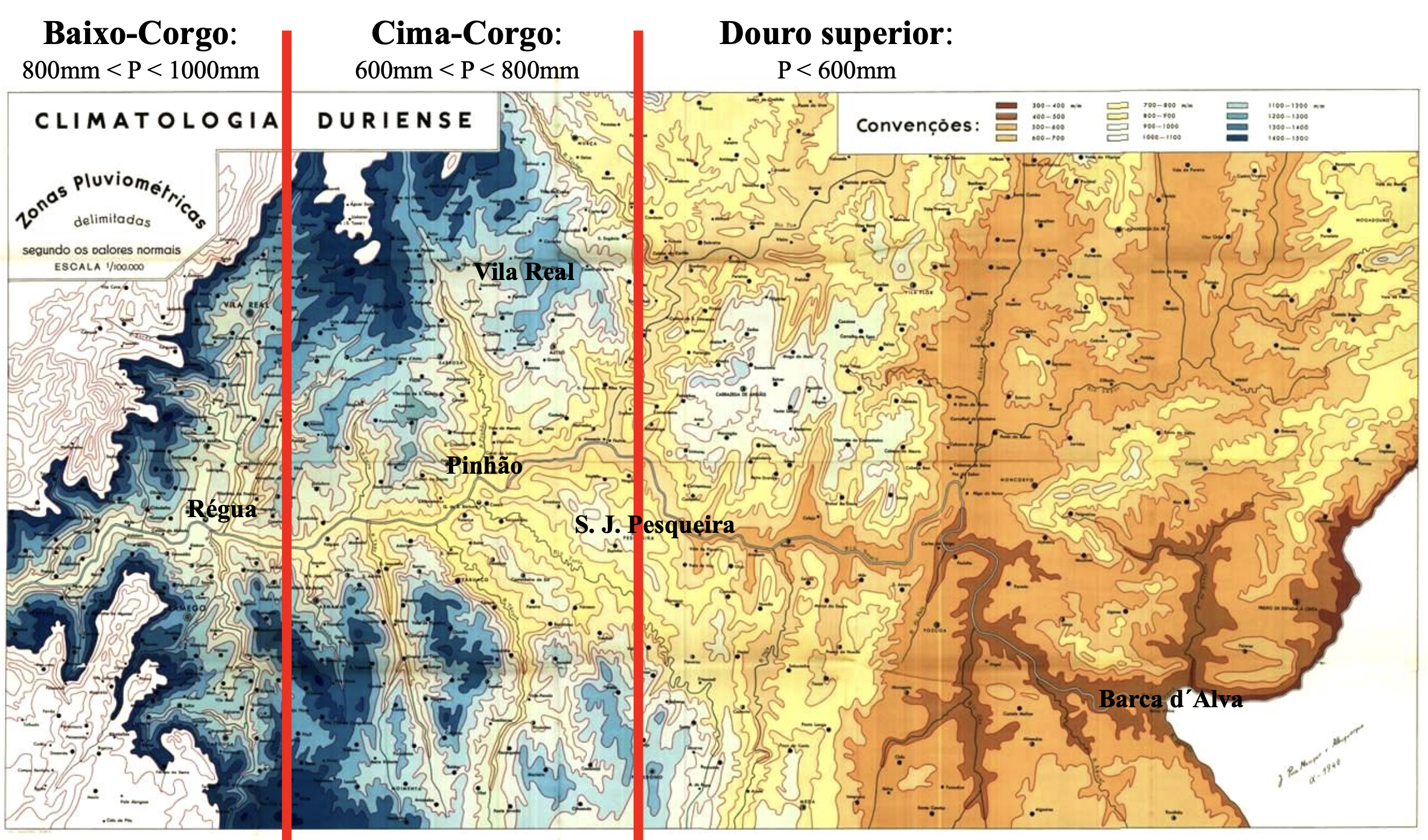
“When my father came home from work, he would spend hours studying military maps,” recalls Jorge Rosas, the CEO of Ramos Pinto, a port wine house founded in 1880 by his great-grandfather, Adriano Ramos Pinto. “He was searching for the perfect farm in the Douro Superior, a region he believed could produce exceptional wines like the legendary Barca Velha.”

Sitting on the floor with an old magnifying glass that had lost its handle, Jorge’s father, José António, pored over contour lines in search of flat land. He wanted to find terrain that was easier to cultivate than the steep slopes that dominate the Douro Valley. From Friday to Sunday, José António drove through rustic roads, to visit locations he had marked on the maps.

One day, crossing a remote mountain path, he found his dream farm. “Shangri-La!” he exclaimed. The estate, then planted with cereals, was called Ervamoira. It was love at first sight—a love so strong that his wife often felt jealous of the farm. Determined to buy it, José António contacted the owners in Lisbon. Despite having little attachment to the estate, they hesitated to sell a property that had been in their family for generations.

An avid trout fisherman, José António donned his fishing gear to fish in the rivers that cross Ervamoira, the Coa, and the Douro, even though he knew they had no trouts. Fishing was merely an excuse to immerse himself in the landscape, imagining the vineyards he might one day plant.

In the aftermath of the 1974 revolution, many farms were nationalized. Fearing expropriation, the owners of Ervamoira agreed to sell. Despite his family’s concerns about buying an estate amid so much uncertainty, José António seized the opportunity. “My father is a cereal killer,” jokes Jorge, alluding to how the cereal fields were soon replaced with vineyards.

At Ervamoira, José António introduced innovative viticultural practices. He assigned each grape varietal to a separate plot. Instead of using traditional terraces, he planted vines on platforms that facilitate mechanization. High-density planting forced roots to delve deep for nutrients, enhancing quality through higher polyphenol content and increasing drought resistance.

But a shadow loomed over paradise. In the early 1990s, plans resurfaced to construct a hydroelectric dam that would flood the estate. Horrified, José António fought tirelessly against this project. The discovery of a Roman tomb and ancient coins on the property provided fleeting hope, but archaeologists deemed the finds insufficient to halt the dam project.

Desperate, José António entered his wines into international competitions, receiving numerous awards. But not even these accolades could stop the project.  “What now?” he wondered. “Only a miracle can save the farm,” his cousin, João Nicolau de Almeida, remarked.

Then, a miracle happened. Archaeologists discovered prehistoric cave engravings near Ervamoira.  An expert who secretly evaluated the site revealed that the engravings are about 30,000 years old. It was widely assumed that outdoor prehistoric art couldn’t survive millennia of exposure to the elements. Ervamoira proved otherwise.

The discovery attracted the attention of the Portuguese media but failed to sway the government. Deliverance came from an unexpected source. A Portuguese émigré, who had been Jacqueline Kennedy’s butler, read about the engravings in a local newspaper. He shared the news with an acquaintance at The New York Times, and the newspaper published an article titled “Vast Stone Age Art Gallery Is Found but Dam May Flood It.” The story sparked an international outcry that led to the abandonment of the dam project.

Today, Ervamoira thrives. Its grapes contribute to the iconic Duas Quintas wines, made from a blend of grapes from two farms—Ervamoira and Bons Ares. The schist soils of Ervamoira, at 150 meters altitude, lend structure, while Bons Ares, perched at 550 meters with limestone soils, adds refreshing acidity.

Ervamoira’s magic is unmistakable. Nestled in the remote Douro Superior beyond the Cachão da Valeira—a region inaccessible until Queen Maria I spearheaded efforts to make the Douro River navigable—it is a gem of the Douro Valley, a dream that a miracle made come true.

Please click here for information on how to visit Ervamoira.

Wines of the land and sea at Serenada

A woman named after a flower crafts enchanting wines on a farm called Serenada, which her family has owned for over three centuries. It sounds like a fairy tale, but the wines are as real as the spell they cast.

As a young girl, Jacinta Sobral had no idea she was destined to become a winemaker. In 1961, one year after getting married, her father, António Sobral, planted a vineyard at Serenada with twelve grape varietals. He crafted his wines with little more than his hands, heart, and the wisdom gained through experience. The vineyard thrived, and in 1970, he decided to plant more vines.

As for Jacinta, she wandered down a different path. She studied the secrets of chemistry and became a microbiologist. But in 2004, as António’s health began to fade, he expressed a desire to teach Jacinta to make white wine. “Anyone can make red wine, but white wine—that is art,” he said. António showed Jacinta the delicate process of decanting free-run juice while preserving the fine lees, which enhance the wine’s texture and complexity.

When António passed away in 2006, he left various properties to his other children but bequeathed Serenada to Jacinta. She felt like a spell had been cast, binding her to the vines. Determined to honor her father, she enrolled in a Master’s program in Agricultural Engineering. There, she found that her background in microbiology was like a magic key, unlocking the mysteries of winemaking. She immersed herself in enology textbooks and crisscrossed Europe to learn from other producers. 

Serenada is rich in geological diversity. There are schist soils near the ancient Grândola mountain, veins of manganese and iron, and fields of clay and sand. These nutrient-poor soils stress the grapevines, prompting them to grow deeper roots in search of water and minerals. The cooling Atlantic breeze slows grape ripening, fostering complex flavors while preserving acidity. The result is wines that are fresh, balanced, and vibrant.

Unburdened by convention and free to follow her imagination, Jacinta began exploring different vinification and aging techniques, from fermenting the must in Roman clay amphoras to aging bottles in a cave once mined for pyrite, the mineral known as fool’s gold.

The most remarkable discovery came in 2017 when Jacinta submerged wine bottles 15 meters deep into the ocean. There, the bottles slept in silence, rocked by the waves and shielded from the sun’s light. Eight months later, when Jacinta tasted the wine, she was astonished. These ocean-aged wines were unlike any she had experienced—smooth, ethereal, as if blessed by the ocean’s spirit.

Serenada has a handful of rooms where you can stay, each offering a peaceful retreat surrounded by pines and oak trees. Guests can enjoy scenic walking and cycling trails, delicious meals, picnics, and wine tastings.  It’s the perfect place to savor Jacinta’s mesmerizing wines that capture the essence of land and sea.

Serenada is located near Grândola in Alentejo. Click here for their website. 

Vale da Capucha’s artisan wines

As we arrived at Vale da Capucha, a wine estate in Torres Vedras near Lisbon, a small, cute dog ran up to greet us. “His name is Arinto,” Manuel Marques said as he walked towards us, “all of our dogs are named after grape varieties.”

For the Marques family, producing great wine was never a choice–it was their destiny. Manuel’s great-grandfather was a winemaker, and his grandfather acquired Vale da Capucha to expand the family’s wine production. The estate was famous because it belonged to António Batalha Reis, the first director of the Torres Vedras School of Viticulture. This school taught local farmers how to graft vines onto American rootstock, protecting them from phylloxera, the disease that devastated European vineyards in the late 19th century.

Manuel’s grandfather raised his family on this farm. When he passed away, Teresa, Manuel’s mother, inherited the house and some of the land. She and Afonso, her husband, had busy lives in Lisbon, so they were unsure what to do with the property. But in 2005, the couple came for a weekend and fell in love with country life. They never returned to Lisbon, embracing their new chapter in rural Portugal. 

Pedro, Manuel’s brother, had studied enology and saw immense potential in the farm’s terroir for producing high-quality white wines with significant aging potential. The estate’s proximity to the ocean fosters a cool climate, which preserves the acidity in the grapes. At the same time, the limestone-rich soil, packed with 400-million-year-old fossils, lends minerality and complexity to the wines. Manuel joined the venture as the commercial director, and a new era for Vale da Capucha began.

In 2006, the family replanted the vineyards with carefully selected white grape varieties: Fernão Pires, widely grown in the Lisbon region, and Arinto from nearby Bucelas. They also introduced Antão Vaz from Alentejo, as well as Gouveio and Viosinho from the Douro Valley. At Vale da Capucha, these grape varieties developed a distinctive profile, gaining salinity and freshness.

The family made their first wine in 2009 and released it in 2011. Another significant milestone came in 2012, when they embraced biological agriculture to fully express the land’s natural character. Today, Vale da Capucha produces around 60,000 bottles annually. They rely exclusively on wild yeast for fermentation, handpick all their grapes, and practice minimal enological intervention, allowing the wine to reveal the essence of the terroir and tell the story of each vintage.

As we walked through the farm, we saw many animals. The farm raises Alcobaça-spotted pigs, turkeys, and Bresse chickens—Paul Bocuse’s favorite breed–to supply the kitchen with wonderful organic meats.

Manuel invited us to the wine cellar to taste some wines surrounded by old barrels that testify to the estate’s rich history. We started with a 2018 blend of Arinto and Fernão Pires, which impressed us with its stunning color, freshness, and vibrant character. Then, we sampled the 2019 Arinto made from a blend of three different parcels. It has elegant citrus notes, intense minerality, and salinity. These are wines that will age gracefully, becoming more complex and refined with time.

Next, we tasted an interesting Alvarão, a playful twist on Alvarinho, a grape from the Vinho Verde region. A 2019 Fossil “palhete” followed. This wine, made with 80 percent white grapes (Arinto) and 20 percent red grapes (mostly Castelão), is what people used to drink in this region one century ago. Despite its red hue, the wine drank like a white, bursting with freshness. To finish, we sampled a 2014 Syrah—light, earthy, and with only 13 degrees of alcohol–a singular expression of this variety.

The influence of the Atlantic Ocean, with its waves crashing just eight kilometers from the vineyards, gives these wines a distinct character. No wonder they captured the attention of sommeliers and wine enthusiasts searching for something exceptional.

Lunch with Manuel, Afonso, and Teresa in the dining room of the manor house was a gastronomic feast. We were treated to delicious vegetables served with local cheese and country bread, followed by a magnificent roasted lamb and rice made from the animal’s giblets. The 2019 Arinto was the perfect lunch companion, its bright acidity enhancing the flavors of the food.

It was an unforgettable visit to Vale da Capucha, a place where winemaking traditions, organic farming, and a refined understanding of winemaking come together to produce outstanding wines.

Once a month, Vale da Capucha hosts a lunch featuring cozido, a traditional Portuguese stew, paired with their wines. It’s a word-of-mouth event eagerly awaited by those in the know. Occasionally, they announce it on their Instagram page. If you see the posting, don’t miss the opportunity to meet this remarkable family and taste wines that are bringing international acclaim to the Torres Vedras region.

The Douro Heirloom Tomato Festival

The tomato is a South American fruit that traveled to Europe on sailboats in the 16th century and, over time, conquered the cuisines of the Old World. Like travelers who adapt to foreign lands, tomatoes developed distinct characteristics in different regions. In the Douro Valley, the warm days, cool nights, well-drained soils, and abundant micronutrients produce tomatoes with exceptional flavor, texture, and succulence. 

Every year, on the third Friday of August, the Douro Valley comes alive with a festival dedicated to the heirloom tomato. Winemakers submit tomatoes grown in their vegetable gardens to this friendly competition, an opportunity to enjoy some light-hearted fun before the serious work of the harvest begins. Renowned chefs like Miguel Castro e Silva prepare the food and vintners pour their wines, creating a festive atmosphere.

The tomatoes are served at peak ripeness, blessed with a pinch of Castro Marim sea salt, and anointed with sacred olive oils from the Douro Valley. A panel of judges, composed of chefs and food experts, conducts a rigorous blind tasting to elect the finest tomatoes.

This year, a small producer, Casa da Quinta dos Ferreiros took first place. Wine & Soul, acclaimed for their iconic Pintas and Guru wines, received second place. Third place was awarded to the Mateus Palace.

The festival was conceived by Abílio Tavares da Silva, the charismatic Foz Torto winemaker, Celeste Pereira, a gifted communications strategist, and Edgardo Pacheco, a renowned food journalist.

Each year, a different winery hosts the festival. Previous editions were held at Quinta de la Rosa, Quinta do Vallado, Quinta de Ventozelo, Niepoort’s Quinta de Nápoles, and Sogrape’s Quinta do Seixo. This year’s event took place at the Mateus Palace, a graceful Baroque manor surrounded by serene gardens.

The festival is open to the public. If you dream of mingling with famous chefs and winemakers at a picturesque Douro Valley estate, mark your calendar for the third Friday of August. You can email greengrape@greengrape.pt to join the mailing list. One word of advice: once you receive your invitation in late July, answer immediately—the event sells out in less than an hour!