Revisiting Santa Clara

If god is in the details, then Santa Clara, our favorite hotel in Lisbon, is truly blessed. We arrived on a Friday afternoon, weary from a bumper-car-like ride through the city’s busy streets. As soon as we entered Santa Clara, a sense of calm embraced us.

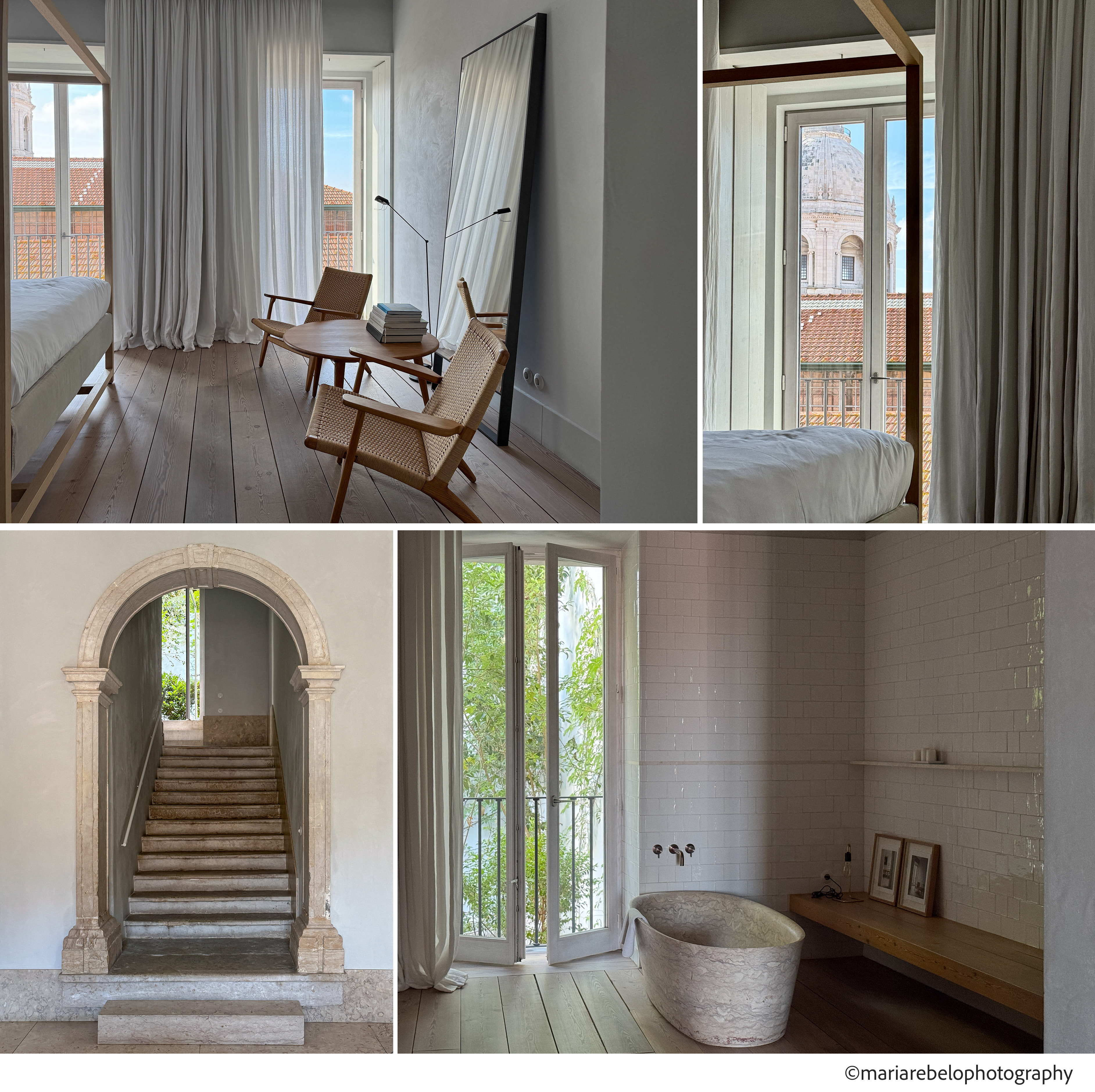
We climbed the stairs slowly, savoring each step. The old lioz, the marble of Lisbon, turned pale by the passage of time blends seamlessly with the soft pink of the newer lioz, creating harmony between past and present.

Our bedroom felt like home. A spacious foyer welcomed us with a plush sofa and a generous bowl of ripe cherries. From the west-facing windows, Lisbon unfolds in all its grandeur: the Pantheon’s majestic dome rising above a sea of orange rooftops, its white stone luminous against the blue shimmer of the Tagus River. More than three centuries in the making, the Pantheon reminds us that some things are worth the wait.

To the east, the bathroom windows open to a tranquil garden planted with lemon trees, where a small choir of birds greeted us. 

The walls and closets are painted in a soft grey that is the perfect frame for the Pantheon’s radiant white. A simple geometry gives the room a sense of serenity. Pine planks draw the eye outward, to views framed by curtains that sway like skirts of ballet dancers caught in a gentle breeze.

In the bathroom, a grand bathtub, hewn from a single block of marble, stands beside two cylindrical basins sculpted from solid stone. Handmade tiles catch and scatter the light, while a thin line of marble placed at eye level evokes a far-off horizon, separating earth from sky.

After dinner, we retired to our room with the sense of being where we belonged. In the morning, sunlight poured in—joyous and bright. We made our way to breakfast—coffee, fresh bread, sweet fruit, creamy yogurt, eggs, and wild mushrooms. We lingered at the table, reluctant to part with this place that is so quietly beautiful.

Santa Clara 1728 is located at Campo de Santa Clara, 128 in Lisbon, tel. 964 362 816, email booking@silentliving.pt. Click here for the hotel website.

Dining at Ceia with Alex Atala

Dining at Ceia is always a singular experience, but even more so when shared with the legendary Brazilian chef Alex Atala, seated humbly among the guests as if he were a mere mortal.

Lisbon’s most elegant table was adorned with the bark of a cork tree, harvested on the thirtieth anniversary of its growth. Draped in moss, mushrooms, and delicate flowers, it set the stage for a menu designed by chef Renato Bonfim and inspired by Hieronymus Bosch’s Garden of Earthly Delights.

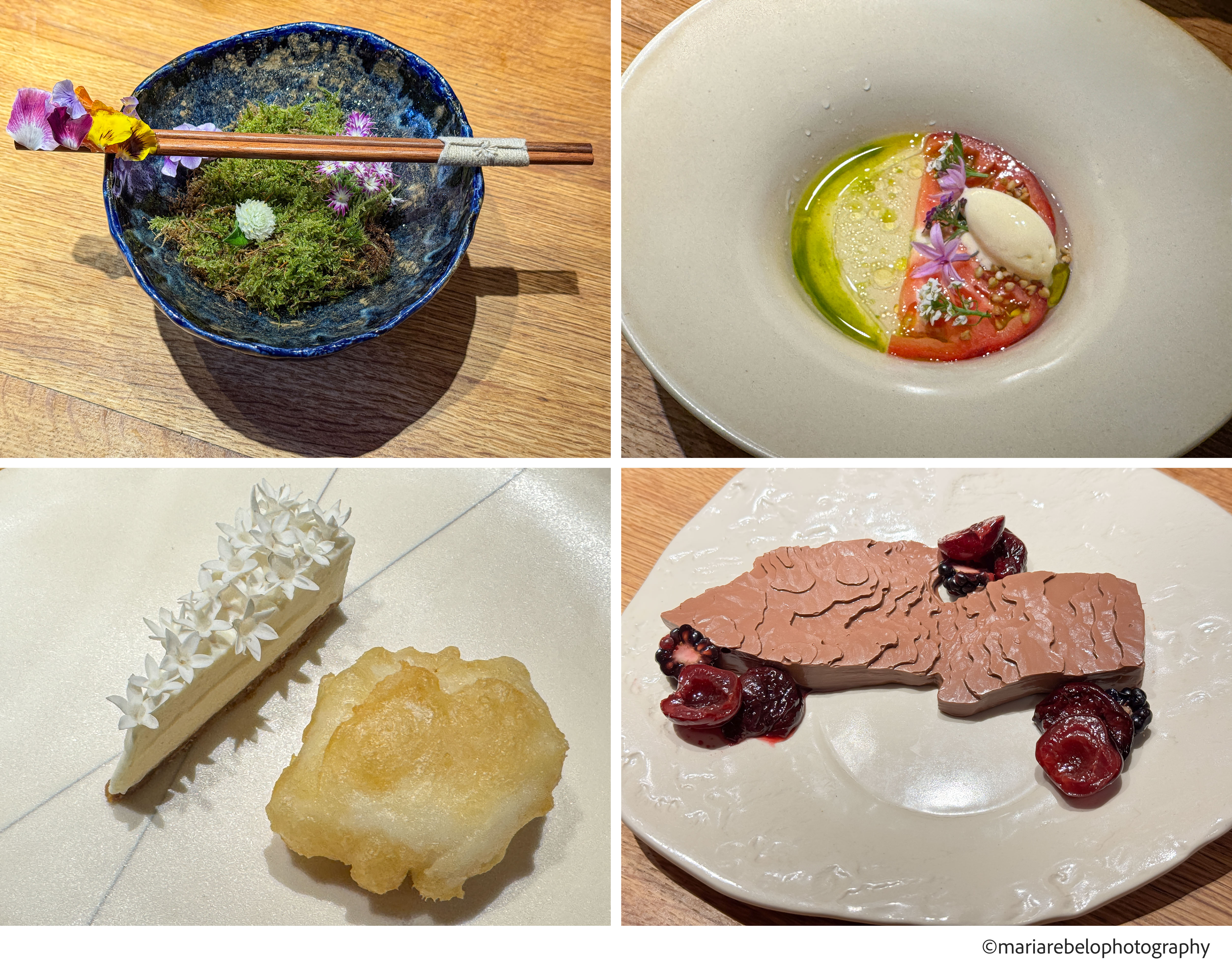
The meal began with a whisper—an ethereal broth of ginger and algae, offering no hint of the wonders to come. A bowl soon appeared, strewn with moss and topped with chopsticks decorated with flowers. Nestled beneath the blossoms was a sublime tartare of carabineiros, the crimson prawns of the Algarve. “I was trained as a Bocusian,” Atala said, referring to Paul Bocuse, the patriarch of nouvelle cuisine. “I expect the food to be on the plate, but here, the food is beyond the plate.” A joyful Blanc de Noirs from Bairrada, fittingly named Dinamite, kept us good company.

Then came Water: a delicious composition of tomato, coriander oil, and a sorbet of toasted bread and garlic. Kristin Liebold, the gracious maître d’, poured glasses of Tepache she had crafted herself—a lightly fermented pineapple elixir that brightened the palate.

Another delight soon followed: slices of savory garlic cheesecake, adorned with white blossoms, served with perfectly fried hake from the Azores. The fish was prepared in a traditional style:  marinated in milk, lemon, salt, and pepper, then delicately fried in tempura batter. 

Atala reflected on how his time in Italy had taught him the importance of simplicity and repetition in dishes like fried fish. “Every Sunday, the mother cooks for the family,” he said, “but when the nonna (grandmother) prepares the same dish, it becomes a feast. The ingredients don’t change—but the nonna brings a deeper understanding, born of repetition and a lifetime of attention to detail.”

An exquisite wine, whimsically called Viagem ao Princípio do Mundo (journey to the beginning of the world), filled our glasses. It is made with Alvarinho grapes grown in Melgaço and aged in sherry casks.

We were then invited into the garden, where, under flickering candlelight, oysters from Setúbal arrived dressed in spinach and algae, gently cooked in a Bulhão Pato style. Atala spoke about the importance of authenticity and of how this dish marries local ingredients and time-honored techniques with a sense of modernity.

Back in the dining room, the next course arrived: cordyceps mushrooms cleverly disguised as pasta. They were glazed in aged balsamic and served with a warm, buttery brioche, the perfect partner to their umami taste. A luminous white wine from António Madeira in the Dão lent the moment a festive air.

The final savory dish was a richly flavored wild boar terrine, served with oven-cooked rice and bread made from roasted quiabos (okra).

Dessert began with a leche de tigre jelly, adorned with nasturtiums and elderflower. Then came a mousse sculpted in the shape of Silent Living’s Herdade no Tempo, the estate that supplied much of the pristine produce featured throughout the meal. The mousse was encircled by an orchestra of cherries: fresh, roasted, and infused with lemon. 

A 2000 vintage Port crowned an unforgettable meal that Renato Bonfim and his youthful brigade cooked for Alex Atala, a philosopher-chef who sees food in its fullness: as ingredient and craft, as joy and communion.

Ceia is located at Campo de Santa Clara, 128. Lisbon. Click here for the restaurant’s website.

Savoring pasteis de nata at Hotel do Bairro Alto

In Lisbon, pastéis de nata inspire near-religious devotion. And with good reason–these delicate tarts, made of flaky layers of puff pastry and filled with a luscious cream of eggs and milk, offer a glimpse of heaven on earth.

Some Lisboetas are devoted to a neighborhood pastry shop that proudly displays the words Fabrico Próprio on its façade, signaling that its pastries are made in-house. But the city’s most revered pastry sanctuary is the Antiga Confeitaria de Belém, which has been drawing pilgrims since it first opened its doors in 1834.

Manteigaria is a more recent cult whose crisp, lemon-kissed tarts have earned a loyal following. Its original Chiado location has become a popular pastry shrine.

There is also Pastelaria Aloma, a bakery in Campo d’Ourique, which rose to fame after winning national competitions in 2012 and 2013.

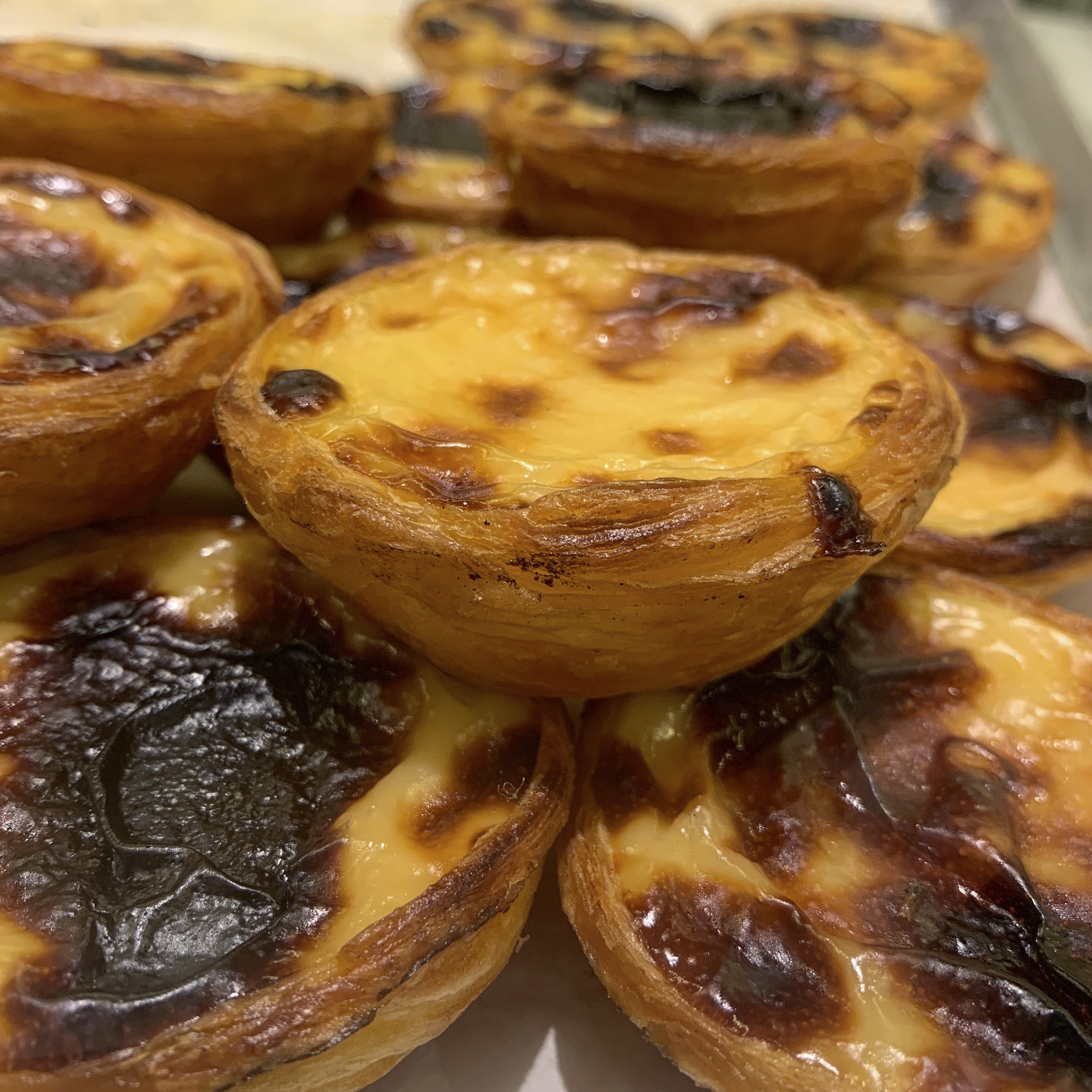
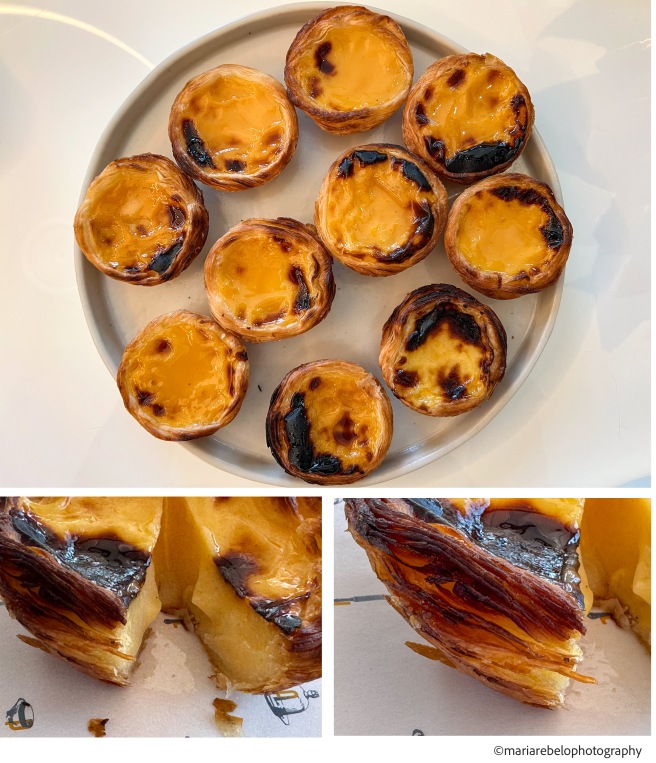
Just when we thought we had tasted all the city’s holy pastries, we stumbled upon a new revelation, hidden in plain sight at the recently renovated Hotel do Bairro Alto. Its pastéis are extraordinary. The custard, radiant yellow and delicately scented, has just the right touch of sweetness. The crust is golden, crisp, and exquisitely flaky with seven layers that echo Lisbon’s seven hills.

When we asked the servers about the recipe’s ingredients, they nodded politely and walked away. But on the final morning, a waitress slipped us a handwritten note with the ingredients. The secret? The filling is made not with cream, but with milk and cornstarch, lending it an ethereal lightness. The crust’s sublime texture is achieved through a blend of butter and pork lard.

So here is an insider’s tip: if you find yourself near Chiado, step into the Hotel do Bairro Alto and take the elevator to the fifth floor. Settle into the serene terrace overlooking the Tagus River and order some pasteis de nata. As you sit there, savoring these sweet devotions, you’re likely to find yourself at peace.

Hotel do Bairro Alto, Praça Luís de Camões 2, Lisbon, tel. 213 408 288, email: reservations@bairroaltohotel.com. Click here for the hotel’s website.

Miss Can

When we were young, we spent our summer vacations camping by the sea. We packed cans of berbigão- small, flavorful cockles- and used them to make rice dishes that tasted divine after a swim in the ocean.

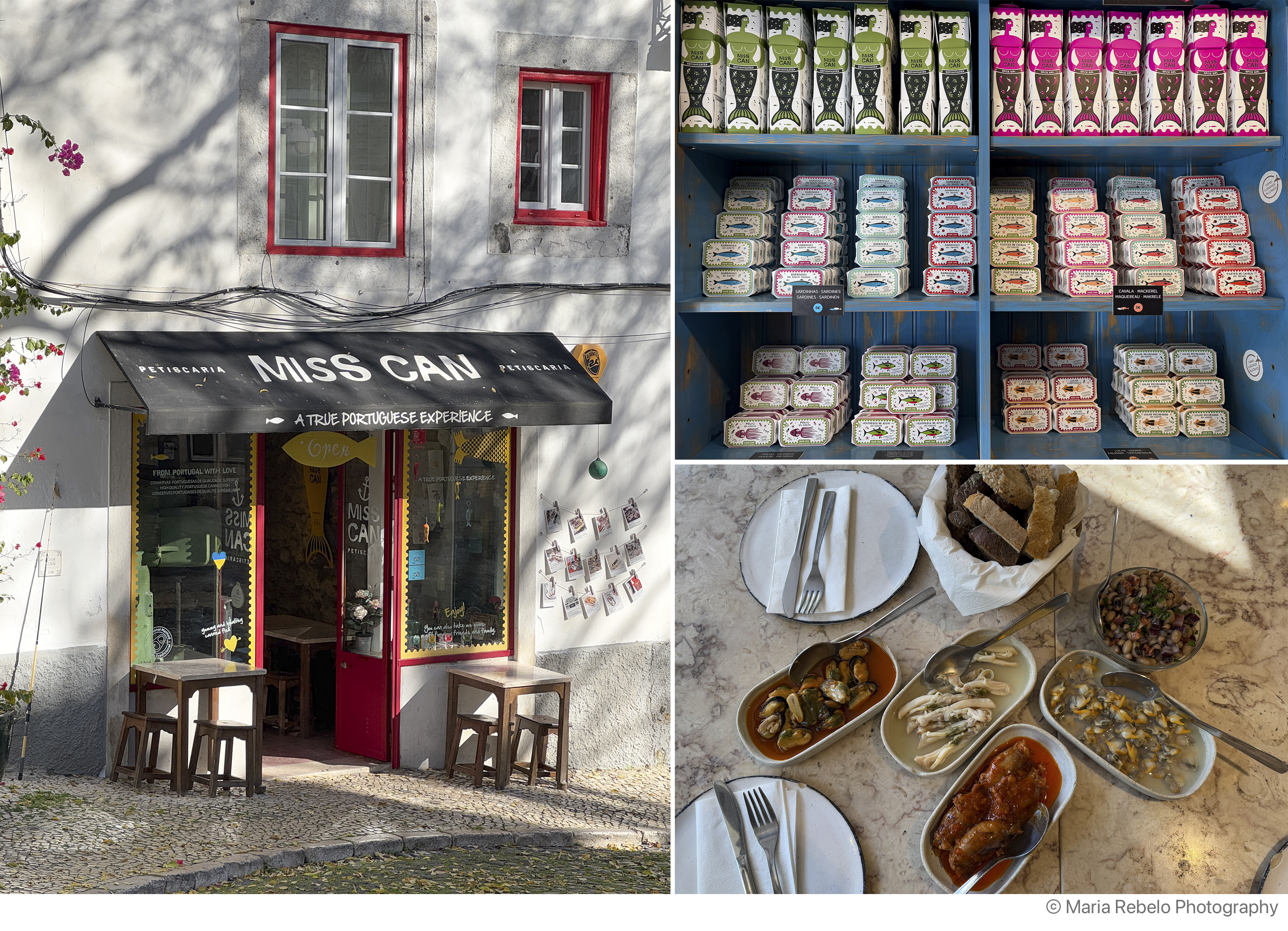
Over the years, canned berbigão nearly vanished from store shelves. Fortunately, Miss Can has brought it back, along with various other delicacies. In addition to classics like sardines and tuna, their selection includes razor clams, squid, mussels, octopus, and more.

The brand’s origins date back to 1911, when Alberto Soares Ribeiro established two canning plants—one in Setúbal, near Lisbon, and another in Olhão, Algarve. Like many others, these plants closed their doors during the years of economic turmoil that followed the 1974 revolution. Almost a century later, Alberto’s great-grandson, Tiago Soares Ribeiro, brought the family’s canning legacy back to life. Together with his relatives, Tiago launched Miss Can, a brand dedicated to high-quality, artisanal canned fish.

The rebirth began in 2013 when Tiago started producing small batches of canned fish and selling them from a yellow Piaggio motorcycle in Lisbon’s St. Jorge Castle neighborhood. In 2015, Miss Can received two prestigious awards, enabling Tiago to open a charming eatery near St. Jorge’s Castle, where visitors can experience the exceptional quality of his products.

All the fish, except cod, are sourced from the Portuguese coast. The canning process follows the same traditional method used a century ago. The fish are gently steamed to preserve their texture and natural flavor.

With Miss Can, we can effortlessly create a delicious salad, a rich pasta, or a comforting rice dish that brings back the taste of our carefree vacations by the sea.

You can sample Miss Can’s products at Largo do Contador Mor, 17 Castelo in Lisbon. Miss Can is available in the U.S. at World Market stores. Click here for Miss Can’s website.

The pleasures of a Solo lunch

To find the finest place for lunch in Lisbon, you must head toward the majestic Pantheon, a baroque limestone masterpiece that took three centuries to build. The adjacent plaza, Campo de Santa Clara, overlooks the “sea of straw,’’ the stretch of the Tagus River that reflects the golden sunlight, resembling a field of wheat.

A short walk leads you to number 128, where the understated entrance of the elegant Santa Clara 1728 hotel awaits. From Tuesdays to Saturdays, the hotel’s dining room, home to the renowned Ceia restaurant, transforms into a lunch haven called Solo.

The meal begins with the comforting aroma of warm, house-made sourdough bread served with creamy butter.  It continues with a starter and main course paired with a glass of wine and ends with dessert. The menu is updated every two to three weeks to reflect what is seasonal.

The starters are a testament to culinary finesse, featuring options like delicate Hamachi kissed with ponzu and coriander, requeijão–a soft cheese from the Estrela mountain–adorned with grapes and a touch of balsamic vinegar, or duck escabeche infused with the sweetness of ripe tomatoes.

The main courses are equally enticing, including choices like tender roast beef accompanied by grilled lettuce hearts and anchovy vinaigrette, creamy orzo with pumpkin, spinach, and truffles, or line-caught fish paired with pumpkin, hazelnut, and a rich bouillabaisse.

For the sweet ending, will you choose the tropical freshness of Azorean pineapple with yuzu syrup and finger lime? Or the indulgent richness of chocolate ganache with seasonal fruits?

Sharing the experience with a friend doubles the delight. The chef can split two menus, letting you savor two different starters, main courses, and desserts.

Solo’s exceptional cuisine is rooted in its “soil to table” philosophy. Most ingredients are sourced from Herdade no Tempo, a farm in Alentejo that uses regenerative and holistic practices to nurture the soil and support biodiversity. Chef Renato Bonfim and his team transform these pristine ingredients into dishes that celebrate the gifts of nature and the joy of cooking. 

From the artful presentation to the gracious service and intimate ambiance, every detail at Solo turns lunch into an experience that lingers in our memory long after the last bite.

Solo is located at Campo de Santa Clara, 128. Lisbon. Click here for the restaurant’s website.

Tradition and modernity at Casa Tradição

Casa Tradição is located near Lisbon’s old cathedral, a neighborhood rarely visited by locals. The restaurant has rustic decor, so we went in expecting a traditional meal. But our waiter mentioned a tasting menu, and we tried it.

Dinner began with an assortment of bread served with creamy nut butter and fragrant olive oil from Porto de Mós, the hometown of the restaurant’s chef, Samuel Mota.

Then, the unexpected delights started. First, a martini glass brimming with ice held a slice of apple marinated in citrus and spices, evoking the essence of a frozen sangria. Then, a crisp mini baguette layered with Serra cheese and exquisite Pata Negra prosciutto. 

But the clearest sign that this would be a memorable night came next: a pastry resembling a pastel de nata crowned with smoked codfish and filled with a blend that echoes the flavors of traditional creamed codfish.

We were still recovering from this moment of deliciousness when we were served a cabbage tempura stuffed with migas made from beans and olives. The rich and satisfying taste was reminiscent of a Portuguese sausage called alheira. 

The seafood entrée was stunning: a delicately cooked large Algarve shrimp served with a broth and fermented lupini beans. The fish course was a perfectly cooked corvina with asparagus and açorda made with fish roe.

The seventh step to culinary heaven was faux cabidela rice. Traditionally made with vinegar and chicken blood, it was ingeniously reimagined as a beetroot risotto, subtly enhanced with raspberry vinaigrette, and served with succulent guineafowl cooked with bacon.

The meal concluded with a moist pão de ló and a foam crafted from Serra cheese. Chef Samuel’s five-year tenure at the acclaimed Belcanto helped prepare him to follow his imagination. Though rooted in tradition, his creations brim with innovative, delicious culinary ideas.

Casa Tradição is located at Travessa do Almargem, n. 4, Lisbon, tel. 967-340-913. Click here for their website.

Touta, the sensuous cuisine of Lebanon in Lisbon

We heard from the culinary rumor mill that a famous Lebanese chef had moved to Lisbon and opened a restaurant called Touta. So, on a warm spring evening, we climbed the hill from Estrela to Campo de Ourique to try it out.

Rita Abou Ghazaly welcomed us into the gracious dining room decorated with Middle Eastern motifs. She served us hibiscus and rose-petal kombucha while Lebanese music filled the air with the same microtones we hear in fado.  

Dinner started with a basket of Lebanese bread and cheese bonbons—crispy cheese treats wrapped in phyllo dough. Next came a plate of hummus, a combination of chickpeas and tahini sauce that is a staple of Middle Eastern cuisine. This rendition was the best we ever tried. It was topped with soujak meat, pickles, and aquafaba, a sumptuous emulsion of chickpea water that resembles whipped egg whites. It was quickly followed by grilled cabbage with lentils and beetroots delicately seasoned with cured lemons. 

We tried a delicious soup made with a local fish called mero. It reminded us of cação soup, a traditional Alentejo recipe. Finally, we had a spectacular grilled black pork served with black beans, carob marshmallows, and a barbecue sauce made from molasses. Dessert was a simply perfect sweet croquette. 

“What made you decide to open a restaurant in Lisbon?” we asked Rita. “Ask Waël,” Rita said, laughing, “it’s all his doing.” Waël Haddad told us he has had a crush on Lisbon since his first visit ten years ago. “I kept returning and brought my friend Rita and my cousin Touta, a celebrated Lebanese chef. With every visit, our love for the city deepened, and so we started looking for a restaurant location. We explored various neighborhoods until we stumbled upon this perfect spot with a ‘for sale’ sign. Now, here we are, living our dream.”

Chef Cynthia Bitar, affectionately known as Touta, came to greet us. She inherited her passion for cooking from her mother, a famous Middle East caterer. Touta has always been obsessed with cooking.  “When I was a child and went on play dates, I often cooked in my friend’s kitchens. I think about food during the day and dream about it at night.” 

She returned to her family’s catering business after training at the Paul Bocuse Academy in Lyon. But, like Waël and Rita, Touta fell for Lisbon’s charms. She was drawn to the similarity between Lebanese and Portuguese cuisines, the quality of local ingredients, and the warmth of the people. “I found amazing produce in the farmers markets. Try this carrot.” She sliced a small carrot in half so we could experience its aroma and enjoy its sweet taste.” 

Touta took us to the grocery store at the back of the restaurant. Its shelves are full of products from Lebanon and jars with pickles, jams, fermented drinks, and preserved citruses that she prepared. We stayed past midnight, bewitched by Touta’s sensuous cuisine, sampling everything from molasses and infusions to spices like sumac and za’atar.  

In the 15th and 16th centuries, trade with Africa, Asia, and South America turned Lisbon into a hub for global talent. The diverse influx of people profoundly influenced Portuguese culture, cuisine, and art. It is wonderful to see Lisbon once more attracting people who will bring the city to new heights.  Welcome, Waël, Rita, and Touta!

Touta is located at Rua Domingos Sequeira 38 in Lisbon 960 49 49 49. Click here to go to the restaurant’s website.

St. George’s castle

If you’re up for a climb in Lisbon, we recommend visiting St. George’s castle. You can start at the bottom of the hill and go up the old meandering streets of Alfama, the only neighborhood that survived the 1755 earthquake.

At almost every corner, someone sells glasses of ginginha, a delightful liquor made from sour cherries. But it is unbecoming to drink ginginha from plastic glasses. We prefer to get it at “A Ginginha” in Largo São Domingos, where they’ve served it in proper glasses since 1840.  

It’s worthwhile to buy the ticket to enter the castle. However, keep your expectations low–a first sight, there isn’t much to see. A bronze statue of Dom Afonso Henriques, the first king of Portugal, who conquered the castle from the Moors in 1147. A marble statue of Dom Manuel, the monarch who oversaw the golden age of discoveries by Portuguese navigators. Fountains whose water has run dry, broken marble columns, and cannons that are no longer battle-ready lie around the castle, all in medieval disarray. There are pines and olive trees, their branches sought by vain peacocks searching for a thrill.

The castle was built and rebuilt over centuries, first with cement and stone and then with brick and mortar. The layers of the imposing walls read like a diary of all those who lived here: Phoenicians, Carthaginians, Romans, Moors, and Portuguese. 

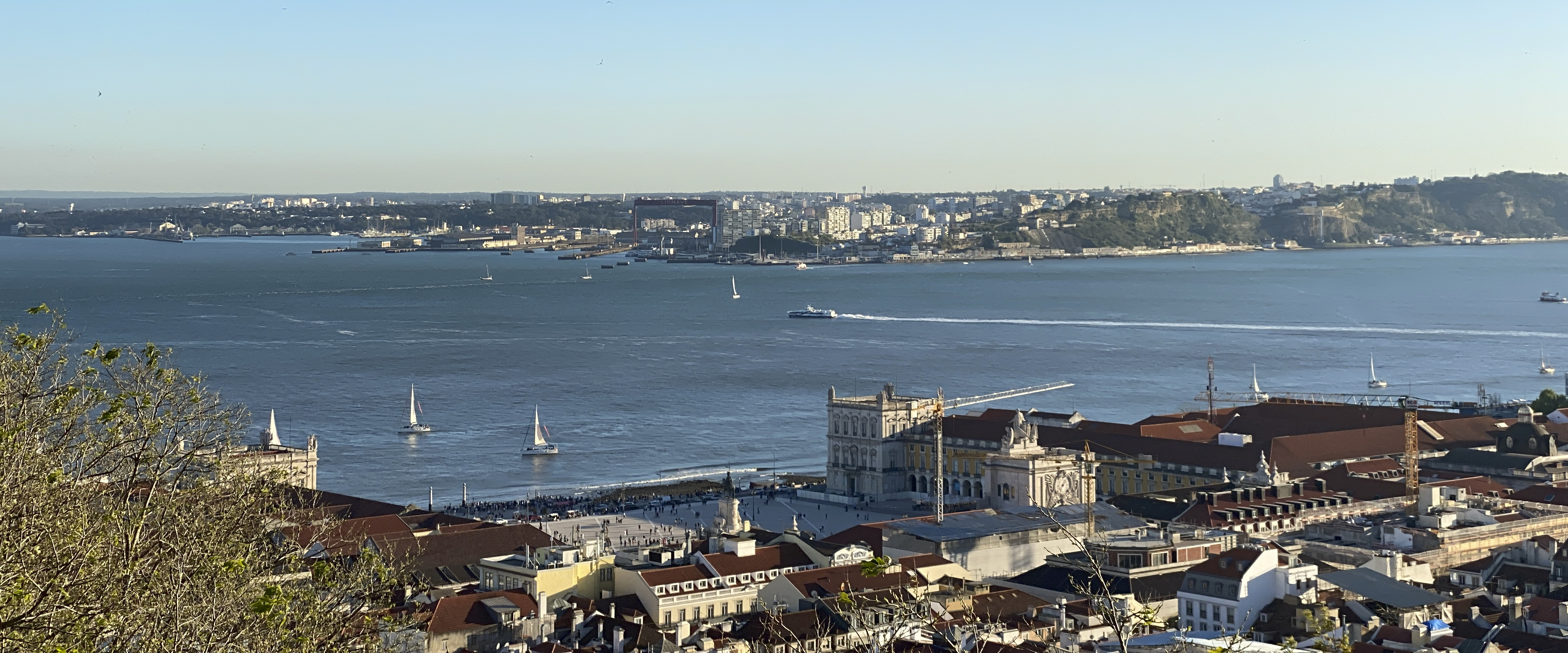
What the castle offers are magnificent views of Lisbon. The city lies at our feet, making us feel like royalty—scratch your skin, and surely blue blood will trickle out. A map made out of tiles shows us the lay of the land. Nearby there are benches inscribed with the words of Sophia de Mello Breyner. What a beautiful idea to carve in stone the words of a poet!

We stroll around the castle until the sun sets down. Only then do we go downhill. Be careful because the cobblestones are slippery. And there’s no need to rush. There’s plenty of time to get to Largo de São Domingos and enjoy a glass of ginginha.

You can get tickets online at the castle’s website, here.

The thrill of Loco

Dining at Loco is like attending a jazz concert–there’s a feeling of excitement in the air. The restaurant lighting is soft, but the tables are lit like a stage, ready for chef Alexandre Silva’s performance. 

We sat down and studied the interesting wine list curated by Mário Marques, an old acquaintance from Ceia and Cura.

The performance started with a series of delicious food riffs presented on a wide variety of backgrounds: stones, coal, shells, and much more. The tempo was fast, like John Coltrane playing Giant Steps. We recognized culinary motifs inspired by the classics of Portuguese cuisine. For example, there were disks of crispy chicken skin that tasted like the traditional roasted chicken with piri-piri sauce. 

Then, the rhythm slowed down to a ballad tempo, like Thelonious Monk playing ‘Round about Midnight. A basket of artisan bread came with rich butters and a bowl with sauce from the traditional clams Bulhão Pato. There was also delicately cooked, perfectly seasoned black pork, pumpkin dumplings, and pristine fish dressed with colorful sauces. 

The desserts were playful, pomegranate granita and supple ice cream topped with hibiscus crystals. Finally, there were some encores–miniature sweets that please the eye and charm the palate. It is a thrill to dine at Loco!

Loco is located at Rua dos Navegantes nº53-B, Lisbon, tel. 21 395 1861. Click here for the restaurant’s website.

Zun Zum

It is so much fun to eat at ZunZum! The restaurant, headed by chef Marlene Vieira, has a great location, with the Tagus river on one side and the Pantheon on the other. The food is as wonderful as the location.

We sat for lunch in the esplanade under a large red umbrella on one of those perfect sunny days that Lisbon residents take for granted. The simpatico waiter suggested a rosé made from bastardo at Quinta de Arcossó in Tràs os Montes. It has nice acidity and flavors of cherry and tropical fruit. “Do you want to choose from the menu or be surprised by the chef?” the waiter asked. Surprised, we chose without hesitation.

The “couvert,” a set of delightful little bites that start the meal included codfish tempura (“pataniscas de bacalhau”) and a sourdough brioche. 

The first appetizer was a luscious ceviche made with unusual ingredients: popcorn, red onion, and passion fruit. It was followed by tasty mini pizzas topped with trout eggs, a spider crab called sapateira, and avocado. The pizzas were coated with a traditional spider-crab filling.

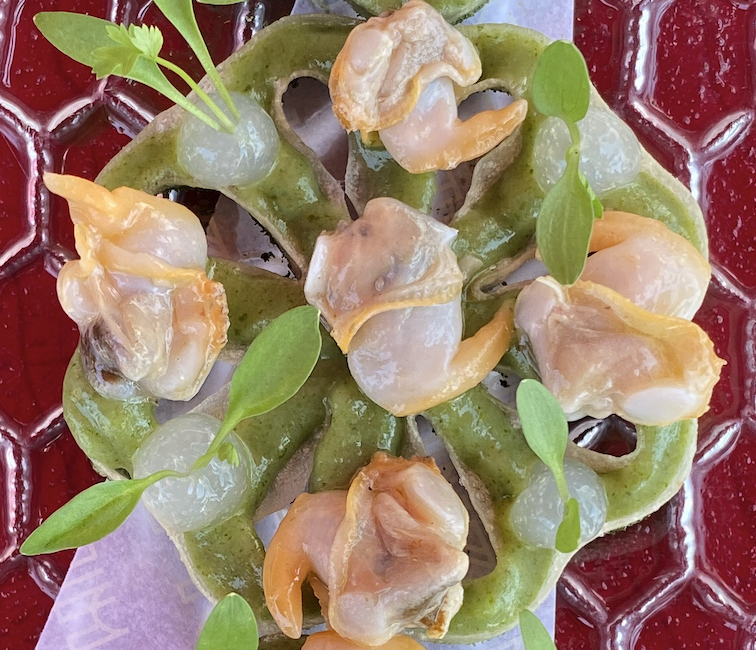
Then came “filhoses de berbigão.” They are a feast, the cockles large and juicy floating on a star-shaped bed made from fried dough filled with a cream of cockle broth, coriander, and lemon. 

The fish entrée was a bowl of creamy, savory rice made with clams, cockles, razor clams, and mussels. The rice, a carolino variety from Bom Sucesso, has large grains that soak the appetizing sauce made by the seafood. 

The meat entrée was a slice of delicious black pork accompanied by fried corn and pickles made from cauliflower and celery.

Our first dessert was a yogurt parfait on a bed of strawberry jam. The fatness of the yogurt and the sweetness of the jam are a perfect yin and yang. The second dessert was “toucinho do céu” (bacon from heaven) a pudding made with egg yolks and bacon. It is so tasty that it could, indeed, be served in heaven.

We left ZunZum deeply satisfied and certain that if Robinson Crusoe could eat Marlene Vieira’s food on his desert island, he would never want to leave.

ZunZum is located ar Av. Infante D. Henrique, Doca Jardim do Tabaco in Lisbon, email hello@zunzum.pt, tel. 915 507 870. Click here for the restaurant’s website.