Jorge Seródio Borges and Sandra Tavares da Silva, the husband-and-wife team behind Wine & Soul, craft some of the Douro Valley’s most iconic wines—among them the extraordinary Guru, Pintas, and Manoella Vinhas Velhas. Jorge’s roots in the valley run deep: his family has been making wine there for five generations.
His mother, Maria Doroteia, devoted her life to teaching the children of the Douro Valley how to read and write. She also has a deep love for animals; at 87 years of age, she still tends to ten hens, who reward her with fresh eggs.
Maria Doroteia is renowned for her cooking. When Jorge and his sister were little, she would bake biscuits and hide them away in tins. As soon as the children caught the first whiff of the delicious aromas, they would set off on a treasure hunt until they found the precious trove of cookies, savoring them with delight.
We recently had the joy of having lunch with Maria Doroteia. With her characteristic generosity, she shared one of her cherished recipes, which we are happy to pass on to you, dear reader.
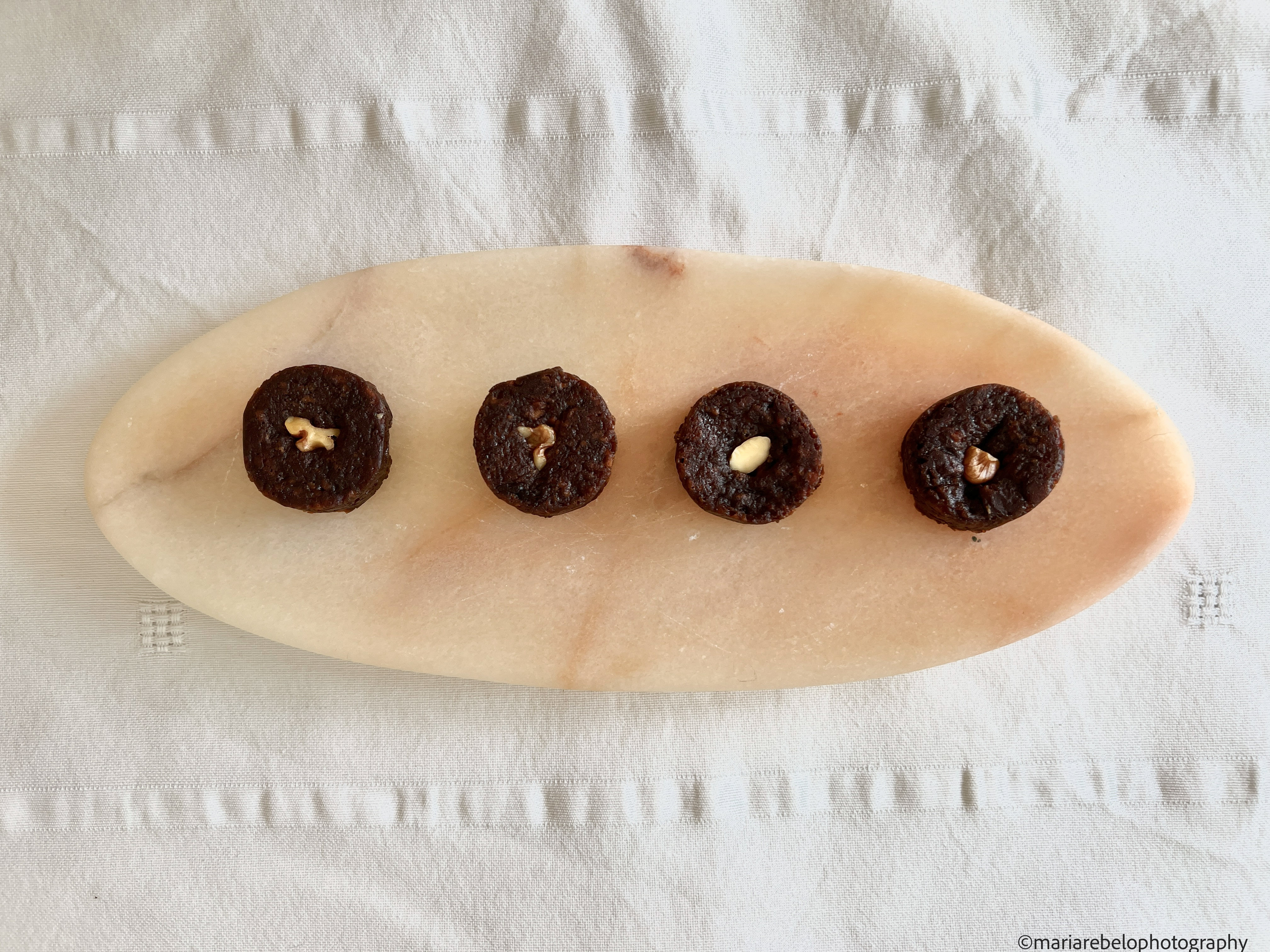
Douro Biscuits
Ingredients
230 g self-raising flour
200 g sugar
1 egg
80 g butter
90 g cocoa
Instructions
Mix the sugar, egg, and butter.
Add the flour and cocoa, mixing well.
Let the dough rest for 90 minutes to 2 hours.
Roll out on a marble surface until paper-thin.
Cut with a cookie cutter and bake at a low temperature until crisp.
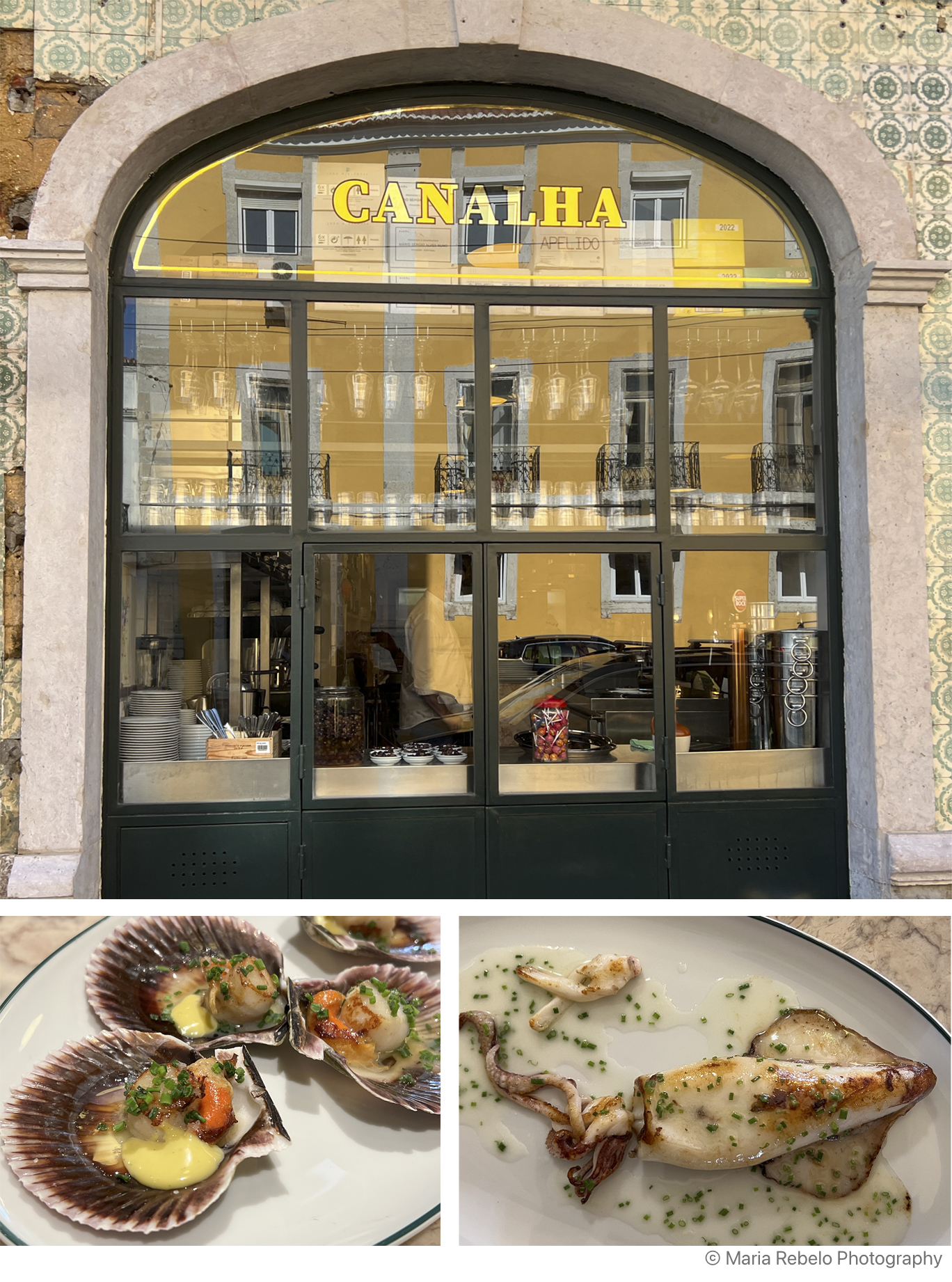
One of Lisbon’s most coveted new restaurants bears a mischievous name: Canalha—the Portuguese word for “scoundrel.” Behind this playful moniker stands one of Portugal’s most acclaimed chefs, João Rodrigues. After earning accolades in haute cuisine, João chose a different path: to open a neighborhood restaurant grounded in the rich culinary traditions of Portugal. The result is a place that is unpretentious and quietly exceptional. Each day features a new “prato do dia”—a beautifully prepared dish offered at a modest price. But for those inclined to indulge, the menu also offers exuberant pleasures: opulent seafood, exceptional cuts of meat, superb artisanal charcuterie, and exquisite wines.
The décor reflects the restaurant’s philosophy of understated elegance. Tabletops are crafted from lioz, the rose-toned limestone that graces Lisbon’s historic buildings. The floors are paved with traditional black-and-white mosaic. Ceiling fans stir the air with their wooden blades, creating a gentle breeze.
Our meal began with crusty bread and pungent olive oil, followed by pastéis de massa tenra—golden, crisp savory pastries filled with seasoned meat and served with a bold sriracha mayonnaise. Then came zamburinhas, small scallops bursting with briny sweetness, and an exquisitely tender squid, lightly charred to smoky perfection. The final dish—grilled octopus with sweet potatoes—was a flawless composition of textures and flavors.
Canalha is not a stage for culinary theatrics. There are no illusions, no deconstructed dishes; there is no drama on the plate. This is cooking rooted in reverence for the land, the seasons, and the ingredients. After stepping away from haute cuisine, João journeyed across Portugal in search of forgotten recipes, unique flavors, and small producers who work with passion and dedication. Their names are celebrated on the menu. One dish is dedicated to our friend Raul Reis, who grows the finest potatoes in Portugal.
João is soft-spoken but intense. At Canalha, he channels this intensity to produce something rare: food steeped in the flavors and traditions of Portugal, cooked with skill, honesty, and soul.
Canalha is located at Rua da Junqueira 207, in Lisboa, tel. 962 152 742. Click here for their website. Reservations are a must.
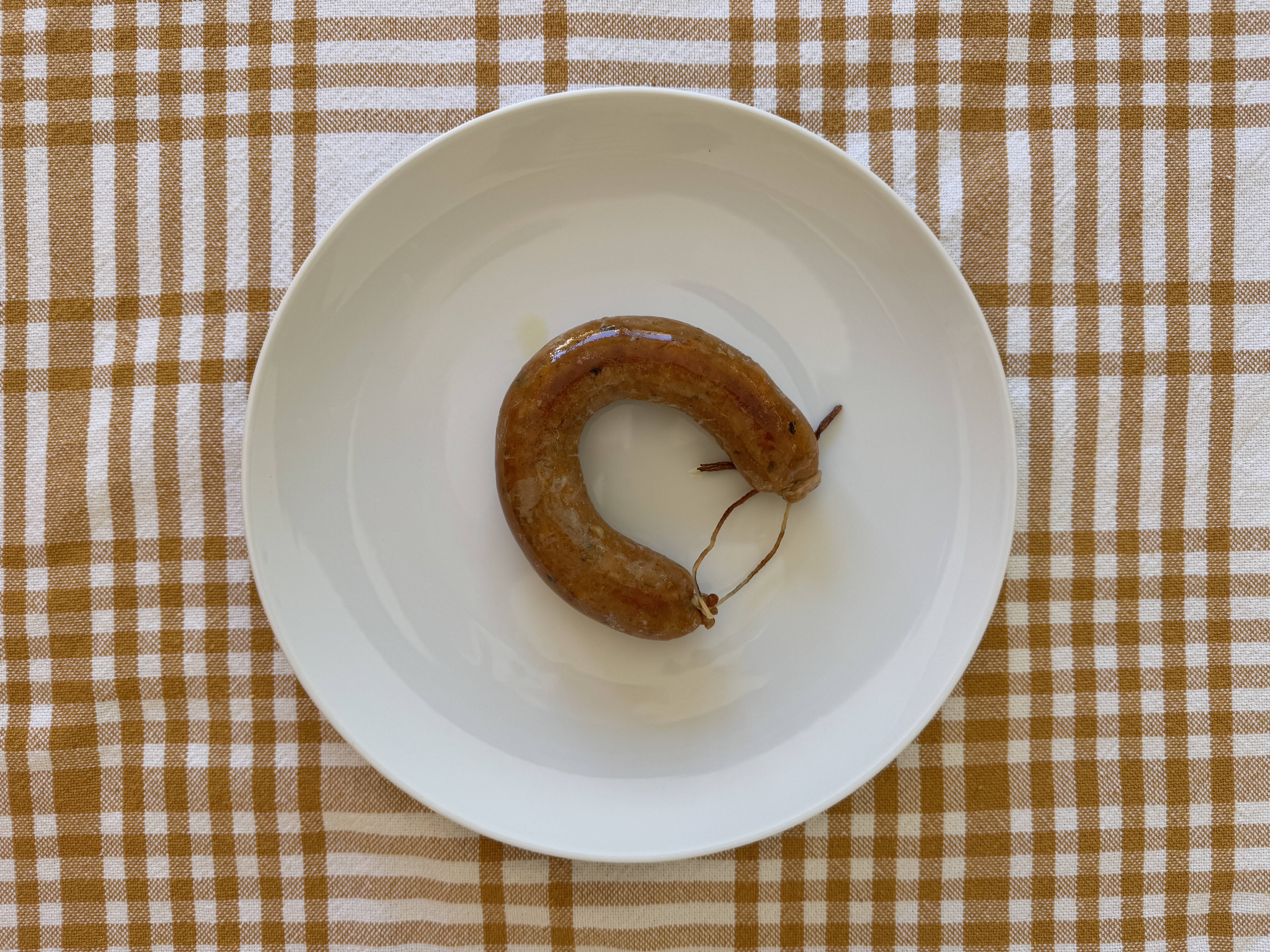
The origin of alheiras (pronounced ahl-yay-ras), a traditional Portuguese sausage, is intertwined with the history of Portugal’s Jewish community during the reign of King Dom Manuel I (1495–1521).
Dom Manuel sought to strengthen Portugal’s standing in Europe by marrying the daughter of the Spanish Catholic Monarchs, Ferdinand of Aragon and Isabella of Castile. However, the union came with a condition: Portugal had to adopt Spain’s policies toward Jews, forcing them to either convert to Christianity and become “New Christians” or leave the country.
Jewish dietary laws forbid the consumption of pork, a staple of Portuguese cuisine. To avoid persecution, New Christians ingeniously created a pork-free sausage using bread, garlic, and other meats such as poultry or game. These sausages, known as alheiras (from alho, the Portuguese word for garlic), were smoked to resemble traditional pork sausages, allowing Jewish families to appear to conform to local customs.
Today, alheiras are a cherished element of Portuguese cuisine, particularly in the Trás-os-Montes region, where they originated. The town of Mirandela is especially famous for its alheiras. Although modern recipes often include pork, these sausages stand out for their distinctive flavor.
Preparing alheiras is far more complex than making traditional chouriços. To make chouriços, pork is marinated in vinha d’alhos—a flavorful blend of garlic, bay leaf, salt, olive oil, paprika, and wine—before being stuffed into casings and smoked until dry. In contrast, alheiras require meticulous preparation: a variety of meats are carefully cooked and then combined with bread and spices before filling the casings and smoking the sausages. Every detail is crucial in this labor-intensive process.
The finest alheiras we’ve ever tasted are crafted by Maria da Graça Gomes and her daughter, Rosário Buia, at Toca da Raposa in the Douro Valley. They are made with an exquisite mix of meats, including rabbit and pheasant, and seasoned with great finesse. Grilled, lightly fried in olive oil, or baked in the oven, these sausages are a culinary feast.
Toca da Raposa makes alheiras between November and January. You can place an order by calling 969951191.
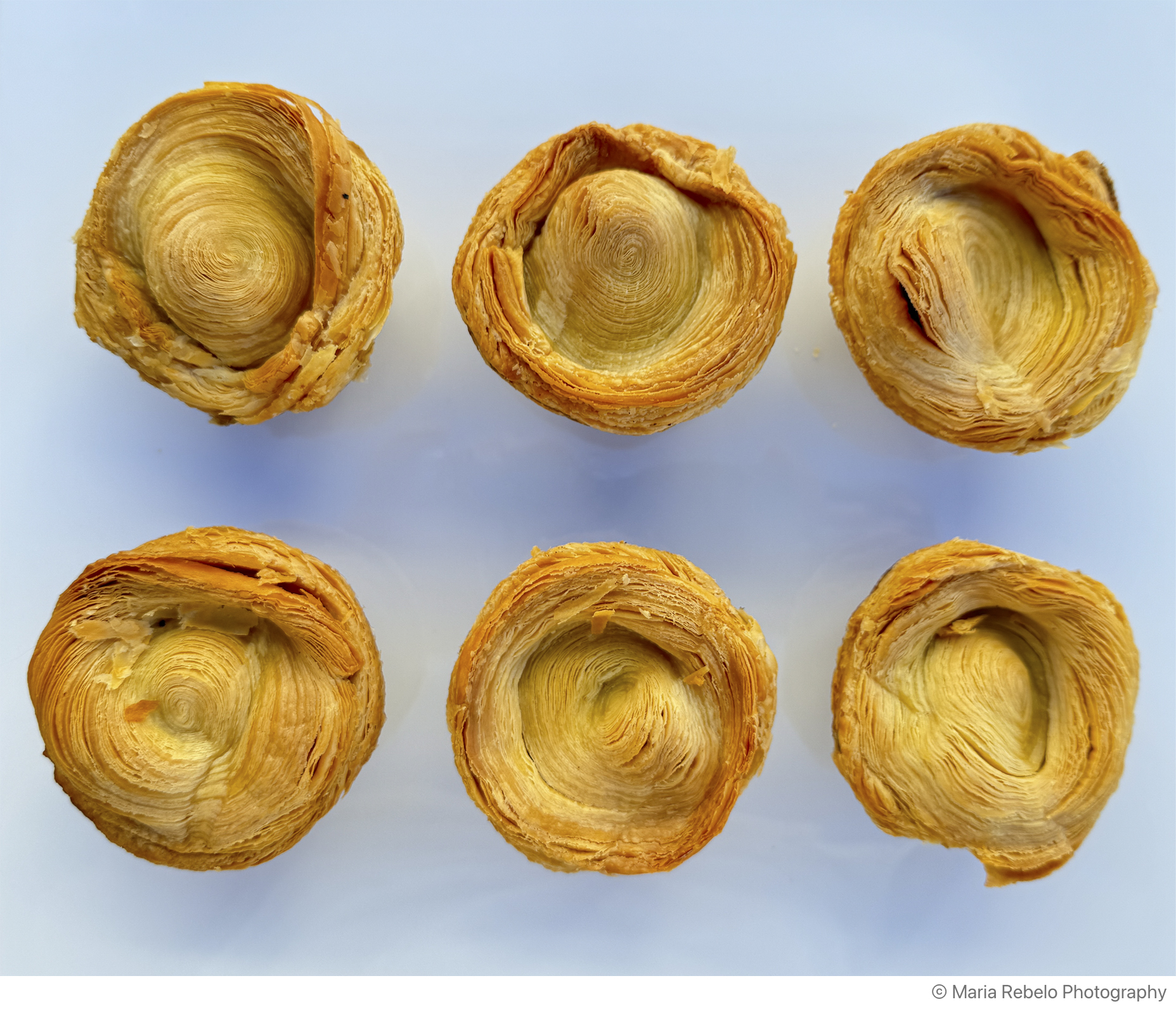
Covilhetes are small meat pies cherished in Vila Real, a town near the Douro Valley. Their origins date back over two centuries when they were sold at religious fairs. By the mid-19th century, covilhetes had become a staple in restaurant and café menus, often served with oven-baked rice. Their popularity has endured ever since.
In 2015, a guild was established to safeguard the authenticity and quality of covilhetes. The unique taste of these pies reflects the premium ingredients used, such as fine flour, Maronesa veal (from a breed native to the Marão mountains), and local sausages.
Though recipes for covilhetes exist, mastering the art of crafting their delicate, flaky pastry and intricate oval crust resembling planetary orbits is challenging. Fortunately, pastry shops in Vila Real’s historic district, such as Pastelaria Gomes, Casa Lapão, and Loja do Covilhete, produce daily batches of these heavenly pies, fresh from the oven, ready to delight our palates.
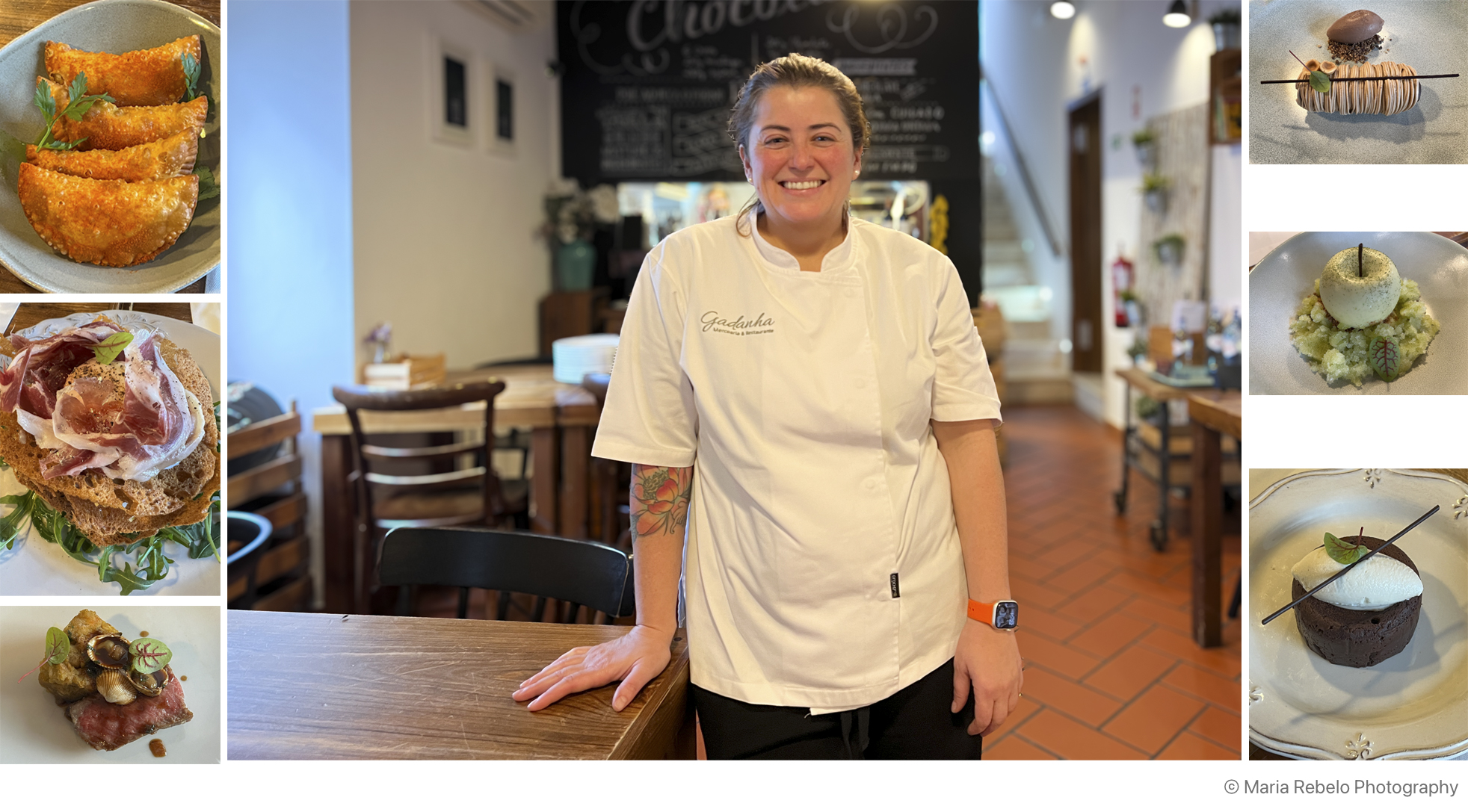
When we asked our son, a chef by trade, what he wanted for his birthday, he answered without hesitation: lunch at Mercearia Gadanha in Estremoz. And so, on the day when we celebrated the arrival of the treasured gift that is our son, we got on the road to Estremoz.
Chef Michelle Marques welcomed us into her restaurant with her radiant smile. She filled our glasses with Mainova, a white wine made with a harmonious trinity of Portuguese varietals (Arinto, Antão Vaz, and Verdelho). It has a wonderful acidity and a citrus aroma that kept us great company through the meal.
Our lunch began with Gadanha’s classic lamb croquettes served with garlic confit mayonnaise. Each bite reminded us why this dish had long been a favorite.
Next came the quail, stewed to perfection and served with a rich demi-glace, an intense apple sauce, and some of the most flavorful potato chips we’ve ever had—thin, crispy, and seasoned with just a whisper of oregano.
Then came wild mushrooms with a soft-cooked egg, and a crumble of alheira sausage, each mouthful an explosion of umami.
The next course was a set of stunning cação pastries. Never was this fish so prized in Alentejo so wonderfully cooked. The pastry was crunchy, allowing the delicate flavors of the fish to shine.
Another favorite followed: the exquisite codfish mille-feuille, a combination of crispy Alentejo toasts, chickpea foam, codfish confit, and black-pork prosciutto. This dish alone is worth the journey to Gadanha.
The next course, black pork and cockles (berbigão) is a delicious reimagination of a traditional Alentejo recipe: pork and clams. The savory part of the meal ended with duck rice brimming with flavor.
We indulged in three desserts: a reconstructed apple with pennyroyal (poejo) and sheep milk ice cream, a medley of chocolate and hazelnut textures, and a chocolate and coffee delight with vanilla ice cream.
Michelle was born in Brazil, but she has lived in Portugal for so long that she lost her Brazilian accent. In its place she gained a culinary voice so original that it is worth traveling the distance to celebrate life’s best moments at her restaurant.
Gadanha is located at Largo Dragões de Olivença, 84 A in Estremoz, tel. 268 333 262. Click here for their website.
The origin of the honey cake remounts to Madeira‘s “white gold” era. This period began in the 15th century when Henry the Navigator brought sugar cane from Sicily to plant in Madeira. The island became Europe’s main sugar supplier until the first half of the 16th century when Brazil took over this role.
The honey cake recipe has been refined over the years. Despite its name, the cake does not contain honey. It combines flour, yeast, nuts, dried fruit, spices, and Madeira wine with sugar cane molasses, known in Madeira as sugar cane honey.
The molasses imparts a rich flavor and contributes to a long shelf life–the cake lasts about a year. Historically, these cakes provided sailors with a sweet reminder of home during lengthy sea voyages.
Ringing in the New Year with a slice of Madeira honey cake is a delightful experience.
Below, we share a version of the recipe created by the great Maria de Lurdes Modesto. It takes more than a week to make a Madeira cake. But there’s an easier way to taste this wonderful dessert: visit Madeira in 2024!
We wish you a happy New Year that is as sweet as a Madeira honey cake.
Madeira’s honey cake (recipe by Maria de Lurdes Modesto)
Ingredients
Wheat Flour: 160g
Baker’s Yeast: 5g
Lukewarm Water: 0.25dl
Lard: 200g
Butter: 125g
Cane Honey: 450ml
Flour: 465g
Sugar: 250g
Orange Zest and Juice: From one large orange
Walnuts (Chopped): 250g
Almonds (Chopped): 75g
Fennel Seeds: 10g
Cinnamon: 20g
Cloves: 5g
Sweet Madeira Wine (Bual or Malmsey): 1 tablespoon
Start a day before baking. Prepare the yeast mixture with 160g of wheat flour, 5g of baker’s yeast, and 0.25dl of lukewarm water. Mix well, cover, and leave in a warm, draft-free area.
On the day of baking
Gently melt 200g of lard and 125g of butter in a saucepan. Once melted, add 450ml of cane honey.
Sift 465g of flour with 250g of sugar into a large bowl (traditionally an “alguidar”). Make a well in the center. Pour the prepared yeast mixture into the well. Add the melted fats and honey (which should now be warm) to the well. Start mixing the ingredients. Add the zest and juice of one large orange. Knead well until the dough is smooth and lump-free.
Mix in 250g of chopped walnuts, 75g of almonds, and 12g of citron (called cidrão in Portuguese, it is a citrus fruit often candied and used in cakes like Bolo Rei). Add the spices: 10g of fennel seeds, 20g of cinnamon, and 5g of cloves. Stir in a generous tablespoon of sweet Madeira wine. Knead the mixture thoroughly by hand. Cover the bowl and place it in a warm, draft-free spot.
Let it rest for 2 to 4 days. After the resting period, portion the dough into 250g or 500g amounts, depending on the desired size of the cakes. Use round, shallow, well-greased baking pans without a hole in the center. Decorate the cakes with walnuts, citron (if available), and/or almonds.
Preheat the oven to 190°C (approximately 374°F). Bake for about 30 minutes or until done. Place the baked cakes on wire racks to cool. Once cooled, cover them with a cloth and let them rest for 2 to 3 days. Finally, wrap the cakes in parchment paper and store them in airtight containers.
The Portuguese culinary tradition does not come from palace kitchens. It comes from the cooking of humble people who, in every season, took the best ingredients that nature offered and prepared them using recipes perfected over centuries. The food presentation is often rustic, but the taste is delicious because everything is harmonious and natural.
Many chefs are reinventing the cuisine of Portugal. But the truth is that there’s no need for reinvention. What we need is an evolution, the creation of new recipes that, like clams Bulhão Pato and Caldo Verde, bring joy to the dining tables of Portugal. Easy to say, but who can do it?
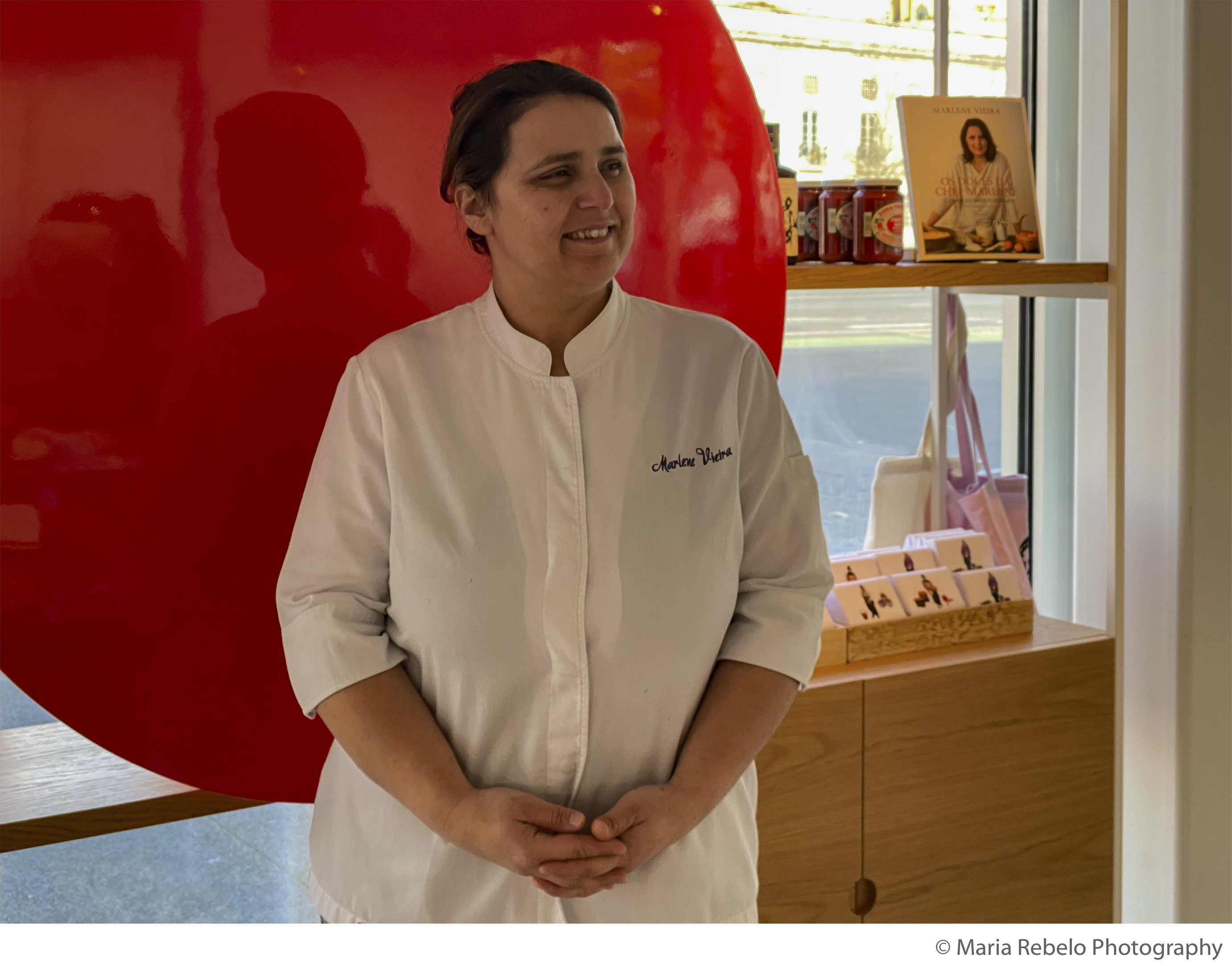
We know one chef who can: Marlene Vieira. Her Zun Zum and Time Out restaurants are indispensable stops in any culinary tour of Lisbon. Her food is creative, not because she wants to surprise or shock. Marlene’s originality stems from her ability to intuit new, delicious ways of preparing Portugal’s great food products.
Marlene started cooking at age 12. Her father, who owned a butcher shop, took her on a delivery to an Oporto restaurant that served French-inspired food. The chef invited Marlene to sample what they were preparing, and she was hooked. She loved the taste, the refinement, and elegance. Marlene spent holidays and school vacations helping out at the restaurant. She relishes the organized chaos of a professional kitchen, and cooking proved to be an ideal outlet for her bountiful energy.
At age 16, Marlene went to culinary school. She graduated as the best student and stayed as a teaching assistant, while working as a pastry chef at a boutique hotel. Up to this point, all her cooking had revolved around French techniques.
At age 20, a friend invited her to work at a Portuguese restaurant in New York. For the first time, Marlene had to cook traditional Portuguese food. She remembered fondly the food that her mother and grandmother prepared, but she did not know how to cook it. More than three thousand miles away from home, this young chef started to study the cuisine of Portugal. And for the first time, she realized that she had a role to play: embrace Portuguese cuisine and make it her own.
Marlene returned to Portugal inspired to learn more about traditional cooking. She continued to work in fine dining, but her cooking became more and more Portuguese. A breakthrough moment came when Time Out magazine chose her dish featuring a large shrimp called “carabineiro” served with an almond brulée as the year’s best recipe. This dish has the hallmark of Marlene’s cooking: it draws on combinations of ingredients and techniques that are hard to envision but feel utterly natural once you try them.
We asked Marlene whether she could share a recipe with our readers. She generously gave us a codfish recipe.
Portugal has many codfish recipes, but only a few have stood the test of time, like those of Brás, Zé do Pipo, and Gomes de Sá. Perhaps one day, this recipe will be known as Codfish Marlene. Enjoy!
Codfish Confit with Sweet Potatoes Gnocchi, Low-temperature Egg, and Pea Emulsion
Ingredients for four people
600 grams of codfish filets
2 garlic cloves
1 laurel leaf
400 grams of sweet potatoes
5 eggs
100 grams of flour
70 grams of onion
70 grams of leaks
300 grams of peas
Microgreens for garnish
3 deciliters of olive oil
200 milliliters of whole milk
Sea salt
Preparation
Pre-heat the oven at 150 ºC.
Clean the codfish fillets, removing the bones. Divide into 12 portions. Smash the garlic, leaving the skin. Place the garlic, the codfish, the laurel leaf, and 2 dl of olive oil on a tray. Set aside.
Place 4 eggs in a pot with water. Heat the pot until the temperature reaches 63.5 ºC. Use a thermometer to control the temperature and keep it steady for 45 minutes. Once the time is up, place the eggs in an ice bowl to lower the temperature.
Cook the sweet potatoes with the skin on. Let them cool, peel them, and make a purée. Mix in a bowl the flour, the purée, and one egg. Blend until the mixture is homogeneous. Make small cylinders and cut them into gnocchi. Bring water and salt to a boil. Once it is boiling, add the gnocchi, cooking for 3 minutes. Remove them with a slotted spoon and drain the remaining water by placing the gnocchi on paper towels.
Slice the onions and leek. Put olive oil, the onion, and leek in a pot and let the vegetables sweat for 10 minutes in low heat. Add the peas, season with salt, cover with milk and cook for another 15 minutes. Blend the mixture with a hand blender and strain.
Place the codfish in the oven for 10 minutes. Heat a frying pan with a bit of olive oil. Once the oil is warm, add the gnocchi and let them cook—season with salt and pepper.
Heat up the eggs in tepid water for 10 minutes. Remove the eggshell.
Warm the pea emulsion and blend with a hand blender until it makes foam.
Serve on a deep plate, placing the gnocchi at the bottom, then the codfish and the egg. Finalize using the pea emulsion and some microgreens.
One of our favorite destinations in the Douro valley is a charming village called Ervedosa do Douro. Its main attraction is Toca da Raposa, a restaurant that prepares the traditional food served in local aristocratic homes.
The ingredients are immaculate and the cooking is sublime. The preparations look deceptively simple, but they require knowledge of all the small details that make the difference between good and exceptional.
Dona Graça, a cook who worked for Douro families before opening Toca da Raposa with her children, has a large repertoire of recipes from the time when food was prepared in wood-fired ovens and cast-iron pans. We’ve been trying to convince her to collect these recipes in a cookbook. But codifying all her experience is a huge task and she has no time–the restaurant is always full.
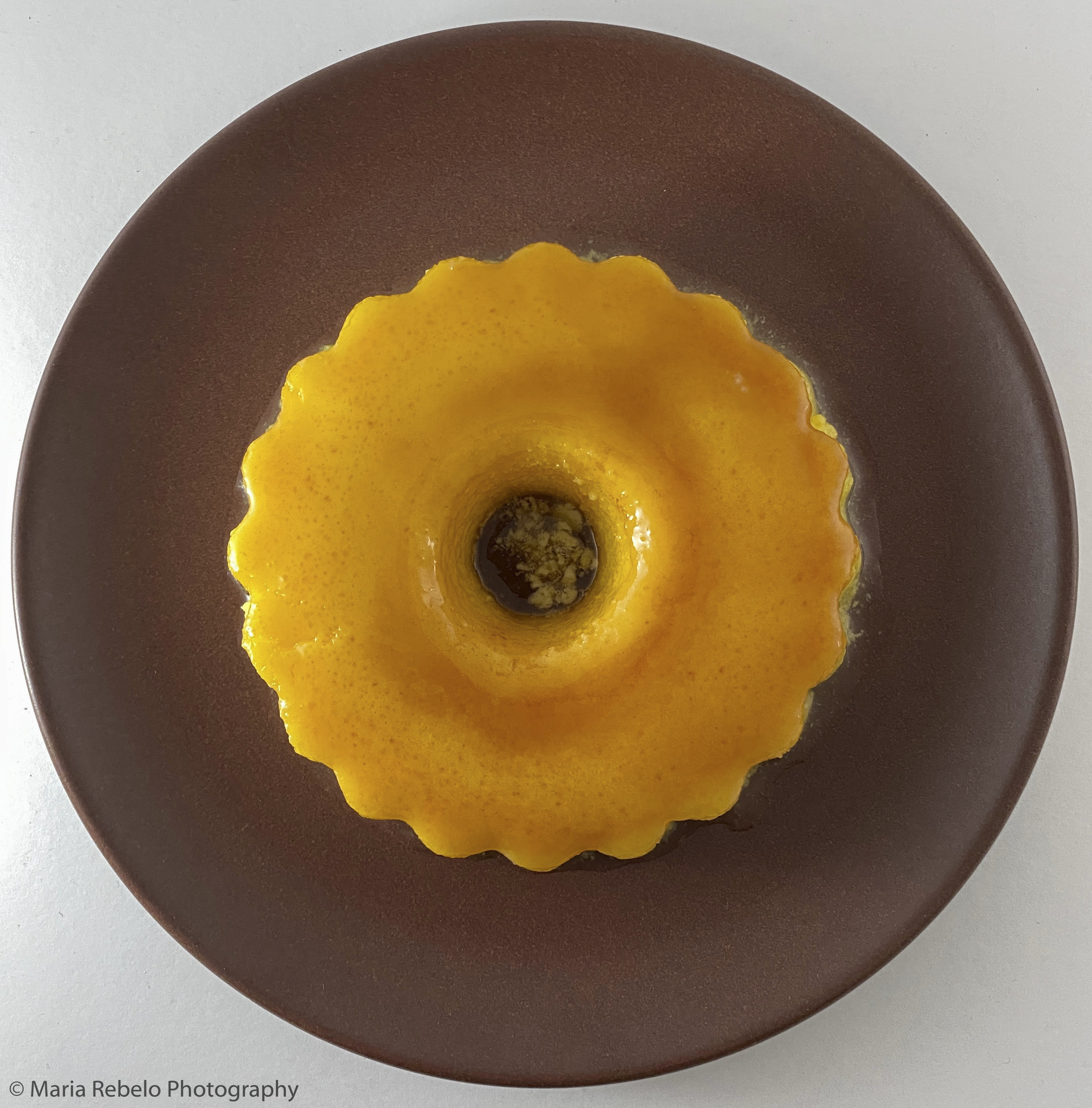
Recently, Dona Graça started writing down some recipes. She shared one of these recipes with us. It is called Pudim de Laranja Descansado (rested orange pudding) because it takes time to prepare. You should try it only when you’re not in a hurry. We hope this recipe is the first of many pages that preserve Dona Graças’s culinary artistry.
Rested Orange Pudding
Pudding ingredients
7 eggs
300 grams of sugar
250 ml of freshly squeezed orange juice
Port-wine caramel
150 grams of sugar
50 ml of port wine
Mix the pudding ingredients at night and let the mixture rest. Cook the pudding in the morning.
To prepare the mixture, combine the eggs and sugar in a mixer. Three seconds after you start the mixer at medium speed, slowly pour the orange juice into the mixture. Once all the juice has been added, keep the mixer on for an extra 30 seconds or so, until you see foam made from small bubbles. Stop the mixer and use a wooden spoon to the pudding ingredients with a movement from top to bottom until you no longer feel any sugar at the bottom of the bowl.
Once the mixture has rested, make the port-wine caramel and use it to coat the pudding mold. Pour the mixture into the mold and place the mold inside a pan filled with two fingers of water surrounding the pan. Cook on the stove on a small burner at medium heat for 40 minutes. Take it out of the mold and let it cool. Enjoy!
Toca da Raposa is located at Rua da Praça in Ervedosa do Douro, tel. 254 423 466.
Do not try this recipe at home unless you’re desperate! Which is how we feel. Far from a purveyor of “pasteis de nata,” how else can we satiate our craving for these divine custard tarts?
We opened with trepidation “Cozinha Tradicional Portuguesa” (Portuguese Traditional Cooking), the imposing tome of vernacular recipes compiled by the legendary Maria de Lurdes Modesto. The old pages creaked, surprised to be turned with such urgency.
Modesto’s instructions assume we know what we’re doing. They’re more like jazz lead sheets than classical music scores. She tells us the key elements of the recipe and expects us to improvise the rest.
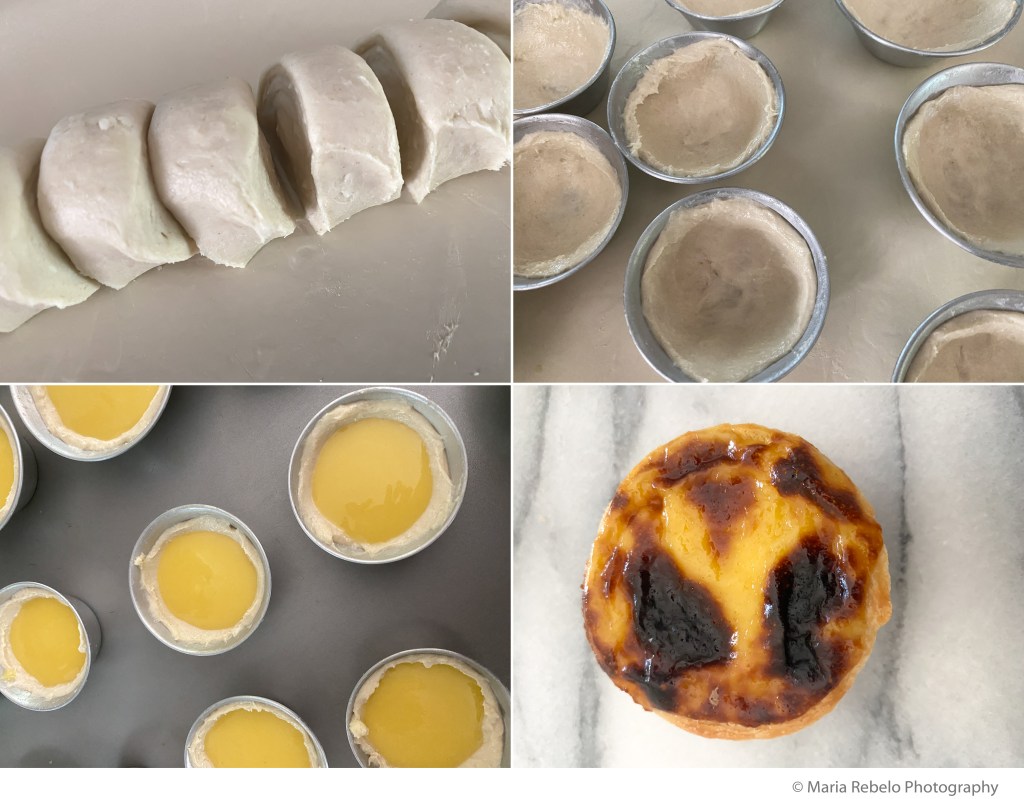
The ingredients are humble: flour, butter, cream, eggs, sugar, water, and lemon. We started by making a version of rough puff pastry, folding the dough to create delicate layers of butter and flour. After a few hours of work, we were rewarded with two dozen delicious pasteis de nata.
All the effort that went into making these pastries made us appreciate Portugal even more. It is a place where it is ordinary to find the extraordinary: heavenly pasteis de nata sold for a modest price in every street corner.
Here’s the recipe.
Ingredients for the puff pastry: 500 grams of flour, 500 grams of butter, 2 to 3 deciliters of water, and salt.
Ingredients for the filling: 5 deciliters of cream, 8 egg yolks, 3 tablespoons of flour, 200 grams of sugar, and one lemon peel.
Melt the salt in warm water and divide the butter into three equal portions. Place the flour on a stone table and make a hole in the middle of the flour to pour the water. Kneed the mixture until it becomes homogeneous and let it rest for 20 minutes.
Next, stretch the dough into a square form. Knead some of the butter until it has the same consistency as the dough. Spread one third of the butter over the dough, leaving a strip of one inch at the edges of the square. Fold the dough from bottom to top and from left to right, making sure that the fold fits perfectly at edges and on the sides. Stretch the dough again forming a square. Repeat the operation twice, first using the second third and then the last third of the butter.
Stretch the dough as thinly as possible. Cut it in stripes and fold into long rolls. Cut the rolls into pieces of 2 to 3 centimeters. Place the dough at the center of a small mold. Moist your thumb in water and spread the dough to the edges of the mold.
To prepare the filling, mix all the ingredients and bring them to a boil. Remove from the heat and wait until the mixture cools down. Fill the molds with the cream. Place the molds in a very hot oven (250 to 300 degrees centigrade). Once the custards come out of the oven and cool, you can sprinkle them with icing sugar and cinnamon.
In one of the letters collected in the volume Lettres Provinciales, published in 1657, the philosopher Blaise Pascal writes that “I have made this letter longer than usual because I did not have time to make it shorter.” Brevity is a virtue that requires time, skill and effort. This is the reason why we appreciate so much a small volume titled “Portuguese Cuisine: a Brief Look” recently published by the Portuguese Academy of Gastronomy.
Summarizing the astonishing diversity of ingredients and preparation methods of the Portuguese cuisine is a herculean task. But with 11 recipes carefully written and beautiful illustrated, this book succeeds in this difficult endeavor.
The collection opens with Portuguese meat pies with collard-greens rice. It is an inspired choice because this staple of home-cooked meals is a test of a cook’s skill. Different people following the same recipe can produce results that vary from adequate to sublime.
The second recipe, Setúbal-style grilled red mullet, is a simple preparation that starts you off on a journey to master the fine art of grilling fish. The freshness of the fish, the amount of salt used to season it, the hotness of the coals, the distance from the coals to the fish, and the timing of the grilling all determine the final results.
Brás-style codfish is a brilliant recipe: an implausible combination of thin, fried potatos, eggs and codfish that surprises and delights. The preparation is quite forgiving, so even a novice can produce great results.
Making Algarve-style fish requires a cataplana, an oval pot that traps the steam to keep the fish moist. This device also collects the delicious juices and reduces them to enhance their flavor. The result is pure magic.
Marinated partridge uses a vinegar-based sauce called “escabeche.” The idea of marinating with acids is thought to come from Persia. It produces a wonderful dish that you can prepare in advance and serve at a dinner party.
Chicken with “cabidela” rice is a traditional recipe that uses the blood of the chicken to make the sauce for the rice. Combine it with a great red wine and you create a symphony of bold flavors that is deeply satisfying.
Roast kid goat is often served at family lunches on Easter Sunday. It is great comfort food that always creates harmony at the table.
Sweet angel hair pasta and honey cake are two easy-to-make, crowd-pleasing desserts.
Pudim Abade de Priscos is an unusual mixture of eggs, sugar, port wine, bacon, and spices invented by an abbot who was an exceptional cook.
The book ends with pasteis de nata (custard tarts). It is a time-consuming, difficult recipe. But if you take the time and effort to master it, you will earn the unending admiration of your dinner guests.
This precious little book can set you off on a culinary journey through the flavors of Portugal with recipes that you can enjoy right away and that you can perfect and refine every time you gather friends and family around the table.



 Salt of Portugal