10 hours in Lisbon

If you arrive in Lisbon by ship, you might understand how Portuguese navigators felt as they entered the tranquil waters of the Tagus river to glide into the city’s warm embrace.
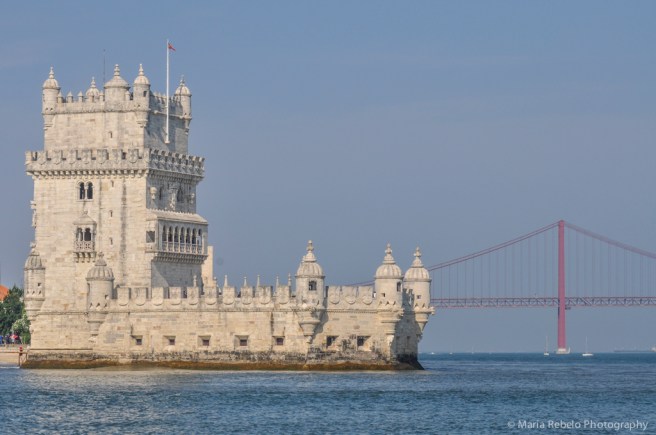
vela_269
The Belém tower

Every week, a Royal Caribbean cruise ship treads the same waters where Vasco da Gama once sailed to bring its passengers to Lisbon. The cruise operator asked us: what is the best way for our passengers to spend 10 hours in Lisbon? This post is about our suggestions.

The most convenient way to travel in Lisbon is to take taxis. Their fares are relatively inexpensive and the drivers are experts at navigating the narrow streets of the old neighborhoods. Traffic can at times be heavy, so it is a good idea to plan on taking about 30 minutes to travel between the three locations we describe below (Belém, St. George’s castle, and Chiado).

Morning

We recommend for your first stop the Antiga Confeitaria de Belém (Belém’s Old Pastry Store, Rua de Belém, 84-92).

belem
Belém

When the religious orders were abolished in 1834, the monks of the Jerónimos monastery started selling custard tarts to earn some income. These tarts, which became known as “pasteis de Belém,” gained great popularity.

pasteis-de-belem-1
Pasteis de Belém

The convent’s pastry chef sold the recipe to an entrepreneur who opened the Confeitaria in 1937. Today, this pastry store continues to thrive as one of Lisbon’s most popular destinations.

Unlike the “pasteis de nata” you find elsewhere in the city, these custards are best enjoyed while they’re still warm. The Confeitaria is always full and there’s often a long line of people waiting to  order.  We suggest that you bypass the line and go to the large room in the back where you can sit down and enjoy these pastries without waiting.

lisboa_113f
The Jeronimos Monastery

Next, we recommend a visit to the Jerónimos monastery. Financed with a tax on the gold, silver and spices brought from Africa and the Far East, its construction began in 1501 and finished only one century later.  It is a masterpiece of the Manueline, a Portuguese gothic style that uses nautical motifs, such as sirens, nets, ropes, corals, and seaweed. See if you can spot these motifs during your visit.

Inside Jerónimos, you’ll find monuments to two Portuguese heroes. The first is Luis Vaz de Camões, the author of a famous epic poem about the exploits of Portuguese navigators in “seas that had never been sailed, facing perils and wars with force that is rare in humans.” The second is Vasco da Gama, the navigator who discovered how to sail from Portugal to India. This discovery allowed Portugal to bring rare spices from the Orient, such as pepper, clover and cinnamon, and sell them for extravagant prices in Europe.

After visiting Jerónimos, walk towards the Tagus river to the monument to the discoveries. In the 15th century, the river came close to the monastery, so you are walking on land claimed from the Tagus.

The monument to the discoveries was first built in 1940 with plaster and then rebuilt in 1960 with cement and stone. It features the statues of navigators, and other important protagonists of the age of discovery.

vela_248
Monument to the discoveries

Henry the Navigator, the prince who sponsored Portugal’s first naval explorations, has pride of place in front of the monument. Some say his stern demeanor comes from contemplating the perils that Portuguese explorers had to face. Others, think that he is afraid of being pushed into the river (despite his nautical fame, prince Henry did not know how to swim).

There are a few additional activities available in Belém. You can take the elevator to the top of the monument to the discoveries for a breathtaking view of the river and the city. You can also walk to the beautiful Tower of Belém, a defensive structure built in the 16th century to guard the city from pirates and other foes. If you’re traveling with kids, you might want to visit the nearby Coach Museum (Avenida da Índia, 136). It has a beautiful collection of ancient coaches.

Lunch
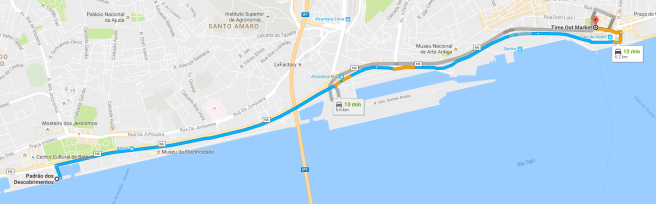
We have three lunch suggestions. Wherever you choose to go, if you find clams Bulhão Pato on the menu, order them. They are culinary poetry.
For a quick lunch, visit Mercado da Ribeira (Avenida 24 de Julho, 49).
belem-time-out
From Belém to Mercado da Ribeira
You can tour the beautiful food market to admire the freshness of the fish and produce. Then, walk over to a large food court set up by Time Out magazine where many of the top chefs in Lisbon have stalls.
DCIM101GOPRO
Time Out food court at Mercado da Ribeira
It is always crowded, but it offers a wide selection so you can sample well-prepared versions of many popular Portuguese dishes. Seafood rice, codfish cakes, and roasted piglet (leitão assado) are obvious choices. Paired with a glass of Portuguese wine, they make a great meal.

Afternoon

If you have lots of energy left, we suggest you take a taxi or a tuk tuk to St. Jorge’s castle.

Otherwise, take a taxi to Chiado.

St. George’s castle was occupied by the Romans, the Visigoths and the Moors. Dom Afonso Henriques, the first king of Portugal, conquered the castle in 1147 and built there the first royal palace. The castle has beautiful views of the city. It is great fun to wander around in Alfama, the neighborhood between the castle and the Tagus river.

time-out-st-jorge
Mercado da Ribeira to St. Jorge’s castle
_dsc3681
Lisbon’s tuk tuks.

It is Lisbon’s oldest neighborhood, the only one to survive the devastating 1755 earthquake.

Next, we recommend you go to Chiado. One fun way to get there is to board the famous tram 28 (but please watch out for pick pockets on the tram). Alternatively, you can take a taxi.

saojorge-chiado
St. Jorge castle to Chiado

Once you reach Chiado, you can participate in an important debate. On the corner of the Camões plaza you’ll find Manteigaria (Rua do Loreto, 2), a new “pastel de nata” store. Try their custard tarts and compare them to the ones you tried in Belém. Which ones do you like the best? We eagerly await your views in the comments to this post!

You can now walk towards Lisbon’s most famous café, A Brasileira (Rua Garrett, 120).

a-brasileira
A Brasileira

Inaugurated in 1905 to sell coffee from Brazil, it quickly became a popular meeting point for painters and writers. Go in to see the interior. In the esplanade, you’ll find the bronze statue of Fernando Pessoa, a great Portuguese poet who often came to A Brasileira to write.

If you’d like to buy a gift for a friend, check out the Vista Alegre porcelain store (Largo do Chiado 20-23). They have beautiful plates and the world’s most perfect tea and espresso cups.
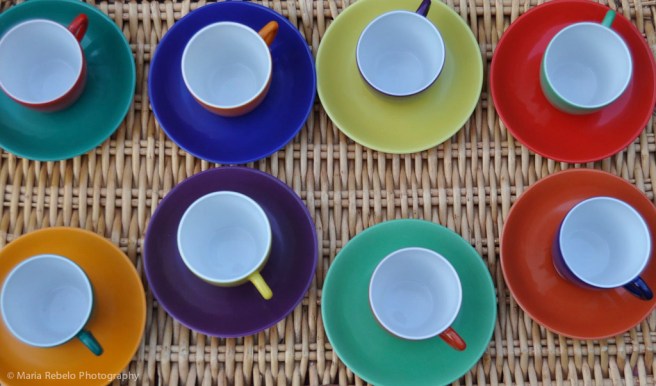
dsc_0015-f
Espresso cups from Vista Alegre
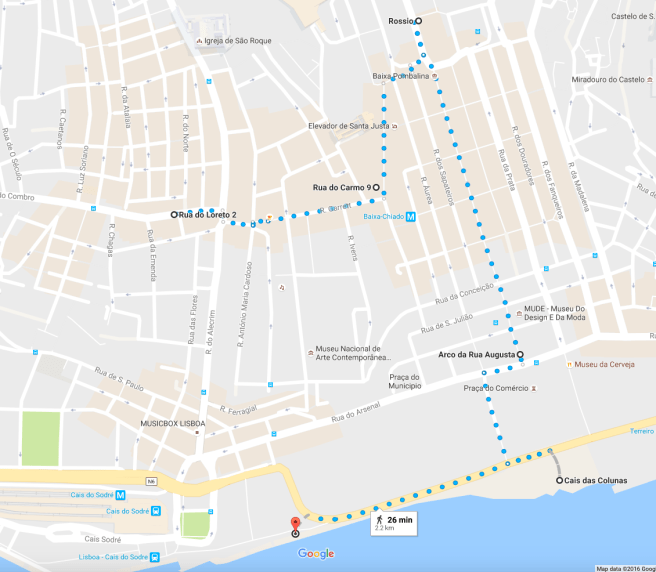
Now you have two options. The first is to take a walking tour (all downhill) with us as your guide. Click here to log on to VoiceMap to download the audio tour and we will guide you through the streets of Lisbon.
self-guided-tour
Chiado to Ribeira das Naus

The second option is to take a self-guided walking tour.
santini-2
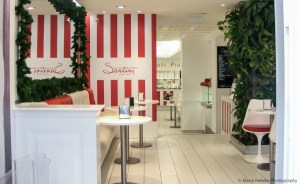
Santini ice cream store

We recommend that you go down on Rua Garrett and turn left on Rua do Carmo. You can stop at Santini (Rua do Carmo, 9) to try one of their famous ice creams. Continue on Rua do Carmo until you reach Rossio, one of Lisbon’s main plazas.

Cross the plaza and find Rua Augusta. Keep walking towards the river until you reach the Rua Augusta arch. On your left, you can buy tickets to take an elevator to the top of the arch which offers spectacular views of downtown Lisbon.

DCIM101GOPRO
View from the top of the Rua Augusta arch

Once you cross the arch, you are in Terreiro do Paço, also called Praça do Comércio (commerce plaza). This is the place where the second royal palace was located before it was destroyed by the 1755 earthquake. It was here that king Dom Carlos and his son were assassinated in 1908 by revolutionaries. Two years later, in 1910, Portugal became a republic.

We recommend that you walk past the statue of king Dom José towards the two columns on the river. This is the “cais das colunas” (the pier of the columns).

cais-das-colunas
Cais das colunas

In the days when most visitors arrived in Lisbon by sea, this pier was the port of entry for VIPs. Now walk towards Ribeira das Naus, the place where the caravels used to be built and repaired.

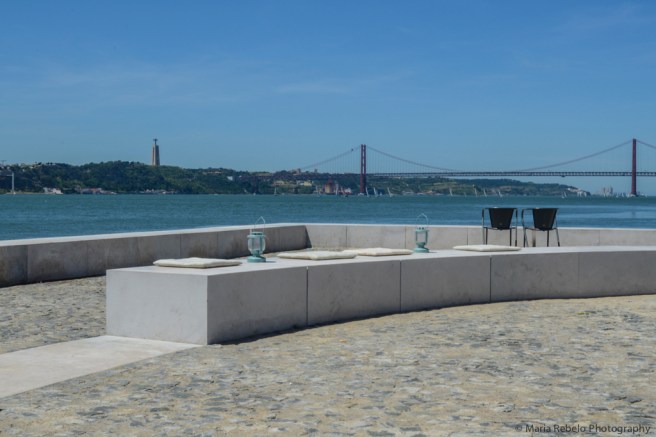
There you’ll find the most beautiful esplanade in Lisbon. We recommend that you order an aperitif from the kiosk. Our favorite is Favaios, made in the Douro from moscatel grapes. Sit on a chair and enjoy the magnificent view.
lisboa_193
Ribeira das Naus esplanade.
We hope you have enjoyed your 10 hours in Lisbon. You have seen a lot, but Lisbon does not reveal all its charms on a first date. We look forward to seeing you back; our blog will be here to guide you.

The Guimarães pousada

DCIM104GOPRO

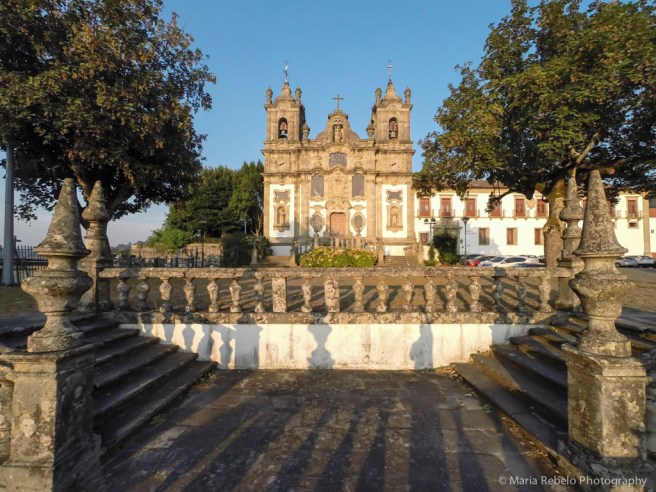
The narrow, meandering road that leads to the Guimarães pousada is good at keeping secrets; it gave us no glimpse of what this historical hotel looks like. When we arrived late in the afternoon, we were stunned to see the imposing granite facade of the church adjacent to the monastery bathed in golden light. Did the architects position the church to benefit from the sun’s exposure or did the sun move so it can shine on the magnificent building?

The origin of this monastery is intertwined with the early days of Portugal as a nation. It was built in the 12th century in fulfillment of a promise. Dona Mafalda, the wife of the first king of Portugal, vowed to fund the construction of a monastery for the order of Saint Augustine if she gave birth without complications. The monastery was named after the patron saint of expectant mothers, Santa Marinha.

In the 16th century, the monastery was transferred to the order of Saint Jerome. The monks offered university degrees in the arts and the humanities that attracted students from the royalty and nobility.  It was during this time that the chapter room, the place where monks read chapters of the bible, and the famous Saint Jerome terrace, an outdoors meditation space, were built.

In 1834, when the state abolished the religious orders, the monastery was sold and became a private residence. In the 1950s, a fire destroyed part of the building and turned it into a ruin.

In the 1970s, the Portuguese government bought the monastery and hired architect Fernando Távora to convert it into an historical hotel. Távora did a masterful job of restoring the old and integrating it with the new.

Every morning we took a walk in the romantic woods that surround the pousada. It is a place with no traces of modern civilization, where damsels in silk dresses and knights in shining armor would not be out of place. We returned to the pousada summed by the chanting of the waters that flow from the fountain in the Saint Jerome terrace. Every minute spent in this terrace was a moment of zen.

The pousada has a proud gastronomic tradition. Its kitchen staff has accompanied the president on foreign diplomatic visits to showcase Portugal’s culinary heritage. The restaurant, decorated with elegant blue tile panels, occupies the space that was once the cellar. We tried two delicious entrées: baby goat rice and roasted black-pork shoulder. They were followed by an artisanal ice cream based on a traditional dessert from Guimarães: toucinho do céu. It is the kind of divine treat you would expect from a convent.

The Guimarães pousada is a history lesson, a gourmet destination, and the perfect place to rest and recharge.

The Guimarães Pousada is located at Largo Domingos Leite de Castro, Lugar da Costa, Guimarães tel. 351 253-5112-49. Click here for the pousadas’ website.


Sweet moments in Lisbon

Composit Manteigaria

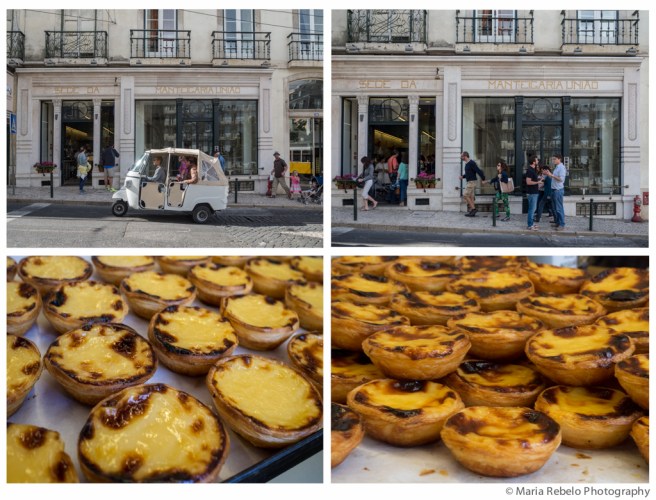
What is the best pastel de nata in Lisbon?  The answer depends on our mood. Some days, we like them perfumed with lemon. Other days, we prefer them scented with vanilla.

Our current favorites are the lemony kind. They are made by Manteigaria in Praça Camões near Chiado at a location that was once occupied by a butter shop (manteiga is the Portuguese word for butter). Perhaps as an homage to the past, Manteigaria’s pasteis have a buttery taste. The crispy crust and the rich filling are so satisfying that they make us feel, for a moment, that we discovered the meaning of life.

Whenever a new batch of pasteis comes hot out of the oven, Mantegaria’s cashier rings a bell. You’ll see people dropping what they’re doing and rushing to Manteigaria in search of a moment of sweetness.

Manteigaria is located on Rua do Loreto, 2 near Chiado in Lisbon, tel. 21-347-1492.

The tavern of the tides

Taberna da Maré - Tavira.JPG

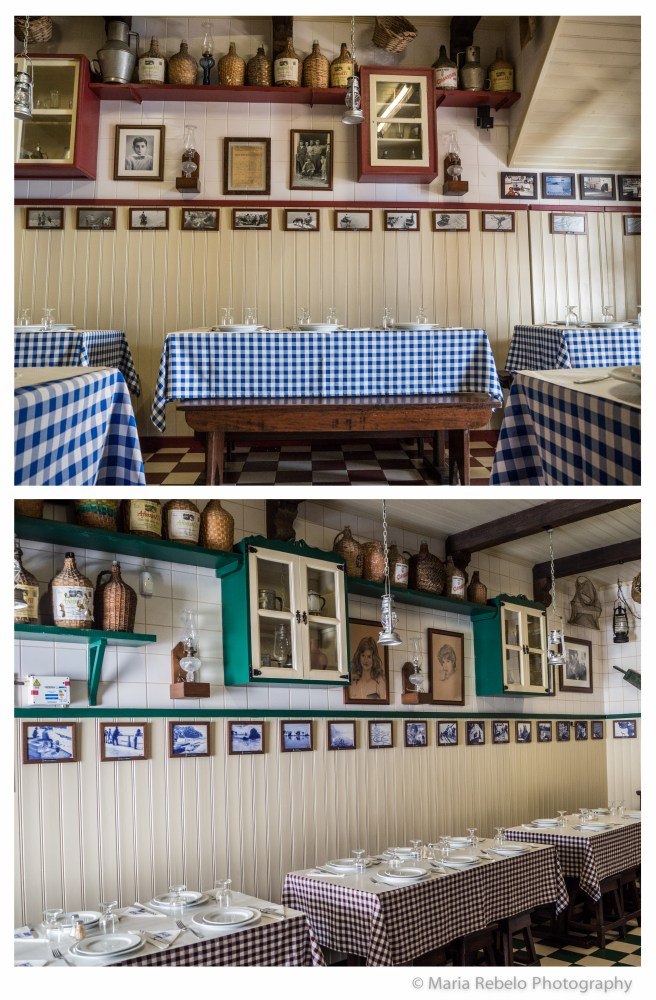
Portimão, a city in the Algarve, is famous for the quality of its sardines. Our favorite place to enjoy the silver of the sea is Taberna da Maré (tavern of the tides), which opened in 1946. The current owner, Zeca Pinhota, restored the restaurant with great sensitivity and care, using the original floor mosaic, vintage furniture, and photos by Julio Bernardo, a photographer born a century ago in nearby Ferragudo.

The food is wonderful. When they are in season, between June and September, the sardines are the main event. But there are many other delicacies. We had a feast composed of razor-clam rice, fried fish with “açorda,” clams Bulhão Pato, and grilled fish eggs.

We told Zeca that his clams are amazing. “That’s because they come from the sea to the restaurant. They do not spend time in tanks, shedding weight and flavor.” Zeca explained. “I call the local fisherman first thing in the morning to ask about the catch of the day. I want to cook the best of what the tide brings.” And that is indeed what you get at the tavern of the tides.

Taberna da Maré is located at Travessa da Barca 9, Portimão, tel. 282 414 614.

The ducal palace of Vila Viçosa

Palácio Vila Viçosa

Portugal is a dream reborn in the prairies of Alentejo. In 1580, the king of Portugal died without an heir and the king of Spain inherited the throne of Portugal. After six decades of Spanish domination, a small group of nobles organized a coup to restore independence. They wanted to make Dom João of Braganza, a duke with royal blood who lived in Vila Viçosa, king of Portugal.

The king of Spain had arranged a marriage between Dom João and a Spanish aristocrat, Dona Luisa de Gusmão, hoping she would persuade the duke to support the Spanish rule. Instead, Dona Luisa became a passionate advocate for Portugal’s independence.

Dom João worried that the rebellion was likely to fail. He was willing to die for his country but did not like risking the fate of his wife and children. Dona Luisa convinced him to go forward with the words: “I would rather be queen for a day than duchess for life.” Portugal regained independence on December 1, 1640 and the duke became king João IV.

The ducal palace of Vila Viçosa is still owned by the House of Braganza. A visit to the palace is a rare glimpse into the domestic life of the royal family.

Dom Carlos, who ruled between 1889 and 1908, loved to vacation at Vila Viçosa. A talented painter, he covered the palace walls with his oils and watercolors. It was here that the king slept his last night before returning to Lisbon where he was assassinated.

There’s an elegant garden in the back of the palace that has no flowers. Catherine of Braganza, the Portuguese princess who married Charles II of England, banned flowers from royal gardens after learning that the king liked to pick them for his mistresses. In deference to Catherine, flowers were removed from the garden of the ducal palace.

The visit’s grand finale is the magnificent royal kitchen. It is equipped with 2.4 tons of copper pots used to prepare the elaborate banquets offered by the royal family to visiting aristocrats and foreign dignitaries.

If you’re traveling in Alentejo, don’t miss the chance to see the palace of Vila Viçosa, a retreat of kings where history was made.


Finding truffles in Bombarral

composit D. José

Bombarral’s rolling hills offer their vines daily to the sun. In return, the star ripens the grapes so they can make intense, aromatic wines. The region is full of small wineries and traditional restaurants waiting to be discovered.

Our latest find is a restaurant called Dom José. It is named after José Louro who in 1992 left his job in London to open a restaurant in his hometown. His son Nelson told us that “My father used the honorary prefix Dom to name the restaurant, but we don’t have royal blood.”

Nelson was working in London in the real estate industry when, in 2012, his father announced he was selling the restaurant. Nelson quit his job and came to Bombarral to run Dom José. “I have no regrets,” he said. “I like the idea of building on what my father did and making the restaurant better every day.”

The menu offers traditional food prepared with great care using the wonderful ingredients that the region offers. Our meal began with clams bulhão Pato. The clams were succulent and their sauce was a poem to the brilliant simplicity of Portuguese gastronomy. Next, Nelson brought out his version of “fish and chips.” The fish was moist and the batter crisp. The chips were replaced by a hearty bean and spinach rice. The last dish was a wonderful “feijoada” (stewed beans and cabbage) made with black pork. It is so popular that it always on the menu.

We told Nelson that we were too full to venture into dessert territory. “But I saved the best for last,” he said as he placed on the table a plate of chocolate truffles. They melted in our mouths filling our palates with caramel, lime, and chocolate sensations. “Where do you get these magnificent truffles?” we asked. “After I started running the restaurant, my sister Carla left her banking job in London to study with William Curley, a famous British chocolatier. Then, she joined me at the restaurant. Her truffles are a great success. They’re already sold in many gourmet shops and we are starting to export them to England.”

We left the restaurant inspired by the nobility of what Carla and Nelson are doing. And certain that, somewhere in their ancestry, there is royal blood.

Dom José is located at Rua Dr Alberto Martins dos Santos 4, in Bombarral, tel. 262 604 384.

Mizette’s rugs

Composit Tapetes Mizette

Mizette Nielsen moved from Holland to Portugal and got into the production of textiles.  In 1976, she received a large order and started looking for a factory to execute it.

She traveled to Reguengos de Monsaraz to visit the Fábrica Alentejana de Lanifícios (Wool Factory of Alentejo). Entering the factory was like stepping into the 19th century. Inside, she found the last manual looms of the Iberian peninsula. Old weavers operated these looms with confidence and grace to make wool blankets traditionally used by shepherds to keep warm during Winter.

In the early 20th century, these blankets were often included in the trousseaux of Alentejo brides. But they had since fallen out of fashion.

Realizing that the factory might close soon, Mizette decided to buy it. “I could not stand the idea that the knowledge of these master weavers would be lost forever,” she said with quiet intensity. “I got them to teach the next generation of weavers. And this generation will teach the next, so that this chain that goes back centuries will be unbroken.”

The blankets produced in the factory are too heavy to be used in houses with modern heating and insulation. But they are sturdy, so they became popular as rugs. Mizette started by producing the traditional designs inspired by the colors of the Alentejo landscape. Then, in collaboration with Gil Kalisvaart, she added new designs that combine well with contemporary furniture.

Mizette’s rugs are one of the most beautiful thing you can buy in Portugal. They are works of art that link past, present, and future.

Mizette has a store in Monsaraz at Rua do Celeiro, tel. 266-557-159, email mizettenielsen@yahoo.com. 

Lunch at Herdade do Esporão

composit Herdade do Esporão

We should have known that it is hard to get to paradise. We drove from Vila Viçosa to Herdade do Esporão guided by a GPS system that chose an old dirt road over the new road from Reguengos. Taking the slow road helped us understand that Esporão is an oasis. A place in the dusty interior of Alentejo where a blue lake nurtures pristine vines that produce some of Portugal’s best wines.

The road to the success of Esporão was also slow. José Roquette bought the estate in 1973 at a time when Alentejo was not a major producer of great wines. Shortly after the 1974 revolution, the estate was nationalized. It was returned to its owner only in 1984. The first wine was bottled in 1985 and released in 1987. The success of this vintage and of those that followed put Alentejo on the world wine map.

Maria Roquette, José’s daughter in law, welcomed us to the dinning room. It is a tranquil space that overlooks the lake and the vines. The walls are decorated with art that Esporão commissioned over the years to use in the labels of its reserve wine.

Maria introduced us to the chef, Pedro Pena Bastos. We did not guess that this unassuming 25-year-old was about to take us on an extraordinary culinary journey.

To prepare our senses, Pedro brought us a heavenly concoction of chick peas, seaweed, codfish eggs, and citrus caviar.  Next, came a marriage of peasant food and contemporary cuisine: pig’s feet with coriander in a red shiso gelatin. We visited the woods to taste wild mushroom beignets and a green garlic custard with truffles. We cruised rivers to enjoy crayfish and sailed seas to eat mackerel and porgy. Back on land, we had lamb from Alentejo with artichokes and apricots.

Finally, we entered the garden of delights: a green-almond ice cream, a lavender and peach tart, a gelatin of late-harvest wine, and marshmallows made of hazelnuts and chocolate.

Our traveling companions were the wonderful wines of Esporão. There were many different personalities and styles. Some, like the experimental white made from the Sardinian varietal Vermentino, were new and festive. Others, like the classic reserve red, were gracious and wise. The meal ended with fireworks provided by a wonderful tawny-style dessert wine.

If you’re visiting Portugal, travel the road to Herdade do Esporão, a place where you can taste the food and wine of paradise.

The Herdade do Esporão is located at Reguengos de Monsara, near Évora, Alentejo. Their telephone and email are 266 509 280
 and reservas@esporao.com , respectively. The Herdade’s GPS coordinates are: latitude: 38.398611 and longitude: -7.546111. Chef Pedro Pena Bastos is the fifth from the left on the photo above.

The Queluz pousada

Composit Queluz.JPG

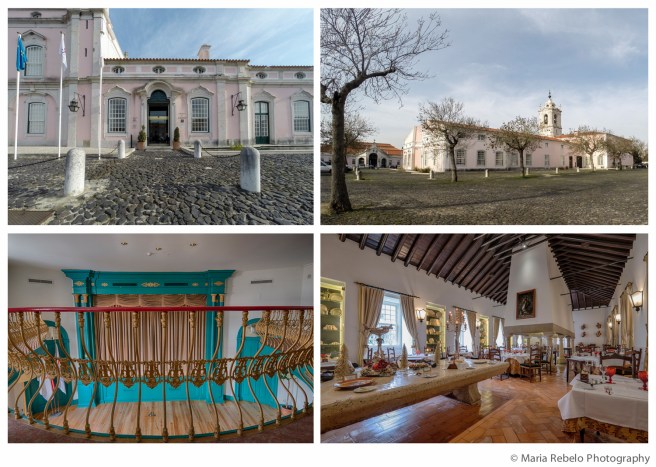
Once upon a time, there was a prince called Pedro who was calm and handsome. As the younger brother of the king, he did not expect to have to perform royal duties. So he devoted his energies to the construction of a palace in the village of Queluz where he could host hunting parties.

The king died and his daughter Maria inherited the throne. Her volatile temperament made many fear for the future of the kingdom. Pedro was asked to marry his niece, so that he could help rule Portugal. The prince accepted this arranged marriage as an obligation. But the queen fell in love with her dashing prince and her devotion was such that he fell in love with her.

The Queluz palace became a royal project, financed by the river of gold and diamonds that flowed from Brazil. A French architect, Jean Baptiste Robillon, was hired to build a palace that would rival Versailles. The original plan was inspired by the harmonious royal marriage: it included two symmetrical buildings that complemented each other.

After the first edifice was built, the royal couple spent as much time as they could at Queluz. They lived a blissful life, surrounded by their six children in one the world’s most graceful palaces.

Before the construction of the second building began, these happy times came to an end: Dom Pedro died of a stroke. The queen never recovered from this loss and her elder son replaced her as the prince regent.

In 1819, to mark the birth of a granddaughter of the old queen, the royal family built the watch tower of the second building planned for Queluz. Later, a private theater and servant quarters were later added to the tower.

In 1995, the watch-tower building and the old palace kitchen were converted into an historical hotel called Pousada Dona Maria I.

If you’re planning to divide your time between Lisbon and Sintra, Queluz is a superb location. You can wake up in the morning to the singing of birds, enjoy a wonderful breakfast, and walk to the Queluz palace before other visitors crowd in. You can drive or take the train to Lisbon (12 km) or Sintra (16 km). And return in the evening to this enchanting place that preserves the romance and splendor of an age gone by.


The Pousada Dona Maria I is located at Largo do Palácio Nacional, Queluz, tel. 351 21 435 6158. Click here for the pousadas’ website and here for a large collection of photos of the hotel.

Ephemeral gardens in Viseu

OLYMPUS DIGITAL CAMERA

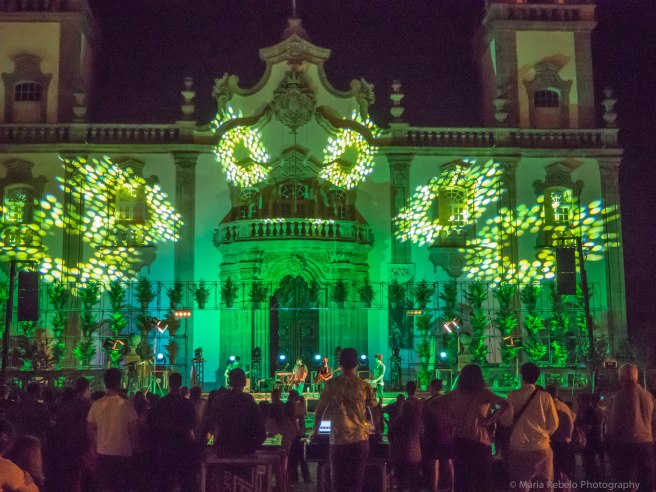
Every year, the Ephemeral Gardens festival jolts Viseu, a serene city in the interior of Portugal. Sandra Oliveira organizes this grand event, inspiring a large troupe of collaborators to adorn Viseu with modern art and serenade it with contemporary music.

Shops become installation spaces, ancient churches double as music venues, old walls serve as canvases for street art. Every plaza seems to have its own DJ, every garden its own sculpture show.

Stores, bookshops, restaurants, and bars stay open until late. The flowers of the linden trees blend their fragrance with the aromas of chocolate, vanilla and popcorn. There are workshops to attend, movies to watch, performances not to miss. It is a wonderful celebration of the many ways in which the old inspires the new.

The Ephemeral Gardens (Jardins Efémeros) festival runs from July 1 to 10, 2016. All events are free. Click here to see the program.