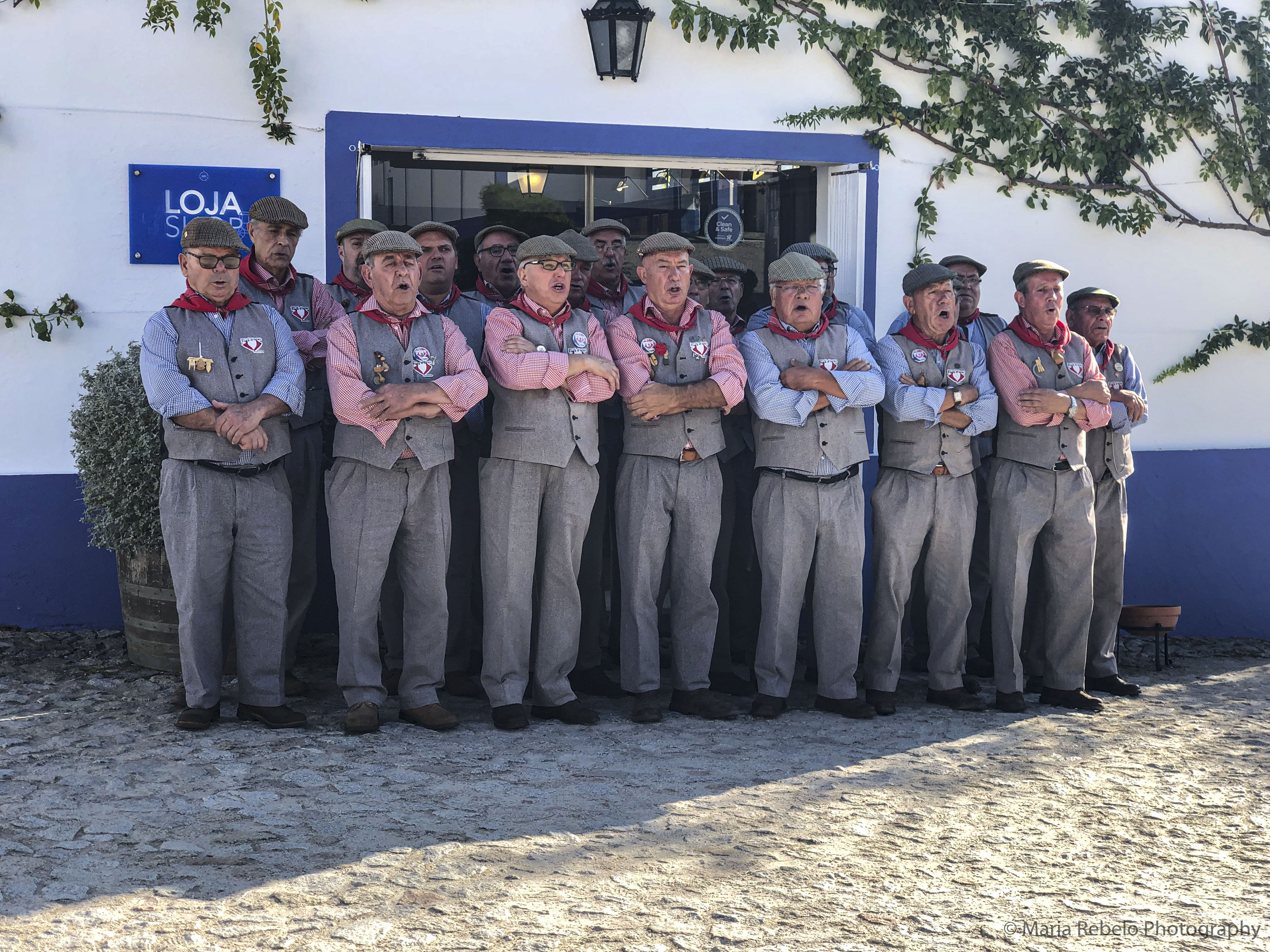
Rows of laborers stand motionless, like a battalion poised for battle. The “ponto” starts singing a few verses alone. The “alto” responds often singing the same melody a major third above the ponto. Then, the choir sings, their voices soaring towards the sky. This style of music is called “cante.” UNESCO recognized it in 2014 as part of the Intangible Cultural Heritage of Humanity.
The tunes are generally in a major key, but the people of Alentejo imbue their singing with such a sense of longing that they make major scales sound minor. The tempo is languid, like the rhythm of life in Alentejo, a place where the summer’s sweltering heat eases the pace of everything.
The verses are simple and sincere. They speak about toiling in the fields, love, faith, the fruits of the land, and the hardships of life.
As the day winds down, people often congregate at local taverns to drink a glass of amphora wine with bread, olives, and some black-pork sausages. Someone sings a few verses, someone else responds, and the group spontaneously burst into song. It is a privilege to hear these voices that carry with them the soul of Alentejo.
Field recording of Fora d’horas group singing at Monte da Ravasqueira by Vasco Rosa Santos. Sound editing by Pedro Rebelo.
In July 1419, Portuguese navigators discovered an island covered by a lush forest in the middle of the Atlantic Ocean. They named it Madeira, after the Portuguese word for wood. Prince Henry, the son of King João I, paid for the expedition. He acted like a venture capitalist, funding sea voyages in return for 20 percent of what his sailors discovered.
Madeira was formed five million years ago by a volcanic eruption. Only four percent of the island is visible. The rest lies beneath the sea. It is a place of rare beauty, with lofty mountains and cobalt-blue waters.
Where should you stay in Madeira? We usually pick Funchal, the capital, as our base. There are plenty of hotels to choose from. We often stay at the Pestana Casino Park, an architectural landmark designed in 1966 by Oscar Niemeyer, one of the greatest architects of the 20th century. Niemeyer sought to preserve the island’s beauty and its picturesque, welcoming character. He succeeded, using the privileged location to create a sensuous building in harmony with the natural surroundings.
What should you do in Madeira? Here are our top-10 favorite activities.
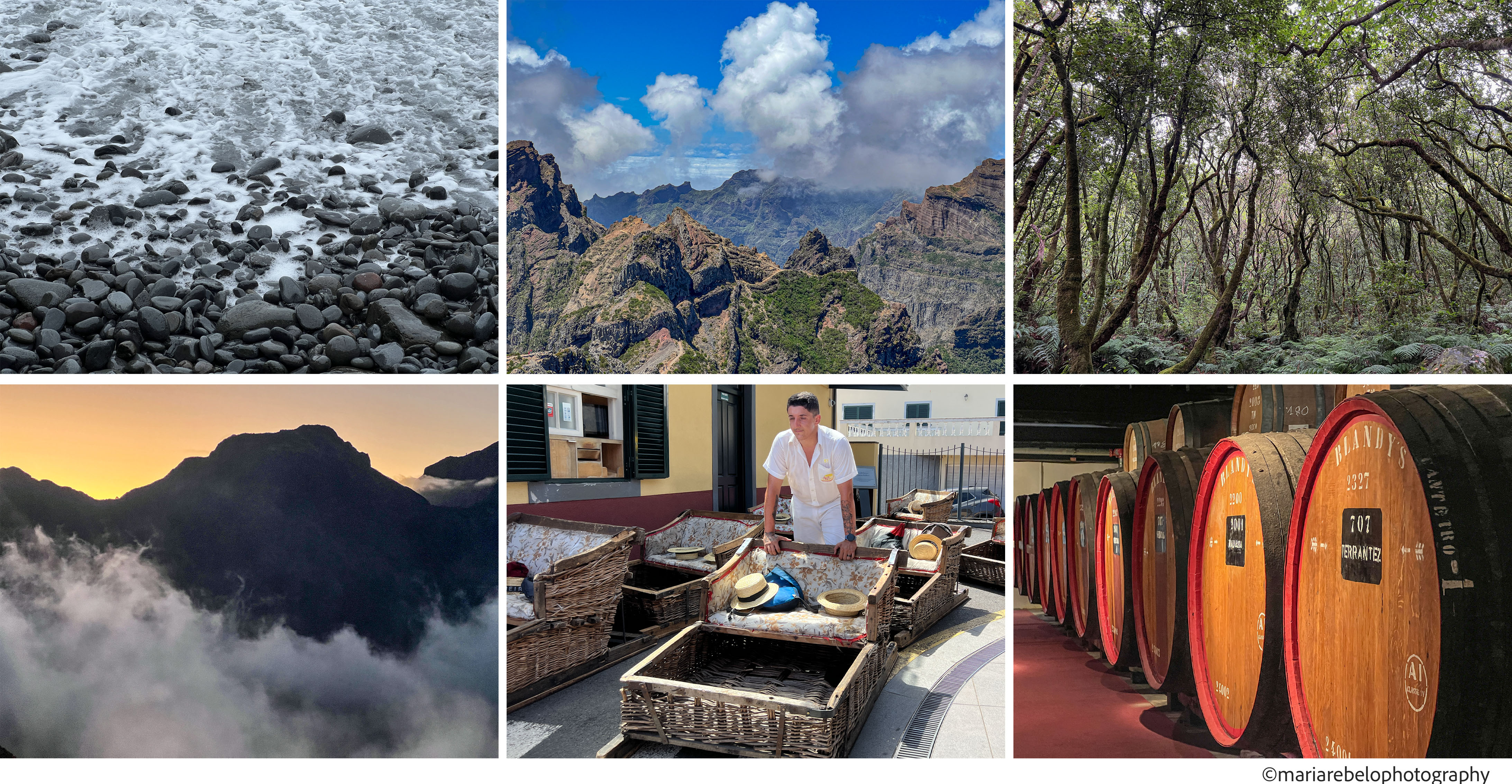
1. Enjoy the beaches. We love the contrast of the black sand and the white sea foam. There is nothing like idling on the beach and bathing in the Atlantic ocean. Some favorite locations are Ponta de São Lourenço, Porto Moniz, and Garajau.
2. Climb every mountain. Watching the sunset or sunrise in the mountains is an unforgettable experience. The breezes push the clouds up the mountains. Then, when the winds relent, the clouds descend like ethereal waterfalls.
Pico do Areeiro, 1818 meters above the sea, is the highest peak that can be reached by car. It has several trails with awe-inspiring views. Cabo Girão, one of the first places sighted by the navigators, is an impressive lookout point.
Before driving or climbing up a peak or lookout point, it is prudent to check visibility conditions using the island’s webcam system.
3. Walk alongside a levada. In 1427, the Portuguese started building channels called levadas to bring water from the rainy north to the drier south, where most people live. A network of approximately 3,000 kilometers of levadas crisscrosses the island. Walking alongside these channels allows us to experience the magic of the Laurissilvia—the original forest that covered Madeira. There are so many walks that it takes a lifetime to explore them all. So far, our favorite is the Levada dos Balcões. The filmmaker Werner Herzog says that we know the world by walking. Madeira is the perfect place to put this credo into practice.
4. Visit a rum distillery. Henry the Navigator imported sugar cane from Sicily to plant in Madeira. At the time, sugar was so rare it was called white gold. Madeira became Europe’s leading sugar supplier until the first half of the 16th century when Brazil replaced it. Today, the island’s sugar is mainly used to make sugar-cane rum.
At Porto da Cruz, you can visit a rum factory powered by a steam engine that is a relic of the first industrial revolution. The rum is used to make a popular local drink called poncha.
Scurvy, a disease caused by vitamin C deficiency, was a common seafaring affliction in the 15th and 16thcenturies. Sailors discovered they could protect against the disease by drinking a mixture of lemon, sugar-cane rum, and honey. They called this concoction poncha, an adaptation of the English word punch. In the mid-20th century, the drink became popular with locals who often recommend it as a remedy for various maladies. Beware that there’s no medical evidence of poncha’s curative powers.
5. Visit Cámara de Lobos, a quaint fishing village where Whiston Churchill vacationed in 1950. He enjoyed spending time by the harbor painting watercolors of the seascape. Bar number 2, a gathering spot for fishermen, is famous for its poncha. The settlers found a colony of sea lions along the shoreline. They called these creatures “lobos marinhos” (marine wolves) and named the place after them. The sea lions have since migrated to the desert islands off the Madeira coastline.
5. Go to the Funchal farmers market. It is a feast of color, where tropical fruits vie for attention with exuberant spices. The island is so fertile that everything grows there, acquiring a unique taste imparted by the volcanic soil. We love the local bananas, which, just like Madeira wine, combine enticing sweetness with a pleasant acidity. At the fish stalls, you can see the riches of the sea—the black scabbard (called espada in Portuguese) that is a local favorite, the impressive tuna, and the colorful bodião.
6. Explore the nuns’ valley and dine at Eira do Serrado. In 1566, French pirates laid siege to the island for 15 days, ransacking Funchal and killing many of its residents. The nuns of the Santa Clara Convent sought refuge in the heart of the island in a place now known as the nuns’ valley. They took with them their treasure, amassed over time from the donations of affluent families. The mother superior and the prioress buried the treasure in secret but they died without divulging its whereabouts. So, the treasure is still in the nuns’ valley, waiting to be found.
You can drive from the valley to the mountaintop to dine at the Eira do Serrado hotel. It serves one of the best espetadas (succulent beef cubes artfully seasoned and grilled on laurel skewers) on the island. The restaurant’s veranda has breathtaking views of the encircling peaks and the nuns’ valley. Gazing upon this panorama, the poet Miguel Torga reflected, “Nietzsche said that you need wings to love the abyss. I’d posit that humans can adore the abyss as well, as long as they are born in Madeira.”
7. Visit Santana and Quinta do Furão. Santana is famous for its palheiros, houses painted in blue and red hues covered with straw-thatched roofs. Quinta do Furão is a hotel with generous views of the north of the island. Before dinner, you can visit the vineyards and see an old wine press like those described by the Roman historian Cato the Elder circa 160 BCE. It is wonderful to dine in the esplanade at Quinta do Furão, cooled by the breeze, our eyes feasting on the magnificent vistas.
8. Sail the ocean blue. Sailing on the waters surrounding Madeira helps us imagine the exhilaration felt by the Portuguese explorers when they first caught sight of the island. You might encounter playful dolphins or see a flock of cagarras—birds that like to slumber while gently drifting upon the water’s surface.
9. Ride a toboggan. Back in the 19th century, residents of Monte, a charming hilltop town overlooking Funchal, turned baskets used to carry vegetables into makeshift toboggans for exhilarating downhill rides. Today there are many “carreiros” who bring tourists down the hill, steering the toboggans with the help of shoes fit with robust rubber soles that function as brakes. There are often long lines, but the thrilling ride is worth the wait.
10. Visit Blandy’s Lodge. Located in downtown Funchal, Blandy’s Lodge is the ideal place to learn about the wine that shares its name with the island. It is an elixir so alluring that it catalyzed global trade. Naval engineering, shipbuilding, logistics, and finance came together so that royals and aristocrats could enjoy Madeira wines all over the world.
Madeira wine is fortified—the yeast’s conversion of grape fructose into alcohol is interrupted by the addition of 96-proof vinic alcohol. The result is a wine that retains some sweetness. Following fortification, the wine is stored in hot attics for about three months. The natural warmth concentrates and caramelizes the wine, producing a delightful amber tint. Then, the wine is aged for at least five years. At Blandy’s, you can visit the attic where the wines are naturally exposed to heat, and the cellars where they age inside large American oak barrels. Then, embracing the advice of the ancient Greeks—”know thyself”—you can discover your favorite Madeira style: sercial (dry), verdelho (medium dry), bual (medium sweet), or malmsey (sweet).
Some final words: locals say that staying in Madeira for more than two weeks, makes it likely you will move to the island.
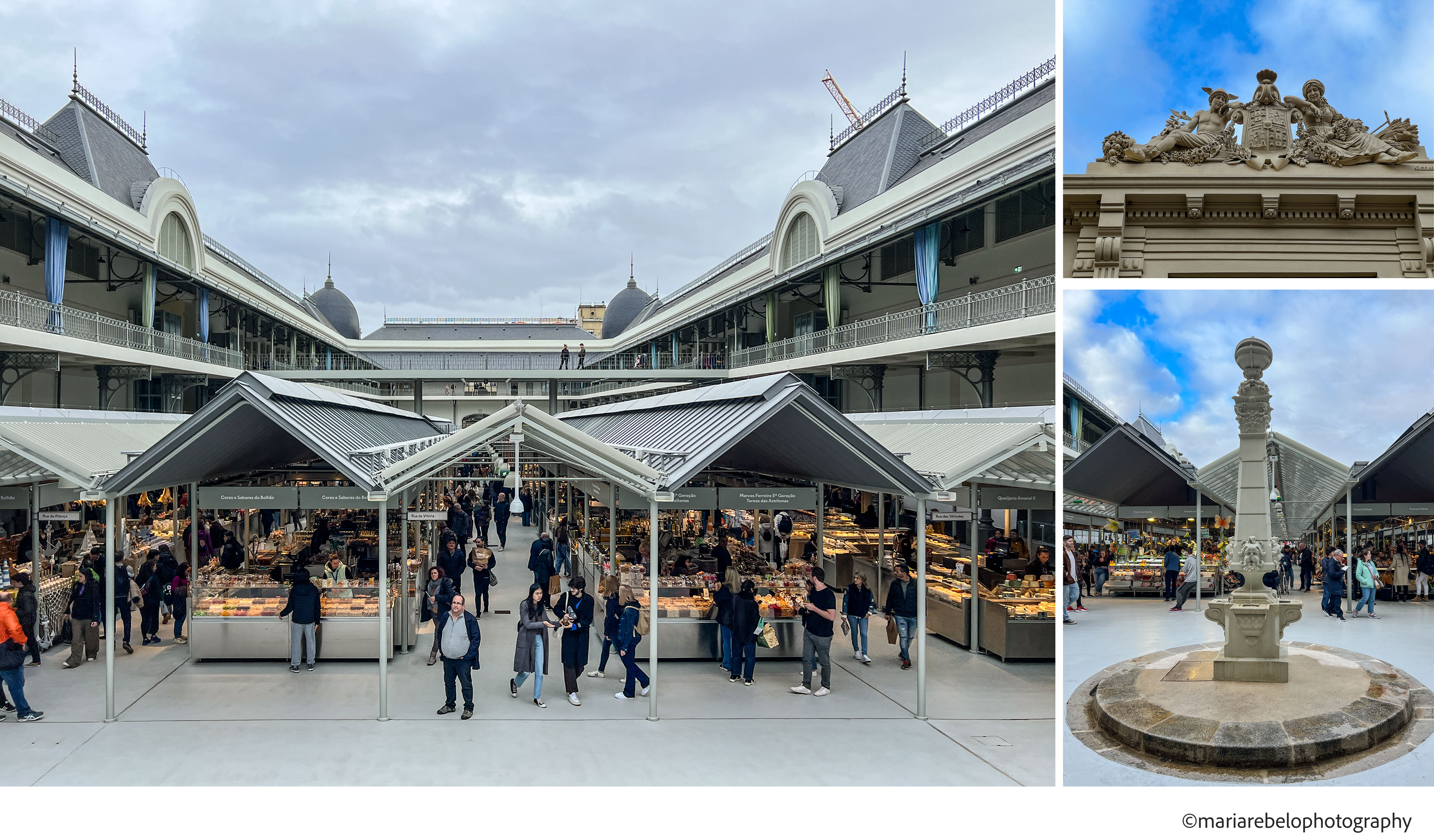
In 1841, several farmer markets in Porto merged with the fruits and vegetable fair and relocated to the Bolhão Plaza in the middle of downtown. Built on marshy terrain, the plaza owes its peculiar name to the large water bubbles formed in a stream that crossed the swamp.
With the city’s population on the rise, the market outgrew its humble beginnings. In 1911, architect António Correia da Silva was entrusted with constructing a new market. Having studied in Paris, his monumental design drew heavily on the Beaux-Arts style. Inside, the decor featured simple white tiles accentuated by elegant ironworks, creating a blank canvas where the vibrant produce could shine.
After its inauguration in 1914, the Bolhão market quickly earned its place as a city hallmark. “Going to Bolhão” became a common expression. At Bolhão, the city and the countryside came together to trade fresh vegetables, fruits, flowers, and other delights. Moreover, the market was a place for exchanging ideas and discussing current events.
In 2022, Bolhão underwent a splendid renovation that preserved its historical charm. It is the perfect place to savor a glass of wine and some petiscos (the Portuguese word for tapas) while chatting with the vendors about what’s happening. You will not know Porto without going to Bolhão.
In Porto, we like to stay far from the commotion of the city center. One of our favorite choices is Freixo, an 18th-century palace converted into a luxury hotel. We’re also fond of the neighboring Pestana Douro Riverside, a perfume factory turned into a modern hotel with generous views of the Douro River.
Exploring Porto’s architectural jewels like the Bolsa Palace, the Lello bookstore, and the Majestic café is always a joy. And we never tire of the spectacular tile panels that decorate the São Bento train station and the Carmo church. If you’re a music lover, check out the schedule of Casa da Música, a concert venue designed by Rem Koolhaas. We like visiting Bolhão, a 19th-century farmers market that has been recently renovated. It is the perfect place to buy a present for a gourmet friend, while enjoying a glass of wine and some appetizers.
We also love visiting the Serralves Foundation, exploring its contemporary art exhibitions, strolling through the elegant Art Deco mansion, and wandering through the magnificent gardens adorned with striking sculptures.
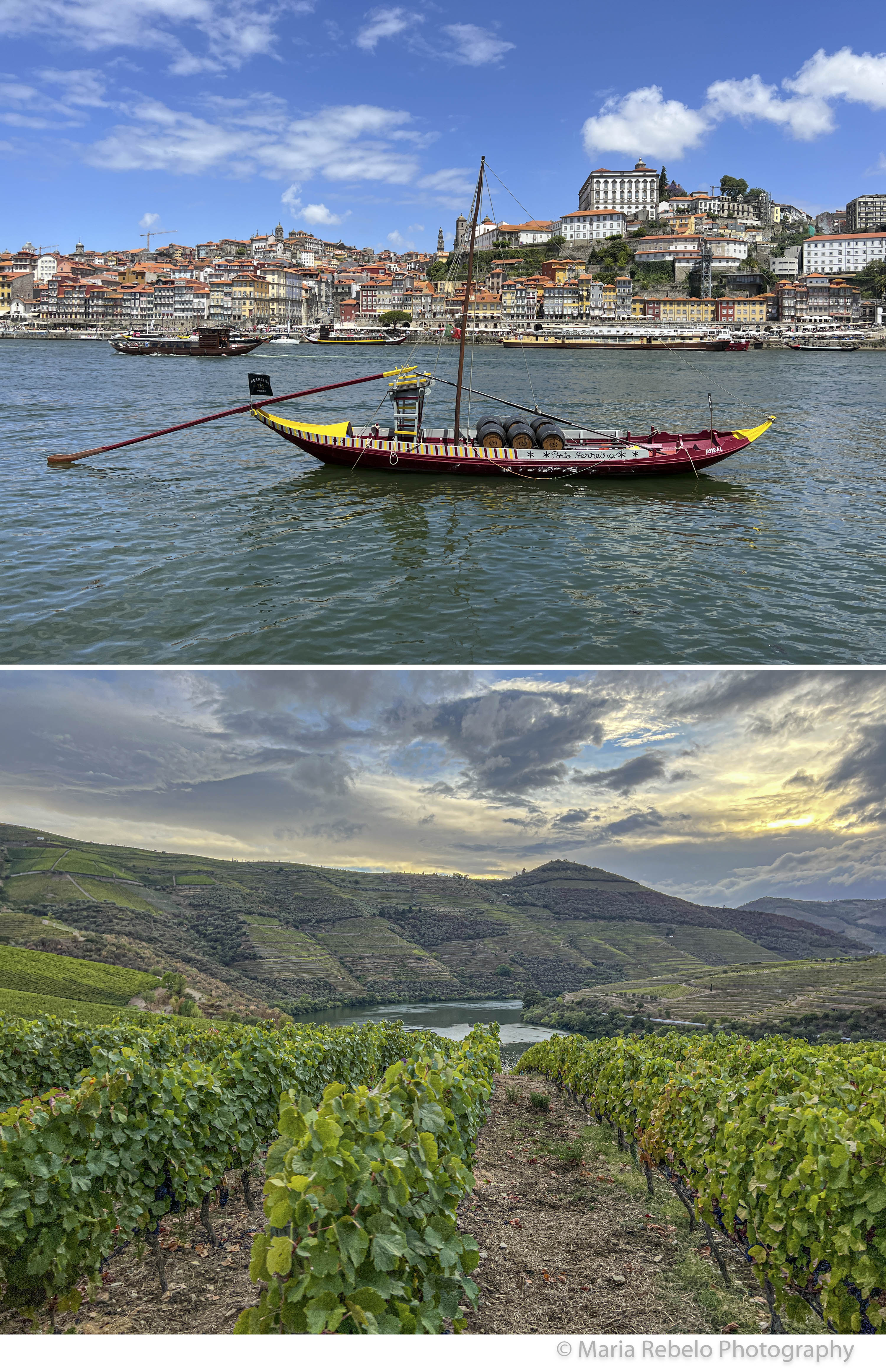
Another favorite activity is to visit Gaia’s port-wine cellars. Port-wine merchants built these cellars to protect their precious wines from the scorching Douro Valley summers and allow them to age gently. Over time, the cellars expanded, often taking over adjacent buildings and even entire streets. The Ferreira cellars include the house that once belonged to the famous Dona Antónia Ferreira. A cellar visit is a unique way of experiencing the magic of port wine. The cellars of Taylor’s, Ferreira, and Ramos Pinto are all great choices.
For lunch, we like going to Matosinhos to feast on grilled fish (rodovalho is our favorite). It is always delightful to eat at Gaveto, a renowned traditional restaurant. For an enchanted evening, treat yourself to a sunset dinner at the luxurious Boa Nova Tea House headed by chef Rui Paula.
To enjoy panoramic city views while sipping an aperitif, head to the rooftop of DeCastro Gaia. Whether it’s a chilled dry white port, a port tonic cocktail, or the exquisite Soberbo vermouth produced by Poças, you’ll find the perfect drink to complement the breathtaking scenery. When you’re ready for a delicious meal, head down one floor to relish the culinary delights prepared by Miguel Castro e Silva at DeCastro Gaia.
There are many fine dining choices in Porto. Eskalduna, helmed by Vasco Coelho Santos, offers a gastronomic journey through Portugal’s finest produce. Pedro Lemos crafts refined versions of traditional Portuguese recipes, while DOP, led by chef Rui Paula, is another avenue to savor his elegant cuisine. At Casario, chefs Miguel Castro e Silva and José Guedes have created a menu full of tempting flavors. Guests can enjoy it in a warm, intimate interior or on a terrace with sweeping views of the Douro River.
There are also traditional eateries like Adega S. Nicolau that have stood the test of time.
After spending one or two days in Porto, it is time to head to the Douro Valley. You can opt to drive or take the train to Pinhão, a town in the heart of the valley, from the São Bento or Campanhã stations. Alternatively, you can travel from Porto to Régua by boat. The eight-hour ride offers an opportunity to admire the magnificent bridges designed by Gustave Eiffel and sail through the impressive locks which regulate the river flow at Crestuma-Lever and Carrapatelo.
In the Douro Valley, it is a privilege to stay at Ventozelo, a magnificent wine estate transformed into a luxury hotel. The houses once occupied by workers and two port-wine balloons have been beautifully converted into unique bedrooms. Other elegant accommodations include the riverside Vintage House in Pinhão, the luxurious Six Senses Douro Valley, and the meticulously restored Quinta da Corte.
As soon as we drop our bags at the hotel, we head to Foz Torto, a winery near Pinhão owned by our friend Abílio Tavares da Silva. Abílio, a successful engineer who sold his company to become a wine producer, is the ultimate guide to the secrets of the Douro Valley. We also make sure to visit Sandra Tavares da Silva and Jorge Serôdio Borges, the acclaimed Wine & Soul enologists. Their exquisite wines showcase the best the Douro has to offer. It is always a pleasure to visit the vineyard that produces the iconic Pintas or their splendid Quinta da Manoella.
Distances within the Douro Valley are short, but travel times can be long because the narrow roads meander through the landscape. There are two ways to enjoy the breathtaking views without worrying about driving. The first, is to board the historical, coal-powered train from Pinhão to Tua for a journey back in time. The second, is to travel by boat from Pinhão to the mouth of the Tua River. In the past, the aristocratic Douro families traveled by boat to visit each other. There were no restaurants, but every family had a talented cook who used traditional recipes to prepare culinary feasts.
One of these cooks is Dona Graça. Together with her daughter Rosário, she opened the delightful Toca da Raposa restaurant in Ervedosa do Douro. We love her cooking so much that we often have all our meals here.
There are two restaurants with beautiful views of the river. The esplanade of Foz do Tavora is the perfect spot to enjoy a simple meal. DOC, another Rui Paula venture, is one more opportunity to try his elegant food. If you’re in the mood for a sumptuous breakfast or brunch, you can satiate your desires at the Six Senses Douro Valley.
As our stay in the Douro Valley nears its close, it’s always hard to leave. Abílio reminds us that our restlessness reflects our “urbanoid” disposition – we constantly seek new vistas instead of embracing paradise. Why don’t you move to the Douro Valley?, he asks. Perhaps one day, we shall heed his wise advice.
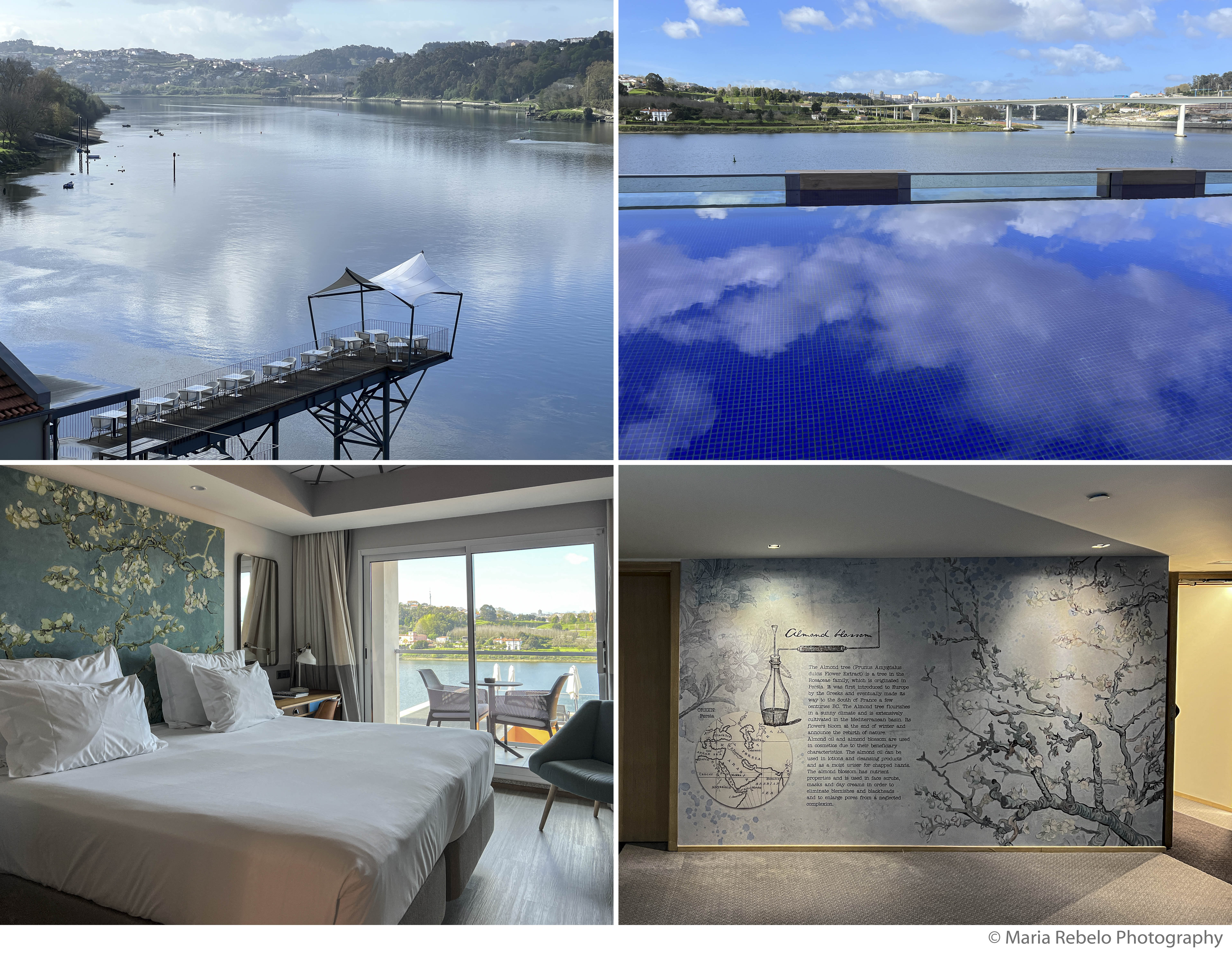
We love falling asleep to the sound of the river flowing by at the Douro Riverside in Porto. Adjacent to its older sibling, the Freixo Palace, the hotel occupies the site where a company called Floral produced soaps, candles, and perfumes between 1888 and 1990.
Floral’s imposing brick chimneys, built by master Lino Soares Guedes, were meticulously restored. The formulations used to produce the scents prized by the city’s aristocracy adorn the walls. And the flowers are back, lending their aromas and elegance to the interiors.
But it is the river that plays the lead role. Its views are everywhere, from bedrooms, balconies, public interiors, and terraces. An infinity pool creates the illusion that its waters mix with the river. But the Douro keeps to itself and looks straight ahead as it flows to the sea.
The Pestana Douro Riverside is on Av. Escritor Costa Barreto nº60, Porto. Click here for the hotel website.
There are so many seashore towns in Portugal that it’s hard to single one out. But Porto Côvo, an old fisherman’s hamlet on Alentejo’s Vicentine coast, deserves special mention. It is blessed with sandy beaches bathed by turquoise waters and a view to the enigmatic Peachtree Island where two forts, now in ruins, once kept pirates at bay.
In the late 18th century, Jacinto Fernandes Bandeira, a successful businessman, bought a vast stretch of land in Porto Côvo. He hired an architect to draw plans to populate the area and turn it into a significant harbor. The king rewarded these efforts by granting him, in 1805, the title of Baron of Porto Côvo da Bandeira.
Bandeira’s plan was inspired by the grid system used to rebuild downtown Lisbon after the 1755 earthquake. The construction of Porto Côvo did not adhere closely to it, but its sense of geometry prevailed, giving the town a harmonious feeling.
In the center, the farmers market brims with fresh fruits from land and sea. Local restaurants turn these products into appetizing meals. Our favorite is Lamelas, a place where chef Ana Moura serves veritable culinary pearls. We owe these riches to Baron Jacinto Fernandes Bandeira who first recognized the beauty of Porto Côvo.
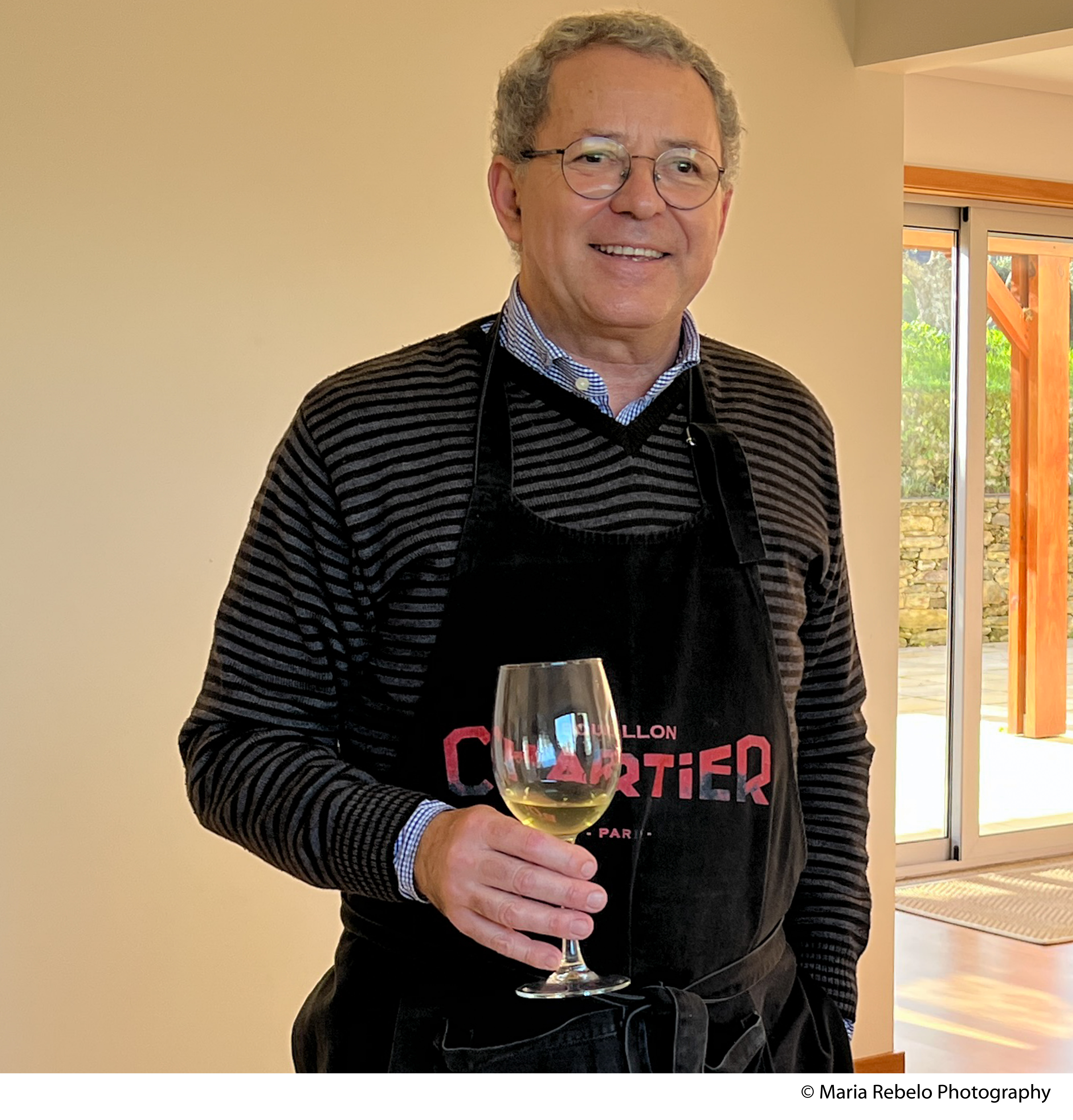
Luís Sottomayor, the enologist who makes Barca Velha, an iconic Douro valley wine, is uncomfortable with his fame. He misses spending August in quiet solitude amidst the vines at Quinta da Leda, the large estate that produces most of the grapes used in Barca Velha. Today everybody wants to talk to him, journalists, sommeliers, and wine enthusiasts. They all want to discover the secret of Barca Velha.
Luís says the style was created by the legendary Fernando Nicolau de Almeida when he produced the first Barca Velha in 1952. Nicolau de Almeida traveled the Douro valley in search of grapes that could make an exceptional table wine and found them in a region called Douro Superior. He blended grapes from high altitudes that have acidity and freshness with those from low altitudes that have maturation, body, and color. This marriage of acidity and structure created a sublime wine that can age and improve for decades.
Barca Velha is made with the best grapes that Sogrape, Portugal’s largest wine company, has in Douro Superior. The parcels are vinified separately and stored in casks. Luís creates a blend from the different barrels. If the resulting wine meets his exacting standards, he bottles it. Then the wait begins. He samples the wine with his team for four, five, six, sometimes seven years before deciding whether to label it Barca Velha or Reserva Especial. Since 1952, there have only been 20 vintages of Barca Velha and 17 of Reserva Especial.
Luís says that some decisions are challenging but he was lucky to learn with the two masters who made Barca Velha before him, Fernando Nicolau de Almeida and José Maria Soares Franco. Luís was hired by Soares Franco in 1989 and became responsible for Barca Velha in 2007.
“For how long should we store a Barca Velha?” we ask. Luís smiles and says he doesn’t like waiting too long to pull the cork from the heavy bottles that guard the precious wine. “Open it when you’re with good friends,” he recommends. Luís is a hunter, so he loves to pair Barca Velha with partridge or duck. “But the wine also can be enjoyed without food, especially by the fire on a cold winter night,” he says.
We asked Luís about another remarkable Sogrape wine called Legado (the Portuguese word for legacy). “Barca Velha has a consistent style and is the expression of a large terroir,” says Luís. “Legado is the opposite. It comes from a small terroir– a vineyard planted in 1910 with eight hectares that produce only six or seven tons of grapes. Each vintage is a different chapter of the life of that vineyard.”
Luís grew up on a farm near Porto. His father, who studied enology in Dijon after the 2nd World War, worked in a port wine company. From an early age, Luís dreamed about being a winemaker. Now he makes wines that people dream about drinking.
Belmiro is the kind of restaurant that is increasingly hard to find in Lisbon. It does not prepare food to look good on Instagram. It does not seek originality for its own sake. Instead, it cooks classics of the Portuguese cuisine with good-quality, seasonal ingredients.
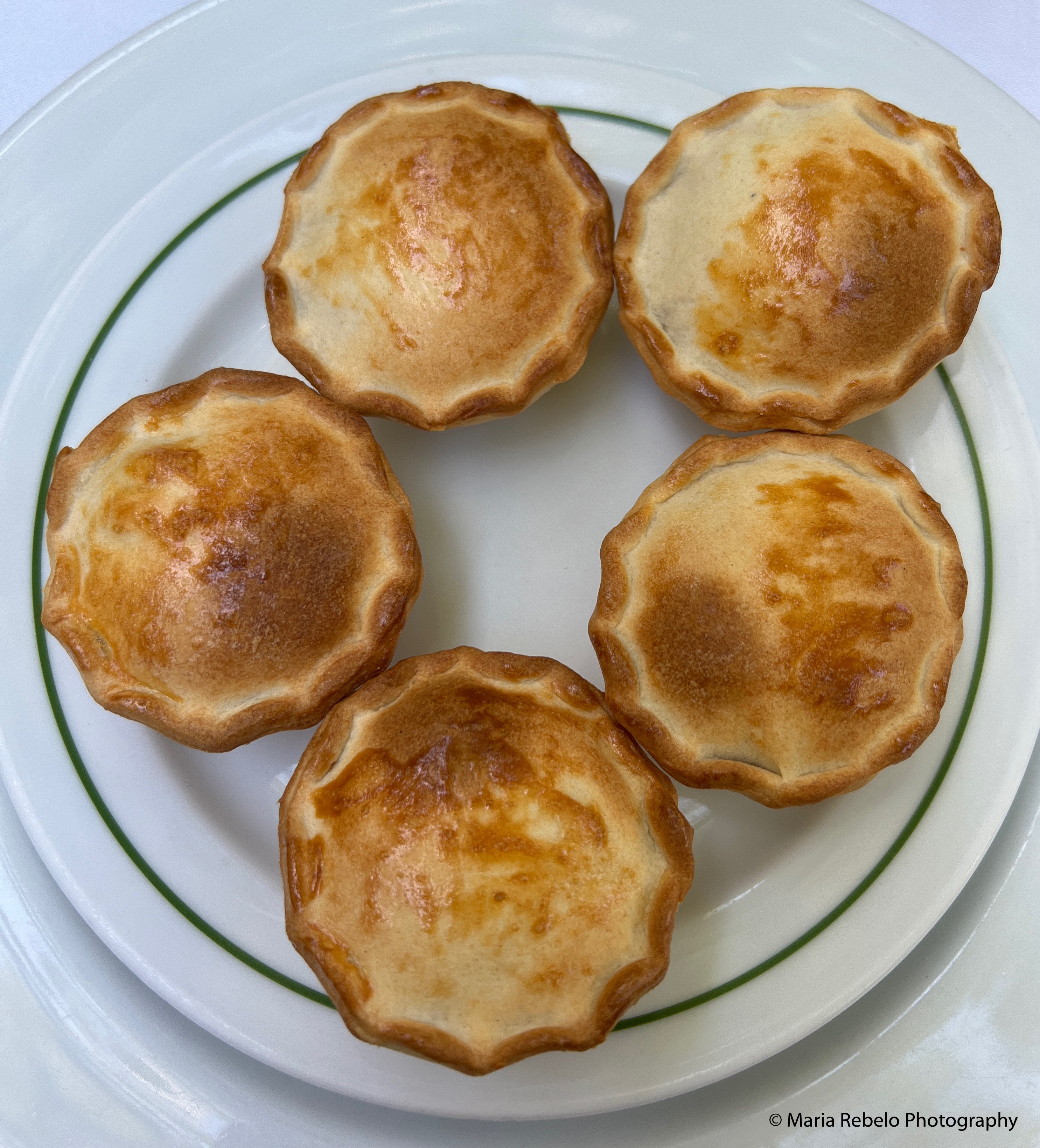
The restaurant is named after Belmiro de Jesus, an old hand who’s been a chef at places like Salsa & Coentros. Belmiro is famous for his mouthwatering “empadas,” small pies with delightful fillings. And he is a virtuoso at cooking partridge and hare. He prepares them with rice, in “açorda,” with beans, and much more. The menu is seasonal, it changes to reflect what’s fresh in the market. If you can’t decide what to choose, a good rule of thumb is to order anything cooked in a “tacho” (a saucepan).
We like to go to Belmiro with friends and ask the chef to prepare a few entrées we can all share. Accompanied by some good bottles of wine, the meal always turns into a party.
Belmiro is located at Paço da Rainha 66, Lisbon, tel. 21 885 2752.
The best partridges we ever tasted were cooked by a professor. His name is Emídio Gomes. He is the rector of the UTAD, the university that trained many of the star enologists who work in the Douro valley.
Emídio learned to cook while studying in France on a meager scholarship. He asked his grandmother to teach him some of her recipes so that he could eat at home. Cooking was so relaxing that he continued to cook regularly after returning to Portugal.
Emídio’s stewed partridges are renowned throughout the Douro valley. The professor generously gave us his grandmother’s recipe and allowed us to share it with our readers.
The recipe starts with an admonition: “If the partridges are good, make sure you don’t ruin them.” Here’s the rest.
Remove the feathers and the tripes of the wild partridges and cut them into pieces. Marinate them for twelve hours in a small amount of white wine, laurel, parsley, and a little thyme.
Heat a cast iron pot. Pour a generous amount of olive oil. The quality of the olive oil is paramount. Choose an olive oil with low acidity, ideally from the Douro valley. Slice enough onions to cover the bottom 2 inches of the pot. Slowly sweat the onions. Remove the thyme, laurel, and parsley, and place the partridges in the pot. Add a small amount of water to prevent the stew from drying.
Cover the pot with the lid and slowly stew the partridges for four to five hours. Monitor periodically to ensure the stew does not dry; add small amounts of water as necessary. Season with salt towards the end of the cooking period. After the first four hours, regularly pierce the meat with a fork. The partridge is ready when the meat offers no resistance. Serve with white rice and toasts.
Like a top scientific paper, the recipe requires high-quality content and flawless execution. And in the end, the results look deceptively simple.
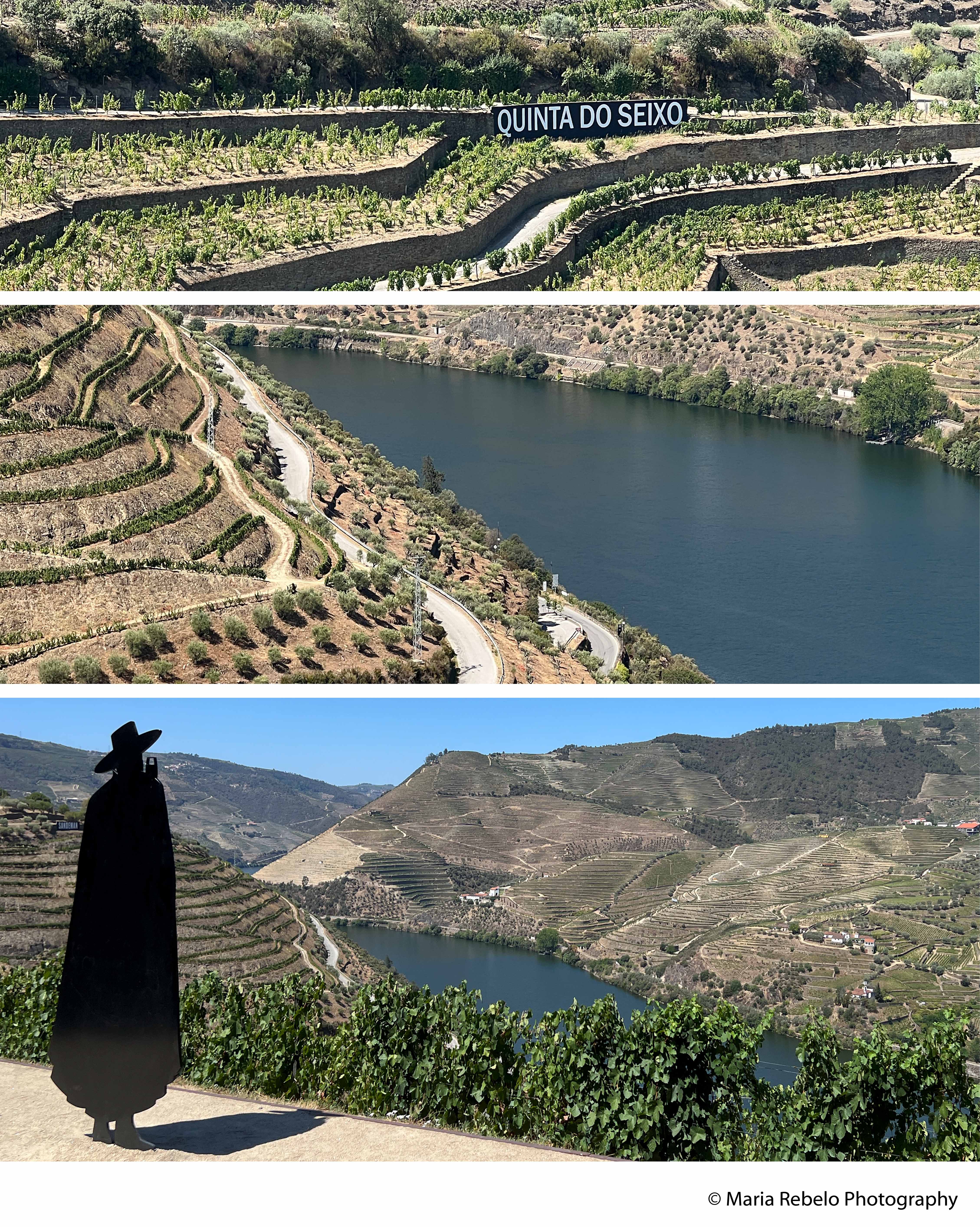
Quinta do Seixo in the Douro valley is a place of timeless beauty. Here’s how Henry Vizetelly described it in his book “Facts about Port and Madeira,” published in 1880:
“It occupies the spurs and slopes of a mountain, one side of which bounds the Douro, and the other the Rio Torto valley. Scattered over the heights above are the white cottages of the village of Valença, the vineyards of which produce a considerable quantity of first-class wine. The buildings of the Quinta do Seixo , which is entered through an imposing gateway, surmounted by the armorial bearings of its owner, are very extensive. The casa is both commodious and well arranged, and has a certain air of pretension about it, while the lagares and the adega are on a scale proportionate to the extent of the surrounding vineyard.”
This description remains remarkably apt. The main house still offers spectacular views of the surrounding vineyards, some of which are centenarian. But Vizetelly would be amazed to see that inside the traditional building, there’s a state-of-the-art winery.
Our guide explained what makes the Douro different: the stone terraces built to support the vines, the “field blends” made from varietals planted together in the vineyards, the poor soils that force the plants to struggle, making the berries small but full of flavor, and the methods used to produce tawnies, vintages, and late-bottled vintages.
She also told us about Georges Sandeman, the Scottish merchant who founded Sandeman in 1790. The company quickly became the largest port-wine shipper. Its mysterious logo, created in 1928, was inspired by its two product lines: ports from Portugal and sherries from Spain. It is a silhouette of a man wearing a Spanish hat and dressed in the cloak used by students in Coimbra, Portugal’s oldest university.
At the end of the tour, we tasted four wines—first, a harmonious white Vinha Grande with fine tannins and a pleasing acidity. Then, an exuberant red Callabriga made with grapes from the Callabriga hill, which was originally planted by the Romans. Next, a delicious 2019 Vintage Port from Quinta do Seixo that tastes even better with a view of the vines that produced it. And, finally, a great Sandeman Vau port wine from the 1999 vintage.
A visit to Quinta do Seixo is a delightful introduction to the wonders of the Douro valley.



 Salt of Portugal