Mariana Salvador’s elegant wines

We were not surprised when a leading Portuguese magazine awarded the Wine of the Year prize to Vinha Negrosa, one of the wines produced by Marcelo Aráujo’s Textura Wines. These wines are like Audrey Hepburn–they have an elegance that is difficult to define and hard to imitate. Everything is in harmony from the moment when the cork frees the first aromas from the bottle to when we taste the delicate flavors of the wine.

Together with Luís Seabra, Mariana Salvador makes these wines in the Dão region. They use traditional varietals planted in granite soils near the sky, on the slopes of Portugal’s highest mountain, Serra da Estrela. The vineyards are in the coldest part of Portugal, with copious rainfall and high thermic amplitude between night and day. 

This is only Mariana’s third harvest at Textura, but she compensates for youth with intensity. She notices everything and speaks in rapid-fire sentences. When she likes someone’s comments, she replies “boa, boa” (good, good), as if the echo of the first word was unavoidable.

In lesser hands, the grapes could produce unbalanced wines with excessive tannins. But Mariana and Luis found a way to get the best out of the grapes. They make wines with minimal intervention, relying on natural fermentation to better express the properties of the varietals and the region. The result is a collection of graceful wines that are a joy to drink. 

Porto Côvo

There are so many seashore towns in Portugal that it’s hard to single one out. But Porto Côvo, an old fisherman’s hamlet on Alentejo’s Vicentine coast, deserves special mention. It is blessed with sandy beaches bathed by turquoise waters and a view to the enigmatic Peachtree Island where two forts, now in ruins, once kept pirates at bay. 

In the late 18th century, Jacinto Fernandes Bandeira, a successful businessman, bought a vast stretch of land in Porto Côvo. He hired an architect to draw plans to populate the area and turn it into a significant harbor. The king rewarded these efforts by granting him, in 1805, the title of Baron of Porto Côvo da Bandeira. 

Bandeira’s plan was inspired by the grid system used to rebuild downtown Lisbon after the 1755 earthquake. The construction of Porto Côvo did not adhere closely to it, but its sense of geometry prevailed, giving the town a harmonious feeling.

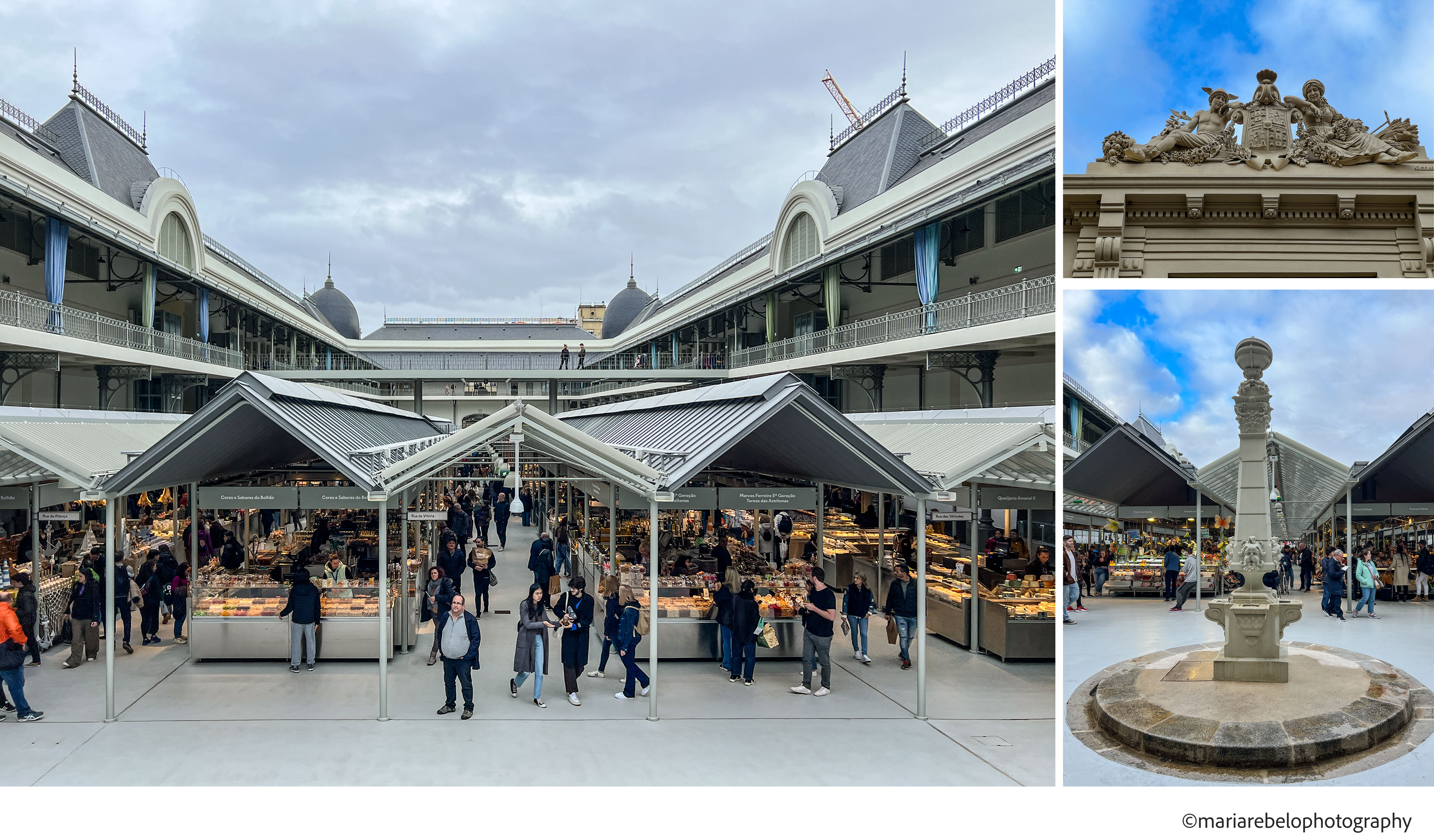
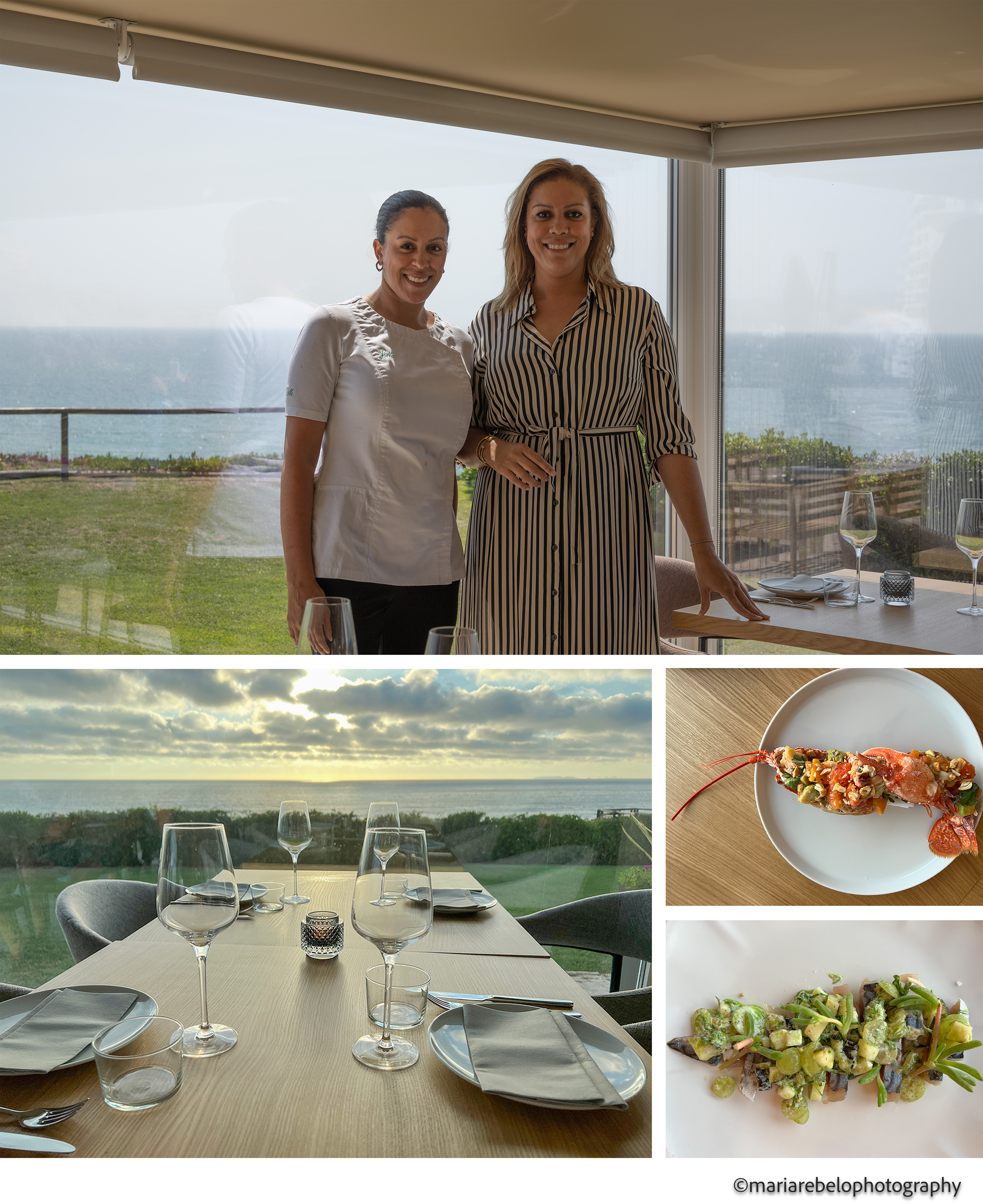
In the center, the farmers market brims with fresh fruits from land and sea. Local restaurants turn these products into appetizing meals. Our favorite is Lamelas, a place where chef Ana Moura serves veritable culinary pearls. We owe these riches to Baron Jacinto Fernandes Bandeira who first recognized the beauty of Porto Côvo.

Myths and secrets at Bussaco

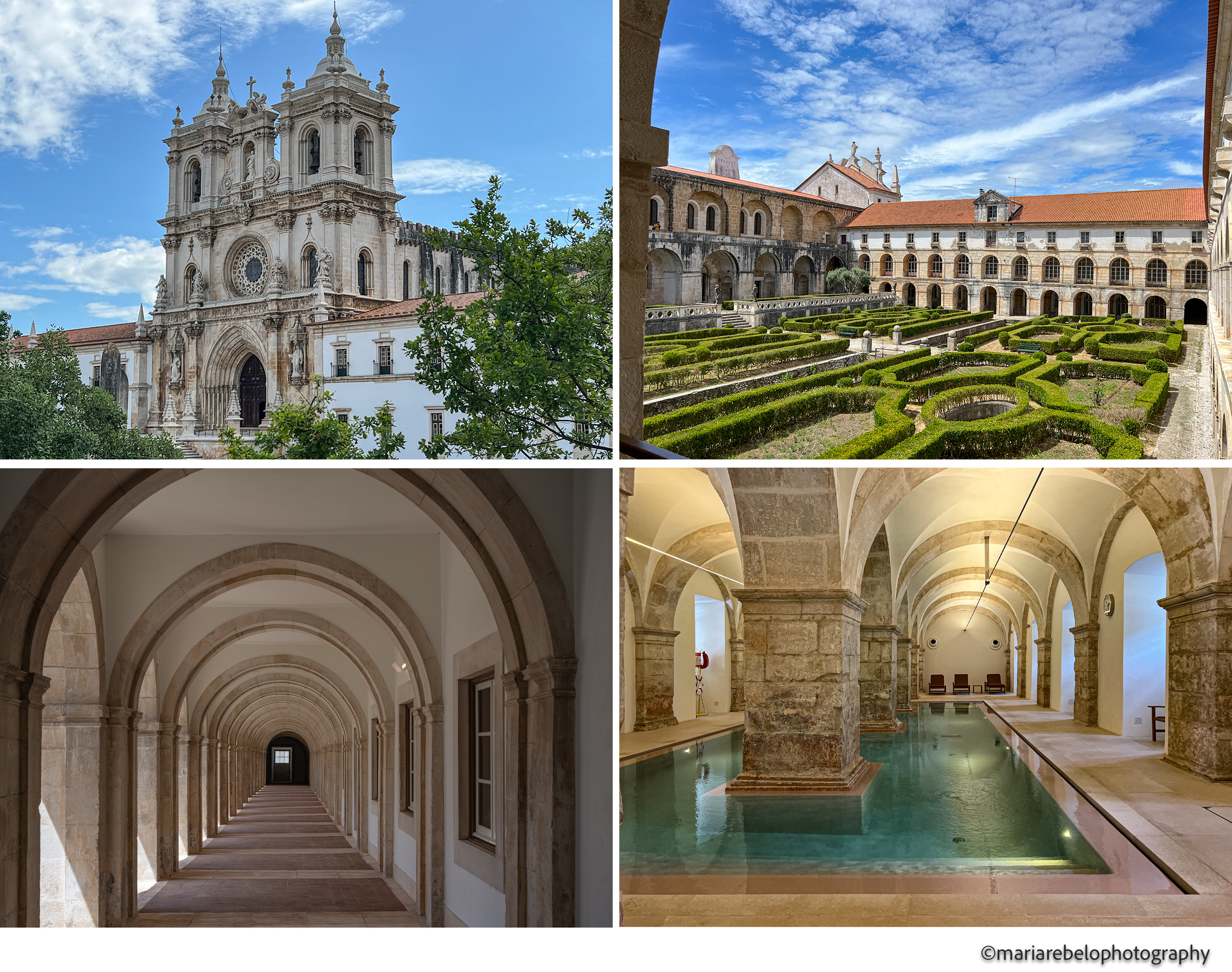
King Charles I enjoyed hunting in the Bussaco forest so much that he decided to turn a local Carmelite monastery built in 1630 into a royal retreat. When construction began in 1888, the king engaged the most important Portuguese artists of the time in the project. 

It is a gorgeous place. Limestone from the nearby village of Ançã, carved with intricate motifs, decorates the outside. Beautiful tile murals and frescos depicting scenes inspired by literary works and historical events adorn the interiors. 

In 1910, Portugal abolished the monarchy and became a republic. The royal palace seemed destined to become a romantic ruin. But Alexandre de Almeida, a local entrepreneur, endeavored to save it. He negotiated a concession with the state to convert the palace into a luxury hotel. Inaugurated in 1917, it became a success with international celebrities like the mystery writer Agatha Christie.

In the 1920s, Alexandre de Almeida started bottling wines to serve in the dining room of the palace.  These wines gathered fame for their unique character and outstanding aging ability. 

Alexandre de Oliveira, the founder’s grandson, currently runs the hotel group that operates the Bussaco Palace. One of his childhood friends, António Rocha, directed the hotel for many years. Fifteen years ago, António told Alexandre that he would like to give up his managerial role to focus on producing Bussaco wines. Knowing António’s passion for these wines, Alexandre accepted his proposal.

We met António in the palace cellar. He’s been spending many hours there, patiently recorking old bottles so the wine can continue to age gracefully. He showed us with pride wines bottled in the 1940s. “They flow from the bottle with remarkable freshness and vigor, ready to be enjoyed,” he told us.

“What makes Bussaco’s wines so special?” we asked António. “Great wine is 60 percent myth and 40 percent secrets,” António answered, smiling. Bussaco is located between Bairrada and Dão, so the wines are made with grapes from both regions. The red is made from Touriga Nacional and Baga, the emblematic grape from Bairrada. The white is made with Bical, Maria Gomes, and Encruzado. Total annual production is small, only 20,000 bottles. But the cellar stores 200,000 precious bottles hoarded over the last century. 

Later, we joined António at a vinic dinner for a small group of wine connoisseurs at the famed Mesa de Lemos. There were many interesting wines to try, and as the wine flowed, so did the conversation. António tuned out the words to focus on the aromas and tastes of the wines. When it was time to sample the Bussaco wines he brought, António tried to be impartial, appreciate qualities, and identify aspects that can be improved. This passion and dedication is the true secret of Bussaco’s wines. 

Click here, for the Bussaco Palace web site.

The maker of Barca Velha

Luís Sottomayor, the enologist who makes Barca Velha, an iconic Douro valley wine, is uncomfortable with his fame. He misses spending August in quiet solitude amidst the vines at Quinta da Leda, the large estate that produces most of the grapes used in Barca Velha. Today everybody wants to talk to him, journalists, sommeliers, and wine enthusiasts. They all want to discover the secret of Barca Velha.

Luís says the style was created by the legendary Fernando Nicolau de Almeida when he produced the first Barca Velha in 1952. Nicolau de Almeida traveled the Douro valley in search of grapes that could make an exceptional table wine and found them in a region called Douro Superior. He blended grapes from high altitudes that have acidity and freshness with those from low altitudes that have maturation, body, and color. This marriage of acidity and structure created a sublime wine that can age and improve for decades. 

Barca Velha is made with the best grapes that Sogrape, Portugal’s largest wine company, has in Douro Superior. The parcels are vinified separately and stored in casks. Luís creates a blend from the different barrels. If the resulting wine meets his exacting standards, he bottles it. Then the wait begins. He samples the wine with his team for four, five, six, sometimes seven years before deciding whether to label it Barca Velha or Reserva Especial. Since 1952, there have only been 20 vintages of Barca Velha and 17 of Reserva Especial. 

Luís says that some decisions are challenging but he was lucky to learn with the two masters who made Barca Velha before him, Fernando Nicolau de Almeida and José Maria Soares Franco. Luís was hired by Soares Franco in 1989 and became responsible for Barca Velha in 2007. 

“For how long should we store a Barca Velha?” we ask. Luís smiles and says he doesn’t like waiting too long to pull the cork from the heavy bottles that guard the precious wine. “Open it when you’re with good friends,” he recommends. Luís is a hunter, so he loves to pair Barca Velha with partridge or duck. “But the wine also can be enjoyed without food, especially by the fire on a cold winter night,” he says. 

We asked Luís about another remarkable Sogrape wine called Legado (the Portuguese word for legacy). “Barca Velha has a consistent style and is the expression of a large terroir,” says Luís. “Legado is the opposite. It comes from a small terroir– a vineyard planted in 1910 with eight hectares that produce only six or seven tons of grapes. Each vintage is a different chapter of the life of that vineyard.”

Luís grew up on a farm near Porto. His father, who studied enology in Dijon after the 2nd World War, worked in a port wine company. From an early age, Luís dreamed about being a winemaker. Now he makes wines that people dream about drinking.

Belmiro

Belmiro is the kind of restaurant that is increasingly hard to find in Lisbon. It does not prepare food to look good on Instagram. It does not seek originality for its own sake. Instead, it cooks classics of the Portuguese cuisine with good-quality, seasonal ingredients. 

The restaurant is named after Belmiro de Jesus, an old hand who’s been a chef at places like Salsa & Coentros. Belmiro is famous for his mouthwatering “empadas,” small pies with delightful fillings. And he is a virtuoso at cooking partridge and hare. He prepares them with rice, in “açorda,” with beans, and much more. The menu is seasonal, it changes to reflect what’s fresh in the market. If you can’t decide what to choose, a good rule of thumb is to order anything cooked in a “tacho” (a saucepan). 

We like to go to Belmiro with friends and ask the chef to prepare a few entrées we can all share. Accompanied by some good bottles of wine, the meal always turns into a party. 

Belmiro is located at Paço da Rainha 66, Lisbon, tel. 21 885 2752.

The professor’s partridges

The best partridges we ever tasted were cooked by a professor. His name is Emídio Gomes. He is the rector of the UTAD, the university that trained many of the star enologists who work in the Douro valley. 

Emídio learned to cook while studying in France on a meager scholarship. He asked his grandmother to teach him some of her recipes so that he could eat at home. Cooking was so relaxing that he continued to cook regularly after returning to Portugal.

Emídio’s stewed partridges are renowned throughout the Douro valley. The professor generously gave us his grandmother’s recipe and allowed us to share it with our readers. 

The recipe starts with an admonition: “If the partridges are good, make sure you don’t ruin them.” Here’s the rest. 

Remove the feathers and the tripes of the wild partridges and cut them into pieces. Marinate them for twelve hours in a small amount of white wine, laurel, parsley, and a little thyme.

Heat a cast iron pot. Pour a generous amount of olive oil. The quality of the olive oil is paramount. Choose an olive oil with low acidity, ideally from the Douro valley. Slice enough onions to cover the bottom 2 inches of the pot. Slowly sweat the onions. Remove the thyme, laurel, and parsley, and place the partridges in the pot. Add a small amount of water to prevent the stew from drying.

Cover the pot with the lid and slowly stew the partridges for four to five hours. Monitor periodically to ensure the stew does not dry; add small amounts of water as necessary. Season with salt towards the end of the cooking period. After the first four hours, regularly pierce the meat with a fork. The partridge is ready when the meat offers no resistance. Serve with white rice and toasts.

Like a top scientific paper, the recipe requires high-quality content and flawless execution. And in the end, the results look deceptively simple.

The timeless Quinta do Seixo

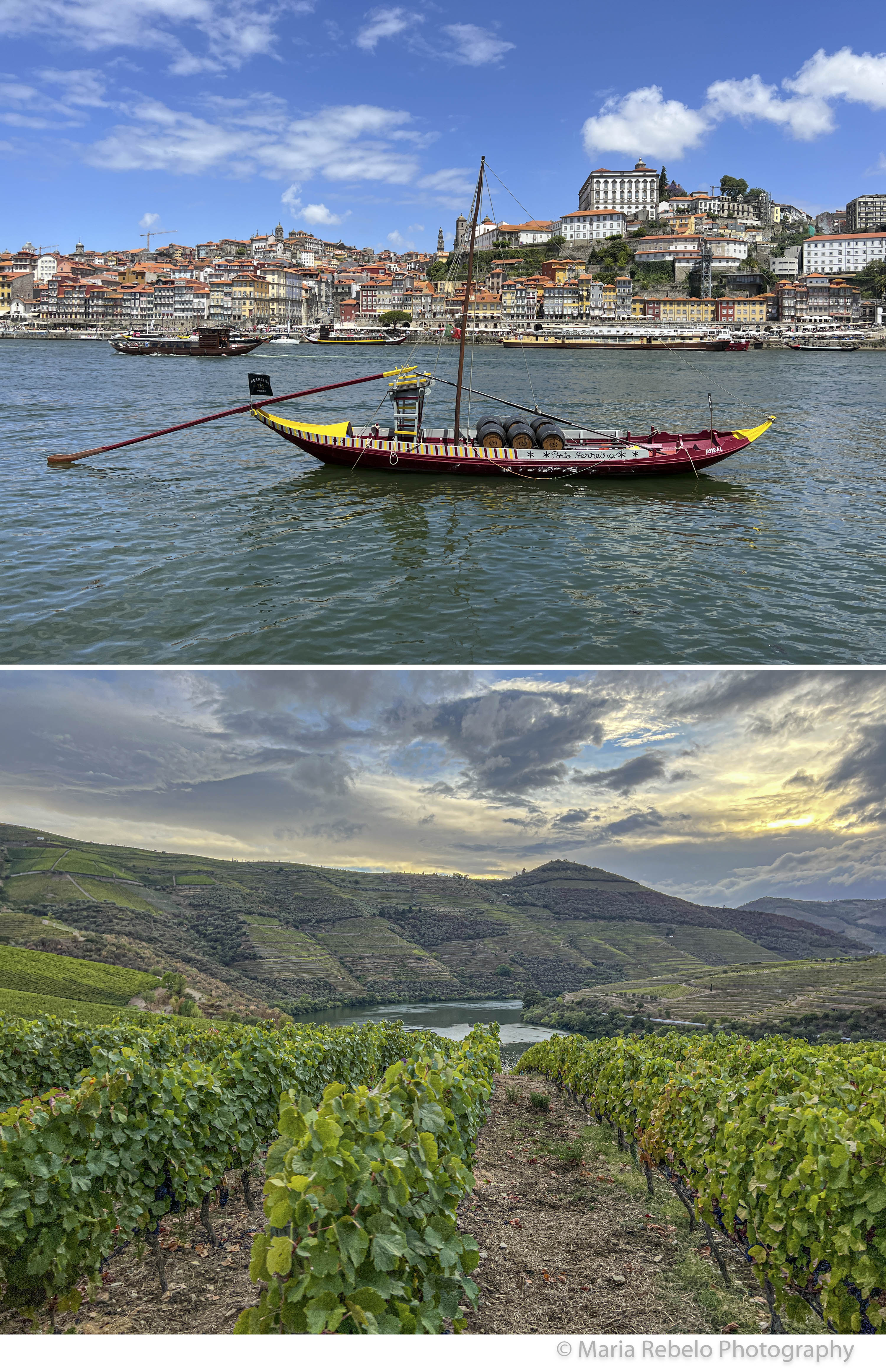
Quinta do Seixo in the Douro valley is a place of timeless beauty. Here’s how Henry Vizetelly described it in his book “Facts about Port and Madeira,” published in 1880:

“It occupies the spurs and slopes of a mountain, one side of which bounds the Douro, and the other the Rio Torto valley. Scattered over the heights above are the white cottages of the village of Valença, the vineyards of which produce a considerable quantity of first-class wine. The buildings of the Quinta do Seixo , which is entered through an imposing gateway, surmounted by the armorial bearings of its owner, are very extensive. The casa is both commodious and well arranged, and has a certain air of pretension about it, while the lagares and the adega are on a scale proportionate to the extent of the surrounding vineyard.”

This description remains remarkably apt. The main house still offers spectacular views of the surrounding vineyards, some of which are centenarian. But Vizetelly would be amazed to see that inside the traditional building, there’s a state-of-the-art winery. 

Our guide explained what makes the Douro different: the stone terraces built to support the vines, the “field blends” made from varietals planted together in the vineyards, the poor soils that force the plants to struggle, making the berries small but full of flavor, and the methods used to produce tawnies, vintages, and late-bottled vintages. 

She also told us about Georges Sandeman, the Scottish merchant who founded Sandeman in 1790. The company quickly became the largest port-wine shipper. Its mysterious logo, created in 1928, was inspired by its two product lines: ports from Portugal and sherries from Spain. It is a silhouette of a man wearing a Spanish hat and dressed in the cloak used by students in Coimbra, Portugal’s oldest university.

At the end of the tour, we tasted four wines—first, a harmonious white Vinha Grande with fine tannins and a pleasing acidity. Then, an exuberant red Callabriga made with grapes from the Callabriga hill, which was originally planted by the Romans. Next, a delicious 2019 Vintage Port from Quinta do Seixo that tastes even better with a view of the vines that produced it. And, finally, a great Sandeman Vau port wine from the 1999 vintage.

A visit to Quinta do Seixo is a delightful introduction to the wonders of the Douro valley.

Click here for Quinta do Seixo’s website.

Fire and rain

On the last day of the year, there were fireworks on the beach. People enjoyed the impressive pyrotechnics. But the ocean did not stand still to stare at the sky; its waves kept rolling on the sand. 

On the first day of the new year, there was copious rain. The ocean, created by millions of years of precipitaton, rejoiced like a child who sees her mother after a long absence. The waves danced, and we watched in awe how a coastline known for its sunny days could be so beautiful in the rain.

We wish you a joyous New Year and hope you come to see the beauty of the Portuguese coastline, rain or shine.

Chocapalha’s fascinating wines

Some of our favorite wines come from an estate near Lisbon called Chocapalha. It has a privileged location. The Montejunto mountain protects the land from cold winds and the Atlantic breeze lends the wines an enticing freshness and acidity. The farm, which is known for its wines since the 16th century, has a hilly terrain with different sun exposures and soils rich in clay and limestone.

Chocapalha belonged since the 19th century to the family of Diogo Duff, a Scottish noble who came help the Duke of Wellington fight the Napoleonic troups. Paulo Tavares da Silva, a retired Portuguese Navy officer, and his Swiss wife Alice bought the estate from the Duff family in 1987. 

The journey to the glorious wines produced today was long and arduous. There was a modern winery to build, laborers to hire, new vineyards to plant, sustainable practices to implement, and many other tasks. When we first met Paulo, he told us that a visiting producer tried to discourage him by quoting a French aphorism: “wine is an easy business; only the first 200 years are hard.” But he and Alice were not deterred. They were driven by a passion for the land and a desire to create a legacy for future generations. For this reason, they paid from the start close attention to environmental issues. They want to see that the soil is alive, the vineyards are healthy, and the birds and animals are thriving. 

The family worked so hard that success came much sooner than anticipated. Alice and Paulo enlisted two of their daughters, Sandra and Andrea, to work at Chocapalha. Sandra, a renowned enologist, took time from Wine & Soul, the project she has in the Douro valley with her husband, to oversee the planting of the vineyards and the making of the wines. Andrea left a lucrative career in finance to manage the estate. Paulo works tirelessly in the vineyards. Alice graciously receives the many guests that visit the farm. 

The wines speak for themselves: they are pure and refined, produced with minimal intervention so that each glass can take our palate to the sunny hills of Chocapalha. 

There are many wines to try. There’s a Castelão with the elegance of a Pinot Noir and a Viosinho with the charm of a Chardonnay. Vinha Mãe has rich tannins and great concentration; it is a perfect companion for a cold winter night. The CH white, made with Arinto from old vines, is an aristocratic wine with subtle salinity. The wine is an homage to Alice (CH is the symbol of Switzerland, her homeland). The red Guarita, named after the farm’s sentry house, is an homage to Paulo. Produced with Alicante Bouschet, it is a symphony for the palate.

When you visit Chocapalha, you can taste their wines, visit the picturesque vineyards, and get to know a family passionate about creating some of the world’s most fascinating wines.

Chocapalha is located at Aldeia Galega da Merceana, 50 km from Lisbon. You can schedule a wine tasting by emailing chocapalha@chocapalha.com. Click here for their website.

Holiday cheer

The farmers market was bustling. The baker ran out of cornbread; the vegetable stalls were out of Christmas cabbages. At home, thick slices of salt codfish were soaked to be cooked and doused with fragrant olive oil. In a country with so many splendid wines, it’s hard to elect one to grace the table. But the choice was made. Pumpkin fritters and other delights are ready to be served. And most of all, there are friends and family coming to enjoy each others’ company in this beautiful corner of the world called Portugal.